Why Robber Flies Patrol North Carolina Vegetable Gardens On Hot Sunny Days
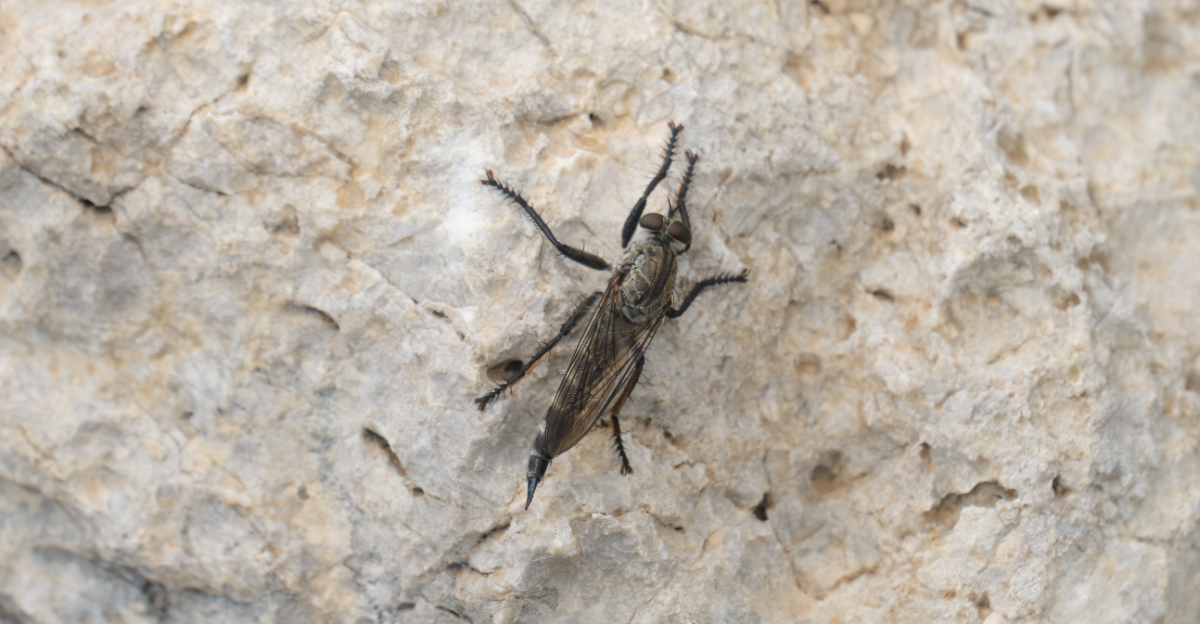
A North Carolina vegetable garden can feel strangely watched on a bright summer afternoon.
Something large settles on a tomato stake and barely moves. A second later, the perch is empty, a blur crosses the beans, and the same insect returns carrying something smaller in its legs.
The whole sequence can happen so fast that it looks more like a trick than ordinary garden behavior.
That repeated pattern is not random.
Certain sunny corners, fence posts, trellis wires, and exposed stems seem to attract the same visitor again and again, especially once heat builds and other insects become active above the leaves.
Gardeners may notice it most around squash blossoms, bean flowers, or open rows where movement is easy to track.
So what exactly is happening over the vegetable bed?
The answer involves hunting strategy, temperature, prey movement, and a surprisingly disciplined use of the garden itself.
Once the pattern becomes familiar, those sudden flights stop looking chaotic and start looking almost organized through the hottest stretches of Carolina summer.
1. Read Their Patrols As Active Hunting
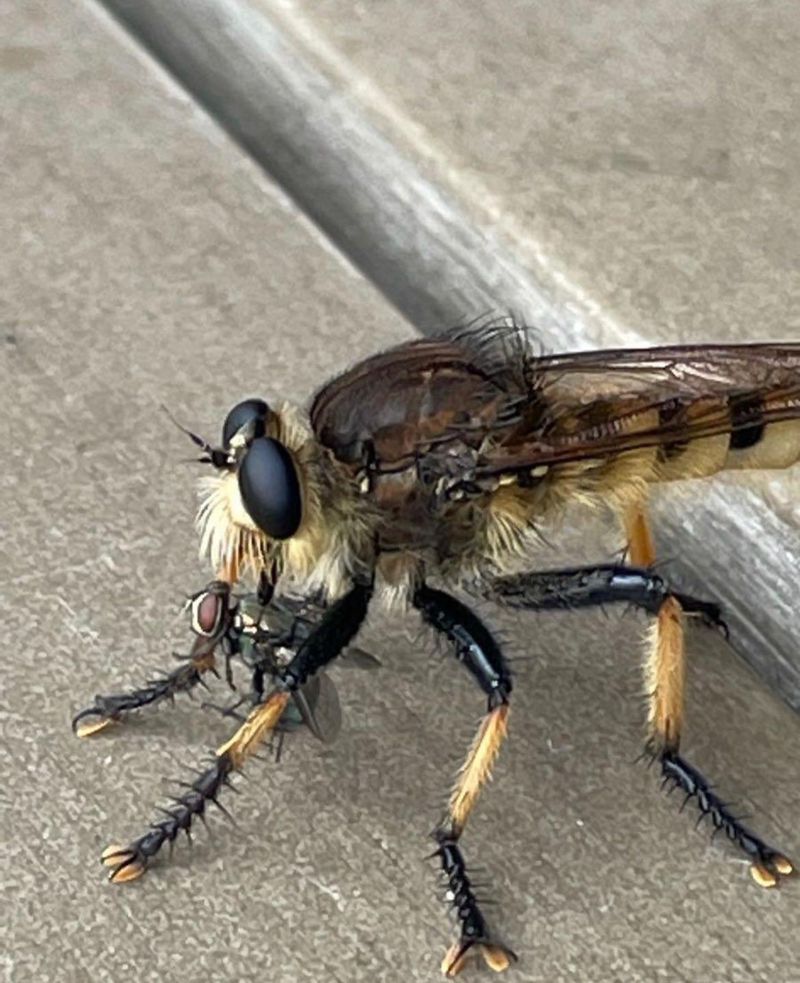
A robber fly that keeps making short loops over the same bed is usually working a hunting route.
These insects belong to the family Asilidae and are active predators. Some species spend long periods on a perch, then launch when prey crosses a useful flight path.
Others make repeated short flights through open spaces before returning to a stake, stem, or fence post.
Vegetable gardens create excellent lanes for that behavior.
Rows leave open air between plants. Stakes rise above foliage. Squash and bean flowers draw steady insect traffic, while bare paths give a robber fly clear sight lines over moving prey. A perch near all that activity can function like a tiny observation tower.
Watch the pattern for a few minutes.
The fly may sit almost motionless, turn its head, then explode into the air and return seconds later. Another launch may end with nothing caught. Predators miss plenty of opportunities, and robber flies are no exception.
That matters because the patrol is not a sign that the fly is bothering the vegetables.
The leaves, fruit, and stems are scenery. The real target is movement in the air around them.
Once that becomes obvious, the garden starts looking different. A tomato stake is no longer only holding up a vine. It may also be the favorite lookout for a hunter running the same route all afternoon.
2. Watch Perches For Sudden Hunting Flights
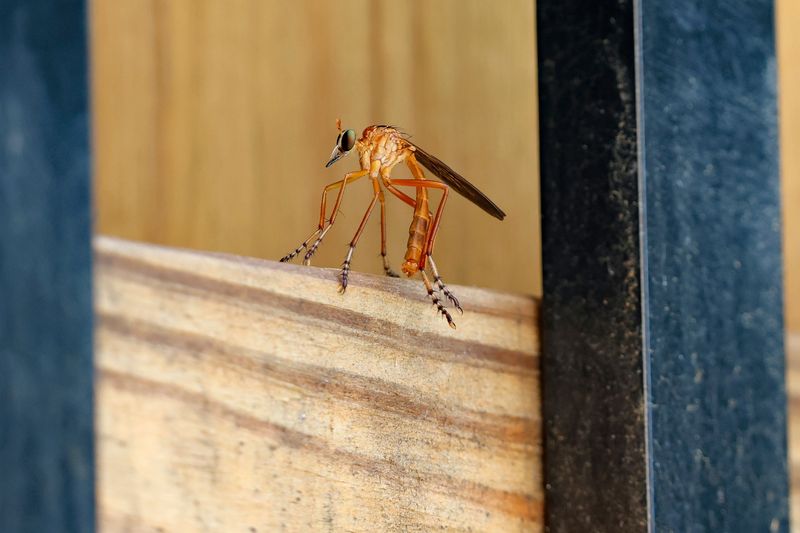
The easiest robber fly to spot is often the one doing absolutely nothing.
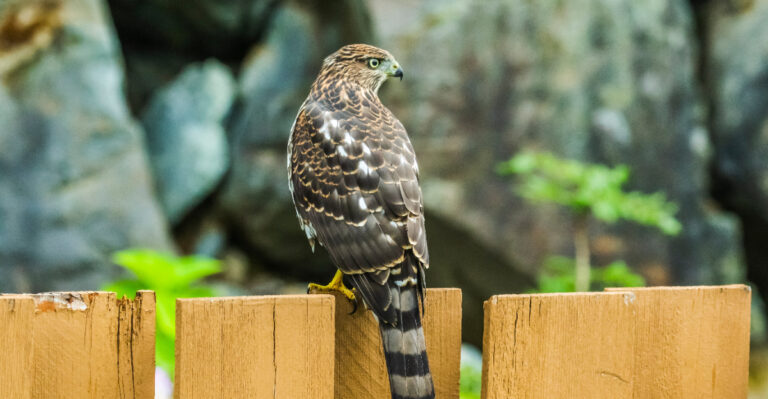
Look along tomato stakes, cucumber trellises, fence rails, exposed stems, and sunlit leaves. Robber flies frequently choose raised perches that give them an open view of nearby airspace.
From there, they can wait for another insect to cross within striking distance.
Their eyes help make that strategy work.
Large compound eyes give robber flies excellent visual awareness, and the head can shift slightly as the insect tracks movement. The still body paired with a turning head makes the fly look almost unnervingly attentive.
Your North Carolina Garden Changes Every Week. Your Plan Should Too.
Gardening in North Carolina changes quickly throughout the season. Every Friday you’ll receive a simple weekly plan showing exactly what to plant, prune, fertilize, harvest, and protect so you never miss the right timing.
Then the quiet ends.
A suitable target moves past, the robber fly launches, and the perch is suddenly empty. Successful hunters often return to the same general area after a capture or an unsuccessful chase. That repeat use can make one stake seem unusually popular.
Do not assume the sun-warmed perch is only about basking.
Warmth matters for insect activity, but position matters too. An elevated launch point beside flowering vegetables can put a robber fly near a steady stream of bees, flies, beetles, and other airborne prey.
That is why trellises can become especially busy.
They combine height, open air, and flowers in one small zone. The structure may have been built for pole beans, but a robber fly can turn it into excellent hunting real estate without asking the gardener for a lease.
3. Expect Them Where Flying Prey Is Moving
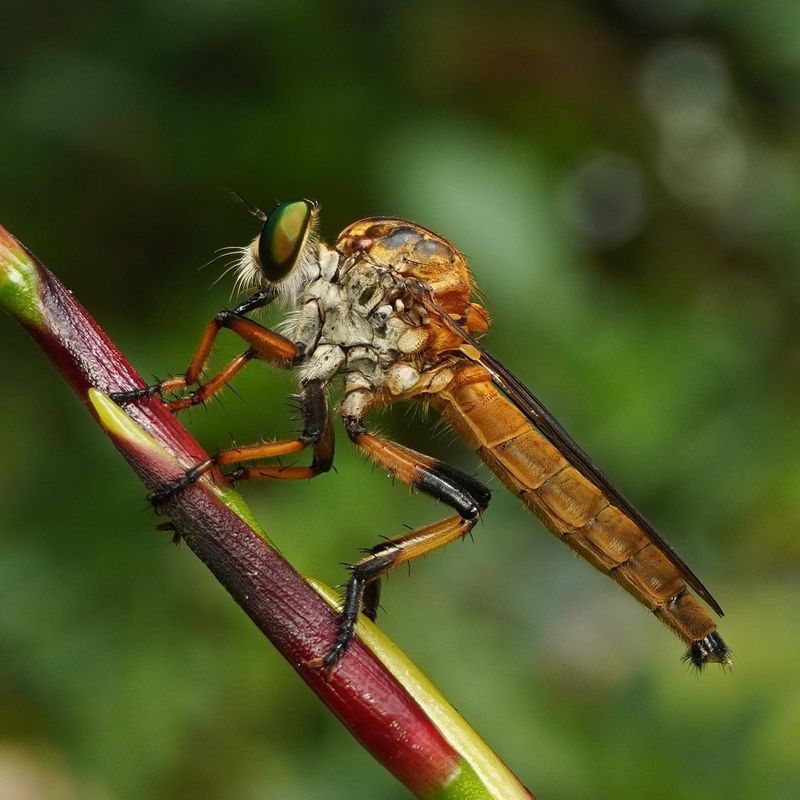
A vegetable garden becomes especially attractive to an aerial predator once flowers and flying insects fill the space.
Squash blossoms bring bees. Bean flowers draw pollinators. Leafhoppers, small beetles, wasps, flies, and other insects move between plants throughout the day.
Robber flies respond to that traffic because they are generalist predators rather than specialists tied to one crop pest.
Warm, bright weather can make the effect much more noticeable.
More insects take flight as conditions become favorable, which means more opportunities for a robber fly sitting above the foliage. A garden with several crops blooming at once can resemble a busy intersection from the fly’s point of view.
Diversity adds to the traffic.
Vegetables, herbs, flowering borders, and nearby native plants can support many kinds of insects across the same yard.
That does not guarantee more robber flies, but it creates the sort of active airspace that gives an ambush predator plenty to watch.
The important detail is prey movement, not vegetable variety.
A robber fly does not care that the plant below is a tomato, cucumber, or pepper. The garden matters because insects are crossing it.
This also explains why one section of the yard may get more patrols than another.
A sunny bed with open flight lanes and steady flower visitors offers better hunting than a dark, still corner.
The vegetables provide the stage. The airborne crowd is what keeps the hunter interested.
4. Notice Their Fast Midair Interceptions
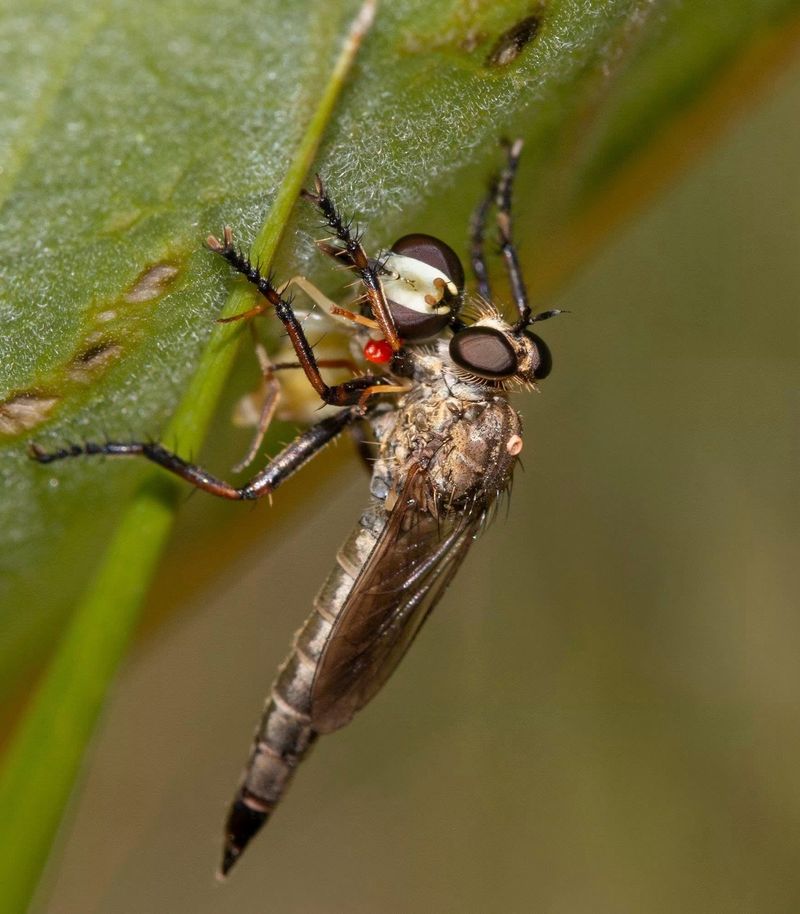
The capture can happen so quickly that the returning robber fly seems to have produced prey from nowhere.
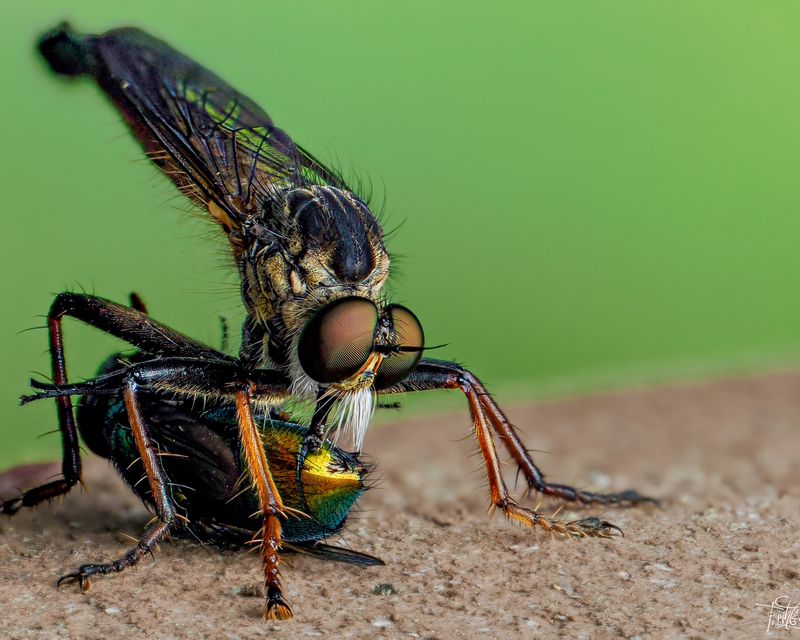
During an interception, the fly uses strong, spiny legs to grab another insect in the air. Once secured, the prey is held tightly while the robber fly uses a short, rigid mouthpart to pierce it.
Saliva helps immobilize the capture and begins breaking tissues down before feeding continues.
The whole system is built for speed.
A robber fly does not need to wrestle with prey on a leaf for several minutes. The grab happens in flight, and the hunter can carry the captured insect back to a perch where feeding is easier.
Success is not guaranteed.
Targets change direction, drop into foliage, or simply escape the initial rush. Watching several launches makes that clear. Some end with a meal. Others end with the robber fly returning empty-legged and trying again.
That imperfection makes the behavior more interesting.
The insect is skilled, but it is not a guided missile with perfect aim. It is a predator making repeated decisions based on movement, distance, size, and opportunity.
Gardeners often notice the result before they notice the chase.
A fly that was empty a moment earlier suddenly lands with a small beetle or another fly held beneath it.
The best way to catch the action is patience. Pick one favorite perch and watch it. The dramatic part may last less than a second, but the setup can repeat all afternoon.
5. Treat Robber Flies As Generalist Predators
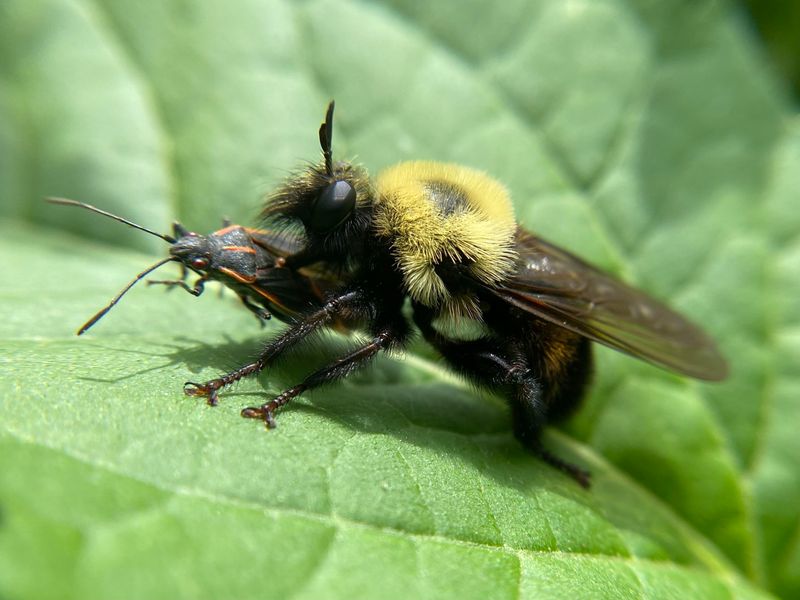
Robber flies can be useful predators without becoming tiny employees assigned to vegetable pest control.
They eat a broad range of insects, and that menu can include leafhoppers, flies, beetles, grasshoppers, wasps, and other prey small enough for a particular species to handle.
The exact meal depends on the robber fly’s size, the prey available, and what happens to cross its hunting zone.
That makes them generalists.
A cucumber beetle may become lunch, but so might an insect the gardener would rather keep. Robber flies do not separate the garden into helpful and harmful categories before launching.
Their value is broader than that.
Predators add another layer to the food web and can remove some insects that would otherwise remain active and reproduce.
That contribution is real, even though it cannot be translated into a promise that squash bugs or leafhoppers will disappear.
This is where expectations matter.
A robber fly should not be treated as a replacement for scouting, hand removal, row covers, or other crop-specific management. It is simply one predator among many working through the garden.
That is still worth appreciating.
A healthy vegetable plot is not a factory staffed by insects with assigned job descriptions. It is a crowded ecosystem where feeding relationships overlap constantly.
Robber flies fit that messy reality perfectly.
They are hunters first, garden helpers only by coincidence, and that makes their presence more interesting than a neat pest-control label ever could.
6. Remember They Hunt Helpful Insects Too
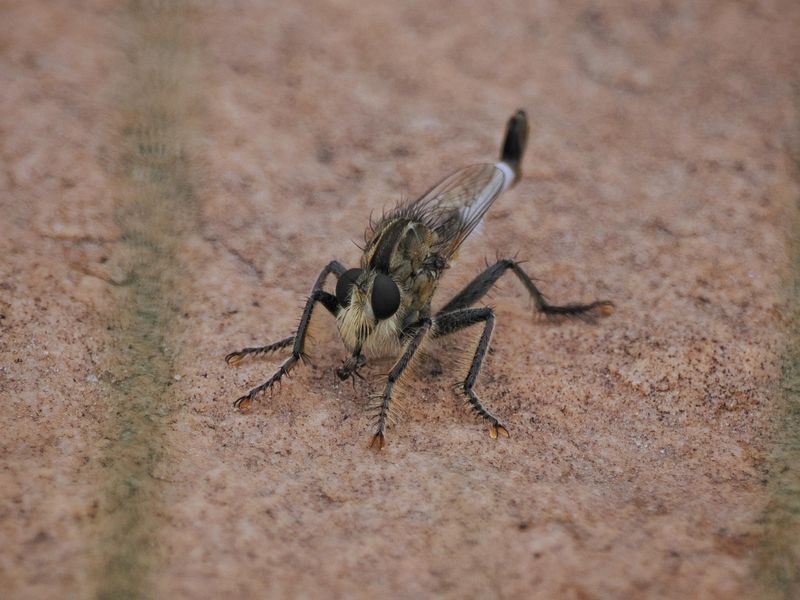
The uncomfortable part of robber fly biology is that pollinators can end up on the menu too.
Bees, wasps, hover flies, and other beneficial insects are still prey when their size and movement suit the hunter. A robber fly near squash blossoms is not guarding the flowers. It is watching whatever flies through the area.
That does not make the predator a villain.
Natural food webs are full of useful insects eating other useful insects. Gardeners tend to sort species by human goals, but the insects themselves are responding to food, shelter, reproduction, and opportunity.
One captured bee is not evidence that pollination is collapsing.
Robber flies are usually scattered through a landscape rather than packed into vegetable beds in enormous numbers. In an ordinary home garden, occasional predation on pollinators is part of the larger ecological mix.
Managed beehives deserve separate attention.
A persistent robber fly hunting directly at a hive entrance could become a nuisance, especially where repeated captures are easy to observe. That situation is very different from one fly occasionally taking a bee over a vegetable row.
For most gardeners, intervention makes little sense.
The predator is part of the same system that supports bees, wasps, beetles, spiders, and countless other insects.
Seeing one beneficial species catch another can feel wrong at first. The garden, however, is not keeping score the same way people do.
Sometimes the pollinator gets the flower. Sometimes the hunter gets the pollinator. Both outcomes belong to the same food web.
7. Avoid Mistaking Every Large Fly For A Pest
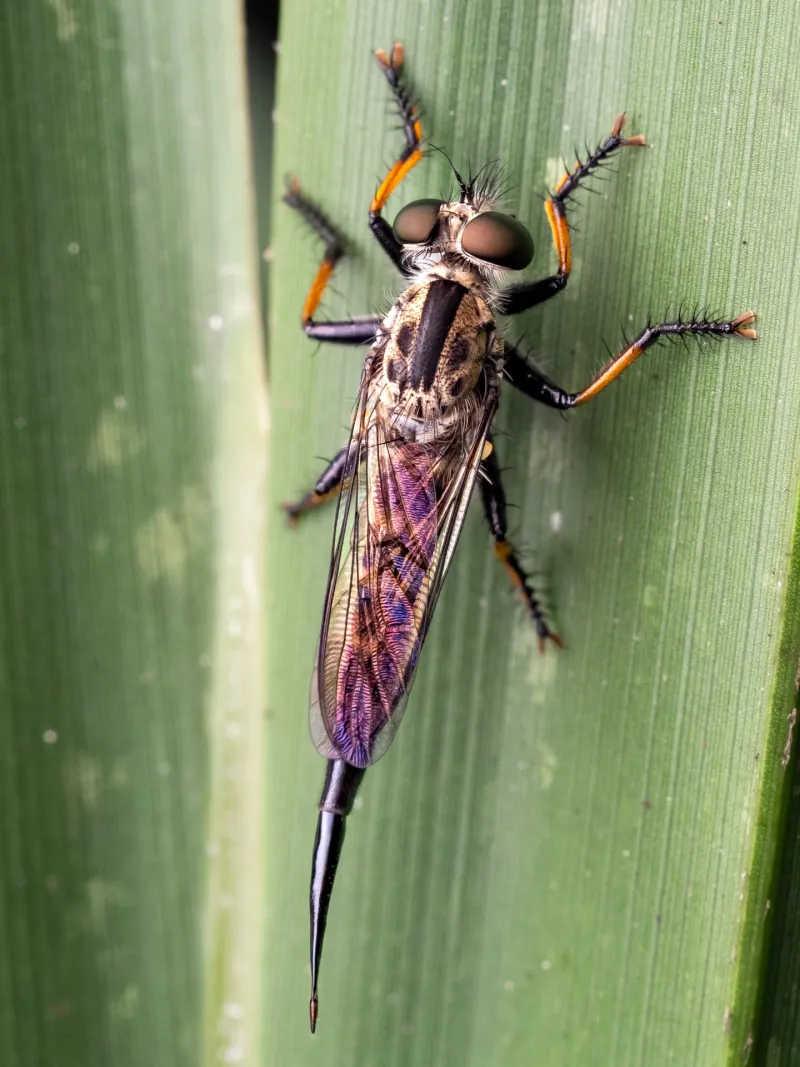
Large flies tend to get blamed quickly, especially when they are bristly, fast, and sitting near food crops.
Robber flies are easier to recognize once a few features become familiar. Many have a sturdy body, long legs, a tapered abdomen, and a distinctive bristly face.
The dense facial hairs form a beardlike patch below the eyes that gives the insect a rough, mustached appearance.
Behavior helps just as much as body shape.
A robber fly commonly waits on an exposed perch, launches after other insects, and returns to a similar lookout. Horse flies and deer flies behave differently and are better known for seeking blood meals from mammals.
Robber flies are not out patrolling tomato stakes in search of gardeners.
They can defend themselves when handled, so grabbing one barehanded is a poor experiment. Left alone, they generally focus on hunting insects rather than interacting with people.
Size varies considerably among species.
Some are modest, while others are large enough to look startling when they lift off beside your face. Color varies too, so identification should rely on several traits instead of expecting one exact pattern.
The bristly face plus predatory perch-and-launch behavior is a useful combination.
That prevents a common garden mistake: assuming every big fly needs to be swatted.
Sometimes the large insect on the pepper stake is not a pest at all. It is waiting for the next smaller insect to make the unfortunate decision to fly past.
8. Give Robber Flies Space To Keep Hunting
The easiest way to support robber flies is mostly to stop creating unnecessary problems for them.
Broad-spectrum insecticides can remove predators directly along with the pests gardeners meant to target. They can also reduce the variety of prey moving through the garden, leaving fewer hunting opportunities for robber flies and other beneficial insects.
Use pest control with a specific target in mind.
Scout plants, identify the actual problem, and choose the narrowest practical response. Hand removal, barriers, pruning badly affected tissue, or a crop-specific treatment may solve a problem without turning the entire garden into collateral damage.
Perches can stay simple.
Tomato stakes, rough fence posts, trellis tops, bare branches, and other exposed surfaces already give robber flies places to watch from. There is no need to build special structures or buy an insect hotel with a robber fly suite.
Diverse planting can help maintain insect activity.
Herbs, vegetables, flowering plants, and nearby native species create different bloom times and habitats across the yard. That supports a more complicated food web, which is exactly the sort of place predators tend to appear naturally.
Do not try to handle or relocate the flies.
A robber fly on a stake is not blocking plant growth or chewing foliage. Give it room and keep gardening.
The whole arrangement is refreshingly low maintenance.
Provide a garden with prey, perches, and fewer unnecessary sprays, and the predator can take care of the hunting schedule without another item being added to yours.