What Magnolia Scale Looks Like On Michigan Trees Before Branches Start Looking Sticky
A Michigan magnolia can look perfectly normal from the sidewalk while something much smaller is already changing along its newest branches.
The first clues are easy to miss. They sit close to the bark, follow young twigs, and can resemble harmless bumps left by ordinary growth.
Weeks later, the tree may become much harder to ignore as leaves shine, insects gather, and dark residue appears below the canopy.
By then, the quiet stage has already passed.
That is why a close inspection before midsummer mess builds can tell you far more than waiting for the tree to advertise trouble from across the yard.
So what deserves a second look when the branches still seem clean?
The answer comes down to shape, color, location, and timing. Several small details appear before the obvious symptoms, and learning their order makes the whole problem easier to recognize.
A hand lens, a few minutes, and the right twig may reveal what the canopy has not announced yet to anyone walking past that morning outside.
1. Look For Large Waxy Bumps On Young Twigs
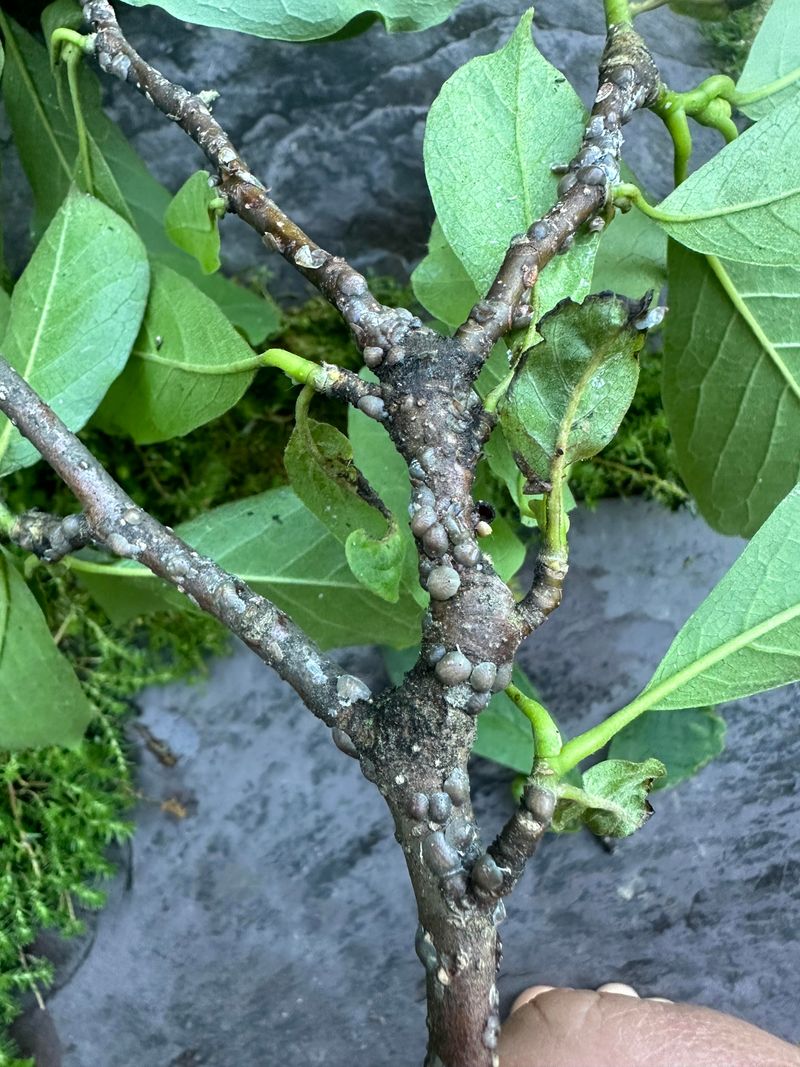
The easiest clue to overlook is also one of the most useful: rounded bodies pressed tightly against young magnolia twigs.
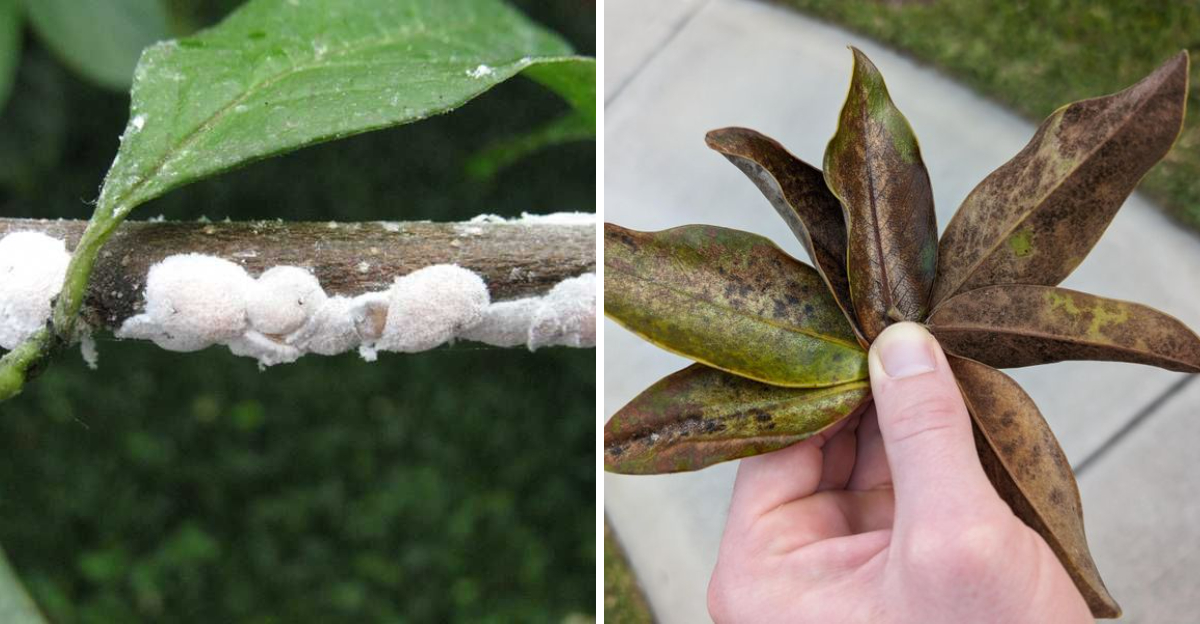
Magnolia scale, Neolecanium cornuparvum, is unusually large for a scale insect. Mature females can approach one-half inch across and look smooth, swollen, and almost shell-like.
Their color ranges from pinkish orange to brown, often with a pale waxy coating that makes them look more like odd bark growths than insects.
Focus on one- and two-year-old wood.
That is where the species spends much of its life cycle, including the overwintering nymph stage. Check slender branches near the outer canopy rather than starting with thick old trunk bark.
A lightly infested twig may carry only a few bumps, while a crowded colony can make the branch look warty from several feet away.
Use your eyes before your fingers.
Natural buds have a regular position and recognizable shape. Scale bodies look more irregular and can appear lined along the twig between buds. A hand lens helps when the insects are still small.
Do not scrape every bump off immediately.
First confirm what you are seeing, especially on a valuable tree. Magnolia bark has plenty of normal features that deserve to stay attached.
The useful habit is simple: inspect young twigs before the leaves and surfaces below become messy. The branch often keeps the first visible record.
2. Notice Pinkish Brown Scale Bodies Early
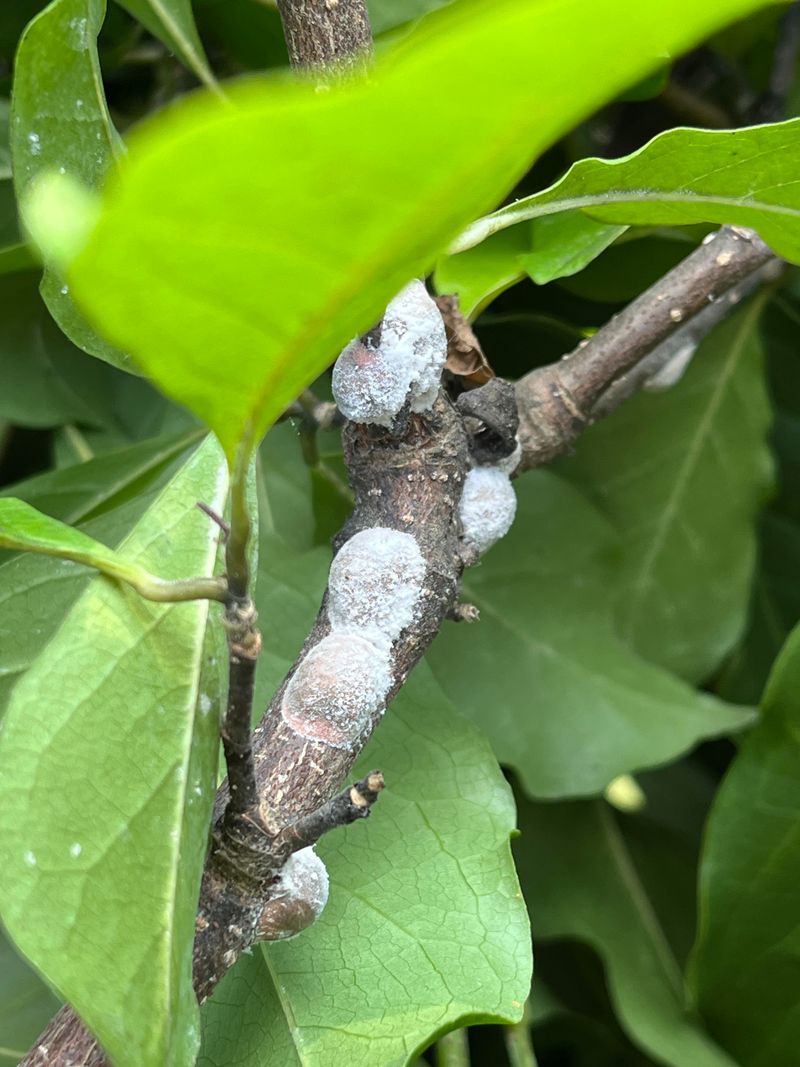
Spring magnolia scale does not always look like the plump summer insect shown in garden photos.
The species overwinters as small nymphs attached to young twigs. At that stage, the bodies are dark gray with a reddish-brown ridge running along the middle.
They sit flat enough against the bark to disappear into the branch pattern unless you are deliberately searching for them.
That makes early inspection a close-range job.
Choose several outer twigs from different sides of the tree and look along the previous season’s growth. A hand lens can reveal flattened bodies that would otherwise register as tiny dark marks.
Your Michigan Garden Changes Every Week. Your Plan Should Too.
Gardening in Michigan changes quickly throughout the season. Every Friday you’ll receive a simple weekly plan showing exactly what to plant, prune, fertilize, harvest, and protect so you never miss the right timing.
The goal is not to find one perfect textbook specimen. Repeated, similar bumps on several young twigs create a much stronger clue.
As the season advances, those nymphs grow and the appearance changes.
Females become larger, smoother, and more rounded during summer. That transition is why a gardener who saw almost nothing in April can suddenly notice conspicuous bumps weeks later.
Do not use color alone for identification.
Bark scars, buds, lichens, and other scale species can create confusing marks. Magnolia scale has to match the host, twig location, body form, and seasonal pattern together.
This early stage matters because the tree may still look clean from below.
No black coating has to be present. No patio furniture has to feel tacky. The tiny dark forms on young wood can arrive well before the yard starts supplying louder clues.
3. Check For White Waxy Males On Branches
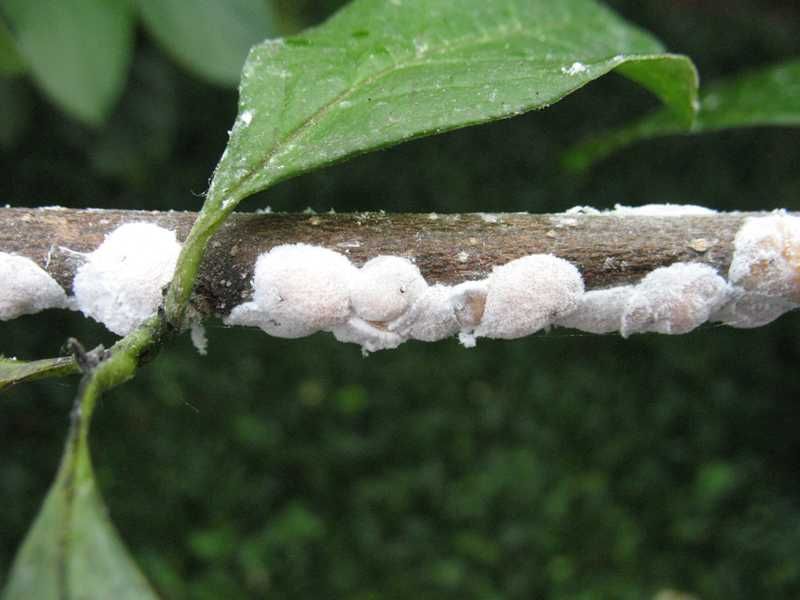
A pale coating on magnolia twigs can be another clue, but it needs careful interpretation.
Magnolia scale females develop a waxy covering as they mature. The coating may make individual insects look chalky, dusty, or lightly frosted against the bark. On a crowded twig, several wax-coated bodies can merge visually into an uneven pale patch.
The important detail is what sits underneath.
Look for the rounded, convex shape of the scale body rather than treating every white mark as the same problem. Powdery residue, lichens, and other harmless material can also appear on branches.
Nearby swollen scale bodies make the diagnosis much stronger.
Adult males are different.
They eventually emerge as tiny winged insects rather than becoming the large bumps gardeners notice most easily. That means the conspicuous waxy forms along a twig should not automatically be described as male colonies.
Season also helps tell the story.
By midsummer, females are much easier to see than the flattened nymphs from spring. Their larger size can make a previously subtle infestation look sudden even though the insects have occupied the tree for months.
Take a close photo before treatment or removal when identification remains uncertain.
An image of the twig, bumps, and surrounding buds can make comparison easier without damaging the branch.
The wax is not the whole diagnosis. It is one piece of a sequence that becomes much more convincing when size, shape, host, and twig age all line up.
4. Watch Ant Activity Around Infested Twigs
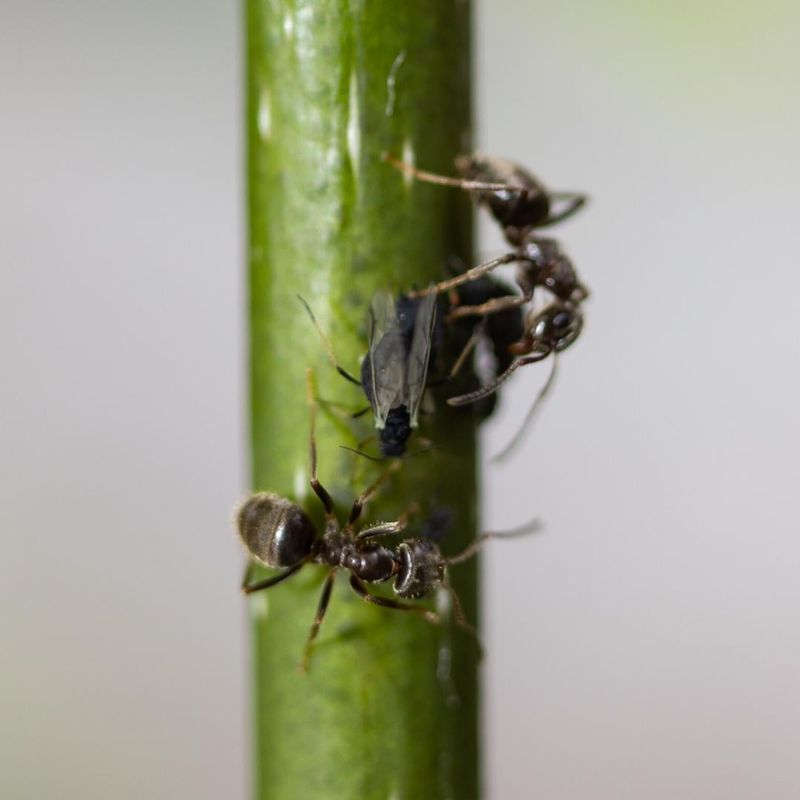
Ants marching up a magnolia trunk can reveal a problem before the entire tree feels sticky.
Soft scale insects feed on plant fluids and release sugar-rich honeydew. Ants, wasps, and other insects are attracted to that material, so repeated traffic on the trunk or lower branches can point toward a food source higher in the canopy.
The ants are a clue, not a diagnosis.
A few scattered ants may be doing garden work. A steady trail traveling up the same section of bark deserves more attention, especially when young twigs above it carry suspicious bumps.
Follow the traffic with your eyes.
Check the nearest branches for dark overwintered nymphs, swelling summer females, or pale wax on attached scale bodies. Then look at leaves and objects beneath that section of canopy for the earliest glossy droplets.
Avoid coating the trunk with homemade sticky substances.
Some materials can injure bark or trap unintended insects. The first useful response is inspection and correct identification, not turning the trunk into flypaper.
Ant activity can also increase around other honeydew-producing insects, including aphids and different soft scales. That is another reason to inspect before assigning blame.
Magnolia scale becomes much easier to recognize when several clues overlap.
A persistent ant highway below, unusual bumps above, and the right host tree tell a stronger story than any one sign alone. The ants may simply be the first ones to notice that the buffet has opened.
5. Spot Honeydew Before Leaves Feel Coated
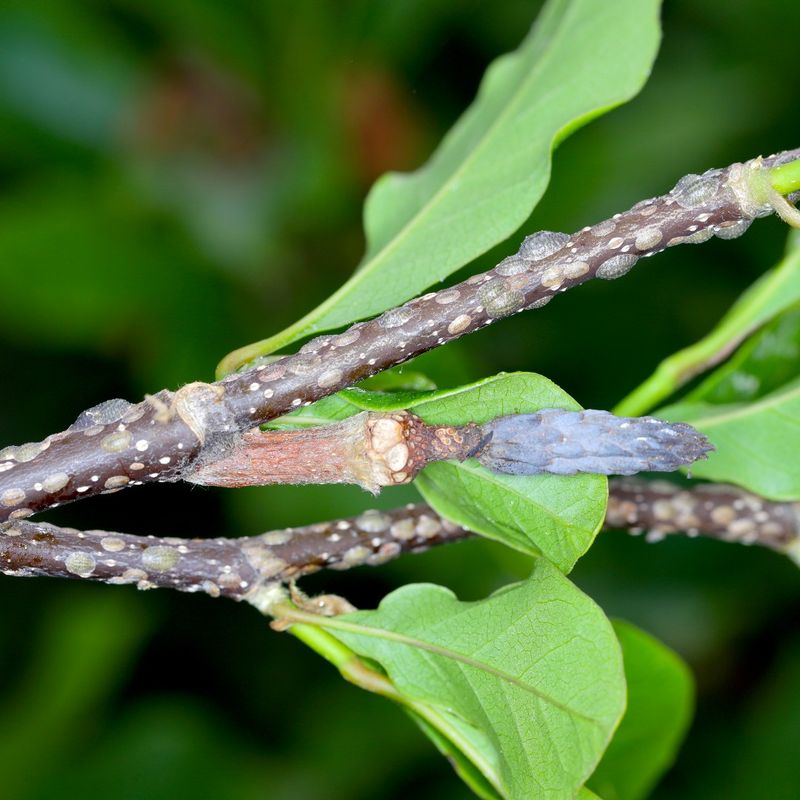
The first honeydew may look more like an unexplained shine than a syrupy coating.
Magnolia scale is a soft scale, and active feeding produces sugary liquid that can collect on leaves, twigs, shrubs, pavement, patio furniture, and vehicles beneath the canopy.
Early deposits may appear as scattered glossy spots on a dry day before anyone notices a tacky surface by touch.
Look below the suspicious branch.
A shiny upper leaf surface beneath a cluster of scale bodies is more meaningful than one glossy leaf elsewhere in the yard. The same applies to clear droplets on a railing or driveway directly under the canopy.
Honeydew does not come from the tree leaking sap through healthy leaves.
It is associated with feeding insects, so the next move is to trace the residue upward and inspect the twigs. Aphids and other soft scales can also produce honeydew, which keeps identification important.
As the population grows, the mess becomes harder to miss.
More liquid can mean more insect visitors, sticky surfaces, and eventually the dark growth that develops on sugary deposits.
That is why the faint shine deserves attention.
The tree may still have full foliage and normal-looking flowers while a colony is feeding heavily enough to leave evidence below.
Catching that transition gives you time to identify the insect and plan around its life cycle rather than reacting after every surface under the magnolia feels coated.
6. Look For Black Sooty Mold Below Branches
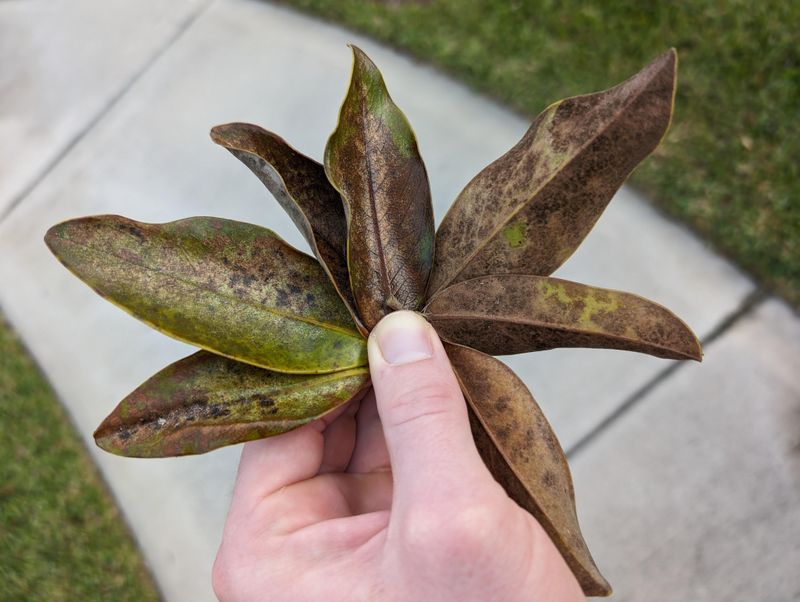
Black coating beneath an infested branch is dramatic, but it is usually not the first stage of the problem.
Sooty mold grows on sugary honeydew deposited on leaves, stems, and surfaces below feeding soft scales. It can look powdery, smudged, or crusted, which makes the magnolia appear to have developed a dark leaf disease overnight.
The fungus is using the honeydew.
That distinction matters because spraying the black coating alone does not solve the source. Once honeydew production drops, fresh sooty growth loses the food supply that allowed it to spread.
Use the black patches as a map.
Look directly above the darkest leaves or shrubs and inspect young magnolia twigs for scale bodies. Heavy deposits beneath one part of the canopy can help narrow the search when the tree is large.
A thick coating can also reduce the light reaching leaf surfaces.
The bigger concern, though, is the scale population feeding on the tree. Heavy infestations can slow growth, reduce foliage and flowering, weaken branches, and contribute to long-term decline.
Do not wait for the whole canopy to turn black before paying attention.
Sooty mold means honeydew has already been present long enough to support visible fungal growth. The quieter clues came earlier.
By the time black residue becomes the feature everyone notices from the driveway, the magnolia has been keeping receipts on its young twigs for quite a while.
7. Find Tiny Crawlers Moving In Late Summer
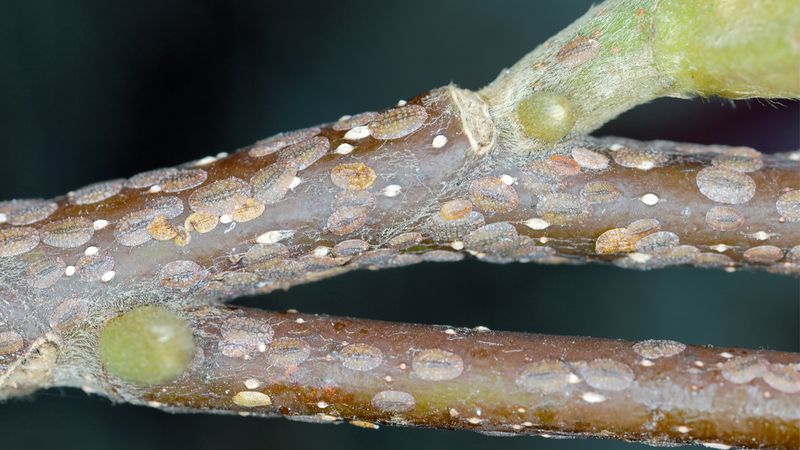
Late summer brings the stage that barely resembles the large bumps seen earlier.
Magnolia scale produces tiny crawlers that move along twigs for a short period before settling on young wood. They are much smaller than mature females and can look like reddish specks without magnification.
Michigan timing is better treated as a window than one guaranteed August date.
Landscape pest timing data place magnolia scale crawler emergence around 1,925 to 1,950 growing degree days, while regional guidance commonly places crawler activity in late August into early September.
Seasonal heat can shift that schedule, so local development matters more than circling one weekend on the calendar.
A hand lens makes scouting easier.
Double-sided tape wrapped around an infested twig can also catch moving crawlers and show when activity has begun. Check the tape regularly.
This stage matters because crawlers have not developed the same protective covering as older scales.
Products labeled for magnolia scale often target this vulnerable period, including certain horticultural oils and insecticidal soaps. Treatment still needs to match the label, plant condition, temperature limits, and actual crawler activity.
Do not spray simply because August arrived.
First confirm the pest and the stage.
Magnolia scale gets one generation each year, so the crawler window is a useful point in the cycle. Those tiny moving specks may be harder to see than half-inch females, but their timing can matter more for management.
8. Inspect Magnolias Before The Mess Builds
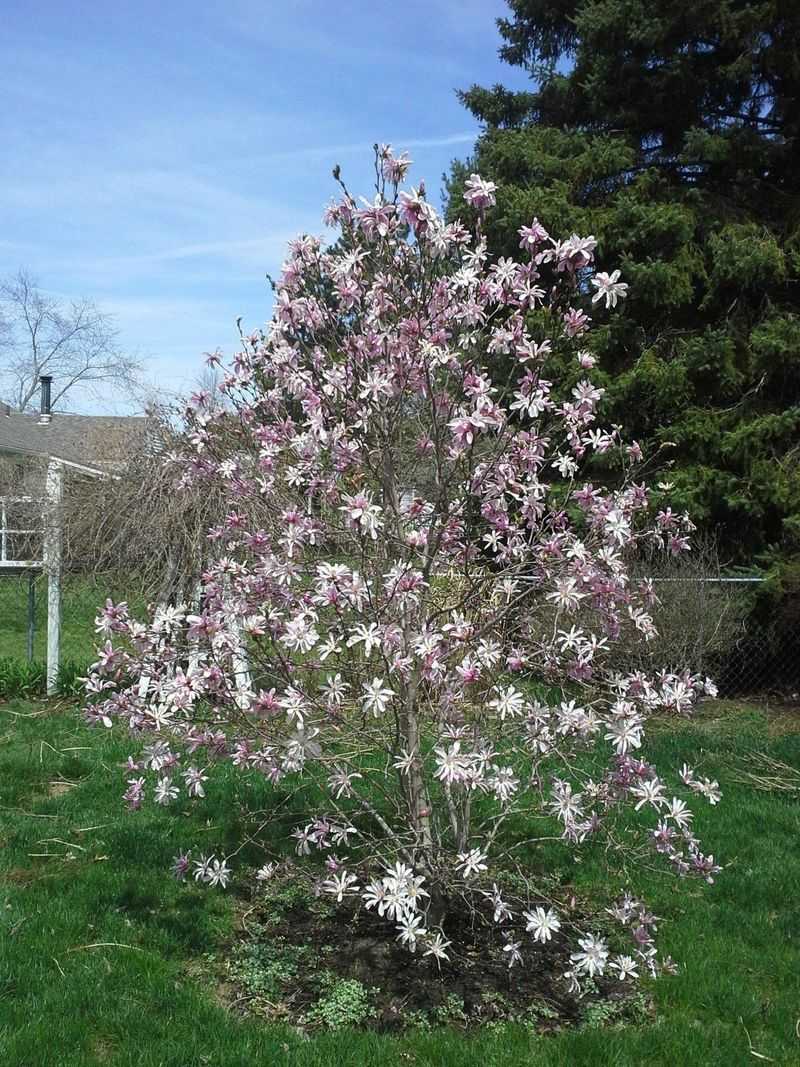
Bare branches and early spring growth make magnolia scale much easier to scout than a dense summer canopy does.
Start with the youngest twigs and work inward. Look for flattened dark nymphs, reddish-brown ridges, clusters of unusual bumps, and old scale remains from the previous season.
Star, saucer, lily, and cucumbertree magnolias are among the hosts commonly affected.
Light infestations are easier to evaluate while branches remain visible.
Pruning out a small, isolated infested branch may be practical when the cut will not damage the tree’s structure. A large population spread through the canopy calls for a broader management plan rather than random clipping.
Early spring also offers a treatment window for some infestations.
A properly labeled dormant or horticultural oil can target overwintering nymphs before buds open, with application timing guided by the product label and safe weather conditions.
Late summer provides another opportunity once crawlers become active.
Avoid spraying by guesswork.
Oils and insecticides can injure plants under the wrong conditions, affect beneficial insects, or miss the pest entirely when applied at the wrong life stage.
Large trees and severe infestations are good reasons to involve a qualified tree-care professional.
Most importantly, keep scouting after one treatment.
A clean patio does not prove every scale is gone.
Young twigs tell the better story. Checking them before honeydew, ants, and sooty mold dominate the view keeps the problem small enough to understand before it becomes the yard’s stickiest mystery.