The First Signs Of Powdery Mildew On Georgia Hydrangeas And Mistakes To Avoid
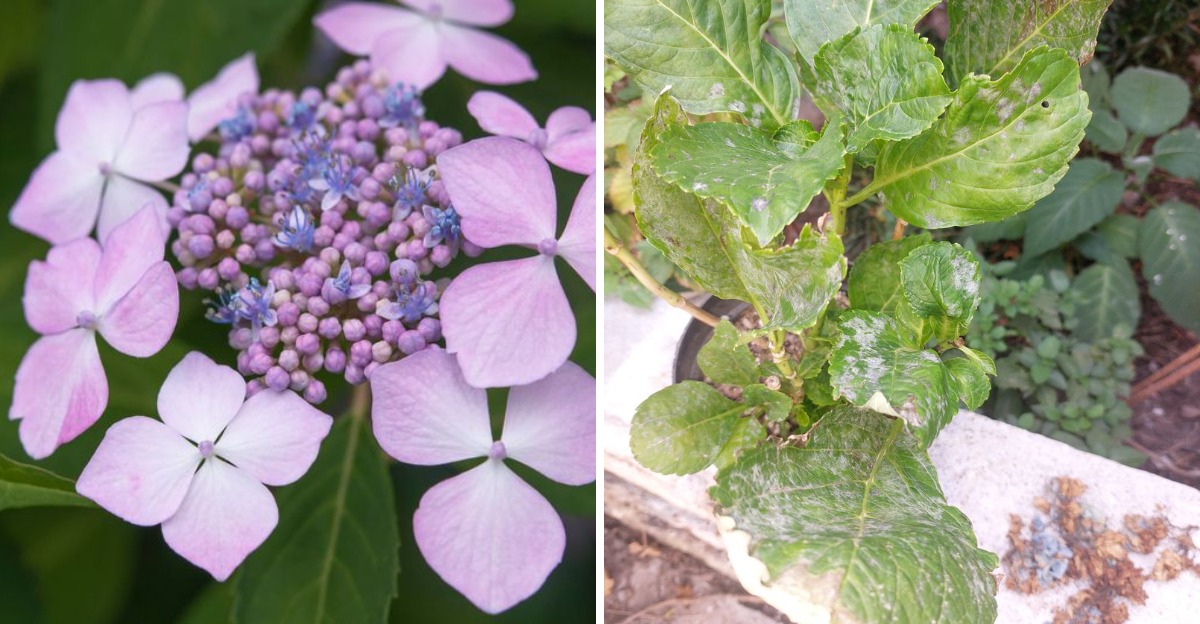
A Georgia hydrangea can look healthy from the sidewalk while something pale is already changing across a few hidden leaves.
The first clue may be no larger than a fingertip. It can sit inside the canopy, cling to tender new growth, or appear where shade holds humidity longer after sunset. From a distance, the shrub still looks full, green, and ordinary.
That quiet stage does not last forever.
A few scattered marks can become easier to notice as summer settles in, especially when warm days and humid nights keep returning.
By the time the whole plant looks obviously affected, several earlier clues have already come and gone.
So what deserves attention before the hydrangea starts advertising the problem across the yard?
The answer is not just a white coating. Leaf shape, canopy position, growth rate, spacing, and even the way the garden is managed can reveal what is developing.
Catch those changes early, and the next move becomes clearer before Georgia humidity turns a minor clue into a bigger display.
1. Spot Faint White Dust Before It Spreads
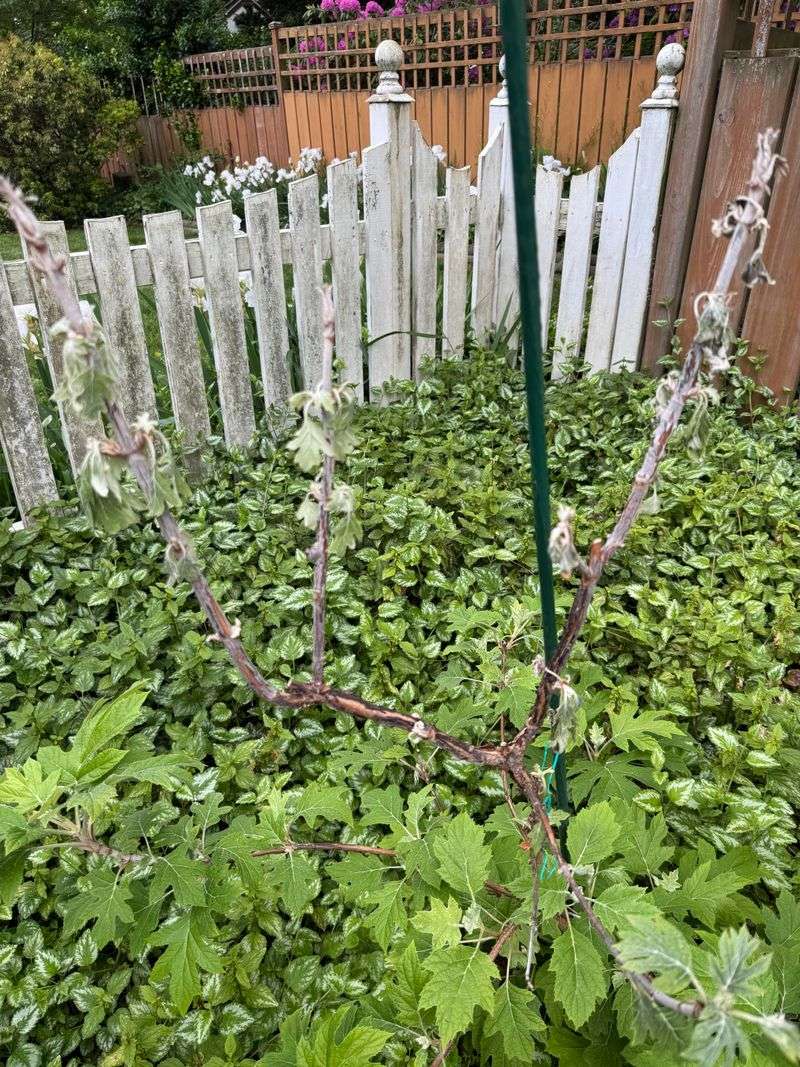
A faint white patch on one hydrangea leaf deserves more attention than a dramatic coating across half the shrub.
Powdery mildew often begins as small areas of whitish or gray fungal growth on leaf surfaces, tender stems, or other young tissue.
Early colonies can look dusty enough to be mistaken for dried residue, pollen, or a splash from nearby work.
As the fungus expands, those separate patches become easier to recognize and may eventually cover much larger portions of the leaf.
Use location and pattern instead of a quick rub test as the main clues.
Powdery mildew growth tends to look irregular but organized, with repeated pale colonies appearing on susceptible tissue. Mineral residue from irrigation often follows droplet patterns or leaf edges.
Dirt usually looks more random. A hand lens can make the fine surface growth easier to see before the patch becomes obvious from several feet away.
Check several leaves on the same branch.
One pale mark proves very little. Several similar patches, especially on tender foliage, make powdery mildew a stronger possibility.
Young shoots and flowers can also show whitish growth when pressure becomes heavier, and infected expanding tissue may later look distorted or stunted.
The advantage of finding the first dusting is timing.
Early disease is easier to manage with cultural changes and a correctly labeled fungicide when one is truly needed. Waiting for the shrub to look frosted from the sidewalk gives the fungus far more territory before the gardener finally reaches for a plan.
2. Check Shaded Leaves For Early Patches
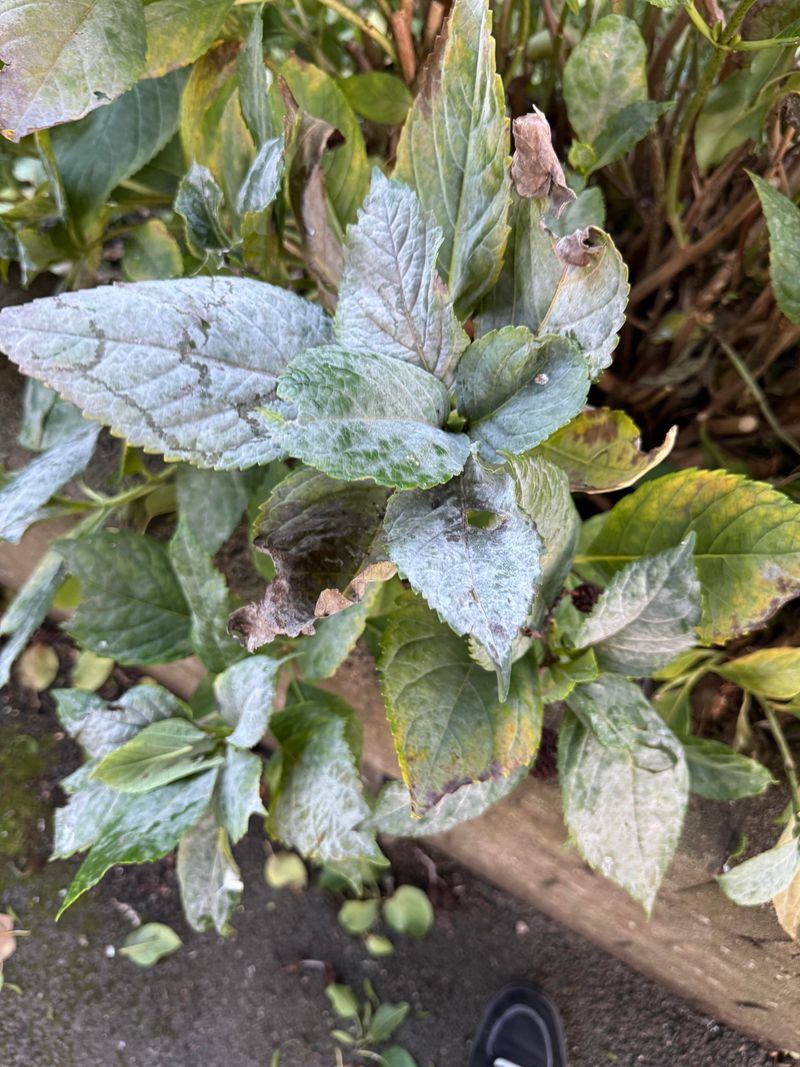
The outer leaves may look clean while the first obvious colonies sit several inches deeper inside the shrub.
Dense hydrangea foliage creates small pockets where air moves slowly and humidity stays high. Powdery mildew does not require a film of standing water on the leaf to infect.
High humidity, especially when paired with warm days and cooler, moist nights, can create favorable conditions even while the foliage looks dry.
Your Georgia Garden Changes Every Week. Your Plan Should Too.
Gardening in Georgia changes quickly throughout the season. Every Friday you’ll receive a simple weekly plan showing exactly what to plant, prune, fertilize, harvest, and protect so you never miss the right timing.
That changes how a Georgia gardener should scout.
Part the outer branches and look toward the center of the plant, especially around crowded stems and leaves pressed against neighboring shrubs.
Hydrangeas beside solid fences, walls, or dense hedges can have even less air movement around the interior canopy.
Do not assume shade itself causes the disease.
Hydrangeas often need protection from harsh afternoon sun in Georgia, and moving a shade-loving plant into punishing exposure is not a sensible disease treatment.
The useful goal is improving circulation around the foliage while keeping the plant in a site that suits its light needs.
Look low as well as deep.
Older interior leaves can show powdery growth that remains hidden beneath the showier outer canopy. A weekly close inspection during periods of persistent humidity can catch those patches before they spread across many leaves.
Increasing plant spacing and selectively opening crowded growth are established ways to reduce humidity around susceptible foliage.
The shrub does not need to become open enough to see through from the driveway.
A few well-placed gaps between stems can help air move without turning the hydrangea into a collection of lonely sticks.
3. Watch Young Growth For Curling And Distortion
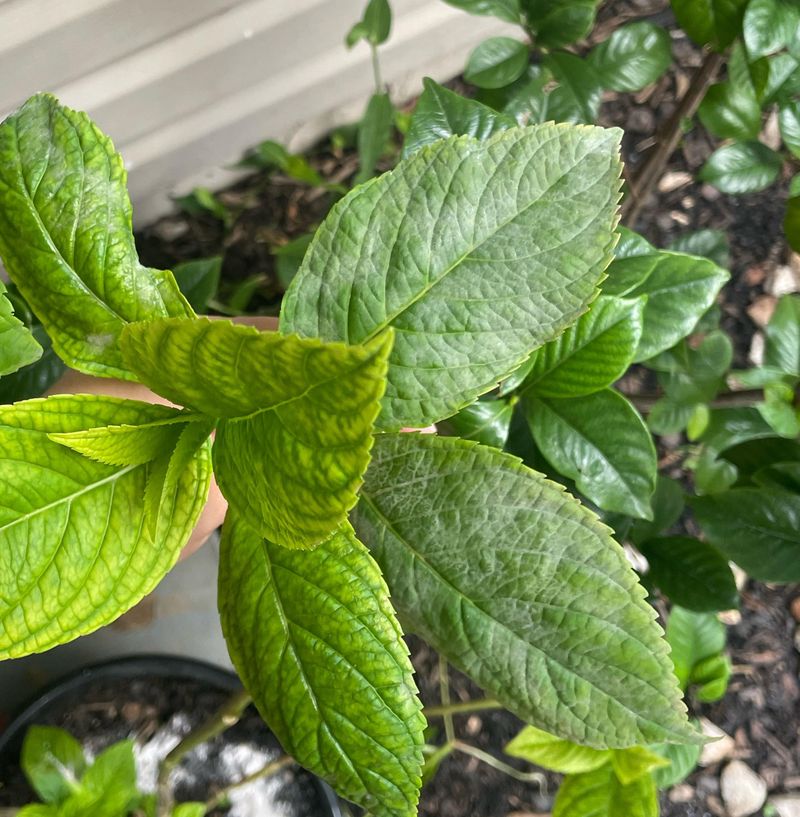
New growth can show trouble before the familiar white coating becomes dramatic.
Powdery mildew fungi grow on the surface of tender leaves and shoots while drawing nutrients from the outer plant cells.
When infection develops on young, expanding tissue, leaves and shoots can become twisted, curled, stunted, or otherwise distorted. That combination of odd shape plus pale surface growth deserves a closer look.
Do not diagnose every curled leaf as mildew.
Heat stress, herbicide injury, insects, moisture problems, and other disorders can also distort hydrangea foliage.
Powdery mildew becomes more convincing when the curled tissue carries whitish or gray growth and nearby leaves show similar patches.
Inspect the shoot tips carefully.
Fresh leaves are smaller, lighter in color, and often folded naturally while expanding, so subtle fungal growth can blend into the new tissue.
Turn leaves over, examine the petioles and young stems, and compare suspicious growth with a healthy tip elsewhere on the shrub.
Avoid responding with hard pruning during hot weather.
Removing a few heavily affected leaves or stems can reduce disease pressure, but stripping a hydrangea of large amounts of foliage adds another stress and can expose interior growth to stronger sun.
Selective removal of affected material is part of standard cultural management.
New leaves are also where garden habits become visible.
Crowded stems, overly lush growth, and stagnant air can all make tender tissue harder to keep healthy. The curled leaf is not merely an ugly symptom. It is a clue about the conditions surrounding the whole plant.
4. Notice White Patches Joining Across Leaves
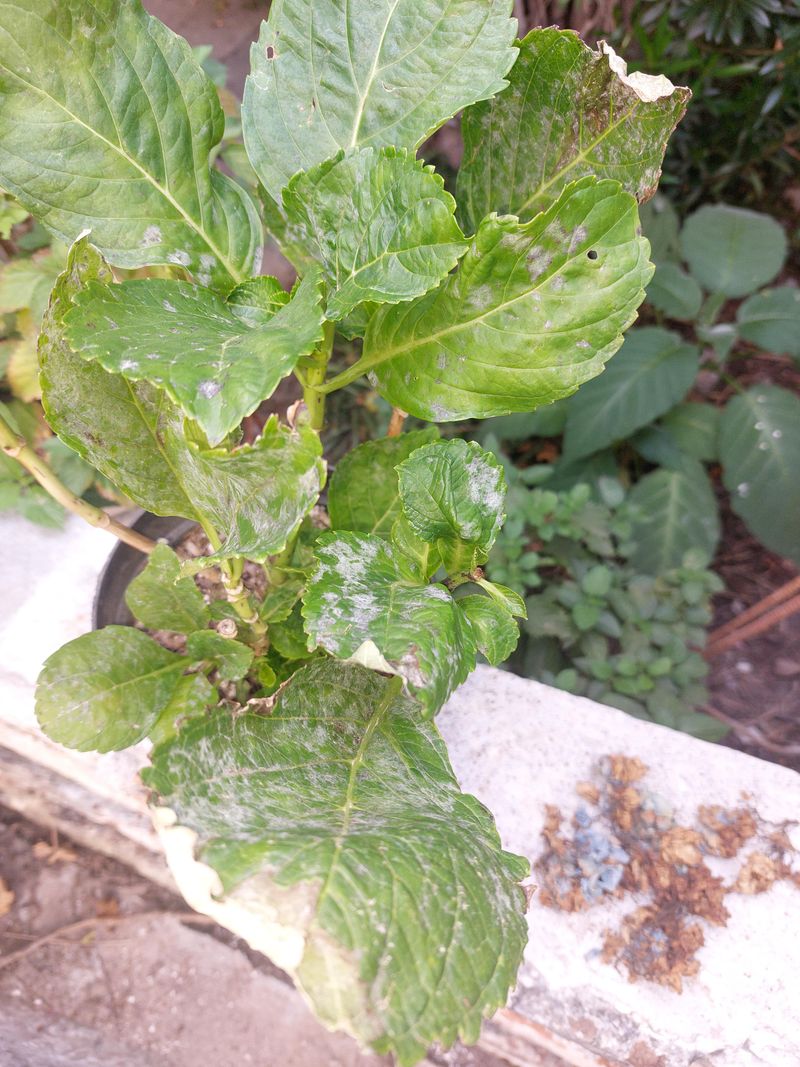
Separate white spots can slowly turn into one broad gray-white sheet across a leaf.
That progression happens as fungal colonies expand and produce spores that move on air currents to susceptible tissue.
A hydrangea that showed three faint patches during one inspection may show several joined areas later when humidity and temperature continue favoring the disease.
Use progression as part of the diagnosis.
Powdery mildew has a recognizable surface-growth pattern, but the speed of change varies with weather, cultivar, plant vigor, and canopy conditions.
One hot afternoon does not determine the outcome. Repeated favorable periods can keep new infections appearing while older colonies enlarge.
Heavily affected leaves may yellow, distort, or drop earlier than normal.
Established shrubs often tolerate modest powdery mildew without serious long-term injury, so one spotted leaf is not a horticultural emergency.
Repeated or widespread infection matters more, particularly on young plants or shrubs already stressed by drought, poor roots, or another problem.
Mark one branch mentally and check it again.
That simple comparison tells you more than staring at the whole shrub every morning. Expanding patches and new colonies on adjacent leaves show that the disease remains active. Stable old spots with healthy new foliage tell a different story.
Do not wait for every leaf to become white before making adjustments.
Improve airflow, remove badly affected material where practical, clean up fallen diseased foliage, and consider a labeled treatment when disease pressure or plant value justifies it. Early action is quieter and usually much easier.
5. Stop Crowding Hydrangeas Into Stale Air
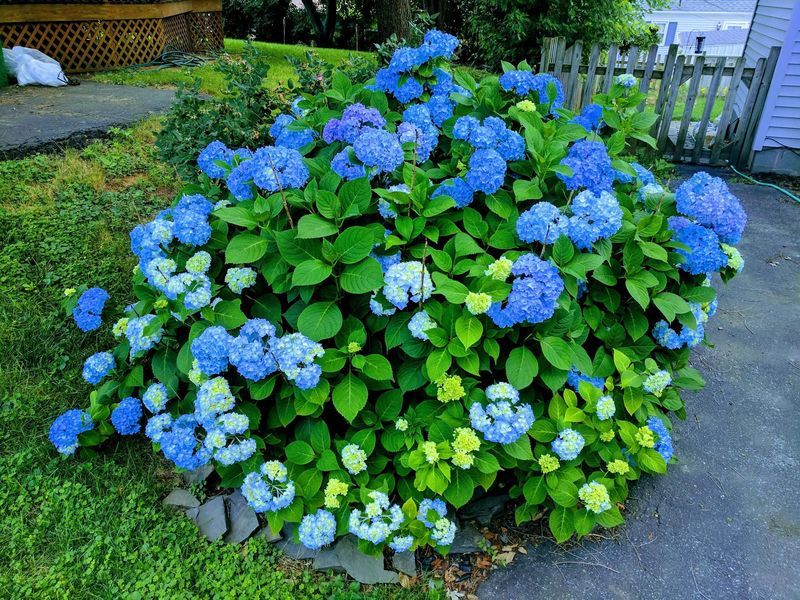
Crowding can turn a beautiful hydrangea border into a humidity trap.
Shrubs planted too close together eventually press leaves and branches into one another, reducing air movement through the canopy.
The same problem develops when a hydrangea grows tightly against a wall, fence, evergreen hedge, or another broad shrub. High humidity then lingers around foliage longer, creating conditions that favor powdery mildew.
Mature width should guide spacing, not the size of the nursery pot.
A young hydrangea may look lonely with several feet of open ground around it, but that space disappears as the crown expands. Planting for instant fullness often creates years of corrective pruning later.
Established shrubs can still be improved.
Remove selected crossing, damaged, or inward-growing stems to open small channels through the canopy. Keep the natural outline rather than shaving the outside into a dense shell.
Increasing spacing and selectively pruning branches are recommended approaches for improving ventilation around disease-prone plants.
Trim neighboring plants too.
Sometimes the hydrangea is not the plant causing the stale air. A boxwood, gardenia, vine, or volunteer sapling may be blocking the only useful breeze through the bed.
Air circulation is not a promise of disease-free foliage.
Georgia humidity can still favor powdery mildew during suitable weather. Better spacing simply removes one condition that helps the fungus thrive.
The goal is breathing room, not botanical social distancing. Hydrangeas can still form a lush border without every branch having to share the same square foot.
6. Skip Heavy Nitrogen That Pushes Lush Growth
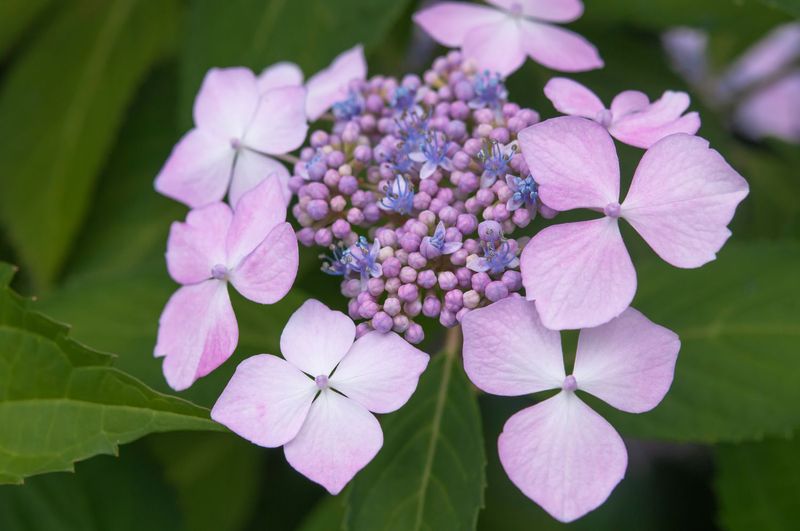
A hydrangea does not need a fertilizer-fueled growth spurt every time its leaves look less than perfect.
Nitrogen drives vegetative growth, and excessive feeding can create dense, succulent tissue that is harder to manage in a humid canopy.
Heavy growth also closes the spaces gardeners were trying to preserve for airflow. Excess nitrogen is associated with heavy, susceptible growth in powdery mildew management, while established ornamentals generally benefit from avoiding excessive fertilizer.
Start with actual plant need.
Established ornamental shrubs often need less fertilizer than gardeners assume. Soil testing can reveal nutrient conditions and pH before another bag is opened, while the plant’s growth history provides another useful clue.
A hydrangea producing vigorous shoots and full-sized leaves is not automatically asking for more nitrogen.
Avoid using fertilizer as disease medicine.
A white coating is not a nitrogen deficiency, and feeding harder does not remove fungal colonies already present. Excess fertilizer can also cause foliar injury when rates become too high.
Keep the program modest.
Use a product and rate suited to landscape shrubs, follow the label, and avoid piling repeat applications onto a plant already making plenty of growth.
The goal is steady foliage, healthy roots, and enough vigor to flower without creating a canopy that resembles a green traffic jam.
Disease management usually improves when inputs match need.
Water, fertilizer, pruning, and spacing all affect the plant’s growth pattern. More is not automatically better. Sometimes the most useful thing the fertilizer spreader can do during mildew season is remain parked in the shed.
7. Do Not Blame Wet Leaves Alone
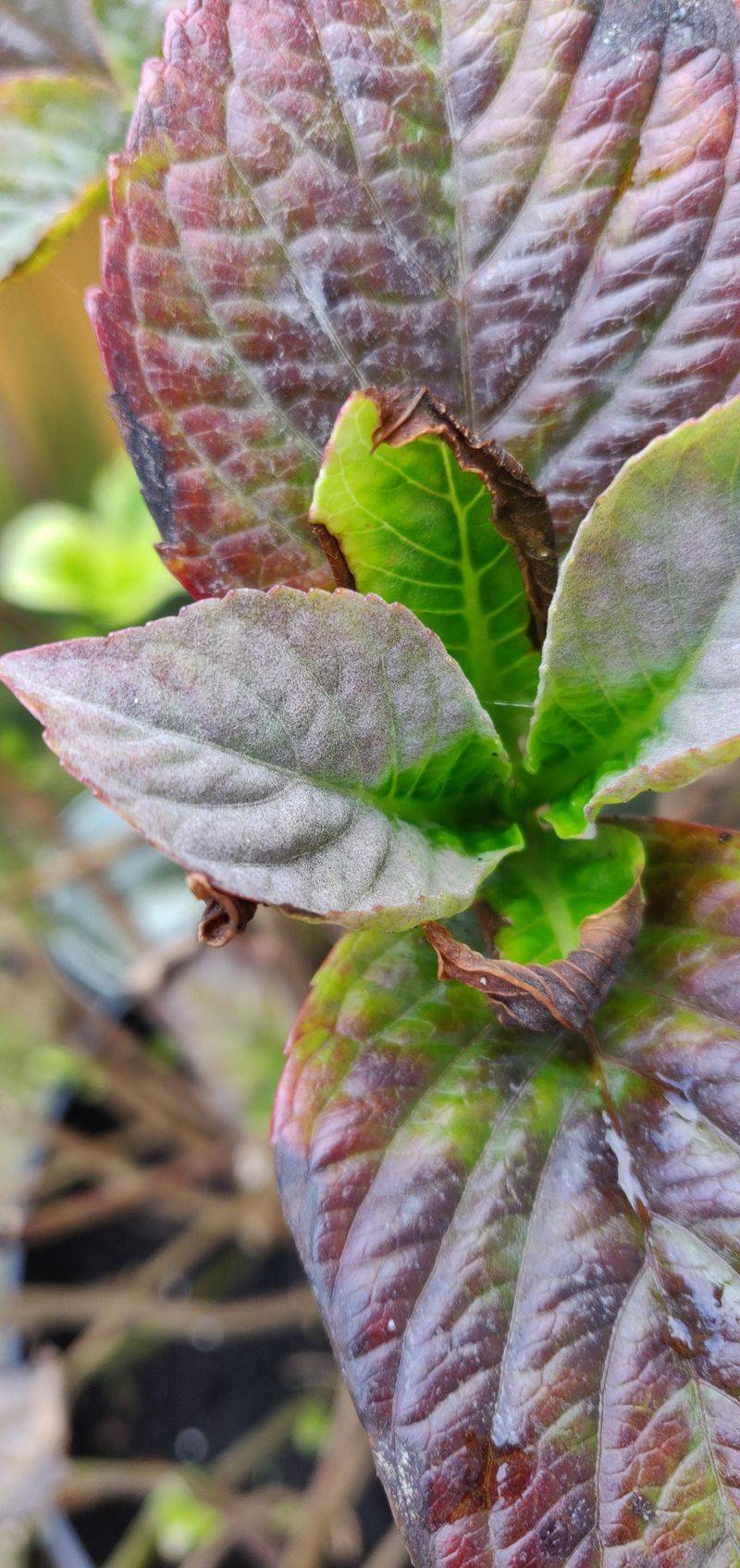
Powdery mildew breaks one of the gardening rules people repeat most confidently: wet leaves are not required for infection.
Many fungal diseases depend heavily on prolonged leaf wetness. Powdery mildew is different. Its spores can infect under high humidity without a visible film of water across the foliage.
Warm days followed by cooler, moist nights can create favorable conditions even after several rain-free days.
That explains a common Georgia mystery.
A gardener switches from overhead sprinklers to drip irrigation, keeps the leaves dry, and still finds pale colonies appearing.
The watering change may help with other leaf diseases and can reduce unnecessary moisture around a crowded bed, but it does not remove the humidity that powdery mildew uses.
Do not respond by starving the shrub for water.
Hydrangeas still need adequate root-zone moisture, especially through hot Georgia weather. Drought stress weakens the plant and can create a second problem while the mildew remains perfectly capable of developing during humid nights.
Water the soil according to need.
Morning irrigation is a practical choice for many landscapes because stray moisture has time to dry and the root zone is supplied before hotter conditions build. Keep mulch from piling against stems and avoid keeping the bed constantly saturated.
Then focus on the bigger mildew factors.
Air circulation, spacing, susceptible tissue, seasonal weather, and early detection matter more than chasing every droplet off a leaf.
The fungus does not need a swimming pool. Georgia’s humid air can provide plenty of opportunity all by itself.
8. Act Before The Whole Canopy Is Coated
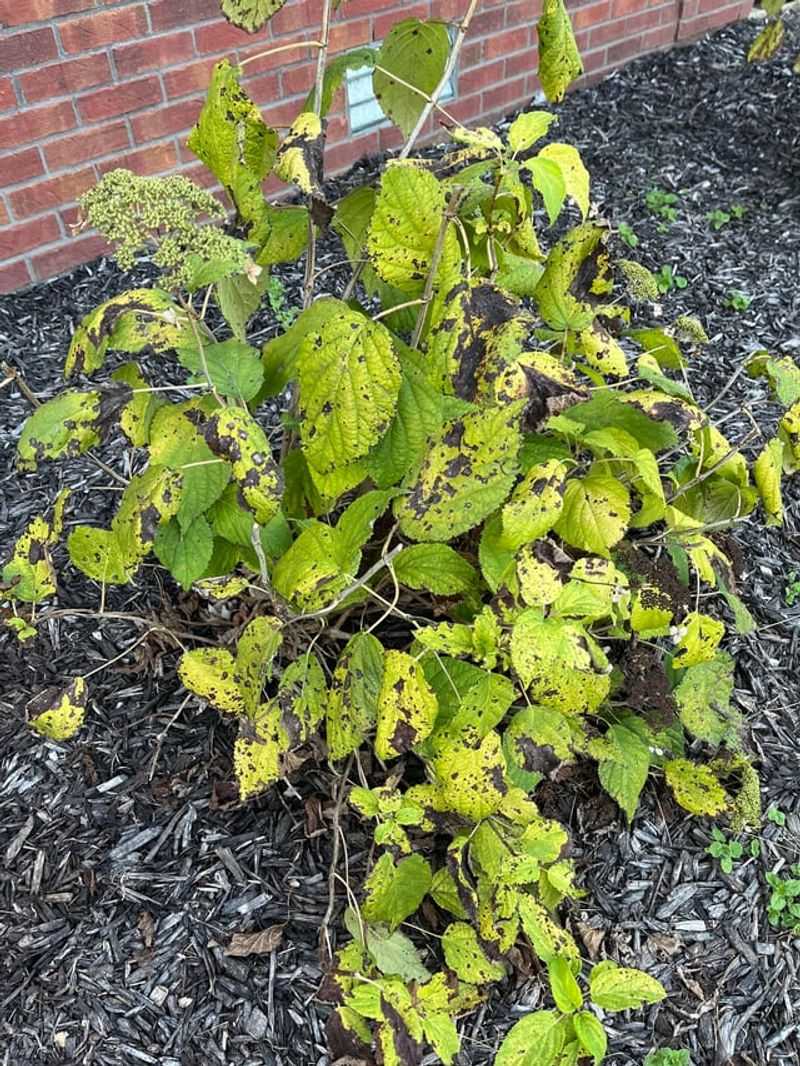
A hydrangea covered from top to bottom is the wrong moment to begin thinking about prevention.
Start with cultural management as soon as the first convincing patches appear. Improve air movement, remove badly affected leaves or stems when that can be done without stripping the shrub, and clean up fallen diseased material beneath the plant.
Those steps reduce disease pressure without pretending every spotted leaf needs a chemical response.
Fungicides work best as protective or early-management tools.
Choose only a product currently labeled for powdery mildew on the plant or ornamental site being treated. Follow the label rate, application interval, temperature restrictions, and safety directions.
Labels change, so an old garden note or half-used bottle should never outrank the current instructions.
Repeated treatments need another layer of care.
Using the same fungicide mode of action again and again can increase resistance risk in fungal populations.
A treatment program that requires multiple applications should follow label guidance and rotate modes of action where appropriate.
Do not spray merely because Georgia feels humid.
Confirm the disease first. Mild powdery mildew on a mature hydrangea may remain mainly cosmetic, while a young, highly susceptible, or repeatedly affected shrub may justify more active management.
Plant selection matters for the next garden too.
Hydrangea species and cultivars can vary in disease susceptibility, so a history of repeated problems is worth considering before expanding the planting.
Choosing less susceptible plant material is part of long-term landscape disease management.
The smartest treatment plan begins before the whole canopy turns white. Fungicide is a tool, not a time machine.