Why Viburnum Leaves In Michigan Look Skeletonized By August And The Pest To Check First
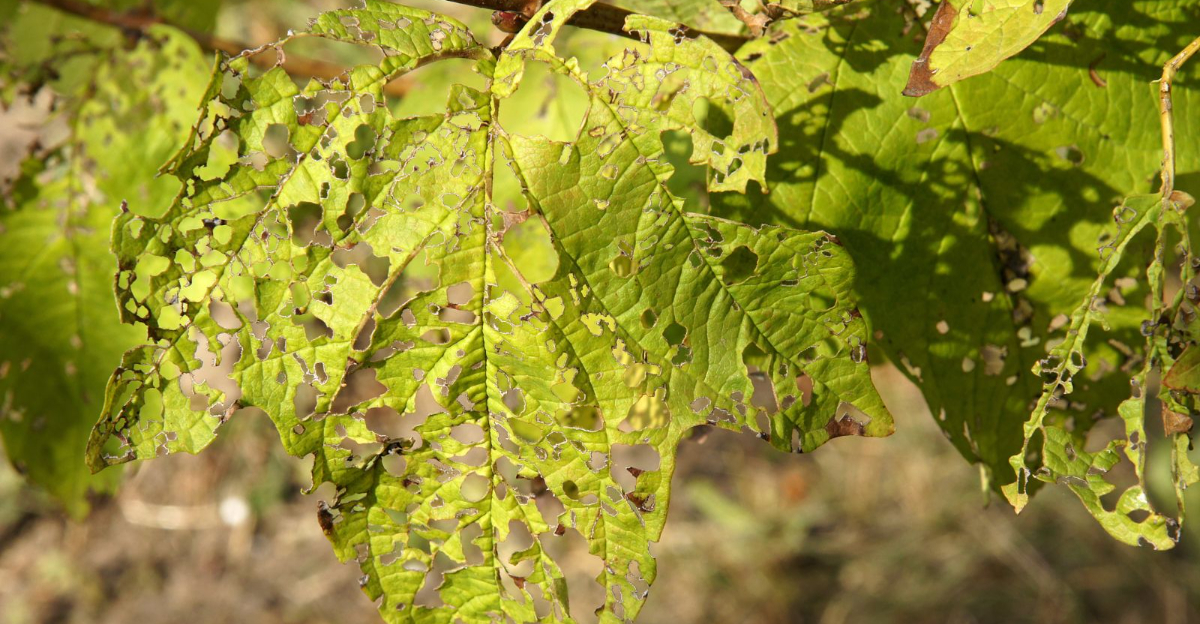
Michigan viburnum shrubs have been having a rough time lately, and the culprit is small, persistent, and surprisingly hungry.
Viburnum leaf beetle has become one of the most damaging shrub pests across the state, working through viburnum foliage in two distinct phases that leave behind a lacy, skeletonized appearance that stops gardeners mid-walk to wonder what went wrong.
Larvae start the damage in spring on tender new leaves, adults pick up where they left off in summer, and by August many viburnums are carrying evidence of both rounds on the same branches at once.
The damage looks alarming, and it should get attention, but knowing what is actually happening on those tattered leaves makes the response a lot more straightforward than the appearance of the shrub suggests.
1. Viburnum Leaf Beetle As A Strong First Suspect
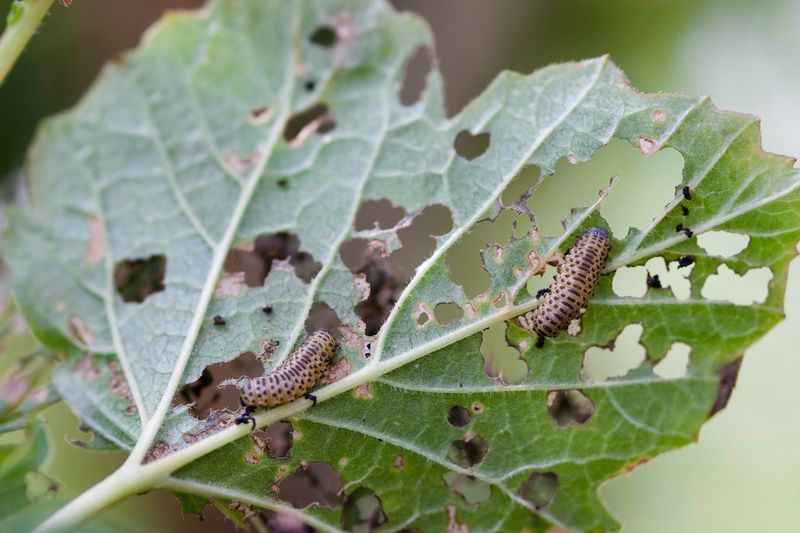
Chewed and lace-like viburnum foliage is one of the most common complaints Michigan gardeners bring to their local Extension offices.
When the damage looks heavy and appears mostly on viburnums rather than nearby plants, the viburnum leaf beetle becomes a strong first suspect worth checking for.
That focused pattern can be an especially useful clue when other shrubs in the same area show little or no similar feeding damage.
The reason this insect earns top billing is simple. It specializes in feeding on viburnum, so a shrub covered in damage while surrounding plants stay clean can point toward this pest.
The pattern, timing, and host plant all line up in ways that raise suspicion.
Still, leaf damage alone does not prove a single culprit is responsible. Other chewing insects, such as certain caterpillars or beetles, can create holes and ragged edges that look somewhat similar at a glance.
Weather stress or scattered nibbling can add to the confusion.
Because of that, careful observation matters more than a quick guess. Look for the insects themselves, check the underside of leaves, and inspect young twigs for signs of egg-laying.
These extra clues help confirm whether the viburnum leaf beetle is truly present.
Treating the pest as a likely lead rather than a certainty keeps you on the right track. In Michigan landscapes, it often turns out to be involved, but a little detective work protects you from misreading the situation and reacting to the wrong problem.
2. Spring Larvae And The Skeletonized Leaf Pattern
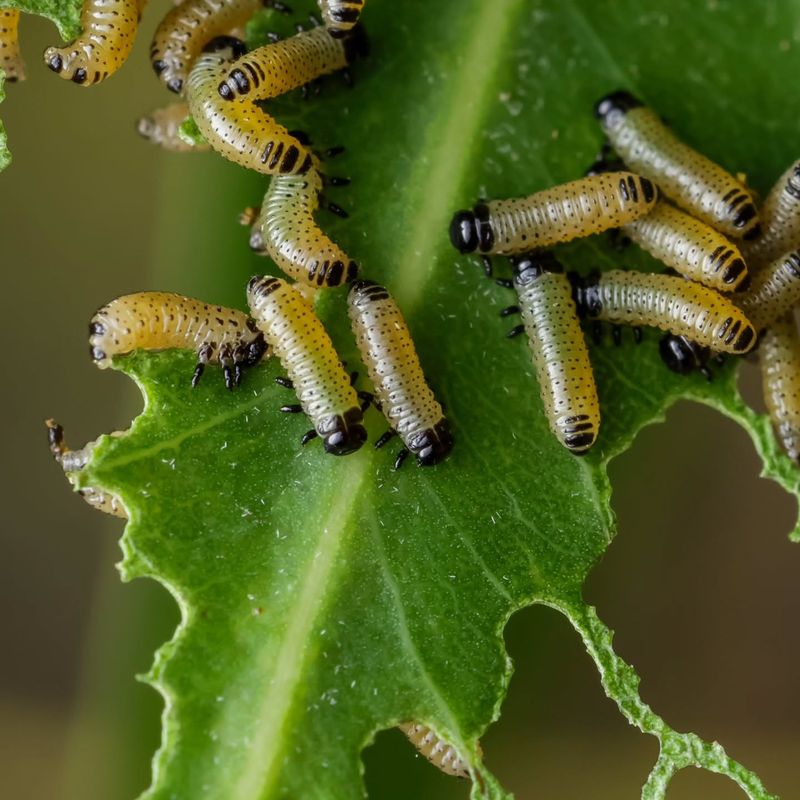
Long before August arrives, the story usually begins in spring when tiny larvae hatch and start feeding on fresh viburnum leaves. That early feeding sets the stage for the ragged look many Michigan homeowners notice later in the year.
Since the injured tissue does not repair itself, those spring feeding marks can remain visible well into summer.
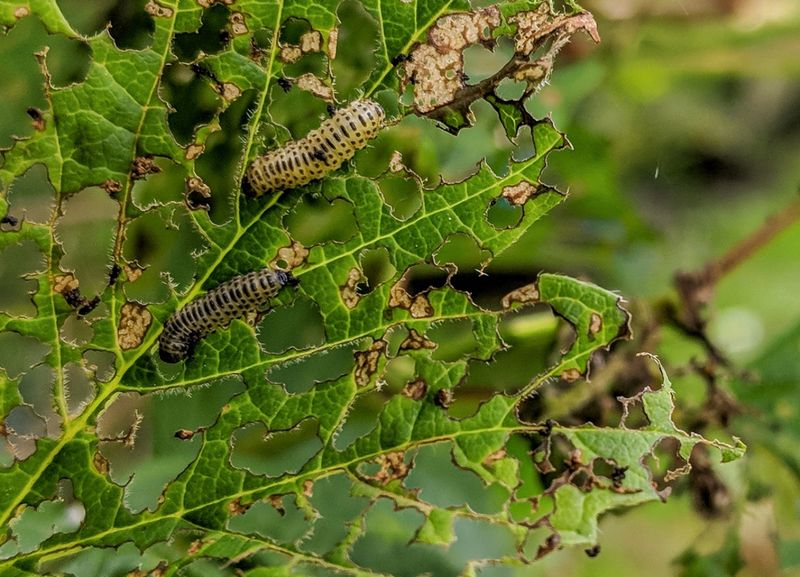
The larvae are small and often greenish-yellow with rows of dark spots along their bodies. They tend to feed in groups, especially while leaves are still young and tender, and they can quickly cover the surface of a shrub.
What makes their feeding so recognizable is the pattern they leave behind. Instead of eating whole sections of leaf, larvae chew away the soft tissue between the veins.
Your Michigan Garden Changes Every Week. Your Plan Should Too.
Gardening in Michigan changes quickly throughout the season. Every Friday you’ll receive a simple weekly plan showing exactly what to plant, prune, fertilize, harvest, and protect so you never miss the right timing.
The result is a skeletonized or lace-like surface where the thin network of veins remains standing.
Because this happens during active spring growth, the damage can spread fast across expanding foliage. A viburnum that looked healthy in early spring may appear tattered within a few weeks.
For Michigan gardeners, spring is the most useful time to look closely. Checking the undersides of new leaves for clustered larvae can confirm what is happening while the shrub still has time to push out fresh growth.
Spotting this classic skeletonized pattern early gives you a head start. It also explains why the same leaves may still look damaged when you inspect them months later in the heat of summer.
3. August Damage That Still Reflects Spring Feeding
Walking past a viburnum in August, you might assume the damage you see is brand new. In many Michigan yards, though, a good portion of that tattered look traces back to feeding that happened weeks or even months earlier.
Leaves do not repair themselves once tissue has been eaten away. So the skeletonized areas created by spring larvae stay visible on the shrub throughout the growing season.
The veins remain, the missing tissue does not grow back, and the leaf keeps its worn appearance.
Because of this, August is not necessarily the start or the peak of skeletonizing damage. Instead, it is often a snapshot that captures older larval injury alongside anything that has happened since.
By late summer, additional feeding can pile on top of the earlier damage. A shrub that already looked lacy in June may look even more ragged by August as new holes appear next to the old skeletonized spots.
This layering effect is why timing matters when you inspect your plants. Knowing that some damage is historical helps you avoid panicking over injury that is essentially finished.
For Michigan gardeners, the practical takeaway is to read August damage as a combination of past and present. That perspective makes it easier to judge how active the pest still is right now.
4. Summer Adult Feeding And Its Different Leaf Damage
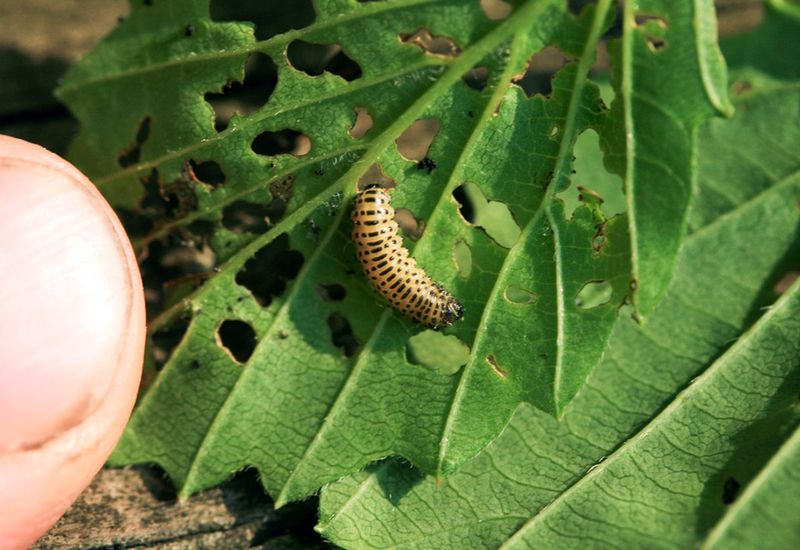
After the spring larvae finish their work, the shrub gets a second round of attention from the adult beetles that emerge later in the season. Their feeding tells a slightly different story on the leaves.
Adults chew the foliage too, but they usually do not create the same fine, lace-like pattern that larvae leave behind. Instead, their feeding tends to produce holes or irregular, oblong chewed areas across the leaf.
Recognizing this difference can help you sort out what you are seeing. If a Michigan viburnum shows both delicate skeletonized patches and rougher holes, it may reflect the combined work of larvae earlier in the year and adults during summer.
The presence of fresh holes in late summer suggests that beetles are still active on the plant. That is a useful clue, because it means the damage is ongoing rather than purely leftover from spring.
Not all August leaf damage is fresh, though. Some of it is old skeletonizing that simply has not disappeared, while some is newer adult chewing.
Both can share the same shrub at the same time.
Paying attention to the type of damage, and whether you spot adult beetles on the leaves, gives you a clearer picture. For Michigan gardeners, that distinction between larval and adult feeding is one of the most helpful things to understand about this pest.
5. Adult Viburnum Leaf Beetle Identification
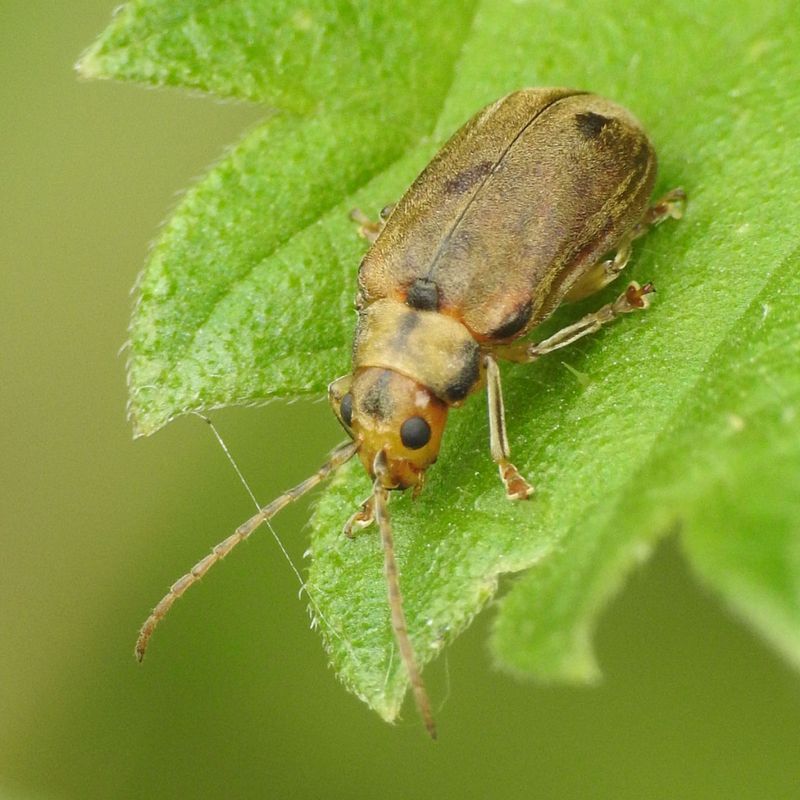
Spotting the beetle itself can turn a guess into a confident identification. The adult viburnum leaf beetle is small and easy to overlook, so it helps to know what you are looking for before you start searching your shrubs.
These beetles are roughly a quarter inch long, with an elongated, somewhat oval body. Their coloring is generally brownish to yellowish-brown, often with a slightly dull or grayish tone that blends in against stems and leaves.
Because they are small and modestly colored, they do not jump out at you the way a brightly marked insect might. Checking leaves carefully, including the undersides, gives you a better chance of finding them.
In Michigan, adults can be present during the summer months, including August, depending on seasonal conditions and how the year has progressed. Warm stretches and local timing can shift exactly when you notice them.
Finding adults actively chewing near fresh holes is a helpful sign that feeding is still going on. It also supports the idea that the viburnum leaf beetle, rather than some other insect, is involved.
Since appearance can be subtle, comparing what you find with reliable university Extension photos is smart. For Michigan gardeners, a quick side-by-side check helps confirm the beetle and rules out look-alike insects that might be causing similar-looking damage.
6. Viburnum Varieties More Susceptible To Beetle Damage
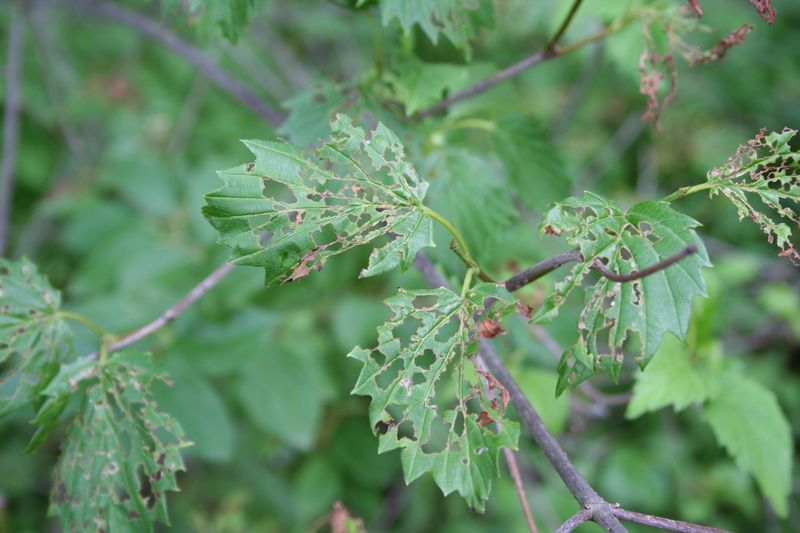
Not every viburnum in a Michigan yard suffers equally, and that difference often comes down to the specific species or cultivar you are growing. Some are clearly favored by the beetle, while others hold up better.
Among the more susceptible or preferred hosts, arrowwood viburnum tends to come up often. American cranberrybush viburnum and European cranberrybush viburnum are also documented as attractive to this pest.
Because susceptibility varies, two viburnums planted just a few feet apart can look very different by late summer. One may be heavily chewed while a less preferred type nearby shows only light damage.
This uneven pattern can actually help with identification. If your most damaged shrub happens to be one of the known favored species, that lines up with what you would expect from viburnum leaf beetle activity.
For Michigan gardeners planning new plantings, understanding these preferences is useful. Choosing less susceptible viburnum types where possible can reduce how much damage you deal with in future seasons.
It would be a mistake to assume every viburnum is equally vulnerable, since that is not the case. Resistance and preference differ across the group.
Knowing which of your shrubs are more likely targets lets you focus your inspections. That way, you spend your time checking the plants most worth watching rather than treating them all the same.
7. Egg-Laying Scars On Young Viburnum Twigs
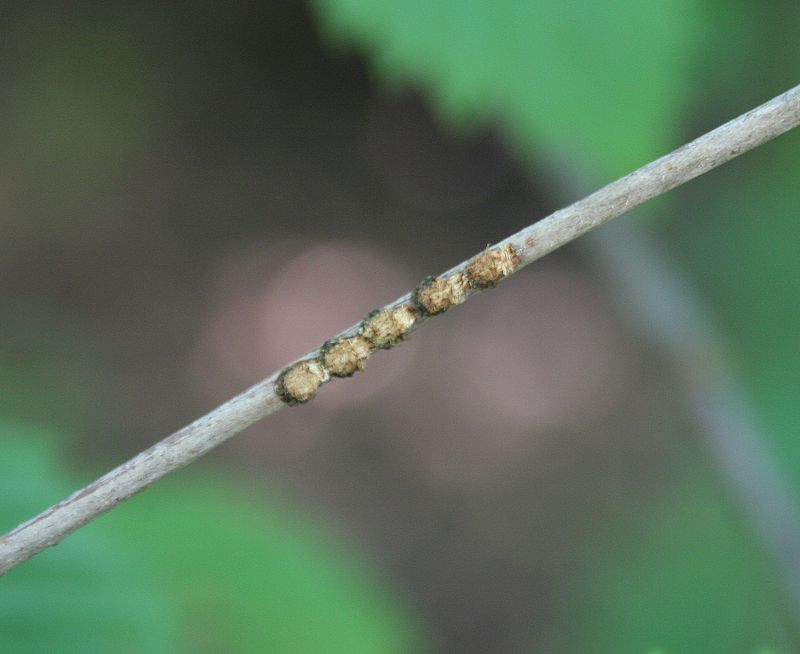
Turn your attention from the leaves to the twigs, and you may find another important clue. Female viburnum leaf beetles create egg-laying sites in young twigs, and these marks can help confirm the pest is present.
The females chew small pits into the bark of young stems and deposit eggs, then cover the sites with a cap of chewed material. These appear as tiny raised bumps or dark scars, often lined up in neat rows along the twig.
Finding these rows of egg sites is a fairly reliable sign that viburnum leaf beetles have been active on the plant. Unlike leaf damage, which many insects can cause, these twig markings are more specific to this beetle.
That said, they are not always easy to see. The pits are small, they can blend into the bark, and you often need to look closely along younger stems to notice them.
For Michigan gardeners, checking twigs during the cooler months, when eggs are present, can offer an early heads-up before the next season of feeding begins.
Some homeowners choose to prune out and remove twigs holding these egg rows as a cultural step, when practical. Spotting the scars gives you both confirmation of the pest and a possible chance to reduce the population before spring larvae hatch again.
8. Repeated Heavy Feeding And Declining Plant Vigor
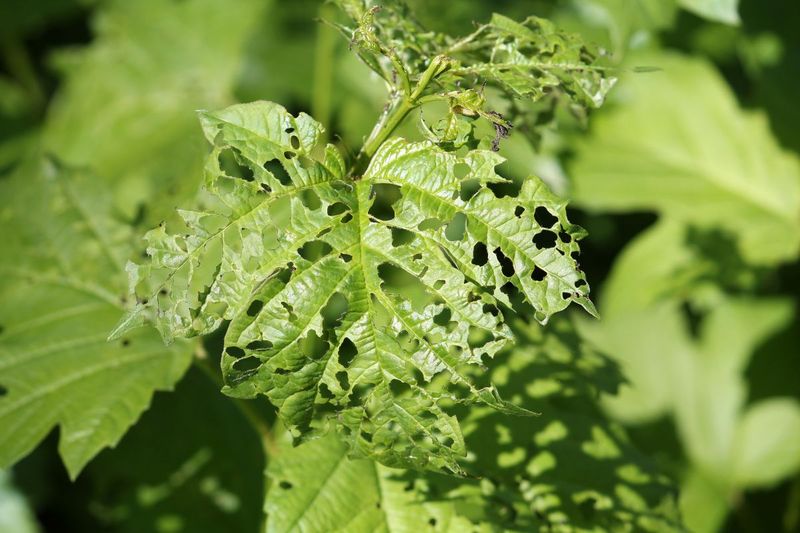
A single rough season rarely spells serious trouble for an otherwise healthy viburnum. The bigger concern shows up when heavy feeding repeats year after year and the shrub never gets a real break.
Leaves are how a plant makes its food, so losing large amounts of foliage over and over can gradually stress and weaken a susceptible viburnum. Reduced leaf area means the shrub has less energy to grow and recover.
How much this matters depends on several factors. The amount of foliage lost, whether infestations return each season, the overall health of the plant, and the growing conditions all play a role.
A vigorous viburnum in good soil with steady care can often bounce back from one heavy year. A plant already under stress, facing repeated damage, may struggle more and show thinning or weaker growth over time.
For Michigan gardeners, the practical goal is to prevent that steady drain rather than react to a single event. Keeping shrubs healthy with proper watering, mulching, and reasonable care helps them tolerate feeding better.
Watching for repeated damage across seasons, checking twigs for egg sites, and removing infested growth when practical are measured steps that can ease pressure on the plant.
Reading the long-term pattern, not just one August snapshot, gives you the clearest sense of how your viburnum is really doing.