The Most Underrated North Carolina Perennial That Actually Thrives In Mid-Summer Humidity

A North Carolina perennial border can look worn out by midsummer while one corner quietly starts getting better.
Heat settles over the garden. Afternoon humidity barely lifts. Earlier flowers fade, stems lean, and the whole bed begins to look like it has spent too many weeks working overtime.
Then a taller plant starts opening fresh yellow blooms above the tired foliage around it.
That timing is easy to overlook.
The plant does not rely on spring weather to make its best impression, and it does not need the garden to feel crisp and comfortable before it starts performing.
Its real advantage appears later, when warm nights, summer storms, and heavy air have already exposed which perennials were built for the region and which ones were merely visiting.
So what keeps this native standing tall while the border loses steam?
The answer comes from where it grows naturally, how it handles moisture, how much room it needs, and what happens once its underground growth decides the season is finally worth celebrating.
Meet Cutleaf Coneflower

A tall yellow flower can disappear into the background at the nursery and become impossible to miss once July settles over North Carolina.
Cutleaf coneflower, Rudbeckia laciniata, is a native herbaceous perennial with deeply lobed lower leaves, branching stems, and yellow ray flowers around a greenish central cone.
It occurs naturally in moist woods, meadows, streambanks, and roadside ditches, which explains why it looks so comfortable in parts of the state where summer humidity makes less-adapted perennials sag.
Height is one of its defining traits.
Plants can reach roughly 3 to 10 feet, although garden specimens may stay considerably shorter depending on light, moisture, competition, and soil.
That range makes site selection more important than the small nursery pot suggests. A back border, meadow edge, rain-garden margin, or naturalized area gives the stems room to rise without blocking shorter plants.
The bloom season also arrives at a useful moment.
Yellow flowers can open from July into fall, extending color into the stretch when many spring and early-summer performers have already peaked.
This is not a compact black-eyed Susan wearing taller shoes. It has its own scale, leaf shape, moisture preference, and spreading habit.
That difference is exactly why it deserves more attention in North Carolina gardens.
Let Hot Humid Summers Work In Its Favor

North Carolina humidity can expose weak plant choices quickly, yet cutleaf coneflower is unusually comfortable with hot, humid summer conditions.
That tolerance is one of the strongest reasons to use it where late July and August routinely make the perennial border look exhausted.
Humidity tolerance does not mean every soggy, crowded site becomes perfect.
Give the stems enough room for air to move through the clump, especially in beds surrounded by dense shrubs or fences.
A mature plant can become broad and tall, so squeezing several crowns into one tight patch makes the whole planting harder to inspect and manage.
Moisture at the roots matters more than trying to keep every leaf dry.
Your North Carolina Garden Changes Every Week. Your Plan Should Too.
Gardening in North Carolina changes quickly throughout the season. Every Friday you’ll receive a simple weekly plan showing exactly what to plant, prune, fertilize, harvest, and protect so you never miss the right timing.
The species naturally favors moist settings and can keep pushing growth through warm weather when its root zone stays reasonably supplied. A dry, baked slope is much harder on the plant than humid air alone.
Watch for leaning rather than assuming the plant is struggling.
Tall stems can need support, particularly where soil is rich, moisture is generous, or light is limited. A discreet ring, stake, or nearby sturdy companion can keep the flower heads upright without turning the border into a scaffolding project.
The advantage is timing.
Cutleaf coneflower does not merely survive midsummer and wait for September. It can be flowering right through the heat-and-humidity stretch.
North Carolina already supplies plenty of summer atmosphere. This perennial is one of the rare garden guests that does not spend August complaining about it.
Give It Moist Soil With Good Drainage

Cutleaf coneflower reveals its wild origins through the places where it performs best.
Moist woods, streambanks, meadows, and roadside ditches define its natural habitat. In the garden, it prefers moist soil and can handle clay, loam, sand, and soils with plenty of organic matter when the root zone remains suitable.
That makes it especially useful near a rain-garden edge, low meadow, or border that stays fresher than the rest of the yard.
Do not translate “likes moisture” into permanent saturation.
A garden bed that holds stagnant water for long periods creates a different root environment from a naturally moist streamside bank. Aim for soil that keeps some moisture through summer while still supporting healthy root aeration.
Mulch can help bridge dry gaps.
Use a modest layer of shredded leaves, pine bark, or another organic mulch over the root zone, keeping the material away from the crown. The cover slows surface moisture loss and reduces competition from weeds while the plant builds its colony.
During an extended dry spell, check the soil rather than waiting for the lower leaves to advertise the shortage.
Deep watering is more useful than repeated surface splashes. Established plants can handle normal fluctuations, but dependable moisture produces stronger foliage and flowering.
This is not the perennial for the driest gravel bank in the yard.
Give cutleaf coneflower the kind of soil where a shovel still finds some coolness in July, and the plant has a much better chance of carrying the border through August.
Use Full Sun Or Light Afternoon Shade

Cutleaf coneflower gives North Carolina gardeners useful flexibility with light.
It can grow in full sun or partial shade, so it fits woodland edges, open borders, meadows, and bright areas beside taller shrubs.
Full sun generally supports stronger flowering and a sturdier overall habit, while partial shade can work well where summer soil stays moist.
The tradeoff becomes clearer as shade deepens.
Tall stems may stretch farther for light and become more likely to lean, especially in rich soil. Flowering can also become less impressive than it would in a brighter position.
A woodland edge often offers a useful middle ground.
Several hours of direct light followed by lighter afternoon shade can reduce moisture loss without turning the plant into a lanky search party for the sun.
That setup can be useful in hotter Piedmont and Coastal Plain gardens where open afternoon exposure dries the soil rapidly.
Do not chase maximum sun at the expense of the root zone.
A baking site with poor moisture can create more stress than a lightly shaded site with better soil conditions. Light and moisture need to be judged together rather than as separate checkboxes.
Use nearby plants as clues.
A spot supporting moisture-loving ferns, sedges, or vigorous woodland-edge perennials may suit cutleaf coneflower better than a dry bank where even weeds look annoyed.
The plant is flexible, not indifferent.
Give it enough light to flower well and enough soil moisture to support those tall stems, and midsummer performance becomes far more reliable.
Give Tall Stems Room At The Back
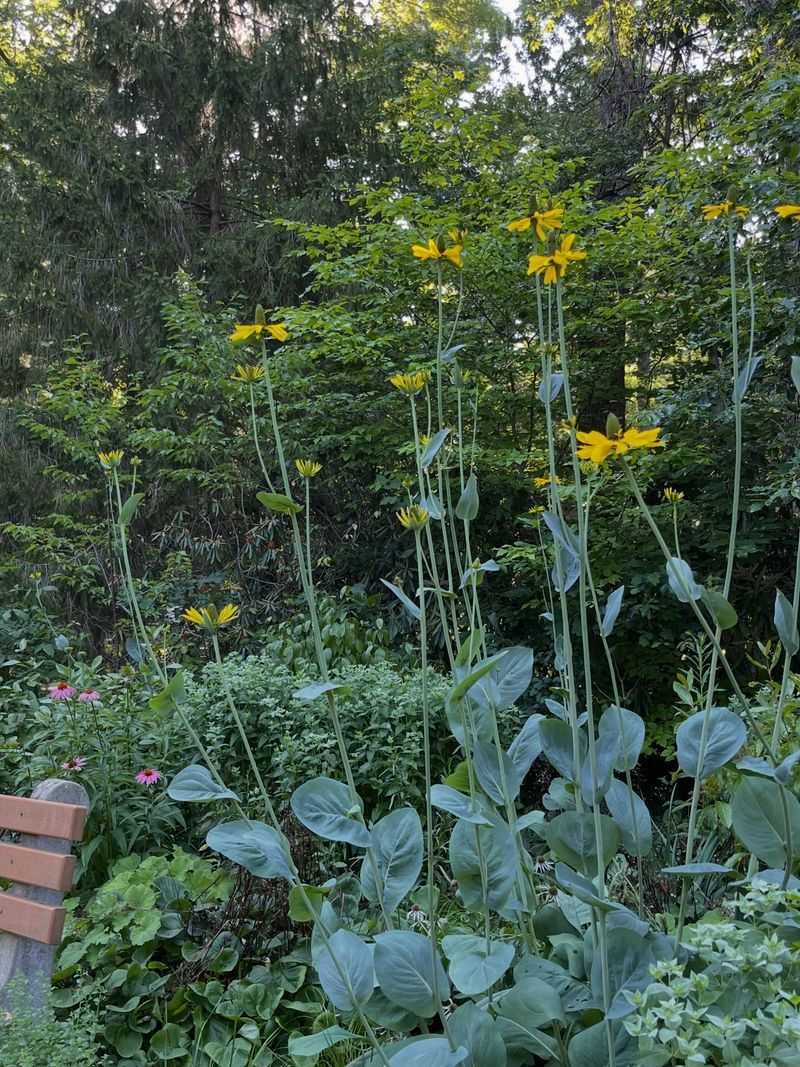
A three-foot nursery label can become a very different plant once cutleaf coneflower settles into a favorable North Carolina site.
The species can reach 3 to 10 feet tall, with a mature spread around 18 inches to 3 feet. That makes it a natural back-of-border perennial rather than something to tuck beside the front walkway.
Use the height as structure.
Plant it behind shorter summer bloomers, along a meadow edge, or near the rear of a rain-garden planting where yellow flowers can rise above lower foliage.
The tall stems add vertical interest during the exact part of summer when many borders start looking flat and tired.
Leave access around the clump.
A mature patch planted directly against a narrow path can lean into traffic, especially after heavy rain. Extra setback saves the gardener from shoulder-checking stems whenever the hose comes out.
Support may be useful on especially tall plants.
A grow-through ring installed early, a few discreet stakes, or sturdy neighboring perennials can prevent major leaning without making the planting look tied together. The need tends to increase in shade or very rich, moist soil.
Choose companions with similar moisture needs.
Ironweed, moisture-tolerant native grasses or sedges, and other robust meadow plants can create a layered border without forcing one species to carry all the late-summer height.
Cutleaf coneflower does not understand the concept of “background plant” once it reaches eight feet.
Give it the back row anyway. It will still find a way to be noticed.
Divide Rhizomes Before The Patch Runs Wide

The plant’s toughness comes with one important warning: cutleaf coneflower can spread aggressively through underground rhizomes.
That trait is useful in a meadow, naturalized slope, or broad habitat planting where a colony is welcome. In a small perennial border, the same growth can push beyond its assigned space and begin competing with neighboring plants.
Watch the perimeter every spring.
New shoots appearing beyond the intended clump show where the rhizomes have traveled. A sharp spade can separate those outer sections before the patch becomes difficult to untangle.
Division is also a practical propagation method.
Lift manageable sections with healthy roots and shoots, then replant them where more plants are wanted. Water new divisions well while they settle.
The goal is control and reuse, not a rigid rule that every established clump must be divided on a fixed three-year calendar.
Deadheading can reduce some unwanted seed production, but it does not stop underground spread.
That distinction matters. Removing flower heads may tidy the plant and encourage additional bloom, yet the rhizomes beneath the soil continue making their own expansion plans.
Give the colony a generous footprint from the beginning.
Open meadow edges are easier than narrow strips beside delicate perennials. A plant with room to wander becomes an asset. A plant boxed into a tiny bed turns every spring into a boundary negotiation.
Cutleaf coneflower is not badly behaved. It is simply very confident about square footage.