The Ohio Prairie Native Replacing Store-Bought Butterfly Weed
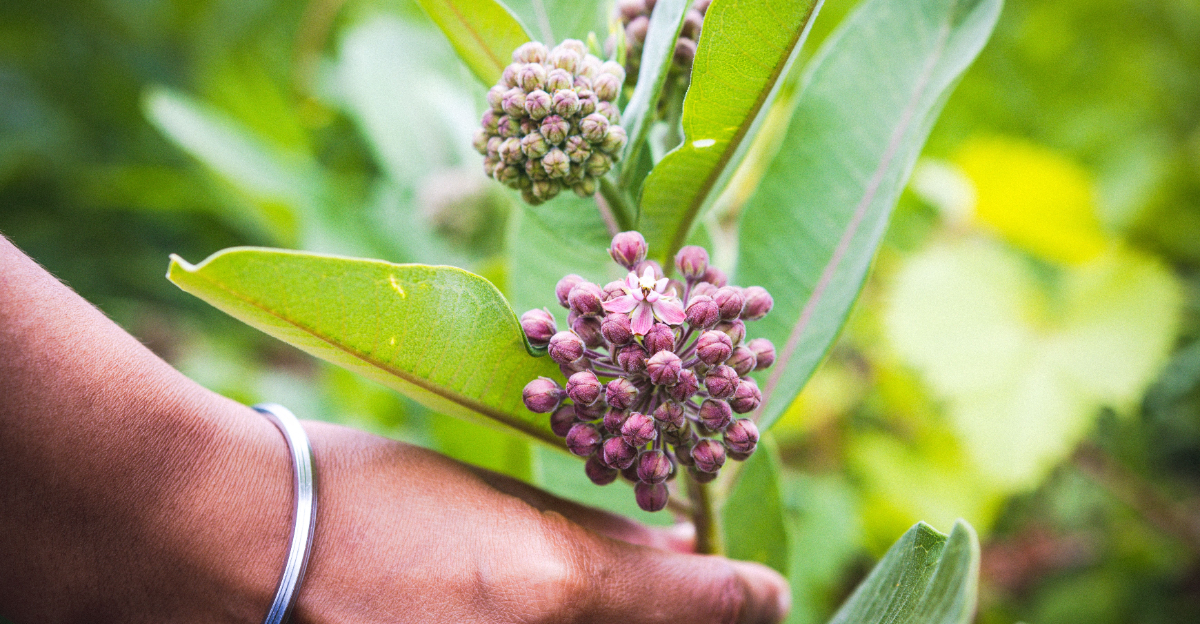
Butterfly weed earns its reputation. Reliable, orange, beloved by monarchs, and available at every garden center that sells native plants.
It became the default milkweed for Ohio gardens for good reasons and stayed there long after better options for specific situations became available. One prairie native has been quietly outperforming it in the yards where it gets a chance.
Deeper roots, greater drought tolerance, and a relationship with monarch butterflies that goes beyond the familiar orange bloom most people picture when they think about milkweed.
It belongs in Ohio’s prairie heritage in a way that butterfly weed, popular as it is, never quite claimed.
The gardeners who have made the switch describe the same experience. Not that butterfly weed was wrong.
That this one was always the better fit for an Ohio yard trying to do something real for monarch conservation through the late summer push that matters most.
1. Sullivants Milkweed Is The Prairie Native Most Garden Centers Overlook
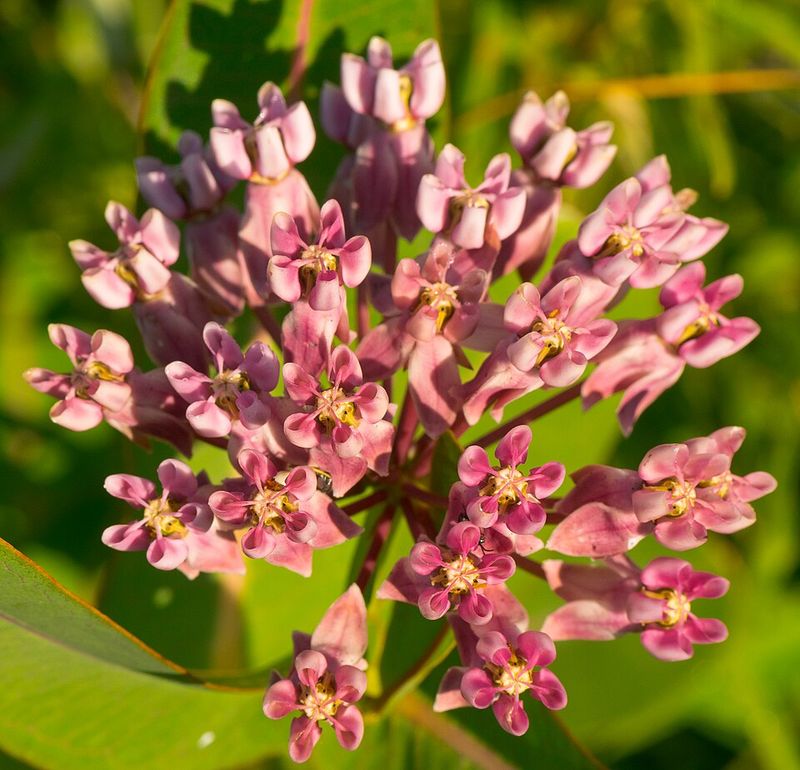
Few perennials with such a strong wildlife resume stay as quietly under the radar as Asclepias sullivantii. Known commonly as Sullivant’s milkweed or prairie milkweed, this species is native to Ohio and is associated with open prairie habitat across the Midwest.
It tends to appear far less often in garden center benches than its orange-flowered cousin, making it genuinely unfamiliar to many home gardeners.
The plant grows upright, typically reaching three to four feet tall at maturity. Its leaves are broad, smooth, and paired along sturdy stems.
The overall form is more upright and less branched than common milkweed, Asclepias syriaca, though the two can look similar at a glance.
Leaf surfaces on Sullivant’s tend to be noticeably smooth and hairless, which helps separate it from common milkweed when both are growing nearby.
In the state, Sullivant’s milkweed is considered uncommon across much of its range. Uncommon does not mean it is endangered or legally protected, but it does reflect the loss of prairie habitat over time.
That context matters when thinking about garden value. Planting nursery-propagated specimens supports the species without disturbing any wild populations.
Readers interested in sourcing it should seek out reputable native plant nurseries that grow it from seed or divisions, rather than collecting plants from wild remnants.
2. Pink Flower Clusters Give The Garden A Different Kind Of Milkweed
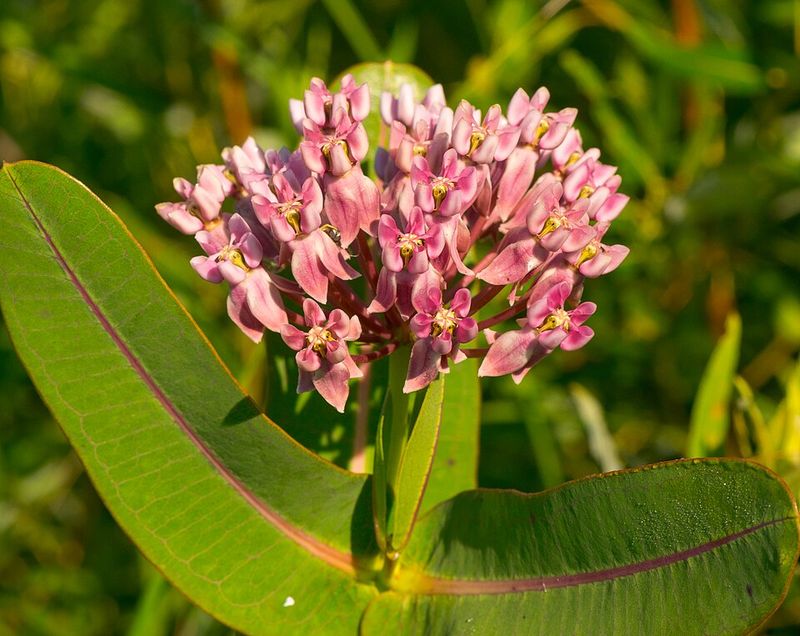
A cluster of pale pink flowers rising above smooth, broad leaves creates a noticeably different impression than the vivid orange of butterfly weed. Sullivant’s milkweed blooms in rounded, ball-like clusters called umbels.
The flower color is typically described as pale to medium pink, sometimes with a soft rosy or lilac quality depending on light and individual plant variation.
Butterfly weed, by contrast, produces flat-topped clusters in shades of orange or occasionally yellow-orange. Both flower types are attractive to nectar-seeking insects, but the visual effect in an Ohio garden bed is quite different.
Sullivant’s pink tones blend easily with prairie forbs like purple coneflower or wild bergamot. Butterfly weed’s orange, by contrast, reads as a bold accent in a mixed planting.
Your Ohio Garden Changes Every Week. Your Plan Should Too.
Gardening in Ohio changes quickly throughout the season. Every Friday you’ll receive a simple weekly plan showing exactly what to plant, prune, fertilize, harvest, and protect so you never miss the right timing.
Bloom timing for Sullivant’s milkweed generally falls in early to midsummer, with some overlap possible with butterfly weed depending on the season and location.
Exact peak bloom can shift with weather, plant age, and site conditions, so promising simultaneous flowering would be misleading.
Both species produce seed pods after flowering, releasing seeds with silky white fibers that carry on the wind. The pale flower clusters of Sullivant’s are sometimes described as subtly fragrant, though this can vary and is generally considered mild rather than strong.
3. Moister Prairie Soil Is Where It Can Outperform Butterfly Weed
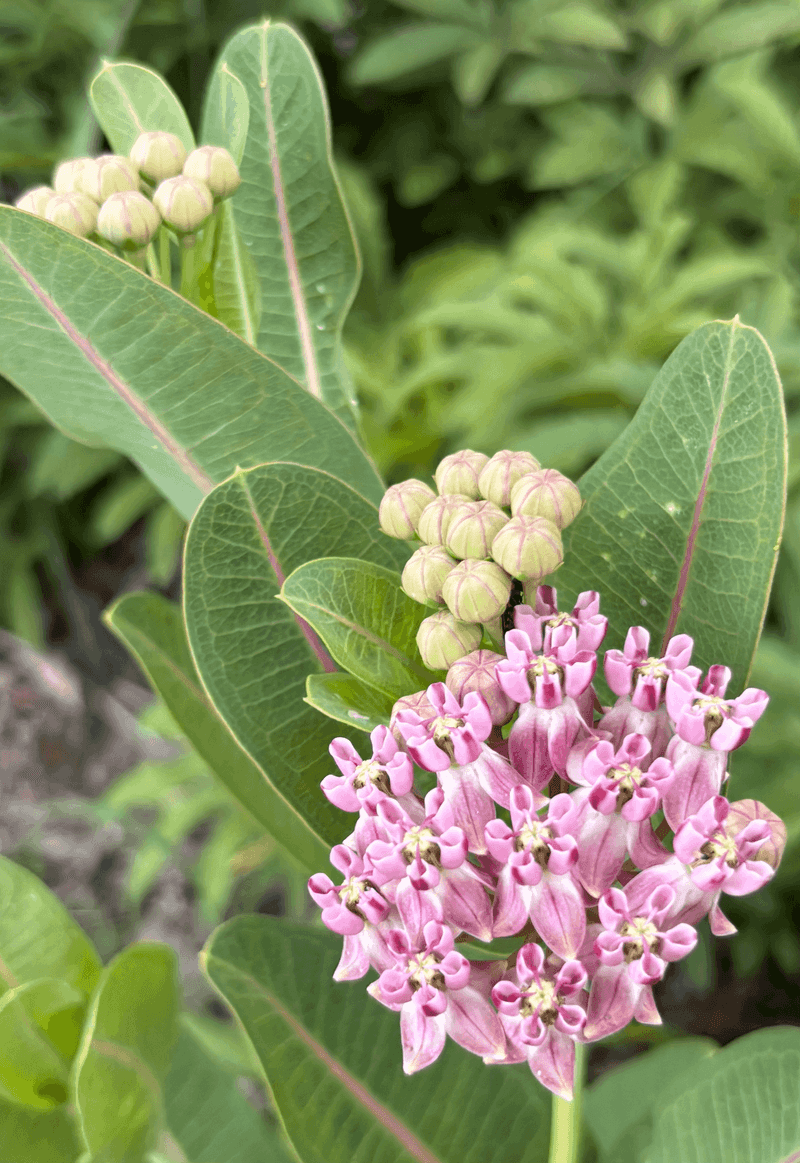
Beneath the surface is where these two milkweeds part ways most clearly. Sullivant’s milkweed is associated with mesic to slightly moist Ohio prairie conditions.
That means soil that holds some moisture through the growing season without staying waterlogged. This is not swamp ground.
Sullivant’s milkweed, Asclepias sullivantii, is entirely different from swamp milkweed, Asclepias incarnata. The two should not be treated as interchangeable.
Butterfly weed, Asclepias tuberosa, is well documented as a dry-site plant. It thrives in well-drained, often sandy or gravelly soil and shows strong drought tolerance once established.
Putting it in heavier soil that stays consistently moist tends to create problems with root health over time. A gardener whose yard has that kind of heavier, moisture-retentive ground may find that Sullivant’s settles in more reliably.
That said, Sullivant’s milkweed is not a plant for poorly drained spots or areas that flood repeatedly. Moister prairie soil still drains between rain events.
The key distinction is between soil that stays reasonably moist and soil that stands in water. A rain garden or low wet depression is not the right fit.
A level or gently sloped prairie bed with good organic content and moderate moisture is closer to what this species naturally occupies. That difference in site preference is the most practical reason a gardener might choose one over the other.
4. Monarch Caterpillars Can Use It Just Like Other Native Milkweeds
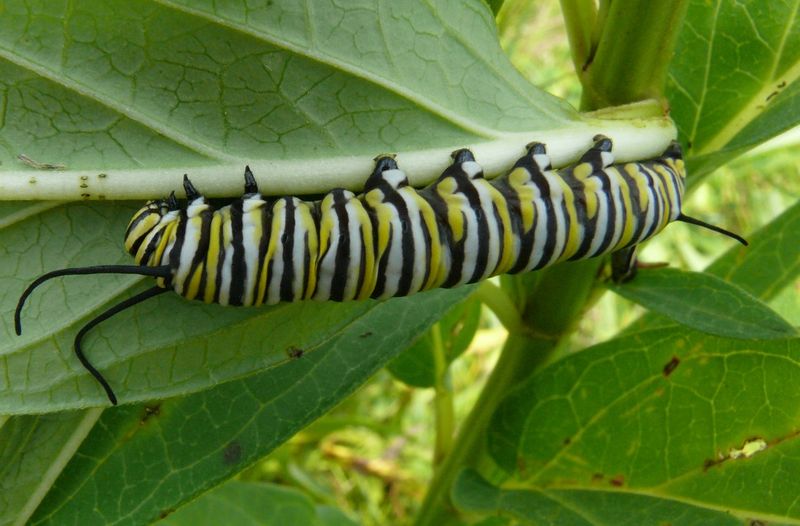
A monarch caterpillar does not care much about flower color. What it needs is a milkweed leaf, and Sullivant’s milkweed provides exactly that.
Like other milkweed species, Asclepias sullivantii serves as a larval host plant for monarch butterflies. Female monarchs can lay eggs on the leaves, and the hatching caterpillars feed on the foliage as they develop.
Choosing Sullivant’s instead of butterfly weed does not mean giving up its host-plant function. That role is what makes milkweeds so valuable to gardeners interested in supporting monarchs.
Both species belong to the same genus and share the cardiac glycosides that make milkweed foliage useful to monarch larvae as a chemical defense. The broad leaves of Sullivant’s offer plenty of surface area for feeding caterpillars.
Adult monarch butterflies also visit milkweed flowers for nectar, but that is a separate relationship from larval hosting. A monarch may land on a flower to feed without ever laying eggs nearby.
Other pollinators also visit milkweed flowers for nectar and pollen, though specific visitor counts vary by site and season. No single planting guarantees monarch eggs or caterpillars, since monarch populations fluctuate and site factors matter.
Sullivant’s milkweed offers a confirmed host-plant role in a garden setting. That is the same core function that makes butterfly weed so widely recommended for monarch-friendly landscapes.
5. Underground Growth Lets One Plant Slowly Build A Wider Colony
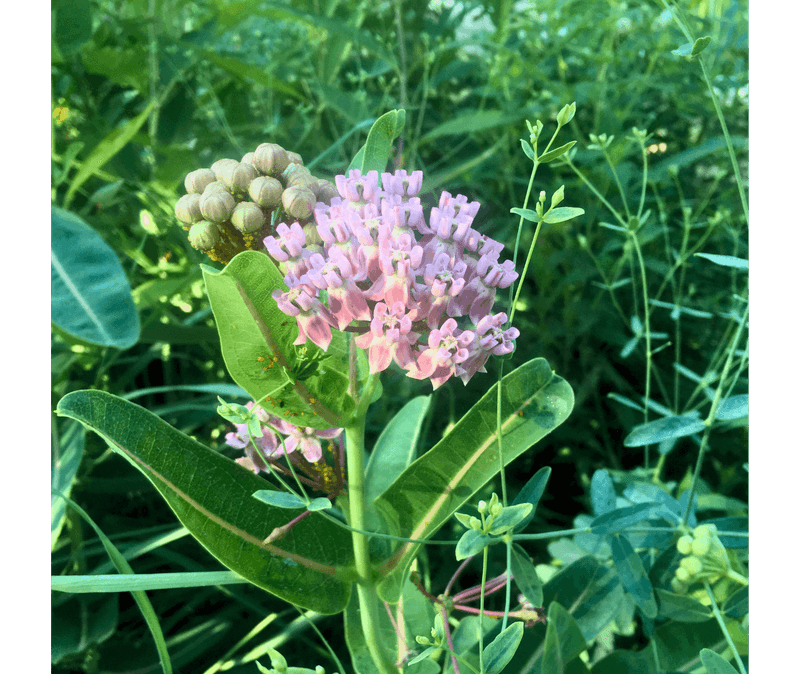
Several stems emerging from one expanding base is a common sight with an established Sullivant’s milkweed planting. The species spreads by underground rhizomes, which are horizontal underground stems that send up new shoots over time.
This is a normal and documented growth habit for the species, and it differs meaningfully from the more clumping behavior typical of butterfly weed.
Butterfly weed tends to stay in a relatively contained clump, growing from a deep taproot without much lateral spread. Sullivant’s milkweed, by contrast, can gradually expand outward as rhizomes extend through the soil.
The pace of that expansion depends on soil conditions, moisture, sun, and plant age. Spread rates vary and no reliable specific measurement applies to every Ohio garden situation.
In a prairie bed, a naturalistic border, or a larger sunny planting, that slow colony growth can be a real asset. A small planting can fill in over several seasons without requiring new transplants.
In a tightly controlled formal bed or a small front garden where space is limited, the spreading habit may need more management. Calling the plant aggressive would not be accurate based on how horticultural sources typically describe it.
Colony-forming is the more appropriate term. Rhizomes are not roots, though they grow underground.
They are specialized stems that store energy and allow the plant to persist and expand across a site over time.
6. Full Sun Helps This Prairie Species Settle Into Its Natural Role
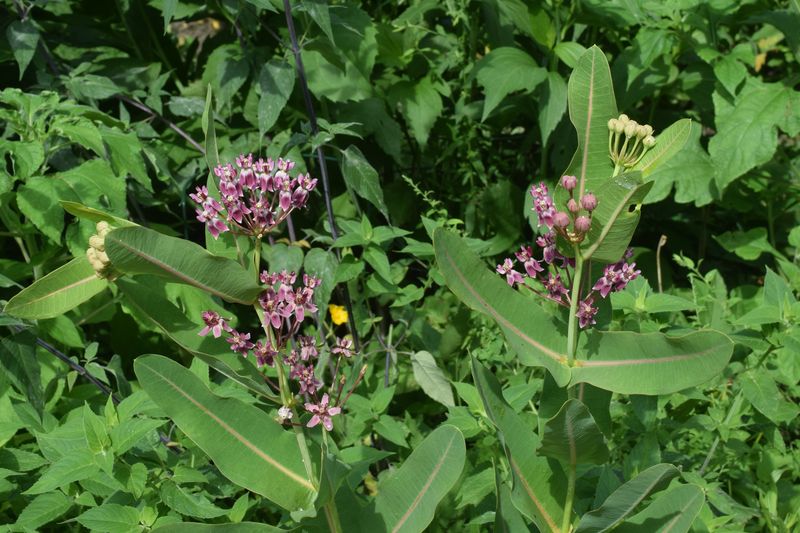
Open sky and direct sunlight are the conditions Sullivant’s milkweed knows best. As a prairie species, it evolved in Ohio landscapes with little tree canopy and long hours of summer sun.
Full sun is the recommended exposure for the strongest growth and the most reliable flowering from this plant.
Nearby tall plants can compete for light as a planting matures. Placing Sullivant’s milkweed next to species that will eventually shade it out may reduce flowering or weaken stems over time.
In a prairie-style bed, pairing it with grasses and forbs of similar or shorter stature helps keep the canopy open. Its own mature height, generally three to four feet, means it can hold its own among mid-height prairie companions.
New plants may take a season or more to establish before producing their best flowering. Prairie perennials often put energy into root development in their first year, with more visible top growth following in later seasons.
Rushing to judge a young plant by its first-year performance can be misleading. Once settled in with adequate sun and appropriate soil moisture, Sullivant’s milkweed tends to grow with increasing confidence each year.
Placement in a spot with at least six hours of direct sun daily is a reasonable starting point, though specific hour requirements can vary by source and site. Avoid spots where afternoon shade from buildings or trees cuts into that exposure significantly.
7. Its Taller Growth Needs More Room Than A Compact Butterfly Weed
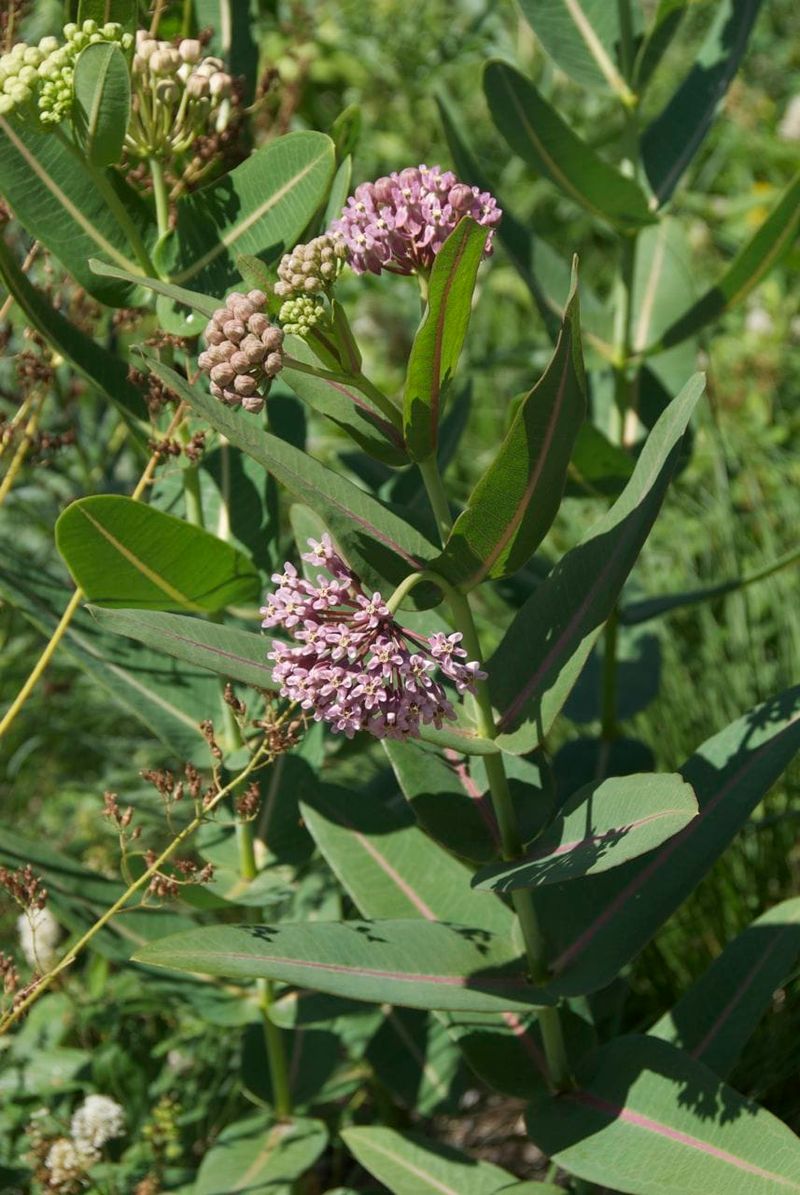
Scale matters when choosing between these two milkweeds for a specific garden space. Sullivant’s milkweed typically reaches three to four feet in height at maturity, with an upright, somewhat columnar form.
Butterfly weed is generally shorter, often maturing between one and two and a half feet tall, with a more spreading mound-like shape.
Growing conditions and cultivar selection can affect those dimensions, but the height difference is generally consistent across horticultural references.
That extra height gives Sullivant’s milkweed a strong presence in a larger prairie border or meadow-style planting. Placed toward the middle or back of a wide bed, it can anchor a composition without overwhelming shorter neighbors.
Its upright stems and broad leaves create a solid vertical element through the summer months, even before flowers open.
In a small front bed, a tight edging strip, or a formal low border, that same height and spreading colony habit may feel out of place. A gardener who wants a neat, low-growing orange clump near a walkway may find butterfly weed fits that role more naturally.
Sullivant’s milkweed is well suited to larger naturalistic plantings. It works especially well where there is room for the plant to develop its full character over several seasons.
Matching plant scale to the actual space available is one of the most straightforward ways to decide between these two otherwise closely related species.
8. Butterfly Weed Still Has The Advantage In The Driest Garden Spots
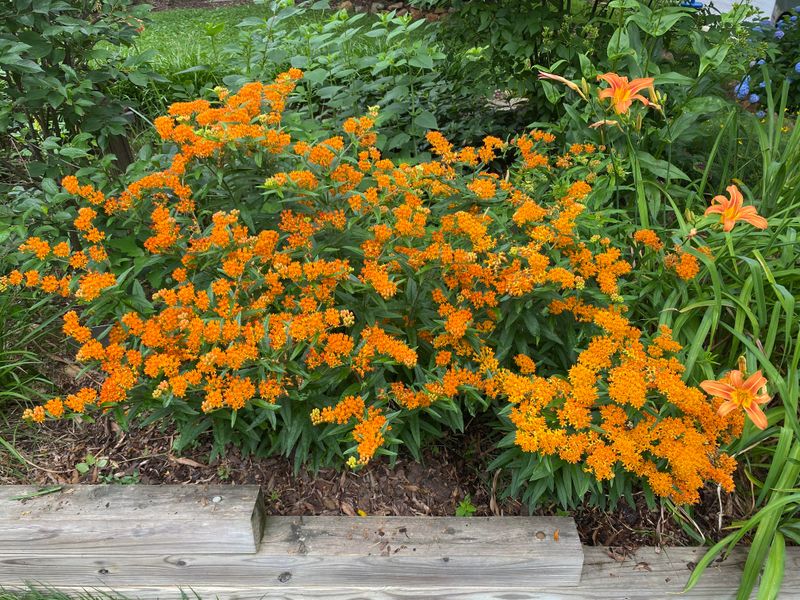
A dry, gravelly slope baking in afternoon sun is exactly where butterfly weed earns its reputation. Asclepias tuberosa is well documented as a drought-tolerant species once established, with a preference for dry to medium, sharply drained soil.
It is native to a wide range of open, sunny habitats across much of North America, including dry prairies, rocky outcrops, and sandy fields. That adaptability to lean, dry conditions is one of its strongest practical advantages.
Sullivant’s milkweed, suited to moister mesic conditions, would not be the obvious choice for those same dry sites. Placing it where soil drains very quickly and moisture disappears fast after rain may stress the plant and reduce its long-term performance.
Butterfly weed, in that same spot, tends to settle in and persist with minimal intervention once its deep taproot is established.
Choosing between these two species comes down to reading the site honestly. Soil moisture, drainage, available space, desired plant height, and preferred flower color all point toward one or the other depending on the specific garden.
A dry sunny bank with sandy soil still belongs to butterfly weed. A level prairie bed with heavier loam that holds moisture longer may be where Sullivant’s milkweed makes more sense.
Neither plant is the wrong answer in the abstract. The site makes the decision, and both milkweeds are worth knowing well enough to place correctly.