The Michigan Native Plant That Turns A Hot Sidewalk Strip Into A Pollinator Stop
That skinny strip beside a Michigan sidewalk gets almost no sympathy.
July sun hits the pavement. Heat bounces back into the soil. Rain disappears fast, and the grass along the edge looks tired before the rest of the yard even notices summer.
Yet one native perennial treats that awkward little space like prime real estate.
It does not need rich soil or constant fuss. Its roots head down rather than plead for daily attention near the surface. Then midsummer arrives, and the plant adds a color so bold that gray concrete suddenly looks intentional.
The best part comes when the visitors notice.
Butterflies pause. Bees work the flower clusters. One especially famous caterpillar may even turn a few leaves into lunch.
So what plant can handle a sidewalk strip and still make it feel alive?
The answer is less delicate than it looks.
Give this Michigan native sun, drainage, and one permanent address, and that overlooked strip may become the busiest little rest stop on the block by late July.
Plant Butterfly Weed Beside Hot Pavement
Butterfly weed does not flinch at the kind of spot that makes lawn grass complain.
A hot sidewalk strip can actually suit this Michigan native when the soil drains well and the sun stays strong. Asclepias tuberosa naturally handles dry to average moisture and grows well in full sun.
That makes a sunny pavement edge far more useful than it first looks.
Give each plant enough room to form a sturdy clump.
About 18 to 24 inches between plants works well for many home landscapes. Keep the crown away from the actual footpath so shoes, bikes, and snow shovels do not clip the stems.
Sun matters more than pampered care.
Six hours can work, but a brighter site usually supports a fuller shape and stronger flower display. Strips on south or west sides often provide plenty of light, though reflected heat can make young plants thirsty through their first season.
Check drainage before the plant goes in.
Butterfly weed dislikes a spot that stays wet after rain. A strip that sheds water quickly can be a better match than a lush bed with heavy, soggy soil.
You do not need to turn the hole into a luxury suite.
This plant is happier with lean conditions and a sensible location.
That miserable strip beside the concrete may simply need a plant with better summer manners.
Let Deep Roots Handle Dry Ground
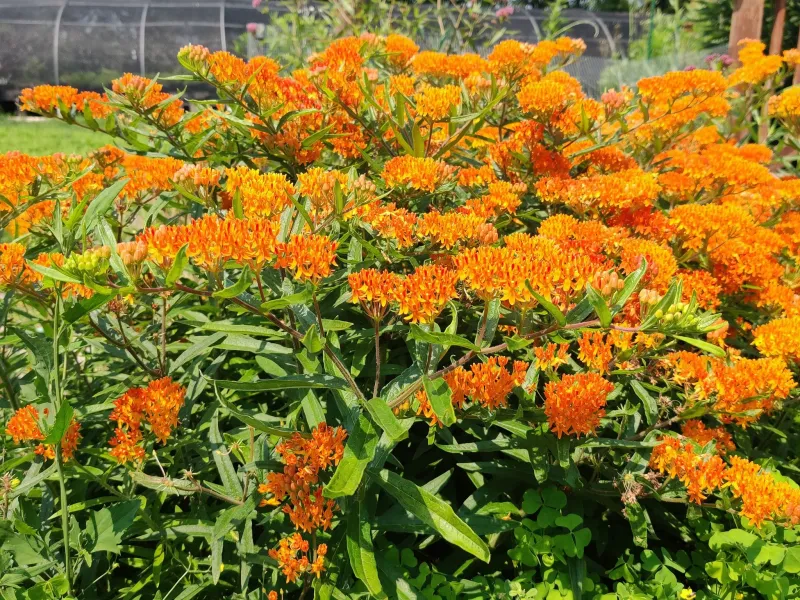
The real toughness starts below the orange flowers.
Butterfly weed develops a thick taproot that reaches deeper than the roots of many shallow lawn plants. Once established, that root system helps the plant handle dry stretches with much less drama.
Established butterfly weed also prefers drier soil than many traditional border perennials.
The first year still needs your attention.
Water a new transplant deeply when the soil begins to dry. Give the root zone a thorough soak rather than a quick splash across the surface. That encourages roots to follow moisture downward instead of stay near the hottest top inch.
Your Michigan Garden Changes Every Week. Your Plan Should Too.
Gardening in Michigan changes quickly throughout the season. Every Friday you’ll receive a simple weekly plan showing exactly what to plant, prune, fertilize, harvest, and protect so you never miss the right timing.
Then ease off as the plant settles in.
A mature butterfly weed usually handles dry ground well, though a long drought can still justify an occasional deep drink. Pavement heat can dry a narrow strip faster than the rest of the yard, so use the soil as your guide.
The taproot also comes with one important rule.
Choose the location carefully before the plant goes in.
Older butterfly weed plants do not enjoy a move because that fleshy root can suffer damage from a shovel. A young plant may move with care, but an established clump deserves to stay where it started.
That makes sidewalk placement worth extra thought on day one.
Leave room for the mature spread. Keep the crown out of traffic. Make sure snow piles and runoff will not soak the spot for weeks.
Butterfly weed likes commitment.
Plant it once, water it through the awkward first season, then let the roots handle more of the summer workload.
Give Orange Blooms Full Sun
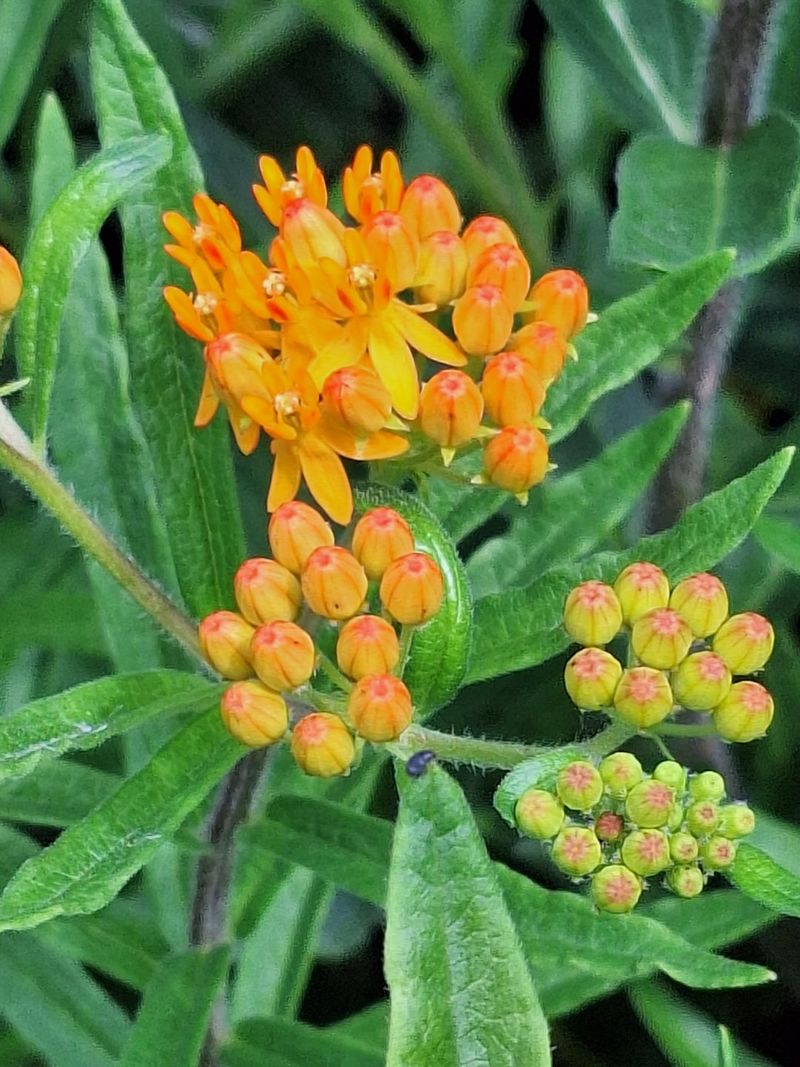
Butterfly weed does not do subtle once bloom season arrives.
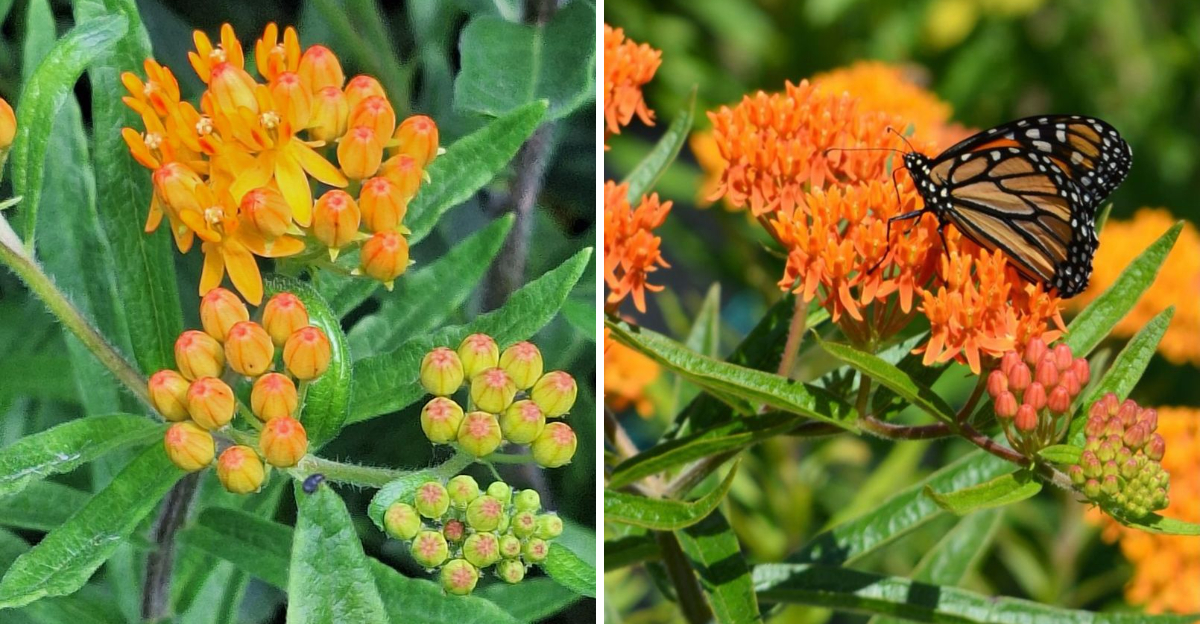
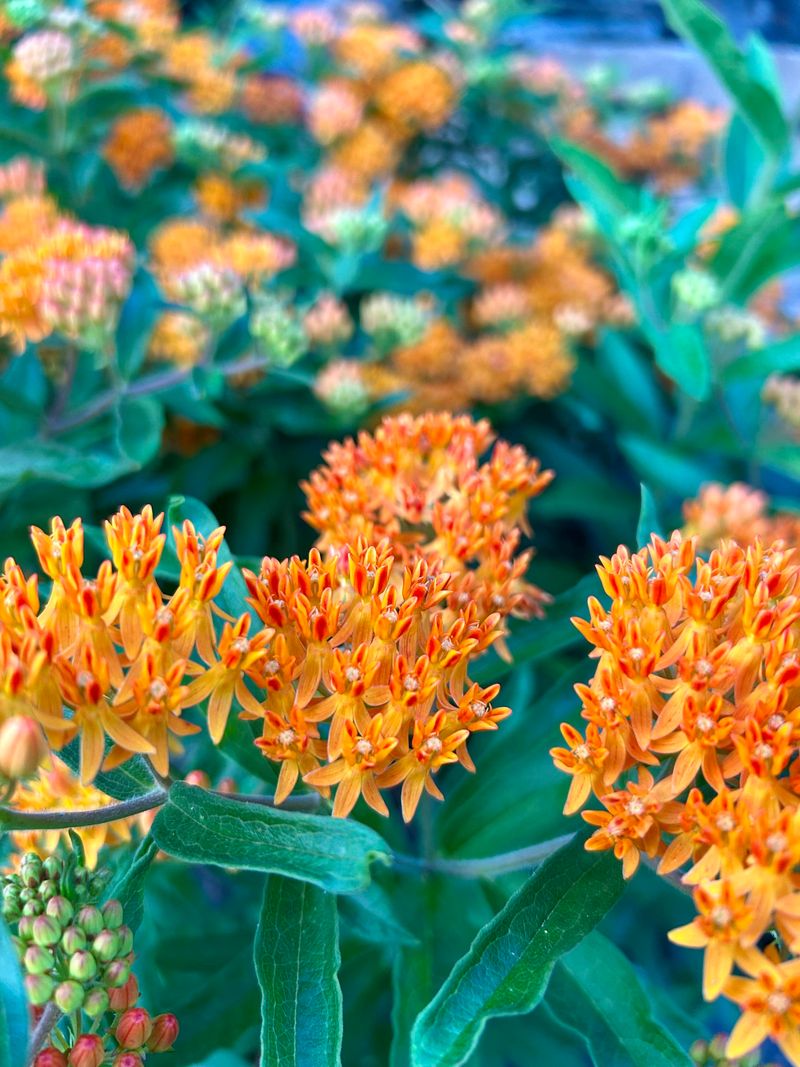
The flower clusters can glow orange against gray concrete, and that contrast is exactly what makes this plant so effective in a narrow streetside strip.
Full sun helps produce the best display.
Butterfly weed can tolerate some partial shade, but a bright site usually keeps the plant sturdier and more floriferous. In Michigan, bloom often lands in summer, after spring bulbs have already finished their show.
The flowers sit in rounded clusters above narrow green leaves.
That shape makes them easy for pollinators to find and easy for you to notice from the driveway. The plant usually stays compact enough for a narrow bed, often around one to two feet tall.
Avoid a rich fertilizer push.
Too much fertility can favor softer leafy growth over the compact habit that makes this species so useful near pavement. Lean soil and full sun often produce a cleaner result.
You can remove faded flower clusters for a tidier look.
Leave some later in the season when you want seed pods and volunteer seedlings. Either choice can work, so the sidewalk strip does not need a strict cleanup schedule.
This plant makes a hard site look planned instead of tolerated.
The concrete supplies the gray backdrop.
Butterfly weed arrives with the orange punctuation mark.
Let Monarch Caterpillars Take Their Share
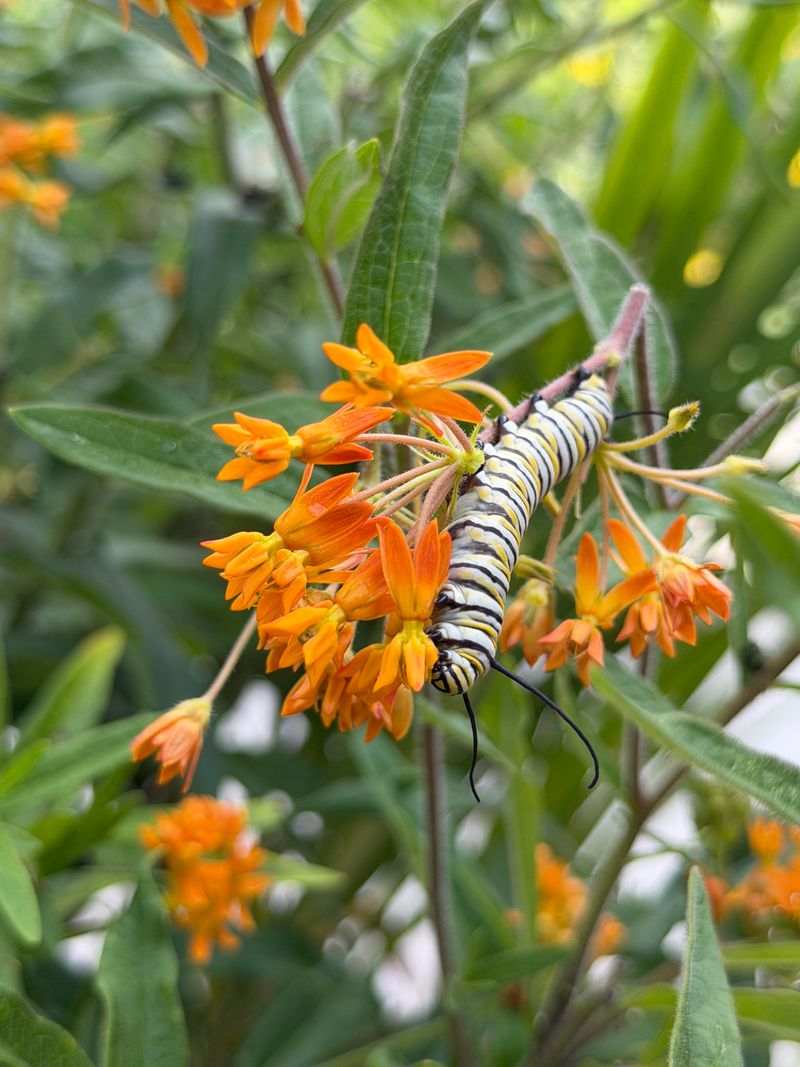
Chewed leaves can look like trouble until you know who ordered lunch.
Butterfly weed belongs to the milkweed family, which gives it a second job beyond summer color.
Monarch caterpillars can use its leaves as food, and monarch females may choose milkweeds for their eggs. Butterfly weed is among the milkweeds used by monarchs in Michigan.
That means a few nibbled leaves deserve a different reaction.
Do not reach for an insect spray just because the foliage looks imperfect. A caterpillar on the plant may be exactly the visitor you hoped the sidewalk strip would support.
Keep pesticide use away from the plant whenever practical.
Products aimed at leaf-chewing insects can also affect monarch larvae and other useful insects that visit the patch. Even products sold for garden use deserve careful label attention around a host plant.
Let some leaf damage become part of the display.
Butterfly weed usually has enough personality to stay attractive without flawless foliage. Orange flowers pull the eye upward, while the leaves quietly handle their other job below.
Monarchs are not the only visitors worth a glance.
The blooms also provide nectar for adult butterflies and other pollinators. One plant can support different parts of the food web at different moments.
That makes a chewed leaf less of a cosmetic failure.
It is evidence that the plant offers more than decoration beside concrete.
Your sidewalk strip may lose a little leaf tissue.
In exchange, it gets a much better story than another rectangle of thirsty grass.
Draw Butterflies To Summer Flowers
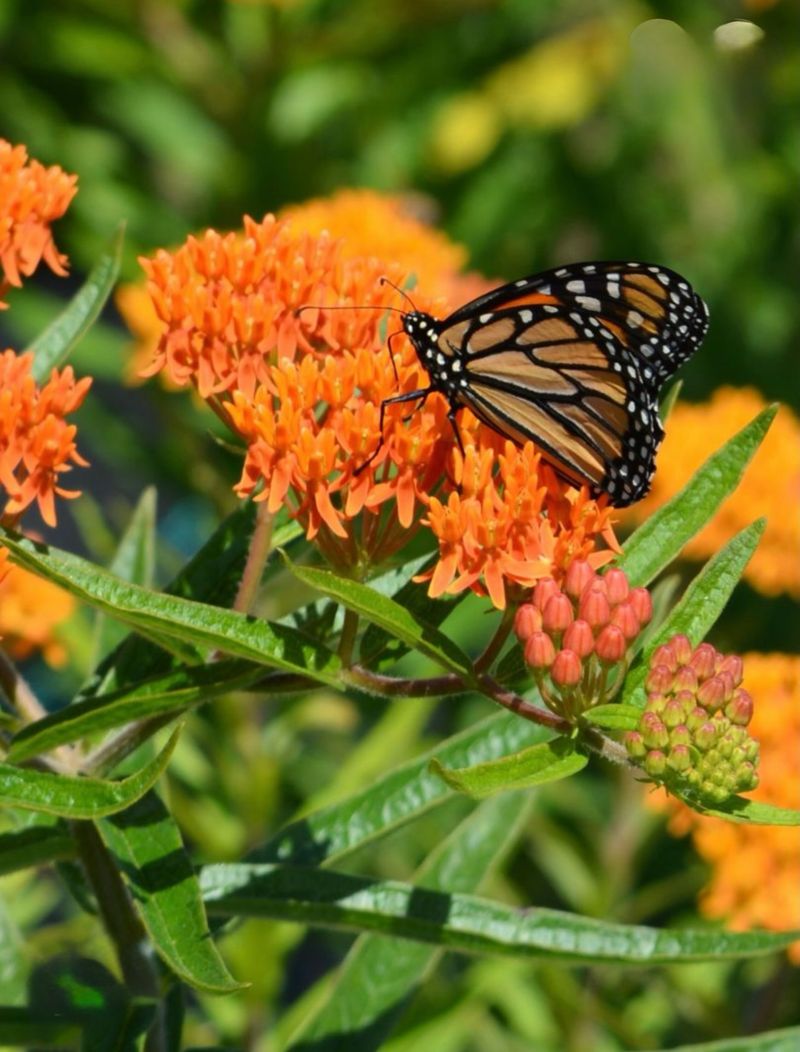
One butterfly weed can brighten a sidewalk strip.
A small group can turn it into a much easier target for pollinators that pass through.
Cluster several plants with enough room between them, then add other sun-friendly Michigan natives nearby where space allows. A longer bloom sequence gives bees and butterflies more reasons to return after the orange flowers fade.
Butterfly weed itself offers nectar to many insect visitors.
Bees can work the flower clusters alongside butterflies, and monarch adults may stop for nectar even though their caterpillars use the leaves for food. That double role gives this milkweed more value than its size suggests.
Keep the layout simple in a narrow strip.
Three butterfly weeds repeated down the bed can look more intentional than one plant surrounded by random annuals. Add a compact native with a different bloom time rather than crowd every inch.
Leave clear space near the sidewalk edge.
Pollinator habitat works better when pedestrians do not have to brush through stems, and the plants stay safer from shoes and wheels too.
Skip broad pesticide treatments across the strip.
A pollinator stop loses much of its charm when insects meet residues on the flowers or leaves.
No plant can promise a daily butterfly parade.
The goal is to make the stop worth a pause when pollinators pass through.
A hot strip of concrete and soil may never look like a meadow.
It can still become a very good snack bar with excellent orange signs.
Keep The Crown Out Of Soggy Soil
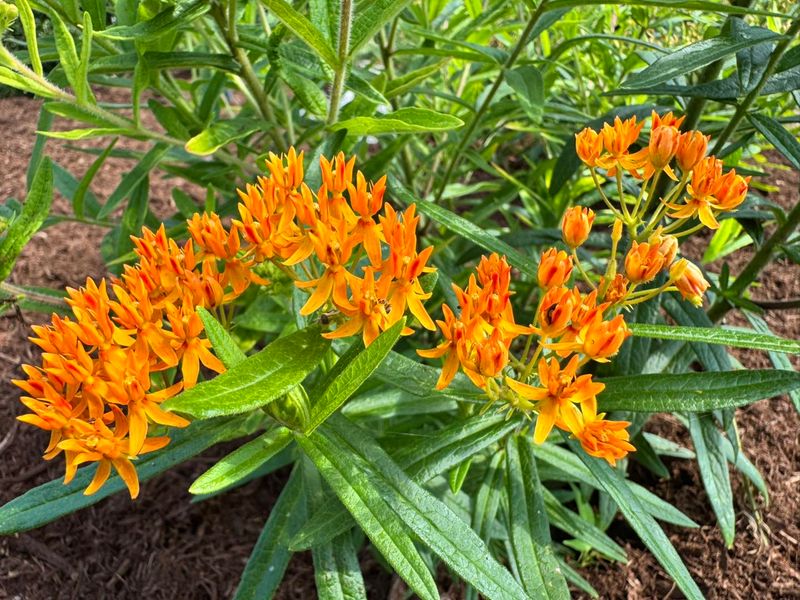
Butterfly weed can handle dry soil far better than a soggy crown.
That difference matters beside sidewalks, where compacted ground can create strange drainage patterns. One section may dry in hours while another holds water after every storm.
Check the spot before the plant goes in.
After a good rain, notice how long moisture sits near the surface. A low pocket that stays wet is a poor match.
A slight slope or raised section with quick drainage usually makes more sense. Butterfly weed performs best in well-drained soil.
Avoid the old trick of mixing a little sand into heavy clay.
Small amounts of sand can create a dense mix rather than the loose soil you wanted. A better plan is to choose a naturally better-drained spot or raise the bed slightly with suitable soil across a broader area.
Set the crown at the same level it held in the nursery pot.
Do not bury it under a mound of mulch. Keep mulch light and pull it back from the stem base so moisture does not linger against the crown.
Street runoff deserves attention too.
A strip that collects salty winter slush, pooled water, or heavy road splash may be rougher than butterfly weed prefers. Move the plant farther from that drainage path when possible.
This native likes tough conditions, not every bad condition.
Give it heat, sun, and lean soil.
Keep the roots out of a bathtub, and the sidewalk strip becomes much easier to manage.