What Yellow Leaves On Your Michigan Tomatoes In July Really Mean And How To Fix Them
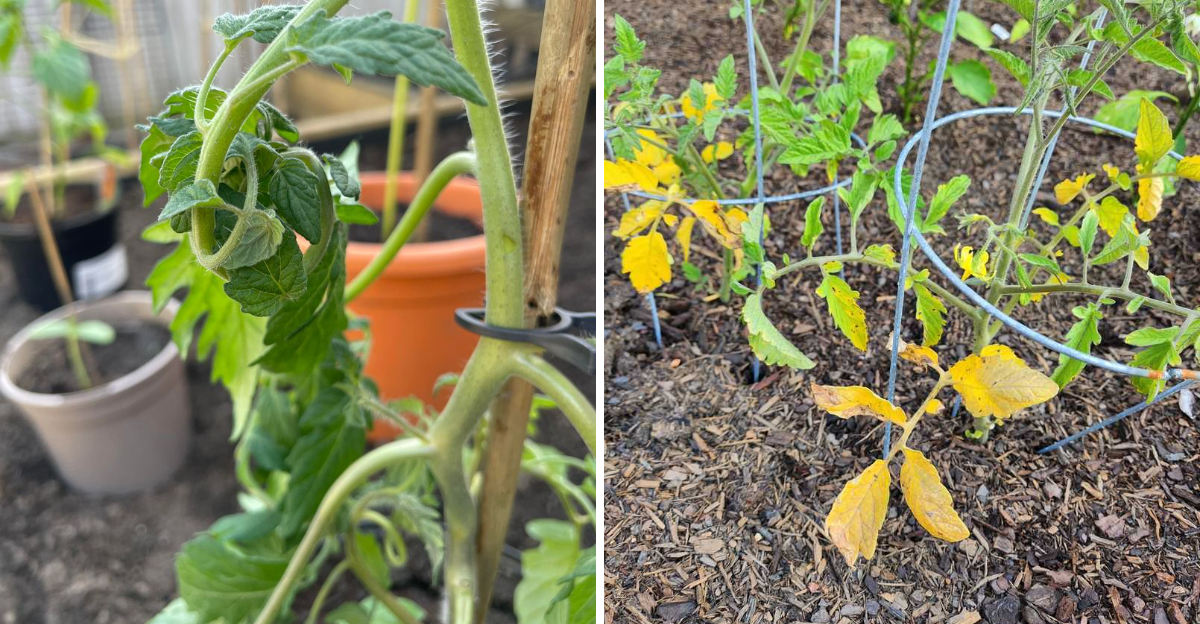
Yellow tomato leaves in July send Michigan gardeners searching for answers that generic advice consistently gets wrong.
The problem is that yellowing has multiple completely different causes that look similar enough on the surface to confuse even experienced growers, and treating the wrong one wastes time the plant does not have in a season that is already moving fast.
Whether the yellowing starts at the bottom of the plant or the top, spreads uniformly or in patches, affects older leaves or new growth, and appears alongside other symptoms or in isolation all point toward different diagnoses.
Reading those details correctly is what leads to a fix that actually works rather than another week of watching the problem continue unchanged.
1. Plain Yellow Lower Leaves May Mean Nitrogen Is Low
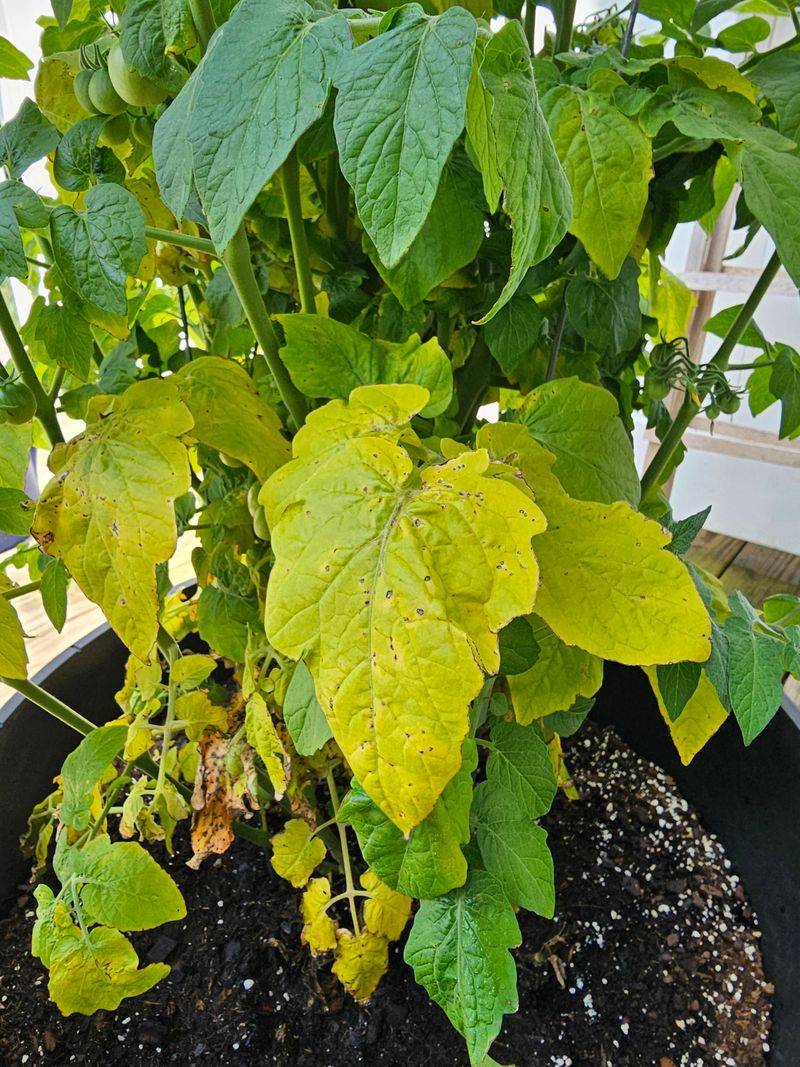
Older lower leaves going pale yellow on your tomato plants is one of the most common signals Michigan gardeners see in July. Nitrogen moves upward in the plant, so when levels drop, the oldest leaves at the bottom give up their nitrogen first.
That fading color is essentially the plant pulling resources toward newer, more productive growth higher up the stem.
Heavy rains, fast plant growth, and frequent watering all flush nitrogen out of the soil faster than you might expect. July in Michigan can bring exactly those conditions, so it makes sense that this problem peaks right in midsummer.
Before you reach for a fertilizer bag, take a moment to look at the whole plant and not just the bottom few leaves.
If the rest of the plant looks green and healthy, a few pale lower leaves may not need any treatment at all. When the whole plant looks washed out or pale, a soil test will confirm whether nitrogen is truly low.
Adding compost, a light side dressing of balanced fertilizer, or working aged manure into the soil surface are all smarter moves than dumping on extra product without knowing what the soil actually needs.
2. Yellow Leaves With Small Dark Spots May Mean Septoria Leaf Spot
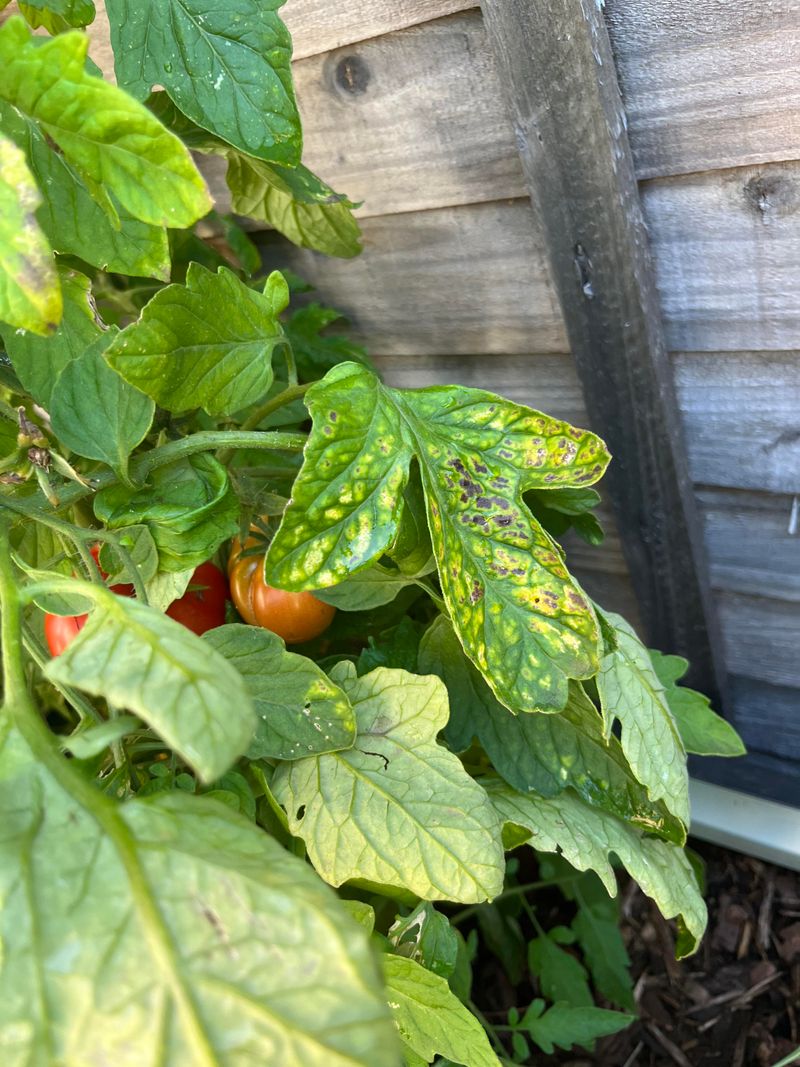
Septoria leaf spot is a fungal problem that Michigan tomato growers deal with every single summer, and it has a very recognizable look. Small, roughly circular spots with dark brown or grayish centers and yellow halos appear first on the lowest leaves of the plant.
Once you see that pattern, you can be fairly confident about what you are dealing with.
Wet weather and splashing water spread the spores from the soil up onto the leaves, which is why Michigan’s rainy July spells can trigger outbreaks almost overnight.
The infection usually climbs the plant from the bottom up, so catching it early gives you a real advantage. Leaving badly spotted lower leaves on the plant just gives the fungus more surface area to work from.
Removing the most affected lower leaves carefully and disposing of them away from the garden is a good first step. Laying down a thick layer of mulch around the base of the plant helps prevent soil splash from reaching the leaves during rain or watering.
Your Michigan Garden Changes Every Week. Your Plan Should Too.
Gardening in Michigan changes quickly throughout the season. Every Friday you’ll receive a simple weekly plan showing exactly what to plant, prune, fertilize, harvest, and protect so you never miss the right timing.
Watering at the soil level rather than overhead keeps the foliage dry, and giving plants enough space to allow airflow between them slows the spread significantly.
Consistent attention to these simple habits makes a noticeable difference over the course of the growing season.
3. Yellow Leaves With Target-Like Spots May Mean Early Blight
Early blight is another fungal issue that shows up in Michigan tomato gardens with frustrating regularity, and the spots it leaves behind are hard to miss.
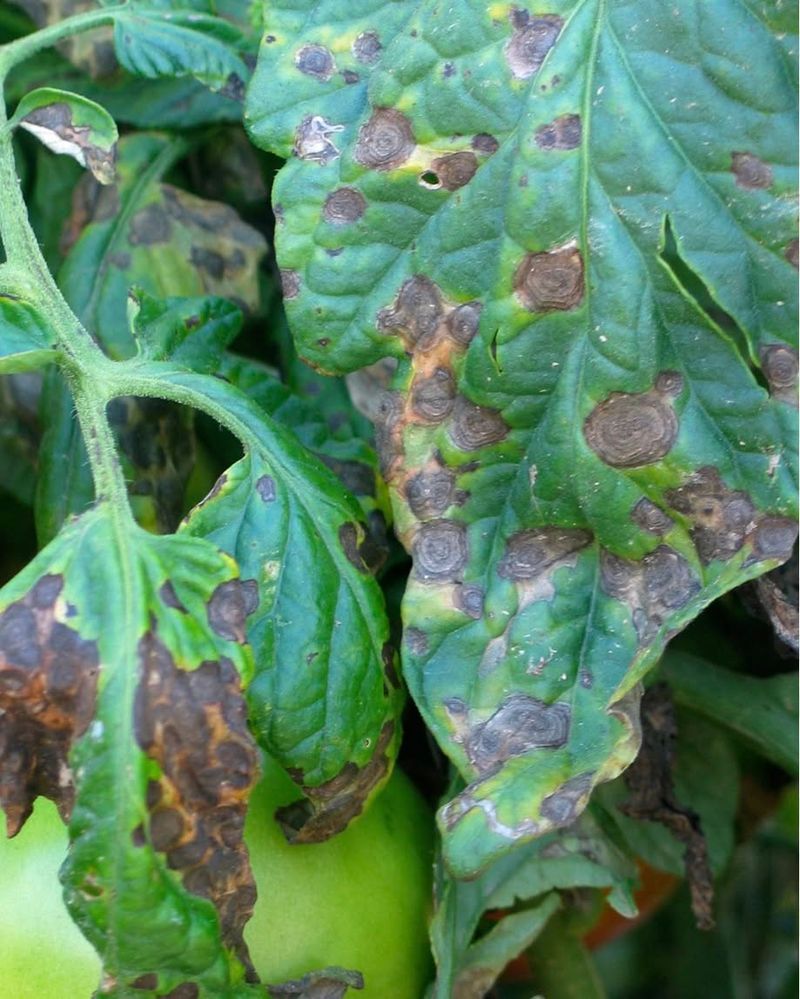
Instead of tiny dots, early blight creates larger brown patches with distinct ring patterns inside them, almost like a target or a bullseye.
The yellowing around those spots tends to spread outward as the infection progresses.
Crowded plants, wet foliage, and leaves that rest against the soil are all conditions that help early blight get started and move fast.
July in Michigan can bring stretches of warm, humid weather followed by afternoon storms, which creates the perfect environment for this fungus to thrive.
Plants that are already under stress from heat or uneven watering tend to show worse symptoms.
Pruning away the worst lower leaves gives the plant better airflow and removes some of the infected tissue before spores spread further. Keeping foliage lifted off the soil surface and spacing plants at least two feet apart helps considerably.
Avoid watering from overhead, especially in the evening, since wet leaves overnight are a major driver of fungal problems.
Rotating your tomato planting location each year is one of the most effective long-term habits you can build to reduce early blight pressure in your Michigan garden.
4. Yellow Leaves After Dry Then Soaked Soil May Mean Water Stress
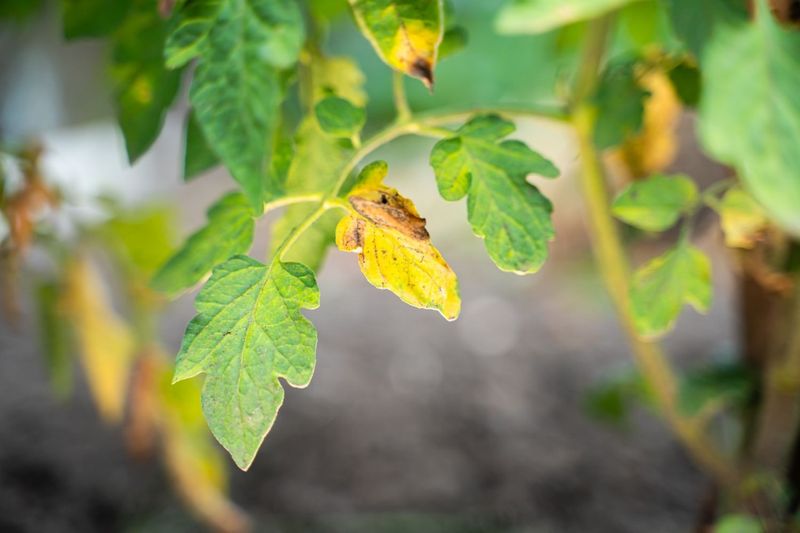
Tomatoes are surprisingly sensitive to swings in soil moisture, and Michigan’s July weather has a habit of delivering exactly those swings.
A week of dry, sunny days followed by a heavy thunderstorm can put serious stress on a plant whose roots are not prepared for the sudden change.
That stress often shows up first as yellowing leaves, sometimes combined with cracking fruit or wilting that does not fully recover overnight.
When soil dries out deeply and then gets soaked all at once, roots can struggle to absorb nutrients properly even if those nutrients are present. The plant essentially goes into a kind of shock as it tries to regulate water uptake too quickly.
Consistent moisture is far more valuable to a tomato plant than occasional heavy watering sessions.
Watering deeply and steadily at the soil level, rather than splashing the surface quickly, encourages roots to grow deeper and become more resilient.
A two to three inch layer of mulch over the root zone holds moisture between waterings and buffers the soil against rapid drying.
Checking the soil a few inches down before watering helps you avoid adding water when the deeper layers are still moist.
Building these habits in early July, before the weather gets unpredictable, sets your plants up to handle Michigan’s storms much more gracefully.
5. Yellow Leaves In Containers May Mean The Pot Is Struggling
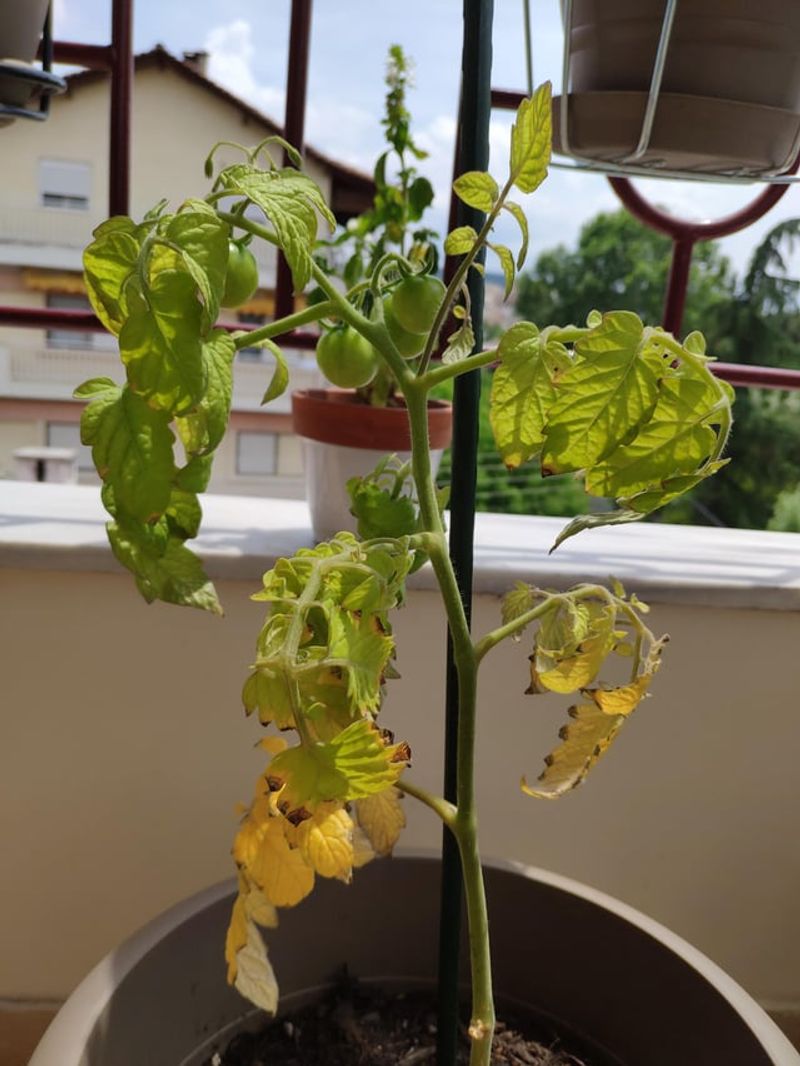
Container tomatoes have a tougher time in Michigan’s July heat than most gardeners expect.
A pot sitting in full sun on a deck or patio can heat up to temperatures that stress roots, and the limited soil volume means moisture levels can swing dramatically from one day to the next.
That combination of heat and inconsistent moisture is one of the fastest ways to trigger yellowing in container-grown tomatoes.
Poor drainage makes the problem worse in a completely different direction. If water pools at the bottom of the pot because drainage holes are blocked or too small, roots can sit in soggy conditions that limit oxygen and invite root problems.
Interestingly, both overwatering and underwatering in containers can produce similar yellowing symptoms, which makes diagnosis a little trickier.
Before watering a container tomato, push your finger two inches into the potting mix. If it still feels moist, hold off for another day. If it feels dry, water thoroughly until it drains freely from the bottom.
Feeding container tomatoes lightly with a balanced liquid fertilizer every couple of weeks supports growth without overwhelming the plant, but only feed when the plant is actively growing and looking healthy.
Pale, stressed plants do not benefit from extra fertilizer and may actually respond poorly to it when roots are already under pressure.
6. Yellow New Growth May Mean A Nutrient Or Soil Ph Problem
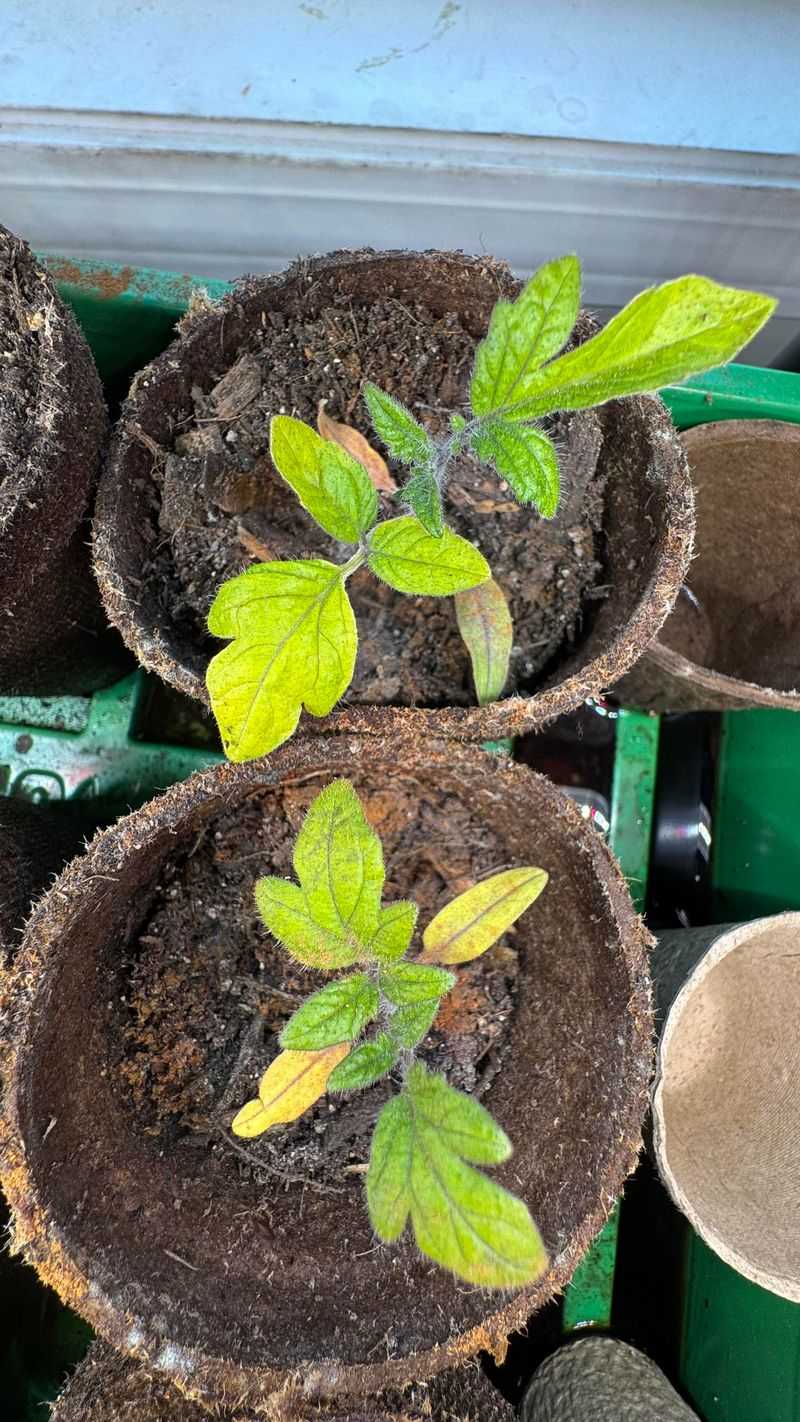
Most yellow leaf problems start at the bottom of the plant and work their way up, so when yellowing shows up on the newest growth at the top instead, that is a meaningful clue.
New growth yellowing often points to a nutrient that the plant cannot access rather than one that is simply absent from the soil.
Iron, manganese, and magnesium are common examples of nutrients that become unavailable when soil pH is off.
Michigan soils vary quite a bit in pH, and tomatoes prefer a range of about 6.0 to 6.8. Outside that range, certain nutrients get locked up in the soil and roots cannot absorb them even if they are present in good amounts.
Adding random supplements without knowing your soil pH can actually make the problem worse rather than better.
A basic soil test from Michigan State University Extension or a garden center gives you real information to work with instead of guesswork.
If pH is the issue, adjusting it with lime to raise it or sulfur to lower it takes time but produces lasting results.
Addressing the root cause of the problem is always more effective than chasing symptoms with foliar sprays or fertilizer products.
Getting your soil tested early in the season, or even over the winter before planting, puts you in a much stronger position going into July.
7. Yellow Curling Leaves May Mean Herbicide Drift Or Virus Trouble
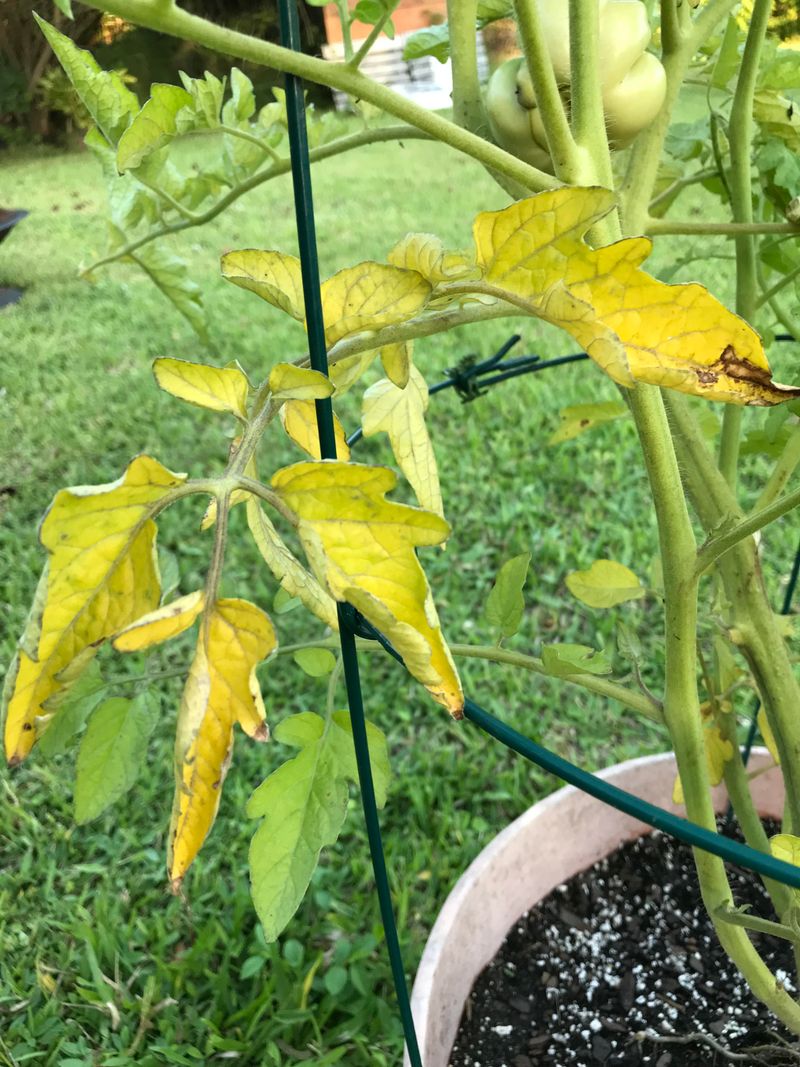
Yellow leaves that also curl, twist, or look distorted are telling a different story than simple yellowing, and they deserve a closer look before you take any action.
Herbicide drift is a real and underappreciated problem in Michigan neighborhoods, especially in July when lawn care companies and homeowners are actively treating grass for broadleaf weeds.
Even a small amount of herbicide carried by wind can cause dramatic leaf distortion on tomatoes.
Virus problems, often spread by aphids or other sap-feeding insects, can produce similar symptoms including curled, yellowed, or mottled new growth.
Unlike fungal diseases, there is no spray treatment for a virus, so removing affected plants before the problem spreads is usually the most practical response.
Identifying which issue you are dealing with helps you avoid wasting time and money on treatments that will not work.
Look around your yard for clues before deciding on a fix. Did a neighbor treat their lawn recently?
Is there a pattern to which plants are affected based on wind direction? Are there aphids or other insects on the stems and leaf undersides?
Compost made from grass clippings treated with persistent herbicides can also introduce the problem through the soil.
Tracking down the actual source takes a little detective work, but it is the only way to prevent the same problem from showing up again next season.
8. Yellow Leaves With Sticky Residue May Mean Aphids Or Whiteflies
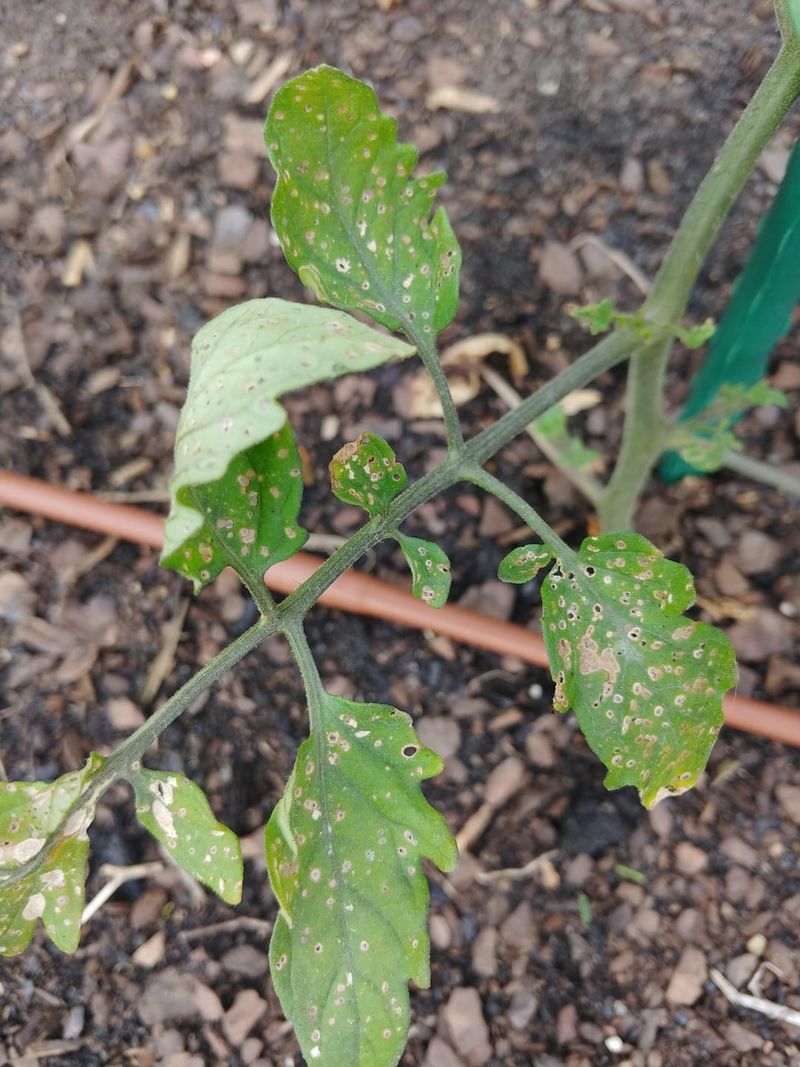
Sticky leaves on a tomato plant are a red flag worth investigating right away. That stickiness comes from a substance called honeydew, which is essentially waste produced by sap-feeding insects like aphids and whiteflies as they feed.
It coats the leaves, attracts ants, and can eventually lead to a black sooty mold growth that blocks sunlight from reaching the leaf surface.
Aphids tend to cluster on new growth and the undersides of leaves, sometimes in such large numbers that they are hard to miss. Whiteflies flutter up in a small cloud when you brush against an infested plant.
Both insects weaken the plant by removing sap, and their feeding can cause leaves to yellow, curl, and look generally unhealthy over time.
For small infestations, a strong spray of water aimed at the undersides of leaves knocks aphids off effectively and does not harm the plant or beneficial insects.
Encouraging natural predators like ladybugs and lacewings by avoiding broad-spectrum insecticide sprays is one of the smartest long-term strategies.
If the problem is more established, insecticidal soap applied directly to the affected areas works well without leaving harmful residue.
Always confirm the pest is actually present before treating, since applying sprays unnecessarily can disrupt the beneficial insect populations that naturally keep pest numbers in check throughout the season.
9. Yellow Leaves With Wilting May Mean Root Stress
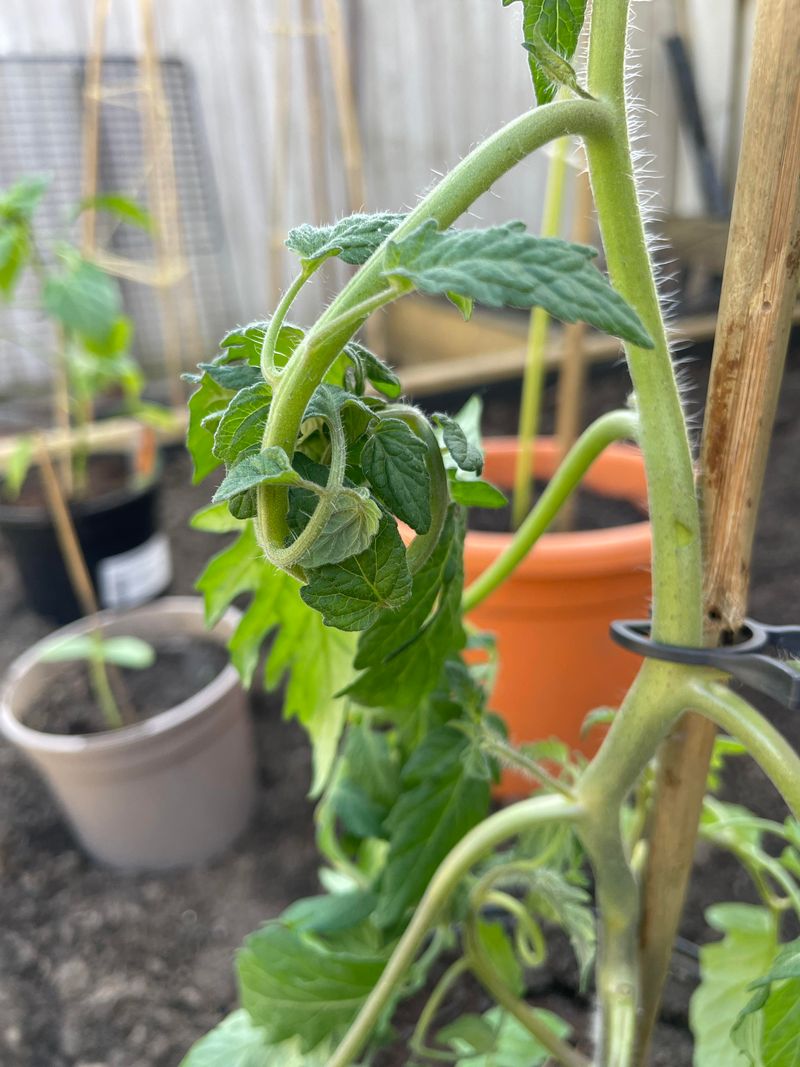
When yellow leaves show up alongside wilting that does not bounce back in the cooler evening hours, that combination points toward root stress rather than a simple leaf problem.
Healthy tomato plants may wilt slightly during the hottest part of a July afternoon and then recover by morning.
Persistent wilting paired with yellowing suggests the roots are struggling to deliver water and nutrients no matter what the temperature is doing.
Soggy soil from poor drainage is one of the most common culprits. Roots need both water and oxygen to function, and when soil stays waterlogged for too long, oxygen gets pushed out and roots begin to break down.
Compacted soil creates a similar problem by preventing both drainage and root expansion, essentially trapping the plant in a small, stressed zone underground.
Before adding more water, check the soil moisture a few inches below the surface rather than judging by the top inch alone. If the deeper soil feels wet or heavy, hold off on watering and focus on improving drainage instead.
Loosening compacted soil around the plant carefully with a fork, adding organic matter over time, and raising beds if standing water is a recurring issue are all practical steps.
Avoid disturbing roots more than necessary, and give the plant time to stabilize before making any other changes to its care routine.
10. A Few Yellow Bottom Leaves Can Be Normal
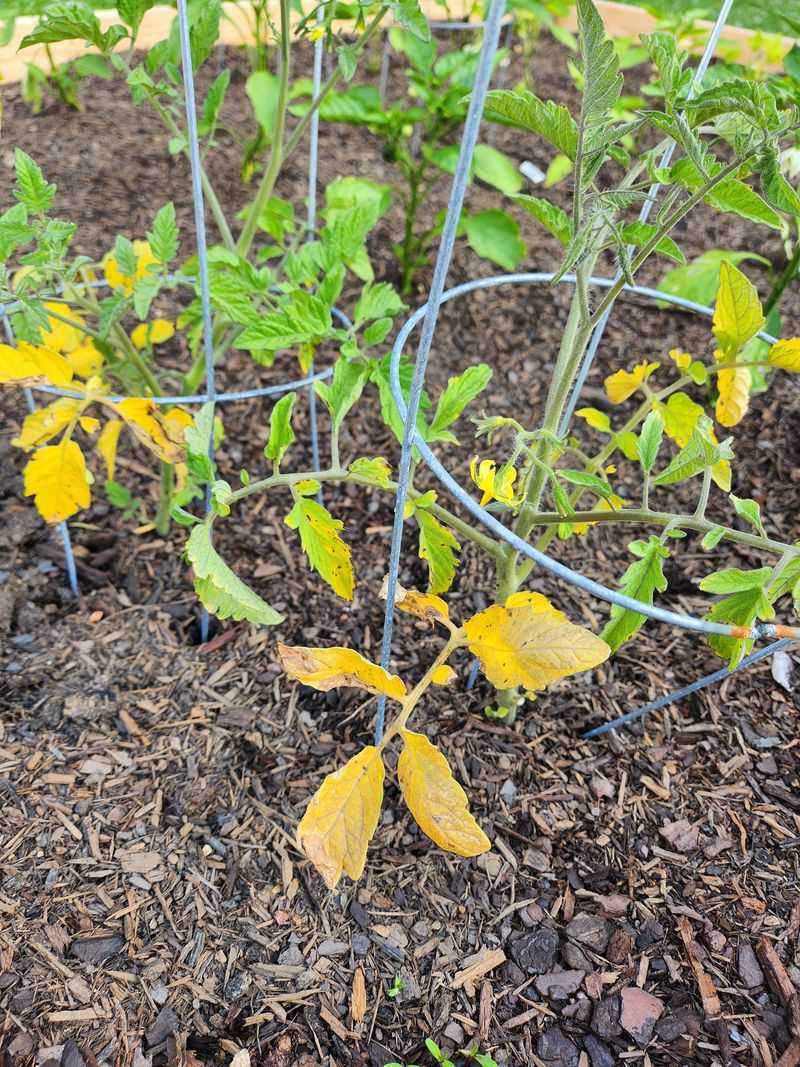
Not every yellow leaf is a warning sign, and recognizing normal plant behavior can save you a lot of unnecessary worry. As tomato plants grow taller through July, the lowest leaves end up deep in shade from the canopy above them.
Without enough sunlight to support their function, those older shaded leaves gradually fade and drop off on their own as the plant redirects its energy toward fruit production higher up the stem.
One or two yellow leaves near the base of an otherwise healthy, green, actively fruiting plant is perfectly ordinary. Michigan gardeners who check their plants daily sometimes catch this natural process and mistake it for a disease or deficiency.
The key is to look at the whole plant rather than focusing only on the problem leaves.
Healthy new growth at the top, strong stems, flowers opening properly, and fruit developing without spots or cracks are all signs that your plant is doing well overall.
Yellowing that stays confined to the lowest one or two leaves and does not spread upward over several days is almost always just normal aging.
You can remove those fading leaves to keep the garden tidy and improve airflow near the soil, but you do not need to treat the plant for anything. Watching for spreading yellowing, spots, curling, or wilting elsewhere on the plant is what matters most.
11. Overfeeding Can Make Yellow Leaf Problems Worse
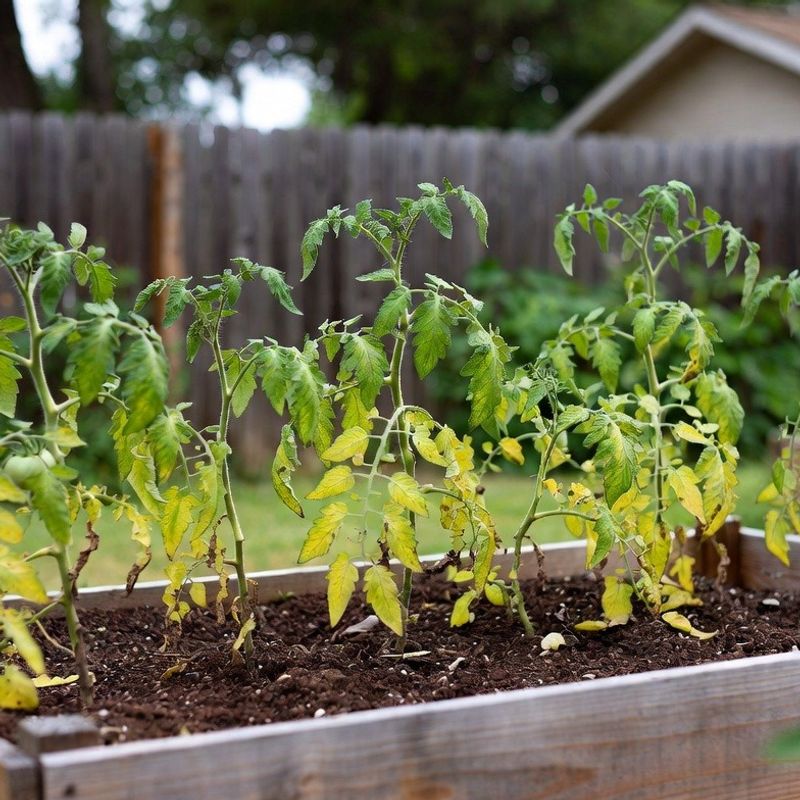
Reaching for fertilizer the moment you spot yellow leaves is a natural impulse, but it is one that can backfire quickly.
Too much nitrogen pushes the plant to produce lush, dark green leafy growth at the expense of flowers and fruit, which is the opposite of what you want from a July tomato plant.
Stressed plants with damaged or struggling roots are especially poor candidates for heavy feeding because they cannot absorb or process nutrients efficiently anyway.
Excess fertilizer salts can also build up in the soil and actually pull moisture away from roots through a process called salt stress, making yellowing and wilting worse rather than better.
Container tomatoes are particularly vulnerable to this because salts have nowhere to go in a limited volume of potting mix.
Flushing the pot with plain water occasionally helps, but prevention through careful feeding is always easier than correction.
Soil test results give you a real picture of what your soil actually needs instead of what you assume it needs. Compost worked into the soil at planting time provides a slow, steady supply of nutrients that does not spike and crash the way synthetic fertilizers can.
Mulching the soil surface, watering consistently, and giving plants room to breathe are the habits that produce healthy tomatoes season after season. Simple, steady care beats aggressive intervention almost every time.