This Is The Invasive Insect Targeting Pennsylvania Fruit Trees At An Alarming Rate
Pennsylvania fruit tree growers are dealing with a pest problem that has been escalating quietly for several seasons and is now reaching a level that demands real attention.
Whether you have a small backyard orchard or a single apple tree you’ve been tending for years, this invasive insect has the potential to significantly impact your harvest, and the damage it causes is arriving faster than most homeowners expected.
This pest does not announce itself. It works through the growing season in ways that produce damage which can easily be attributed to other causes until someone looks closely enough to identify what’s really happening.
By then, the infestation is typically well established and the fruit losses for the season are already locked in.
Extension offices and fruit tree specialists across Pennsylvania have been tracking the spread of this invasive insect with growing urgency, and reports from home growers are climbing each season.
If you have fruit trees in Pennsylvania, this is something you need to know about before it shows up in your orchard.
Brown Marmorated Stink Bug Is The Invasive Pest To Watch
Few insects have made themselves at home in Pennsylvania quite like the brown marmorated stink bug, known scientifically as Halyomorpha halys.
Native to parts of Asia including China, Japan, and Korea, this pest arrived on American soil likely hidden inside shipping containers or packing materials.
The first confirmed specimen in the United States was collected near Allentown, Pennsylvania, in 1998, though Penn State researchers believe the insect had already been present for a few years before that.
Penn State now classifies the brown marmorated stink bug as a serious pest affecting fruit, vegetables, and a wide range of other crops. What makes it especially troublesome compared to many other insects is its feeding behavior.
Most pest insects have a limited number of host plants they prefer. The brown marmorated stink bug is different.
It feeds on an enormous variety of plants, including ornamental shrubs, garden vegetables, wild trees, and cultivated fruit trees.
Backyard orchards are particularly vulnerable because of this broad appetite. A homeowner growing apples next to a vegetable garden surrounded by ornamental plantings has essentially created the perfect buffet for this insect.
Adults are strong fliers and can travel between host plants with ease, making it hard to simply isolate or protect one crop.
Penn State researchers continue studying this pest closely because its impact on Pennsylvania agriculture has grown significantly since its first discovery.
Knowing this insect exists and understanding its habits is the very first step any fruit tree grower needs to take before the growing season gets underway.
Apples, Peaches, Pears And Other Fruits Are On The Menu
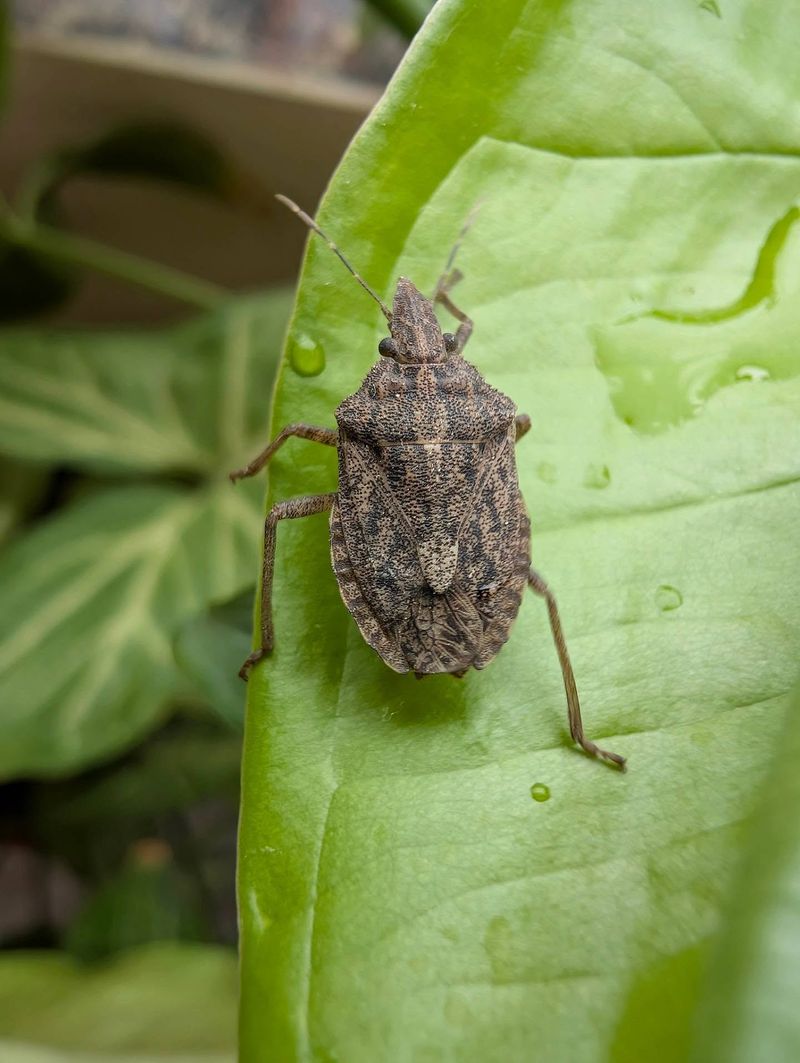
Backyard fruit growers in Pennsylvania have a real reason to pay attention to what is landing on their trees. Apple trees, peach trees, nectarines, pears, and several other popular fruit varieties are all documented hosts of the brown marmorated stink bug.
USDA research has specifically identified apples, peaches, and pears among the orchard crops most threatened by this pest, and Penn State reinforces that finding with its own observations of damage across the state.
Your Pennsylvania Garden Changes Every Week. Your Plan Should Too.
Gardening in Pennsylvania changes quickly throughout the season. Every Friday you’ll receive a simple weekly plan showing exactly what to plant, prune, fertilize, harvest, and protect so you never miss the right timing.
Both adult stink bugs and their younger immature forms, called nymphs, actively feed on fruit during the growing season. Adults are capable fliers that move easily between cultivated plants and surrounding wild vegetation.
Nymphs, while smaller and wingless, are still mobile enough to travel across a tree searching for feeding sites.
Because of this movement, spotting zero bugs on a tree during one inspection does not mean the fruit is safe. The insects may simply be feeding elsewhere and return later.
Stone fruits like peaches and nectarines seem to attract heavy feeding, especially as the fruit begins to develop and swell. Pears and apples are also frequently targeted, and the damage can show up at multiple stages of fruit development.
Growers who raise multiple fruit varieties in close proximity may find that the bugs shift their attention from one crop to another as the season progresses.
Keeping a close eye on all your fruit trees throughout the season, rather than focusing on just one variety at a time, gives you a much better chance of catching problems before they spread across your entire harvest.
The Damage Can Be Hidden Beneath The Fruit’s Skin
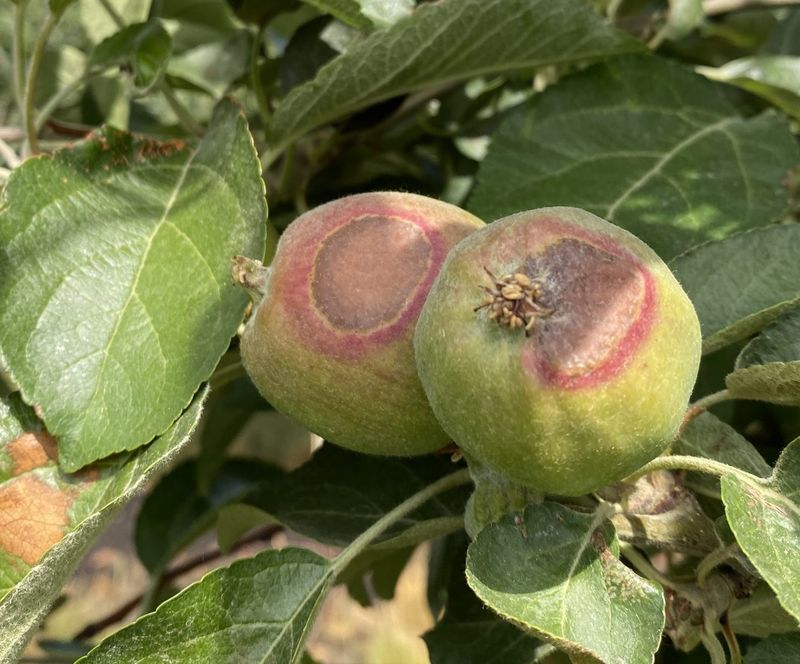
One of the most frustrating things about brown marmorated stink bug damage is that it does not always look obvious from the outside. These insects feed using piercing-sucking mouthparts, which work like a tiny needle.
They push their mouthparts through the fruit’s skin and pull out plant fluids from underneath. The entry point can be so small that it barely registers as a blemish at first glance.
Penn State reports that feeding injury can happen through much of the fruit-growing season, which means the damage is not limited to just one brief window of time.
Early in the season, when fruit is still small and forming, stink bug feeding can cause the fruit to grow unevenly and become misshapen.
Fruit that was damaged early sometimes looks oddly lumpy or lopsided by the time it reaches full size.
Later in the season, feeding tends to leave different signs. You might notice small dimples on the fruit surface, slight discoloration, or soft spots.
Beneath the skin, the tissue can become corky, spongy, or discolored in a way that makes the fruit unpleasant to eat. Growers sometimes cut open a piece of fruit expecting minor damage and find a much larger area of ruined flesh inside.
This hidden injury is part of what makes this pest so difficult to manage. A fruit that looks mostly fine sitting on the tree can turn out to be nearly unusable once it is picked and sliced open.
Checking fruit carefully and often is the only reliable way to catch this kind of damage before too much of the crop is affected.
Learn The White-Banded Clue That Gives This Stink Bug Away
Spotting a stink bug in your garden is one thing. Knowing exactly which stink bug you are looking at is another.
Correct identification matters a lot because Pennsylvania is home to several native stink bug species, and not every brown stink bug crawling across your fruit tree is the invasive brown marmorated variety.
Treating the wrong insect or panicking over a harmless native species wastes time and resources.
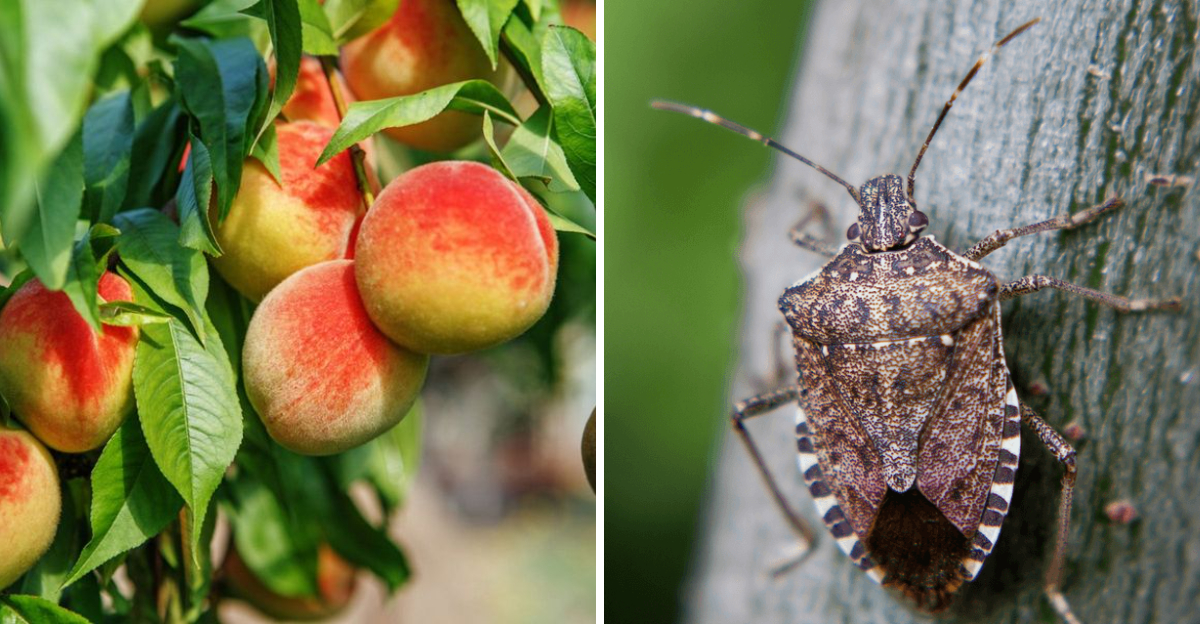
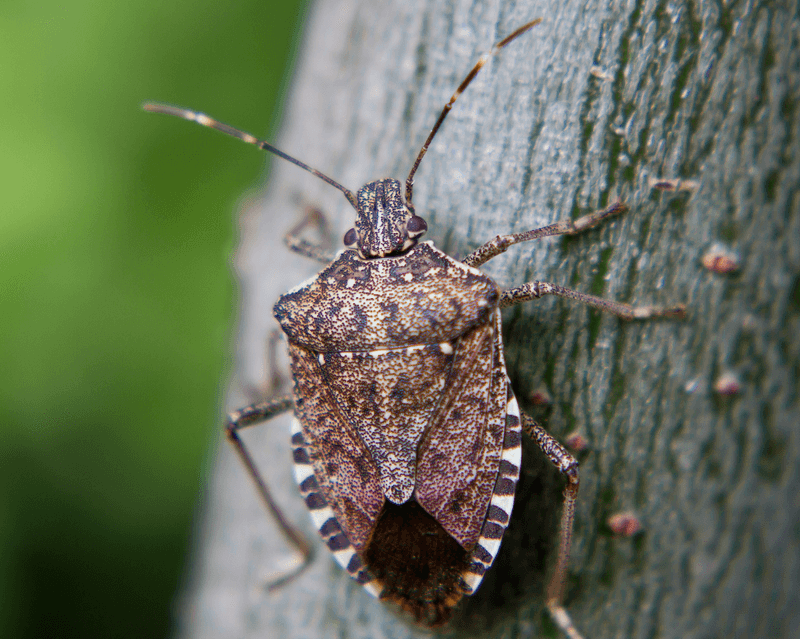
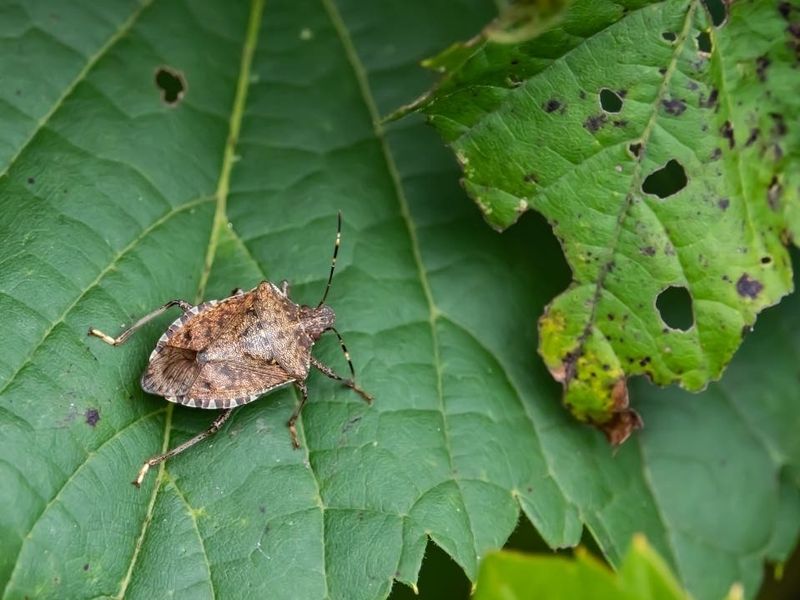
Adult brown marmorated stink bugs have the classic shield-shaped body that most people associate with stink bugs in general. Their overall color is a mottled mix of brown, tan, and gray tones, giving them a rough, patchy appearance.
The single most reliable clue for identifying this particular species is the pattern on the antennae. Look closely and you will see alternating light and dark bands running along the antennae.
That banding pattern is one of the clearest signs you are dealing with the invasive species.
The USDA also points to two additional features that help confirm the identification. Along the exposed edge of the abdomen, you should be able to see alternating light and dark markings arranged in a neat row.
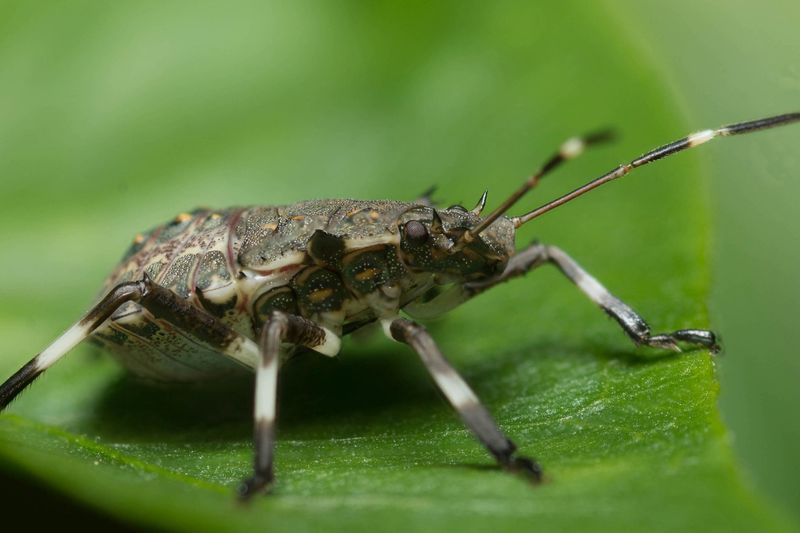
The legs also show pale banding similar to the antennae. Nymphs, the immature form of the bug, look different from adults since they lack wings and may show more orange or red coloring when very young.
As they grow through their developmental stages, they begin to look more like the adults. Taking a clear photo and comparing it against a reliable identification guide from Penn State or the USDA is always a smart move before deciding on any next steps.
Late-Summer Fruit Can Still Be Vulnerable
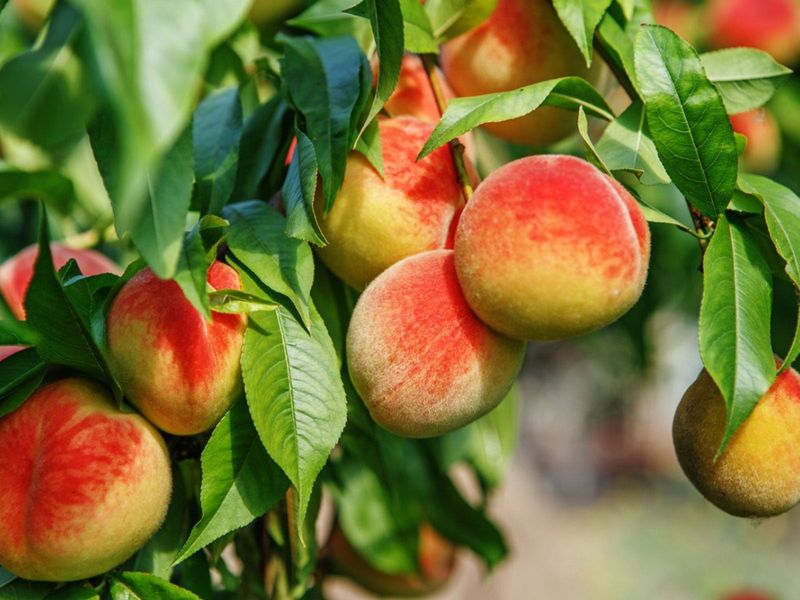
Many gardeners breathe a sigh of relief once their fruit trees are loaded with nearly full-sized fruit. It feels like the hard part is over and harvest is just around the corner.
However, assuming the threat from brown marmorated stink bugs fades as summer winds down would be a mistake.
Penn State clearly states that feeding damage from this pest can occur throughout most of the fruit-growing season, which means ripening fruit remains a target right up until it is picked.
Peaches, apples, pears, and other Pennsylvania fruits are especially at risk during the weeks leading up to harvest. The insects are actively searching for food during this period, and ripening fruit can be particularly attractive.
A grower who stops monitoring in August because the fruit looks close to ready may miss a wave of feeding damage that ruins a significant portion of the crop just days before picking.
There is another reason late-season vigilance matters in Pennsylvania specifically. Penn State research indicates that southern parts of the state can support two full generations of brown marmorated stink bugs within a single year.
That means a second wave of adults and nymphs may be active later in the growing season, adding to the pressure on ripening fruit.
Gardeners in central and northern Pennsylvania typically see one generation per year, but the bug is still active and feeding during late summer regardless of location.
Keeping up your monitoring routine all the way through harvest, rather than easing off once the fruit looks nearly ready, is one of the most effective habits any backyard grower can build.
Monitor Fruit Instead Of Reaching Immediately For A Spray
Grabbing a bottle of insecticide the moment you spot a bug is a natural reaction, but it is not always the most helpful one.
Penn State strongly encourages an Integrated Pest Management approach, which puts monitoring and correct identification ahead of automatic treatment.
The idea is simple: understand what is actually happening in your orchard before deciding whether and how to respond. Spraying without a confirmed problem can wipe out beneficial insects that actually help keep pest populations in check.
Start by building a regular inspection habit. Walk through your fruit trees at least once a week during the growing season.
Check the fruit surface carefully for fresh dimpling, small entry wounds, or discoloration. Look at the underside of leaves and along branches for adults and nymphs resting or feeding.
Check surrounding vegetation too, since the bugs often move between wild plants and cultivated trees. Keeping a simple log of what you find and when helps you spot patterns and catch population increases early.
If you decide that treatment is necessary after confirming brown marmorated stink bug activity, choose carefully. Only use a product that is specifically labeled for the fruit crop you are growing and for this particular pest.
Follow all label directions carefully, including any required time between application and harvest.
Avoid unnecessary applications, especially when beneficial insects like bees and predatory wasps are active, since broad-spectrum products can cause more harm than good in a home orchard.
Catching stink bug activity early gives you the best possible chance of protecting your developing fruit. Waiting until harvest to investigate means the damage has already been done, and there is very little you can do about it at that point.