Why Are Your Georgia Pecans Dropping Prematurely Right Now?
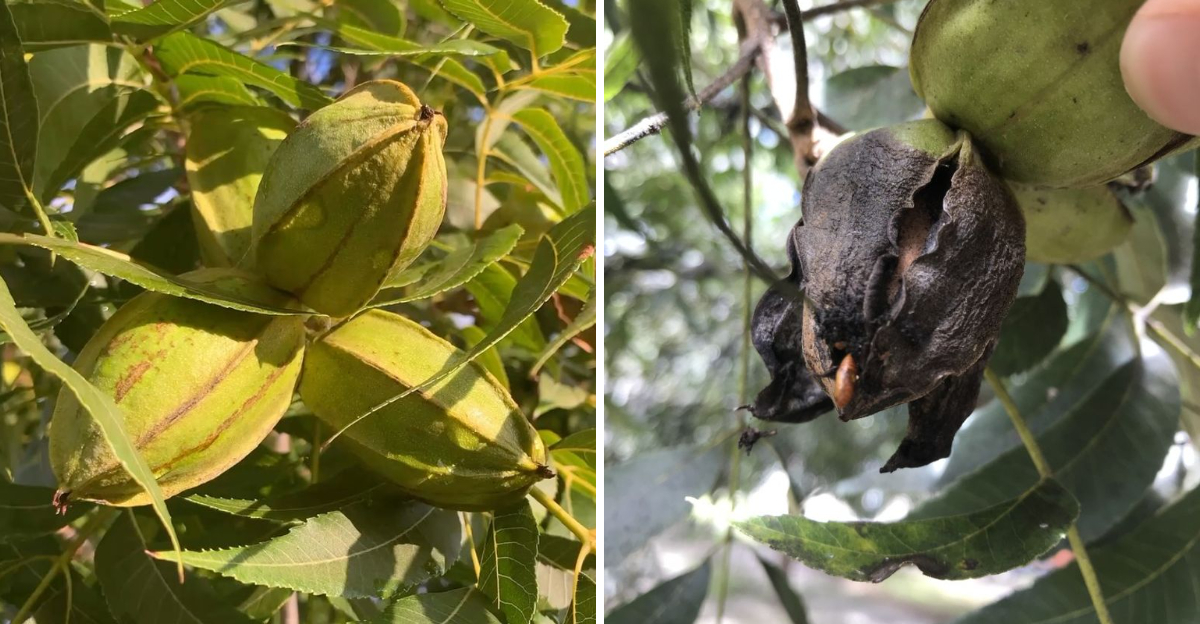
A green pecan on the lawn in mid-August can look like bad news before you pick it up.
Then another drops. And another.
In Georgia, that timing matters.
Pecan trees naturally shed some nuts each year, and August can bring a fourth physiological drop tied to embryo development.
At the same time, susceptible cultivars reach the late water stage, when water-stage fruit split can send apparently healthy green nuts to the ground about a week after internal damage occurs. Insects and scab can add their clues too.
So what does a sudden shower of green pecans mean right now?
Start with the fallen nuts before you blame the whole tree.
Cut a few open. Check the shucks for punctures, dark lesions, internal stains, larvae, and splits. Then look up at the crop that remains.
Mid-August sits right at an important Georgia pecan transition, as shells begin to harden and kernels start to fill.
The ground can tell you what happened this week.
The canopy tells you how worried to be.
1. Expect Some August Nut Drop Naturally
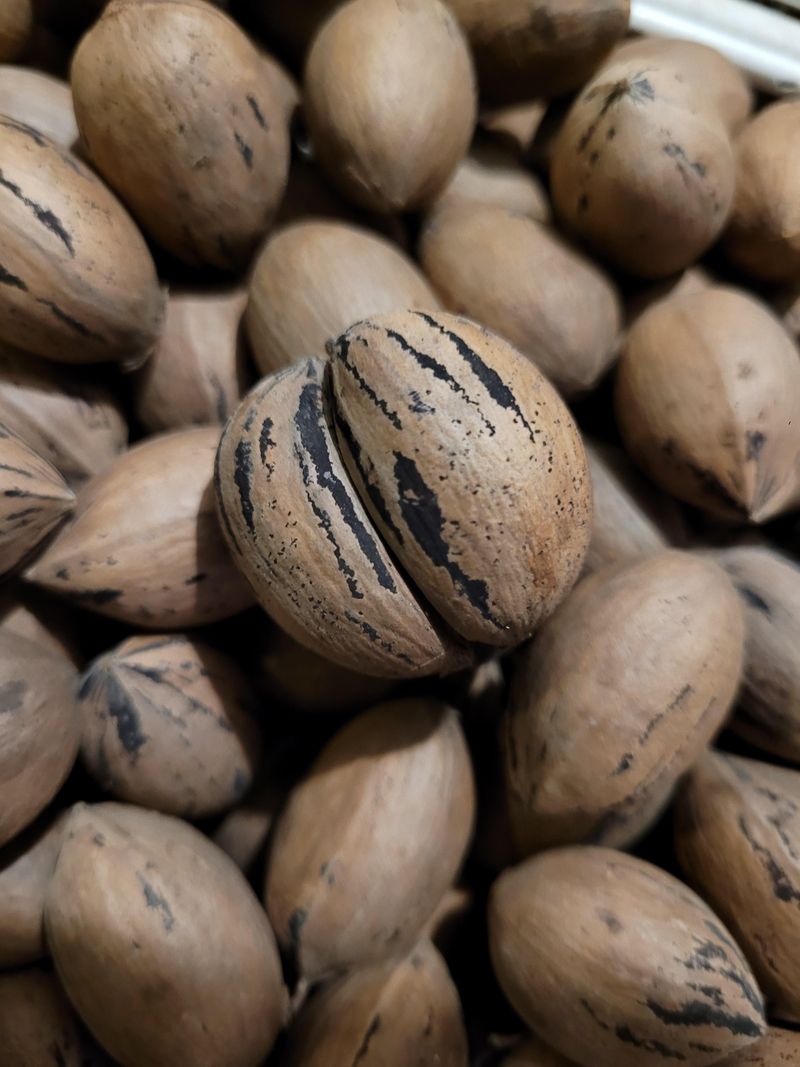
A light scatter of green pecans does not automatically mean the tree has a serious problem.
Pecans pass through several natural nut-drop periods during the season. UGA Pecan Extension describes a fourth physiological drop that can occur in August when embryo development fails.
Poor pollination or weak endosperm development can contribute to that loss, and the amount varies by cultivar and year.
That makes mid-August a tricky moment for homeowners.
Pick up several fresh nuts and compare them before you judge the tree from one dramatic patch of grass. Cut a few open. Nuts with no insect punctures, no obvious shuck lesions, and no clear internal injury may fit the normal physiological drop pattern.
Now look into the canopy.
A tree that still holds a substantial crop can lose a noticeable number of nuts without a season-wide crop failure. UGA specialists make the same practical point: the crop that remains overhead often matters more than the nuts already on the ground.
Keep a rough count for several days.
A brief pulse that slows can fit normal drop much better than a heavy loss that continues day after day with repeated damage clues.
Pecan trees are not famous for neat bookkeeping.
They can throw a few green receipts onto the lawn while the main crop stays firmly on the branches.
Use the fallen nuts as evidence, not a verdict.
2. Check For Water Stage Fruit Split
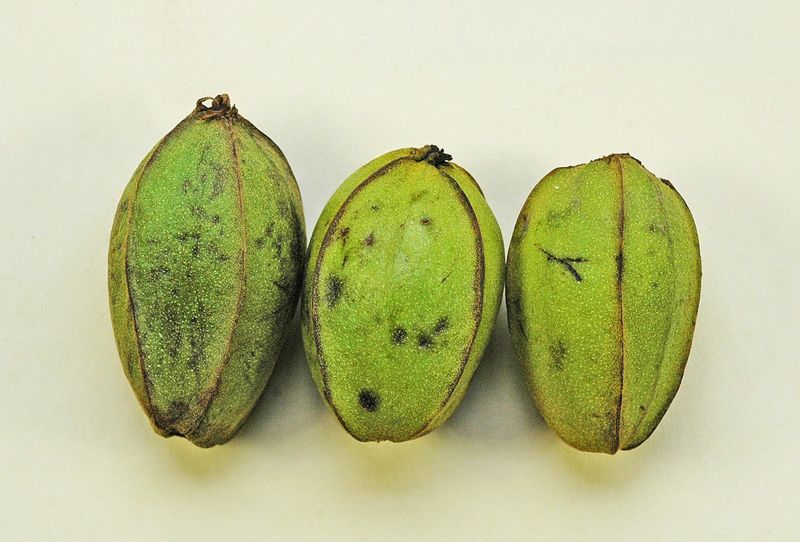
Mid-August is exactly when one of Georgia pecans’ strangest problems can show up.
Water-stage fruit split occurs near the late water stage, just as the shell begins to harden and kernel development shifts forward.
Internal water pressure can split the shell, seed coat, or nearby tissue. The damaged nut often falls about seven days later.
That delay can make the cause feel mysterious.
A storm today may not produce a carpet of nuts until next week. The shuck also may look intact from the outside. UGA Pecan Extension notes that some affected nuts show internal stains or a bruise rather than an obvious external split.
Your Georgia Garden Changes Every Week. Your Plan Should Too.
Gardening in Georgia changes quickly throughout the season. Every Friday you’ll receive a simple weekly plan showing exactly what to plant, prune, fertilize, harvest, and protect so you never miss the right timing.
Cut several newly fallen nuts lengthwise.
Look for a split shell, stained tissue, or a dark internal bruise while the kernel area still looks watery. Susceptible thin-shelled cultivars can show more trouble, and severity changes with cultivar, crop load, site, weather, and year.
Do not expect a treatment to reverse a nut that already split.
The useful move now is diagnosis. Once you recognize the pattern, you can separate water split from insect damage and avoid a spray that cannot repair pressure injury inside the nut.
This problem arrives at the worst moment and hides its clues well.
The nut can look innocent on the lawn while the evidence sits hidden beneath the green shuck.
A pocketknife and a careful cross-section often tell the story faster than the tree can.
3. Connect Dry Spells With Sudden Rain
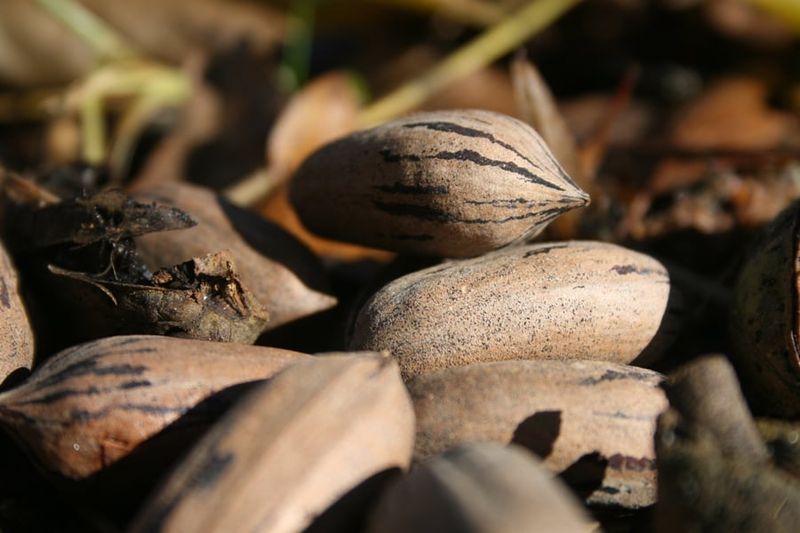
A dry stretch followed by a sudden surge of moisture can make August drop much more noticeable.
UGA pecan specialists link water-stage split with rapid water movement into the tree during the late water stage. Heavy rain can trigger that surge, and even high humidity has been associated with split during this sensitive period.
Past Georgia field reports also describe nut drop after drought followed by rain.
That does not mean rain itself is the enemy.
Pecan trees need substantial water as they move from nut size toward kernel fill. The problem is the sharp swing from water stress to a sudden influx while internal pressure is already high.
Check the recent weather around your tree.
Write down dry days, major storms, and the date fresh nuts appeared below the canopy. Remember the roughly one-week delay that can follow internal split. That simple timeline can connect a rain event with a later drop much more clearly.
For irrigated trees, aim for steadier soil moisture rather than a cycle of severe dryness and rescue soaks.
Large mature pecan trees use a great deal of water during late summer, so casual hose splashes near the trunk do little for the broad root zone.
For a home tree without irrigation, mulch over the root area can help slow soil moisture loss. Keep mulch away from the trunk.
Georgia weather loves dramatic plot twists.
Your pecan would prefer a much duller moisture story.
4. Look For Pecan Weevil Feeding
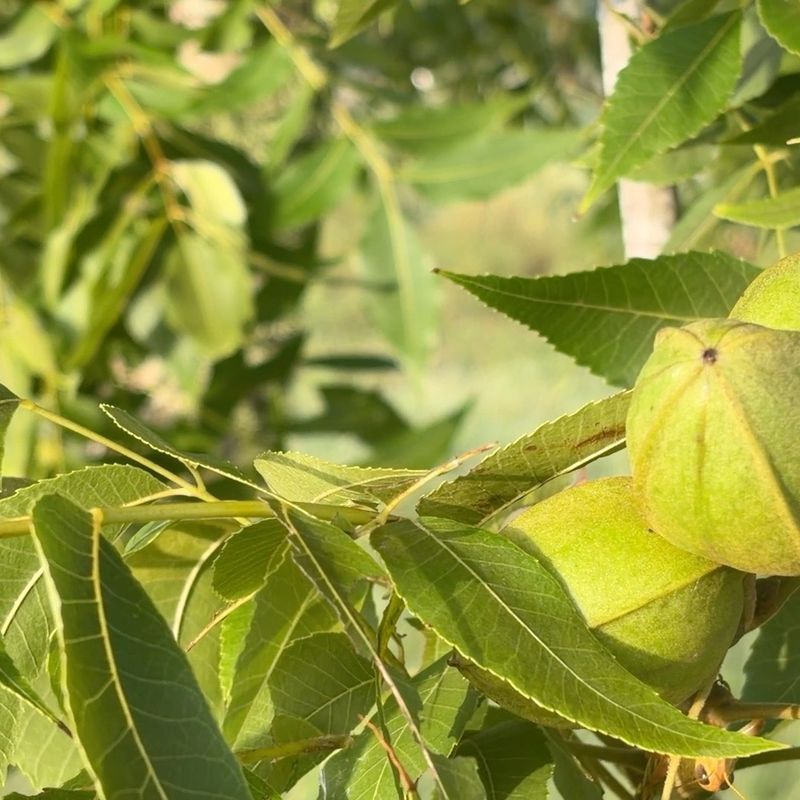
Fresh punctures on a fallen shuck move pecan weevil much higher on the suspect list.
Adult pecan weevils emerge from soil in late summer, and Georgia records place peak emergence roughly from August 10 through September 20.
Rain can help adults move through softened soil, which makes a wet spell especially relevant during this part of the season.
Before the shell hardens, adult feed injury can cause nuts to drop.
After the shell hardens, the concern shifts because females can place eggs in nuts, and larval damage may stay hidden until later. That seasonal change makes mid-August an important inspection point.
Pick up fresh fallen nuts and inspect the shuck closely.
Look for punctures, then cut suspicious nuts open. Creamy, legless larvae inside a nut strongly support weevil or another curculio-type insect problem, though exact identification may require local Extension help.
Homeowners should resist a blind spray.
Large pecan trees are difficult to cover thoroughly, and broad-spectrum products used against weevils can also disrupt other arthropods.
UGA repeatedly recommends pest checks and treatment where a known problem exists rather than automatic late-summer applications. Home pecan pest control can also be difficult because mature trees are hard to spray effectively.
A county Extension agent can help confirm the culprit and current control options for a residential tree.
The weevil is tiny, but its August arrival is not subtle.
Right as the shell hardens, that little snout can turn one green nut into a very informative piece of evidence.
5. Check Shucks For Stink Bug Damage
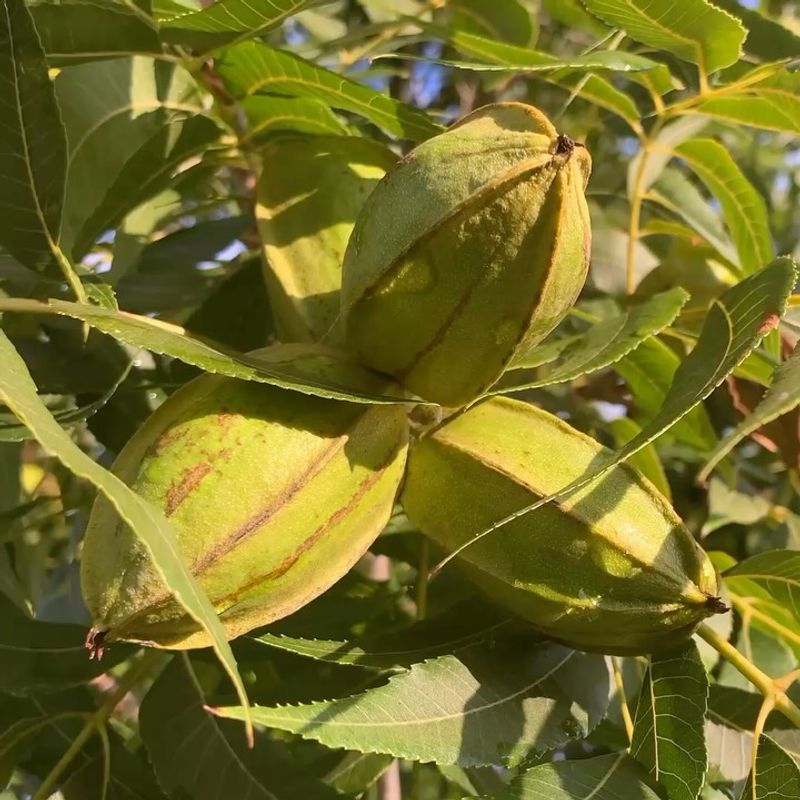
Small dark punctures without a larva can point toward another August visitor.
Stink bugs and related insects that feed on sap push slender mouthparts through the pecan shuck. Before the shell hardens, that injury can cause nuts to fall.
After the shell hardens, the same pests can damage kernels without an obvious early drop.
Their mobility makes the pattern uneven.
One side of a tree or one edge of an orchard may show more activity, especially near crops or vegetation that no longer provide the same food source.
UGA notes that stink bugs can move from nearby row crops into pecans as those crops change late in the season.
Inspect several nuts rather than one.
Look for small dark puncture marks on the shuck, then cut the nut open beneath that point. Early injury can leave dark internal tissue or kernel injury. Compare damaged nuts with clean fallen nuts from another part of the canopy.
Do not treat every black speck as proof.
Scab, bruises, and other disorders can mark shucks too. A live stink bug, repeated puncture patterns, and related internal injury make the diagnosis much stronger.
That distinction matters because insect sprays can flare aphid and mite problems in pecans. UGA specialists specifically warn against a rush into broad-spectrum treatment without a known problem.
Current 2026 pecan recommendations also keep stink bugs and weevils on the late-summer pest radar.
A stink bug leaves a tiny signature.
Make sure the signature actually belongs to the guest before you send the whole yard an eviction notice.
6. Watch Heavy Crop Loads Shed More
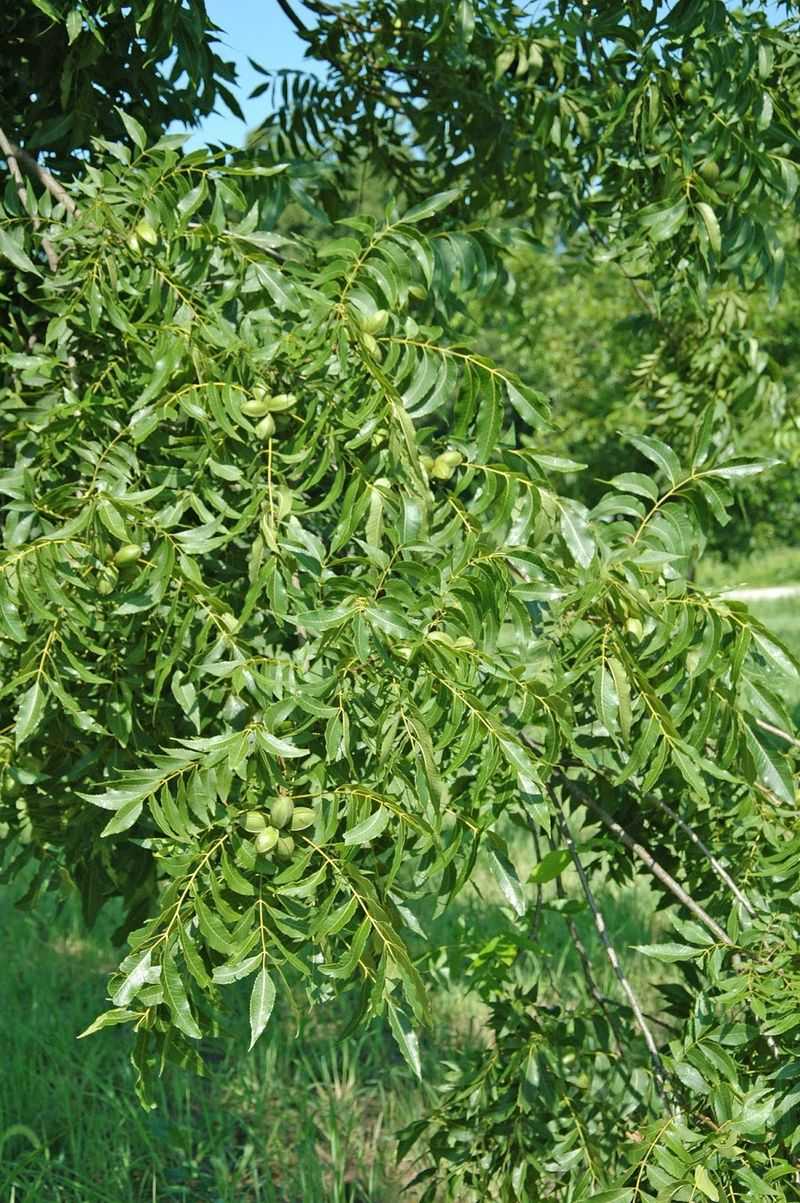
A tree packed with nuts can have a tougher August than a lightly loaded neighbor.
Crop load affects water-stage split, and heavy crops also raise the tree’s demand for water as the kernel-fill stage begins.
UGA notes that water split can become worse under a heavy crop, especially when soil moisture has not stayed consistent through the season.
That does not mean every nut on a loaded tree is destined to fall.
It means the margin for stress gets smaller.
Stand back and look at the canopy rather than stare only at the ground. Dense clusters across much of the tree suggest a heavy crop.
Combine that observation with recent drought, irrigation gaps, or a sudden rain event and the August drop makes more sense.
Keep the crop still overhead supported with sensible moisture.
For commercial orchards, UGA places very high water demand from mid-August through mid-September. A homeowner tree has a different irrigation setup, but the principle stays useful: avoid severe drought stress through this stage.
Skip a panic fertilizer application.
Extra fertilizer cannot put a split nut back together, and late-season nutrition decisions for pecans should come from soil or leaf analysis rather than from the number of nuts on the lawn.
A heavy crop can look like the tree won the pecan lottery.
August is when the bill arrives.
Keep the root zone as steady as practical and let the branches show you how much crop still remains.
7. Scout Remaining Nuts For Scab
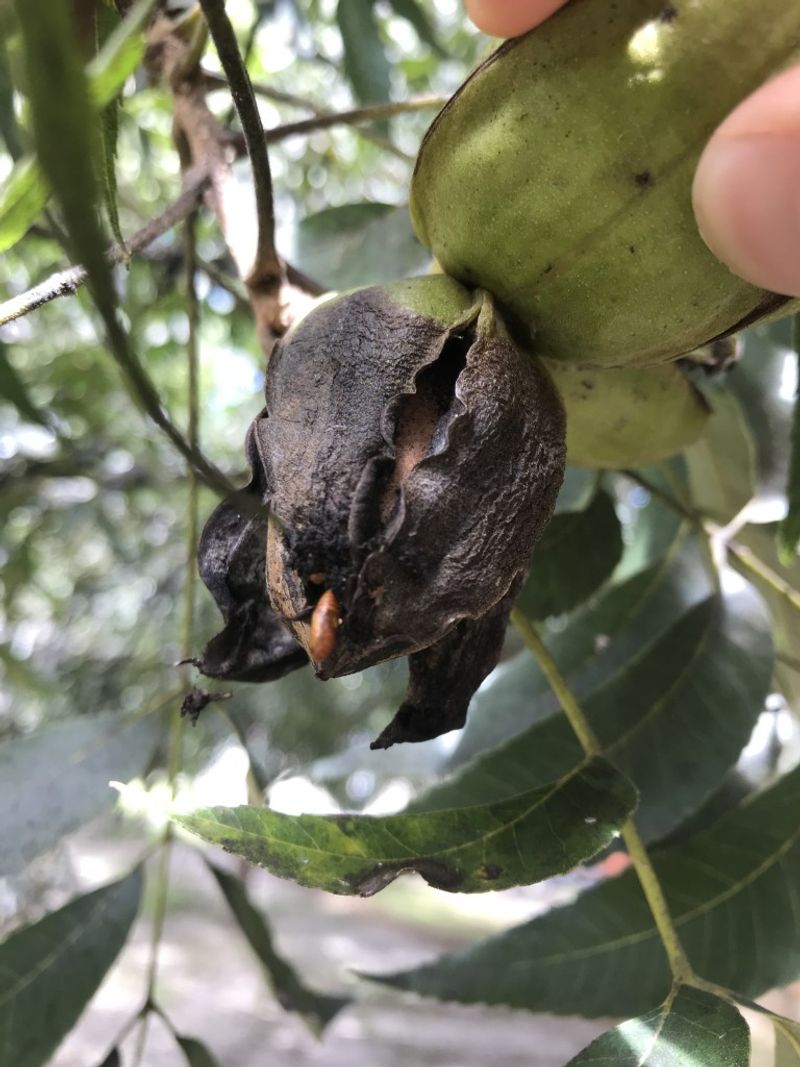
Black lesions on green shucks deserve a different diagnosis from a clean nut that simply dropped.
Pecan scab can infect leaves, twigs, and shucks, and severe nut infection can reduce nut size, lower kernel quality, and cause early drop. Georgia’s warm, wet conditions favor the disease, especially on susceptible cultivars.
By August, the important clue is what the lesions look like and how widespread they are.
Check nuts still on the tree as well as fresh ones on the ground. Scab lesions commonly appear dark on the shuck and can become extensive on susceptible trees.
Leaves may carry lesions too, which strengthens the case for a disease problem rather than a one-time water split event.
Do not expect an August rescue spray to erase established lesions.
Scab management depends heavily on prevention, with fungicide programs that start much earlier in the season.
UGA also warns that adequate coverage on mature home pecan trees often requires commercial spray equipment, which makes routine homeowner treatment difficult.
Use this year’s symptoms as evidence for next season.
Photograph the shucks, note the cultivar when known, and contact the county Extension office for confirmation. For future trees, cultivar resistance and good air movement matter far more than a desperate late spray.
Scab does not arrive with a polite label.
It leaves black punctuation marks across the crop.
Read those marks now, because they can shape a much better plan for next spring.
8. Focus On The Crop Still Hanging
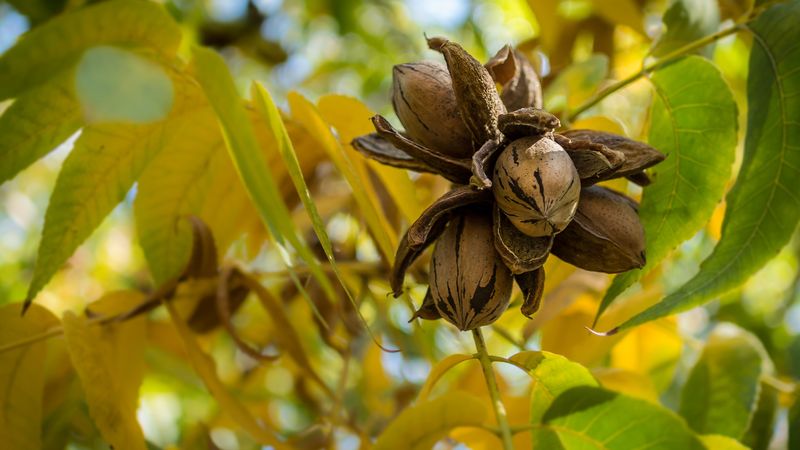
The most useful August habit is to stop the lawn tally and compare the crop above it.
UGA specialists make this point directly during late-summer drop. Natural physiological loss and water-stage split occur every year to some degree, and a tree can shed a large number of nuts while a strong crop still stays overhead.
Use the ground as a sample tray.
Collect fresh fallen nuts from several parts of the canopy. Sort them into groups: clean outside, internally split, punctured, scarred, dark with lesions, or occupied by larvae. A repeated pattern tells you far more than the total number under the tree.
Then look up.
Check cluster density, leaf condition, fresh shuck damage, and the pace of new drop over the next several days.
A canopy that still looks full with a drop that slows deserves a different response from a tree that loses nuts rapidly and shows active pest or disease injury.
Keep records simple.
Note the date, recent rain, long dry spells, cultivar when known, and the main symptom inside each sampled nut. Those details give a county Extension agent something concrete to work with.
Avoid emergency sprays, fertilizer, or heavy root-zone disturbance without a diagnosis.
August pecans already have enough stress.
The lawn tells you who left the party.
The canopy tells you how many guests are still upstairs, and that is the number that matters most.