The Overlooked Yard Threat Growing In Wet Corners Across Indiana Right Now
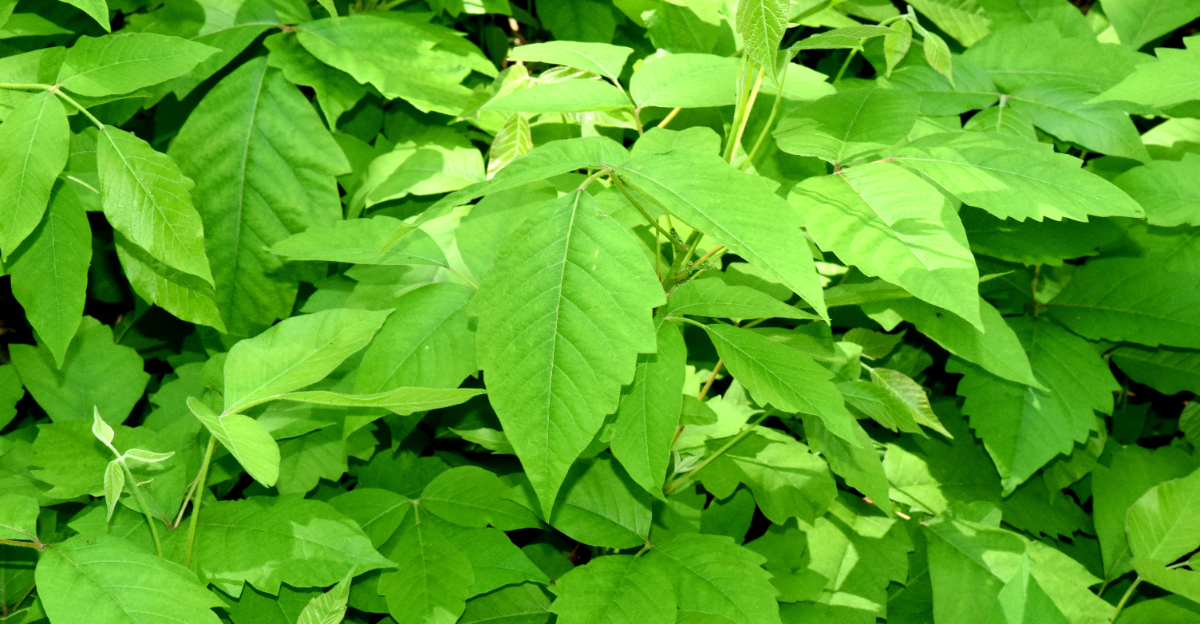
You could walk past real trouble without ever noticing it sitting there. Nothing about this plant looks the least bit concerning to you at a glance. Pale berries and smooth leaves might fool you completely.
Indiana wetlands quietly shelter this shrub near your home. Every part of it, bark to berry, exposes your skin to urushiol. Your skin needs just a quick brush to react strongly and fast.
Smoke from a smoldering branch can carry that toxin into your lungs. Breathing it in can affect you worse than touching it. Backyards across Indiana might hide this shrub near you.
Pulling it barehanded could cost you sudden lasting discomfort. Rashes and irritation can appear fast before you even notice. Clinics treat cases exactly like yours every recent summer.
Nobody expects a quiet plant to outmatch a venomous snake, yet here you are. Knowing this could spare your skin from real discomfort.
Why Snakes Get More Attention Than This Shrub Does
Snakes get all the press. A copperhead sighting clears a yard faster than a thunderstorm, and people post warnings in neighborhood groups within minutes.
Poison sumac, on the other hand, gets ignored. Nobody shares a photo of a shrub with an urgent warning caption, even though this plant can cause far more discomfort than most snake encounters.
A copperhead bite is genuinely serious, but statistics tell a quieter story. According to general toxicology data, most copperhead bites, while painful, are rarely fatal in healthy adults.
Poison sumac reactions, though, can escalate fast. Severe cases have triggered systemic responses requiring hospitalization, especially when the plant is heated and the smoke is inhaled.
The fear gap between snakes and plants is mostly a perception problem. Snakes move, hiss, and coil, which triggers an instinctive alert response. A shrub just stands there, looking like every other shrub in your hedgerow.
That stillness is exactly what makes poison sumac so effective at catching people off guard. You do not get a warning rattle before you brush against a branch.
Copperheads want nothing to do with you and will retreat if given the chance. Poison sumac has no such instinct.
It simply waits in your wet yard corner, persistent and potent, capable of causing a reaction the moment you reach in without gloves.
What Poison Sumac Actually Looks Like Nearby
Poison sumac does not look scary. That is the whole problem, and it is worth sitting with that fact for a moment.
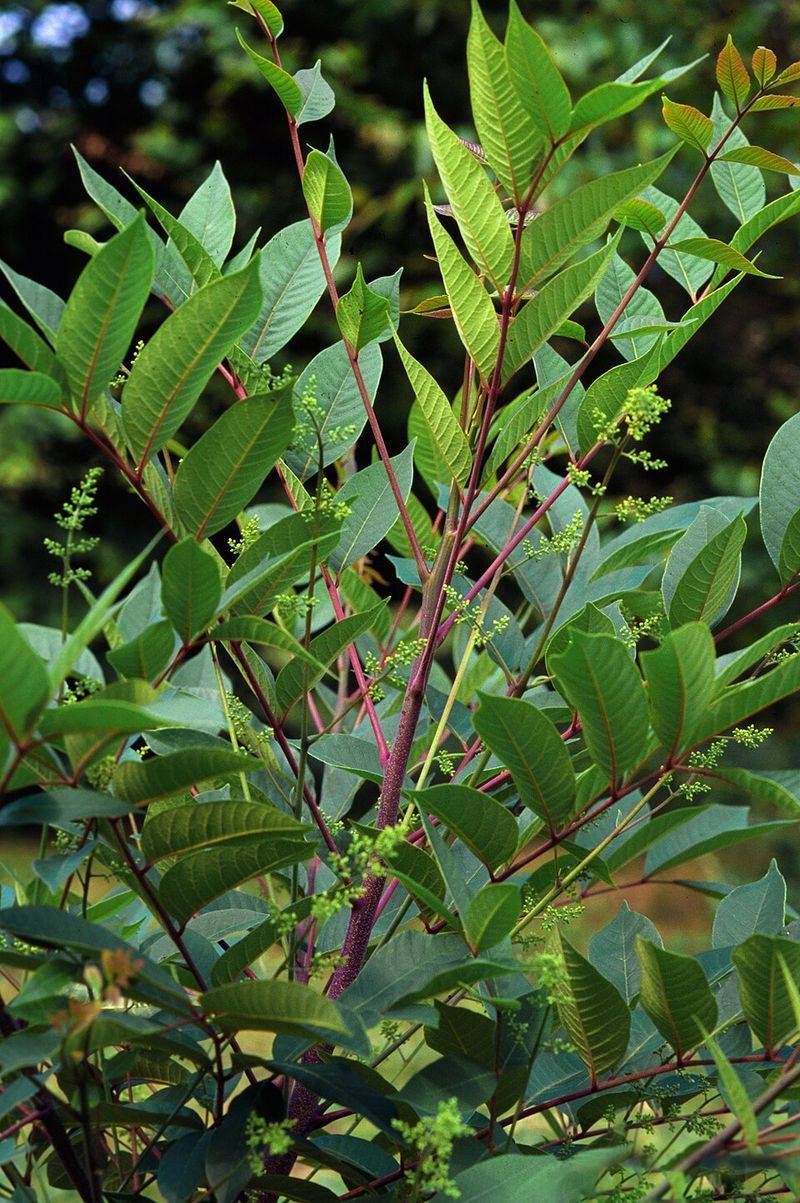
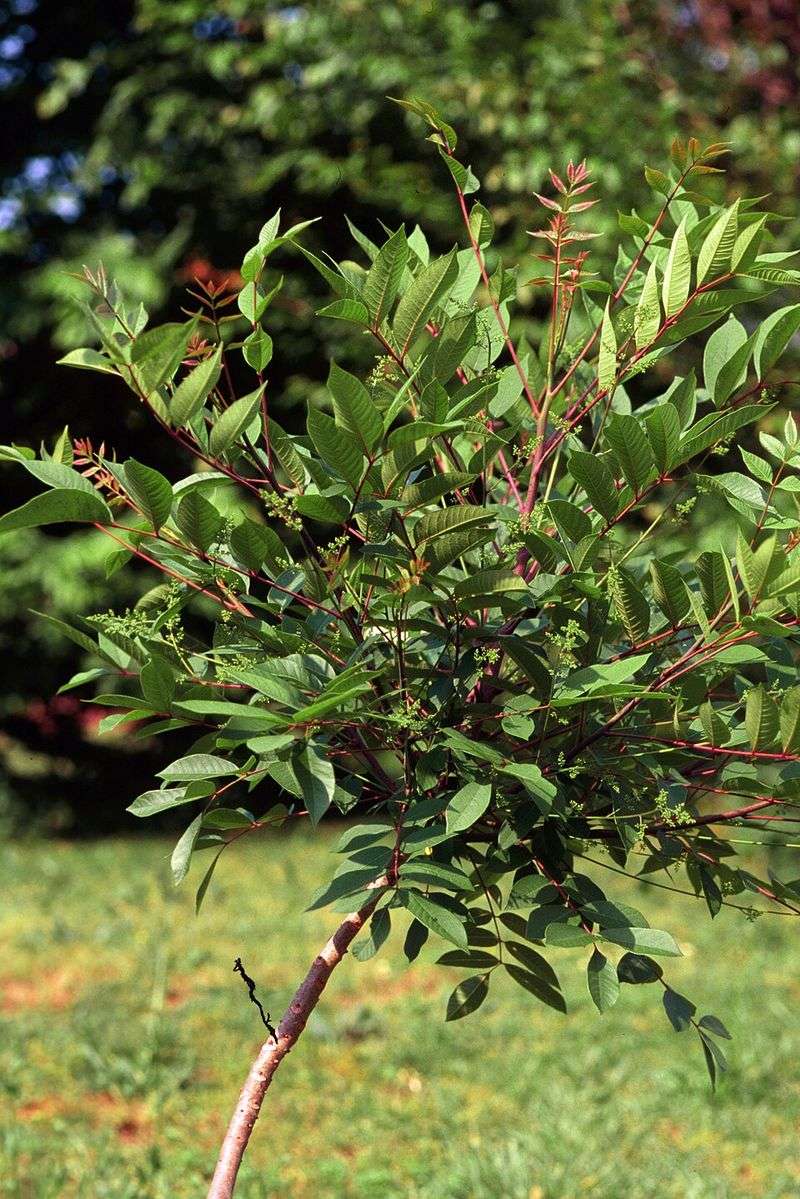
The shrub grows between five and twenty feet tall, which means it can look more like a small tree than a garden weed. Its stems are smooth and often reddish, especially on younger growth.
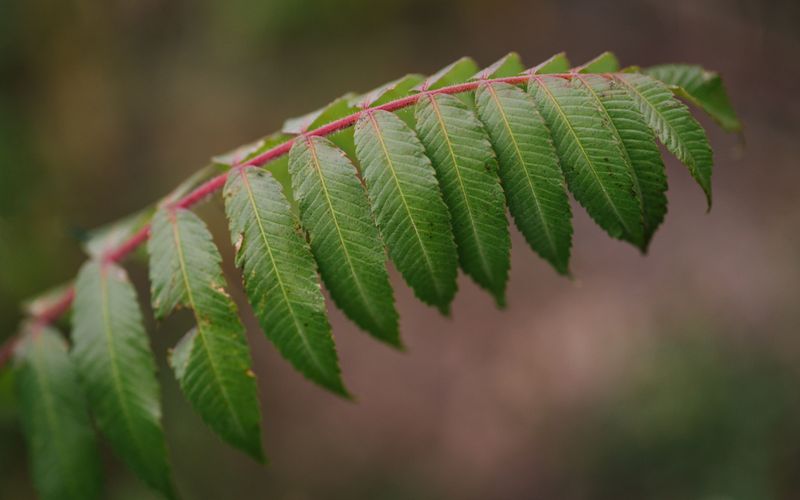
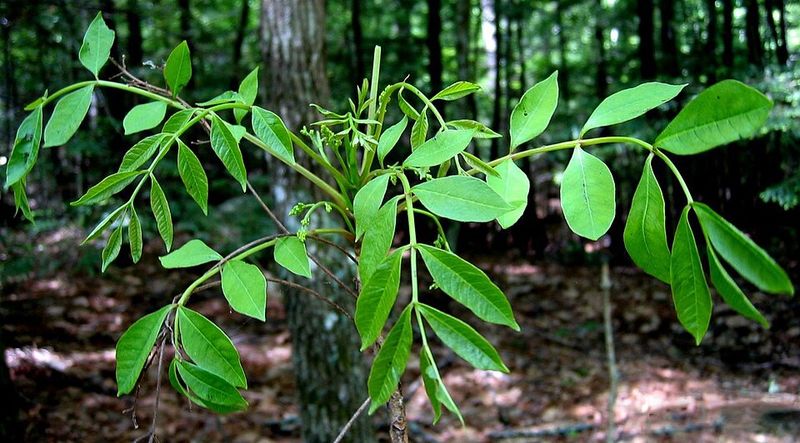
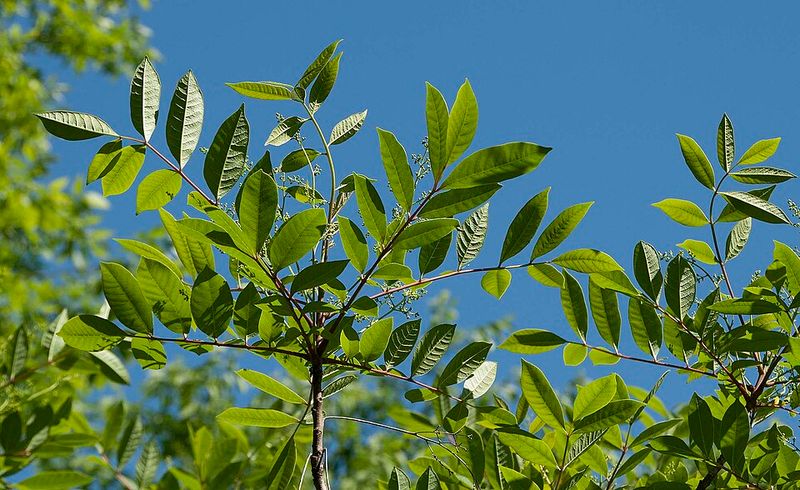
Each leaf is compound, meaning one stem holds a row of smaller leaflets. You will typically count seven to thirteen leaflets arranged in pairs, with one single leaflet at the very tip.
The leaflets are oval, smooth-edged, and a rich dark green on top. Their undersides are lighter, almost pale, and the midrib running down each leaflet is often red or orange-tinged.
Your Indiana Garden Changes Every Week. Your Plan Should Too.
Gardening in Indiana changes quickly throughout the season. Every Friday you’ll receive a simple weekly plan showing exactly what to plant, prune, fertilize, harvest, and protect so you never miss the right timing.
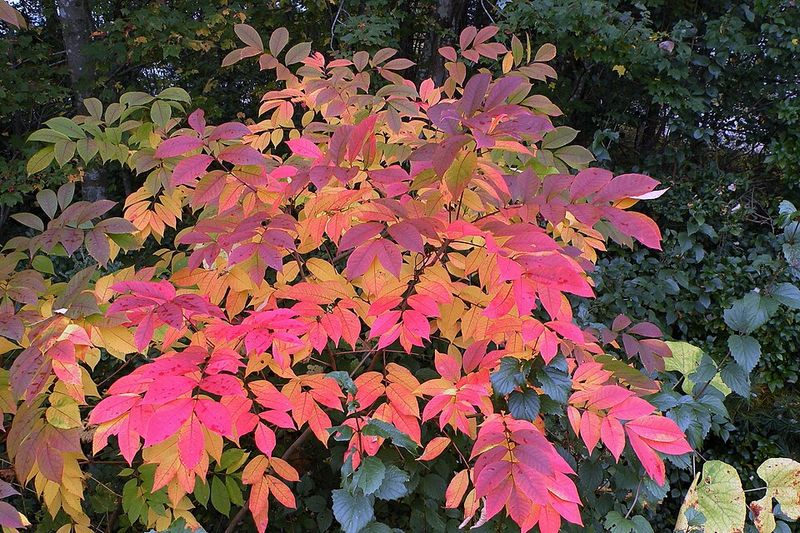
In autumn, those leaves turn a stunning red and orange. Many people actually stop to admire the fall color before realizing what they are standing next to.
The berries are another key identifier. Poison sumac produces small, round, pale yellow or grayish-white berries that hang in loose clusters near the center of the plant. Safe sumac varieties, by contrast, have red berries clustered tightly at the top.
If you spot a tall shrub in a wet area with smooth leaflets, reddish stems, and pale berries, treat it as poison sumac until proven otherwise. Snap a photo, step back, and look it up before touching anything around it.
The Wet, Shaded Spots It Quietly Prefers
Poison sumac is picky about real estate. It does not spread across dry, sunny lawns the way dandelions do.
This plant loves water. Swamps, bogs, wet forest edges, and drainage ditches are its favorite addresses.
If your property has a low-lying corner that stays soggy after rain, that spot deserves a closer look.
Across Indiana, you will find it near creek banks, pond edges, and marshy areas tucked behind suburban neighborhoods. It often grows alongside cattails, willows, and other moisture-loving plants.
Shaded conditions suit it well. Poison sumac thrives under a partial canopy where direct sun is filtered and the soil stays consistently damp. It is not a plant that struggles in tough conditions.
The tricky part is that these wet, shaded corners are exactly where people wander during yard cleanup, trail clearing, or property maintenance. You pull on some gloves, grab a pair of loppers, and wade into the overgrowth without knowing what is in there.
Children and dogs also love these hidden spots. A creek edge or a mossy corner feels like an adventure, and neither a curious kid nor a happy dog is checking leaf shapes before diving in.
If your Indiana yard backs up to any kind of natural water feature, make it a habit to survey those edges before letting anyone roam freely. Knowing where poison sumac prefers to grow is a major step toward avoiding an unexpected reaction.
Why This Reaction Can Be Worse Than Poison Ivy’s
Poison ivy already has a fearsome reputation, and for good reason. A large number of Americans deal with its itchy, blistering rash every year.
Poison sumac, though, operates on a different level. Some dermatologists describe sumac reactions as more intense and faster-spreading than a typical poison ivy rash, though individual responses vary.
The culprit is urushiol, an oily resin present in all three troublemakers: poison ivy, poison oak, and poison sumac. Sumac simply carries a higher concentration of it per surface area of plant.
Contact with even a tiny amount can trigger a reaction within twelve to seventy-two hours. The skin turns red, swells, and develops fluid-filled blisters that itch persistently for days.
Scratching the blisters does not spread the rash, but it can introduce bacteria and cause secondary infections. The rash spreads based on how much urushiol touched different parts of the body, not from blister fluid itself.
For people with heightened sensitivity, the reaction can move beyond skin. Swelling around the eyes, difficulty breathing, and widespread inflammation are all documented in severe cases.
Over-the-counter hydrocortisone and antihistamines help mild cases, but a severe poison sumac reaction usually calls for prescription-strength steroids from a doctor.
If your face swells or breathing feels tight after any plant exposure, skip the pharmacy and head straight to urgent care.
Heating It Turns Smoke Into A Hazard
Yard cleanup days feel productive. You pile up brush, set it alight, and watch months of overgrowth disappear into smoke.
If poison sumac ends up in that pile, though, the smoke becomes a serious problem. Heating the plant releases urushiol particles into the air, and those particles do not lose their potency just because they are airborne.
Inhaling sumac smoke can irritate the airways, trigger inflammation in the lungs, and cause reactions far more alarming than skin contact alone. People with asthma or respiratory sensitivities face an even higher risk.
The frightening part is that you may not realize what you heated. Poison sumac mixed into a brush pile looks like any other woody debris. By the time symptoms appear, you have already been exposed.
Symptoms from inhaled urushiol can include throat tightness, coughing, wheezing, and in severe cases, respiratory distress requiring emergency treatment. These symptoms can appear hours after the exposure, long after the flame is extinguished.
Never heat or dispose by fire of unknown vegetation from wet or wooded areas of your Indiana yard. Bag it, bag it again, and check with your local waste management service about proper disposal of hazardous plant material.
Outdoor workers in wet, wooded regions occasionally report similar exposure during controlled burns and vegetation-clearing jobs.
If the pros can get caught off guard, a weekend yard warrior certainly can too. Respect the smoke as much as you respect the plant itself.
Simple Steps To Spot And Remove It Safely
Knowing the threat is step one. Doing something smart about it is the part that actually protects your family.
Start by walking your property edges, especially any wet or shaded corners, in early summer when leaves are fully open and identification is easiest. Bring a field guide or use a trusted plant ID app on your phone.
Never touch suspected poison sumac with bare hands. Wear chemical-resistant gloves, long sleeves, long pants, and closed-toe shoes. Tuck your pants into your socks so no skin is exposed at the ankle.
Eye protection matters more than most people realize. Brushing a branch and getting sap near your eyes can cause serious swelling and discomfort that lingers for days.
For small plants, you can cut the shrub at the base and bag the debris immediately in heavy-duty garbage bags. Double-bag everything and seal it tightly before disposal.
Larger or deeply rooted plants are best handled by a professional. Landscapers and arborists familiar with hazardous vegetation can remove poison sumac safely and efficiently.
The cost of a pro is far less than a week of prescription steroids and missed work. After any removal, wash all clothing separately in hot water and shower with soap as soon as possible.
Urushiol can linger on fabric, tools, and pet fur for hours after contact. Staying ahead of this everyday shrub keeps your Indiana yard safe and your summer plans intact.