More Praying Mantises Near Your Texas Home Means Fewer Grasshoppers (Here’s How To Attract Them)
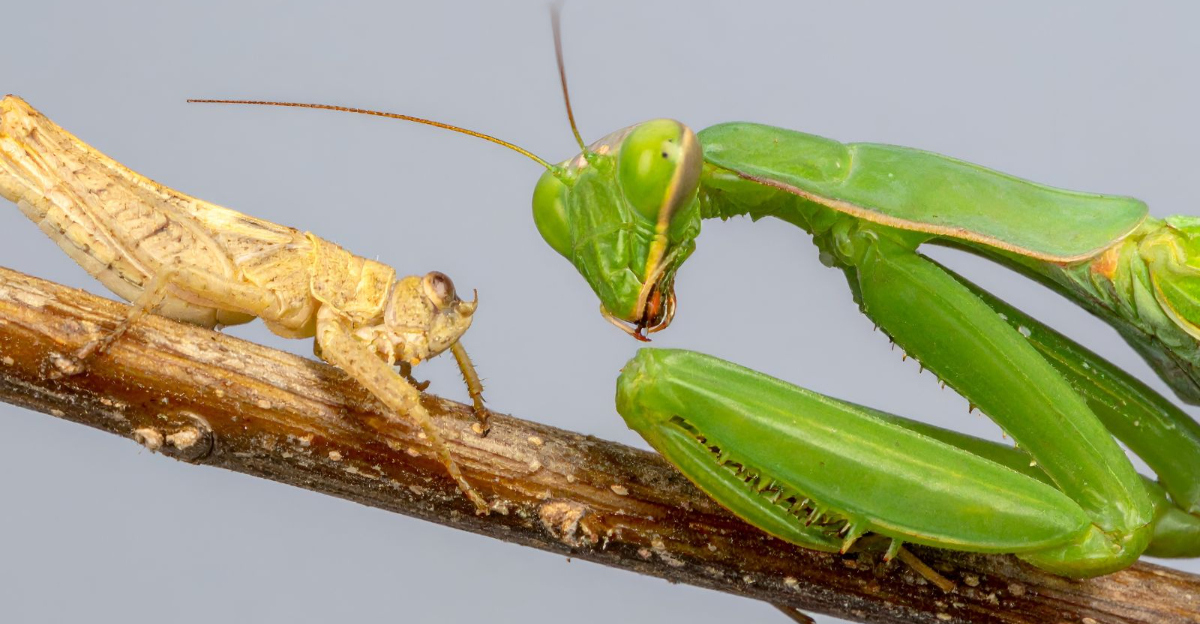
Few backyard moments stop a Texas gardener in their tracks quite like spotting a praying mantis.
One second you are checking on your tomato plants, and the next there is this remarkable, alien-looking insect perched on a stem, completely still, staring at you like it has been expecting you.
Genuinely one of the cooler wildlife encounters a backyard can offer.
Praying mantids are ambush predators with a broad appetite, and yes, grasshoppers can absolutely end up on that menu, which gets the attention of a lot of homeowners dealing with grasshopper pressure during hot summers.
The idea of having a natural predator working the garden is appealing, and mantids do contribute to the overall predator community in a Texas yard.
1. Grasshoppers Can Become Part Of A Mantid’s Menu
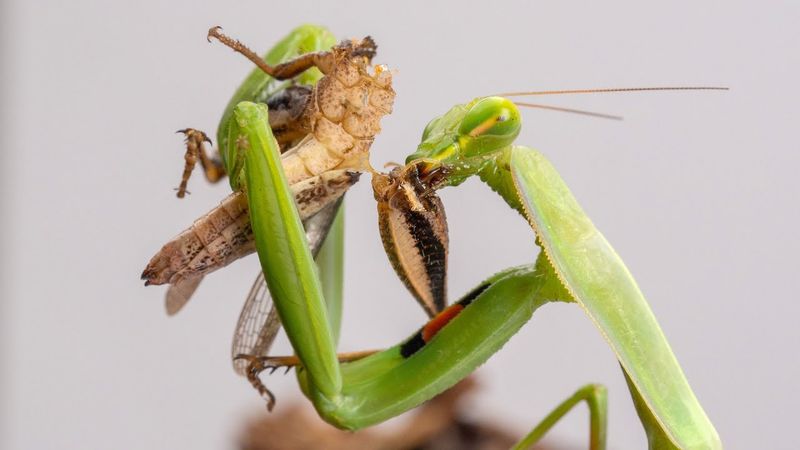
During a busy summer, all kinds of insects move through garden beds, shrubs, and grassy patches, and praying mantids are quietly waiting for whatever comes close enough to grab.
Grasshoppers are among the insects that can become a meal when one wanders within reach of a hunting mantid.
Their size often makes them a suitable target, depending on the mantid’s own size and the grasshopper’s proximity.
Mantids do not single out grasshoppers above other prey. They are generalist predators, meaning they capture whatever suitably sized insect happens to pass within striking distance.
A mantid in a Texas landscape might take a grasshopper one day and a moth, fly, or leafhopper the next, depending entirely on what shows up nearby.
Because of this broad approach to feeding, the presence of mantids in a yard does not mean grasshopper populations will automatically shrink.
Mantids may reduce individual grasshoppers here and there, but they are not specialized hunters working through a population the way a targeted control method might.
Thinking of them as one small thread in a larger web of natural predation is a more accurate and realistic way to appreciate what they contribute to a Texas garden.
2. Patient Ambush Hunting Puts Passing Insects Within Reach
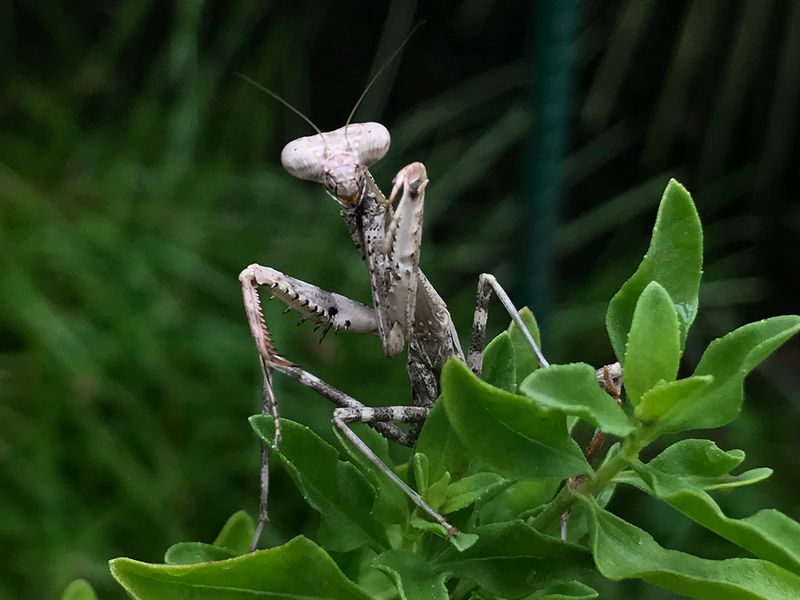
Watching a mantis sit completely still on a flower stem for long stretches of time might make it look like the insect is simply resting, but something more calculated is happening. Mantids are ambush hunters, and that stillness is a core part of how they feed.
Rather than actively patrolling a yard in search of grasshoppers or other insects, they hold a position on vegetation and wait for prey to move into range.
Leaves, stems, shrubs, flower heads, and woody branches all serve as hunting platforms where a mantid can blend in and stay alert. Their front legs are specially adapted for grasping, snapping forward quickly to secure an insect before it can react.
This style of hunting is effective when insect activity is high around the vegetation where a mantid has chosen to wait.
In a Texas landscape with varied plant structure and active insect populations during warm months, mantids can find plenty of opportunities without ever moving far from a single perch.
Your Texas Garden Changes Every Week. Your Plan Should Too.
Gardening in Texas changes quickly throughout the season. Every Friday you’ll receive a simple weekly plan showing exactly what to plant, prune, fertilize, harvest, and protect so you never miss the right timing.
A gardener who notices a mantid returning to the same shrub or flower bed over several days is likely watching a successful hunter working a productive spot.
Understanding this behavior helps explain why dense, active plantings in a Texas yard can be more accommodating to mantids than bare or heavily pruned spaces.
3. Grasshoppers Are Only One Part Of A Mantid’s Diet
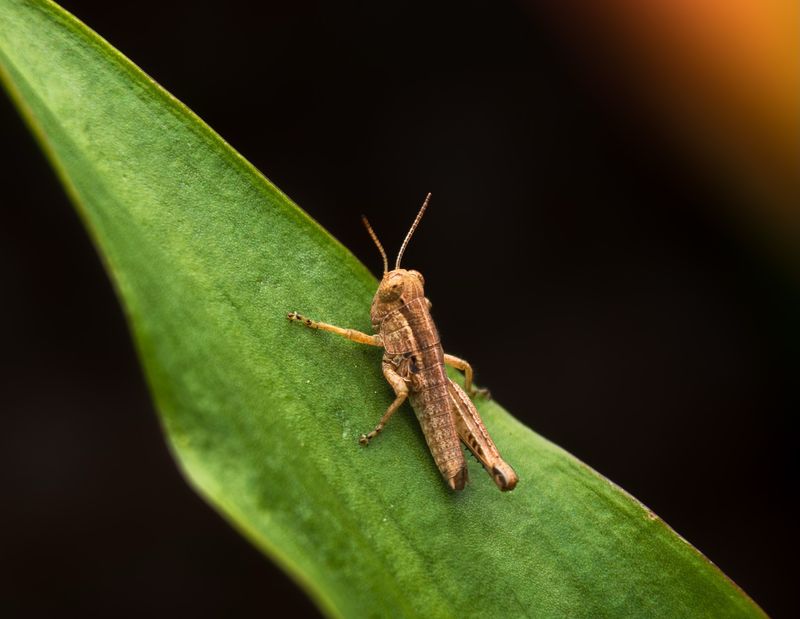
Labeling a praying mantis simply as a grasshopper predator misses a much bigger picture. These insects feed on a remarkably wide range of prey, and the list includes many insects that gardeners in Texas actually want to keep around.
Flies, moths, leafhoppers, beetles, and even butterflies and bees can all become meals for a mantid that happens to be positioned near a flower or flowering shrub.
That broad diet places mantids in a complicated spot within the garden food web. They are not selectively removing pests while leaving pollinators alone.
A mantid hunting near a pollinator garden might capture a bumblebee just as readily as it might take a grasshopper, simply because the bee came within reach first.
This is not a flaw in the mantid’s behavior but rather a reflection of how generalist predators function in nature.
Recognizing this complexity helps gardeners set realistic expectations. Supporting mantids in a yard means welcoming a predator that participates in the full insect community, not one that focuses only on the insects causing plant damage.
Mantids can be a fascinating and ecologically meaningful part of a Texas landscape, but understanding their role honestly, rather than idealizing them, leads to better decisions about how to manage a yard and its insect life overall.
4. Mantids Have Clear Limits As Grasshopper Control
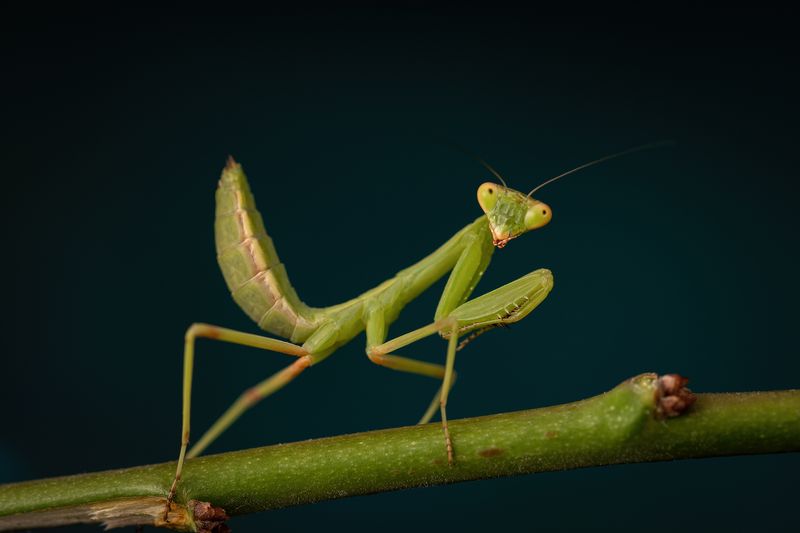
When grasshopper populations build up significantly in a Texas landscape, a few praying mantids scattered through the yard are unlikely to bring those numbers down on their own.
Mantids occur at relatively low densities compared with many other beneficial insects, and their generalist feeding habits mean grasshoppers represent only a fraction of what they consume throughout the season.
Counting on them to handle a serious grasshopper problem would set up most gardeners for disappointment.
Smaller predatory insects, parasitic wasps, and other natural enemies often have a greater cumulative effect on pest populations simply because they occur in much higher numbers.
Mantids contribute to that predator community, but their individual impact on any single pest species tends to be modest.
Their value lies more in their participation in a diverse predator guild than in their ability to target any one insect group.
When grasshopper damage becomes significant, research-based management options supported by Texas A&M AgriLife Extension are worth exploring.
Baits, targeted treatments, and timing strategies based on grasshopper life stages can be more effective approaches when populations are high enough to cause real plant damage.
Mantids can coexist with those strategies, but they work best as part of a broader, balanced approach to managing insect pressure rather than as a standalone solution.
5. Dense Garden Vegetation Gives Mantids Places To Hunt
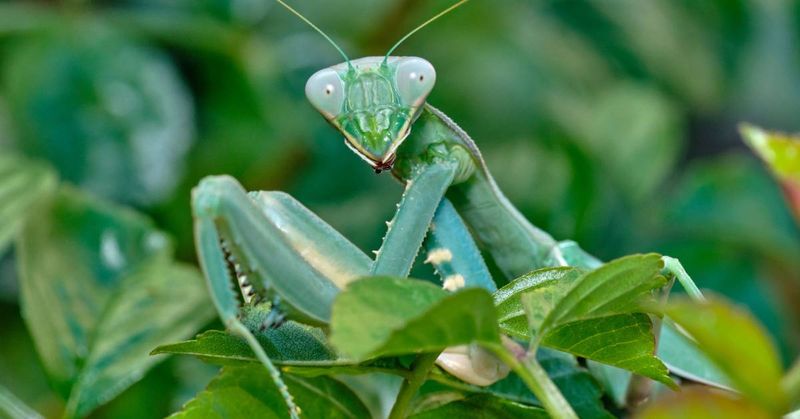
A garden with varied plant heights, flowering shrubs, native grasses, and dense beds gives insects of all kinds more places to move, feed, and shelter.
For mantids, that kind of layered vegetation also means more places to perch, conceal themselves while waiting for prey, and eventually deposit egg cases when the season turns.
Creating that structural variety in a Texas landscape is one of the more practical ways to make a yard more accommodating to naturally occurring mantids.
Taller perennial stems, flowering plants that attract insect activity, and woody shrubs with branching structure all offer the kinds of surfaces mantids tend to use.
Native plants can be especially useful because they support diverse local insect communities, which in turn provide mantids with more consistent hunting opportunities.
A yard that draws a variety of insects is more likely to support mantids than one with minimal vegetation and low insect activity.
Framing these habitat improvements as a way to welcome predators that are already present in the region is more accurate than suggesting they will cause mantids to appear from nowhere.
Mantids that naturally occur in a Texas neighborhood may move into a yard that offers good structure and active insect life, but no planting strategy can guarantee their arrival.
Supporting the conditions that make a landscape hospitable is the most realistic goal for any gardener interested in encouraging beneficial predators.
6. Careful Pesticide Use Can Help Conserve Mantids In The Yard
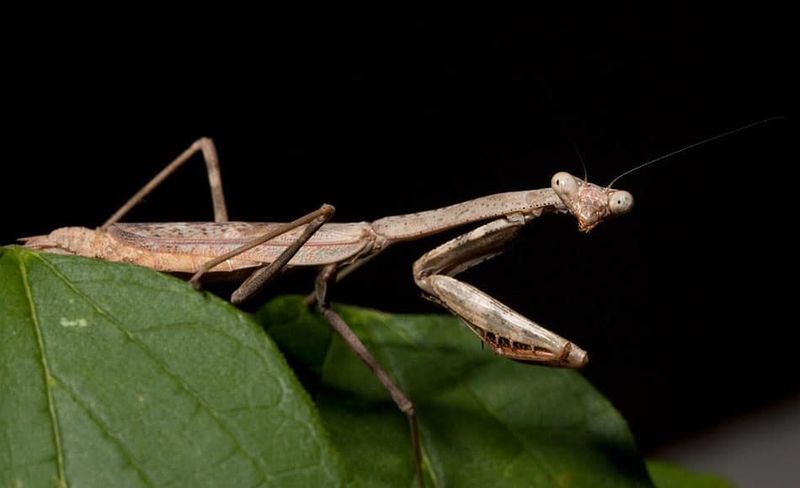
Broad insecticide applications can affect far more than the target pest. Mantids, along with bees, parasitic wasps, and other beneficial insects, can be exposed when sprays are applied widely across a yard or garden.
A mantid that feeds on a recently treated insect or rests on a treated surface may also be affected, which is one reason that thoughtful pest management choices matter for anyone hoping to support naturally occurring predators in a landscape.
Texas A&M Integrated Pest Management principles encourage using the least disruptive treatment that will address a pest problem effectively.
When treatment is needed, applying products in a targeted way, choosing the right timing, and selecting materials with lower impact on non-target insects can help preserve the beneficial insect community already working in a yard.
Avoiding unnecessary preventive spraying when pest pressure is low is another straightforward step.
No pesticide is completely without effect on the broader insect community, so checking product labels and following research-based guidance before applying anything is always worth the time.
Consulting Texas A&M AgriLife Extension resources for specific pest situations can help homeowners make informed choices rather than defaulting to broad treatments out of habit or convenience.
Protecting mantids and other beneficial predators often comes down to treating only when genuinely needed and being selective about how and where products are used.
7. Recognizing Mantid Egg Cases Can Help Protect The Next Generation
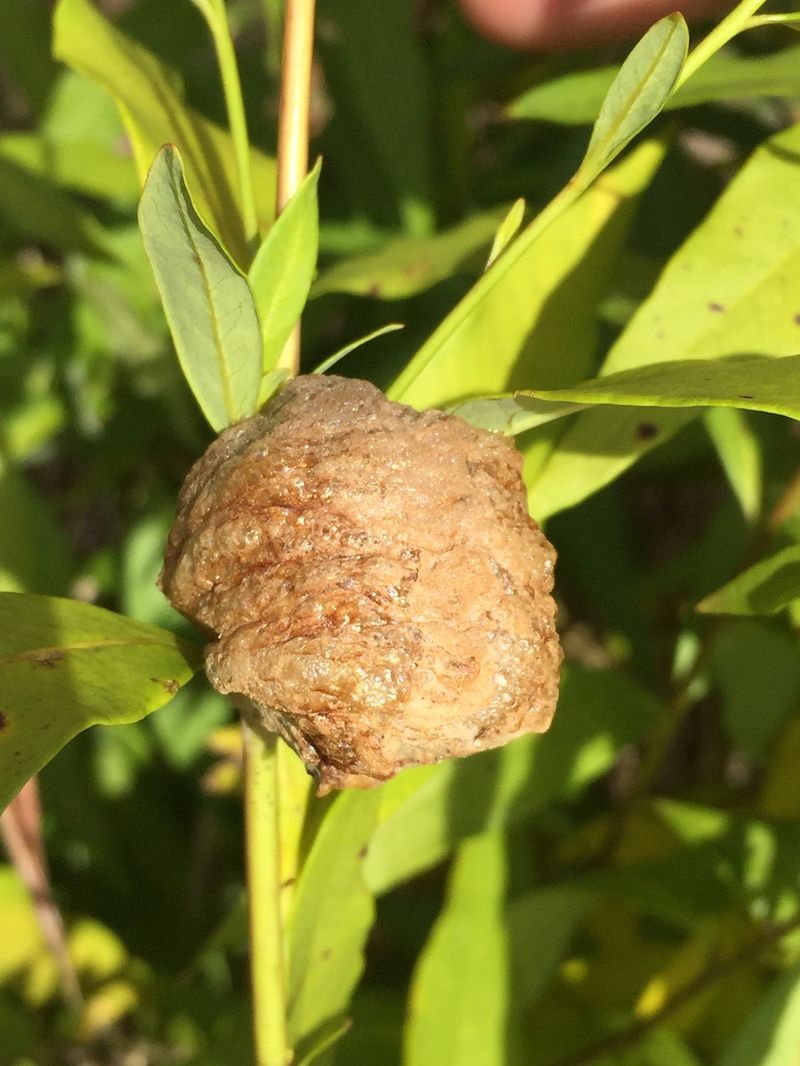
Come late summer and into fall, female praying mantids in Texas begin depositing egg masses on plant stems, twigs, vines, and other firm surfaces.
These structures, called oothecae, are foamy cases that harden into a protective covering around dozens to hundreds of eggs, depending on the species.
They can look like a small, tan, papery lump attached to a stem, and they are easy to overlook or accidentally remove during fall garden cleanup.
Knowing what an ootheca looks like can make a real difference for gardeners who do seasonal pruning or clearing. Cutting back stems that hold egg cases removes a generation of mantids before they ever have a chance to hatch.
Taking a moment to inspect stems and twigs before cutting, and leaving any egg cases in place where possible, helps preserve the mantids that naturally occur in a Texas landscape without requiring any additional effort or expense.
Because different mantid species produce oothecae with slightly different shapes and textures, identifying a case to a specific species can be difficult without expert guidance.
The safest approach is simply to recognize the general form and leave it undisturbed.
Egg cases found on stems that must be pruned can sometimes be moved to a sheltered spot nearby on similar vegetation, though moving them carefully and placing them in a comparable location is preferable to discarding them entirely.
8. Commercial Mantid Egg Cases Deserve Caution In Texas Gardens
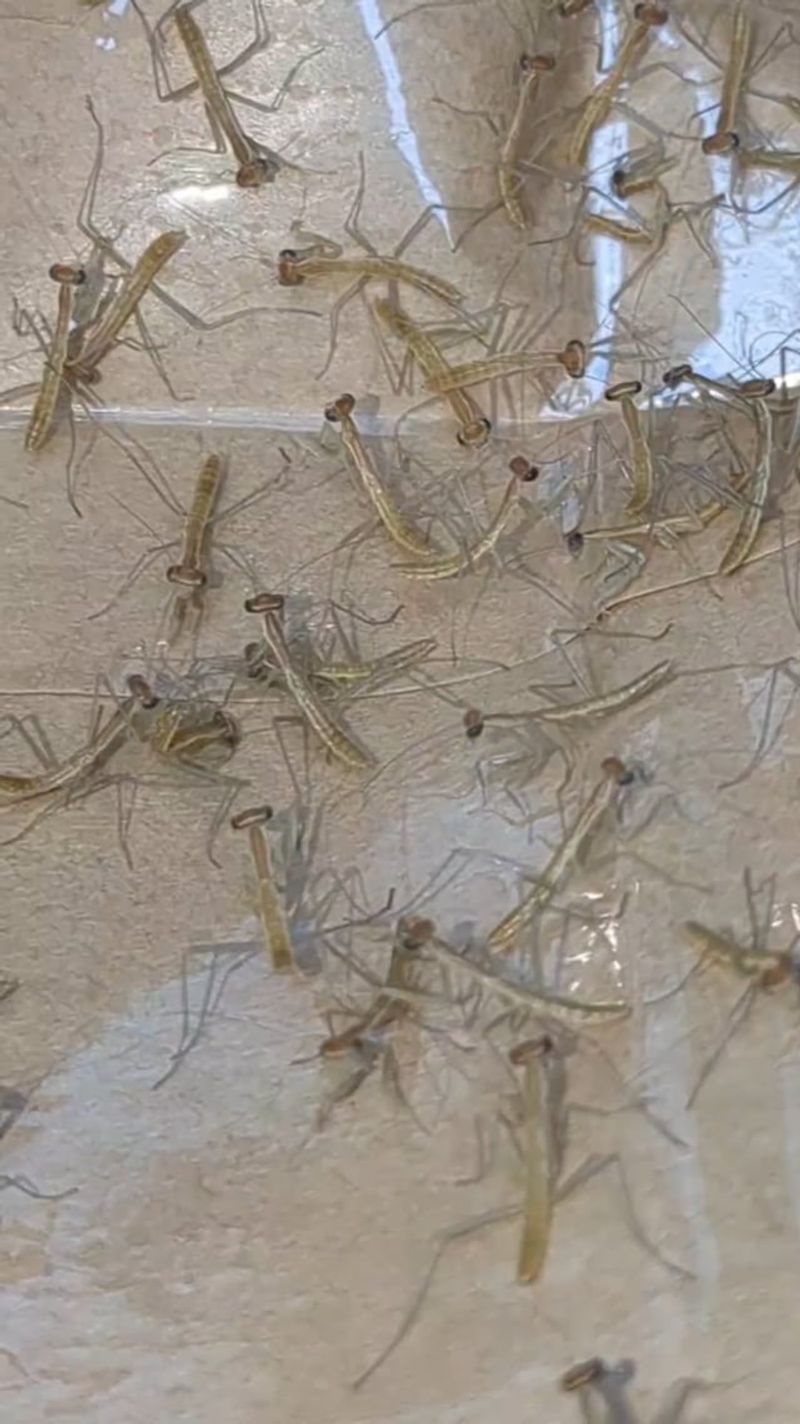
Garden centers and online retailers sometimes sell praying mantid egg cases as a biological control product, marketing them as a natural way to reduce pest insects in a yard.
The idea sounds appealing, but there are some important considerations for gardeners before making that kind of purchase.
Not every mantid species sold commercially is native to Texas, and releasing non-native insects into a local landscape raises questions that are worth thinking through carefully.
Texas A&M resources have noted that commercially available mantids may include species such as the Chinese mantid, which does not naturally occur.
Introducing insects that are not part of the local ecosystem is a different matter from supporting the mantids that already live in neighborhood.
Non-native mantids may compete with native species, consume the same broad range of prey including beneficial insects, and offer no particular advantage over the naturally occurring predators already present.
Purchasing egg cases also does not address the underlying habitat or management conditions that determine whether mantids thrive in a yard over time.
A single release of hatchlings into a landscape that lacks suitable vegetation, prey diversity, or protection from pesticides is unlikely to produce lasting results.
Supporting the mantids that naturally occur in Texas through habitat, careful cleanup, and thoughtful pest management is a more grounded and ecologically sound approach than buying and releasing insects from an outside source.