This Is When And How To Harvest Zucchini In Ohio For Maximum Yields
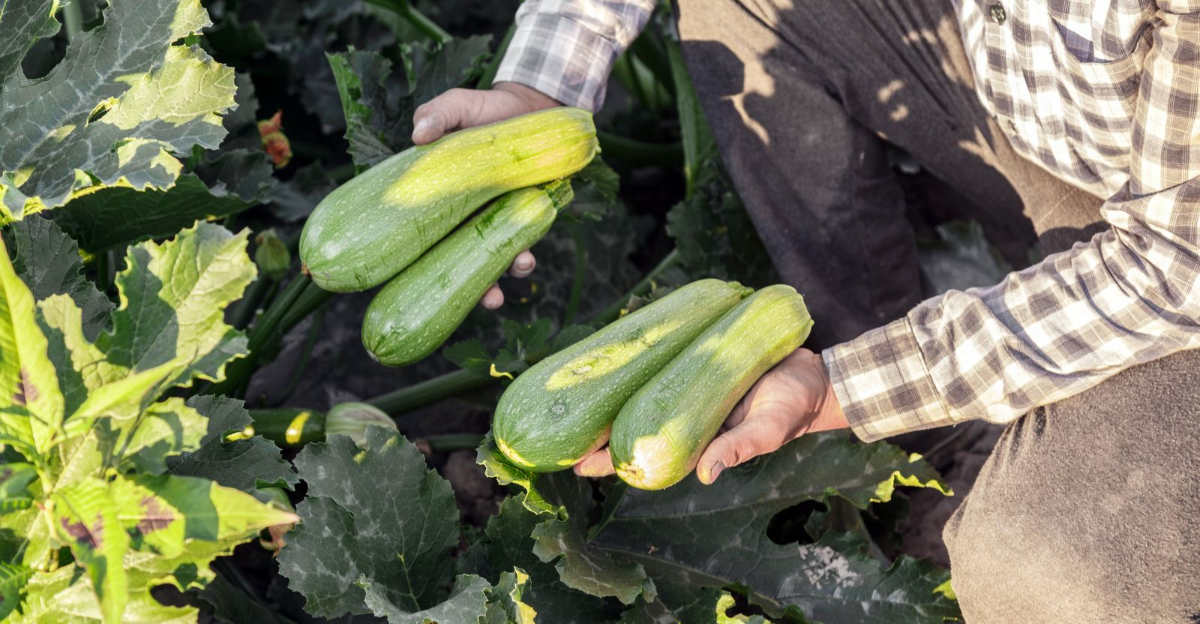
Zucchini has a very particular sense of humor. You check the plant on Monday, everything looks perfectly manageable, and by Wednesday there is something under those leaves that is roughly the size of a small boat.
If you have grown zucchini in an Ohio summer, you know exactly what this feels like, and you probably have at least one story about a zucchini that got away from you.
These fruits develop fast, especially during warm stretches, and missing the ideal harvest window by even a day or two can mean the difference between tender, flavorful zucchini and something that belongs more in a county fair display than in your kitchen.
Knowing when and how to pick makes a genuine difference in eating quality and keeps your plants producing steady and strong all season long.
1. Harvest Zucchini While The Fruits Are Still Young And Tender
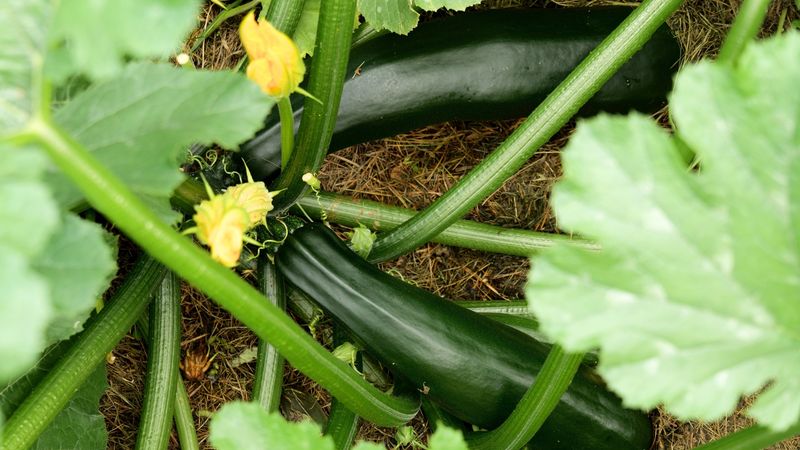
Walking through the vegetable garden on a warm Ohio morning and spotting a row of bright green zucchini is one of summer’s simple pleasures.
What many gardeners discover, sometimes the hard way, is that the best time to pick zucchini is well before the fruit looks fully grown.
Zucchini is a summer squash, which means it is harvested while the fruit is still immature rather than fully ripened on the vine.
Young zucchini tends to have softer, more tender skin and a mild, pleasant flavor that works well in a wide range of recipes.
As the fruit continues to grow, the skin gradually toughens, the seeds become larger and more noticeable, and the overall texture can shift in ways that affect cooking quality.
Leaving zucchini on the plant too long does not make it better or more flavorful.
Picking fruit while it is still young also matters for the plant itself. When a plant carries mature, oversized squash for an extended period, it may put resources into those existing fruits rather than developing new ones.
Harvesting at the right stage can support a more consistent supply of tender, kitchen-ready zucchini throughout Ohio’s summer growing season.
The general goal is to enjoy zucchini at its freshest, most flavorful stage rather than waiting for it to reach its maximum possible size.
2. Aim For Zucchini Around 6 To 8 Inches Long
Most experienced vegetable gardeners have a rough size target in mind when they head out to check the zucchini bed, and for good reason.
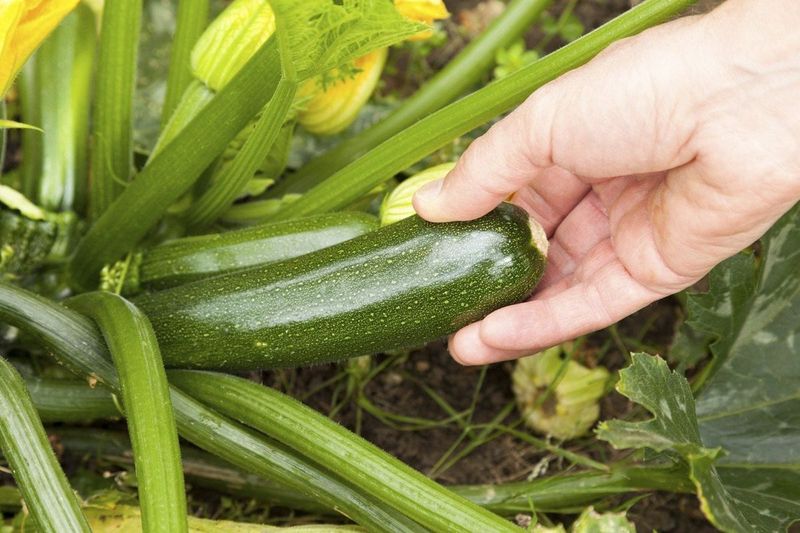
Zucchini is commonly harvested when the fruit reaches around 6 to 8 inches in length, which is generally when texture, flavor, and skin tenderness are at their best.
At this stage, the skin is relatively smooth and easy to slice through, and the seeds inside are still small and soft.
That said, treating 6 to 8 inches as a strict cutoff for every zucchini in every garden would be an oversimplification. Cultivar matters quite a bit, since some varieties are naturally more compact while others grow longer before reaching comparable maturity.
Intended use in the kitchen can also shift what counts as ideal. A zucchini destined for stuffing may be picked at a slightly larger size, while one headed for a quick saute might be harvested even smaller.
Your Ohio Garden Changes Every Week. Your Plan Should Too.
Gardening in Ohio changes quickly throughout the season. Every Friday you’ll receive a simple weekly plan showing exactly what to plant, prune, fertilize, harvest, and protect so you never miss the right timing.
A zucchini that has grown noticeably past 8 inches is not automatically unusable. However, the skin may be tougher, the seeds more prominent, and the overall texture less appealing for many common preparations.
Rather than relying on length alone, Ohio gardeners generally do well by combining size with a quick check of skin firmness and overall fruit condition before making the call to harvest.
Flexibility and observation together tend to produce better results than any single measurement.
3. Check Zucchini Plants Every Day Or Two During Peak Production
Few things surprise a first-time zucchini grower more than how fast these fruits can change size between garden visits.
A small zucchini that barely registers during Monday’s walk-through can be noticeably larger by Wednesday, and considerably bigger still by Friday.
Under warm Ohio summer conditions with adequate moisture, zucchini can enlarge remarkably quickly once fruit begins developing on the plant.
Checking plants every day or every other day during peak production can make a meaningful difference in catching fruit while it is still young and tender.
This kind of frequent monitoring helps gardeners stay ahead of the plant’s rapid growth cycle rather than constantly playing catch-up with oversized squash.
Building a short daily garden check into the morning or evening routine tends to work well for many Ohio growers during the heart of summer.
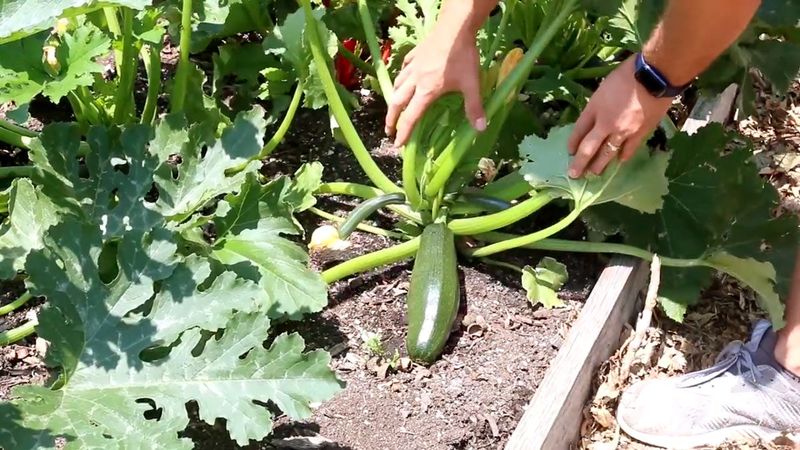
One thing worth keeping in mind is that zucchini plants produce very large, broad leaves that can easily hide developing fruit from view. A fruit that looked tiny during the last visit may be tucked beneath a leaf canopy and growing steadily out of sight.
Gently moving leaves aside and looking under the plant rather than just scanning from above can help reveal zucchini that might otherwise go unnoticed until they have grown far beyond the preferred harvest size.
A little extra attention during peak production tends to pay off noticeably in the kitchen.
4. Pick Frequently To Keep Plants Producing Young Fruit
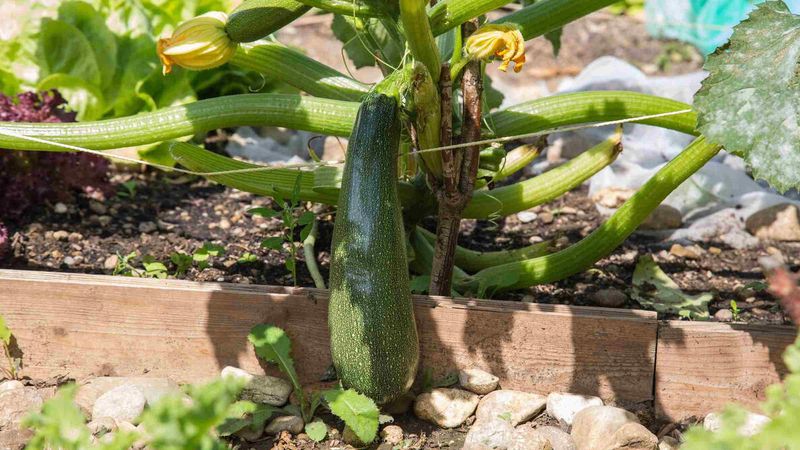
There is a satisfying rhythm to a well-tended zucchini patch during an Ohio summer, and frequent picking is a big part of keeping that rhythm going. When gardeners harvest regularly, plants are not left carrying mature, oversized squash for extended periods.
This can help support continued fruit development, since the plant is not directing its energy toward maintaining fruits that have already passed their prime eating stage.
It would be an overstatement to say that picking on a specific schedule guarantees a particular number of fruits per week, because plant productivity depends on many factors including weather, pollination, soil conditions, and overall plant health.
However, there is a practical logic to harvesting frequently.
A plant that is regularly relieved of maturing fruit may continue setting and developing new zucchini rather than slowing its production around existing oversized squash.
For Ohio gardeners, the window of peak zucchini production during summer can be relatively concentrated, making consistent harvesting especially worthwhile during those weeks.
Missing a few days during a hot, productive stretch may mean returning to a garden full of large, tough-skinned squash rather than the tender young fruit that works best in most recipes.
Keeping a small harvest container nearby during garden visits makes it easier to pick zucchini as you spot them rather than making a separate trip just for harvesting.
Small habits like that can add up meaningfully over a full growing season.
5. Look For Firm Fruit With Tender Skin At Harvest Time
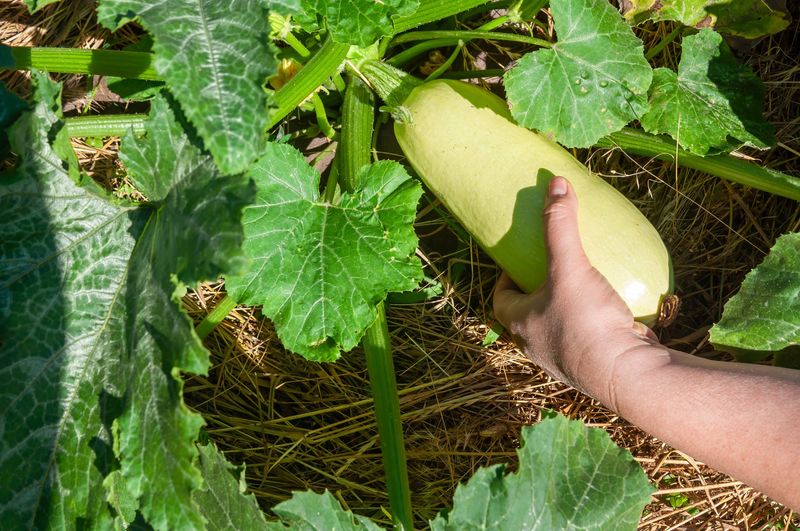
Size is a useful starting point when deciding whether a zucchini is ready to pick, but texture and skin condition can tell an equally important part of the story.
A harvest-ready zucchini generally feels firm when gently pressed, with skin that is relatively smooth and tender rather than tough or waxy.
These physical cues, combined with length, give a more complete picture of whether the fruit is at its best.
One guideline sometimes shared by Extension horticulturists is that the skin of young summer squash can be tender enough to puncture with a thumbnail.
This quick check may be useful in some situations, though it is not a test that every gardener needs to apply to every fruit or every cultivar.
Some zucchini varieties naturally have slightly firmer skin even when young, so context and experience with a particular variety matter.
If the skin of a zucchini feels notably hard or resistant when you handle it, that can be a sign the fruit has been on the plant longer than ideal for fresh eating. Similarly, a zucchini that feels soft or spongy rather than firm may be past its prime in a different direction.
The goal is fruit that feels solid and fresh, with skin that yields slightly to gentle pressure.
Getting familiar with how a well-timed harvest feels in your hands tends to make future harvest decisions quicker and more confident in the Ohio summer garden.
6. Cut Zucchini Carefully Instead Of Tugging At The Plant
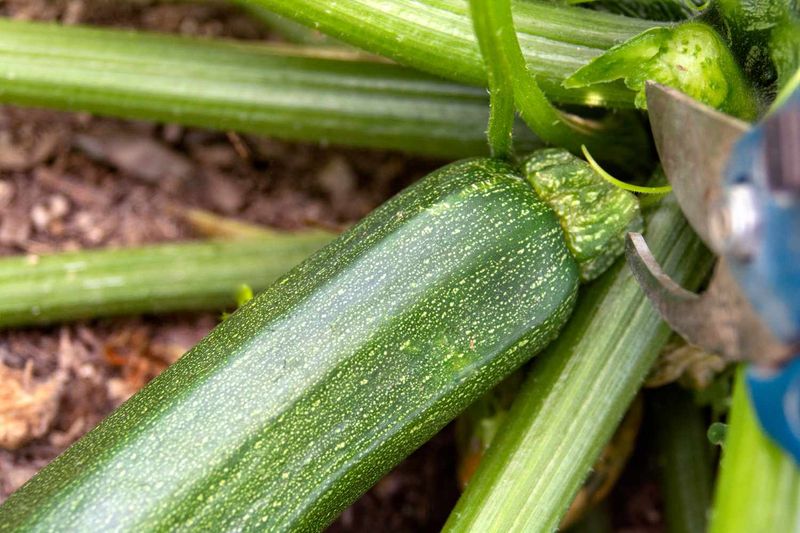
Reaching into a zucchini plant to pull out a ripe fruit sounds simple enough, but the mechanics of how you remove it can matter more than many gardeners expect.
Zucchini plants have thick, somewhat prickly stems and large leaves that can make it awkward to get a clear grip on the fruit.
Forcefully pulling, twisting, or yanking a zucchini off the plant risks damaging the stem, disturbing nearby developing fruit, or injuring the plant in ways that may affect future production.
A cleaner approach is to use a sharp knife, garden shears, or pruners to cut the zucchini stem, leaving a short stub of stem attached to the fruit.
A clean cut reduces stress on the plant and helps avoid the kind of tearing that can create entry points for disease or create issues for developing fruits nearby.
Keeping cutting tools reasonably clean before use is a straightforward habit that most gardeners can maintain without much extra effort.
Working carefully around the broad leaves and prickly stems of the zucchini plant makes the whole process smoother.
Some gardeners find it helpful to use one hand to gently hold the fruit steady while the other makes the cut, reducing the chance of accidentally knocking loose a small developing zucchini hidden nearby.
Taking an extra moment to harvest thoughtfully rather than rushing through the bed tends to be worthwhile, especially during the busy peak weeks of Ohio’s summer vegetable season.
7. Expect The Main Ohio Zucchini Harvest During Summer
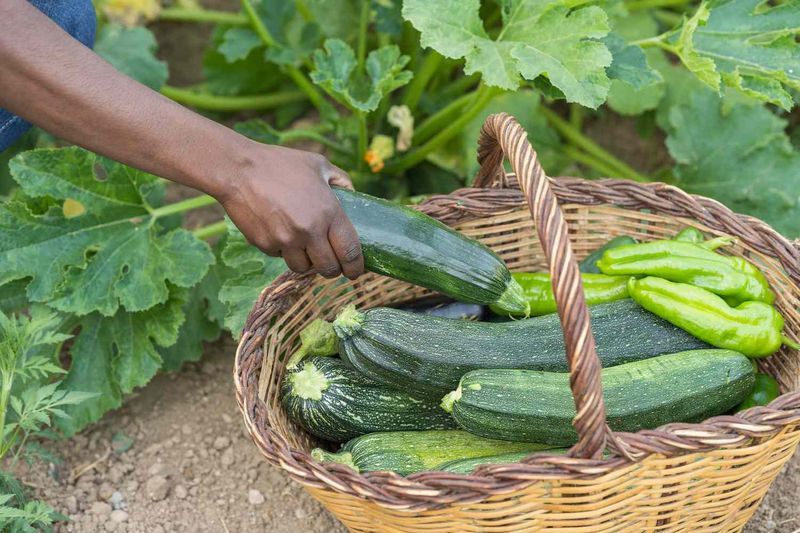
Summer brings warm temperatures, longer days, and the kind of growing conditions that zucchini genuinely thrives in.
Ohio State identifies summer squash as commonly available in Ohio during approximately July through September, which reflects the general window when home gardens and local markets are typically seeing their best zucchini production.
That said, individual gardens may begin harvesting earlier or later depending on a range of factors.
Planting date has a direct influence on when a home gardener will see their first harvestable zucchini.
A gardener who gets transplants or seeds in the ground shortly after the last frost date may begin harvesting well before July, while someone who planted later in the season might not see significant production until midsummer.
Location within Ohio can also play a role, since conditions vary somewhat across the state’s different regions.
Weather during the growing season shapes zucchini development in meaningful ways. A stretch of consistently warm, sunny days with adequate moisture tends to push fruit development along quickly, while cooler or unusually wet periods may slow things down.
Pollination success also affects when and how reliably fruit sets on the plant. Because of all these variables, the July-to-September window is best understood as a general guide rather than a fixed schedule.
Gardeners benefit from staying observant and flexible rather than expecting their garden to follow a calendar precisely.
8. Watch Closely Once Flowers Begin Producing Fruit
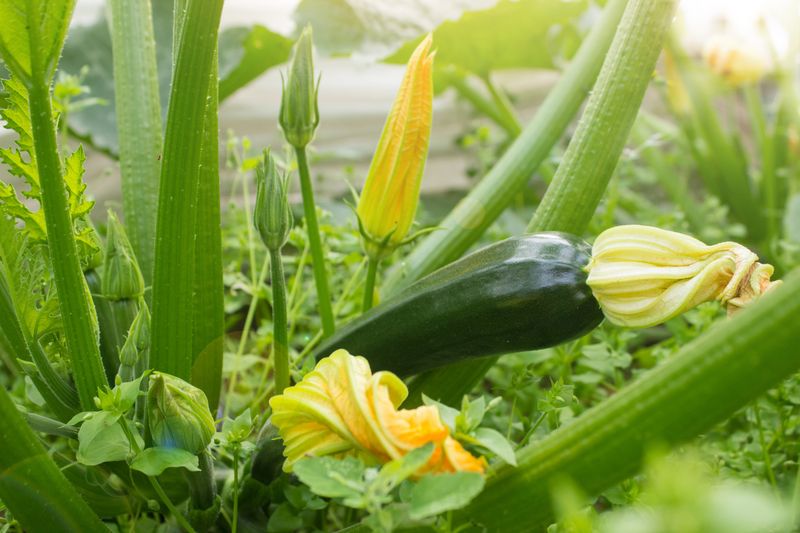
Spotting the first tiny zucchini beginning to form behind a flower is one of those garden moments that signals it is time to start paying much closer attention to the plant. Once female flowers successfully set fruit, zucchini can develop surprisingly fast.
Research-based horticultural guidance suggests that squash may reach harvest readiness roughly four to eight days after pollination, depending on variety and the growing conditions at the time.
That range of four to eight days is a general estimate rather than a precise countdown. Warm Ohio summer temperatures tend to push development along more quickly, while cooler stretches or cloudy periods may slow the process.
The practical takeaway is that once fruit begins forming on the plant, waiting a week or more before checking again is probably not the best strategy during active summer production.
For gardeners who are new to growing zucchini, it can be helpful to know that the female flower is the one with a small, immature squash visible behind the blossom. This tiny proto-zucchini is the fruit that will develop after successful pollination.
Keeping an eye on these newly forming fruits and noting roughly when they appear helps gardeners anticipate when harvesting may begin.
The goal is not to stress over an exact timeline but to stay engaged with what the plant is doing so that tender young zucchini are not missed during Ohio’s warm and productive summer weeks.