What Yellowing Crape Myrtle Leaves In August Actually Mean In Florida
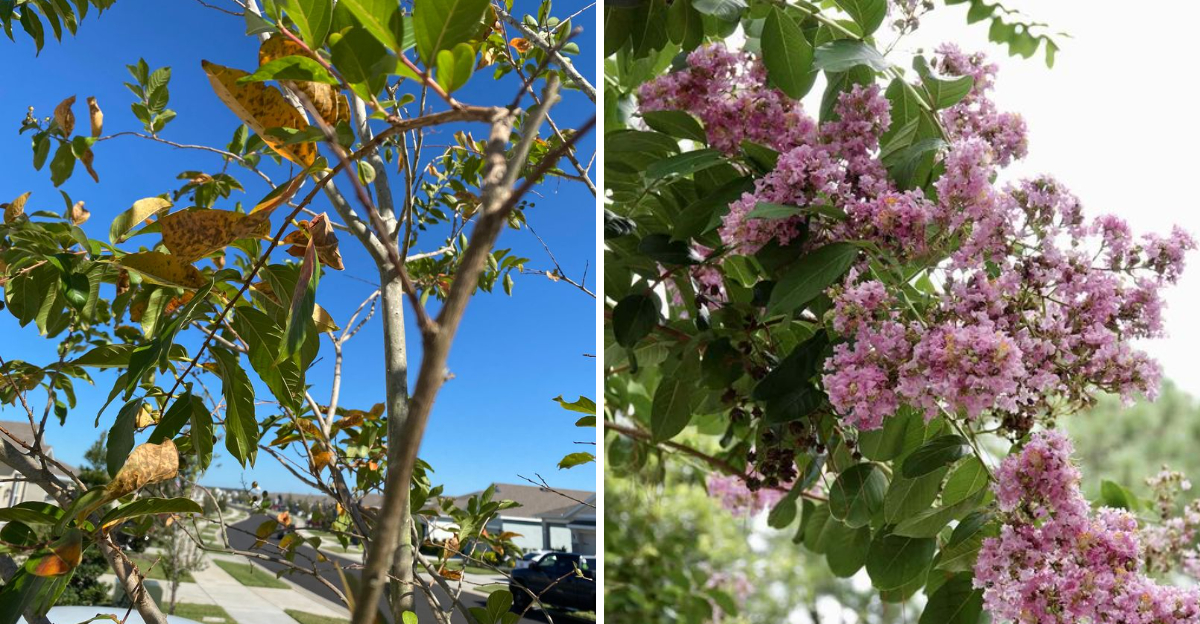
Yellow crape myrtle leaves in August are easy to misread and even easier to overreact to. The spray comes out.
The treatment goes on. The tree spends the rest of the month recovering from the wrong solution.
Your Florida crape myrtle is telling you something specific right now. The color, the pattern, where the yellowing starts and which branches show it first.
All of it points toward a short list of causes that each need a completely different response. Some of what you are seeing clears up on its own within two weeks.
Some of it gets worse without intervention. From three feet away they look identical, which is exactly why August crape myrtle yellowing produces so many wrong calls.
Read the leaves correctly before doing anything and the tree comes through August without losing a step.
1. August Yellowing Often Points To Cercospora Leaf Spot
Spotting yellow leaves on your crape myrtle in August is frustrating, especially when the tree looked perfectly healthy just weeks before.
One of the most common reasons this happens in Florida is a fungal disease called Cercospora leaf spot, caused by the fungus Cercospora lythracearum.
According to UF/IFAS, this disease is widespread on crape myrtles across the state and tends to show up most aggressively during the warm, wet months of summer.
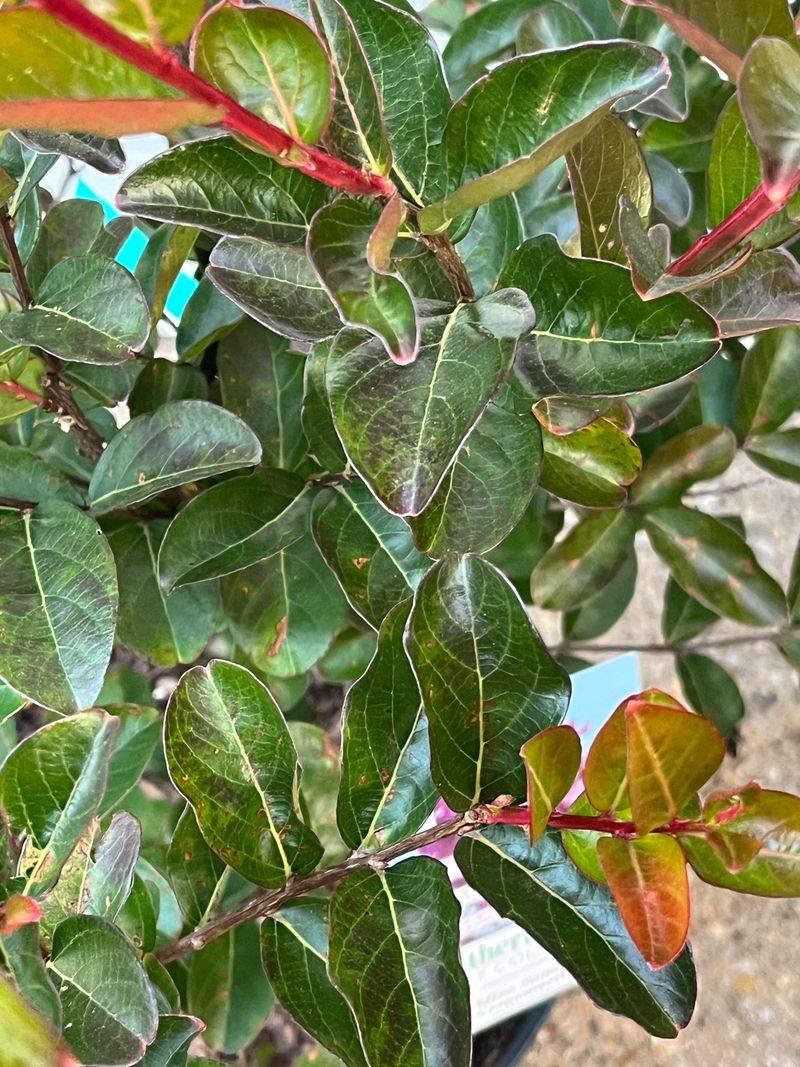
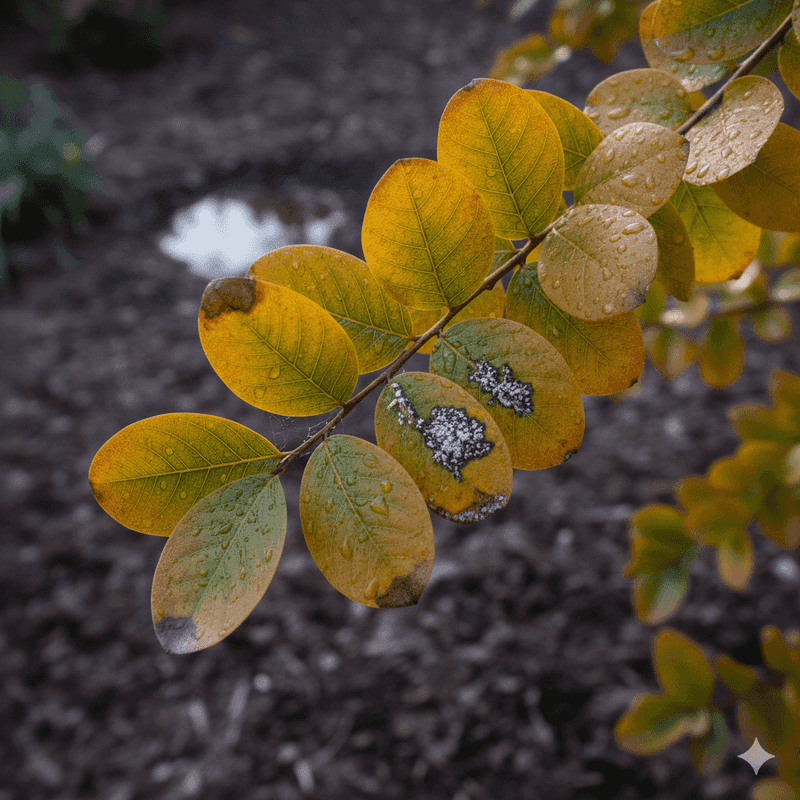
What separates Cercospora from ordinary seasonal color change is the pattern on the leaves themselves. Affected leaves typically develop small, circular spots that are dark brown or reddish-brown at the center.
These spots are often surrounded by a yellow halo, and as the disease advances, the yellowing spreads outward from the spots. Eventually, the entire leaf may turn yellow and drop early.
Not every yellow leaf means Cercospora is present. Some yellowing is completely normal, especially on older interior leaves late in the season.
The key difference is the presence of those distinct spots before the yellow color appears. If your tree is dropping leaves heavily and the leaves clearly show spotting before they turn, Cercospora is worth considering.
A local UF/IFAS Extension office can confirm a diagnosis if you are unsure about what you are seeing.
2. Those Dark Spots Turn Yellow Leaves Into A Bigger Clue
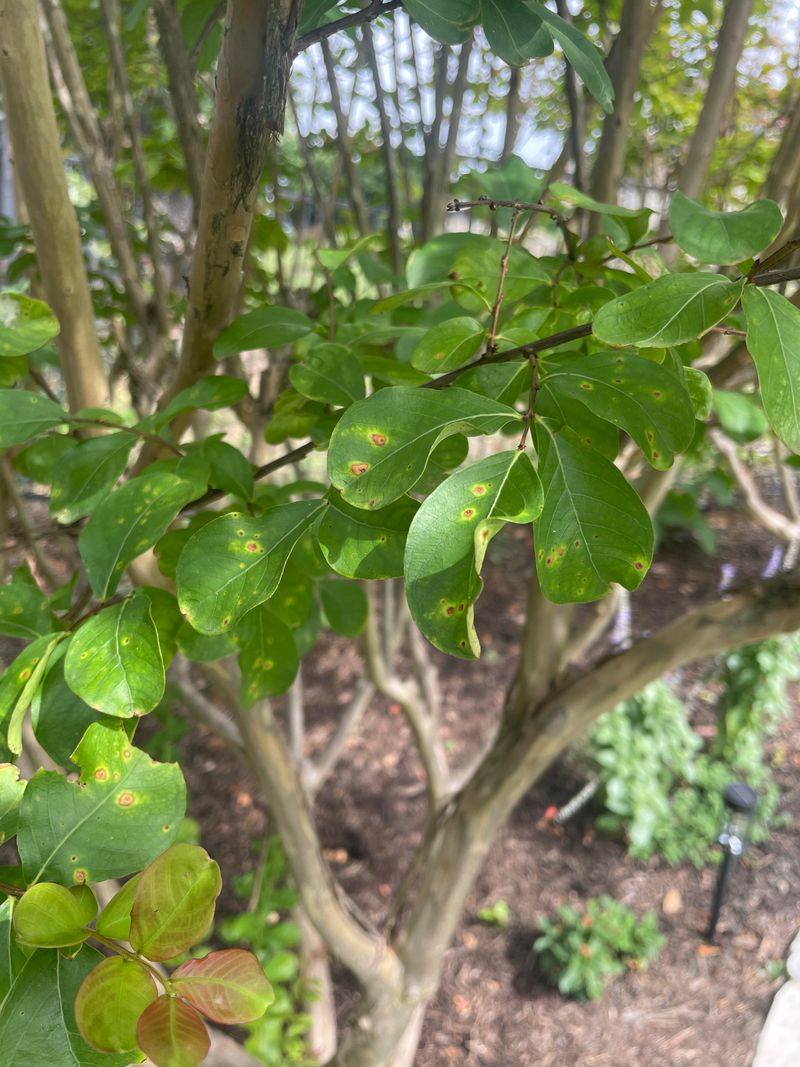
Yellow leaves alone do not tell the whole story. Grab a few affected leaves and look closely at the surface before drawing any conclusions.
Dark brown, reddish-brown, or irregularly shaped spots scattered across the leaf blade give you far more useful information than the yellow color alone ever could.
With Cercospora leaf spot, the spots tend to be roughly circular and small, often less than a quarter-inch across. The tissue around each spot usually turns yellow, giving the leaf a blotchy, uneven appearance.
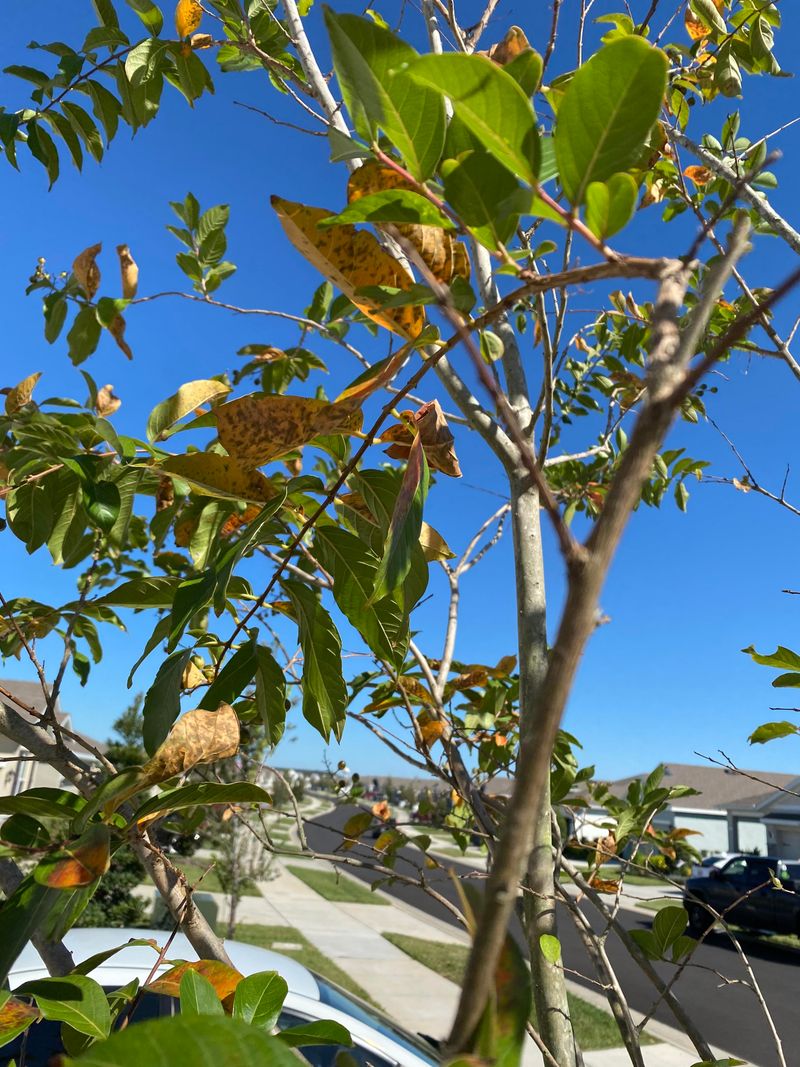
Leaves near the bottom and interior of the canopy are often hit first because those areas stay moist longer and receive less airflow. As the season progresses, the spotting can move upward through the tree.
Examining leaves from different parts of the canopy is a smart move. A leaf from the lower interior may look very different from one near the outer top of the tree.
Your Florida Garden Changes Every Week. Your Plan Should Too.
Gardening in Florida changes quickly throughout the season. Every Friday you’ll receive a simple weekly plan showing exactly what to plant, prune, fertilize, harvest, and protect so you never miss the right timing.
If spotting is concentrated low and inside the canopy while upper leaves remain mostly clean, that pattern is significant. It fits what extension plant pathologists describe for Cercospora progression.
Judging the tree from the sidewalk can lead you to the wrong conclusion. Pick up several fallen leaves too, since they often show the most advanced symptoms and give you a clearer picture of what is actually happening inside the canopy.
3. Hot Wet Weather Gives Leaf Spot The Upper Hand
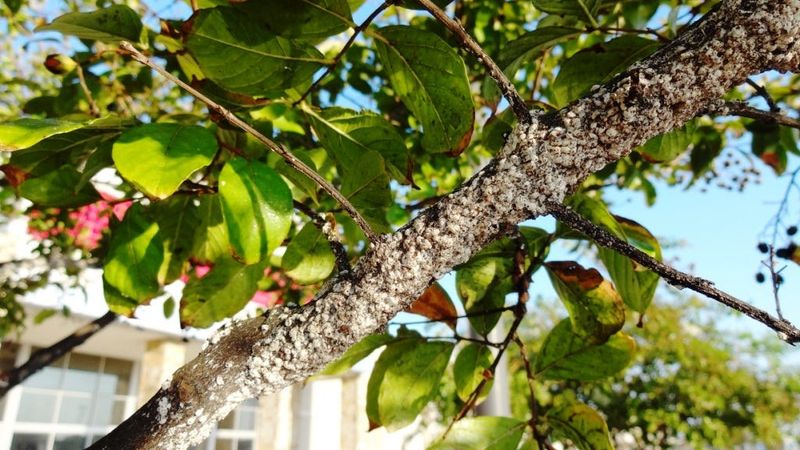
August in Florida brings a reliable combination of afternoon thunderstorms, high humidity, and overnight temperatures that rarely drop enough to dry things out.
That kind of prolonged leaf wetness creates exactly the conditions that fungal leaf diseases need to establish and spread.
Cercospora spores need moisture on the leaf surface to germinate, and Florida summers provide that moisture in abundance.
Poor air circulation around a tree makes the situation worse. Crape myrtles planted too close to fences, walls, or other shrubs tend to hold moisture in their canopies longer after rain.
Leaves that stay wet for extended periods give fungal spores more time to penetrate leaf tissue. A tree in an open, breezy spot typically dries faster and may show less disease pressure even during the same rainy spell.
Crowding within the canopy itself can also slow drying. Crape myrtles that have been repeatedly headed back often produce dense clusters of weak stems.
This damaging practice, known as crape murder, can limit airflow inside the tree. That dense growth traps moisture and creates a favorable microclimate for fungal activity.
Proper pruning that maintains an open, natural canopy structure helps foliage dry more quickly after rain. Weather conditions set the stage, but tree structure and placement determine how much advantage a disease actually gets.
4. Early Leaf Drop Can Make Fall Show Up Way Too Soon
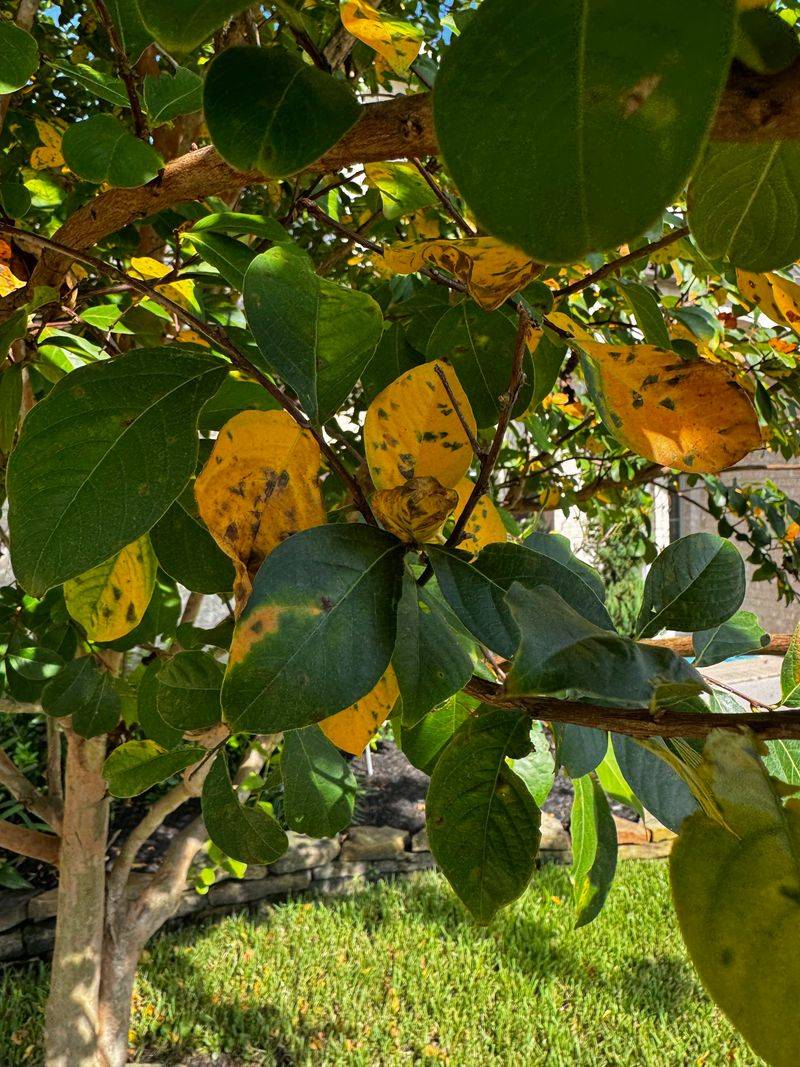
Finding a carpet of yellow leaves under your crape myrtle in the middle of August is a jarring sight. Crape myrtles are supposed to hold their leaves well into fall, so significant leaf drop during the height of summer is worth paying attention to.
Premature defoliation during August usually signals that something has disrupted the tree’s normal growth cycle.
Disease-related leaf drop looks different from normal seasonal change. In autumn, crape myrtle leaves shift gradually through yellow, orange, and red tones before dropping cleanly.
In contrast, leaves falling in August due to Cercospora or similar issues are often spotted, blotchy, or uniformly yellow. They lack the rich color progression you would expect later in the year.
The timing and the appearance of the fallen leaves together tell a more complete story.
A tree that loses a large portion of its canopy in late summer is under real stress. It may push out a second flush of growth to compensate, which can leave it going into fall with tender new leaves that are vulnerable to cooler temperatures.
Substantial leaf loss also reduces the tree’s ability to produce energy through photosynthesis for the rest of the season. Watch how quickly the leaves drop and how much of the canopy is affected.
Those details can help you decide whether the situation needs attention or the tree is likely to recover on its own.
5. Black Sooty Leaves Point To A Different Culprit
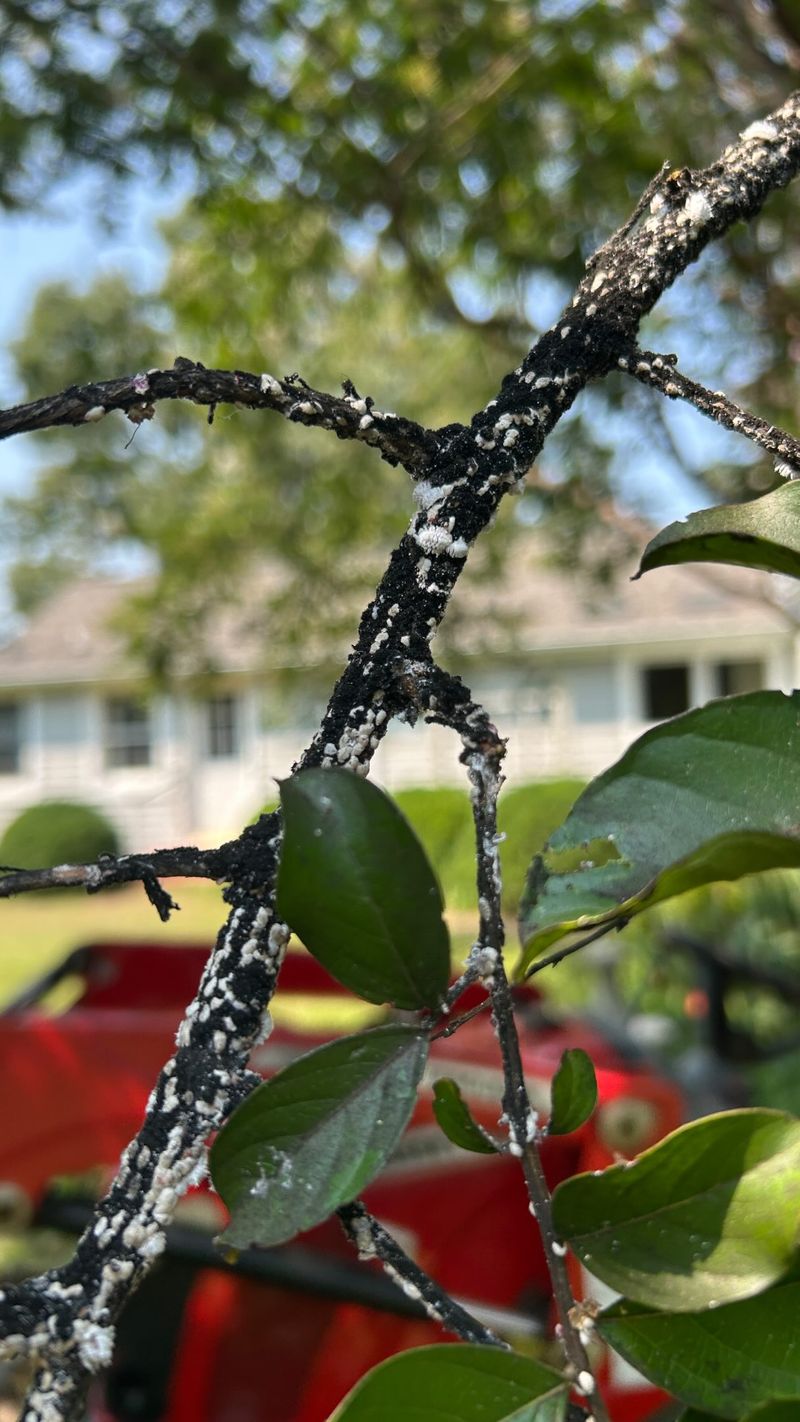
A crape myrtle covered in what looks like black soot is telling you something completely different from a tree with yellow spotted leaves. That dark, powdery coating is sooty mold, a fungus that grows on the sticky honeydew secreted by certain sap-feeding insects.
Spotting it means the real problem is likely crawling on the stems and undersides of the leaves, not hiding in the soil or spreading through spores on wet foliage.
Two insects commonly linked to sooty mold on crape myrtles in Florida are the crape myrtle aphid (Tinocallis kahawaluokalani ) and crape myrtle bark scale (Acanthococcus lagerstroemiae).
Crape myrtle aphids are small, yellowish-green insects that feed on new growth and excrete honeydew as a waste product.
Bark scale appears as white or gray crusty patches on stems and branches. Both insects produce enough honeydew to coat leaves and branches with sooty mold when populations are high.
Sooty mold itself does not directly harm leaf tissue, but a heavy coating can block sunlight and reduce the leaf’s ability to function properly. Treating the insect infestation is the most effective way to address the mold.
Once honeydew production stops, rain and time will gradually wash the mold away. Checking the stems and branch crotches for live insects before reaching for any product is always the right first move.
6. Overhead Watering Can Keep Leaf Trouble Going
Irrigation habits can quietly work against you when a crape myrtle is already dealing with fungal pressure. Routinely wetting the foliage through sprinklers or overhead irrigation keeps the leaf surface moist long after natural rainfall has dried up.
That extended leaf wetness gives fungal spores more opportunities to germinate and penetrate leaf tissue between rain events.
UF/IFAS extension recommendations consistently favor watering at the root zone rather than spraying the canopy. Drip irrigation or soaker hoses deliver water directly to the soil where roots can access it, without getting the leaves wet at all.
Adjusting overhead irrigation to early morning gives leaves more time to dry before nightfall. That can reduce the hours of leaf wetness that favor disease development.
Overwatering is a separate concern worth mentioning. Crape myrtles are drought-tolerant once established and do not need frequent irrigation during Florida’s rainy season.
Soggy soil around the root zone can stress the tree in ways that show up as yellowing leaves, which can be confused with disease symptoms. Checking soil moisture before running irrigation helps avoid adding unnecessary water during weeks when rainfall is already plentiful.
Irrigation is one factor homeowners can control directly. Adjusting it costs nothing and can reduce conditions that favor continued leaf trouble.
7. Fallen Leaves Can Set The Stage For Another Round
Leaves that fall from a diseased crape myrtle do not become harmless once they hit the ground. Cercospora and other fungal pathogens can survive in fallen leaf debris and produce spores that splash back up onto the tree during rain.
Leaving a thick layer of infected leaves under the tree essentially keeps a reservoir of disease sitting right at the base of the plant.
Raking and removing affected leaves from beneath the canopy is a straightforward sanitation step. Extension plant pathologists recommend it for managing fungal leaf diseases.
Bagging and disposing of the debris rather than composting it reduces the chance of spreading spores to other areas of the yard. A clean area under the tree does not eliminate disease pressure entirely, but it removes one consistent source of reinfection.
Mulching the root zone is still a good idea, but fresh, clean mulch is preferable to leaving the infected leaf litter in place. A two-to-three inch layer of mulch helps retain soil moisture and moderate root zone temperature, which supports overall tree health.
Keeping the mulch a few inches away from the trunk avoids creating a moist environment right against the bark. Clean-up is not glamorous work, but understanding why it matters changes the perspective.
It becomes a useful part of managing your tree through a tough Florida summer rather than a pointless chore.
8. The Right Crape Myrtle Variety Can Make A Big Difference
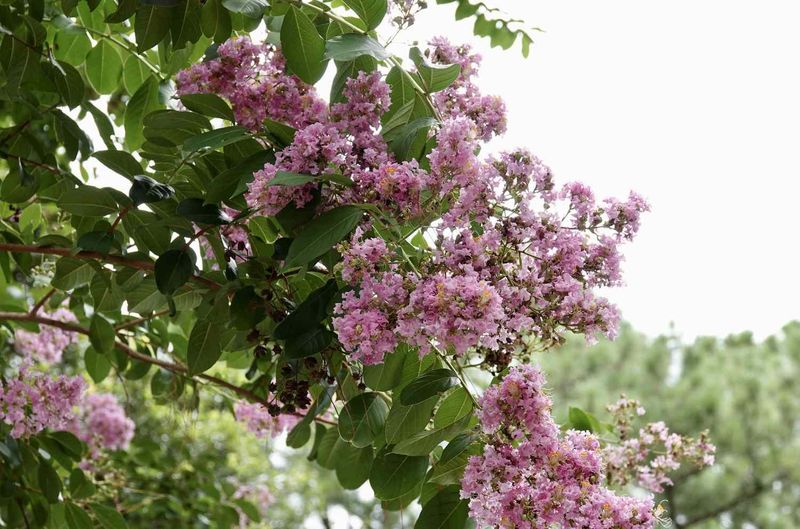
Not all crape myrtles respond to disease pressure the same way. Cultivar selection plays a real role in how much trouble a tree gives you during a wet Florida summer.
Some varieties show noticeably less Cercospora leaf spot damage under similar conditions, while others seem to pick up every fungal problem that comes along.
The National Arboretum crape myrtle breeding program produced many of the named cultivars widely sold today. It evaluated disease resistance as part of its selection criteria.
Cultivars in the Natchez, Acoma, and Hopi groups, among others, have been noted in extension literature for relatively good disease tolerance. UF/IFAS recommends checking with local extension offices or certified nursery professionals for cultivar guidance.
Performance can vary by Florida region and growing conditions.
Replacing a healthy established tree because a few leaves turned yellow in August would be an overreaction. Most mature crape myrtles recover from seasonal Cercospora pressure without long-term harm.
The cultivar conversation matters most when you are planting a new tree or replacing one that has repeatedly struggled. Choosing a variety with a track record of performing well in humid conditions gives you a better starting point.
Before grabbing a fungicide or pulling out a tree, step back and read what the leaves are actually showing you. The symptoms themselves are almost always the most useful diagnostic tool you have.