The Michigan Yard Weed With Sticky Burrs Gardeners Should Pull Before Fall Seed Drop
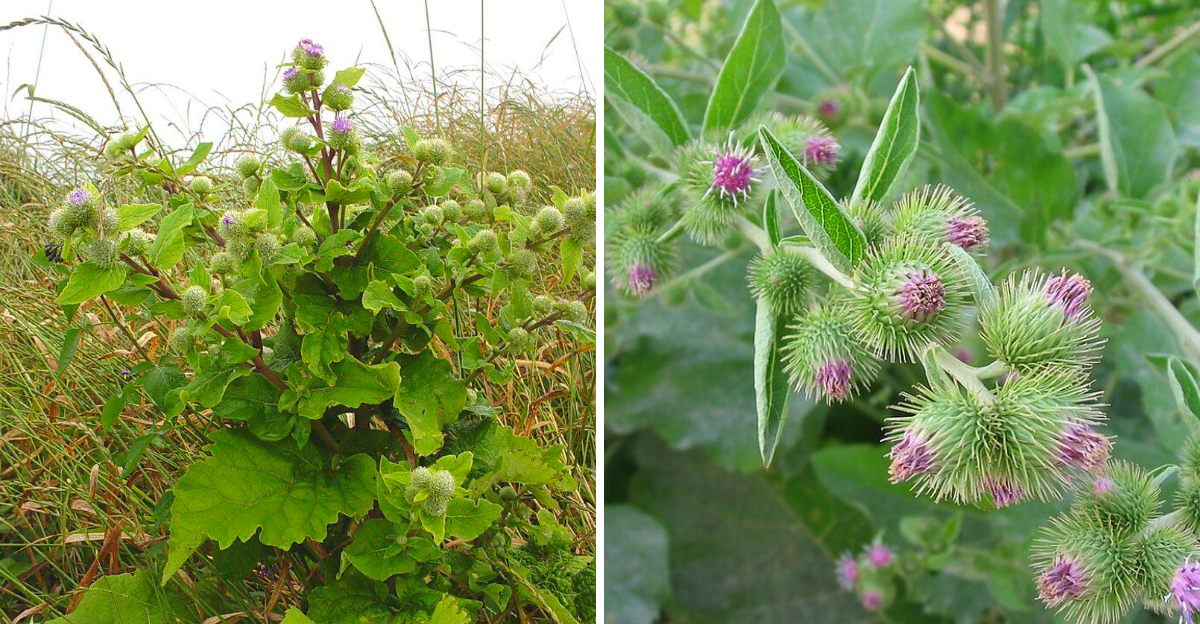
Common burdock has one of the most effective seed dispersal strategies in the Michigan weed world, and your socks are part of the plan.
Those prickly brown balls that latch onto clothing, dog fur, and anything else that brushes past in late summer are not an accident.
They are a brilliantly irritating delivery system for seeds that would otherwise just fall straight down beneath the plant.
Burdock grows in yards, along fence lines, and in neglected corners across Michigan, and it gets considerably harder to manage once those hooked burs mature and start hitching rides around the property.
Pulling it before that happens is the move that actually makes a dent, and timing that removal correctly is what separates a manageable burdock situation from a much larger one next season.
1. Common Burdock Starts As A Low Rosette Before Growing Tall
Spotting a weed before it becomes a real problem is easier when you know what to look for in its earliest stage. Common burdock is a biennial plant, which means it generally completes its life cycle over two growing seasons rather than one.
During its first year, the plant puts most of its energy into producing a ground-level cluster of leaves called a basal rosette instead of sending up a tall flowering stalk.
That first-year rosette can look surprisingly unassuming compared to the towering plant that may appear the following season.
The leaves spread outward from a central point close to the ground, giving the plant a broad, low profile that can blend into unmowed areas, garden beds, or the shadier edges of a Michigan property.
Some gardeners walk right past first-year burdock without recognizing it at all.
Recognizing this stage matters because it gives you a window to address the plant before it ever develops burs or flowers.
A first-year rosette has not yet invested in a tall stem or seed production, so removal at this point can be relatively straightforward compared to dealing with a mature second-year plant.
Keep in mind that germination timing can vary, so not every burdock plant follows an identical schedule across Michigan’s different growing regions and conditions.
2. Large Heart-Shaped Leaves Make This Weed Easier To Spot
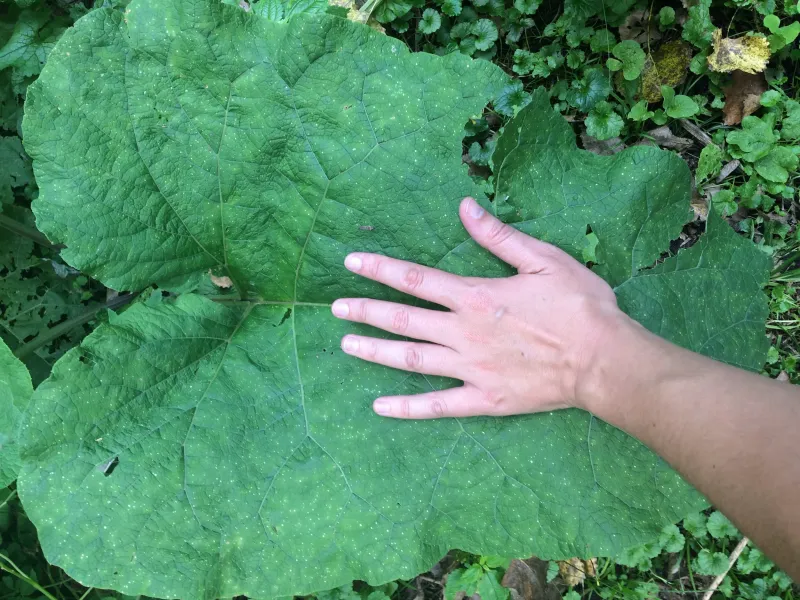
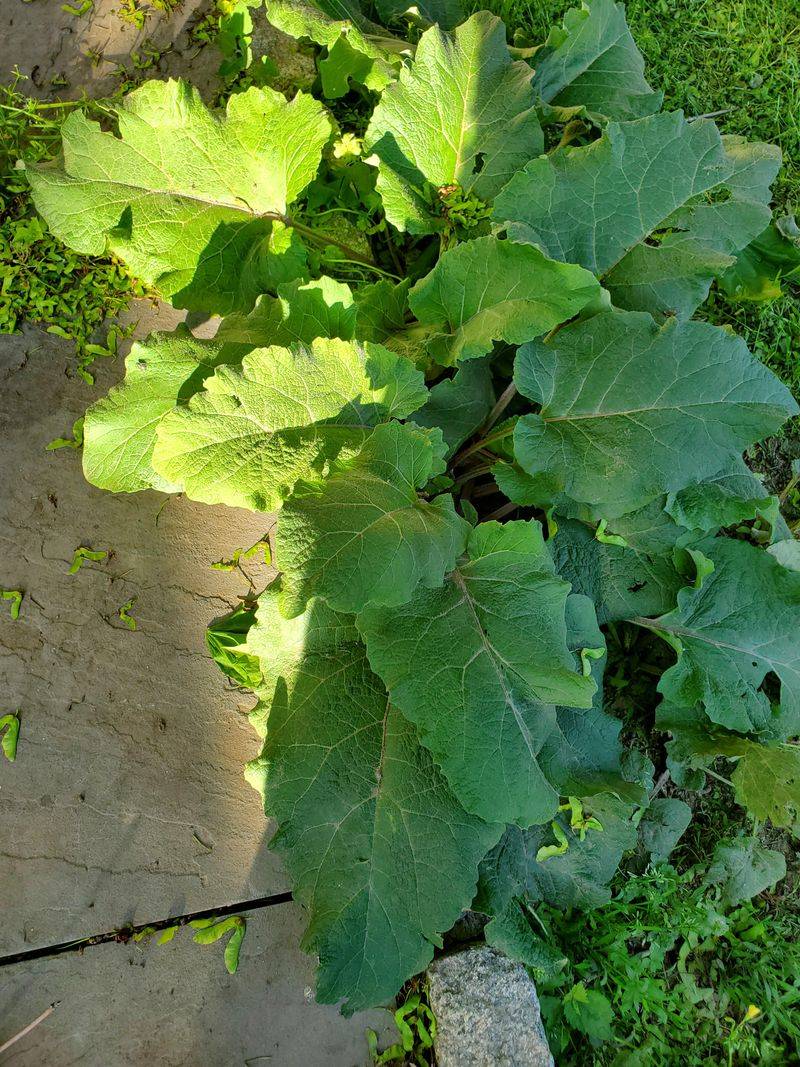
Few weeds announce themselves quite as boldly as common burdock once you know what those leaves look like. The leaves are notably large and broadly heart-shaped, with a rough or slightly fuzzy texture on top and a paler, woolly underside.
On a first-year rosette, individual leaves can reach considerable size, sometimes measuring over a foot across in favorable growing conditions.
That size makes the plant stand out from typical lawn grasses and many smaller garden plants, especially when burdock is growing in a relatively open area.
The leaf edges are wavy or irregularly toothed rather than sharply serrated, and the overall shape is sometimes compared to rhubarb leaves, though the two plants are unrelated and differ in several ways.
Leaf shape alone is not enough to make a confident identification, since other broad-leaved plants can look somewhat similar, particularly at younger stages.
Your Michigan Garden Changes Every Week. Your Plan Should Too.
Gardening in Michigan changes quickly throughout the season. Every Friday you’ll receive a simple weekly plan showing exactly what to plant, prune, fertilize, harvest, and protect so you never miss the right timing.
Paying attention to the plant’s overall growth habit, the arrangement of leaves close to the ground during the first year, and eventually the development of hooked burs during the second year will help you feel more certain before pulling.
If you are unsure, comparing your plant to reference photos from a reliable Michigan horticultural source can be a helpful step before deciding how to handle it.
3. Second-Year Plants Send Up Tall Flowering Stalks
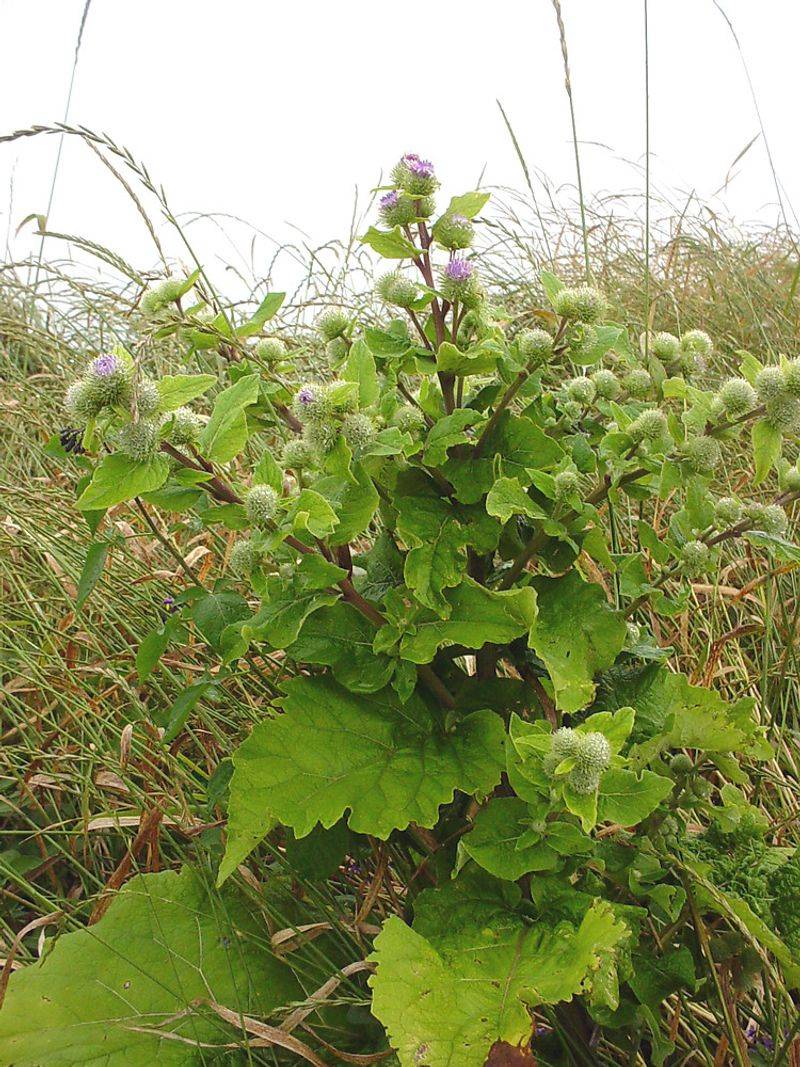
Walking past the same corner of your Michigan yard where you noticed broad leaves last summer and suddenly seeing a plant that towers well above knee height can be a bit startling.
That dramatic change in size is exactly what common burdock does during its second growing season.
Instead of staying low, the plant puts energy into producing an upright, branching stem that can reach roughly three to six feet tall, depending on growing conditions and available resources.
Those tall stalks begin developing during summer of the second year, and they branch outward in a way that gives mature burdock a fairly wide footprint in addition to its considerable height.
The stems are often hollow and can feel somewhat coarse or hairy to the touch.
At this stage, the plant is clearly visible along roadsides, fence lines, field edges, and neglected corners of Michigan properties where it may have gone unnoticed as a small rosette the previous season.
Paying attention to second-year plants matters because they are moving closer to producing flowers and, eventually, the burs that carry seeds.
A plant that has already sent up a flowering stalk is further along in its life cycle than a first-year rosette, which means the window for stopping seed production is narrowing.
Catching these tall plants before their flowers fully mature is a useful goal for gardeners focused on limiting future burdock growth.
4. Purple Flowers Develop Into The Familiar Hooked Burrs
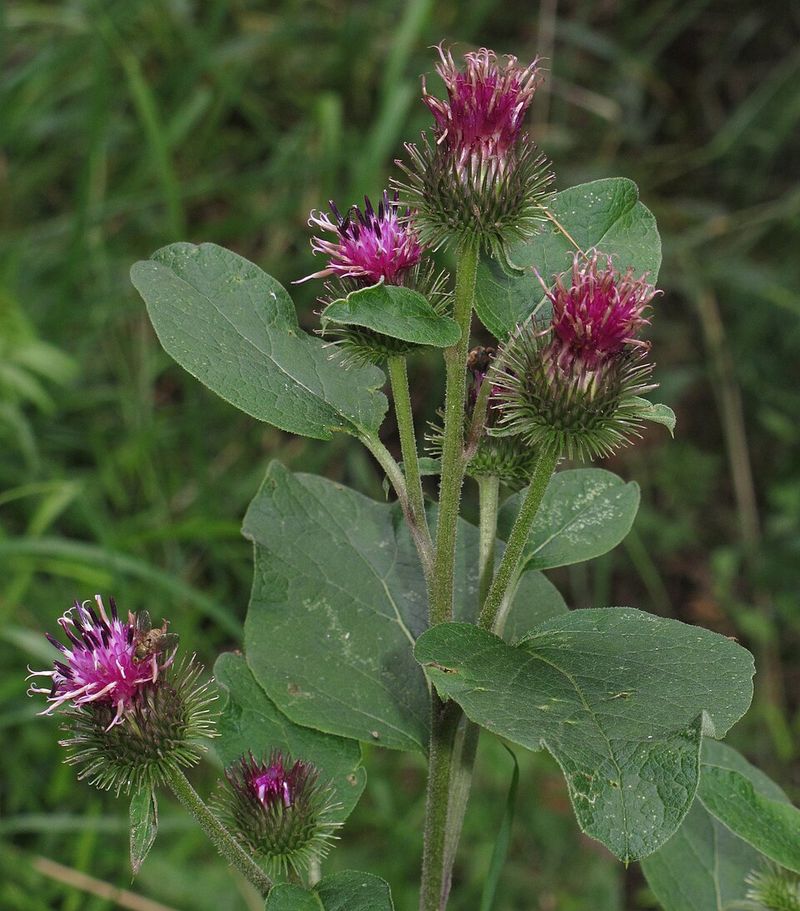
The purple flowers on a common burdock plant are actually quite attractive up close, though most Michigan gardeners are not admiring them for their beauty.
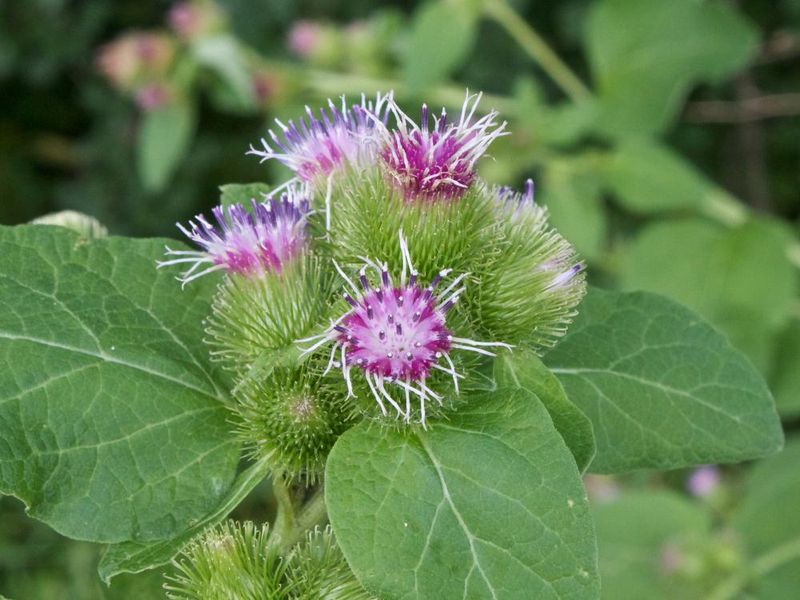
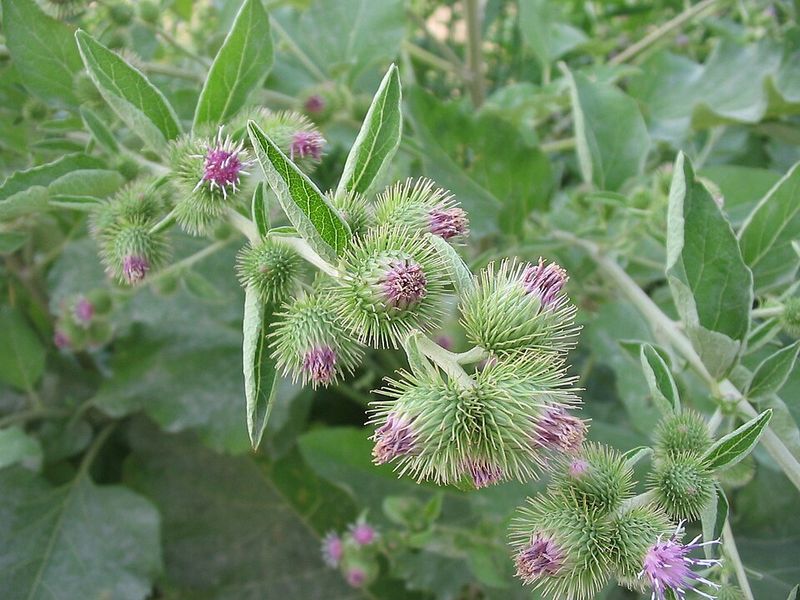
The flower heads are small and tubular, producing pinkish-purple to purple blooms that sit inside a rounded structure covered in stiff, hooked bracts.
Those bracts are what eventually form the familiar burs that cling to everything they touch.
As the flowering period winds down, the green bur-like structures surrounding the flower heads begin to dry and harden. The hooked tips of those bracts become increasingly effective at latching onto fabric, hair, and animal fur as they mature.
This is worth understanding clearly: the hooks are a physical part of the bur’s structure, not a sticky substance or sap. The design works like a natural version of hook-and-loop fasteners, and it is genuinely effective at clinging to almost any textured surface.
Common burdock typically flowers during midsummer into late summer in Michigan, though exact timing can shift depending on where a plant germinated and what the local growing season looks like.
Watching for the appearance of those rounded, hooked bur clusters is one of the clearest signs that the plant is approaching the stage where seeds can begin spreading.
Removing plants before the burs fully mature and dry out can help prevent those hooks from doing their job of carrying seeds elsewhere.
5. Mature Burrs Carry Seeds Far Beyond The Original Plant
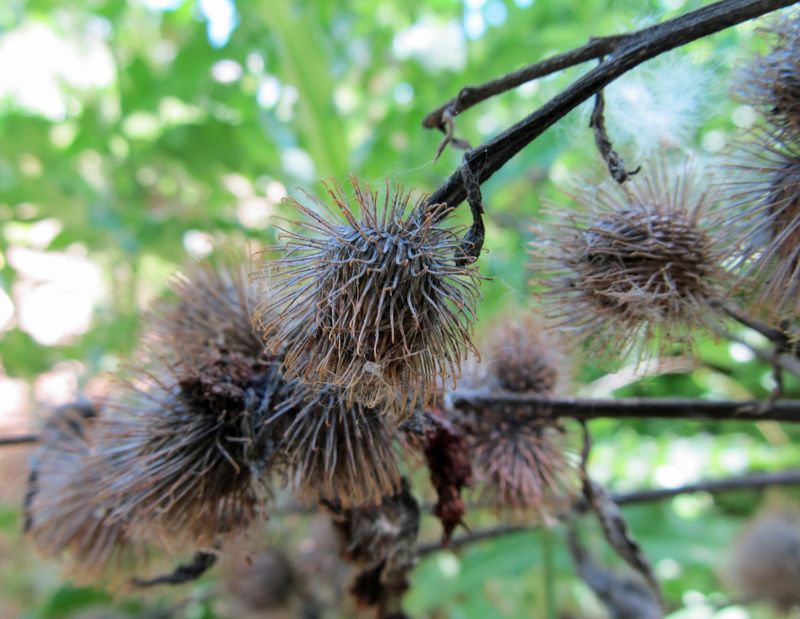
One of the reasons common burdock can show up in so many different spots around a Michigan property is that its seeds do not simply drop straight down from the parent plant.
The hooked burs that develop from the flower heads function as a built-in seed-dispersal system, designed to hitch a ride on whatever happens to brush past them.
Animals, people, gardening gloves, pant legs, and even mowing equipment can all pick up burs and carry them to a new location.
A dog running through a weedy area near a fence line or field edge can return to the yard with several burs tangled in its coat, each one potentially containing viable seeds.
The same thing can happen when a person walks through an overgrown corner or along a woodland edge on a Michigan property.
Seeds are enclosed within those burs rather than simply falling loose, so dispersal depends on the bur itself traveling to a new spot and eventually releasing its contents.
The distance a bur travels depends entirely on what carries it and how far that carrier moves before the bur falls or is removed. Some burs may not travel far at all, while others could end up in a completely different part of the yard or beyond the property boundary.
This unpredictable movement is part of why managing burdock before burs mature tends to be more practical than trying to collect them all after they have already spread.
6. Late Summer Is A Useful Time To Remove Plants Before Burrs Mature
Paying close attention to the burdock plants growing on your Michigan property during late summer can make a real difference in how much of the plant you deal with the following year.
Second-year burdock plants that are actively flowering or beginning to form burs are at a critical point in their life cycle.
Removing them before those burs dry out and mature reduces the chance that seeds will spread to new areas of the yard.
Rather than circling a single date on the calendar, it helps to watch the plants themselves. Burdock growing along a sunny fence line may develop burs earlier than plants in a shadier or cooler spot on the same property.
Checking plants regularly through midsummer and into late summer gives you a better sense of how close each one is to producing mature, seed-bearing burs.
Michigan’s growing season varies enough from region to region that no single removal date works for every yard in the state.
When removing flowering or bur-bearing plants, handling them carefully makes sense. Mature burs cling readily to gloves and clothing, and rough handling can shake seeds loose or spread burs unintentionally.
Placing cut plants or pulled plants into a bag or container before moving them across the yard helps prevent burs from catching on vegetation or equipment along the way.
Checking local Extension guidance for recommended disposal methods is a worthwhile step before bagging and discarding yard waste.
7. The Deep Taproot Makes Complete Removal More Important
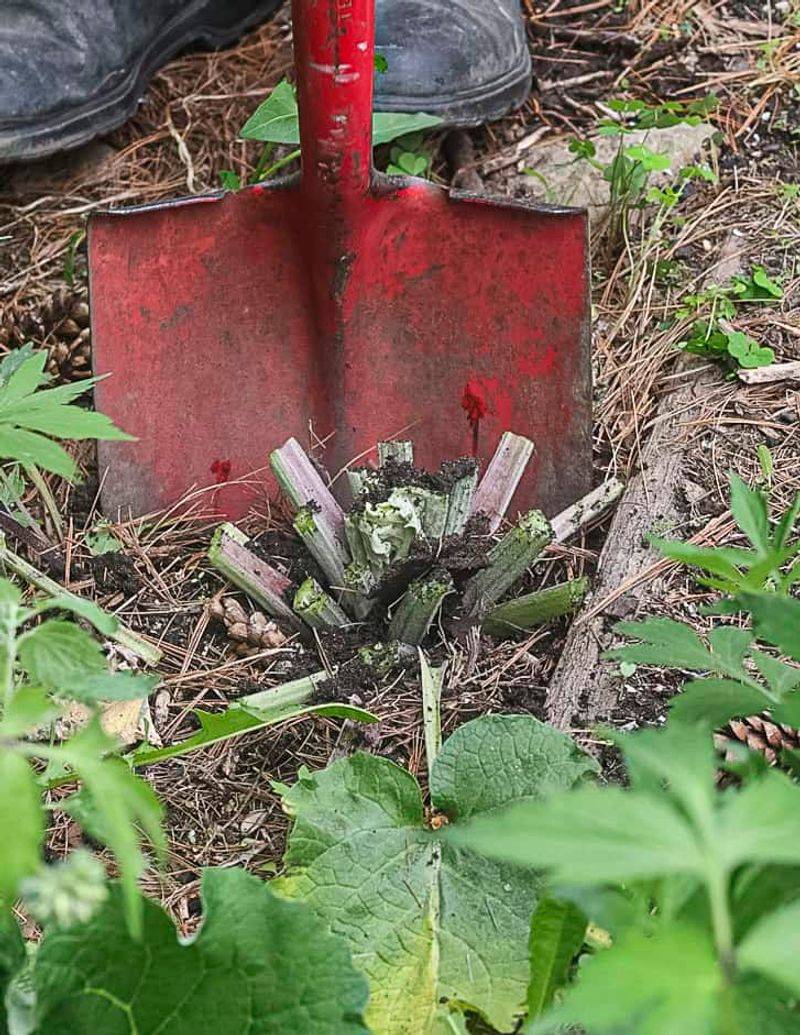
Grabbing a burdock plant by the stem and giving it a firm tug does not always result in a clean removal, and that is largely because of what is happening underground.
Common burdock develops a substantial taproot that can extend well below the soil surface, particularly in loose or deep soil.
That root anchors the plant firmly and stores energy the plant uses to fuel its second-year growth.
Getting a more complete removal generally means loosening the soil around the base of the plant before pulling. A garden fork or narrow spade worked into the ground near the root can make the process considerably easier, especially in compacted or dry soil.
Pulling when the soil is moist after rain tends to be more effective than struggling with dry, hard ground, and Michigan’s seasonal rain patterns can occasionally cooperate in that regard.
Cutting the taproot several inches below the soil surface is sometimes recommended as an alternative when full extraction is not practical, though gardeners should check current Extension guidance on whether this approach is reliably effective for their situation.
Removing enough of the plant to prevent regrowth is the practical goal.
First-year rosettes generally have smaller, more manageable taproots than second-year plants, which is one more reason why catching burdock early in its life cycle tends to be less physically demanding than tackling a fully established plant.
8. Early Removal Can Reduce New Burdock Plants In Future Seasons
Addressing common burdock before it produces mature, seed-carrying burs is one of the most practical ways to reduce how many new plants appear on a Michigan property over time.
When second-year plants are removed before their burs spread seeds, fewer new burdock seedlings have a chance to establish themselves the following season.
The same logic applies to first-year rosettes, which can be pulled or cut before they ever reach the flowering stage.
That said, managing burdock on a property rarely produces instant or complete results.
Seeds that were already present in the soil from previous seasons, or burs carried in from neighboring areas by animals or wind-driven movement, can still lead to new plants appearing even after careful removal efforts.
Continued observation through the following growing seasons helps catch new rosettes before they mature into second-year plants with burs of their own.
Think of burdock management as an ongoing process rather than a one-time fix.
Checking the edges of your Michigan yard, fence lines, shaded corners, and any disturbed or unmowed areas each season gives you the best opportunity to spot new plants at a manageable size.
Removing them consistently over several seasons, before seeds have a chance to spread, tends to reduce the overall number of burdock plants appearing on the property. Patience and regular attention matter more than any single removal effort.