California Trees With Roots Less Likely To Lift Pavers In Small Yards
A small California yard does not leave much room for landscaping mistakes, especially when a tree is planted near a patio, walkway, driveway, or carefully laid row of pavers.
Shade and greenery sound wonderful until you start imagining uneven stones and a pathway that suddenly doubles as a tripping course. Not exactly the backyard upgrade anyone ordered.
That makes tree selection especially important when every square foot counts. A beautiful canopy is only part of the equation.
Gardeners also have to think about how a tree will behave as it matures, how much space it needs underground, and how comfortably it can share the yard with hardscaping.
The good news is that planting a tree near paved areas does not automatically mean future headaches. Some choices can be better suited to compact landscapes where roots, patios, and pathways need to coexist without constant drama.
If you are planning shade for a smaller California yard, it pays to look beyond flowers and foliage. The right tree can bring character and comfort without making you nervously inspect the pavers every spring.
1. Desert Willow Has Low Root-Damage Potential
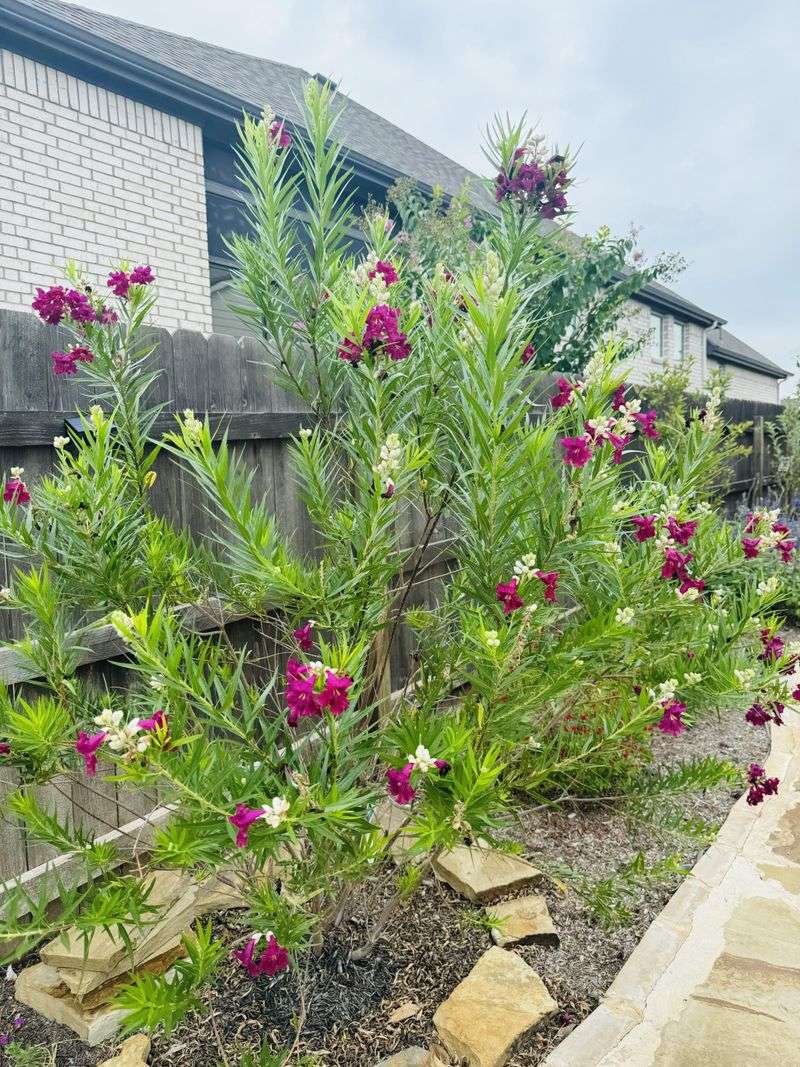
Few flowering trees pull off the combination of beauty and practicality quite like the Desert Willow.
Native to the Southwest, it produces long, trumpet-shaped blooms in shades of pink, lavender, and white that attract hummingbirds all season long. It is a tree that earns its place in a small yard with real charm.
The root system of the Desert Willow tends to stay relatively deep and contained. Unlike some trees that send roots crawling along the surface in search of water, this one adapts well to dry conditions without becoming aggressive underground.
That makes it a much safer neighbor for pavers, patios, and walkways. It grows at a moderate pace and typically reaches 15 to 25 feet tall, which works well for yards that do not have a lot of vertical space to spare.
The canopy stays open and airy, so it does not create too much shade or debris. Pruning it occasionally keeps the shape tidy and encourages more blooms. It handles heat and drought with ease, which is a big advantage in warmer parts of the state.
Plant it at least 5 to 8 feet from any hardscape edge to give the roots plenty of room. With the right placement, it adds a striking focal point without putting your pavers at risk.
2. Marina Strawberry Tree Is A Better Fit Near Hardscape
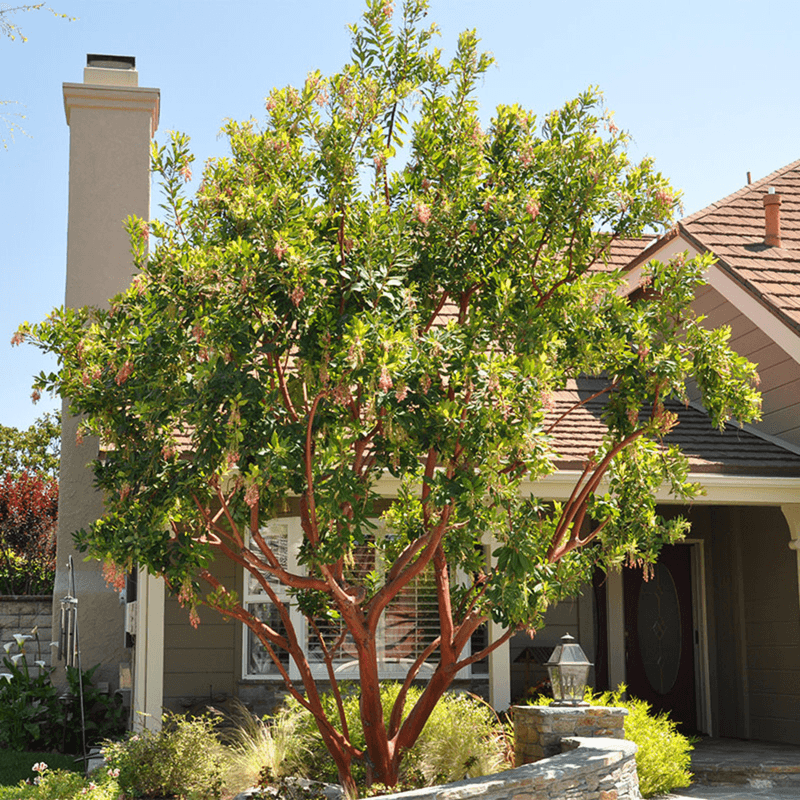
Not every tree that looks good near a patio actually behaves well once it is planted. The Marina Strawberry Tree is one of the rare exceptions that delivers on both looks and root manners.
It is a hybrid of the Mediterranean strawberry tree, and it has earned a strong reputation in urban landscaping for being well-behaved near hardscape.
The roots of the Marina Strawberry Tree tend to grow downward rather than spreading aggressively along the surface. That vertical root habit is exactly what you want when pavers are nearby.
Landscape professionals often recommend it specifically because it poses less risk of cracking or lifting concrete and stone over time.
Your California Garden Changes Every Week. Your Plan Should Too.
Gardening in California changes quickly throughout the season. Every Friday you’ll receive a simple weekly plan showing exactly what to plant, prune, fertilize, harvest, and protect so you never miss the right timing.
It grows to about 20 to 25 feet tall and has an attractive, rounded canopy that provides light shade without being overwhelming. The bark is a warm reddish-brown that peels in interesting patterns, giving it a decorative quality even in winter.
Small white flowers appear in fall and winter, followed by round red fruits that resemble strawberries. Birds enjoy the fruit, which adds a nice bit of wildlife activity to your yard.
It is also drought-tolerant once established, which makes maintenance easier in drier climates. Planting it 6 to 8 feet from pavers gives it enough room to grow comfortably without becoming a problem.
3. Crape Myrtle Works Well In Many Smaller Paved Yards
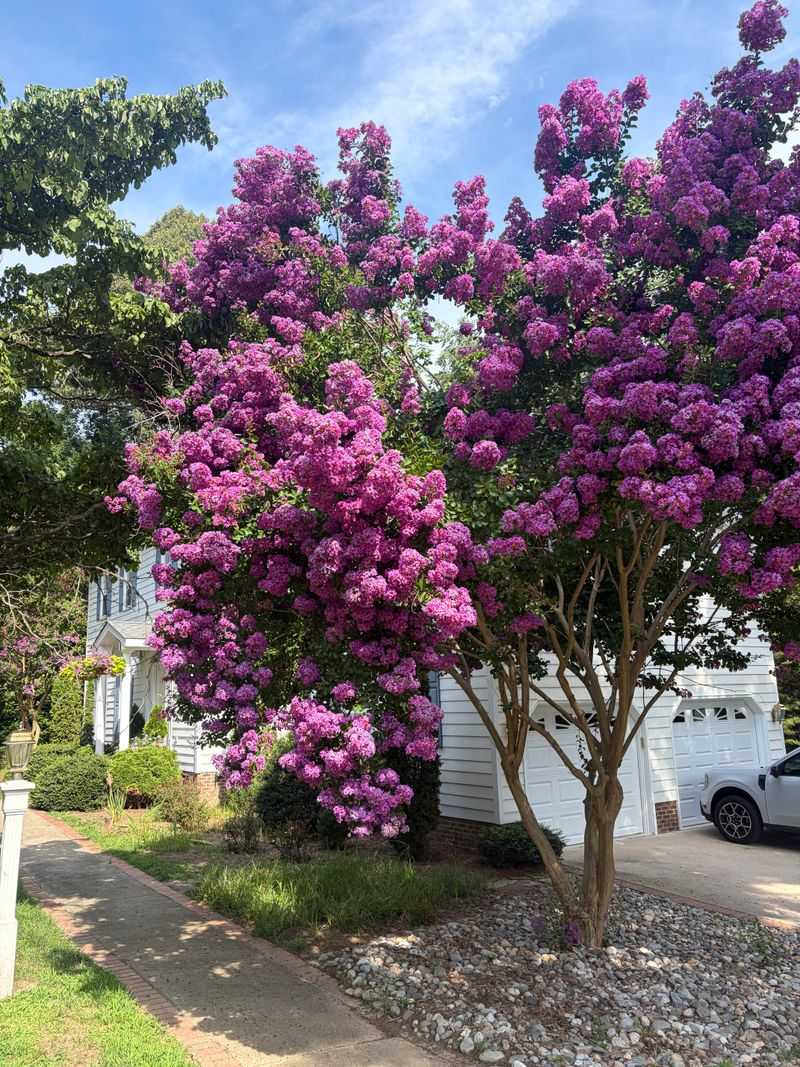
Ask any experienced gardener about a tree that combines showy summer blooms with manageable roots, and Crape Myrtle will almost always come up.
It is one of the most popular ornamental trees for paved spaces because it looks spectacular without creating underground chaos.
The flowers come in pink, red, white, and purple, making it easy to match any yard style.
Crape Myrtle roots are generally non-invasive compared to many other flowering trees. They tend to grow at a moderate depth and do not have a reputation for cracking sidewalks or lifting pavers the way willows or silver maples might.
That said, giving it at least 5 feet of clearance from hardscape edges is still a good habit.
Most dwarf and semi-dwarf varieties stay between 6 and 15 feet tall, which is ideal for compact yards. The multi-trunk form looks beautiful against fences or walls, and the peeling bark adds winter interest when the leaves are gone.
It is heat-tolerant and thrives in warm, sunny spots, which makes it a natural fit for many parts of the state. One common mistake homeowners make is heavy pruning, often called “crape murder” in gardening circles.
Light shaping is all it really needs to stay healthy and full. Let it grow naturally for the best results.
4. Western Redbud Stays Relatively Small For Tight Spaces
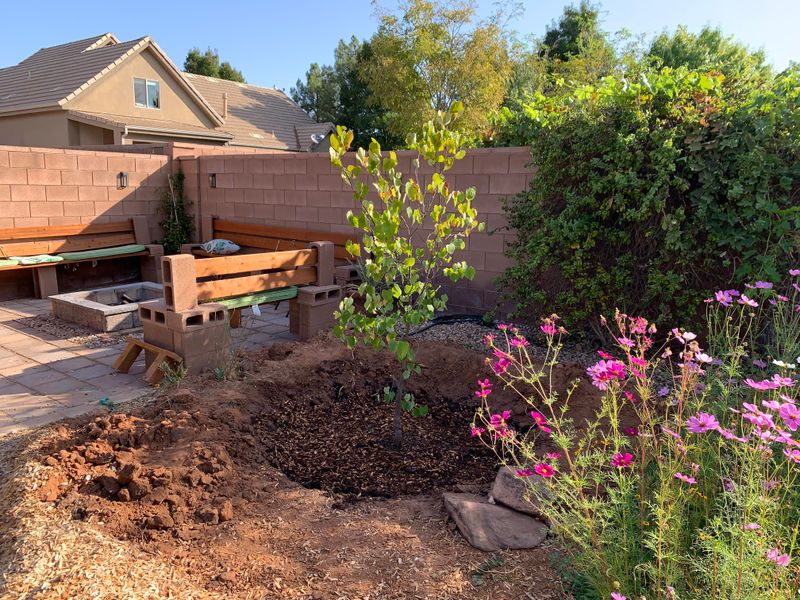
There is something magical about a Western Redbud in early spring. Before the leaves even appear, the branches are completely covered in bright magenta-pink flowers that look almost unreal.
It is one of the most stunning native trees you can add to a small yard, and it has the root behavior to back up its beauty.
Western Redbud is native to the foothills and lower mountain slopes, and it has adapted to grow without sending out aggressive surface roots. Its root system tends to be moderate and well-contained, especially when the tree is planted in well-draining soil.
That makes it a reliable choice for yards where pavers and walkways need to stay intact.
It typically grows 10 to 18 feet tall with a spreading, multi-trunk form that adds a natural, sculptural look to the landscape.
The heart-shaped leaves turn golden yellow in fall, giving you three seasons of visual interest.
After the flowers fade, flat seedpods appear and hang on the branches through winter, which adds more texture to the yard. It is drought-tolerant once established and does well with minimal irrigation.
Plant it in a spot that gets full sun to partial shade for the best flowering performance. Keeping it at least 5 feet from any paved surface is a smart precaution that helps protect your hardscape long-term.
5. Australian Willow Can Fit Narrower California Landscapes
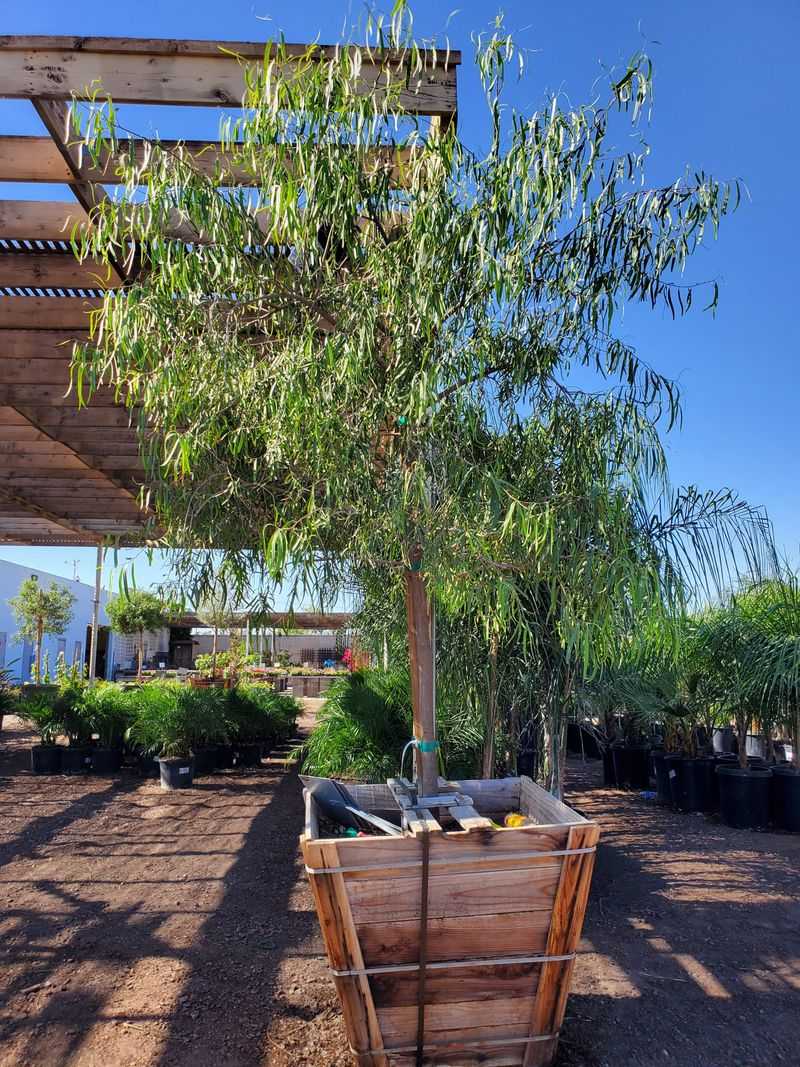
Despite sharing a name with the notorious crack willow, the Australian Willow is a completely different story when it comes to root behavior.
It gets its name from its graceful, weeping branch structure that resembles a traditional willow, but its roots are far less aggressive. That distinction matters a lot when pavers are in the mix.
The Australian Willow, known botanically as Geijera parviflora, produces fine, drooping gray-green leaves that sway gently in the breeze.
The effect is soft and calming, making it a popular choice for narrow side yards, entryways, and small patio areas. It grows slowly and stays relatively compact, usually reaching 20 to 25 feet at full maturity.
Its root system is considered moderate and is much less likely to cause surface damage compared to true willows or other fast-growing shade trees. Still, giving it 6 to 8 feet of clearance from hardscape is a reasonable precaution.
It is drought-tolerant and low-maintenance once it gets established in the ground. Small white flowers appear in spring and have a faint, pleasant scent.
The tree handles heat well and does not need much water once its roots are settled in. For homeowners who want that flowing, graceful look without the root drama, the Australian Willow delivers a surprisingly elegant solution in tight spaces.
6. Fern Pine Can Be Trained For Smaller Urban Spaces
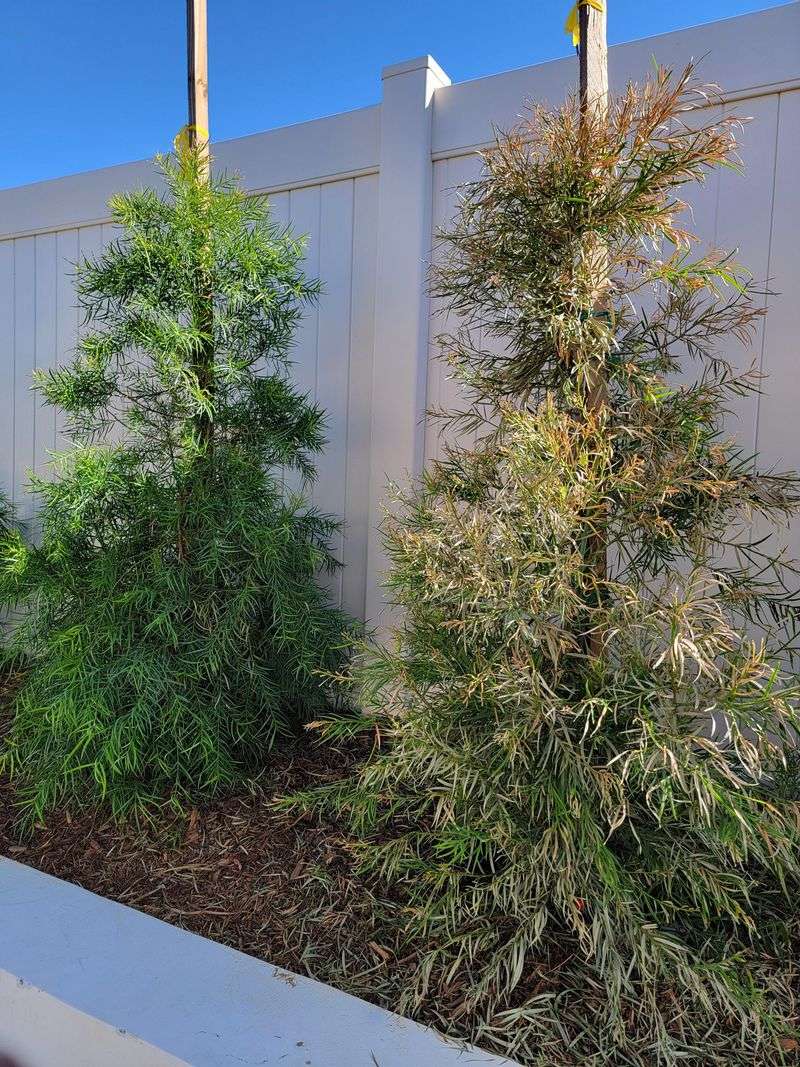
Fern Pine is one of those trees that surprises people. It looks soft and feathery with its fine, dark green leaves, but it is actually quite tough and adaptable.
What makes it especially useful in small yards with pavers is that it can be pruned and shaped into a narrow, columnar form that takes up very little horizontal space.
The roots of Fern Pine, or Afrocarpus gracilior, are generally considered non-invasive when compared to many other shade trees.
They do not typically push up through pavers or crack concrete, which is why urban planners and landscape designers frequently include it in tight, paved spaces.
Keeping it well-watered during dry spells also helps prevent roots from searching aggressively for moisture near the surface.
Left unpruned, it can grow quite tall, sometimes reaching 40 feet or more. But with regular shaping, it can be maintained at a much more manageable size that suits a compact yard.
It tolerates full sun and partial shade, making it flexible for different yard orientations. The dense foliage provides good privacy screening, which is a bonus in neighborhoods where yards sit close together.
It also handles wind reasonably well, which is helpful in coastal areas. For homeowners who want both a privacy screen and a paver-friendly tree in one package, Fern Pine is a hard option to beat.
7. Sweetshade Offers A More Moderate-Sized Canopy
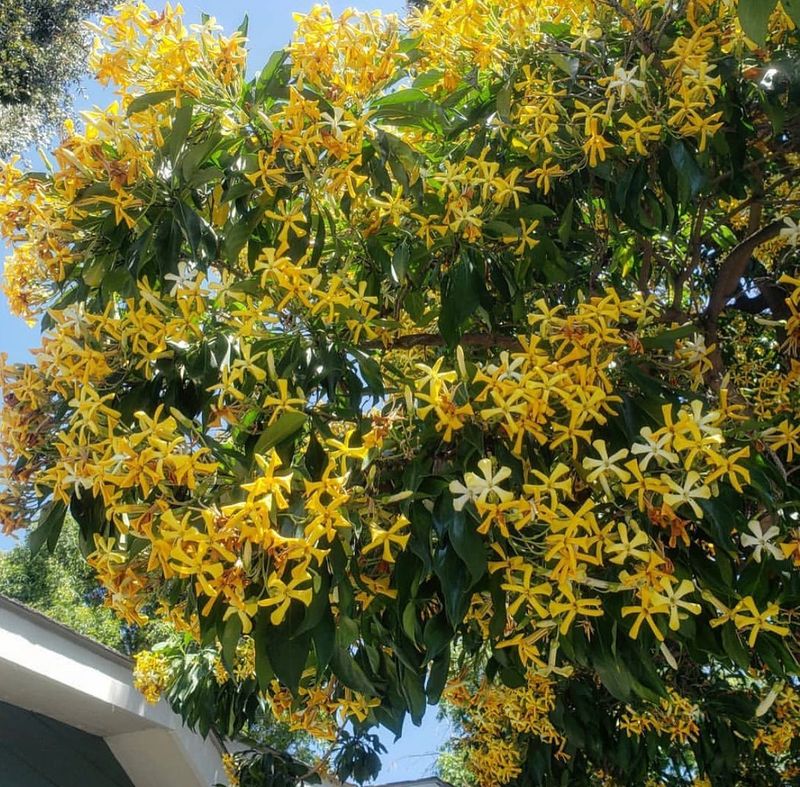
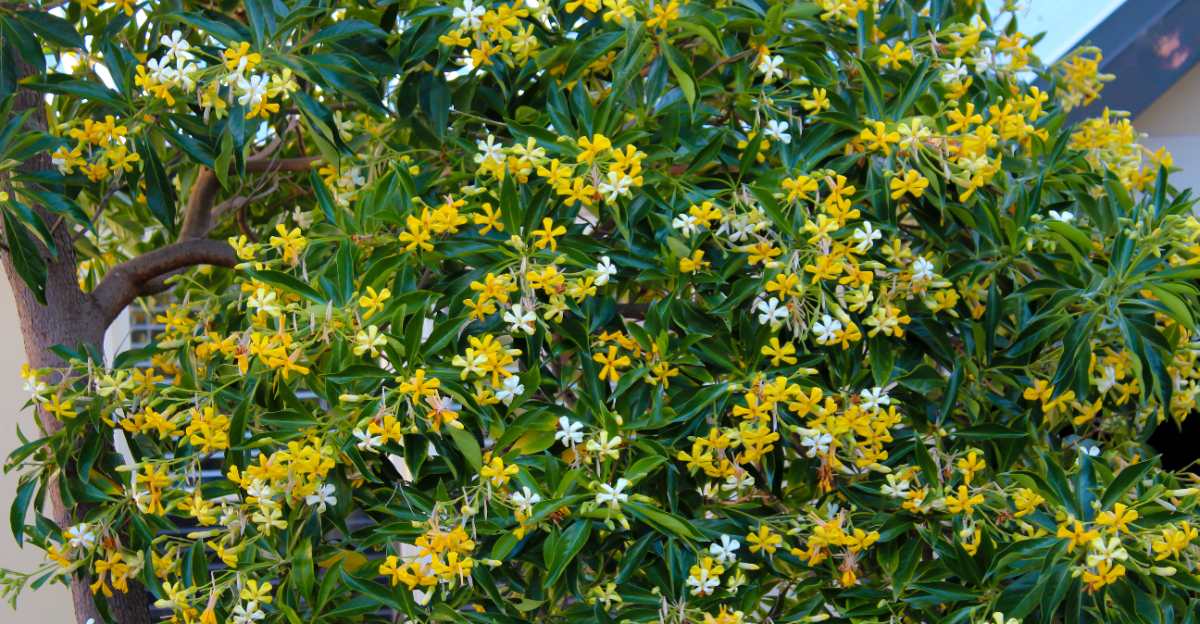
Not many trees can claim the title of both low-maintenance and paver-friendly, but Sweetshade comes close. Known botanically as Hymenosporum flavum, it is an Australian native that has found a comfortable home in warm, mild climates.
The name comes from its intensely fragrant yellow flowers, which smell like honey and jasmine combined.
The root system of Sweetshade is generally considered moderate and non-aggressive, making it a reasonable choice near patios and paved areas. It tends to grow vertically rather than spreading its roots wide along the surface.
That upright growth habit, combined with a moderate overall size, makes it easier to manage in a small yard setting.
It typically reaches 20 to 40 feet tall, but it can be kept smaller with thoughtful pruning over time. The canopy is fairly narrow and upright when young, then becomes more rounded as it matures.
That gradual spread is easier to plan around than trees that expand rapidly. Planting it 8 to 10 feet from hardscape edges gives the roots enough space without crowding your paved areas.
The flowers appear in spring and fill the air with a sweet scent that makes spending time outside even more enjoyable. It prefers full sun and well-draining soil.
With a little care at planting time, Sweetshade can become a long-term fixture in a yard that needs both beauty and practicality.