That Strange Pile Of Sticks In Your Arizona Yard Could Mean Packrats
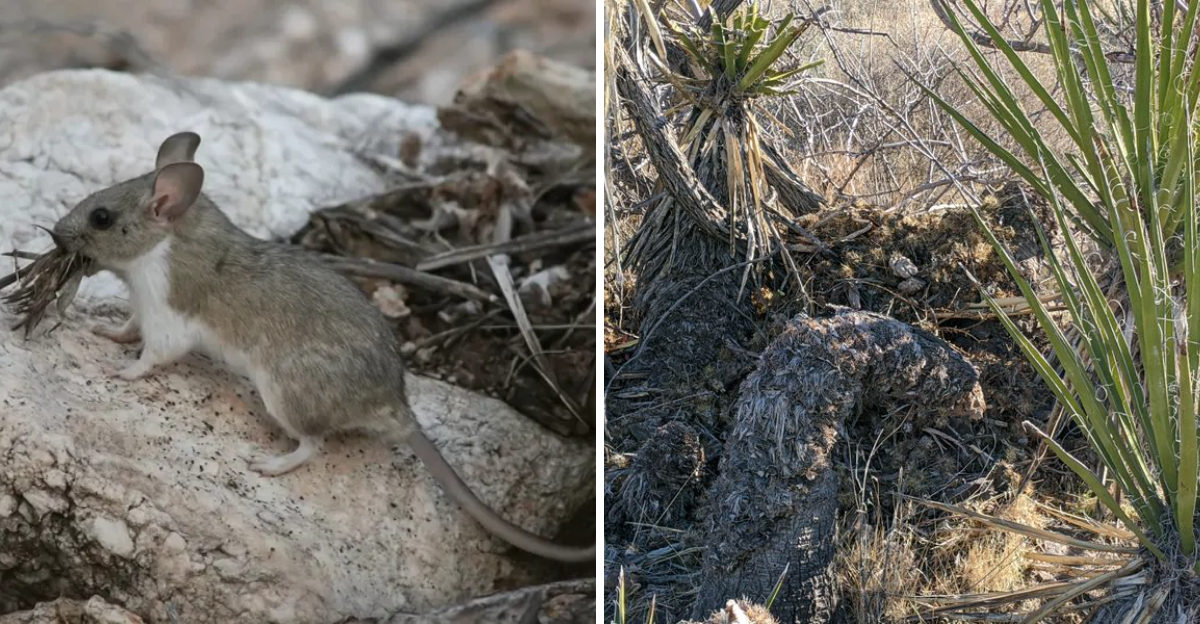
Twigs do not usually gather themselves into a bulky mound beside your fence, shed, or favorite desert shrub.
That strange pile deserves attention. Packrats are skilled builders, and the structures they create can look surprisingly different from ordinary yard clutter.
Look closely before you start pulling everything apart, especially if the same spot seems to grow messier overnight.
In Arizona, these rodents can build impressive shelters around residential properties. What looks like a forgotten heap may be serving a purpose you never expected.
Your first clue might be the arrangement itself. Materials packed together around a protected spot can suggest something has been actively working there.
Finding the source early gives you a clearer picture of what is happening around your property. That unusual mound may be telling you plenty.
1. Packrats Build More Than Ordinary Nests
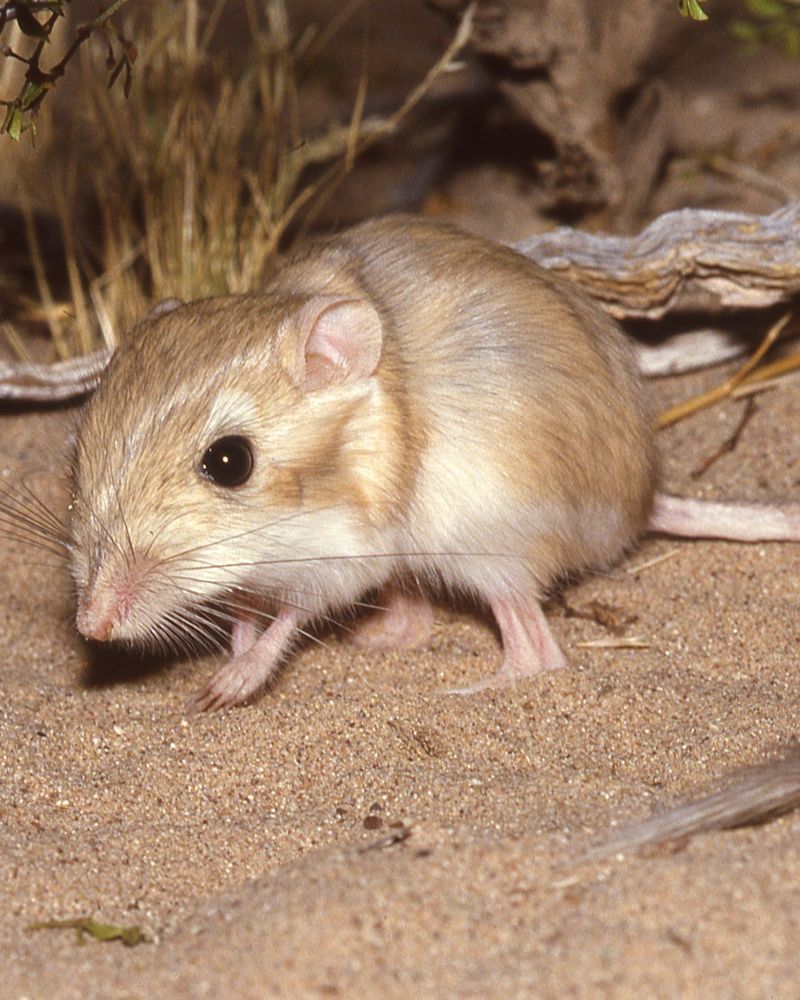
Packrats are not your average backyard rodent. Most people picture a small nest tucked in a corner, but packrat dens are something else entirely.
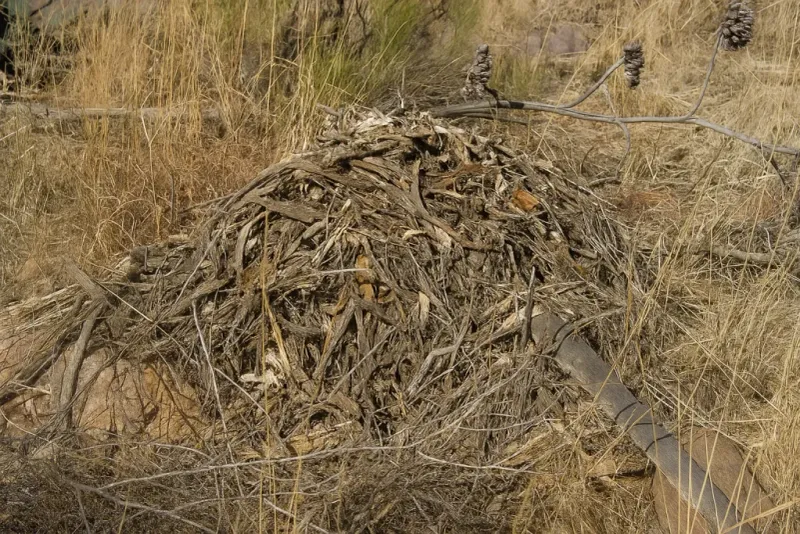
A single den can grow to be several feet wide and nearly as tall.
Packrats collect sticks, plant stems, cactus joints, bones, and random objects they find nearby. Over time, layers build up into what looks like a messy pile but is actually a structured home.
Generations of packrats can use and expand the same den.
Older dens harden into a cement-like material called amberat, which is crystallized urine mixed with debris. Archaeologists have found ancient dens that are thousands of years old.
That gives you a sense of just how durable these structures can be.
Fresh dens look loose and tangled. Older ones look compacted and dark.
Both types are worth paying attention to if you spot them near your home or outbuildings.
Packrats tend to build in sheltered spots. A pile sitting right against your fence or garage wall is a red flag.
Catching it early is much easier than dealing with an established den.
2. Sticks And Debris Form A Protective Shelter
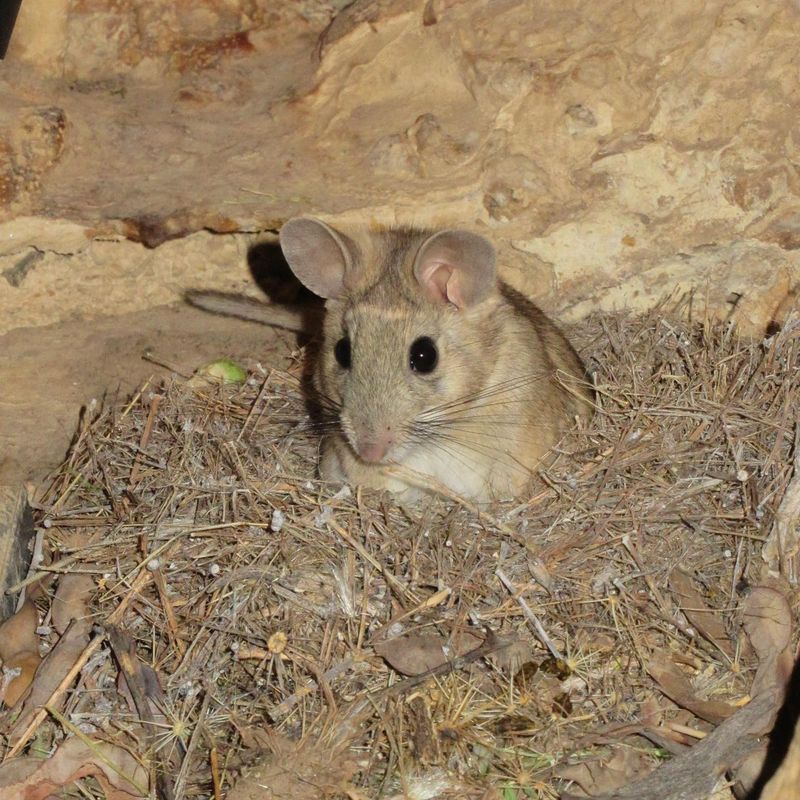
Sharp cactus spines sticking out from a pile of sticks are not an accident. Packrats carefully weave cactus joints and thorny branches throughout their dens on purpose.
It keeps predators from reaching inside easily.
Cholla cactus is a favorite building material in desert regions. Packrats grab the hooked joints and drag them back to the den.
Anyone who has accidentally brushed against cholla knows how painful those spines can be.
Beyond cactus, packrats add dry leaves, bark, cloth scraps, and whatever else they find useful. Shiny objects sometimes end up tucked inside too.
Packrats have a well-known habit of collecting unusual items, which is partly how they earned their name.
The outer layer of a den acts as armor. Predators like snakes, owls, and coyotes have a tough time getting past all those sharp layers.
It is a surprisingly effective defense system built from materials lying around the yard.
Dens built near your property can incorporate pieces of your belongings. Bits of rubber, wire insulation, and fabric have all been found inside packrat dens.
Your Arizona Garden Changes Every Week. Your Plan Should Too.
Gardening in Arizona changes quickly throughout the season. Every Friday you’ll receive a simple weekly plan showing exactly what to plant, prune, fertilize, harvest, and protect so you never miss the right timing.
Protecting your yard from becoming a supply depot for their construction projects is a smart move.
3. Hidden Corners Make Good Denning Spots
Packrats do not build out in the open if they can help it. A sheltered corner, a gap under a porch, or a rocky crevice is far more attractive to them than open ground.
Cover is everything when you are a small animal in a desert full of predators.
Spaces between boulders are prime real estate for packrats. Rocky desert landscapes give them natural walls to build against.
Your retaining wall, raised garden bed, or block fence can offer the same appeal.
Packrats also move into spaces under sheds, wood piles, and brush piles. Anything that creates a dark, sheltered pocket is worth checking.
Outdoor furniture stored against a wall can hide a den that has been growing for months.
Night is when packrats are most active. You are unlikely to spot one during the day because they stay tucked away during daylight hours.
Hearing scratching or rustling at night near a wall or corner is worth investigating the next morning.
Checking hidden spots around your property a couple of times a year takes only a few minutes. A flashlight and a quick look behind stored items can reveal early signs of activity before a small problem turns into a bigger one.
4. Nearby Vegetation Provides Food And Cover
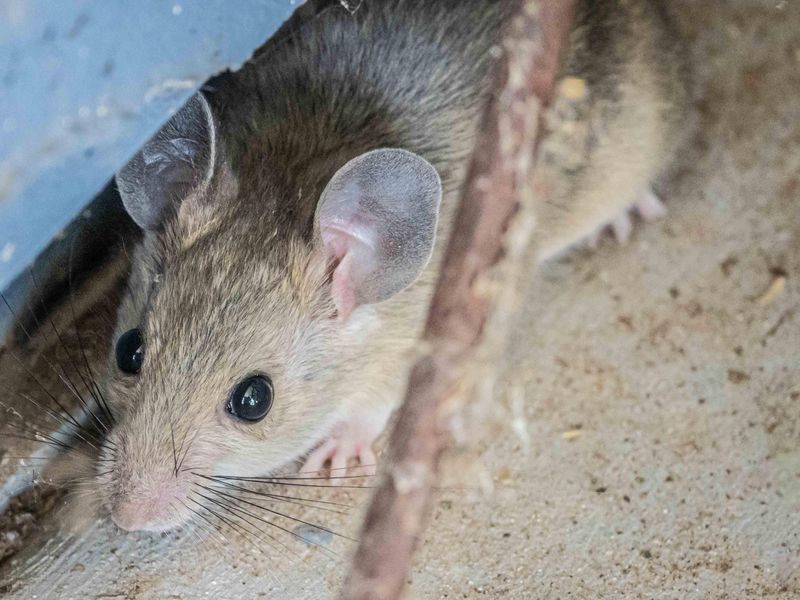
Lush desert plantings are beautiful, but they can also be a buffet for packrats. Prickly pear pads, mesquite seeds, and fruit from native trees are all fair game.
Dense shrubs planted close to your home give packrats both food and a safe travel route.
Packrats are herbivores for the most part. Seeds, green plant material, fruits, and cactus flesh make up the bulk of their food.
They store food inside their dens too, which helps them survive dry stretches without venturing far.
Dense ground cover planted right against your foundation is particularly risky. It creates a hidden corridor that packrats can use without being exposed.
Keeping a small gap between plants and structures removes some of that protection.
In the Southwest, plants like brittlebush, globe mallow, and wolfberry are common packrat food sources. Any yard with a variety of native plants is likely to attract wildlife, including packrats.
That is not necessarily a problem unless they start building near your home.
Trimming back overgrown shrubs and clearing fallen fruit from the ground reduces the attractiveness of your yard. You do not need to remove every plant.
A few small adjustments can make a real difference in how welcoming your space feels to a foraging packrat.
5. Other Clues Can Confirm Their Presence
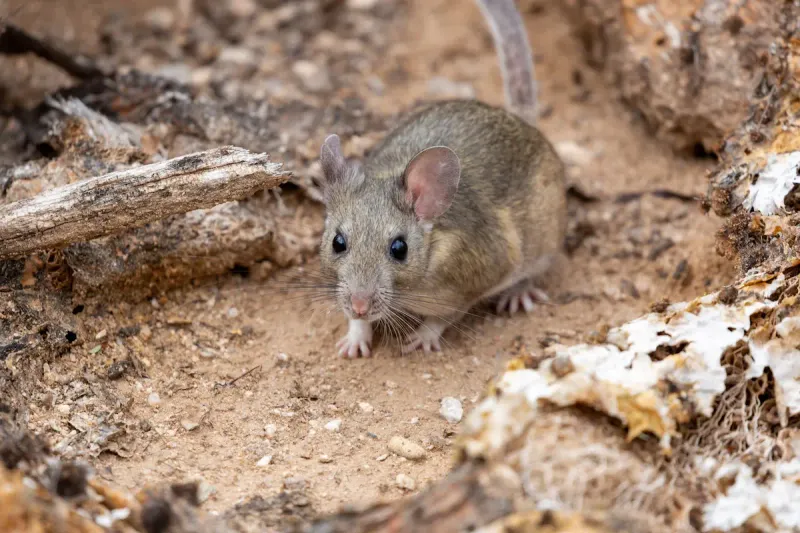
A pile of sticks alone does not always confirm packrats. Other signs help you piece together what is actually going on in your yard.
Knowing what to look for makes identification much more reliable.
Packrat droppings are small, dark, and spindle-shaped. You might find them scattered near the den entrance or along regular travel paths.
A cluster of droppings in a corner is a strong indicator that something has been visiting regularly.
Gnaw marks on wood, plastic irrigation lines, and even vehicle wiring are common signs. Packrats chew to wear down their teeth, which grow continuously.
Damage to hoses, cables, or stored gear can sometimes be traced back to packrat activity.
Footprints in dusty soil near a den entrance are another clue. Packrats have four toes on their front feet and five on their back feet.
Tiny paired prints leading to a pile of sticks tell a pretty clear story.
A strong musky odor near a suspected den is worth noting. Packrats mark their territory with scent, and an established den can carry a noticeable smell.
If you catch an unusual odor near a stick pile, trust your nose. Combining these clues gives you a much clearer picture than any single sign on its own.
6. Dens Near Structures Can Cause Trouble
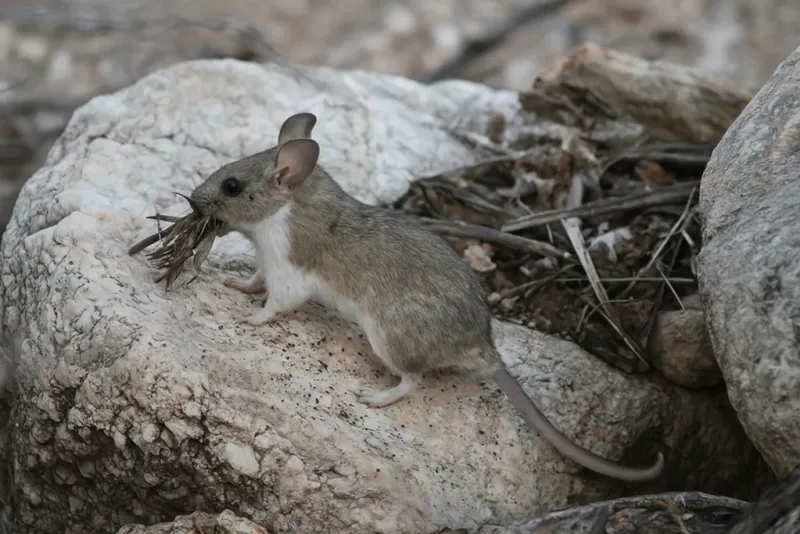
Packrats living close to your home are not just a nuisance. They can cause real damage if left unchecked.
Chewing through wiring, irrigation tubing, and stored materials is well within their capabilities.
Vehicle wiring is a surprisingly common target. Packrats have been known to climb into engine compartments and chew through insulation.
Parking outdoors in a yard where packrats are active increases that risk, especially in warmer months when packrats are more mobile.
Dens built against wooden structures can accelerate rot. Moisture from urine soaks into wood over time.
The damage is usually slow but can become significant if a den sits in the same spot for a long time.
Packrats can carry fleas, and those fleas can carry pathogens. You do not need to handle a packrat to be exposed.
Keeping dens away from living spaces and areas where pets spend time is a reasonable precaution.
If a packrat has gotten inside a wall or attic space, the signs are usually scratching sounds and a musky smell. At that point, getting a pest control professional involved is a practical step.
Waiting tends to make the situation harder to manage. Acting early is almost always the better call when structures are involved.
7. Simple Yard Changes Make Shelter Less Appealing
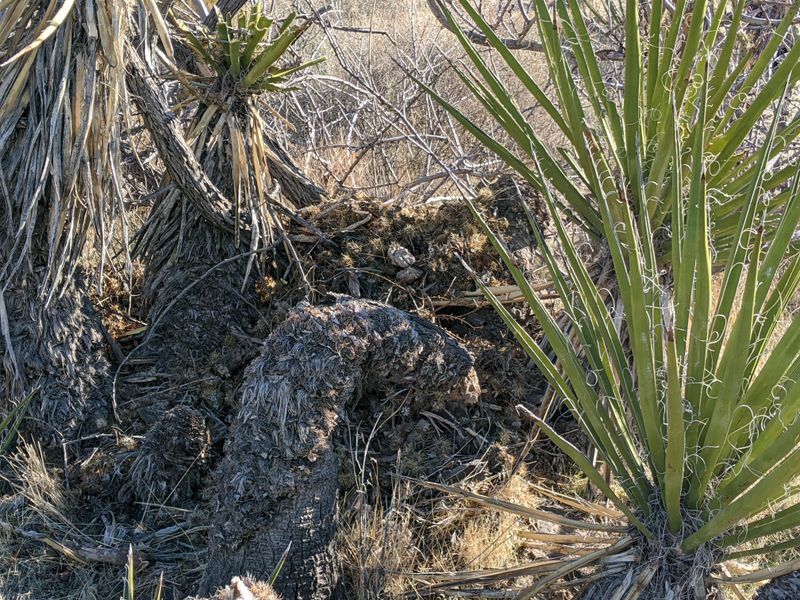
You do not need harsh chemicals or complicated traps to make your yard less attractive to packrats. A few practical changes go a long way toward reducing their interest in your property.
Start with clutter. Wood piles, old equipment, and stored junk sitting on the ground create ideal shelter.
Raising stored wood off the ground and keeping storage areas tidy removes ready-made hiding spots that packrats would otherwise use.
Seal gaps around sheds, under porches, and along foundation edges. Packrats can squeeze through surprisingly small openings.
Hardware cloth with a small mesh size works well for blocking entry points without restricting airflow or looking out of place.
Motion-activated lights can discourage nighttime activity near your home. Packrats prefer darkness, and a light that flicks on unexpectedly can deter them from using a particular path regularly.
It is not a foolproof fix, but it adds another layer of inconvenience for them.
Removing an existing den is best done carefully. Wear gloves and a dust mask.
Scatter the materials rather than leaving them in a pile. If the same spot keeps attracting new activity, addressing the underlying shelter appeal is more effective than repeated removal.
Small, consistent yard habits tend to produce the best long-term results in desert living.