Reasons Pennsylvania Hydrangeas Fade To Green Instead Of Staying Colorful
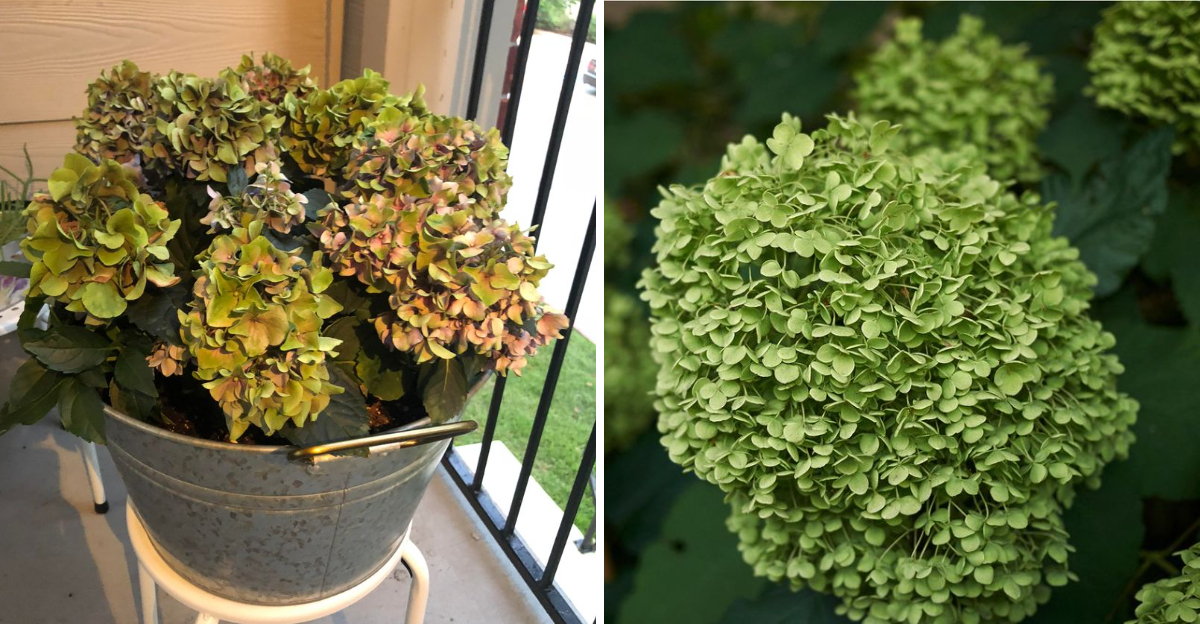
If your hydrangea blooms have been quietly turning green and you have been standing in the garden trying to figure out what went wrong, here is some genuinely reassuring news. Nothing went wrong.
Green hydrangea flowers are one of those garden moments that looks alarming and turns out to be completely normal more often than not. Those big, showy parts that give hydrangeas their famous look are not actually petals.
They are enlarged sepals, and they have a natural tendency to shift color as the season progresses and the flowers mature.
Pennsylvania gardeners see this across a wide range of hydrangea species and cultivars, and the reasons behind it come down to genetics, plant age, and some quiet biological changes happening inside the bloom itself.
Knowing what drives the shift helps you tell a healthy aging plant from one that actually needs attention.
1. Older Hydrangea Blooms Naturally Shift Toward Green
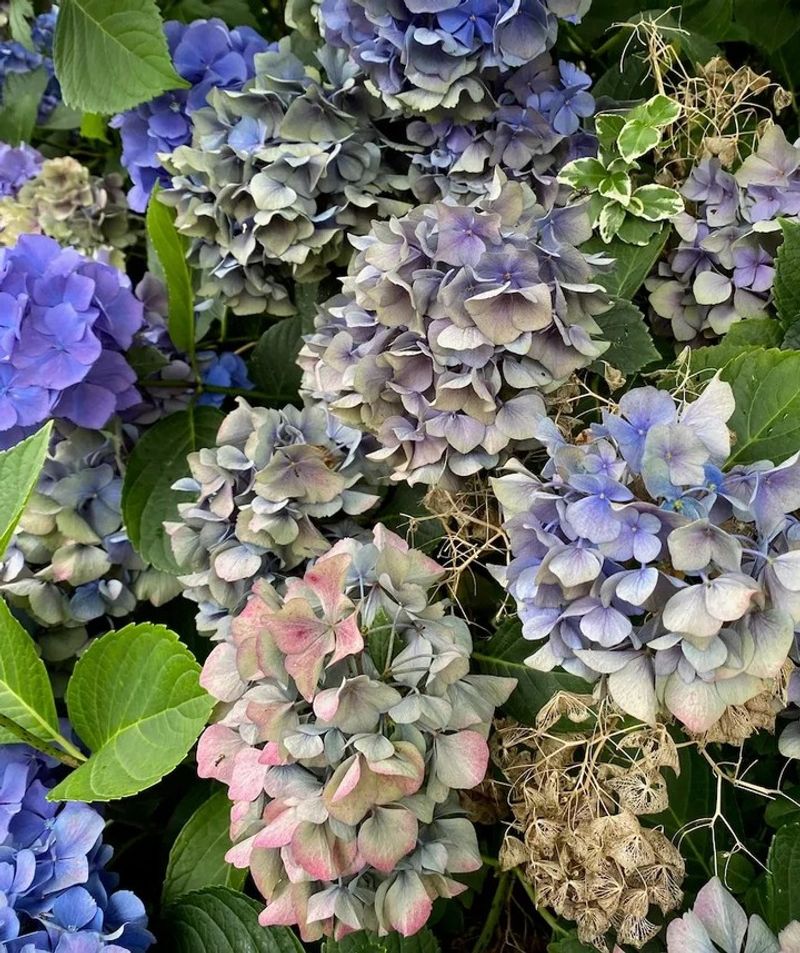
Watching a bloom change color over the weeks is one of the quiet joys of growing hydrangeas. As flowers get older, many types naturally move toward green tones near the end of their flowering cycle.
The showy parts of a hydrangea are not true petals. They are enlarged sepals, and these sepals can change appearance as the flower matures.
Early in the season they may show bright pink, blue, or crisp white, and later they often soften and pick up green shades.
This kind of slow shift is common in Pennsylvania gardens, where hydrangeas bloom through the warm months and stay on the plant for a long stretch. The longer a flower head lingers, the more time it has to change.
Green late in the cycle usually means the bloom is simply aging, not struggling. The flower structure stays whole, and the color change happens gradually rather than all at once.
For gardeners, this is helpful to know. Instead of worrying, you can enjoy the different looks a single hydrangea offers across one season.
Many people even cut these green-tinged blooms for dried arrangements, since they hold their shape nicely. Recognizing normal aging saves you from making changes your plant does not need.
When the shift is smooth and the flowers look otherwise typical, green tones are usually a natural part of the story.
2. Some Smooth Hydrangeas Fade Back To Lime Green
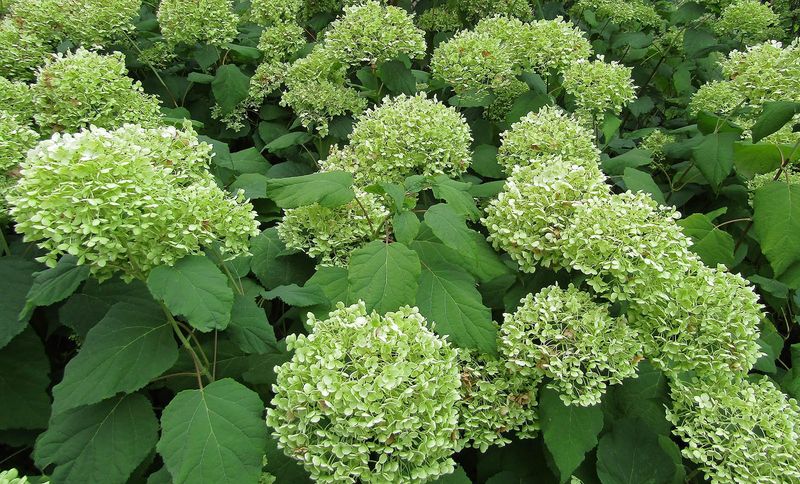
Smooth hydrangeas, known to botanists as Hydrangea arborescens, put on one of the more dramatic color journeys in the garden. Popular selections like ‘Annabelle’ and ‘Incrediball’ are grown all over Pennsylvania for their huge, rounded flower clusters.
These blooms often open a pale, greenish white before opening fully into bright white. As the season moves along and the flower heads mature, many of them fade back toward a soft lime green.
That green stage is completely expected with these plants. It is not a sign that the shrub is unhappy or that the soil is off.
The change comes from the natural way the sepals develop over time.
Pennsylvania gardeners often appreciate this trait rather than fight it. The green phase gives the flowers a fresh, leafy look that blends well with the rest of a summer border.
Your Pennsylvania Garden Changes Every Week. Your Plan Should Too.
Gardening in Pennsylvania changes quickly throughout the season. Every Friday you’ll receive a simple weekly plan showing exactly what to plant, prune, fertilize, harvest, and protect so you never miss the right timing.
Because smooth hydrangeas bloom on new growth each year, they tend to be dependable performers across much of the state. Their green finish is just the last chapter of a long show.
Cut stems in this green stage also dry very well, keeping their round shape for indoor displays. If your white smooth hydrangea slowly turns lime green, you are simply watching a normal part of its yearly rhythm.
Knowing the plant’s habits helps you plan companion colors and enjoy each stage as it comes.
3. Some Bigleaf Hydrangeas Are Genetically Prone To Age Green
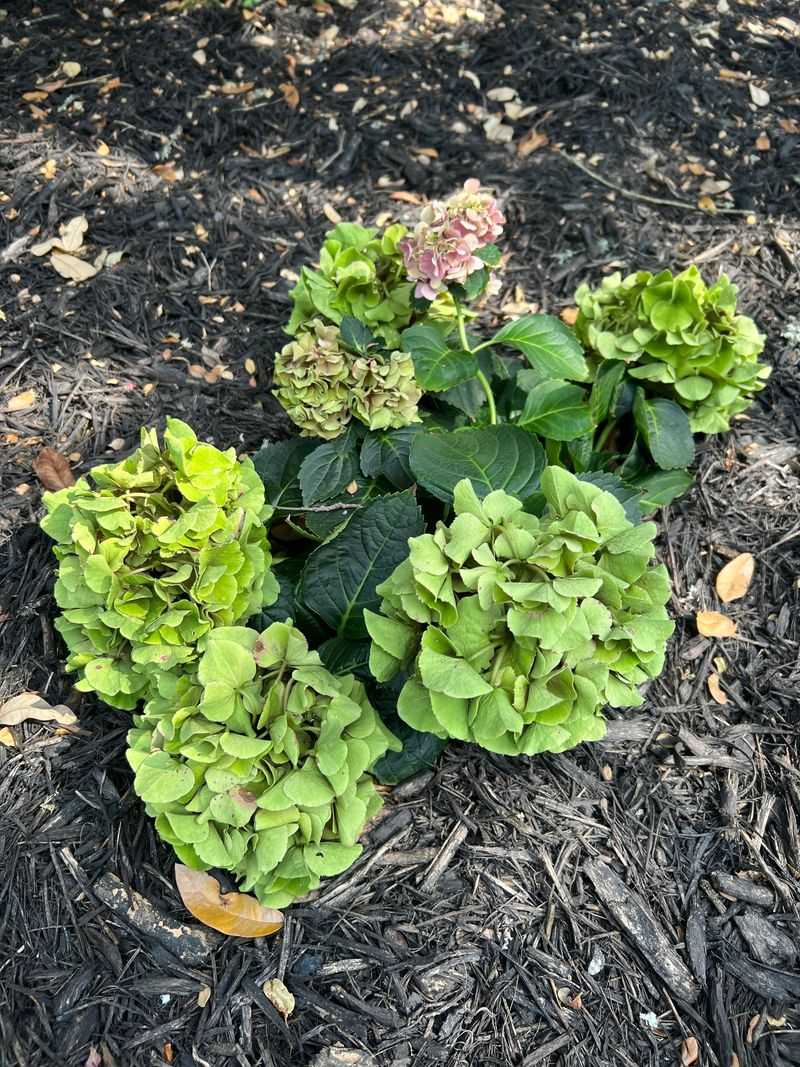
Bigleaf hydrangeas, or Hydrangea macrophylla, are the ones most people picture with big blue and pink mophead flowers. What surprises many gardeners is how differently each cultivar behaves as its blooms grow older.
Genetics play a big role here. Some bigleaf cultivars are simply built to develop green coloration as their flowers mature, while others hold their bright shades longer before fading.
Because breeders have created so many named varieties, two hydrangeas planted side by side in the same Pennsylvania yard can age in very different ways. One might drift toward antique green while another shifts to dusty rose.
This is worth keeping in mind before assuming a problem. A green tint on an older bigleaf bloom often reflects that plant’s inherited color pattern rather than anything about your care.
It also helps explain why advice from a neighbor may not match your results. Their cultivar could follow a completely different schedule than yours.
If you want to know what to expect, check the plant tag or the cultivar name when you buy. Many descriptions mention how the flowers change through the season.
For gardeners who love these color shifts, aging green blooms can be a bonus feature. When the flower shape stays normal and the change is gradual, the green look is usually just the cultivar showing its natural personality across the summer.
4. Green Can Be Part Of The Cultivar’s Normal Color Sequence
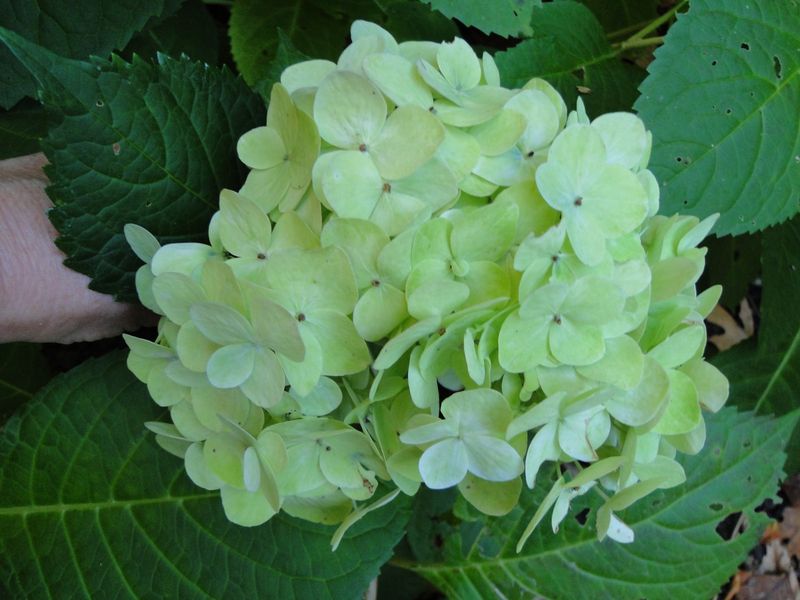
Plant breeders spend years selecting hydrangeas for the way their flowers look, and color change over time is part of that design. A bloom passing through green is sometimes an intended feature rather than a garden hiccup.
Across different species and cultivars, flowers are chosen for specific opening colors and specific seasonal transitions. Some are meant to start one shade and finish in another, with green appearing somewhere in the middle or at the end.
That means the same green tone can be normal in one plant and less common in another. The key is knowing which type you are growing.
Panicle hydrangeas, smooth hydrangeas, and bigleaf hydrangeas all follow their own patterns. Pennsylvania gardens often include a mix, so seeing several color paths in one landscape is completely ordinary.
Rather than treating every green flower the same way, it helps to think about the plant’s expected journey. A cultivar bred to age gracefully into green is doing exactly what it should.
This is also why flower photos on plant labels sometimes show more than one color. They are hinting at the full seasonal display.
When you match your expectations to the cultivar’s habits, green stops feeling like a surprise. Instead, it becomes one more stage in a planned sequence, giving your garden changing interest from early summer through the cooler days of the season.
5. Chlorophyll Development Creates The Green Color
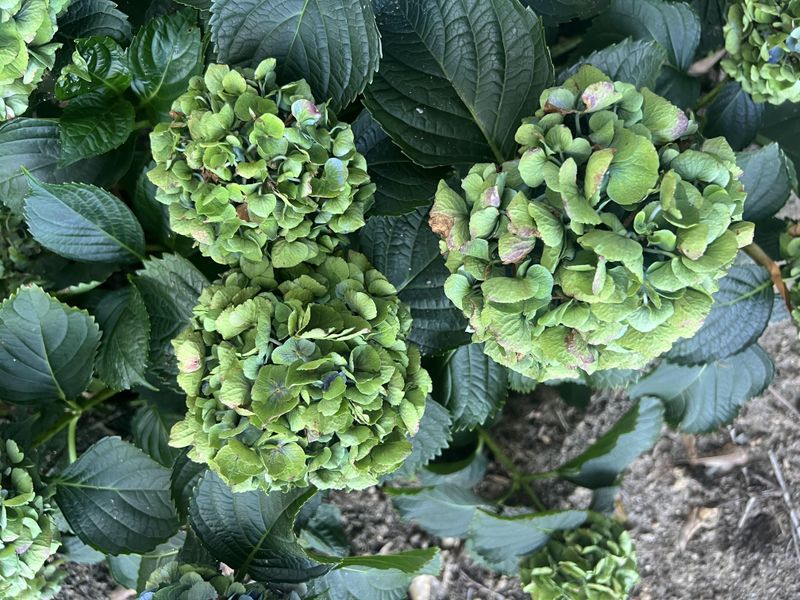
The green you see in an aging hydrangea bloom has a real biological reason behind it. Chlorophyll, the same pigment that makes leaves green, can develop within the showy sepals as flowers mature.
Remember that these sepals are not true petals. They are modified leaf-like structures, so it makes sense that they can take on green tones under certain conditions as they age.
Research on hydrangea sepals has looked at how pigments change over time. As the bright colors from early bloom stages fade, chlorophyll can become more noticeable, giving the flowers their green cast.
Keeping the science simple, think of it this way. Colorful pigments dominate when the flower is young and fresh, and green comes forward as the sepals grow older and behave more like leaves.
This does not explain every color change in every hydrangea, since species and cultivars differ. Still, chlorophyll is a helpful part of the picture for many green-aging blooms.
For Pennsylvania gardeners, this is reassuring news. Chlorophyll appearing in older sepals is a natural process, not a sign of trouble.
It also connects the flower to the rest of the plant in an interesting way, showing how closely petals-that-are-really-sepals relate to leaves.
Understanding this small piece of plant biology makes the green stage feel less mysterious and a lot more fascinating to watch unfold each summer.
6. Abnormal Green Flowers Can Occasionally Point To Phytoplasma
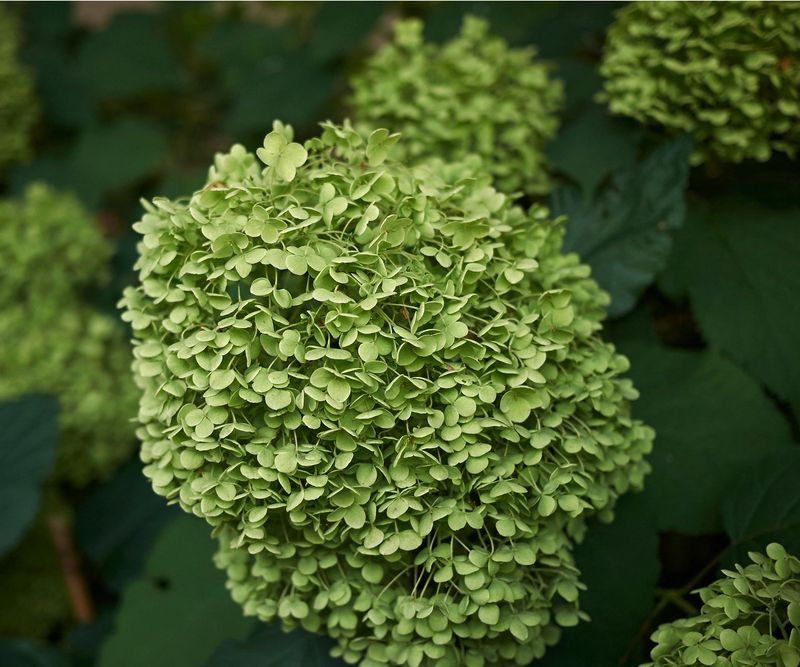
Not every green hydrangea flower fits the story of gentle aging. In rare cases, unusual green blooms can be connected to phytoplasmas, which are tiny organisms that affect certain plants.
The difference shows up in the flower structure. With this condition, blooms may look green, malformed, stunted, or oddly leafy rather than simply changing color in a smooth, gradual way.
That distinction matters a lot. A normal aging bloom keeps its expected shape while shifting shades, but a phytoplasma-related flower can look distorted and unlike a typical hydrangea flower.
Pennsylvania gardeners should not assume a disease just because a bloom turns green. Green color on its own is far more likely to be ordinary aging.
The warning signs to watch for are structural. Think leafy growth where petals should be, twisted or shrunken flower parts, or overall growth that seems clearly wrong for the plant.
If you notice these kinds of strange symptoms, it is smart to get help rather than guess. Penn State Extension offers guidance and diagnostic resources for Pennsylvania gardeners dealing with unusual plant problems.
Reaching out early gives you a clearer answer and helps protect the rest of your garden. There is no need for alarm over a bloom that is simply mellowing into green.
Save your concern for flowers that look truly deformed, and let the experts help you sort out what is really going on.
7. Green Hydrangea Blooms Are Often Part Of Normal Aging
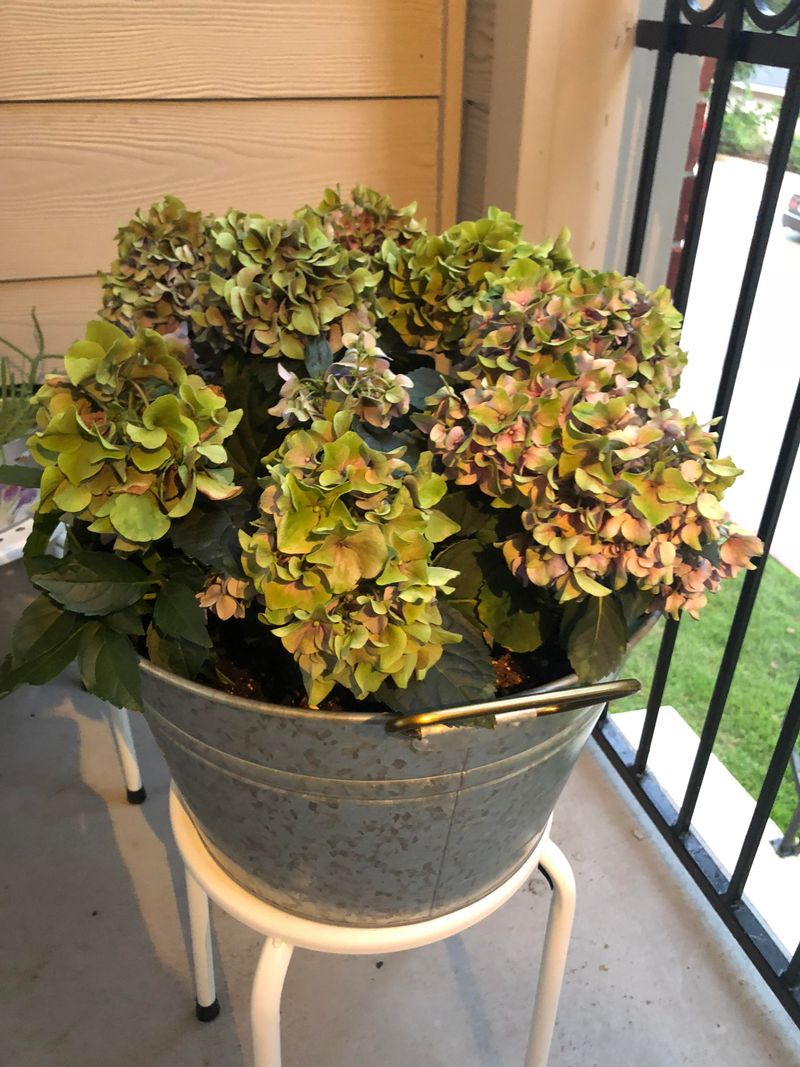
Stepping back to look at the whole plant is one of the best ways to judge whether green blooms are normal. When a hydrangea keeps its expected flower shape while slowly changing color, that pattern usually points to healthy maturation.
Normal aging is gentle and gradual. The petals-really-sepals stay intact, the flower heads hold together, and the green tone arrives over weeks rather than appearing as strange, sudden growth.
Timing and appearance depend heavily on the type of hydrangea. A smooth hydrangea, a bigleaf hydrangea, and a panicle hydrangea will each reach their green stage on their own schedule.
In Pennsylvania gardens, this means you might see one shrub turn green earlier than another nearby. That variation is expected and reflects cultivar differences more than anything else.
A useful habit is to check the leaves and stems too. If the foliage looks healthy and the plant is growing well, green flowers are almost certainly just aging.
Comparing this year’s bloom cycle to past seasons can also help. Many gardeners find their hydrangeas repeat the same color journey each year.
Rather than reaching for fertilizer or making quick changes, it often works best to simply observe. Let the plant finish its natural cycle.
When the structure stays true and the color shift is smooth, you can feel confident that your hydrangea is doing exactly what mature hydrangeas do.
8. Unusual Green Flowers Can Sometimes Signal A Plant Problem
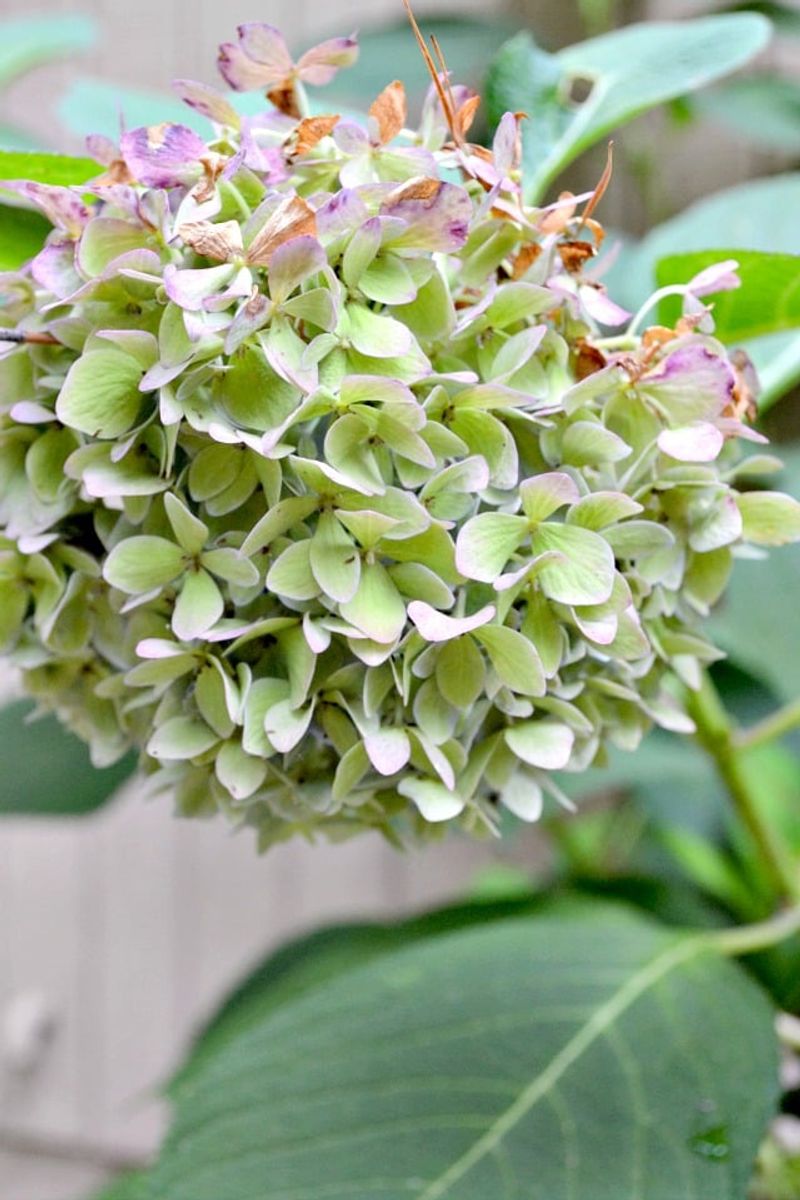
Telling the difference between fading color and a real problem comes down to flower structure, not shade. Ordinary green aging keeps a bloom looking like a hydrangea, while a true issue often changes the shape of the flower itself.
Watch for growth that seems off. Flowers that turn leafy, stay very small, twist oddly, or fail to open normally are more concerning than a bloom that simply mellows to green.
Color alone is a weak clue. A green tint on a well-formed flower head is common and rarely a reason to worry.
Distorted structure is the stronger signal. When the flower parts look nothing like a healthy bloom, that is when it makes sense to dig deeper.
Pennsylvania gardeners have a great advantage here. Instead of guessing from a photo online, you can turn to Penn State Extension for reliable, local diagnostic help.
Extension services can examine symptoms and point you toward accurate answers. This is far better than assuming the worst based on green color.
It also protects your garden, since some plant problems benefit from early attention. Getting a proper diagnosis keeps you from treating something that is actually normal.
The simple takeaway is to trust the flower’s shape as your main guide. Smooth color changes usually mean healthy aging, while clearly abnormal, malformed growth is your cue to reach out to Extension experts for a closer look.