The Oregon Native Shrub That Smells Incredible When It Blooms But Rarely Gets Planted
There are plants you walk past without a second glance, and then there are plants that stop you mid-stride on a warm afternoon because something smells absolutely incredible and you have no idea what it is.
Lewis’ mock orange is very much in the second category.
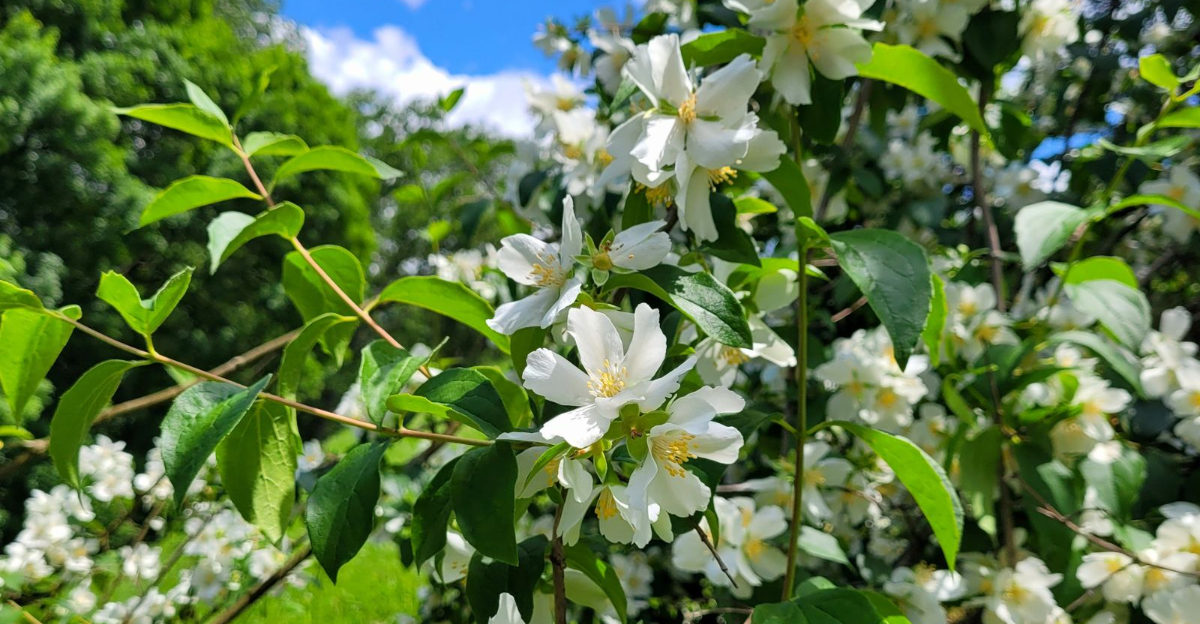
This native Pacific Northwest shrub produces clusters of white flowers with a fragrance that genuinely rivals anything you would find at a much fancier nursery, often described as reminiscent of orange blossoms with a soft, sweet quality that carries surprisingly well on a warm breeze.
And yet somehow Philadelphus lewisii remains one of the more underused native shrubs in Oregon home landscapes, which is honestly a little baffling given how well it fits the climate and how much it brings to the garden.
Consider this a formal introduction to a plant that deserves a lot more attention.
1. Fragrant Blooms Make A Memorable First Impression
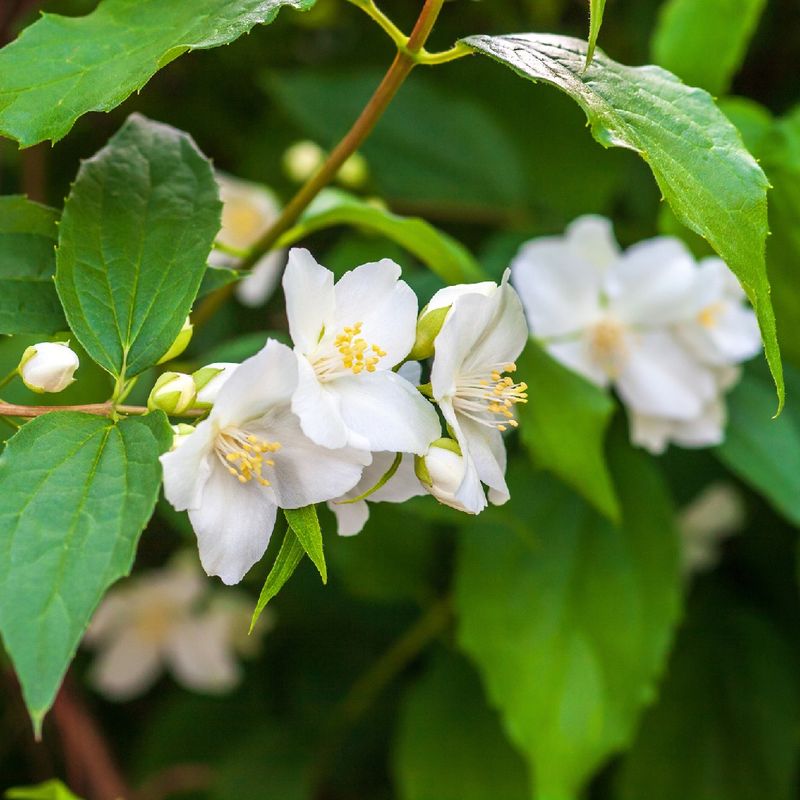
Few things stop a garden visitor in their tracks quite like an unexpected wave of sweet fragrance drifting across the yard. Lewis’ mock orange earns a loyal following largely because of its scent, which many people compare to the smell of orange blossoms.
The comparison refers purely to fragrance, not to any botanical connection with citrus trees.
When the shrub blooms, typically in late spring to early summer in Oregon, the flowers release a sweet, noticeable scent that can carry on a light breeze.
Not everyone perceives fragrance in exactly the same way, and individual experience will vary, but the scent is considered one of the plant’s most appealing features by many gardeners and horticulturists familiar with Pacific Northwest native plants.
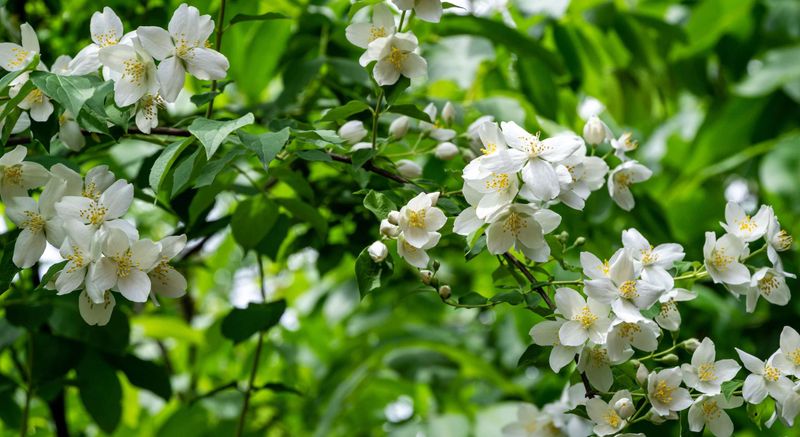
The blooms themselves are white, with a simple, open structure that adds to their charm. They appear in clusters along the branches, creating a generous display during the flowering period.
The combination of visual brightness and pleasant scent makes the plant especially noticeable when it is in peak bloom.
For Oregon gardeners who enjoy fragrant plants, Lewis’ mock orange offers a sensory experience that feels genuinely connected to the region’s natural landscape.
Planting it somewhere accessible, near a path, a patio, or an open window, can make the most of what the shrub naturally provides during its blooming season.
2. Oregon Gardens Sit Within Its Native Range
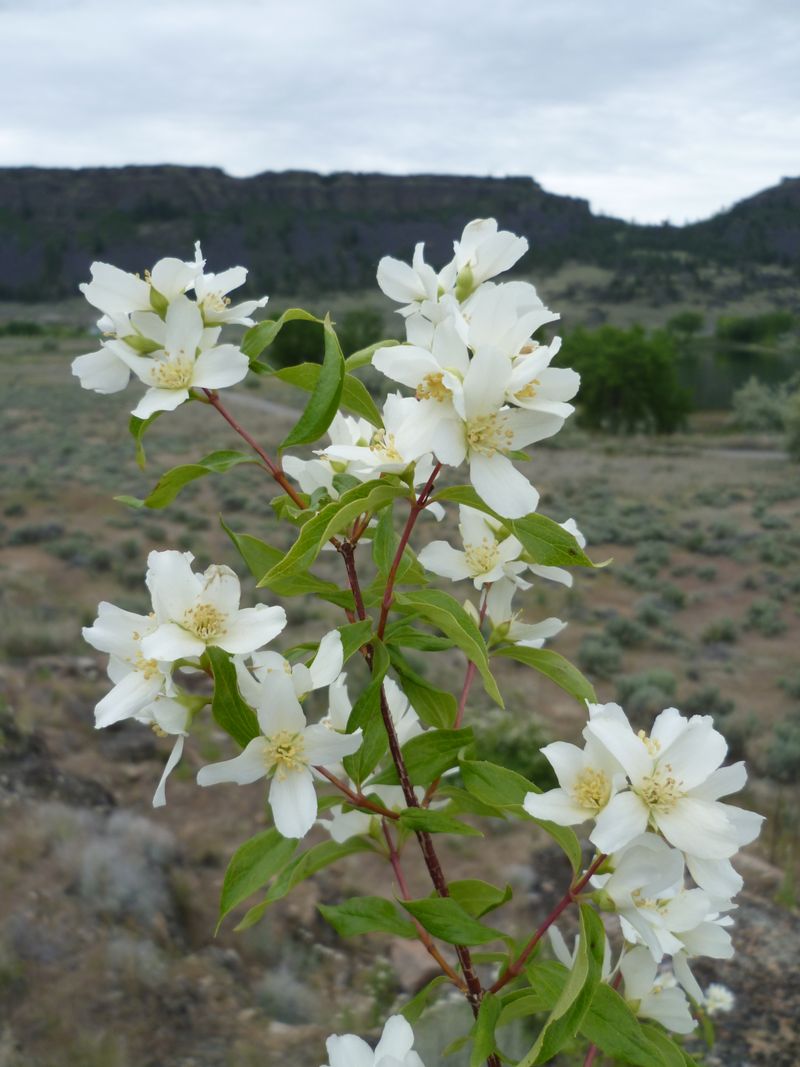
Across the state, this shrub grows naturally along rocky slopes, canyon edges, and open woodland areas, fitting into the landscape as though it has always belonged there.
Philadelphus lewisii is native to Oregon and occurs across a broader range that includes other parts of the Pacific Northwest and western North America.
Its presence in the region goes back long before anyone thought to plant it in a garden.
Because it originates from this part of the continent, the shrub is generally well-adapted to the climate and growing conditions of the Pacific Northwest in the areas where it naturally occurs.
That said, being native to the region does not mean it will perform equally well in every corner of Oregon.
Your Oregon Garden Changes Every Week. Your Plan Should Too.
Gardening in Oregon changes quickly throughout the season. Every Friday you’ll receive a simple weekly plan showing exactly what to plant, prune, fertilize, harvest, and protect so you never miss the right timing.
The state spans a wide range of climates, elevations, and soil types, and site conditions still matter when choosing where to plant it.
Gardeners in areas that fall within or near its natural range may find that Lewis’ mock orange settles in with less fuss than many non-native ornamental shrubs.
Understanding where it grows in the wild can offer useful clues about the kinds of conditions it handles well, including the rocky or well-drained soils it often occupies in natural settings.
Choosing native plants with a genuine connection to Oregon’s landscape is something many gardeners find rewarding. Lewis’ mock orange brings that regional authenticity along with real ornamental value.
3. White Flowers Brighten The Landscape
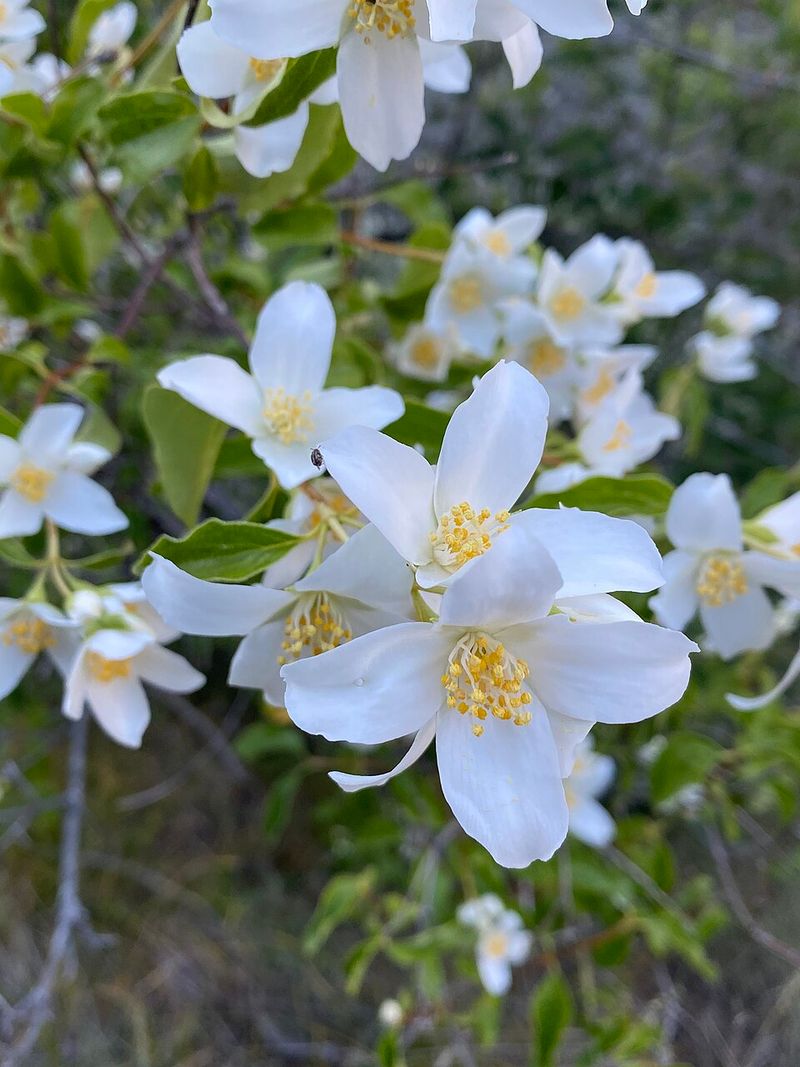
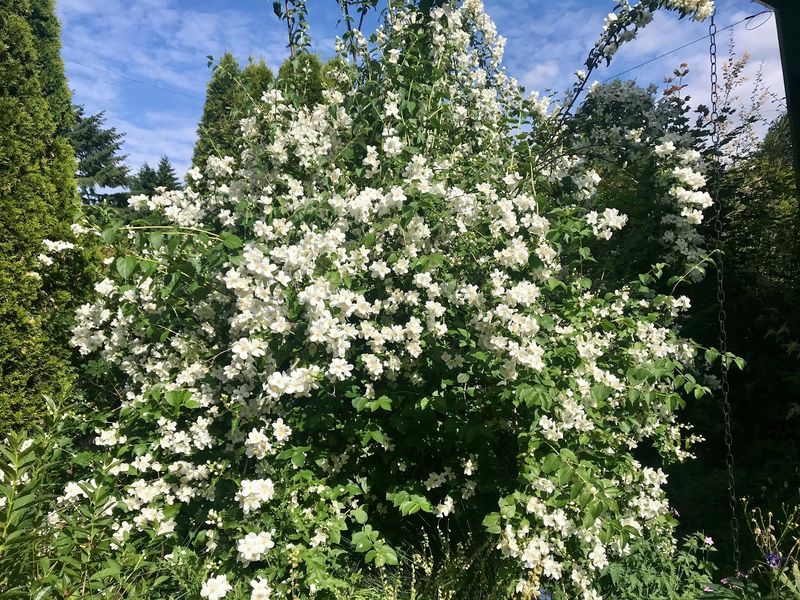
Against a backdrop of summer-green foliage, the white flowers of Lewis’ mock orange stand out with quiet confidence. The blooms are pure white, typically four-petaled, and they appear in clusters that cover the branches during the flowering period.
When the shrub reaches full bloom, the effect is genuinely striking.
White flowers have a way of brightening a landscape even on overcast days, which is no small thing in Oregon where cloudy skies are common in spring.
The contrast between the crisp white blossoms and the green leaves makes the plant easy to spot from a distance, and up close, the individual flowers have a clean, simple beauty that many gardeners find appealing.
Bloom timing generally falls in late spring to early summer, though the exact timing can shift depending on location, elevation, and the conditions of a particular year.
During peak bloom, the shrub can appear almost completely covered in flowers, making it one of the more visually dramatic native shrubs available to gardeners.
Because the flowers are white rather than a bold color, Lewis’ mock orange tends to blend smoothly into a variety of garden styles.
It works alongside other flowering shrubs without clashing, and it pairs naturally with the greens and earth tones that characterize many Oregon native plantings.
The blooms may be brief, but they leave a lasting impression on anyone who sees them at the right moment.
4. Its Size Works Best With Some Breathing Room
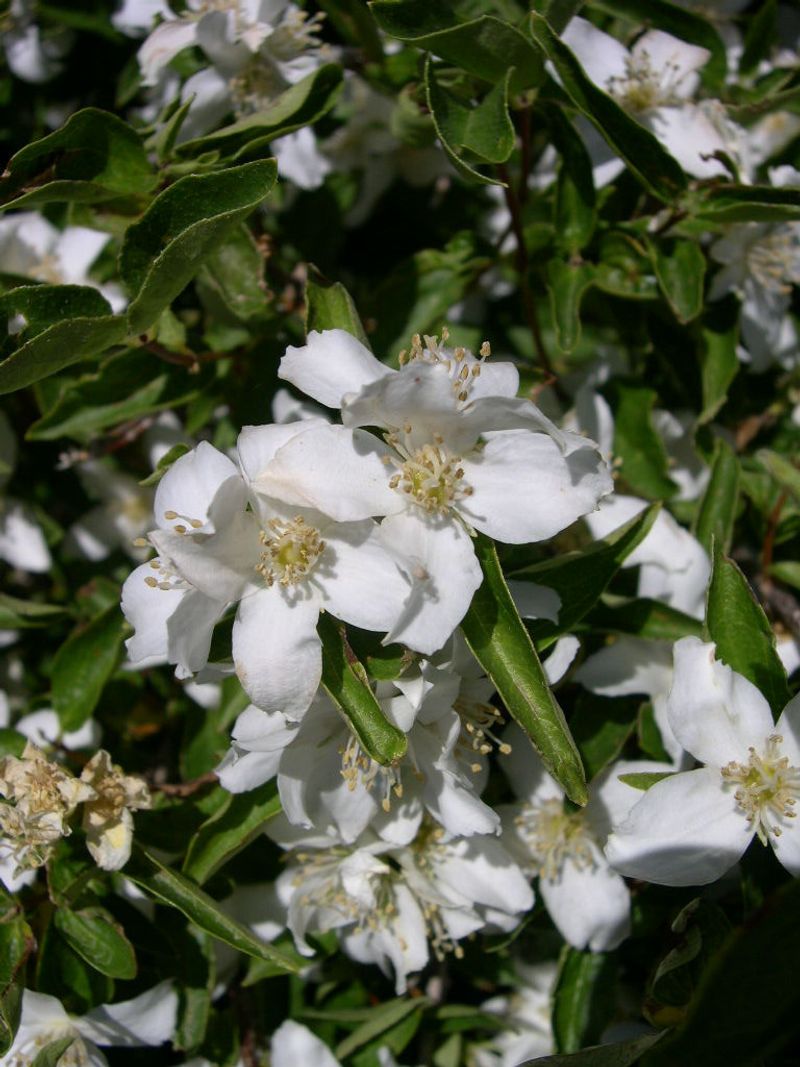
Gardeners who assume Lewis’ mock orange will stay small and tidy may be surprised by how much space a mature plant actually needs.
This is a substantial shrub, and sources indicate it can reach heights in the range of five to ten feet or more at maturity, with a spread to match.
The branches tend to arch outward as the plant matures, giving it a relaxed, open form.
That size makes placement an important decision before planting. Situating it too close to a walkway, a front entrance, a foundation, or a window can create crowding problems later that are difficult to fix without heavy pruning.
Giving the shrub enough room from the start allows it to develop its natural form without constant cutting back.
Open areas in the yard, the back of a mixed border, or a spot along a fence line where spreading branches have room to extend naturally tend to work better than tight corners or narrow planting strips.
The shrub’s arching habit can actually become a design feature when it has space to express itself.
Checking the available space before planting, and comparing it honestly against the mature size range, is one of the most practical steps any gardener can take.
Lewis’ mock orange rewards thoughtful placement with a graceful, full-bodied presence that smaller or more compact shrubs simply cannot provide in an Oregon landscape.
5. Sun And Part Shade Both Offer Possibilities
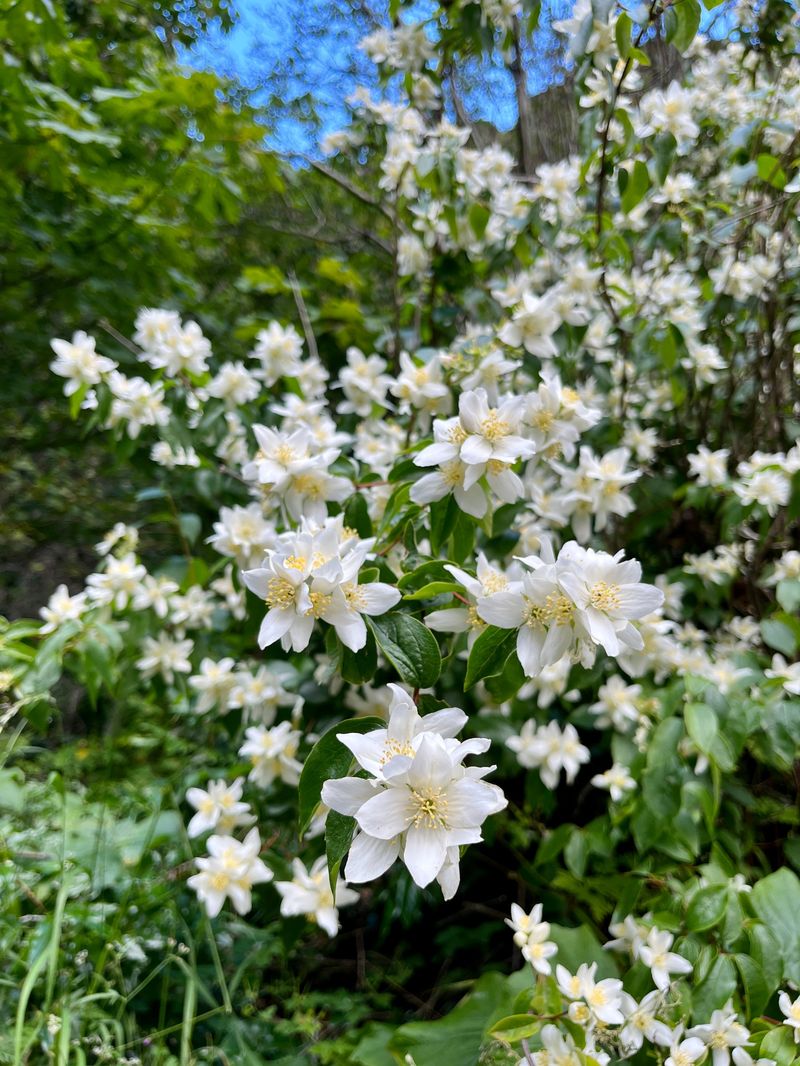
One of the more flexible qualities of Lewis’ mock orange is its documented ability to grow in both full sun and partial shade.
That range of light tolerance gives gardeners more options when deciding where to place the shrub, since not every yard offers a single ideal exposure throughout the day.
In full sun, the plant tends to flower well and develop a full, dense form. Partial shade can also work, particularly in warmer parts of Oregon where some afternoon shade may actually be beneficial during hot summers.
How the shrub performs in lower light conditions can vary, and flowering may be somewhat reduced compared to a plant growing in a sunnier location.
Light is one factor among several that influences how Lewis’ mock orange grows on a particular site. Soil conditions, moisture availability, and the microclimate of the specific planting spot all play roles in how the shrub establishes and develops over time.
Treating light exposure as the only variable would give an incomplete picture of what the plant needs to thrive.
For Oregon gardeners working with yards that have a mix of sunny and shadier areas, Lewis’ mock orange offers enough flexibility to be worth considering in more than one location.
Observing how much direct sun a spot receives across the day, and through different seasons, helps with making a placement decision that supports healthy, long-term growth for the shrub.
6. Established Plants Can Handle A Range Of Garden Conditions
Once Lewis’ mock orange has had time to settle into a site and develop a strong root system, it tends to show reasonable adaptability to the conditions around it.
Horticultural sources note that established plants can tolerate periods of summer dryness, which is relevant for gardeners in parts of Oregon that experience dry summers.
This tolerance reflects the shrub’s origins in the Pacific Northwest, where summer drought is a natural part of the climate in many areas.
Newly planted shrubs, however, need more consistent moisture while they are getting established. Treating a recently planted Lewis’ mock orange the same way as a mature, well-rooted specimen can lead to stress and slow growth.
Providing regular water during the first growing season, or even two, gives the plant a much better start.
In terms of soil, the shrub grows in a range of soil types but generally prefers well-drained conditions. Consistently waterlogged soils are not a good match for this plant.
Rocky or gravelly soils, similar to what it encounters in natural settings, tend to suit it well.
Describing any shrub as carefree or maintenance-free oversimplifies the real experience of growing it.
Lewis’ mock orange rewards attentive establishment care with durability and resilience over time, but it benefits from thoughtful site selection and reasonable attention during its early years in an Oregon garden.
7. Native Plantings Give It A Natural Fit
Shrub borders and naturalistic garden designs have a lot to gain from including plants that actually belong to the regional landscape.
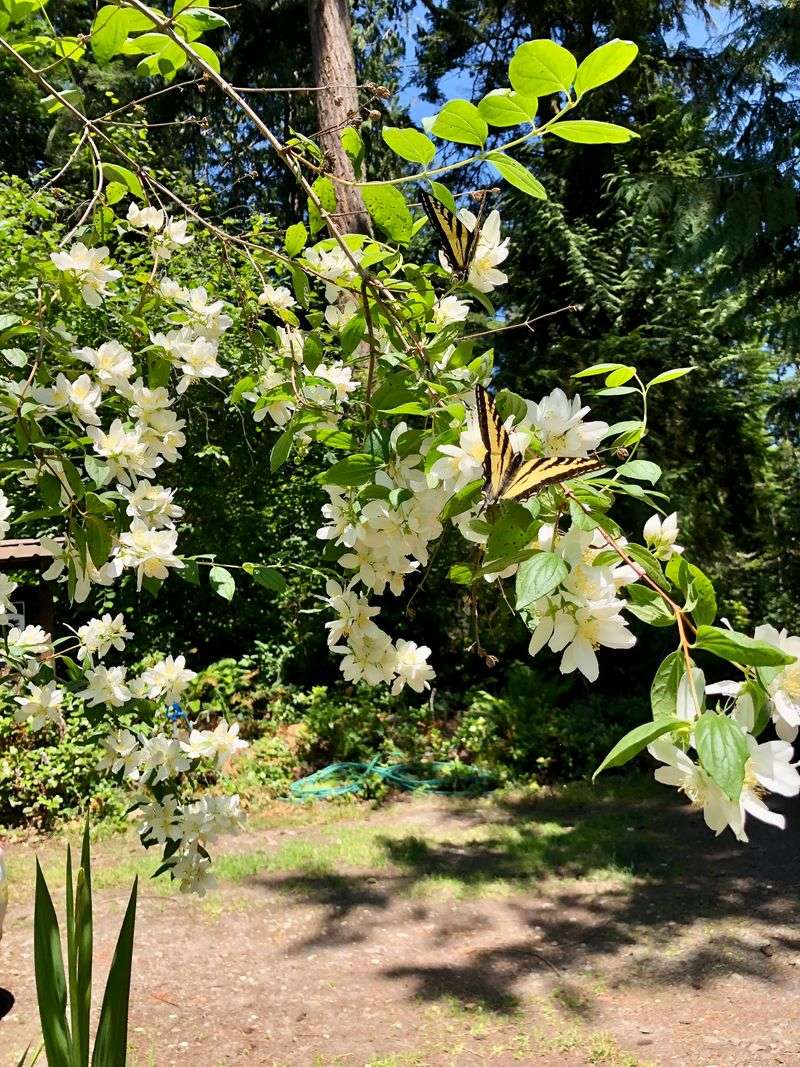
Lewis’ mock orange fits comfortably into native plantings, informal shrub groupings, and habitat-oriented garden designs where the goal is to create something that feels connected to the Oregon environment rather than imported from somewhere else.
Its arching form and seasonal flowering make it a useful structural plant in a mixed native border.
Surrounding it with other Oregon natives that have compatible light and moisture requirements can create a layered planting that looks natural and requires less intervention once established.
The visual rhythm of combining different heights, textures, and bloom times is easier to achieve when the plants share similar growing needs.
From a wildlife standpoint, the flowers of Lewis’ mock orange are visited by pollinators, including native bees, during the blooming period.
Including plants that support pollinators is something many gardeners actively prioritize, and Lewis’ mock orange contributes to that goal in a straightforward way.
The shrub also works in less formal landscape settings, such as along a fence line, at the edge of a property, or in a transitional area between a maintained garden and a wilder section of the yard.
In those situations, its natural form reads as intentional rather than unkempt, which makes it a versatile option for gardeners working with a range of design styles.
8. Its Underused Status Makes It Easy To Overlook
Regional horticultural sources, including those connected to Oregon State University and Pacific Northwest native plant communities, have described Lewis’ mock orange as underused in landscape settings.
That characterization raises an interesting question for anyone who has encountered the shrub in bloom: why does a fragrant, white-flowering native with reasonable adaptability end up less familiar in residential gardens than many non-native ornamentals?
Part of the answer may simply come down to visibility. Plants that are widely stocked at nurseries and prominently featured in garden center displays tend to get planted more often than those that require a bit more searching to find.
Lewis’ mock orange is available through native plant nurseries and specialty growers in Oregon, but it does not always appear alongside the most heavily marketed landscape shrubs.
Familiarity also plays a role. Gardeners tend to gravitate toward plants they recognize or have seen in other yards and public spaces.
A shrub that rarely appears in neighborhood landscapes becomes harder to visualize in one’s own garden, even when its qualities are genuinely appealing.
None of this reflects a flaw in the plant itself. Calling something underused is really just an invitation to look more closely at what it offers.
For gardeners willing to explore beyond the most common nursery selections, Lewis’ mock orange presents a fragrant, regionally grounded option that holds its own against far more familiar ornamental shrubs found in yards across the state.