The Meaning Behind Seeing Garter Snakes In Your Ohio Yard This Summer
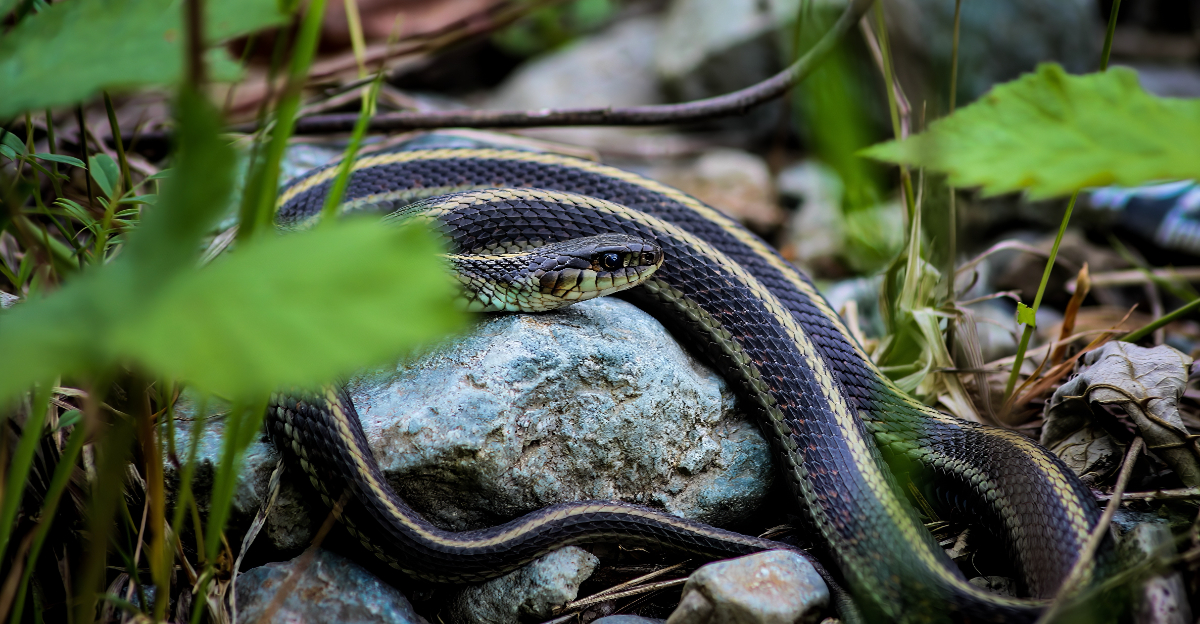
A garter snake moves through an Ohio yard and most people reach for a bucket before they ask a single question.
That bucket is the wrong response. So is everything that usually follows it.
Garter snakes show up in specific yards for specific reasons. The yard that has one moving through it right now earned that visit in ways worth understanding. The yard that does not is missing something the snake was looking for and never found.
What a garter snake is actually telling an Ohio yard this summer is not what most people assume. The natural history is interesting on its own.
The Midwestern tradition around snake presence near a home adds a layer that has been quietly passed between generations in this region for a very long time.
Both point toward the same conclusion. The snake showing up in the yard is not the problem. It is the signal.
1. That Snake May Be Following Dinner Into Your Yard
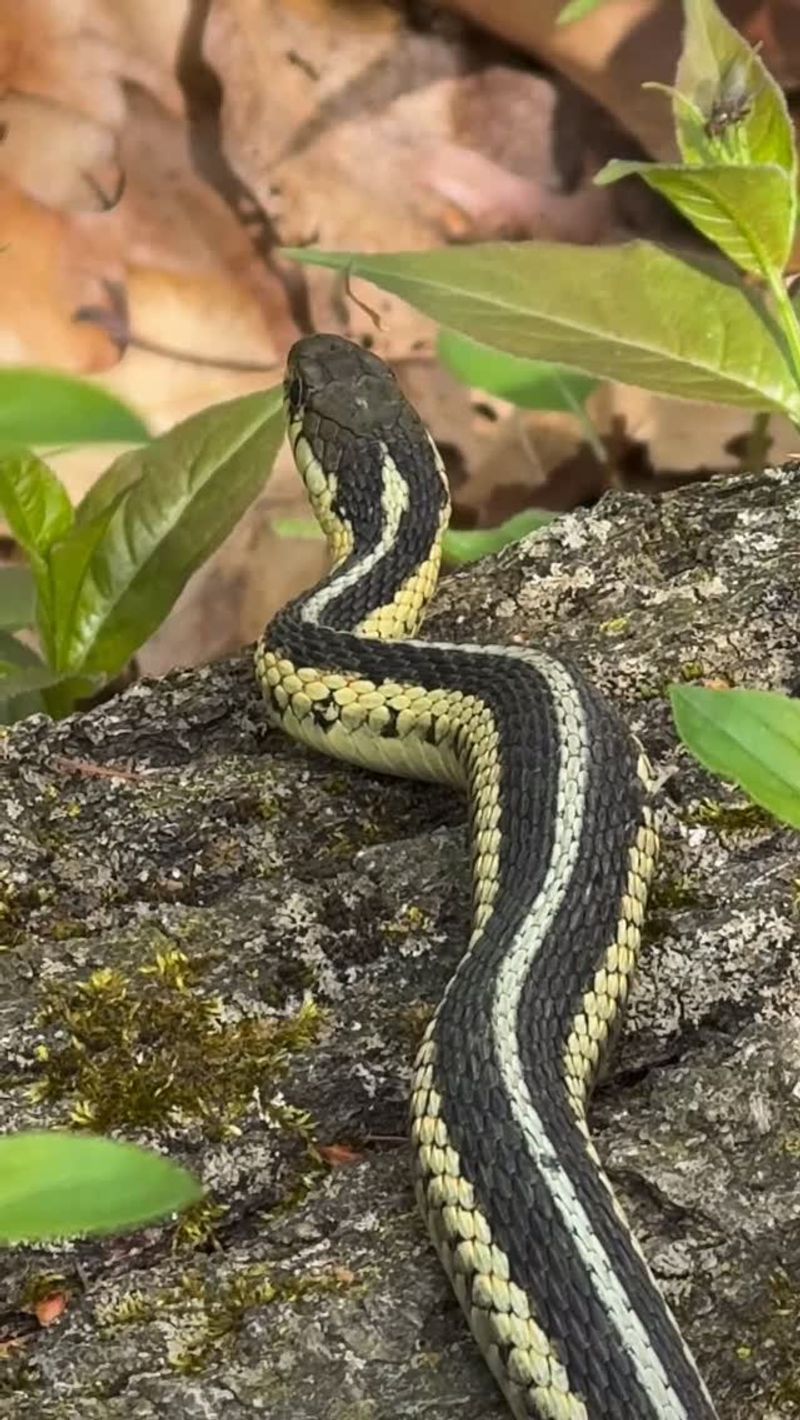
A fat earthworm working its way through freshly watered garden soil is exactly the kind of opportunity a passing gartersnake may notice. The eastern gartersnake is documented to eat earthworms, slugs, and small amphibians such as frogs and toads.
These are soft-bodied, slow-moving prey that a small snake can pursue effectively in low vegetation and damp ground.
Food availability is one of the most straightforward reasons a snake may move into or through a yard. If a garden bed holds good worm activity after watering, or if slugs are active along a border at dusk, that area briefly becomes a productive foraging zone.
The animal is not choosing your yard for any sentimental reason. It is simply moving through a landscape and finding something useful.
Yards with bird feeders, compost areas, or dense plantings may also support higher prey populations. That can make them more attractive to a foraging reptile.
None of this means the yard is overrun with prey, and one snake passing through will not noticeably reduce a slug population on its own. The animal feeds for its own survival, not as a service to the Ohio gardener.
Understanding that keeps the sighting in realistic perspective.
2. Damp Corners Give It More Reasons To Stick Around
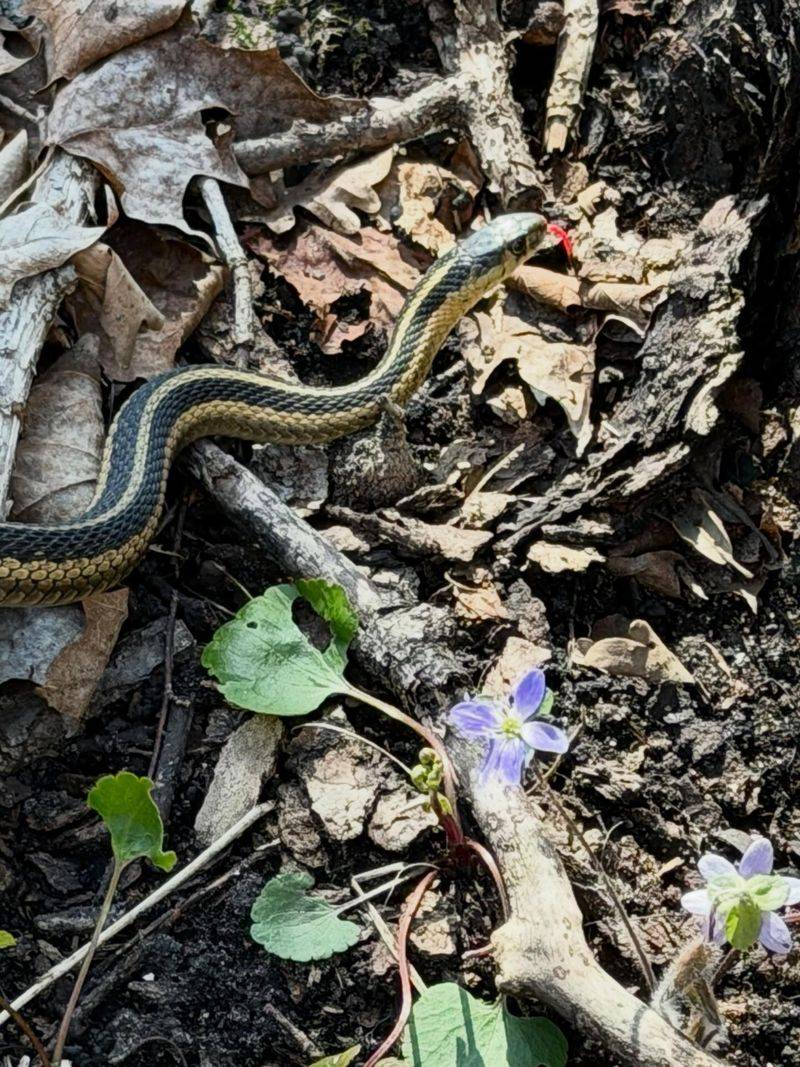
Moist soil along a downspout or a shaded bed that holds water after rain can concentrate prey. A low corner where drainage collects can do the same.
Earthworms rise closer to the surface in damp conditions. Slugs are more active when the ground is wet.
Frogs and toads tend to favor moist microhabitats as well.
The eastern gartersnake is commonly associated with moist environments. It can be found near streams, pond edges, and wet meadow borders, though it is not an aquatic snake.
It does not live in water or require standing water to survive. What moisture does is support the prey base and ground conditions that make foraging easier.
A leaky garden hose or a low spot that stays damp after watering is not a guaranteed attractant. But if that area also supports worm activity and sits near low cover, it may become a useful spot for a foraging individual.
Your Ohio Garden Changes Every Week. Your Plan Should Too.
Gardening in Ohio changes quickly throughout the season. Every Friday you’ll receive a simple weekly plan showing exactly what to plant, prune, fertilize, harvest, and protect so you never miss the right timing.
The connection is indirect. Moisture matters mainly because of what it brings to the surrounding soil and plant layer.
Removing every damp corner from a yard is neither practical nor necessary. Understanding why certain spots draw more attention can help Ohio homeowners make sense of where sightings tend to cluster.
3. Tall Grass Creates Cover Between Hunting Trips
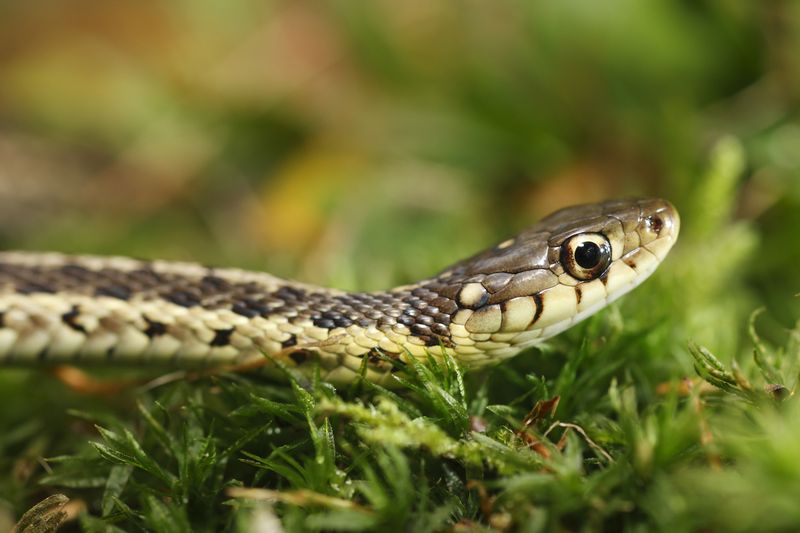
Low to the ground and relatively slender, a gartersnake moving through open lawn is exposed to birds, mammals, and other predators.
A strip of taller grass along a fence, a dense groundcover planting, or a brushy border gives the animal a way to move with less exposure.
Cover is not just about hiding. It provides a corridor between one foraging area and another.
Research on snake movement consistently shows that structural complexity in a landscape supports more reptile activity. Logs, rocks, dense low plantings, and uncut edges all provide the kind of shelter a small snake can use.
None of these features guarantee a snake will be present. They simply make a yard more passable for a species that needs to move between patches of suitable ground.
Ohio homeowners who want fewer encounters near doors, patios, or play areas can keep those immediate zones more open and closely mowed. That reduces available cover in high-traffic spots without stripping the whole yard of vegetation.
A garden bed along a back fence is a different situation from a dense planting right beside a doorstep. Thinking about cover in terms of location, rather than eliminating it entirely, gives a more practical approach.
Promising that short grass removes snakes from the property entirely would not be accurate.
4. Sunny Edges Give Garter Snakes A Place To Warm Up
Unlike mammals, reptiles do not generate body heat internally. They rely on external sources to reach the temperatures needed for normal activity.
This process is called ectothermy, and it shapes nearly every decision a snake makes about where to spend its time.
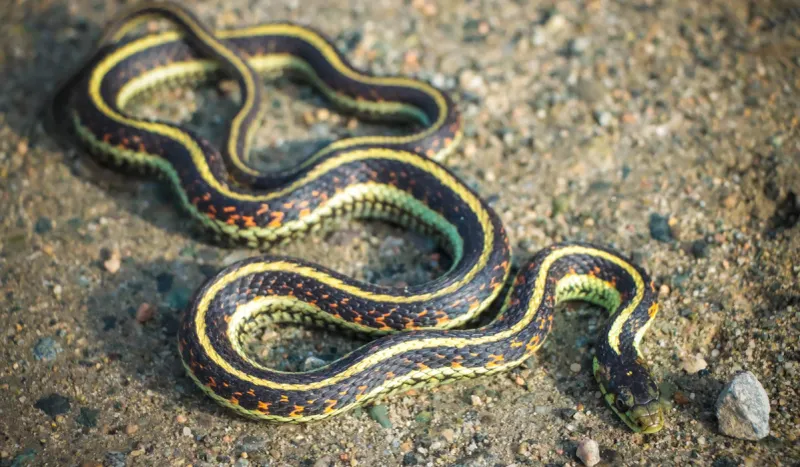
A gartersnake seen lying still on a sunny path edge or mulch border may be doing exactly that: absorbing warmth from the surface or the air around it.
Warm surfaces in a yard, such as flat stones, brick edging, or a sun-exposed strip of bare ground, can serve as useful spots for temperature regulation. The animal moves between warmer and cooler microhabitats throughout the day, adjusting as conditions change.
A snake seen in the open is not necessarily hunting. It may simply be warming up before becoming active, or cooling down after a period of foraging.
Mid to late August brings warm days but also longer shadows and cooler mornings as the season shifts. A gartersnake may be more visible during the warmest parts of the day when it moves to open areas to absorb heat.
Seeing one on a sunny edge does not require any dramatic explanation. The behavior is driven by basic physiological need.
Giving the animal space and allowing it to move on is usually the simplest response.
5. Slugs And Worms Can Keep Them Coming Back
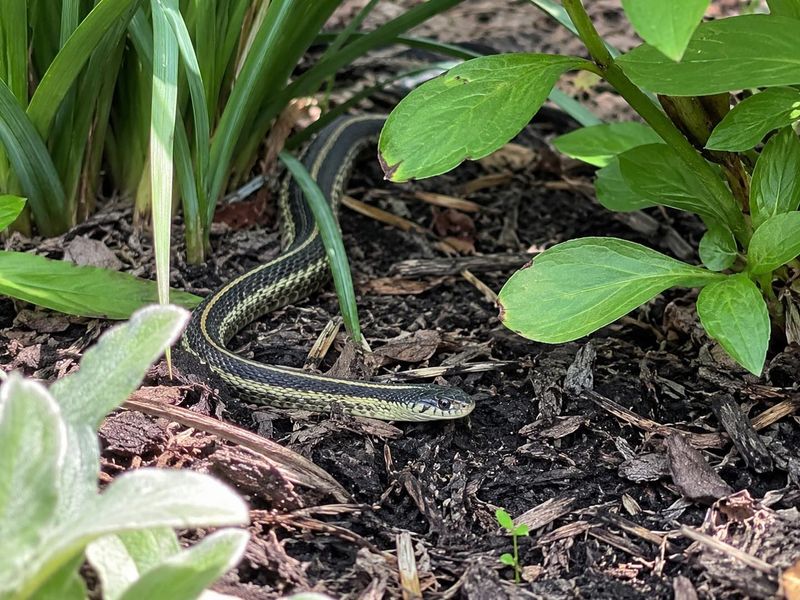
Repeated sightings in the same general area of a yard often puzzle Ohio homeowners. The instinct is to assume the same snake has returned, but without individual markings or tracking, that cannot be confirmed.
What can be considered is whether the area consistently offers something worth visiting. Moist soil, mulched beds, and dense low plantings can support steady earthworm and slug activity across the whole season.
Mulch retains moisture and creates the kind of cool, damp layer where earthworms stay active near the surface. Slugs favor similar conditions and tend to be most active in the evening or after watering.
A garden bed that reliably holds these conditions may attract foraging visits from one or more individuals moving through the area over time.
Compost areas can also support worm populations, though that does not make them automatic focal points for snakes. The connection is always indirect: conditions that support prey may also draw a foraging reptile.
Removing earthworms is not a useful or practical response, and they serve important roles in soil structure. The more useful takeaway is that rich, moist soil and active invertebrate life can make a yard productive for small predators.
A gartersnake may therefore pass through the area repeatedly. That reflects normal ecological activity, not an escalating problem.
6. One Sighting Does Not Mean A Nest Is Nearby
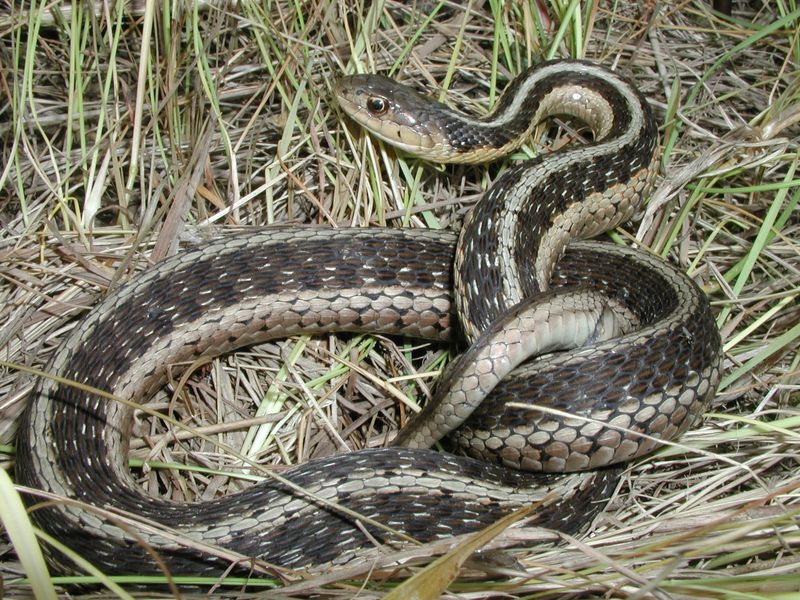
A common reaction to finding a snake in the yard is to assume there must be a nest of them somewhere nearby. That assumption does not match what we know about gartersnake reproduction.
The eastern gartersnake gives birth to live young rather than laying eggs in a soil nest or a hidden chamber. There is no clutch of eggs tucked under the porch, no hatching site in the garden bed.
Females carry developing young internally and give birth to live offspring, typically in late summer. The number of young can vary depending on the individual.
After birth, the young snakes disperse on their own. They do not remain grouped in a fixed location waiting to be discovered.
Multiple snakes seen together may simply be sharing a warm or sheltered spot or following seasonal movement patterns. Summer groups are not automatically a sign of mating activity.
Mating in gartersnakes generally occurs in spring. Seeing two or three individuals near a good basking site in August more likely reflects coincidence of movement than a coordinated event.
The word infestation does not apply to a wildlife sighting. An isolated encounter with a gartersnake, or even a small number of them, is a very different situation from a pest problem requiring intervention.
7. Summer Activity Can Put Them In Plain Sight
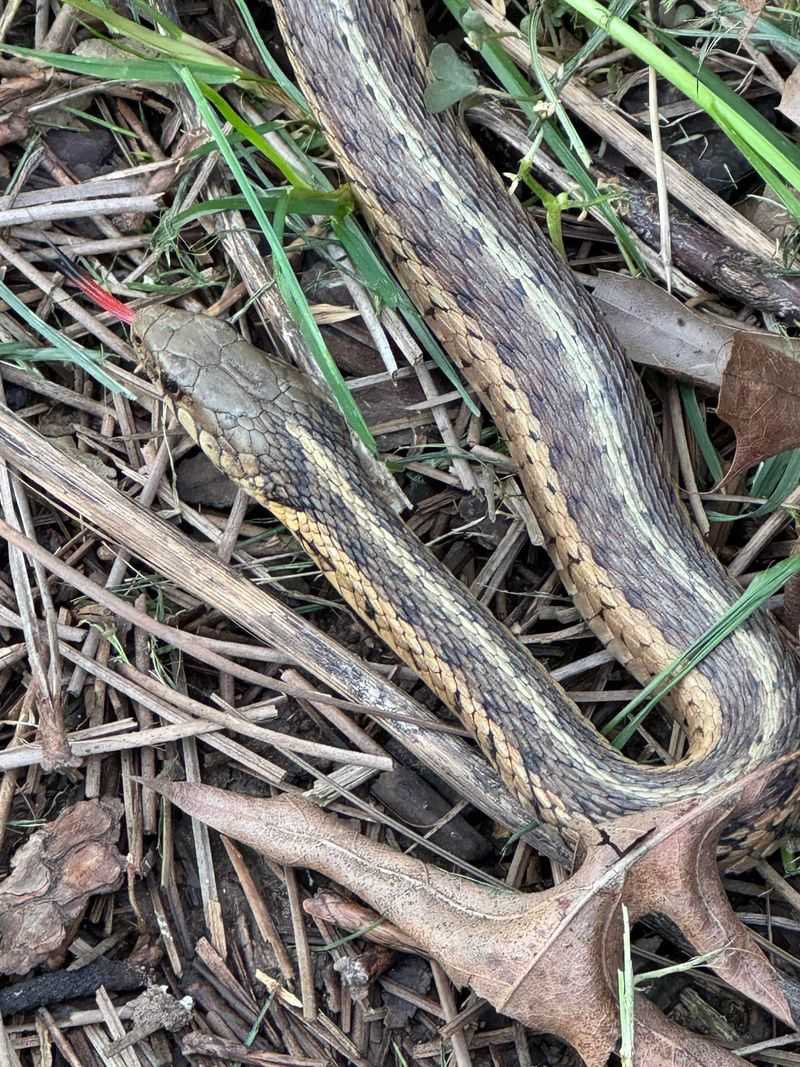
A striped body moving across open lawn on a warm August afternoon tends to get noticed. Part of why summer sightings feel more frequent is simply that active snakes move through exposed areas more often during warmer months.
Foraging requires covering ground. Thermoregulation requires shifting between sun and shade.
Both behaviors can bring a snake into open view.
Activity levels in gartersnakes can shift depending on temperature and time of day. On very hot days, the animal may be less active during peak afternoon heat and more active in the morning or early evening when conditions are more suitable.
As August progresses and temperatures moderate slightly through the day, movement patterns can shift again.
Seeing a gartersnake cross the lawn does not mean the local population suddenly increased. The animal may have been using nearby cover for days or weeks without being noticed.
A single crossing of open ground is enough to produce a sighting. The snake may live entirely on a neighboring property or in a brushy area nearby, passing through your yard as part of a longer route.
Visibility on any given day reflects conditions and behavior, not necessarily how many individuals are in the area. Interpreting a sighting calmly, rather than assuming a surge in numbers, keeps the response proportionate.
8. Seeing One Can Mean Your Yard Has Useful Habitat
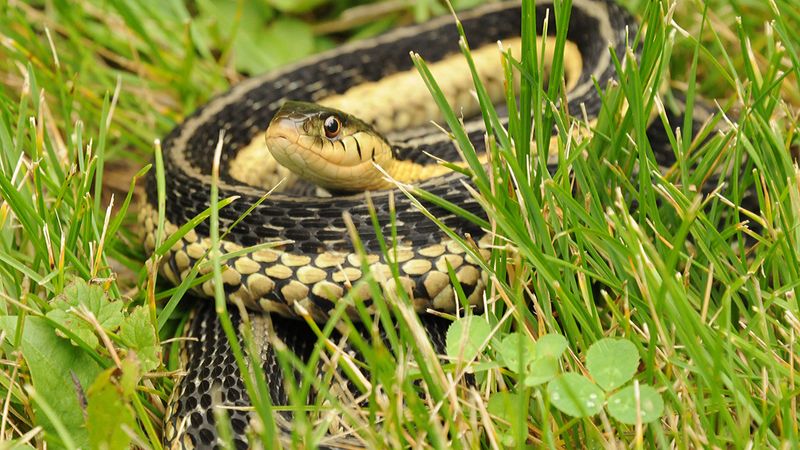
Several features lining up in one small yard can make it a reasonable place for a gartersnake to pass through or linger briefly. Food, a patch of moist ground, low cover, and a warm surface do not have to be elaborate.
A mowed lawn with a mulched border, a shaded corner that stays damp, and a flat stone in the sun can collectively offer enough to make a visit worthwhile.
That does not prove the yard is ecologically pristine or that every element is in perfect balance. Even heavily modified residential landscapes can offer temporary resources.
A snake may use the yard once and move on. Another individual may pass through weeks later following a different route.
Without tracking, neither scenario can be distinguished from the other.
The most straightforward response to an outdoor sighting is usually to give the animal space and allow it to move on its own.
Gartersnakes are not considered a threat to people under normal circumstances, and Ohio wildlife guidance generally does not recommend relocating snakes found outdoors.
Handling any wild snake is not advisable, as even a non-threatening species may defend itself when restrained. A sighting in the yard typically says more about what resources happen to be available than it does about any risk.
Keeping that framing in mind makes the encounter easier to understand.