Florida Landscapers Are Swapping Invasive Shrubs For This Native Shade Tree
Florida landscapers are quietly walking away from the same overused shrubs that fill every big box garden center, and one native alternative keeps getting the call instead. For years, yards across the state leaned on fast-growing exotics for quick privacy and greenery.
Those shrubs spread aggressively, escape into natural areas, and demand constant trimming just to stay in bounds. Native alternatives got overlooked simply because fewer people knew they existed.
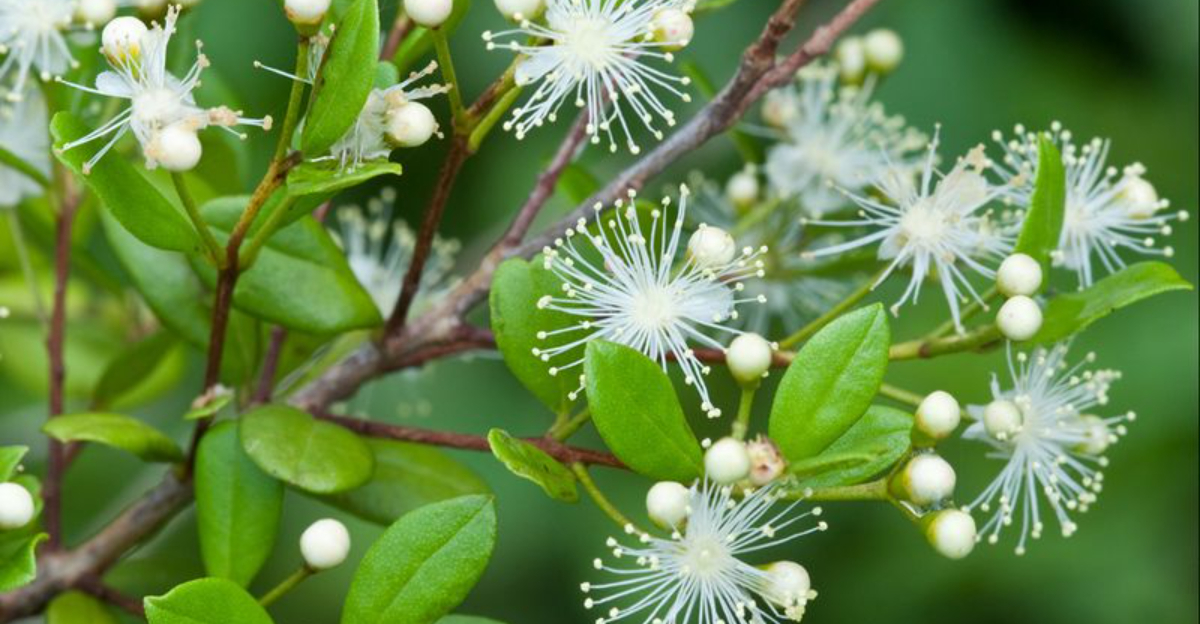
One small native tree changes that math completely. It grows dense and shrubby when young, then matures into an attractive small tree with fragrant white flowers and bright red berries that songbirds seek out on sight.
It tolerates drought, salt, and poor soil without complaint, and it never turns into the yard bully so many imports become. Landscapers notice results fast once they make the switch.
Here’s why this native keeps replacing invasive shrubs one yard at a time.
1. Simpson’s Stopper Does More Than Fill A Hedge
An old hedge hiding a fence can do a surprising number of things at once. It blocks wind, creates privacy, gives the yard a defined edge, and adds year-round green.
Replacing that hedge means replacing all of those functions, not just the plant tag.
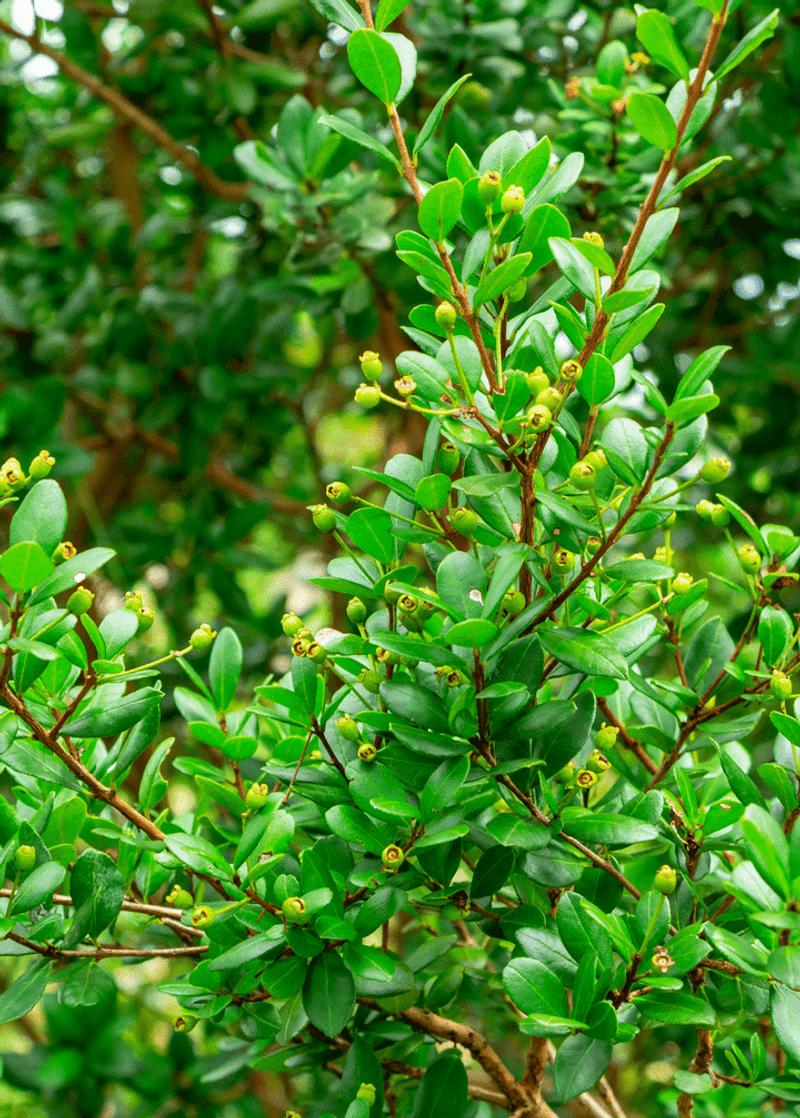
Simpson’s stopper, Myrcianthes fragrans, is a Florida native evergreen that fits several landscape roles. According to UF/IFAS, it can grow as a large shrub or small tree, typically reaching 10 to 20 feet in height under good conditions.
Its spread can be similar to its height, giving it real presence in a yard.
Pruning choices and cultivar selection influence the final size significantly. Kept trimmed, it forms a tidy hedge.
Left to grow with selective shaping, it can develop a multi-trunk or single-trunk small-tree form. Neither outcome happens overnight, since this plant tends to grow at a moderate pace.
Native status alone does not make Simpson’s stopper right for every site. Before choosing it as a replacement, consider mature size, available light, soil drainage, and what the old plant was actually doing.
A homeowner replacing a 6-foot invasive hedge with a plant capable of reaching 20 feet needs to plan for that difference. Matching function to form from the start saves a lot of future pruning.
2. Turn A Shady Corner Into Useful Canopy
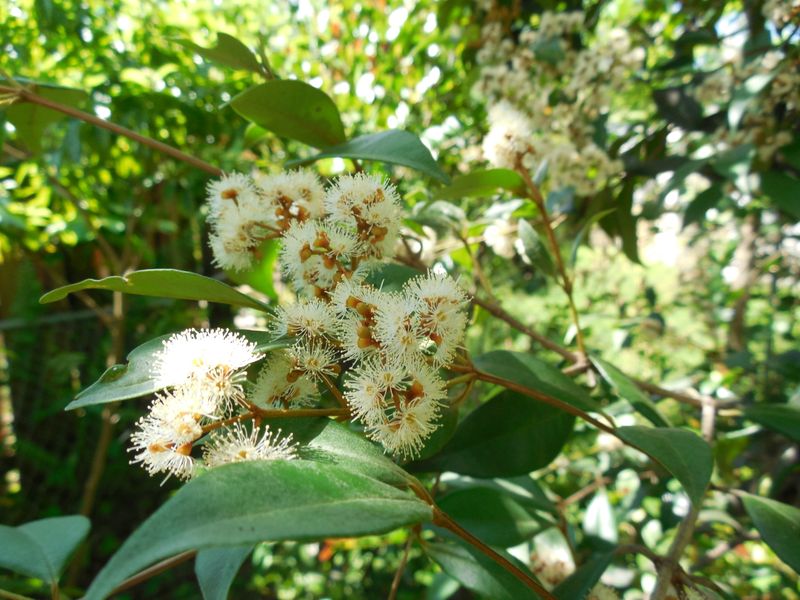
A shaded corner beside a patio often ends up as lifeless space. Turfgrass struggles there, most flowering shrubs sulk, and generic foundation plants add little beyond green.
A small native tree that tolerates partial shade can genuinely change how that spot feels and functions.
Simpson’s stopper handles partial shade, though its growth habit shifts with light exposure. UF/IFAS notes that the plant tends to develop a more open, less dense canopy when grown in shadier conditions compared to specimens in full sun.
That open form can actually work in its favor as a small informal tree, letting filtered light reach the ground beneath it.
Selective pruning helps encourage the tree form. Removing lower branches gradually over several growing seasons lifts the canopy and reveals the attractive bark underneath.
Your Florida Garden Changes Every Week. Your Plan Should Too.
Gardening in Florida changes quickly throughout the season. Every Friday you’ll receive a simple weekly plan showing exactly what to plant, prune, fertilize, harvest, and protect so you never miss the right timing.
The result is a small native tree that earns its spot rather than just filling it.
Partial shade does not mean deep shade. Simpson’s stopper performs best with at least a few hours of direct light each day.
A spot under open tree cover, on the east side of a building, or near a structure that blocks only afternoon sun tends to suit it well. Choosing the right location from the start leads to a healthier plant and a more natural-looking small canopy over time.
3. Get Privacy Without Another Invasive Shrub
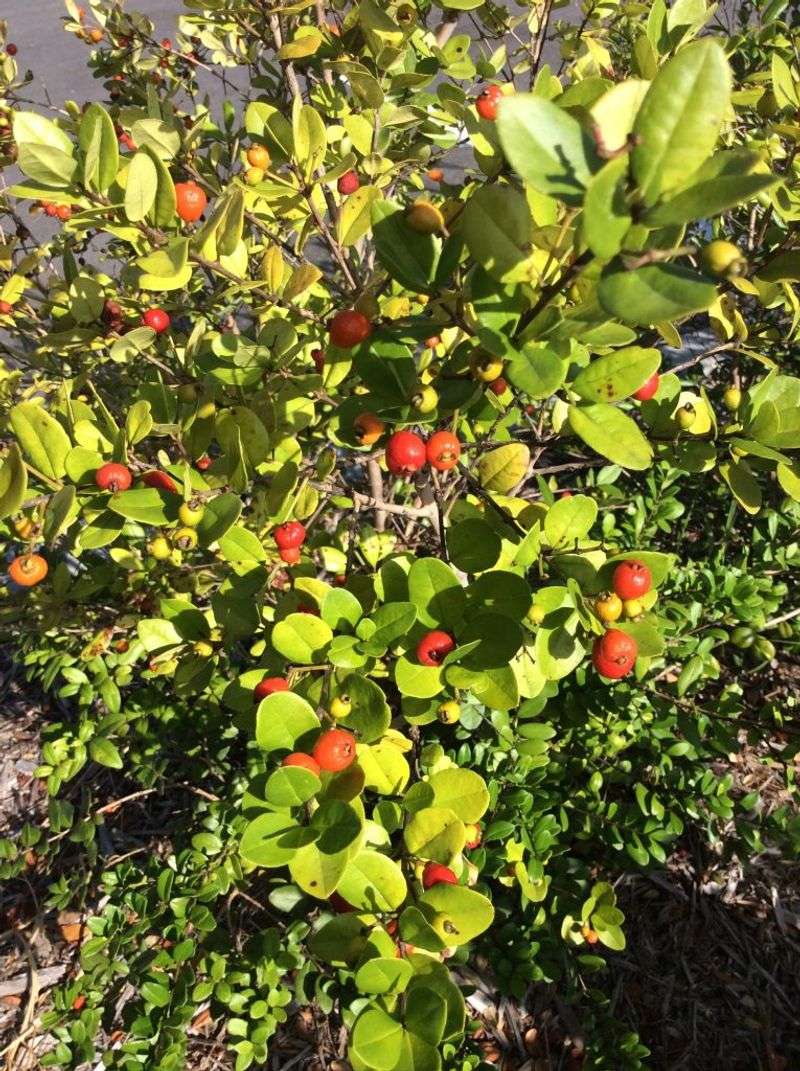
Homeowners who want a solid green screen along a property line often reach for the fastest-growing shrub available.
Some of those fast growers, like certain privets or Old World climbing fern, have ended up on the Florida Invasive Species Council’s list of invasive plants.
Swapping one problem for another is not a solution.
Before removing any shrub and calling it invasive, check the current Florida Invasive Species Council list. A plant being nonnative does not automatically make it invasive.
Correct identification matters before any removal decision is made.
For sites where an invasive hedge genuinely needs to come out, Simpson’s stopper can fill a screening role under the right conditions. Its dense evergreen foliage holds well in full sun, providing year-round coverage.
UF/IFAS describes it as useful for hedges and screens in appropriate settings.
Spacing matters for a successful screen. Plants set too far apart take years longer to close in.
Plants crowded together compete for resources and may develop poorly. Consulting a local UF/IFAS Extension office for spacing guidance based on your specific site and desired outcome is a practical first step.
Mature height and width also factor into the decision. A replacement that eventually towers over a 6-foot fence line changes the look and maintenance needs of the whole yard.
Planning for the plant’s mature size from day one avoids surprises later.
4. Fragrant White Flowers Bring In Pollinators
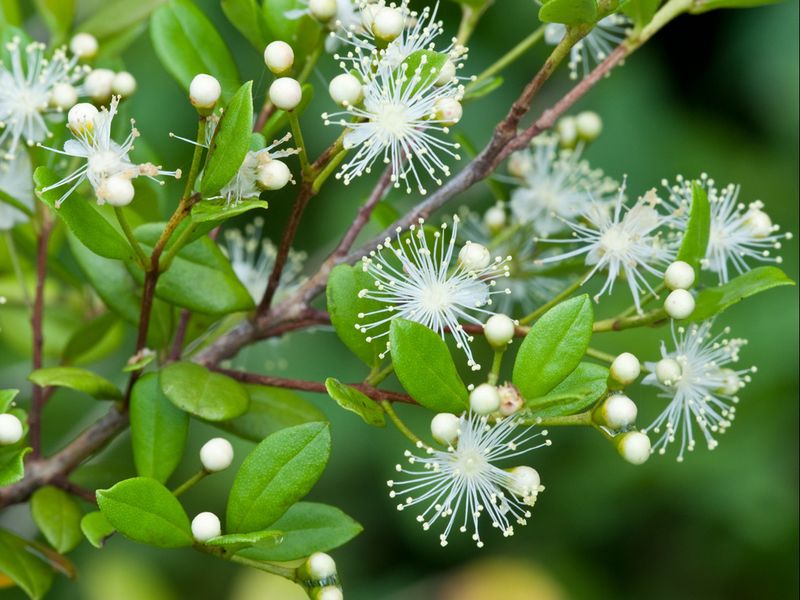
A flash of white flowers on an otherwise green hedge can stop a gardener mid-step. Simpson’s stopper produces small, white, four-petaled flowers with noticeable stamens that give each bloom a soft, feathery look.
The fragrance is mild but real, noticeable up close on a warm morning.
Flowering can occur multiple times during the year in warm climates. UF/IFAS notes that blooms appear most heavily in spring and sometimes again through summer and fall.
The timing varies by location and weather conditions, so not every plant blooms on the same schedule.
Bees are among the visitors drawn to the flowers. The small blooms fit well with native bees that forage on open, accessible flowers.
Butterflies also visit, though Simpson’s stopper is not a documented larval host plant for any common Florida butterfly species.
Calling any plant a pollinator magnet overpromises what one shrub can do. What Simpson’s stopper offers is a reliable source of nectar from a plant that is already doing structural work in the landscape.
A hedge or small tree that also feeds pollinators during bloom periods adds seasonal value without requiring a separate planting bed.
Gardeners supporting local bees and butterflies can pair Simpson’s stopper with other native flowering plants. A mixed planting provides more resources than a single species alone.
5. Red Berries Give Birds Another Reason To Visit
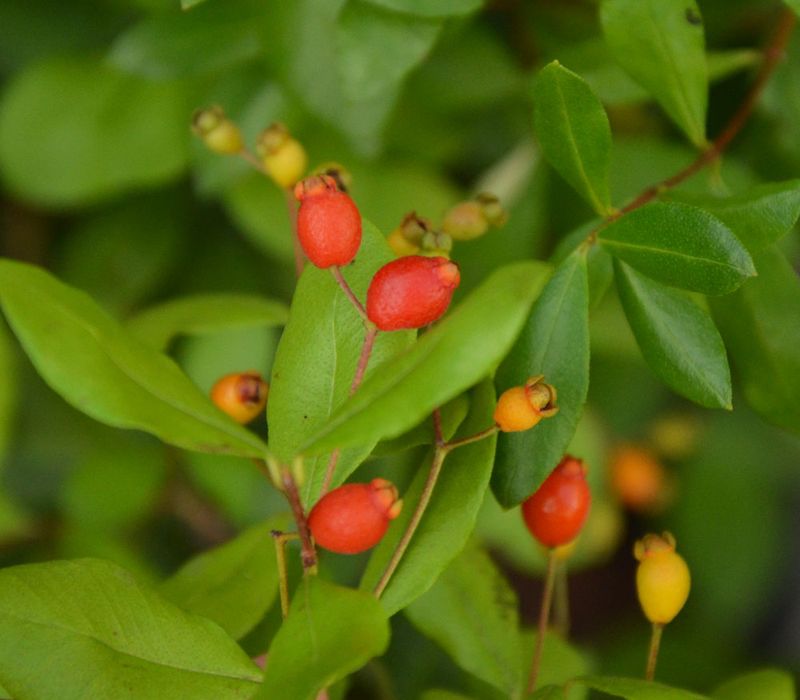
Birds finding red fruit on a shrub is one of those backyard moments that feels genuinely earned. After the white flowers fade, Simpson’s stopper produces small berries that ripen from orange to red.
The fruit is fleshy and edible to wildlife, and it tends to ripen over an extended season rather than all at once.
UF/IFAS notes that the fruit attracts birds, including mockingbirds and other fruit-eating species. Dense foliage also provides cover, giving birds a place to perch, shelter, and nest near a food source.
Those two features together make the plant more useful to local bird life than fruit alone would.
Fruiting typically follows the flowering periods, so a plant that blooms in spring may carry ripe fruit by summer. Later flushes of flowers can extend the fruiting season into fall.
The exact timing depends on the plant’s age, location, and growing conditions.
Planting one shrub does not guarantee a steady stream of bird visitors. Birds respond to a combination of food, water, cover, and overall habitat quality in the yard.
Simpson’s stopper contributes meaningfully to that mix, but it works best as part of a broader planting that includes other native species.
Fruit production on young plants is often lighter than on established specimens. Patience is part of the process.
As the plant matures and fills out, both fruiting and bird use tend to increase naturally.
6. Coastal Conditions Are Harder To Shake
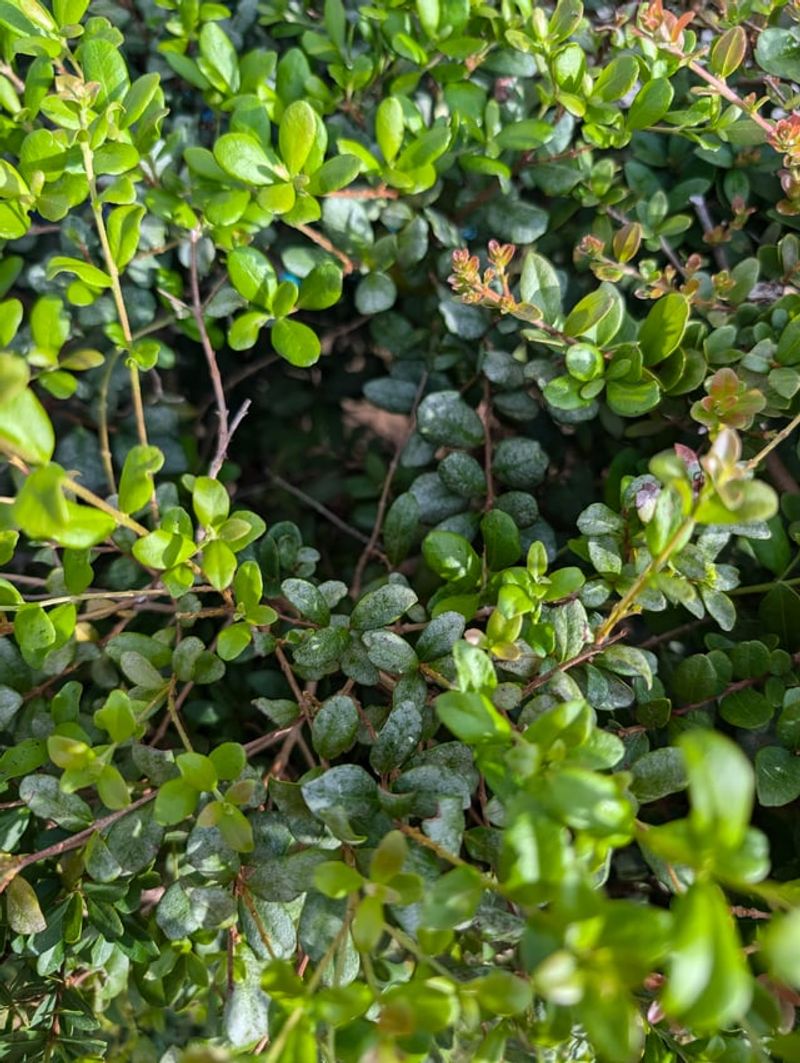
A salty coastal planting spot weeds out a lot of candidates fast. Salt spray, sandy alkaline soil, and periodic drought make many popular shrubs look ragged within a season or two.
Plants that evolved in those conditions handle the stress more naturally.
Simpson’s stopper occurs naturally in coastal hammocks and scrub habitats in Florida. UF/IFAS describes it as tolerant of salt spray and alkaline soils, which makes it a practical candidate for landscapes near the coast.
That tolerance comes from its native range, not from special treatment.
Drought tolerance is real but conditional. An established Simpson’s stopper handles dry periods better than a newly planted one.
Right after planting, regular irrigation is necessary to help the root system get established. Cutting water too soon stresses any newly planted shrub, native or not.
Inland adaptability is also documented. Simpson’s stopper grows in well-drained soils away from the coast, though it performs best when drainage is good.
Poorly drained, consistently wet soils are not its preferred conditions. Matching soil type to plant needs matters as much in inland yards as it does at the coast.
Tolerance and ideal conditions are not the same thing. A plant can survive a difficult site without truly thriving there.
For the best results, plant Simpson’s stopper where drainage is good, light is adequate, and salt exposure is limited during establishment.
7. Shape It As A Shrub Or Small Tree
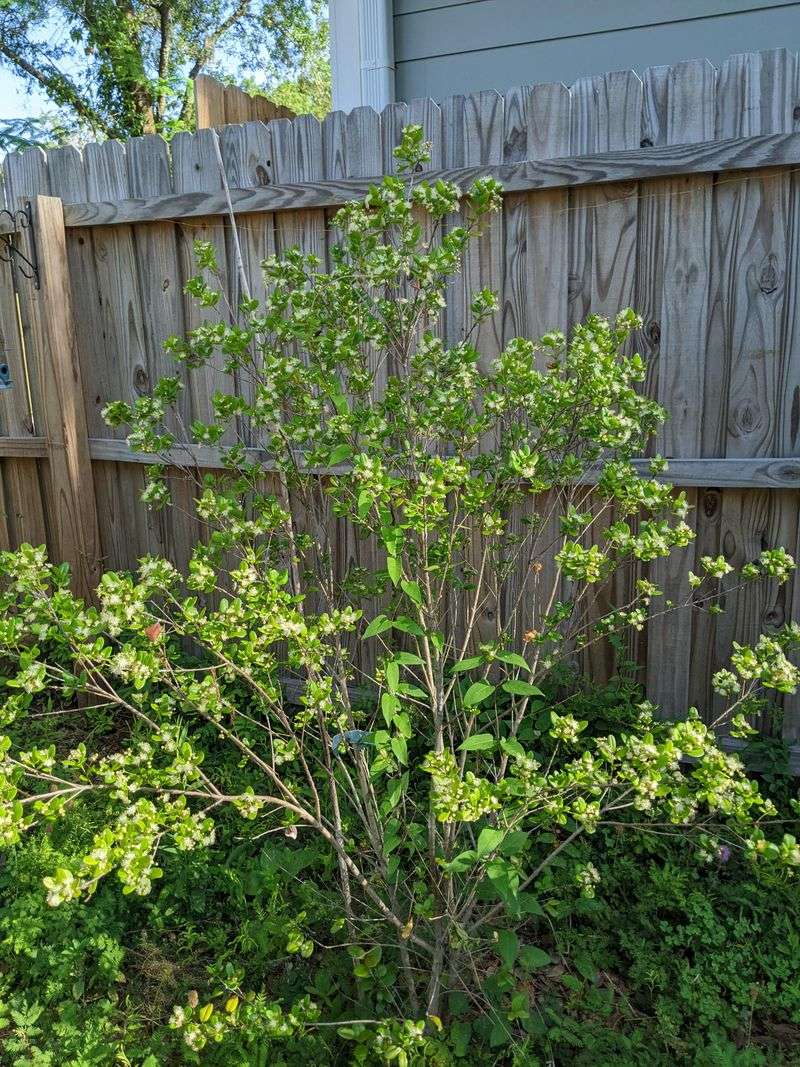
A pruning decision made early shapes the entire future of a Simpson’s stopper planting. Left alone, the plant naturally grows as a multi-stemmed large shrub with branches reaching close to the ground.
Selective pruning changes that trajectory without stressing the plant.
Gardeners who want a hedge or screen should focus on maintaining an even outer surface and encouraging density from the base upward. Light trimming done a few times a year keeps the form tidy.
Constant shearing is not necessary and may actually work against the plant’s natural growth pattern.
UF/IFAS notes that frequent heavy pruning of hedges can reduce flowering and fruiting. For homeowners who want both structure and wildlife value, finding a middle ground between shaping and leaving the plant alone tends to produce the best results.
Developing a small-tree form takes a different approach. Removing the lowest branches gradually over several seasons lifts the canopy and exposes the attractive, flaky bark that mature specimens develop.
The process is slow but low-effort once the basic structure is established.
Simpson’s stopper’s moderate growth rate works in the gardener’s favor here. Slower growth means less frequent reshaping is needed compared to fast-growing species.
Once the plant reaches the desired form, maintenance typically involves occasional corrective pruning rather than constant cutting to keep size in check.
8. Replace Invasives Without Losing The Screen
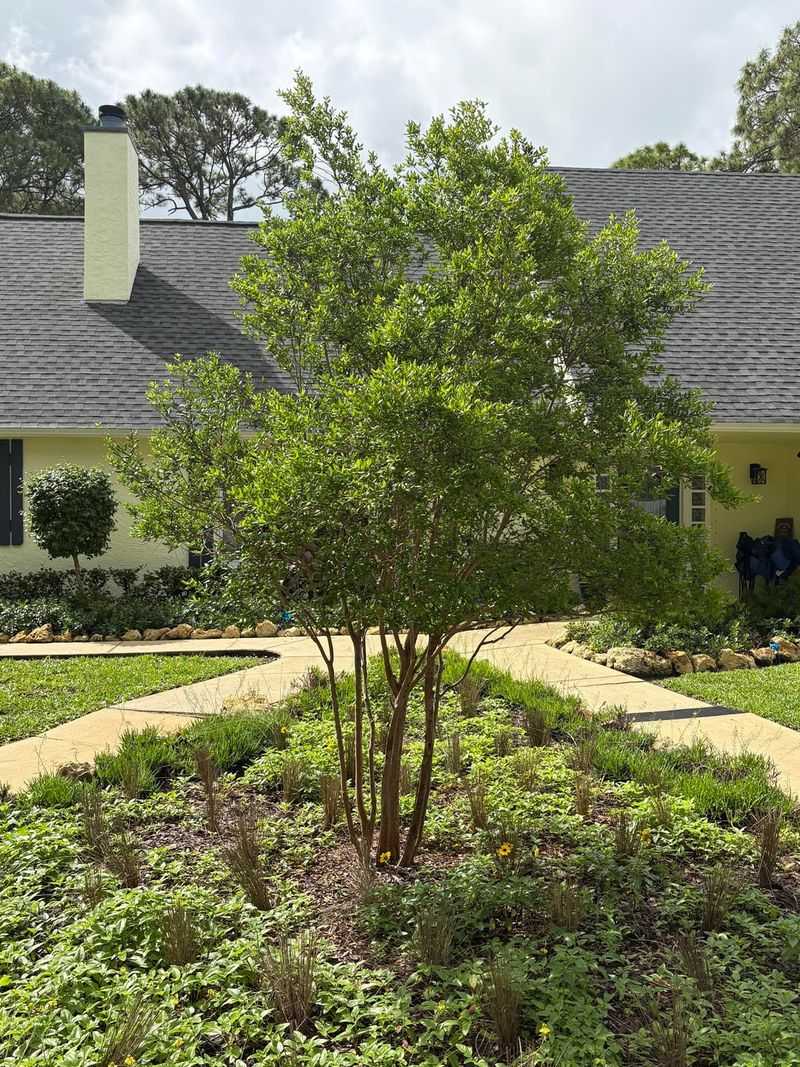
A homeowner replacing an unwanted shrub faces a practical question before anything else. What was that plant actually doing, and can a native species do the same job in the same spot?
Removing an invasive hedge without a plan often means trading one problem for an empty, exposed yard.
Simpson’s stopper can carry several of those functions at once. Dense evergreen foliage provides year-round screening.
Flowers add seasonal interest. Berries support bird activity.
Salt and drought tolerance hold up in tough sites. All of that comes from one plant managed to fit the space.
Matching the replacement to the function is the central idea. A site that needed a 10-foot screen needs a replacement that can reach 10 feet.
A spot that gets afternoon shade needs a plant that handles reduced light. No single native species is right for every yard or every removal project.
Only plants officially listed by state authorities, like the Florida Invasive Species Council, should be treated as invasive. Removing a nonnative shrub that is not documented as invasive may not be necessary.
Correct identification before removal avoids unnecessary work and potential gaps in the landscape.
Filling an empty spot with another problem plant is the outcome worth avoiding. Simpson’s stopper, chosen for the right site and managed to fit its role, offers a way to replace landscape function thoughtfully.
That is a stronger reason to plant it than any trend or label.