California Front-Yard Plants That Look Good From The Street And Survive Reflected Heat
Choosing the right plants for your front yard is harder than it sounds. The space near driveways, sidewalks, and walls gets pounded by reflected heat all summer long.
Regular garden plants often struggle and look terrible by August. But the good news is that plenty of tough, beautiful plants thrive in exactly those conditions.
Whether you live in a hot inland valley or a sun-baked coastal suburb, the right plant choices can make your front yard look sharp all year. You do not need a lot of water or a lot of maintenance to pull it off.
Many of the best options come from dry climates where plants have learned to handle heat, drought, and poor soil like pros.
They store water in thick leaves, grow slowly so they stay tidy, and bloom in colors that pop from the street. Some are spiky and sculptural. Others are soft and flowery.
A few work in tight spots near fences or mailboxes. All of them can handle the punishment that a California front yard dishes out every summer.
This list covers eight standout plants that look great from the curb and keep performing even when the pavement next to them is hot enough to fry an egg.
1. Red Yucca Adds Color Without Looking Scraggly
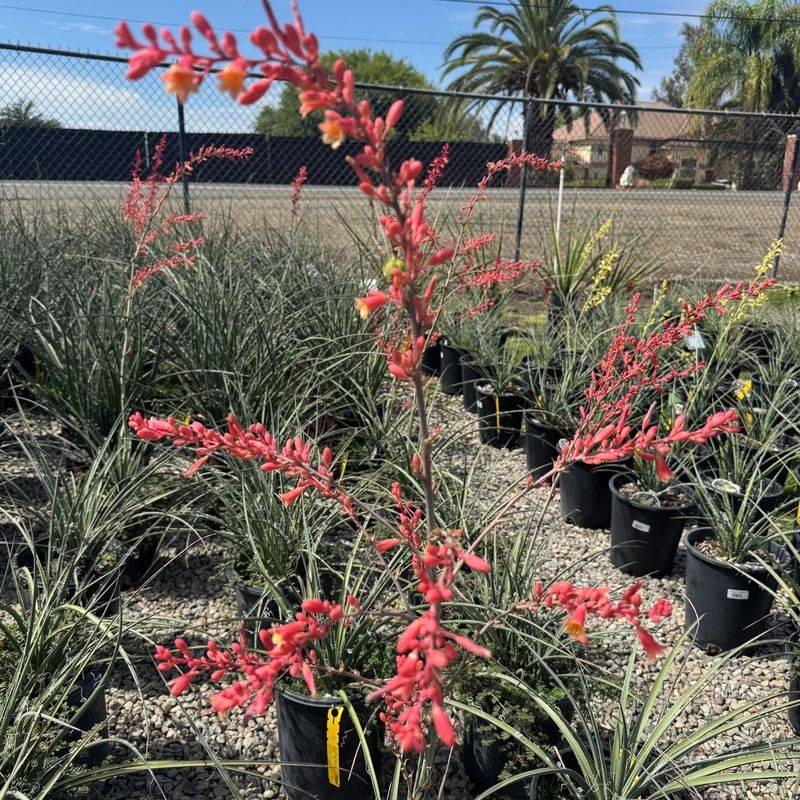
Coral flower spikes shooting up from a tidy clump of grass-like leaves – that is the first thing people notice about Red Yucca. It does not look stiff or prickly like a traditional yucca.
The leaves are soft and slightly arching, giving the plant a relaxed but elegant appearance. It fits right in near a mailbox, along a walkway, or in a narrow planting strip.
One of its best qualities is the bloom season. Flower spikes can appear from late spring all the way into fall.
Hummingbirds visit constantly, which makes the front yard feel alive. The blooms are a warm coral-pink that stands out against gravel, decomposed granite, or dark mulch.
The color reads beautifully from across the street. Red Yucca handles reflected heat without missing a beat. It grows well next to hot walls, concrete edges, and sun-baked driveways.
Once it is established, it needs almost no supplemental water during summer. It stays under three feet tall and wide, so it never blocks sightlines or outgrows its space.
Trimming is minimal – just remove old flower stalks when they fade. It works in containers too, which is helpful if your front yard has limited soil space.
Few plants offer this much visual reward for this little effort in a tough, heat-exposed spot.
2. Desert Spoon Gives Front Yards A Clean Architectural Look
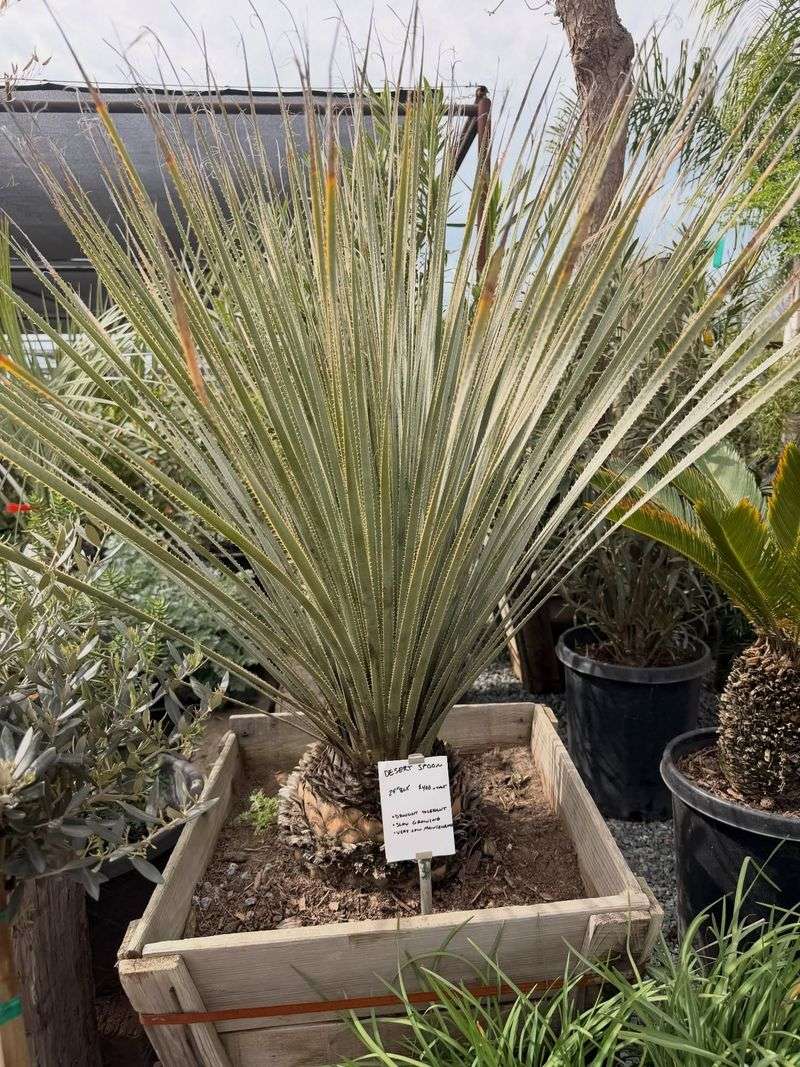
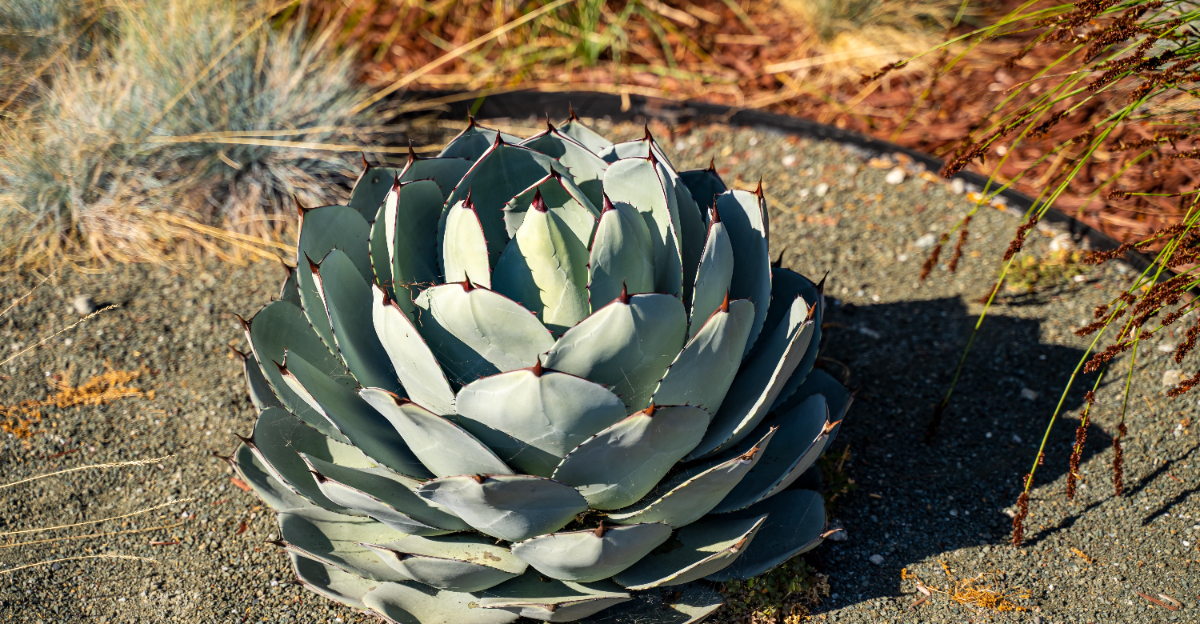
Few plants command attention the way Desert Spoon does. The leaves radiate outward in a perfect rosette, each one ending in a sharp tip.
The base of each leaf widens into a small spoon shape, which is exactly where the name comes from. From the street, it looks like a living sculpture.
It brings serious structure to a front yard without needing any pruning to stay looking sharp.
Your California Garden Changes Every Week. Your Plan Should Too.
Gardening in California changes quickly throughout the season. Every Friday you’ll receive a simple weekly plan showing exactly what to plant, prune, fertilize, harvest, and protect so you never miss the right timing.
Native to the Chihuahuan Desert, it has adapted over thousands of years to handle brutal heat, poor soil, and very little rain. Those traits translate perfectly to a hot front yard.
Reflected heat from driveways and sidewalks does not bother it at all. It actually prefers those conditions to shady, moist spots. Plant it in full sun with fast-draining soil and it will reward you for decades.
Growth is slow, which is a real advantage near entryways and pathways. You will not be fighting to keep it from taking over.
A mature plant typically reaches about four to five feet wide, so give it room to spread without crowding. The gray-green leaf color pairs well with gravel, river rock, or light-colored pavers.
It also looks great next to softer, flowering plants that benefit from its bold contrast. For a front yard that looks polished and intentional, Desert Spoon is a natural anchor plant.
3. Bush Germander Handles Hot Walls And Driveway Edges
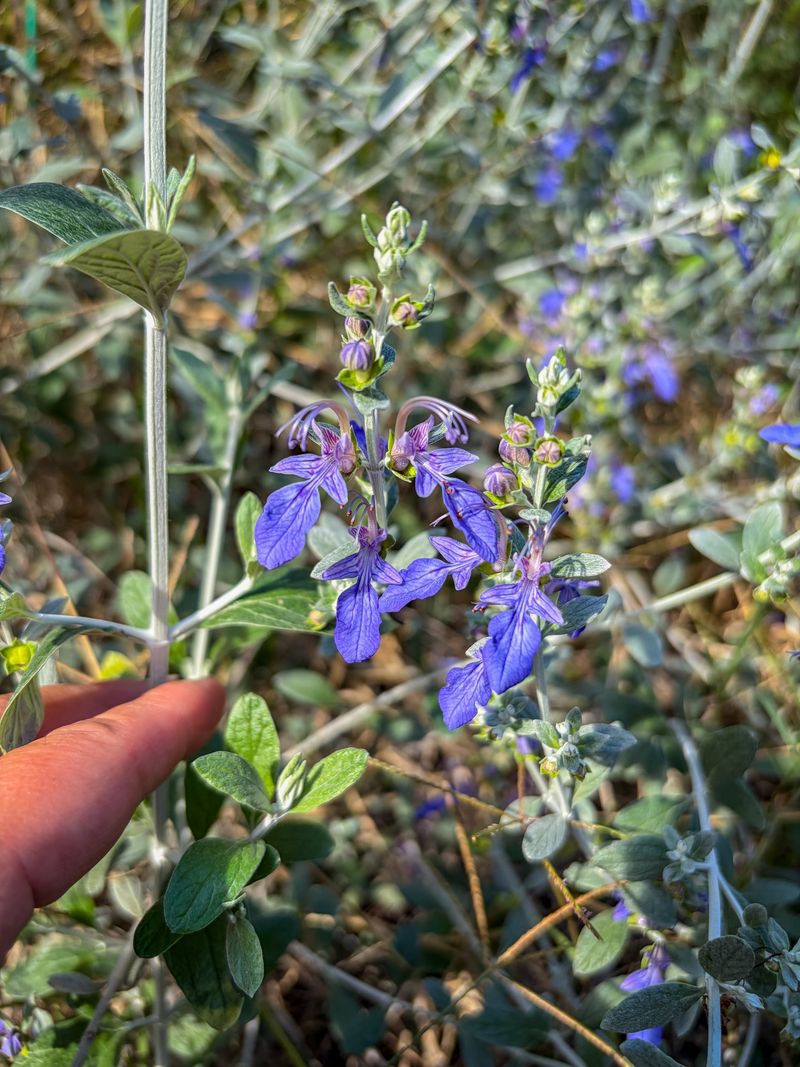
Not every California front yard plant needs to be dramatic to earn its place. Bush Germander is a quiet overachiever.
It forms a tidy, rounded mound of silvery-green foliage that stays dense without much help. Small purple-blue flowers appear almost continuously from spring through fall.
Bees absolutely love it, and the plant stays neat enough to line a driveway or edge a front path.
What makes it especially useful is where it performs best. Hot walls, south-facing beds, and baking driveway edges are its natural territory.
Most shrubs wilt and look stressed in those spots by midsummer. Bush Germander settles in and keeps blooming.
The silvery leaf coating helps reflect sunlight and reduces water loss, which is a built-in survival strategy for intense heat exposure.
Watering needs are low once the plant is established, usually after the first season. After that, deep watering every couple of weeks during summer is plenty.
It responds well to light shearing after a heavy bloom period, which keeps the shape full and tidy. Left untrimmed, it can reach about four feet tall and wide.
For smaller spaces, a light trim twice a year keeps it compact. The combination of low water use, heat tolerance, and nearly nonstop blooming makes Bush Germander one of the most practical choices for front-yard edges that get punished by summer sun every single day.
4. Rock Purslane Brings Bright Flowers To Baking-Hot Beds
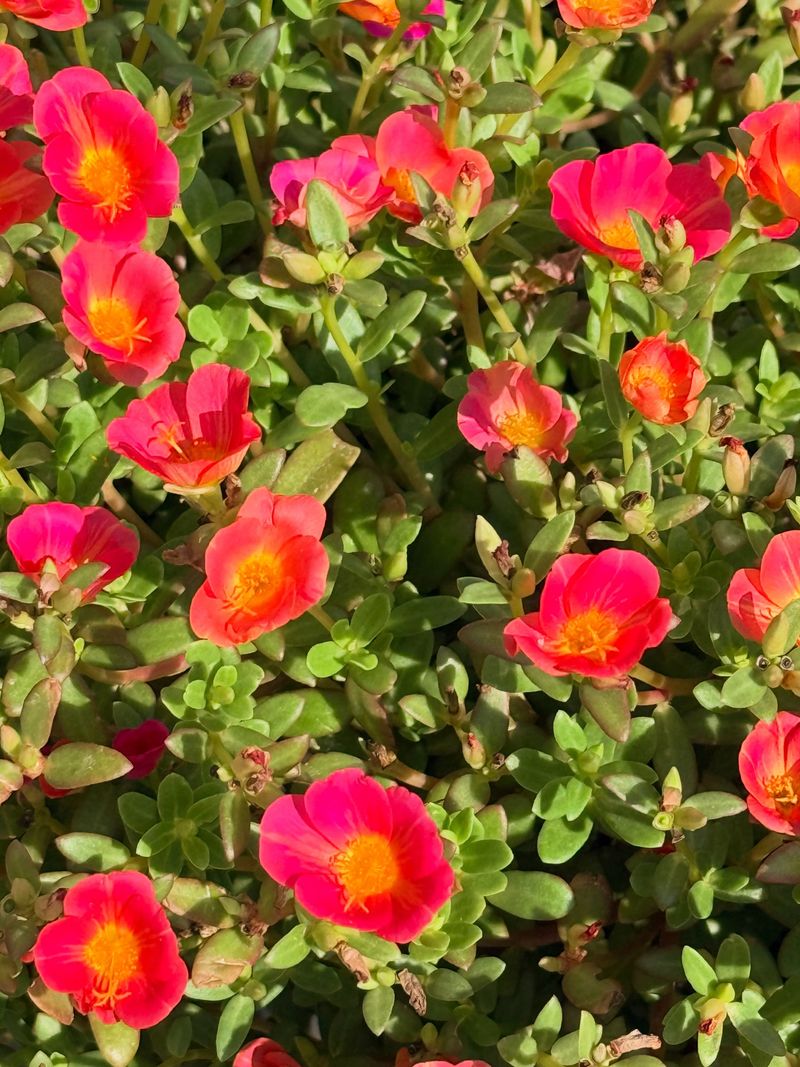
Bright magenta flowers on a low-growing succulent that thrives in the hottest, driest spots in your yard – that is Rock Purslane in a nutshell. The blooms are large for the size of the plant, almost oversized, which makes them pop from the street in a way that stops people mid-walk.
The flowers open fully in direct sun and close at night, giving the plant a lively, dynamic quality throughout the day.
Rock Purslane is native to the coast of Chile, where it grows on rocky cliffs exposed to wind and intense sun. That background means it is built for tough conditions.
Reflected heat from a sidewalk or a light-colored wall does not stress it. In fact, more heat usually means more flowers.
It spreads slowly into a low mat, staying under a foot tall but spreading up to three feet wide over time.
Watering is minimal after establishment. Too much water actually causes problems, so lean on the dry side once roots are settled in.
It works beautifully in raised beds, along curb strips, or tucked between rocks and pavers. The succulent stems store water, so it can handle dry spells without looking sad.
Pair it with gray-leaved plants like salvia or artemisia for a color contrast that reads well from the street. Rock Purslane is one of those plants that looks like it takes effort but actually demands very little from you.
5. Parry’s Agave Stays Striking With Very Little Summer Fuss
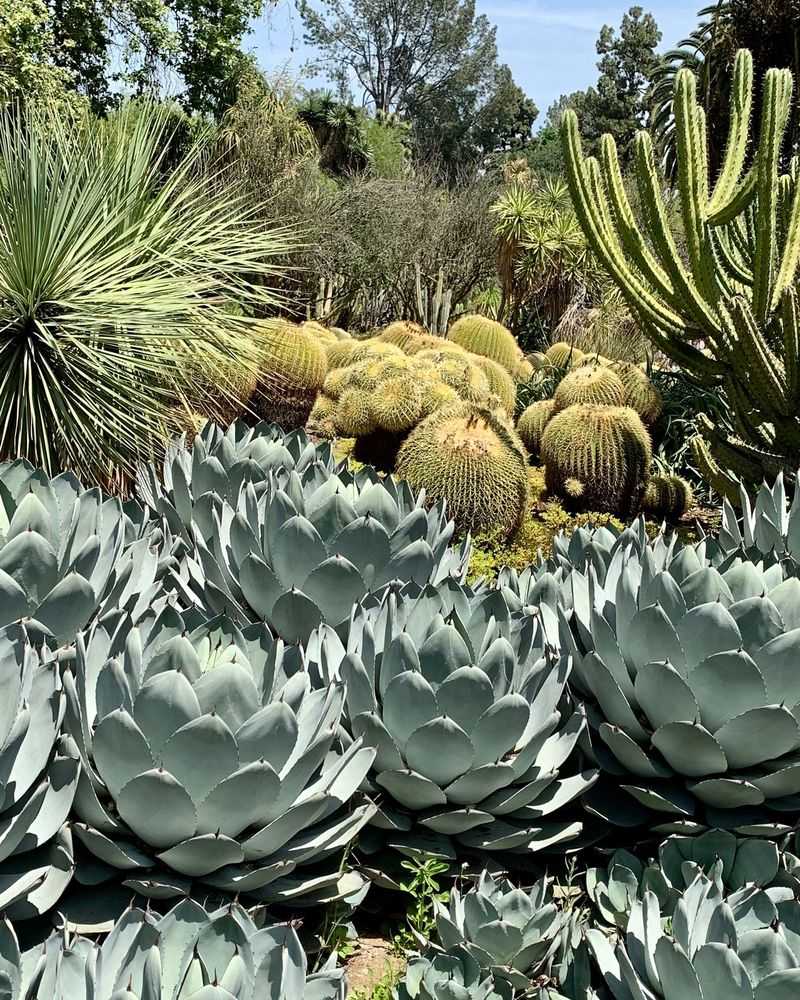
There is something almost prehistoric about the way Parry’s Agave looks. The thick, blue-gray leaves form a tight, symmetrical rosette with a small spine at each tip.
The overall shape is so perfect it almost looks artificial. But it is completely real, completely tough, and completely unbothered by the kind of summer heat that flattens most plants in a front yard.
One of the best things about this agave is its size. Unlike some agave species that grow into giant, yard-dominating monsters, Parry’s Agave stays relatively compact.
Most plants reach about two feet tall and two to three feet wide. That makes it easy to use in tight spots near a front door, along a low wall, or in a container on a sunny porch.
The blue-gray color holds up even in intense reflected heat, never fading or looking washed out.
Water needs are extremely low once established. In most inland areas, natural rainfall plus occasional deep watering is enough to keep it healthy through summer.
It does not need fertilizer, pruning, or much attention at all. Soil drainage matters more than anything else – soggy roots are the one thing it cannot handle.
Plant it in sandy or gravelly soil and it will thrive for years. The bold, sculptural form pairs well with fine-textured plants like ornamental grasses or feathery desert shrubs, creating contrast that looks intentional and polished from the curb.
6. Desert Marigold Softens Hardscape With Long-Lasting Color
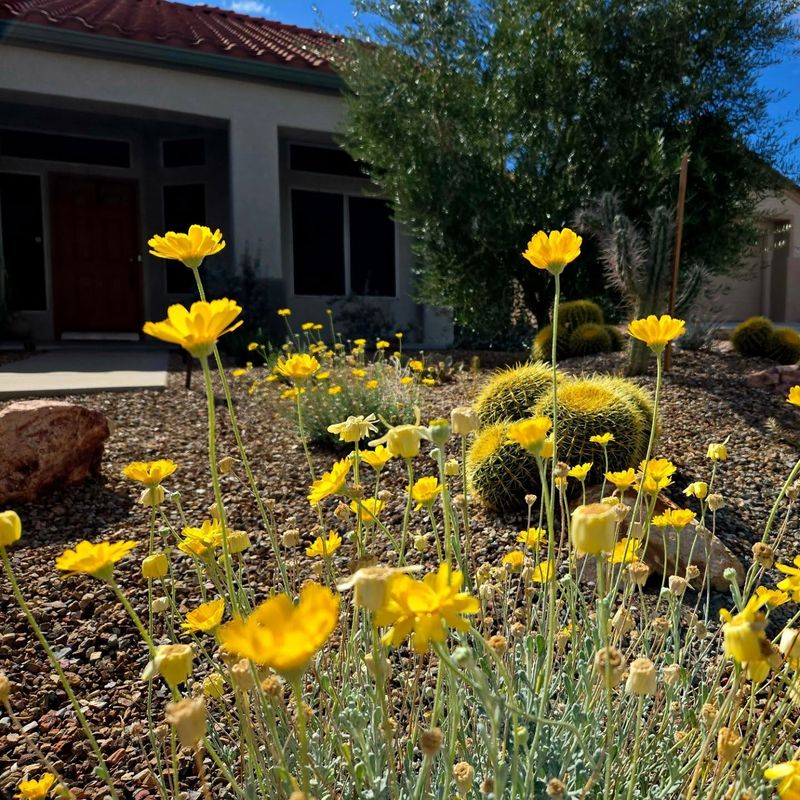
Cheerful and tough in equal measure, Desert Marigold brings a wave of bright yellow to front yards that might otherwise look harsh and dry.
The flowers are small, daisy-like, and produced in such abundance that the plant looks like it is covered in sunshine.
Bloom season stretches from spring well into fall, with the heaviest flush happening in warm weather when most other plants are struggling to hold on.
The woolly, silver-gray leaves play a big role in the plant’s heat tolerance. That fuzzy coating reflects sunlight and slows water loss, which is exactly what a plant needs when it is sitting next to a concrete walkway or a sun-absorbing brick wall.
It grows naturally in the Sonoran Desert, so punishing heat is just normal life for this plant. Reflected heat from hardscape does not slow it down at all.
Height stays between one and two feet, and the plant spreads to a similar width. It looks great in groups of three or more, which creates a fuller, more generous display from the street.
Deadheading spent flowers encourages fresh blooms to keep coming. Water every week or two during summer until established, then cut back to once or twice a month.
Desert Marigold reseeds gently, so you may get new plants popping up nearby over time. That self-spreading habit is a bonus, not a problem, in most front yard settings.
7. Brittlebush Brightens Hot Front Yards Without Heavy Watering
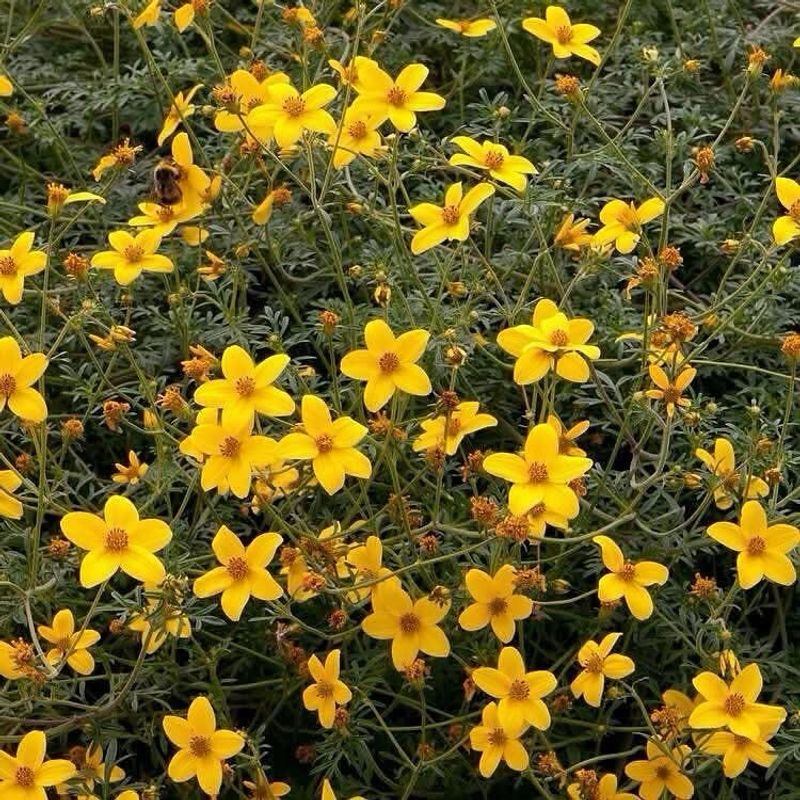
Walk through any sunny California desert hillside in Baja and you will see Brittlebush everywhere, blanketing slopes in silver and yellow. That same toughness translates directly to a front yard situation where heat, poor soil, and minimal irrigation are the norm.
The mounding silver-gray foliage looks attractive even when the plant is not in bloom, giving the yard a clean, soft texture year-round.
Bloom time peaks in late winter and spring, when masses of bright yellow daisy flowers cover the plant completely. The display is dramatic enough to make neighbors stop and ask what it is.
After blooming, the flowers fade and the plant settles into its silver-leafed summer mode. Some light pruning after the bloom period keeps the shape tidy and encourages fresh growth before the next season.
Summer is when Brittlebush really proves its worth. While other shrubs need regular watering to survive the heat, this one slows down, conserves energy, and asks for almost nothing.
It may drop some leaves during the driest stretches, which is a natural drought response, not a sign of trouble. New leaves come back quickly once temperatures cool or rain arrives.
Plant it near a hot south or west-facing wall where few other plants would survive. It pairs beautifully with dark-colored boulders, decomposed granite, and other desert natives.
Full sun and excellent drainage are the only real requirements for a long, healthy life in your front yard.