Gila Woodpeckers Create More Than Nesting Holes In Arizona Saguaros
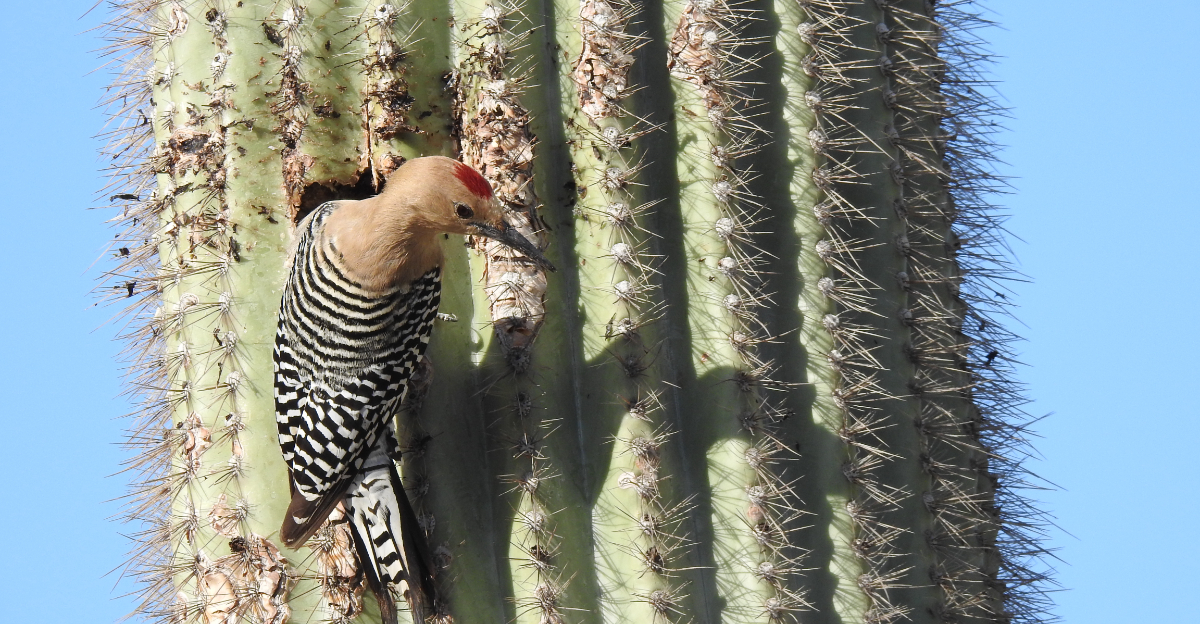
Gila woodpeckers are hard to ignore when they start working around a towering saguaro. Their busy behavior may seem straightforward, but there is much more happening than nesting.
These desert birds spend serious effort creating protected spaces inside mature cacti. What follows makes their relationship with saguaros far more interesting than it first appears.
Throughout Arizona, signs of their activity can remain visible long after the birds have moved elsewhere. Those familiar marks are only part of the story.
Pay closer attention when a woodpecker chooses a saguaro and starts working. The cactus becomes involved in a fascinating natural process of its own.
That interaction has consequences that extend beyond what is immediately visible from outside. Some of the most interesting details only become clear afterward.
A busy woodpecker can start a desert story that continues long after.
1. Gila Woodpeckers Create Cavities Other Birds Can Use
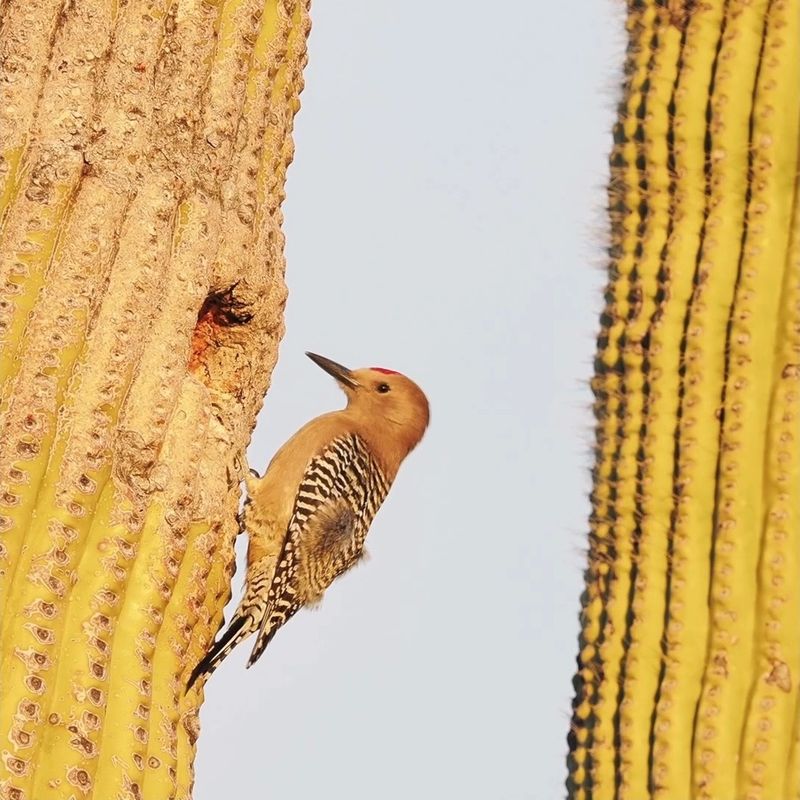
Gila Woodpeckers are natural builders, and not just for themselves. Every hole they carve into a saguaro opens up real estate for dozens of other species.
Once a woodpecker moves on, smaller birds often move right in.
Elf Owls are one of the most well-known tenants. These tiny owls nest almost exclusively in old woodpecker cavities.
Without the Gila Woodpecker doing the hard work first, elf owls would struggle to find safe nesting spots in the desert.
Purple Martins, ash-throated flycatchers, and cactus wrens also use old cavities. Each species has its own preferences for hole size and height, but many rely on what woodpeckers leave behind.
It is a chain of sharing that keeps desert bird populations stable.
Woodpeckers do not simply drill random holes. They choose healthy saguaros with the right tissue density to support a stable cavity.
That selectivity matters because it increases the chance the hole will last long enough for other animals to use it.
Watching a Gila Woodpecker work is genuinely impressive. Their beaks are built for repetitive impact.
Their skulls absorb the shock in a way that would flatten most other birds.
2. Saguaros Seal The Inside Of Each Hole
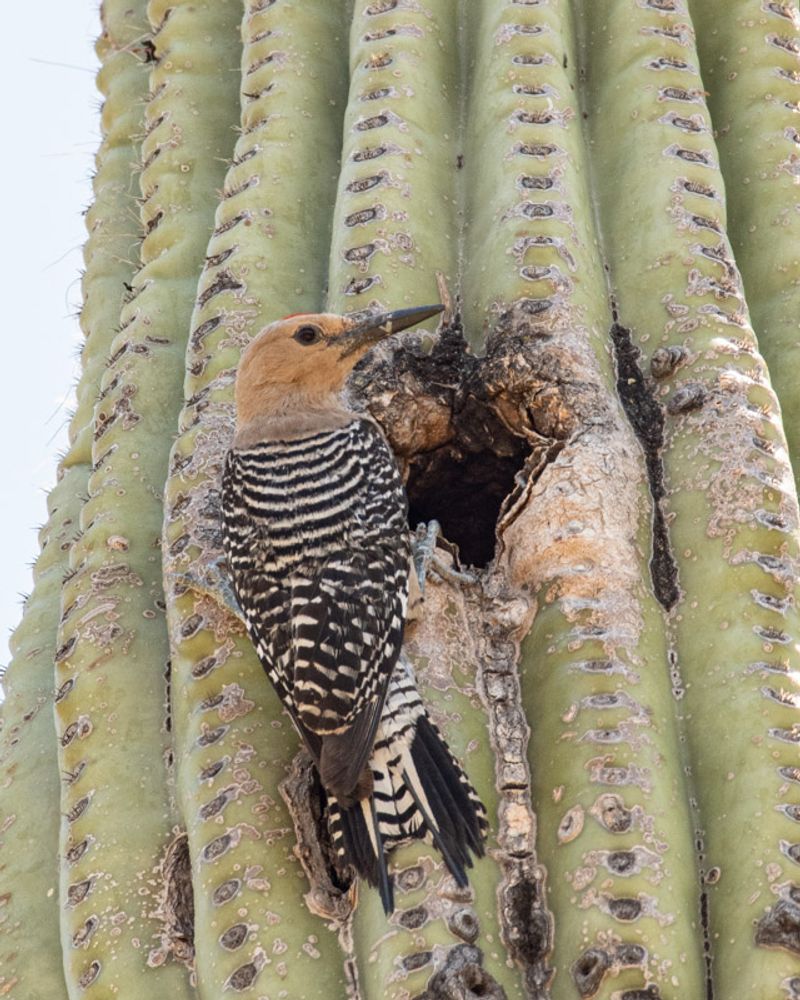
Saguaros do not just sit there and take the damage. When a Gila Woodpecker drills into the cactus, the plant responds by producing a thick layer of protective tissue around the wound.
It is a biological defense system that works quietly from the inside.
That protective layer is called callus tissue. It forms a hard inner wall around the cavity, essentially creating a sealed chamber inside the living cactus.
The process can take several months to complete fully.
Once hardened, the inner lining keeps moisture from leaking out and prevents bacteria from spreading deeper into the plant. Without this response, a single woodpecker hole could cause significant internal damage to the cactus over time.
Botanists sometimes call the finished lining a saguaro boot. When a saguaro eventually falls or shrinks, the boot often survives intact.
You can sometimes find them lying in the desert, shaped exactly like the cavity that formed around them.
That boot shape tells you a lot about how serious the saguaro took the job of sealing itself. The walls are thick, dense, and surprisingly durable.
Your Arizona Garden Changes Every Week. Your Plan Should Too.
Gardening in Arizona changes quickly throughout the season. Every Friday you’ll receive a simple weekly plan showing exactly what to plant, prune, fertilize, harvest, and protect so you never miss the right timing.
Some boots found in the Sonoran Desert appear to have held their shape for many decades after the cactus itself was gone.
3. The Cavity Hardens As The Saguaro Heals
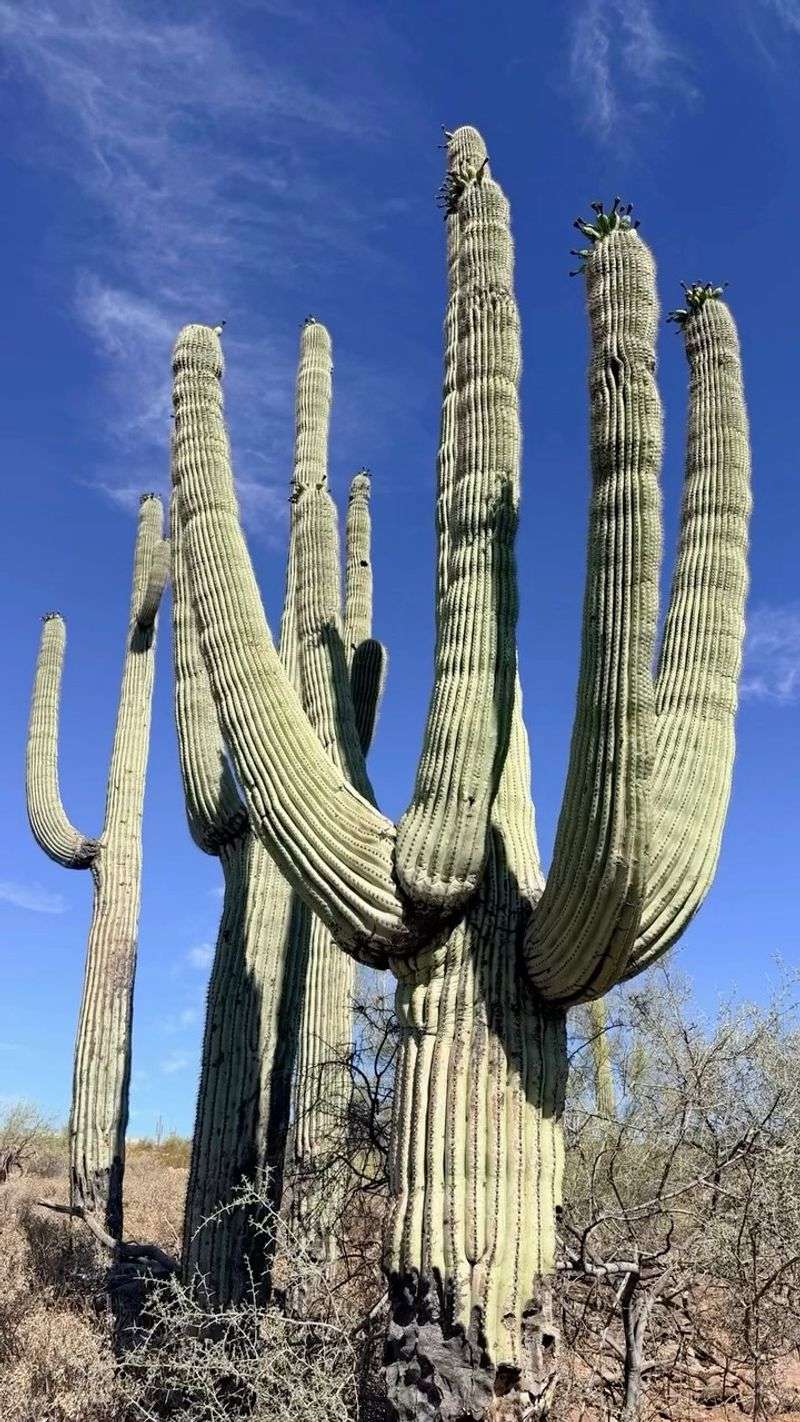
Healing takes time, even for a cactus. After a Gila Woodpecker finishes carving, the saguaro begins a slow process of reinforcing the damaged zone.
Layers of new tissue build up gradually around the opening.
At first, the inner walls feel soft and damp. Over weeks and months, they firm up as the plant concentrates its energy on sealing the breach.
By the time the cavity is fully hardened, the interior is almost woody in texture.
That hardened shell is what makes the cavity so useful long-term. Soft-walled holes would collapse or rot quickly in the heat and humidity cycles of the Sonoran Desert.
The tough lining is what allows a single cavity to remain functional for years.
Not every saguaro heals at the same rate. Older, larger cacti tend to have more stored water and energy to direct toward healing.
Younger or stressed saguaros may take longer or produce thinner callus walls.
Even a cavity that looks rough on the outside can be surprisingly solid inside. The external appearance of a saguaro does not always reflect the condition of its interior chambers.
Experienced naturalists know to look closely before making assumptions.
4. These Spaces Offer Protection From Desert Heat
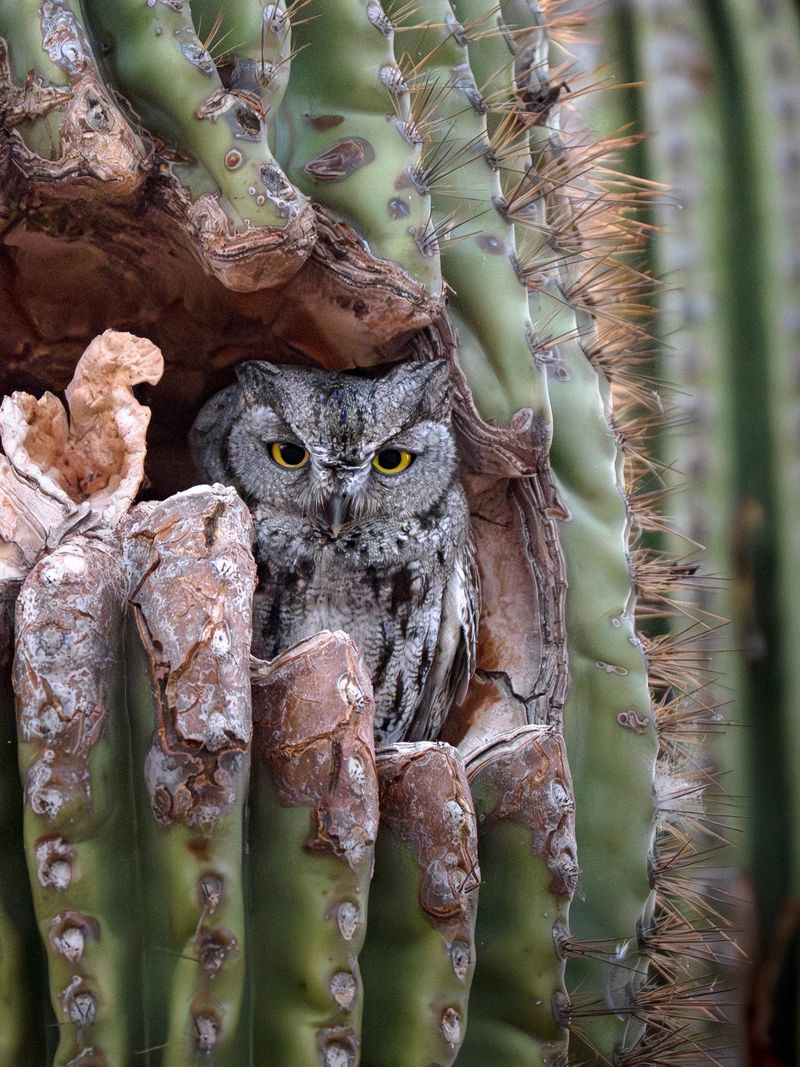
Summer temperatures in the Sonoran Desert can reach well above 100 degrees Fahrenheit. For small animals, finding shade is not just comfort.
It can be a matter of survival on the hottest days.
Saguaro cavities act as natural insulators. The thick cactus walls and the hardened callus lining buffer the interior from extreme outside temperatures.
Inside a cavity, temps can run noticeably cooler than the air just a few inches away.
Elf Owls are famous for using cavities as midday retreats. They roost inside during peak heat hours and become active again in the cooler evenings.
That behavioral pattern depends entirely on having a well-insulated cavity to retreat into.
Lizards and small snakes also slip into lower cavities when the ground becomes scorching. Even insects sometimes cluster inside old holes to avoid the worst of the afternoon sun.
The cavity becomes a shared refuge without any species planning it that way.
Height also plays a role. Cavities located higher on a saguaro arm tend to catch breezes that do not reach ground level.
That airflow adds another layer of cooling that makes upper cavities especially desirable for nesting birds.
5. Nesting Cavities Can Also Provide Shelter From Predators
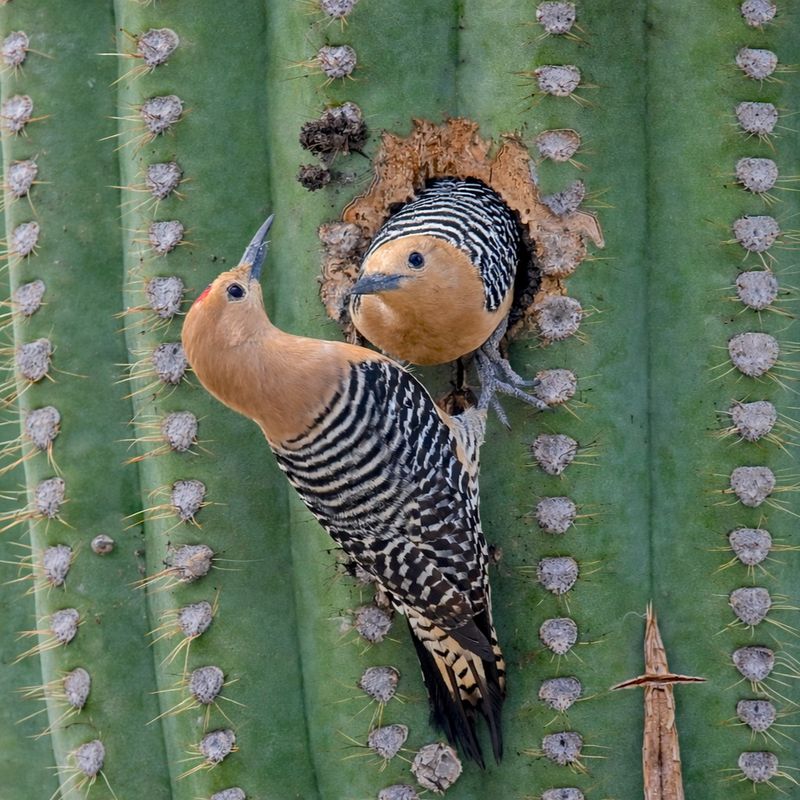
Height is one of the best defenses a nesting bird can have. A cavity carved high into a saguaro puts eggs and chicks well out of reach of most ground-based predators.
That elevation advantage is a big reason why so many birds compete for these spots.
Coyotes, roadrunners, and coachwhip snakes all pose threats to low-nesting birds. A cavity perched eight or ten feet up a saguaro changes the equation significantly.
Climbing that surface is not easy for most desert predators.
The narrow entrance of a woodpecker cavity also works as a natural filter. Only animals small enough to fit through the opening can enter.
That size restriction keeps out larger threats and limits the risk of a predator reaching inside.
Some birds are strategic about which cavities they choose. Elf Owls tend to prefer higher cavities with smaller openings.
Larger birds like flickers may use wider holes but still benefit from the elevation and the solid cactus walls surrounding them.
Even the spines on a saguaro contribute to the overall defense. Approaching the cactus from any angle means brushing against sharp spines.
Many animals simply avoid the attempt altogether, leaving the cavity occupants undisturbed.
6. Healthy Saguaros Can Keep Growing Around The Holes
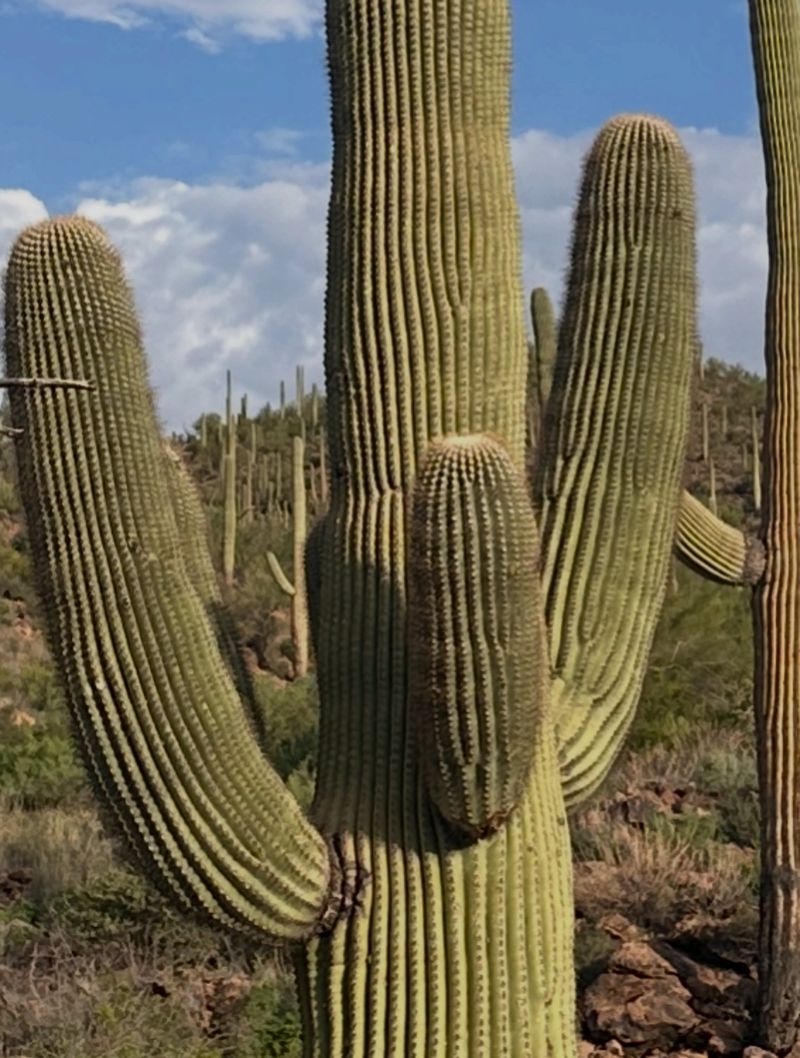
A saguaro with a woodpecker hole is not a wounded cactus headed for trouble. Healthy saguaros often keep expanding upward and outward even after multiple cavities form.
The plant adapts rather than retreats.
Saguaros grow slowly, sometimes less than an inch per year in their early decades. But over time, they accumulate mass and tissue that far exceeds what any woodpecker removes.
A mature saguaro can host several cavities and still maintain a strong, upright form.
New arm growth often continues well past the point where cavities were carved. The vascular system of a saguaro is distributed in a way that allows damaged sections to be bypassed without shutting down growth elsewhere.
It is a resilient internal structure.
Older saguaros sometimes show cavities at multiple heights along the trunk and arms. Some of those holes may span decades of woodpecker activity from different birds across different generations.
The cactus carries that history in its exterior without losing structural integrity in most cases.
Weather extremes, prolonged drought, or disease can weaken a saguaro over time and affect how well it handles cavity formation. A stressed cactus may not heal as efficiently.
But under reasonably healthy conditions, a saguaro and its cavities coexist without major conflict.
7. Old Cavities Can Remain Useful For Years
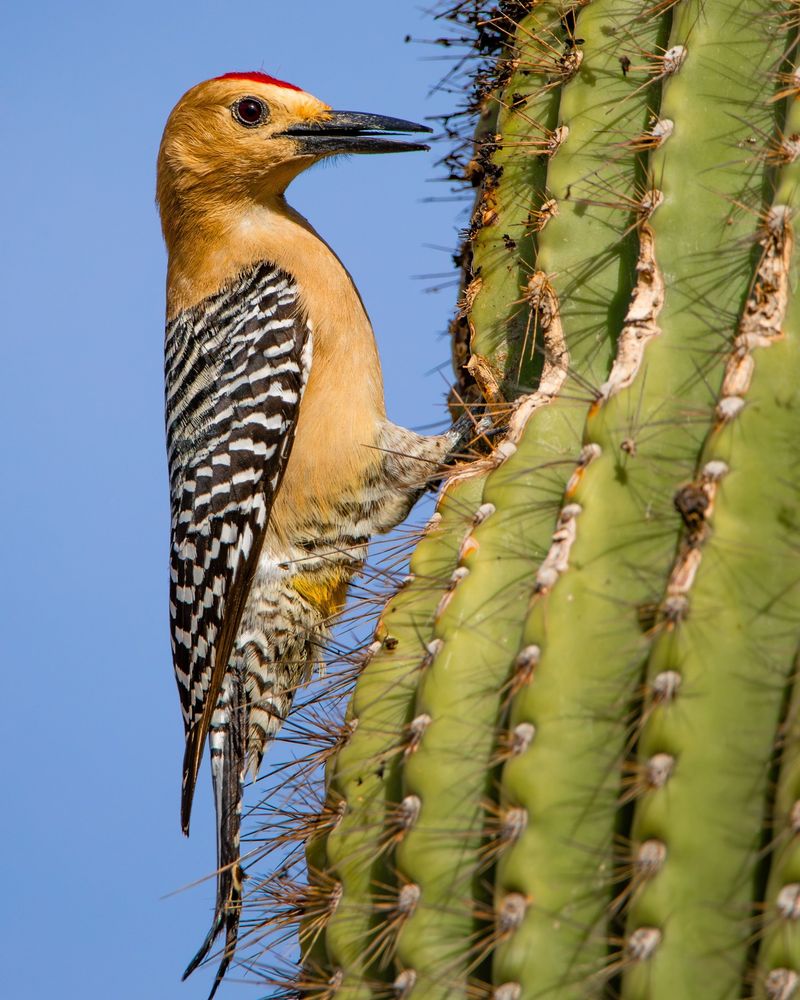
A cavity does not stop being useful once the woodpecker that carved it moves on. Some holes remain active nesting and roosting sites for many years after they were first created.
The desert wastes very little.
As the callus lining continues to harden over time, the cavity can actually become more stable, not less. Walls that were once slightly flexible firm up into a structure that resists collapse even as the outer cactus ages around it.
Different species cycle through the same cavity across seasons. A woodpecker might nest there in spring, an elf owl might roost through summer, and a small snake might use it briefly in fall.
Occupancy shifts without any formal handoff.
Cavity size also evolves over time. Some holes widen slightly as weathering affects the entrance.
A larger opening may attract different species than the original woodpecker intended, adding another layer of biodiversity to a single hole.
In the Sonoran Desert, where natural shelter is genuinely limited, an old cavity holds long-term value. Animals recognize familiar sites and return to reliable locations season after season.
A well-positioned saguaro cavity can become a landmark in a small animal’s territory.