What It Means When Luna Moths Start Showing Up In Arizona Yards This Fall
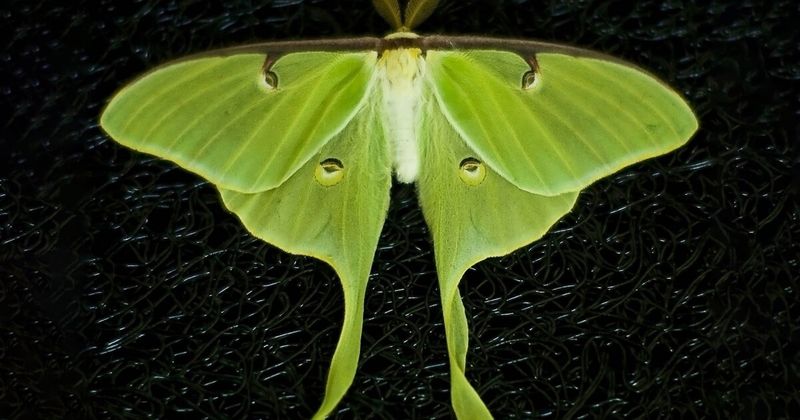
A large, pale-green moth with flowing tails resting on your porch wall is a genuinely striking sight, and it makes sense that Arizona homeowners want to know what they found. The problem is that calling it a luna moth may not be accurate, and sharing that label online can spread a misconception that these insects are seasonally arriving across Phoenix and Tucson yards.
Knowing what the evidence actually says, and what a more likely explanation might be, turns a confusing encounter into a useful observation worth reporting to people who can confirm it.
An apparent luna moth in Arizona needs verification
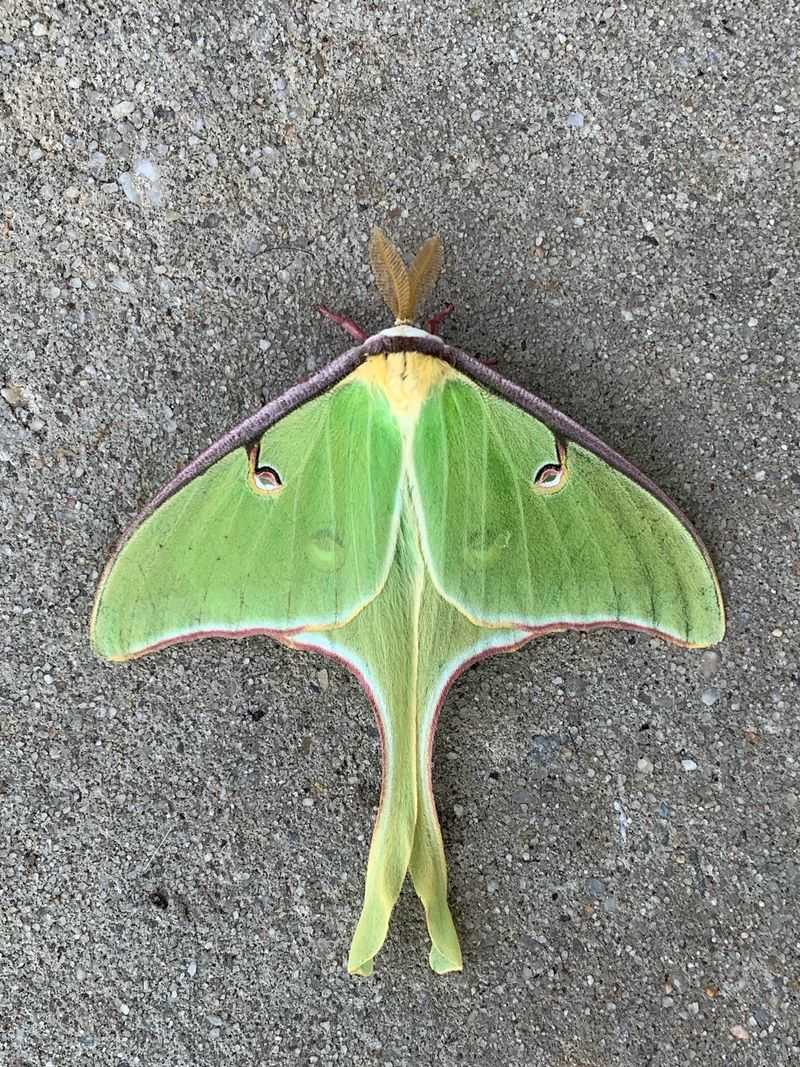
Spotting a large green moth with sweeping tails in your Arizona yard feels like a rare event, and it genuinely might be. However, before posting that photo with the label “luna moth,” the range data deserves a close look.
University of Florida IFAS documentation on Actias luna places the species from southern Canada through the eastern United States, and authoritative range records extend the boundary only as far west as eastern Texas and eastern North Dakota. Arizona sits well outside that documented territory.
That geographic gap matters because it means a recurring fall arrival of luna moths in Phoenix or Tucson yards is not something the current evidence supports. The species has a documented home range, and Arizona is not part of it.
Reporting a sighting as a confirmed luna moth, without verification, contributes to a misleading picture of where the species actually lives.
An isolated individual could still turn up outside the standard range. A transported specimen, an accidental vagrant, or a captive-released moth are all possibilities that cannot be ruled out entirely.
What those possibilities do not justify is treating an unverified report as proof of a seasonal migration or a fall emergence trend in Arizona. The honest starting point is that the insect needs identification before it gets a name.
The western Polyphemus may explain the green, tailed shape
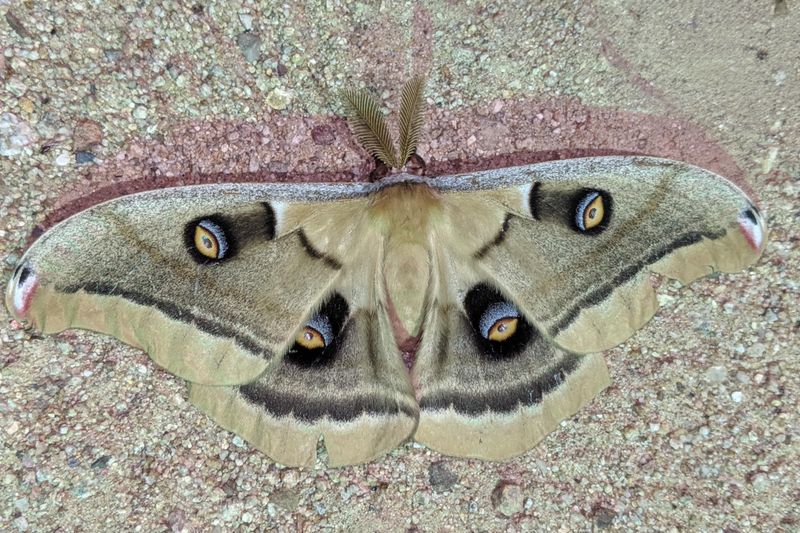
“Luna moth” names one specific species, Actias luna, rather than every large silk moth with greenish wings and tail-like extensions. Getting that distinction right matters, because Arizona has its own documented giant silk moth that can look strikingly similar at a quick glance.
According to the University of Florida IFAS, adult luna moths carry pale-green wings, long curved hindwing tails, and small transparent eyespots, with a wingspan ranging from roughly 3 to just over 4 inches.
The western Polyphemus moth, Antheraea oculea, is a separate species recorded in Arizona, including Pima County. Both moths belong to the giant silk-moth family Saturniidae, which helps explain why a homeowner might reach for the more familiar name when they encounter one at night.
Key visual differences exist between the two species, including eyespot size, tail length and shape, and subtle color variation, but those details are genuinely difficult to sort out without a clear photograph and some familiarity with both species. Resemblance is a prompt for careful identification, not a reason to pick the more dramatic label.
If the moth is in Arizona, Antheraea oculea is the better working hypothesis until an expert says otherwise.
Your Arizona Garden Changes Every Week. Your Plan Should Too.
Gardening in Arizona changes quickly throughout the season. Every Friday you’ll receive a simple weekly plan showing exactly what to plant, prune, fertilize, harvest, and protect so you never miss the right timing.
Monsoon activity does not establish a luna moth arrival
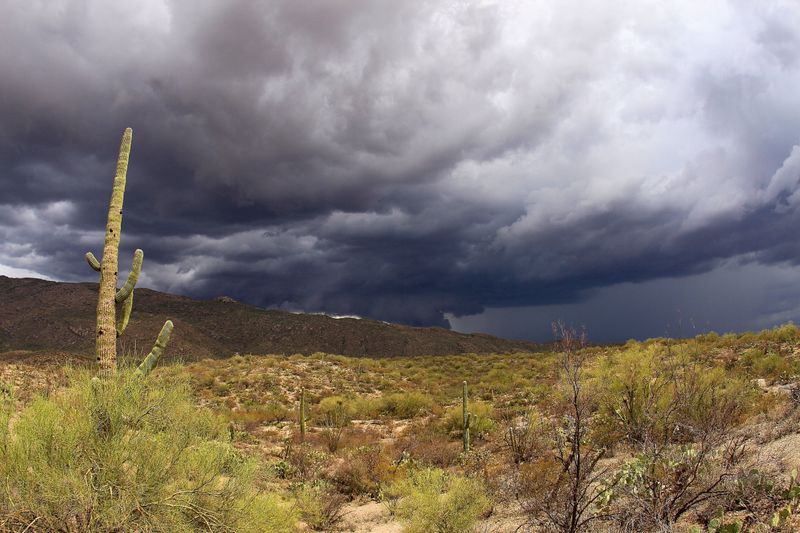
Arizona’s monsoon season runs approximately from June 15 through September 30, and the rains it delivers do increase insect activity in noticeable ways. That post-monsoon pulse makes yards feel more alive with wings, and it can make an unusual moth sighting feel like part of a broader seasonal pattern.
The catch is that this research focuses on butterflies, not on Actias luna or any other large silk moth. Using butterfly abundance data to support a claim about luna moth migration or fall emergence in Arizona is not something the evidence allows.
The two topics simply do not connect in the published record.
Post-monsoon conditions may make any insect sighting feel more significant, and general insect visibility does increase after summer rains. However, that seasonal uptick does not mean luna moths are among the insects arriving.
Readers who notice more wing activity in September and October are observing something real, but attributing it specifically to luna moths adds a layer the evidence does not support. The monsoon context is worth understanding; it just does not explain a supposed luna moth wave.
A porch light can create a misleading impression
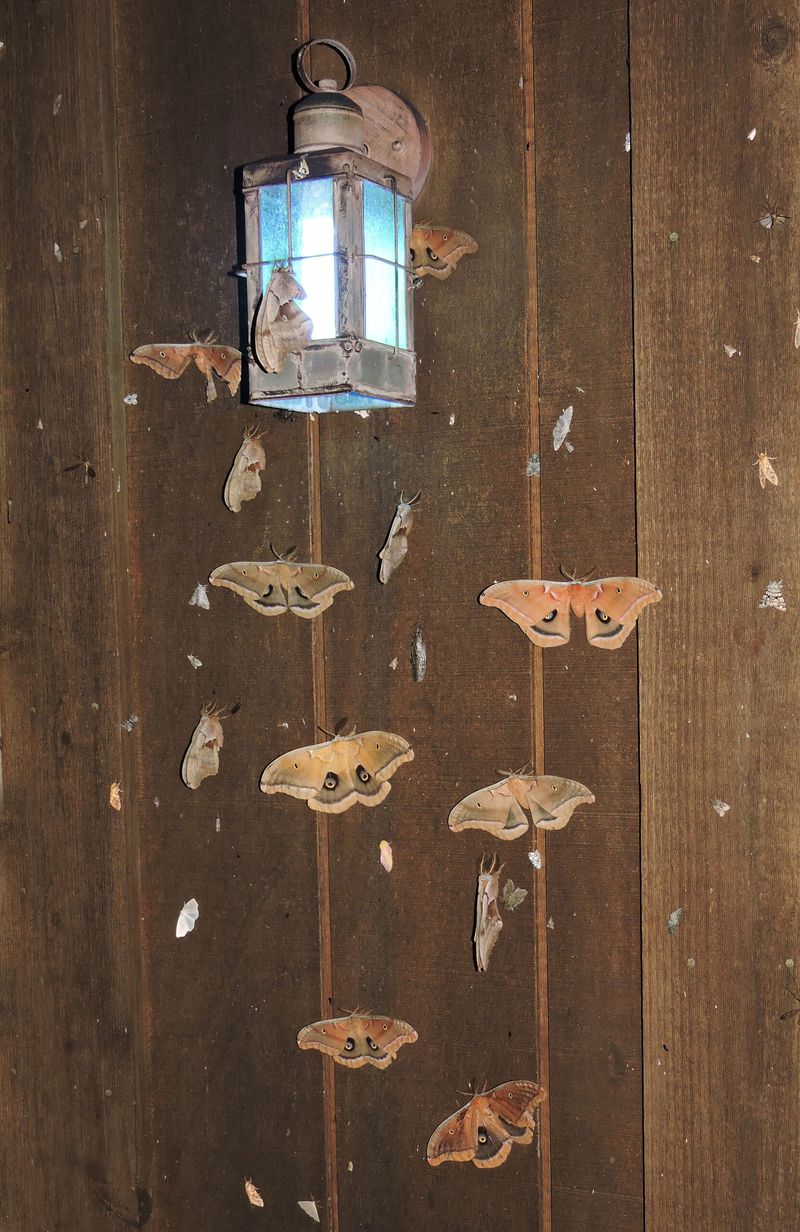
Finding a large moth pressed flat against your front wall at 10 p.m. feels like the yard produced it, but the light above the door may deserve more credit. Luna moths are strongly attracted to artificial light, particularly ultraviolet wavelengths, and a moth appearing on a porch, a stucco wall, or a garage door is very likely responding to that light source rather than emerging from a nearby host tree.
The University of Florida IFAS notes this light-attraction behavior as a consistent characteristic of the species.
Adult luna moths do not feed at all. They have vestigial mouthparts and rely entirely on energy stored during the caterpillar stage, and the Missouri Department of Conservation notes they live only about a week as adults.
A moth sitting motionless near a lamp is not necessarily sick or dying; resting is simply what short-lived, non-feeding adults do during the brief window available to them.
None of that changes the need for identification, but it does change how to interpret the location. A moth drawn to an outdoor light tells you something about light-attraction behavior, not about whether the yard supports breeding, whether a population is growing locally, or whether a fall emergence is underway.
Location near a lamp is one data point worth recording, not a conclusion in itself. Turning off or switching to amber outdoor lights can reduce how often any moth species gets pulled toward your home at night.
Document the insect before assigning it a name
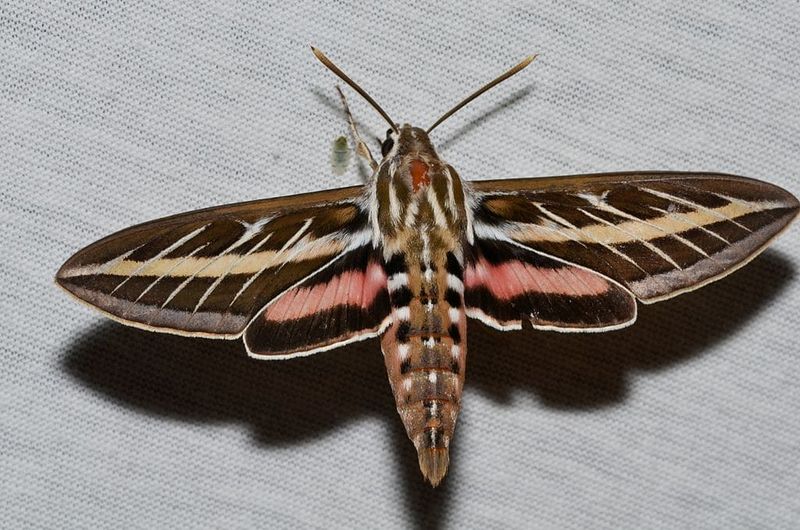
A clear photograph is worth far more than a confident label when the insect in question is outside its expected range. Before doing anything else, photograph the moth from multiple angles without touching or moving it.
Capture the full wing spread if possible, along with close shots of the eyespots, hindwing tails, and any body markings. Blurry or distant images make professional identification much harder, so take several shots and check them before walking away.
Along with the photos, write down the date, the exact address or GPS coordinates, the time of night, and whether the moth appeared near an outdoor light, a broadleaf tree, or somewhere else on the property. Those environmental details help experts assess whether the sighting fits a known species pattern or stands out as genuinely unusual.
A photograph without location context is useful; a photograph with full location data is substantially more valuable.
Submit the image to a reputable identification platform or contact a local entomology resource directly. Online platforms that accept georeferenced photo submissions also build records that researchers use to track real range shifts over time.
A careful observation submitted with good documentation does something that an unverified social media post cannot: it adds to the actual scientific record.
Protect the yard without trying to manufacture a luna sighting

Reaching for a pesticide spray when an unfamiliar moth appears on the wall is a natural impulse, but adult luna moths do not eat plants. The University of Florida IFAS is clear that adults have vestigial mouthparts and cause no feeding damage whatsoever.
Even if the caterpillar stage were present, luna moth larvae are not generally abundant enough to cause significant damage to host trees, so treating an adult sighting as a pest emergency is not justified.
Leaving a modest layer of leaf litter under broadleaf trees can benefit overwintering insects. Luna moths form cocoons among fallen leaves, and those cocoons can overwinter at the base of host trees before adults emerge the following season.
The University of Maryland Extension recommends retaining some leaf litter as part of managing yards to support insect communities. That guidance is based on luna moth biology in the species’ established eastern range, and it should not be read as a promise that leaving leaves in a Phoenix yard will produce luna moths locally.
Similarly, planting walnuts, hickories, sweetgum, or persimmon specifically to attract luna moths is not a strategy the evidence supports for low-desert Arizona. Those are documented host plants within the species’ eastern range, but their suitability varies by regional population, and none of the available sources establish them as appropriate low-desert landscaping choices.
If you find an unidentified caterpillar anywhere on your property, photograph it rather than handling it. Arizona has many moth species, and some caterpillars carry irritating hairs that make identification before contact a sensible precaution.
The useful takeaway is verification, not a seasonal prediction
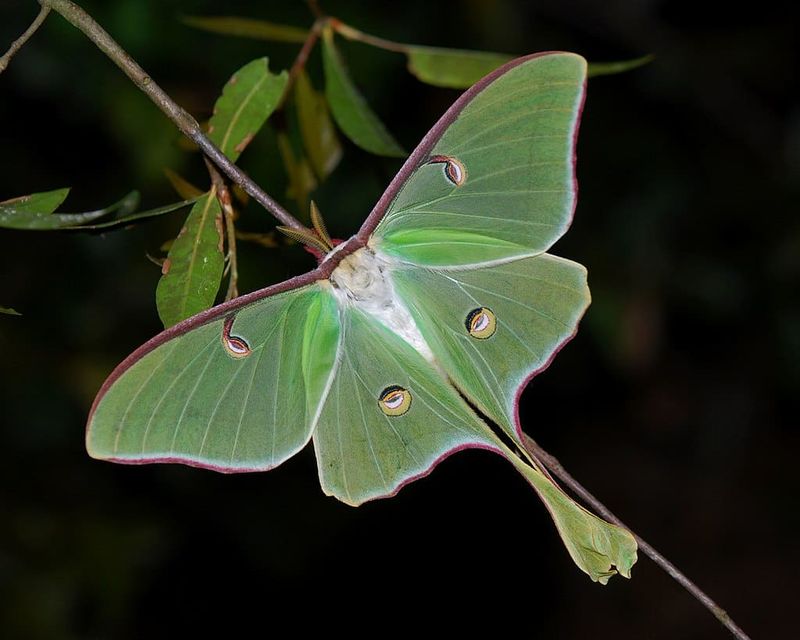
An unusual moth in a fall Arizona yard is worth paying attention to, but the right response is documentation, not a label. Actias luna is outside its standard range in Arizona, and the post-monsoon uptick in butterfly activity that researchers have observed does not extend to luna moth arrivals.
A green, tailed moth photographed in Phoenix or Tucson is more likely the western Polyphemus, Antheraea oculea, or another documented Arizona silk moth than a species whose nearest confirmed population is hundreds of miles east.
An isolated out-of-range individual remains possible, and that is precisely why verification matters. A confirmed Arizona luna moth record, supported by a clear photograph and location data submitted to the University of Arizona Insect Collection or a similar resource, would be genuinely meaningful.
An unverified social media post calling it a luna moth contributes nothing to that record and may mislead other homeowners into the same assumption.
Photograph the moth, note the conditions, and seek an identification from someone with regional expertise before sharing a species name. The insect on your wall deserves accurate recognition, and so does the scientific record of what actually lives in Arizona.