Realistic Late-Season Care for Arizona Pomegranates Still Maturing on the Tree
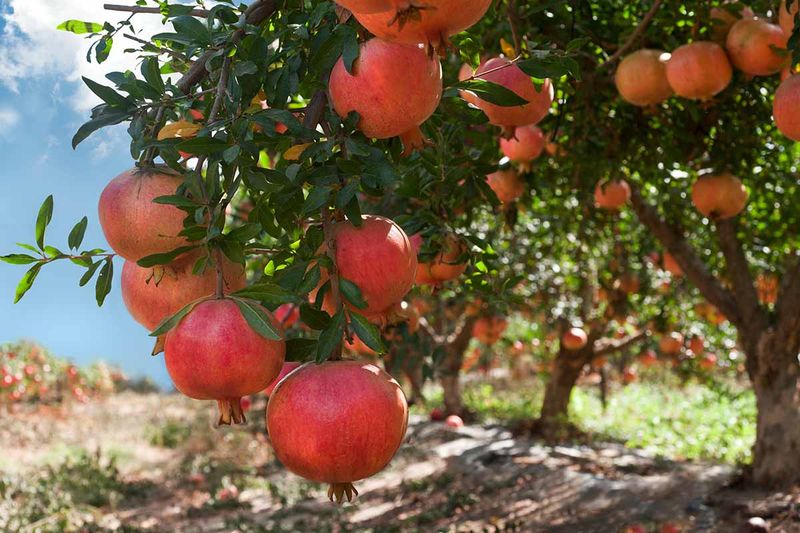
Pomegranates hanging on Arizona trees in fall can leave you wondering if there is anything left to do. The good news is that many fruit keep maturing well into the season.
Late-season care is less about forcing ripening and more about protecting the crop you already have. Here is what helps, what does not, and how to tell when fruit is ready.
Arizona’s harvest window is broad
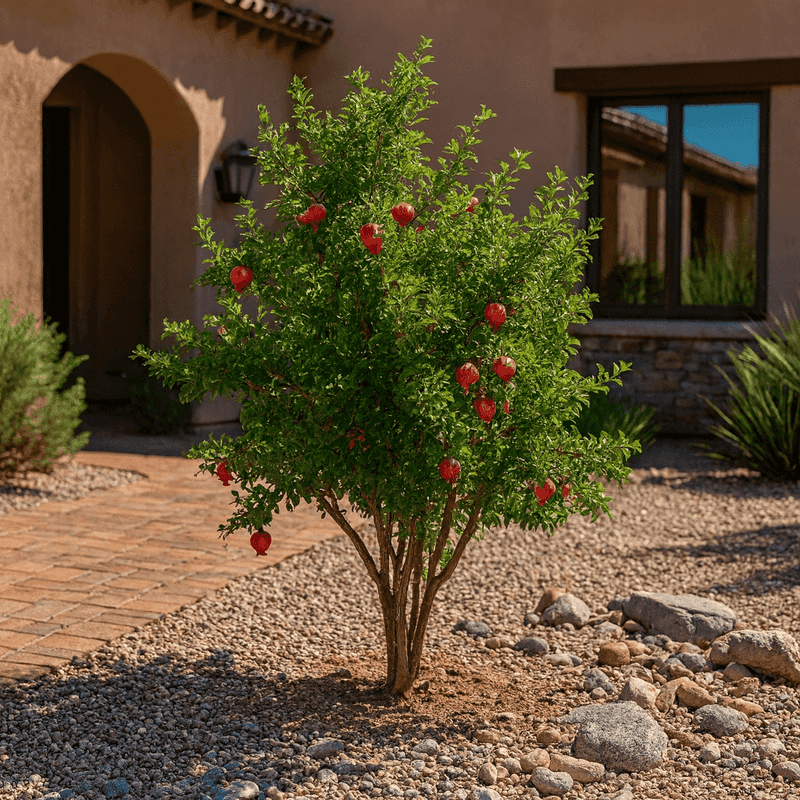
Fall in the low desert brings a wide stretch of time when fruit can finish up. University of Arizona guidance says pomegranates ripen from September through December, which is a long window.
Separate Arizona guidance describes harvest as usually happening in November. Both are general timing cues, not a deadline that fits every tree.
Your variety, when it flowered, and the conditions in your yard all shape when your fruit is ready.
So rather than reacting to the calendar, walk out to the tree and look at the fruit itself. Check color, listen to it, and note how it compares from branch to branch.
Fruit on one side of the tree may be ahead of fruit on the other, and that is normal. Treat the season dates as loose background, and let each fruit tell you where it stands.
That approach keeps you calm and helps you avoid picking too soon.
No late-season trick can force fruit to ripen
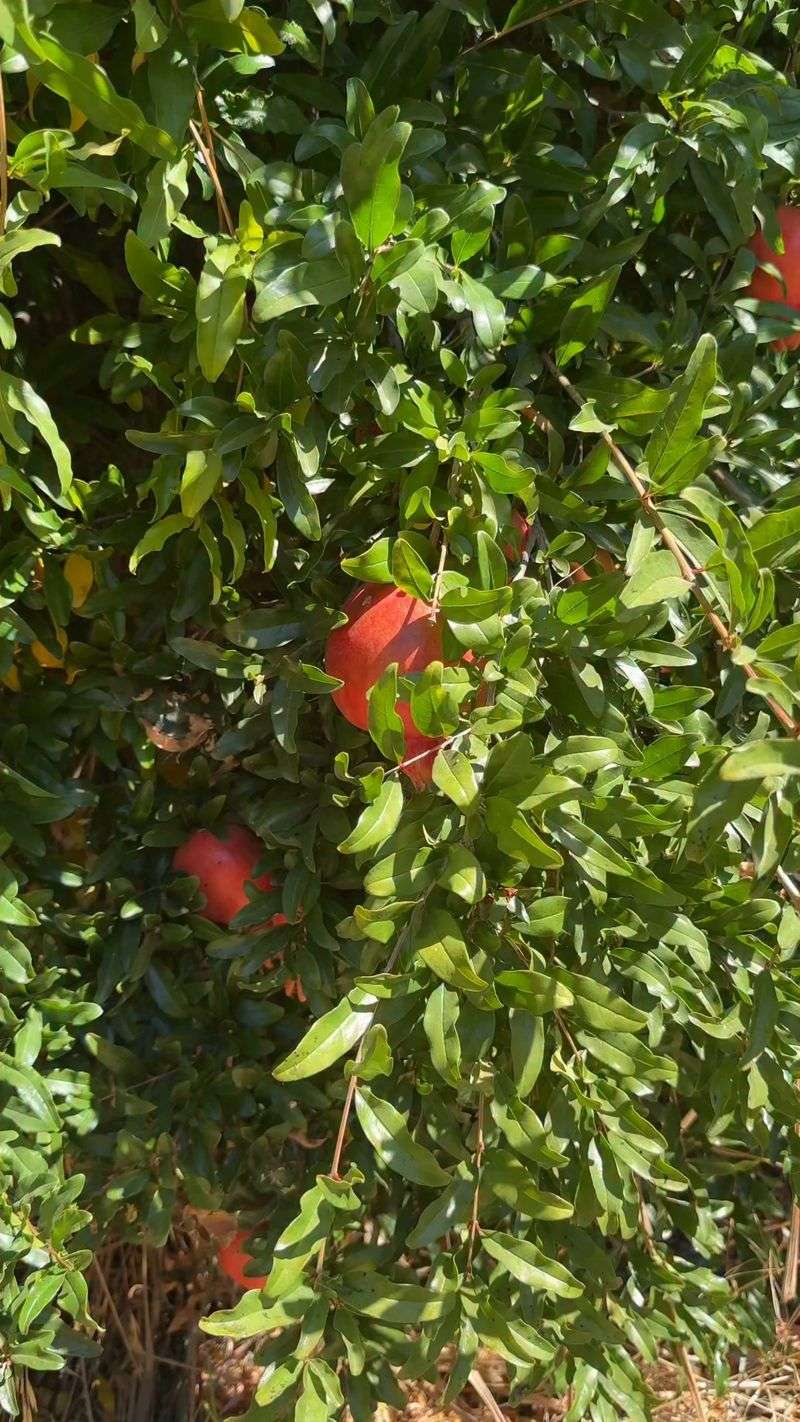
Maturity depends on things you cannot change this month, such as variety and flowering time. A tree that bloomed later may simply need more days, and no watering, feeding, or trimming trick has been shown to reliably speed that up.
Cool nights get blamed a lot, but the sources reviewed give no nighttime temperature at which fruit stops ripening. The cold numbers in Arizona guidance, such as plant tolerance to winter lows near 10°F, are about injury to the tree, not fruit maturity.
One popular idea is to pick fruit early and let it finish on the counter. UC Master Gardeners note that harvested pomegranates do not ripen further, so early picking just locks in unfinished fruit.
The realistic goal is protecting fruit that is already maturing, not squeezing out extra ripe ones.
Steady soil moisture helps limit splitting
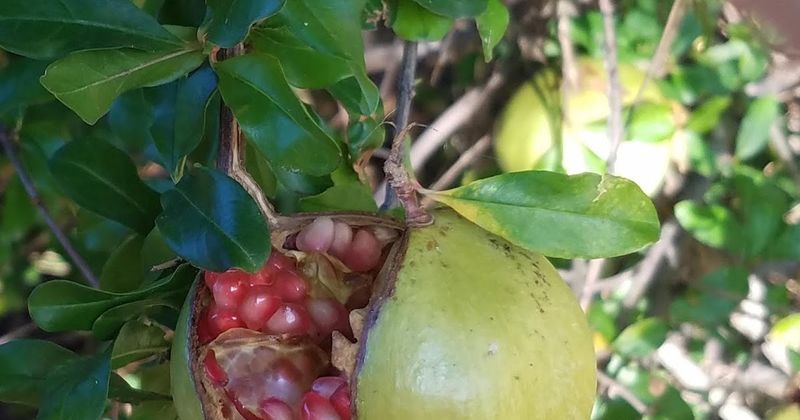
Splits often follow a swing in moisture. New Mexico State Extension explains that rapid water uptake after a stressful dry stretch can make fruit burst.
A long dry spell followed by a big soaking is the pattern to avoid.
Extra water will not ripen fruit faster, so this is about protection only. University of Georgia Extension adds that excessive fall irrigation may contribute to splitting, and Arizona guidance warns that late rain or irrigation can add to cracking.
There is no single schedule that suits every Arizona yard. Sandy ground dries faster than clay, a large tree drinks more than a young one, and a rainy week changes everything.
Push a trowel or probe into the soil near the drip line and see how it feels before you water. Aim for reasonably even moisture and skip the sudden heavy soak.
Your Arizona Garden Changes Every Week. Your Plan Should Too.
Gardening in Arizona changes quickly throughout the season. Every Friday you’ll receive a simple weekly plan showing exactly what to plant, prune, fertilize, harvest, and protect so you never miss the right timing.
Avoid late nitrogen and heavy pruning as ripening fixes
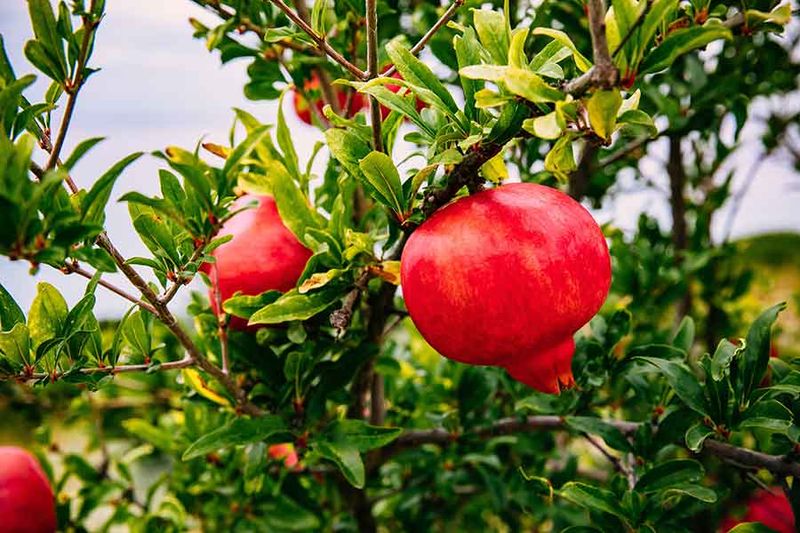
When fruit seems slow, it is tempting to feed the tree or cut it back to spark action. Both moves tend to backfire this late in the year.
A UC pomegranate manual warns that excessive or late nitrogen can delay fruit maturity and color. It also says nitrogen applied after mid-July can interfere with winter hardening.
The concern is nitrogen specifically, not every fertilizer, so simply skip nitrogen as a ripening push.
Pruning is no better. Nevada Extension advises against significant in-season pruning to stimulate new growth or ripening.
Utah guidance adds that severe pruning can reduce yields, which is the opposite of what you want with fruit still on the branches.
If a dead twig or a rubbing branch bothers you, a light touch is fine. Just do not treat the shears as a ripening tool.
Check several signs before harvesting
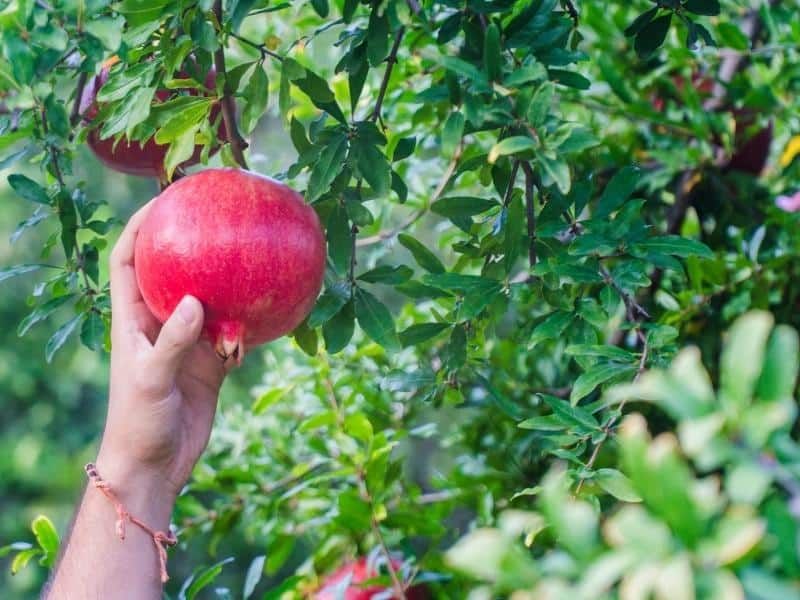
Skin color alone can fool you. Arizona guidance points to distinctive color together with a metallic sound when you tap the fruit, and color varies among varieties.
Some types never turn deep red, so learn what yours should look like.
Tap a few fruit and listen. Ripe ones ring with a tinny, metallic note, while unfinished fruit sounds duller.
Tasting a seed or two from a fruit you plan to pick is a solid final check.
Do not count on a split as proof. Cracking often follows quick water uptake after stress or rain, so one burst fruit does not mean the whole tree is ready.
Use the same checks on it as on any other fruit.
When a fruit passes, clip it with pruners instead of pulling, which can damage the fruit and the branch. Leave the doubtful ones hanging, since harvested fruit will not improve indoors.
Protect maturing fruit without chasing a deadline
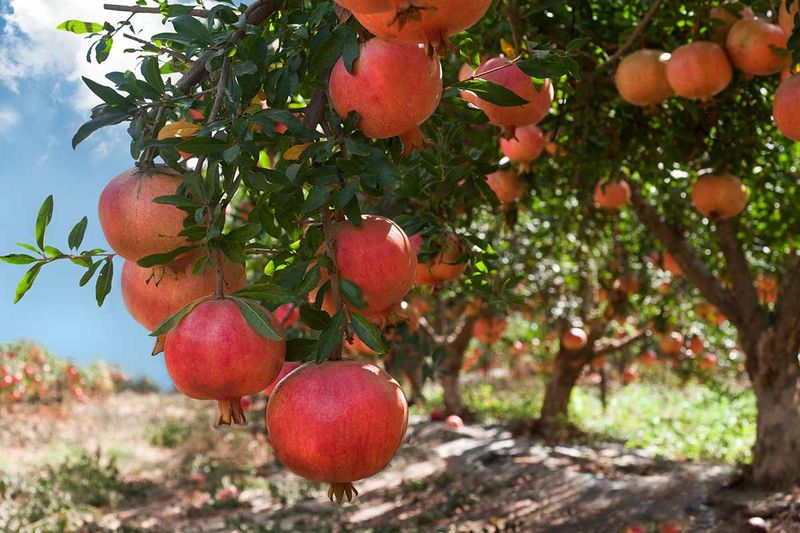
A calm plan works best. Treat Arizona’s broad ripening season as background, keep soil moisture reasonably even, and skip the late pushes.
Then check each fruit before you pick.
These steps can protect your crop, but they cannot promise that every fruit will finish. Cool nights alone are not a signal to rush.
Patience is the real tool here: a fruit left to mature is worth more than one picked in a hurry.