The Most Deer Resistant Native Perennial You Can Plant In Pennsylvania
A Pennsylvania garden can look perfectly established and still become a nightly buffet once deer decide it belongs on their route.
One plant gets clipped. Another loses its flower buds. A third disappears almost to the crown, and suddenly the whole border feels like it needs fencing just to make it through summer.
Yet some perennials attract far less attention.
The reason is not size, thorns, or an elaborate defense system. It comes from what deer notice the moment they lean in for a bite.
One native plant carries enough of that advantage to earn a place in beds where browsing pressure never really goes away.
So which perennial deserves the spot?
The answer brings more than resistance. It handles Pennsylvania conditions, supports an impressive range of pollinators, and can spread into the kind of sturdy patch that keeps bare soil from taking over.
It will not make the entire garden deer-proof.
But it can give one important part of the landscape a much better chance through the growing season.
Plant Mountain Mint For Strong Deer Resistance
A deer-resistant bed needs plants that can keep their foliage after the evening browsing begins.
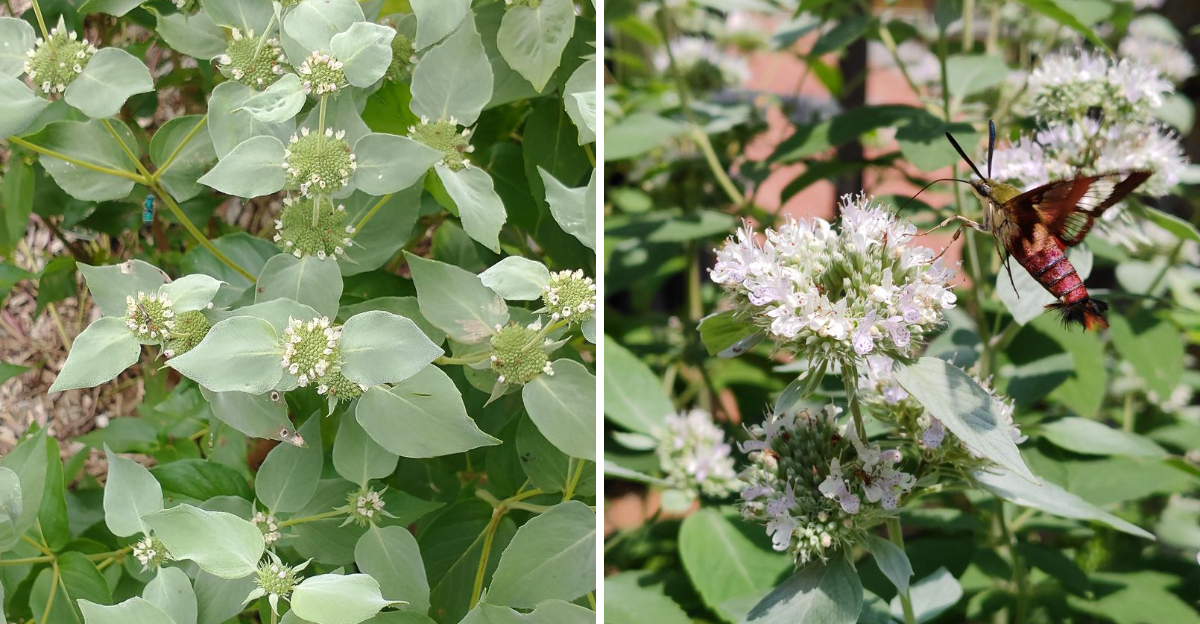
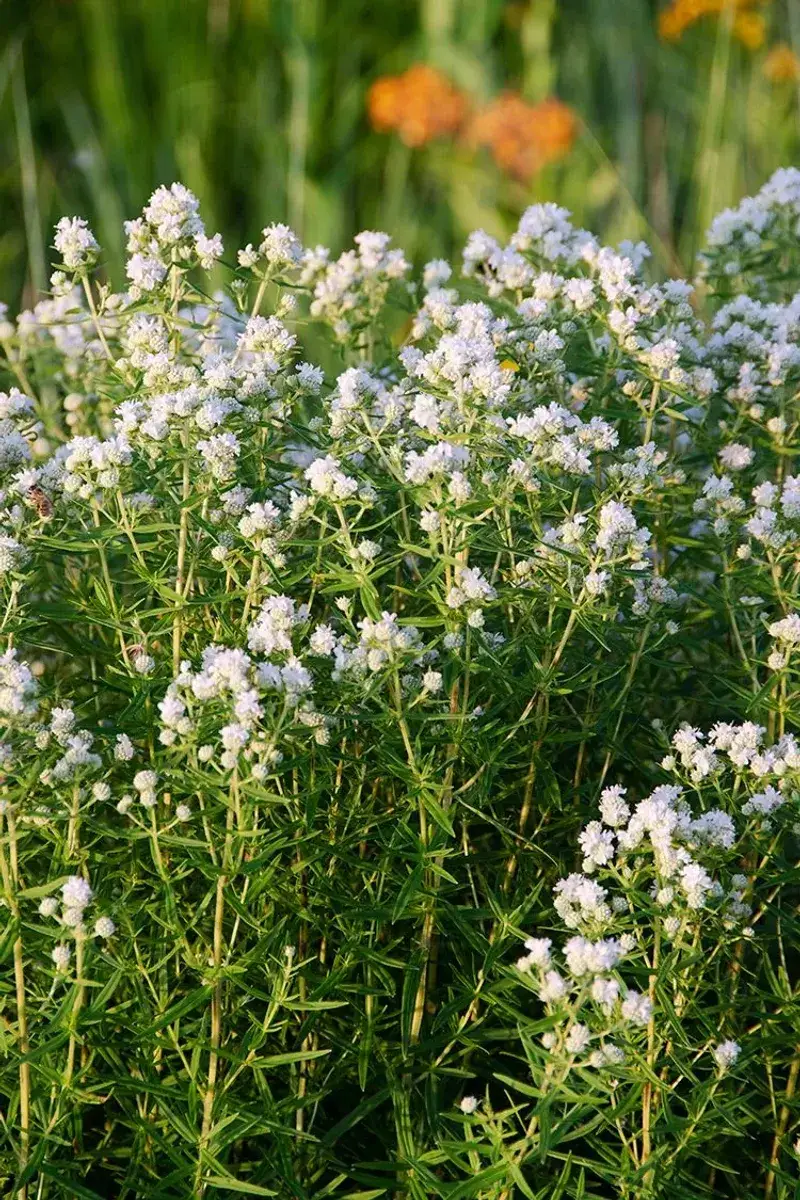
That is where mountain mint earns its reputation. Virginia mountain mint, Pycnanthemum virginianum, is native to Pennsylvania and carries strongly aromatic leaves that deer often find less appealing than softer, milder-tasting perennials.
Brush the foliage and the reason becomes obvious.
The leaves release a sharp minty fragrance from aromatic oils stored in the plant tissue. Deer rely heavily on smell and taste when choosing what to browse, and pungent foliage often falls lower on the menu when more palatable plants are available nearby.
That does not make mountain mint untouchable.
A hungry deer can sample almost anything, especially where browse pressure is severe or other food is scarce.
The useful distinction is that mountain mint tends to be passed over more often than plants such as hostas, daylilies, or tender garden phlox.
Give it sun to part sun and enough room to form a sturdy clump. Once established, it can return reliably each year without needing the constant cages and sprays that more tempting perennials often require.
That makes the plant valuable before you even count its flowers.
You are not planting a magical deer barrier.
You are choosing a Pennsylvania native that usually gives deer fewer reasons to stop for dinner.
That reliability matters most along exposed property lines and woodland edges, where deer can test the same planting night after night and still find little reason to linger.
Strong Scent Makes The Foliage Less Appealing To Deer
The strongest defense is built into the leaves themselves.
Mountain mint produces aromatic oils that create its unmistakable fragrance, and that scent can make the foliage less attractive to browsing deer.
The plant does not need spines or tough leathery leaves to discourage interest. Its chemistry does much of the work.
That matters in Pennsylvania gardens where deer make regular passes through the same beds.
A perennial that gets sampled once and ignored is much easier to live with than one that gets clipped to the ground every few nights.
Your Pennsylvania Garden Changes Every Week. Your Plan Should Too.
Gardening in Pennsylvania changes quickly throughout the season. Every Friday you’ll receive a simple weekly plan showing exactly what to plant, prune, fertilize, harvest, and protect so you never miss the right timing.
Mountain mint often holds its shape through the season because deer tend to prefer plants with milder foliage.
Place it near the outer edge of a border, beside a woodland transition, or along a route where deer commonly enter the yard.
Do not expect the scent to protect everything behind it.
A deer can easily walk past mountain mint to reach a hosta or vegetable plant it wants more. The value comes from making the mountain mint itself a less rewarding target, not from creating an invisible scented fence around neighboring plants.
That distinction keeps the strategy realistic.
Use mountain mint as part of a deer-resistant planting palette, then protect highly favored plants separately where pressure is intense.
Its fragrance gives the plant an advantage.
The rest of the garden still needs a plan of its own.
It also means fewer replacement plants, fewer emergency cages, and less disappointment when spring growth finally reaches the height deer can easily browse.
Let Mountain Mint Spread Into A Wider Deer-Resistant Patch
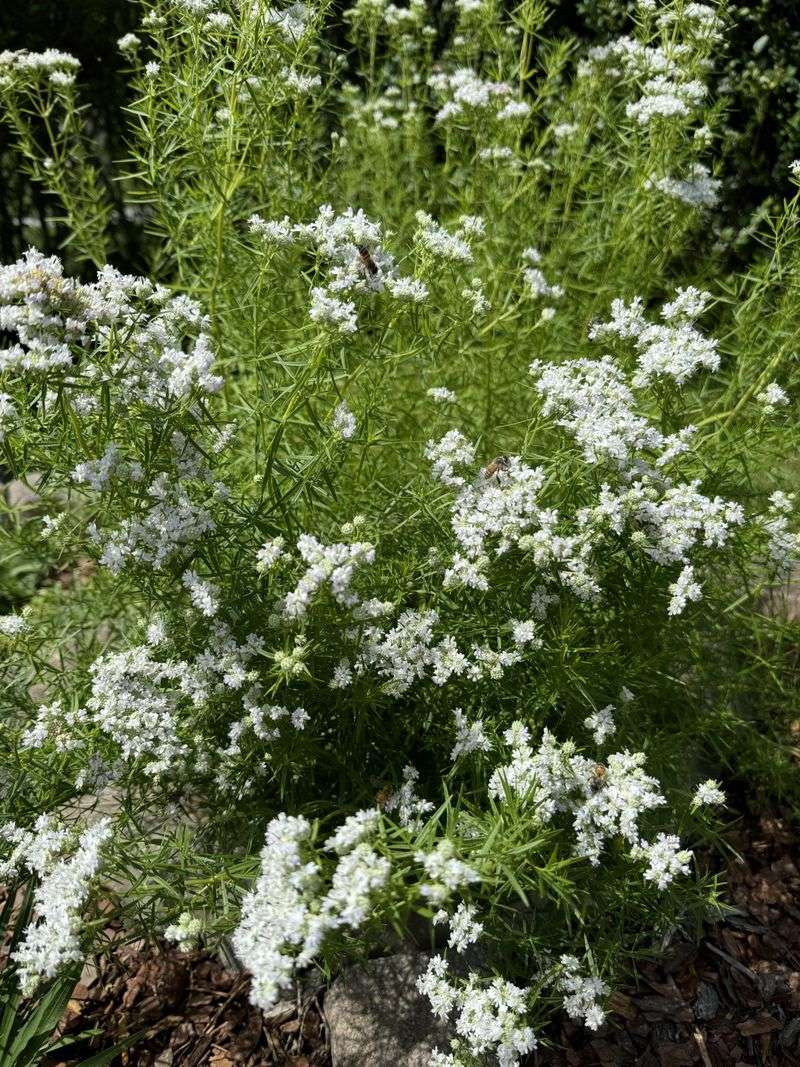
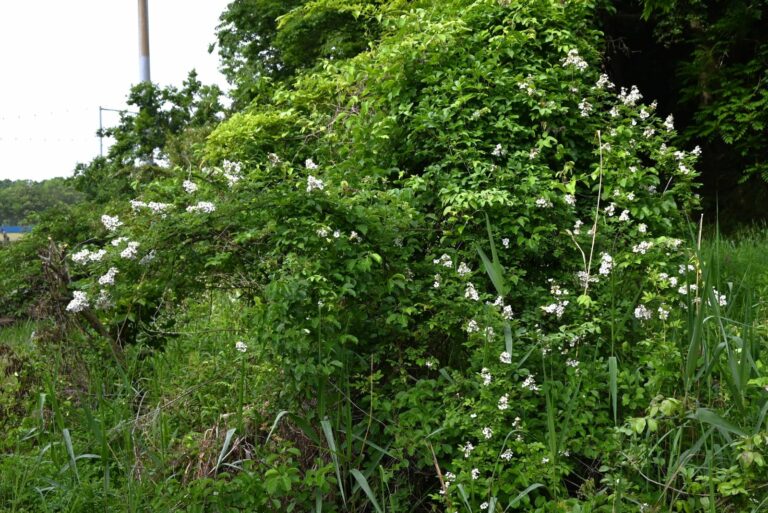
A single plant can help, but a broad patch makes better use of mountain mint’s natural habit.
Many mountain mints spread gradually by underground stems and can form dense colonies when conditions suit them.
In a Pennsylvania border where deer repeatedly browse softer plants, that ability lets the perennial occupy space without constantly needing to be replaced.
Use the spread where you want coverage.
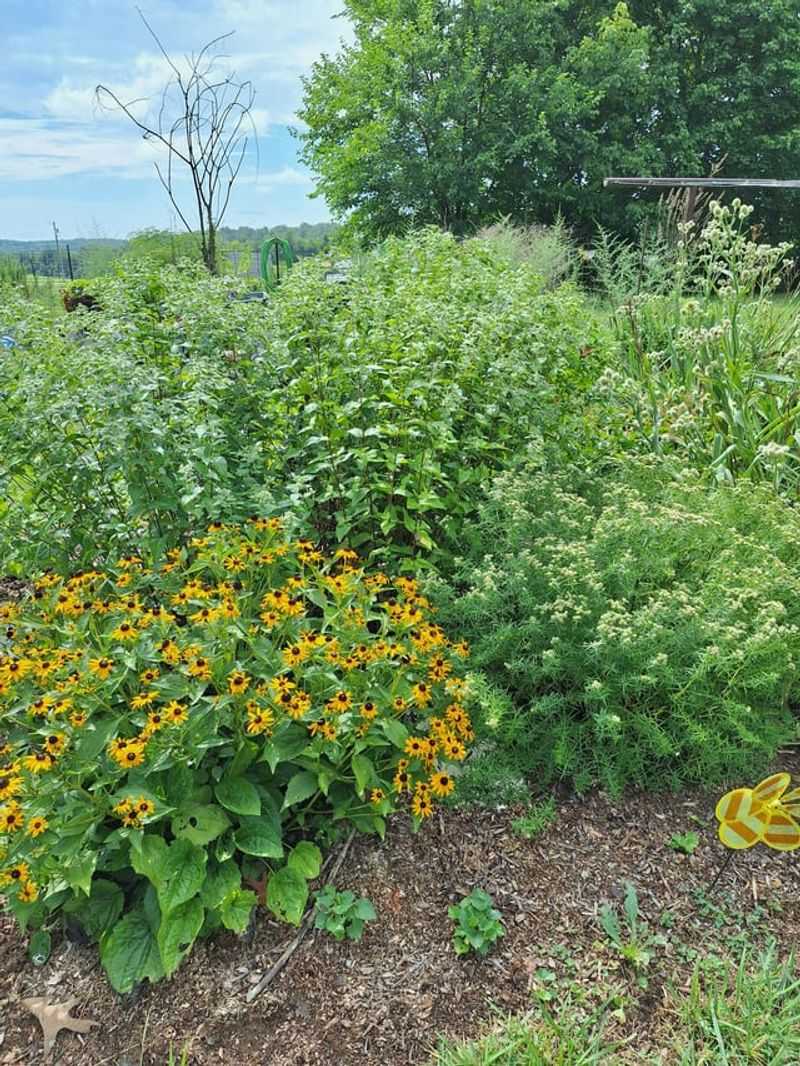
A woodland edge, meadow-style planting, rain-garden margin, or back section of a perennial bed can all give the plant enough room to expand.
Several plants grouped together will usually create a stronger, more natural-looking mass than isolated specimens scattered across the yard.
That does not turn the patch into a deer fence.
Animals can walk through it or around it, and a hungry deer may still investigate nearby favorites. What the colony does provide is a substantial block of aromatic foliage that is less likely to be browsed heavily.
Give the patch boundaries from the beginning.
Paths, edging, mowing strips, or regular division can keep rhizomes from wandering into slower-growing neighbors. Check the edges a few times during the growing season and remove shoots that appear where you do not want them.
In the right location, the spreading habit becomes an asset rather than a nuisance.
Instead of watching bare soil expand after repeated browsing, you get a native perennial willing to hold the ground.
That is especially useful beside naturalized borders, where a neat clipped outline matters less than dependable coverage and steady summer color.
Keep Mountain Mint Healthy To Maintain Dense Aromatic Growth
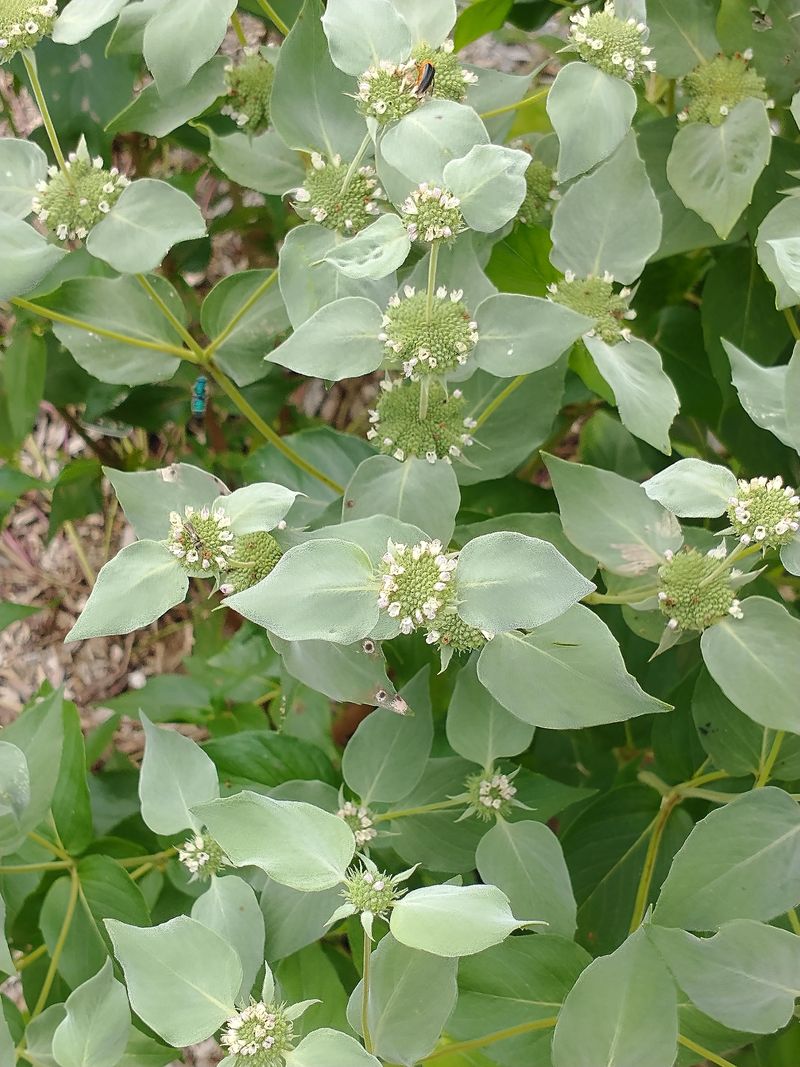
Deer resistance works best when the plant itself is healthy enough to keep producing dense aromatic foliage.
Mountain mint generally performs well in sun to part sun with soil that holds some moisture but still drains.
A strong clump carries leaves from low on the stems upward, giving deer plenty of pungent foliage to encounter before they decide whether the plant is worth browsing.
Deep shade can weaken that advantage.
Stems may stretch, lean, and become sparse when the plant does not receive enough light. Extremely dry soil can also leave a new planting thin and stressed before its roots have had time to establish.
Choose the site with growth in mind.
Water new plants during prolonged dry spells through their first season, especially in exposed Pennsylvania beds.
A modest layer of mulch can help conserve moisture, but keep it away from the crown rather than piling it against the stems.
Skip heavy fertilizer.
Mountain mint does not need lush, overly soft growth to perform well, and excessive feeding can create tall stems that flop or spread more aggressively than you intended.
Once established, the plant is usually far less demanding.
That is part of its appeal in a deer-prone landscape. A perennial that needs constant fussing is not much of a solution.
Give mountain mint enough light, ordinary garden soil, and reasonable moisture.
It will handle the rest with considerably less drama than many plants deer find delicious.
Healthy growth also keeps plenty of flowers available for visiting insects.
Mountain Mint Resists Deer While Feeding Summer Pollinators
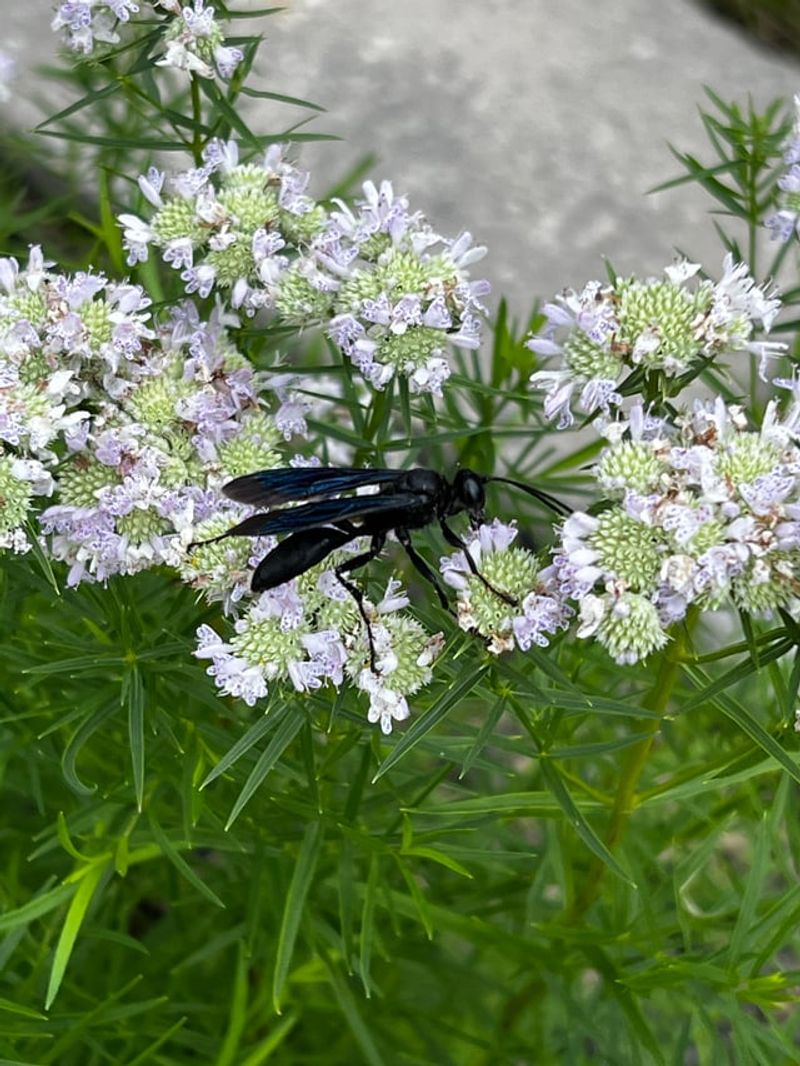
The same plant deer often ignore can become one of the busiest feeding stations in the summer garden.
Mountain mint produces clusters of small flowers that attract an impressive range of pollinating and beneficial insects. Bees, small wasps, beetles, butterflies, and other nectar seekers can crowd the blooms once flowering begins.
That makes its deer resistance especially useful.
A heavily browsed perennial cannot contribute much habitat if its stems and flowers disappear before insects can use them.
Mountain mint’s pungent foliage gives it a better chance of staying intact long enough to bloom and support that activity.
Place the clump where all that insect traffic has room.
The back of a sunny border, the edge of a vegetable garden, or a meadow-style planting works better than squeezing it beside a narrow doorway or patio chair. Once the flowers open, the patch can become remarkably busy.
Avoid broad-spectrum insecticides around the blooms.
Spraying the very insects the plant was chosen to support defeats much of its ecological value. When a pest problem nearby truly needs treatment, use the least disruptive option that fits the situation and follow label directions carefully.
Mountain mint gives Pennsylvania gardeners an unusual combination.
Deer often find the aromatic foliage less appealing, while pollinators find the flowers highly useful. That means one perennial can remain standing through browsing season and still contribute heavily to the garden’s summer food web.
The flowers may be small.
The amount of activity around them can be anything but.
Give Mountain Mint Room To Spread Into A Deer-Resistant Patch
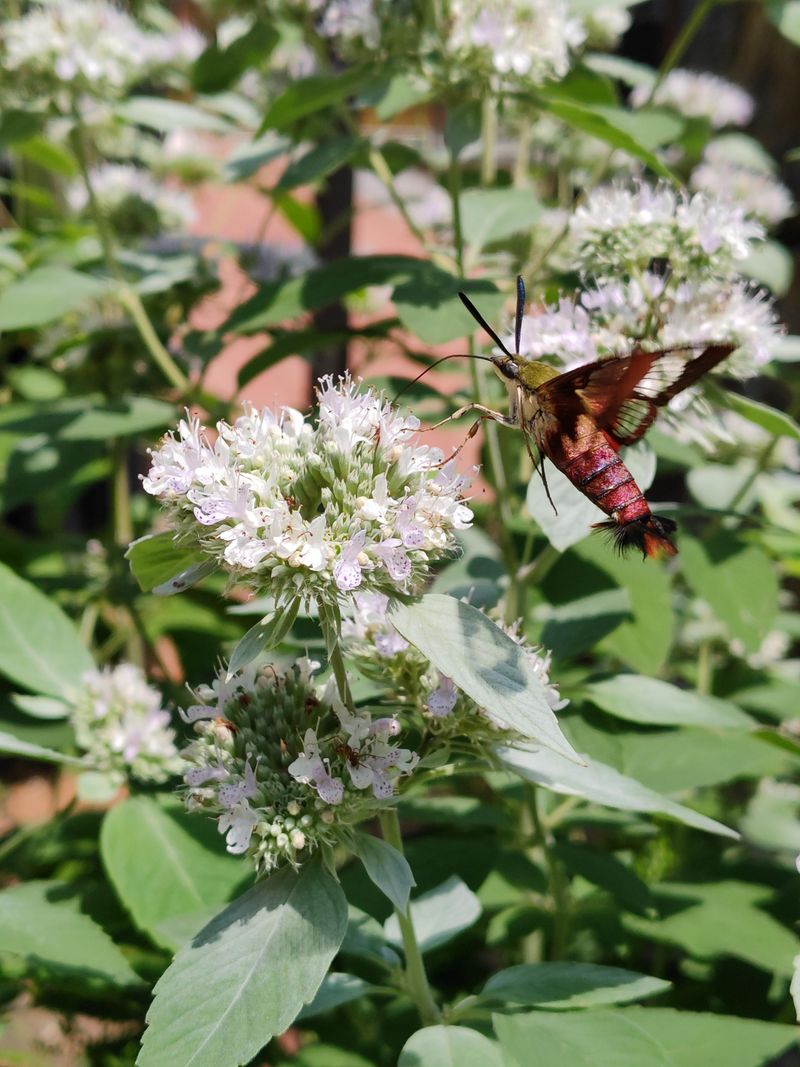
A plant this vigorous needs enough room to behave like itself.
Mountain mint can expand steadily through underground rhizomes, especially in moist, sunny soil. That spreading habit is useful where deer repeatedly leave other plants looking thin because the mint can gradually form a broad, resilient colony.
Choose the location with that future width in mind.
A meadow edge, rain-garden margin, woodland transition, or back section of a perennial border gives the plant more freedom than a tiny space between slow-growing ornamentals.
The wider patch also gives you more dependable coverage.
Even when a few stems get bent, browsed, or damaged, established growth nearby can help fill the gap.
That ability makes mountain mint particularly useful in less formal Pennsylvania landscapes where maintaining continuous plant cover matters more than keeping every stem perfectly contained.
Still, spreading does not equal deer exclusion.
A broad stand will not stop deer from walking through to reach something tastier on the other side. Its real advantage is that the mountain mint itself is more likely to remain present and productive despite regular deer traffic.
Control unwanted expansion at the edges.
Pull young shoots, divide the clump, or use paths and mowing strips as practical boundaries. Cutting the tops repeatedly will not stop underground rhizomes and can sacrifice flowers.
Give mountain mint a generous zone, and its enthusiasm starts working for you rather than against you.