What It Really Means When A Gecko Shows Up On Your Florida Window
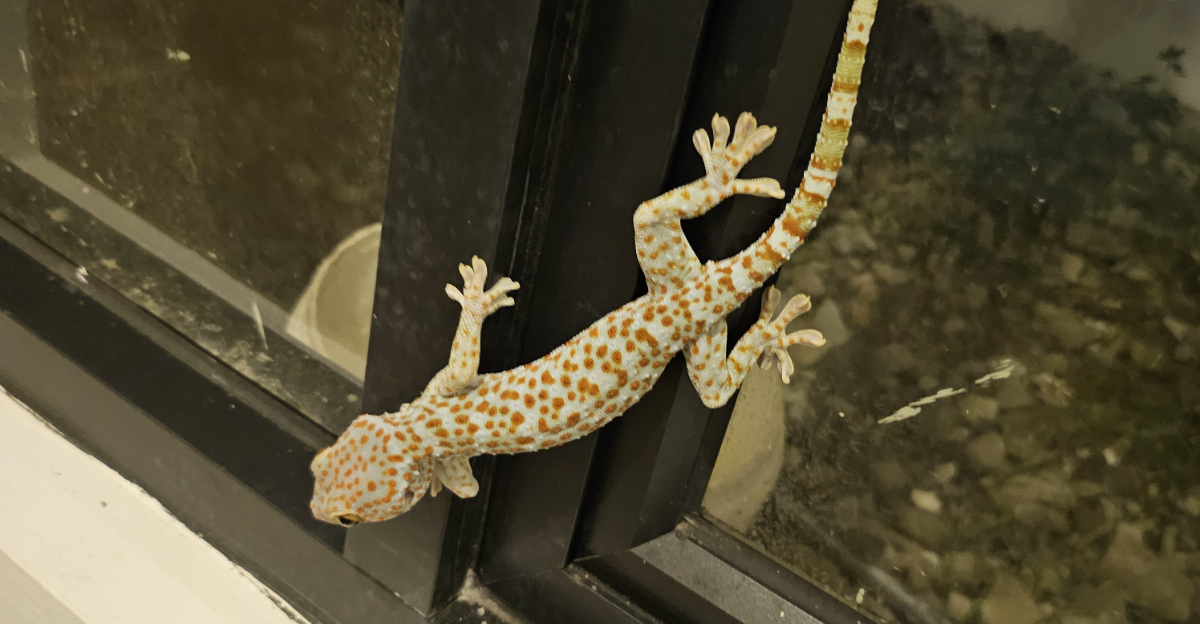
A gecko presses against your window tonight, and there’s a reason it picked that exact spot instead of anywhere else in your yard. Florida homes light up after dark, and that glow pulls in more than just moths.
Something about your window creates the perfect setup for a gecko, and it has almost nothing to do with the gecko wanting to get inside your house. Most people assume one thing when they spot a gecko clinging to glass.
The real explanation flips that assumption completely, and once you see it, you’ll notice this happening on windows all over your neighborhood.
Your window turned into gecko real estate for reasons that have nothing to do with luck.
1. That Gecko May Be Hunting The Bugs Around Your Window
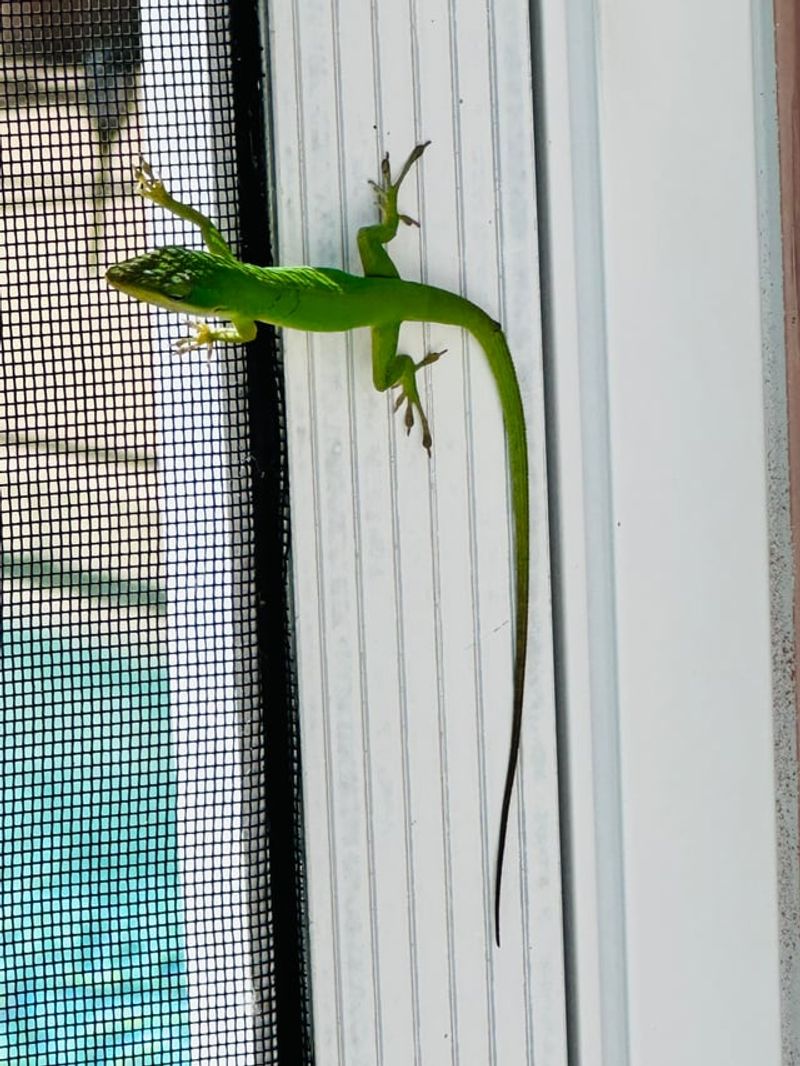
A porch light glowing after sunset does more than light up a doorstep. Artificial light draws moths, gnats, beetles, and other insects toward a bright surface.
A gecko pressing against a window glass is almost always responding to that concentration of prey.
Insects gather near the light source, and the window itself becomes a convenient spot for a gecko to wait and feed. The glass holds warmth from the day, the surface is easy to grip with specialized toe pads, and the insect supply can be steady throughout the evening.
None of that is accidental from the gecko’s perspective.
Researchers studying gecko behavior note that these animals are opportunistic foragers. They move toward available food rather than following a fixed patrol route.
A window with active insects nearby is simply a productive location to occupy for a few hours. Seeing a gecko there does not mean your home has a pest problem.
It means insects are present near your light, which is a normal condition for most residential yards at night.
Understanding this feeding behavior helps put the sighting in perspective. The gecko did not choose your window for mysterious reasons.
A reliable food source was there, the surface was accessible, and the conditions were right. That is the complete explanation in most cases.
2. Check The Species Before Assuming It Is Native
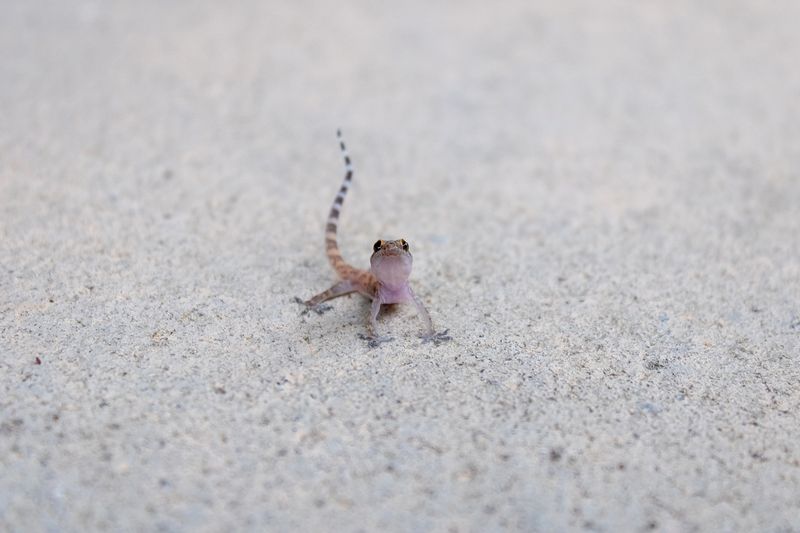
An unfamiliar reptile on a wall can look similar across several different species at a quick glance. Florida has both native gecko species and introduced species that have established populations in parts of the state.
Assuming every small gecko clinging to a window is a local native is a mistake worth avoiding.
The Mediterranean house gecko, known scientifically as Hemidactylus turcicus, is one introduced species that has spread widely across Florida and other warm states. It often shows up on walls and windows near lights after dark.
Spotting one does not mean native species have disappeared from your area, but it does mean the animal you are looking at has a different ecological history than a species that evolved here.
Color, size, and general location are not reliable enough to identify a gecko with confidence. Many species overlap in appearance and range.
Taking a clear photograph and comparing it against resources from the Florida Museum of Natural History or the University of IFAS Extension gives a much more accurate result than guessing.
Your Florida Garden Changes Every Week. Your Plan Should Too.
Gardening in Florida changes quickly throughout the season. Every Friday you’ll receive a simple weekly plan showing exactly what to plant, prune, fertilize, harvest, and protect so you never miss the right timing.
Knowing what species you are observing matters because it shapes how you understand the animal’s relationship to your local environment. Avoid handling or disturbing any gecko you cannot confidently identify.
A photograph is safer, more informative, and completely sufficient for most homeowners.
3. House Geckos Became Common For A Reason
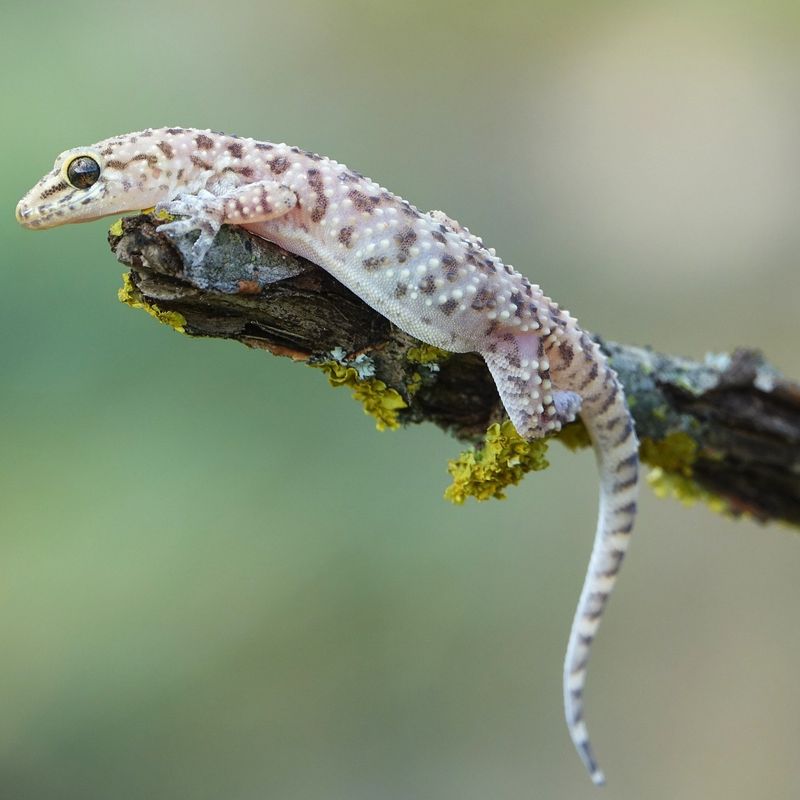
A small pale gecko with large reflective eyes has become a familiar sight on walls and windows across warm regions worldwide. The Mediterranean house gecko arrived in the United States through the pet trade and shipping.
It thrives in warm areas where buildings provide shelter and lights attract insects.
Several traits help this species thrive around human structures. It tolerates a wide range of temperatures, reproduces at a steady rate, and adapts well to surfaces like stucco, tile, and glass.
Buildings essentially mimic rocky outcroppings and cave entrances that these geckos naturally use in their native range around the Mediterranean basin.
Their success near people is not a sign that something is wrong with a yard or neighborhood. It reflects how adaptable this particular species is to human-modified environments.
UF/IFAS notes that introduced house geckos are established in many parts of the state. They are now part of the state’s urban wildlife landscape.
Portraying them as destructive invaders overstates what the evidence actually supports. Equally, calling them a guaranteed solution to insect problems overstates their impact.
They are an established presence in many Florida communities, and understanding why they succeeded helps homeowners make sense of what they are seeing on their walls each evening.
4. Native Geckos Still Have A Role In Florida Yards
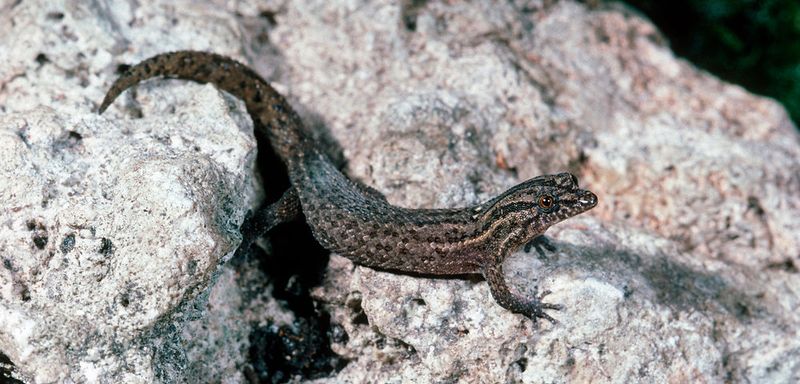
Not every gecko clinging to a surface in a Florida yard is an introduced species. The state has native gecko species that occupy specific habitats and have been part of regional ecosystems long before introduced species arrived.
Recognizing their presence matters for anyone trying to understand the wildlife around their home.
The reef gecko, Sphaerodactylus notatus, is one of Florida’s native species. It is small, secretive, and tends to stay closer to natural ground cover, leaf litter, and vegetation rather than walls and windows.
Spotting one near a home usually means suitable natural habitat is present nearby. That context is useful information for a homeowner.
Native species are not automatically superior to introduced ones in every measurable way, and introduced species are not automatically harmful to every native. The relationships are more complicated than simple good versus bad comparisons.
What matters practically is that knowing which species is present gives a homeowner an accurate picture of their local environment.
Coexistence is the realistic outcome in most Florida residential areas where both native and introduced geckos occupy different niches. A yard with dense native vegetation, leaf litter, and low light pollution at ground level may support native species more readily.
Understanding what each species prefers can help homeowners notice which conditions they have created around their property.
5. Bright Lights Can Create A Gecko Buffet
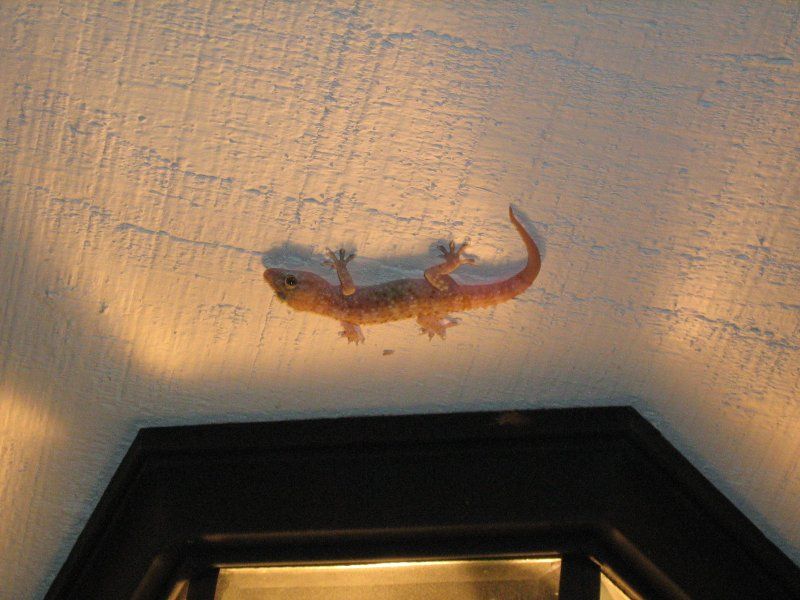
A garden filled with insect activity after dark is often a direct result of bright outdoor lighting. Lights emit wavelengths that many insects navigate toward, pulling them away from the surrounding darkness and concentrating them near the light source.
That concentration creates a reliable feeding zone for any animal quick enough to take advantage of it.
Geckos are well suited to exploit this situation. Their eyes are adapted for low-light conditions, their sticky toe pads keep them anchored to smooth surfaces, and they can remain motionless for long stretches while waiting for prey to come within range.
A brightly lit wall or window with active insects is one of the most productive hunting spots available to them at night.
Switching to warm-spectrum or amber LED bulbs can reduce insect attraction. Many insects respond more strongly to ultraviolet and blue-spectrum light.
This is a practical option for homeowners who prefer fewer insects near their entryways. It also tends to reduce gecko activity near those lights over time.
Turning off every outdoor light is not necessary or practical for most households. Small lighting changes can reduce insect concentration without removing useful outdoor illumination.
Direct lights downward or use motion-activated fixtures. Managing light thoughtfully is more effective than reacting to the wildlife that appears near it.
6. A Window Visitor Does Not Mean An Infestation
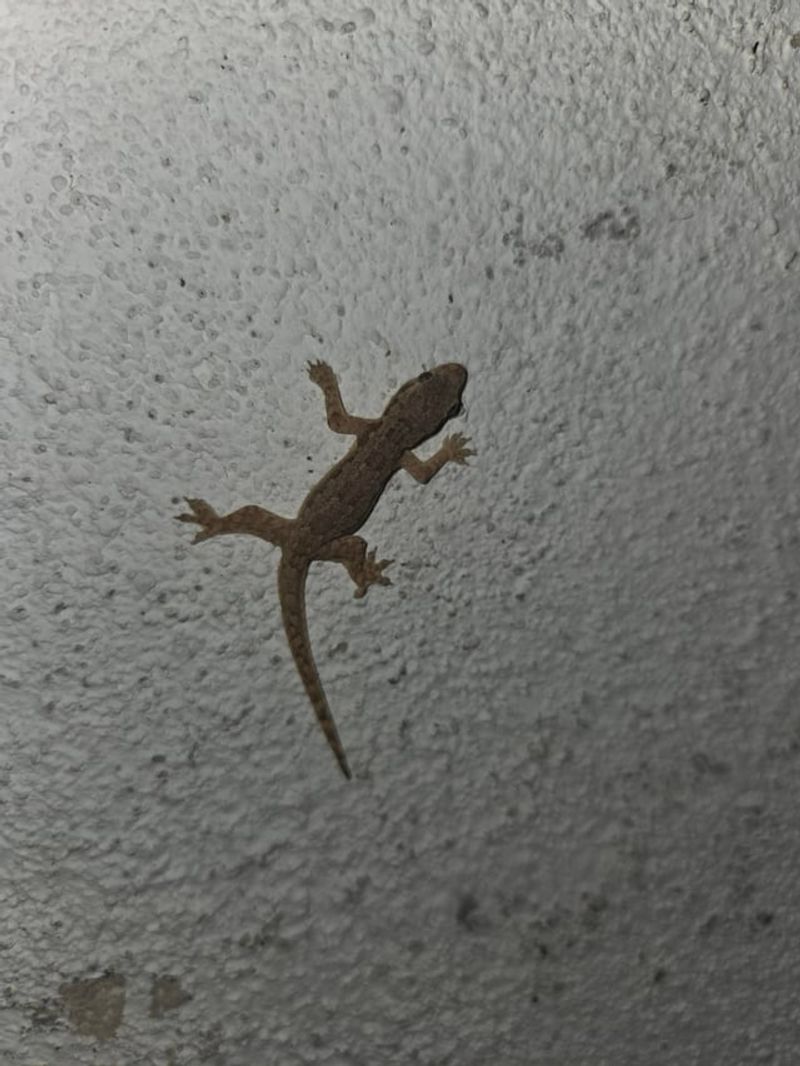
Spotting one gecko on a window on a Tuesday evening is not evidence of a hidden population nesting inside the walls. Wildlife moves through residential areas regularly, and a single sighting usually reflects normal animal activity rather than a structural problem.
Geckos are mobile, and they follow food and warmth as conditions change through the night and across seasons.
The difference between an occasional visitor and a repeated wildlife concern comes down to frequency and pattern. One gecko appearing near a light a few times a week is typical behavior for areas where geckos are present.
Many animals appearing consistently in unusual places, or signs of nesting inside the home, would be a different situation worth investigating more carefully.
Reacting with alarm to a single gecko sighting can lead to unnecessary actions. Sealing gaps, removing vegetation, or trapping wildlife without understanding the situation can cause more disruption than the original sighting.
A calm, observational approach gives much better information.
Watching the window over several evenings tells you more than one sighting ever could. Is the same individual returning?
Are multiple geckos appearing? What insects are present?
Those patterns give a realistic picture of what is happening around the home. Most of the time, the answer is simply that a small reptile found a good spot to eat for the evening.
7. Your Yard Conditions Decide What Wildlife Appears

A closer look at a backyard visitor often reveals more about the yard than about the animal itself. The plants, moisture levels, lighting choices, and clutter present in a residential landscape all influence which species are likely to show up.
Wildlife does not appear randomly. Animals move toward conditions that meet their needs.
Dense vegetation close to a home provides cover for insects, which in turn attracts the animals that feed on them. Areas with standing moisture, whether from irrigation, clogged gutters, or shaded soil, support higher insect populations.
Stacked wood, loose stones, and debris piles create shelter that many small animals use during the day. All of these conditions shape what appears on a window after dark.
Outdoor lighting type and placement also matter. Bright white lights close to entry points pull insects toward doors and windows more intensely than softer, directed lighting does.
Clutter near the foundation of a home gives small animals a protected pathway along the structure. These are yard management factors, not gecko-specific problems.
Adjusting any one of these conditions changes the wildlife activity around a home over time. Reducing dense ground cover near the foundation, improving drainage in shaded areas, and reconsidering lighting placement are all practical steps.
None of them require targeting any specific animal. Changing the habitat changes what finds the habitat attractive.
8. Create A Balanced Florida Habitat Around Your Home
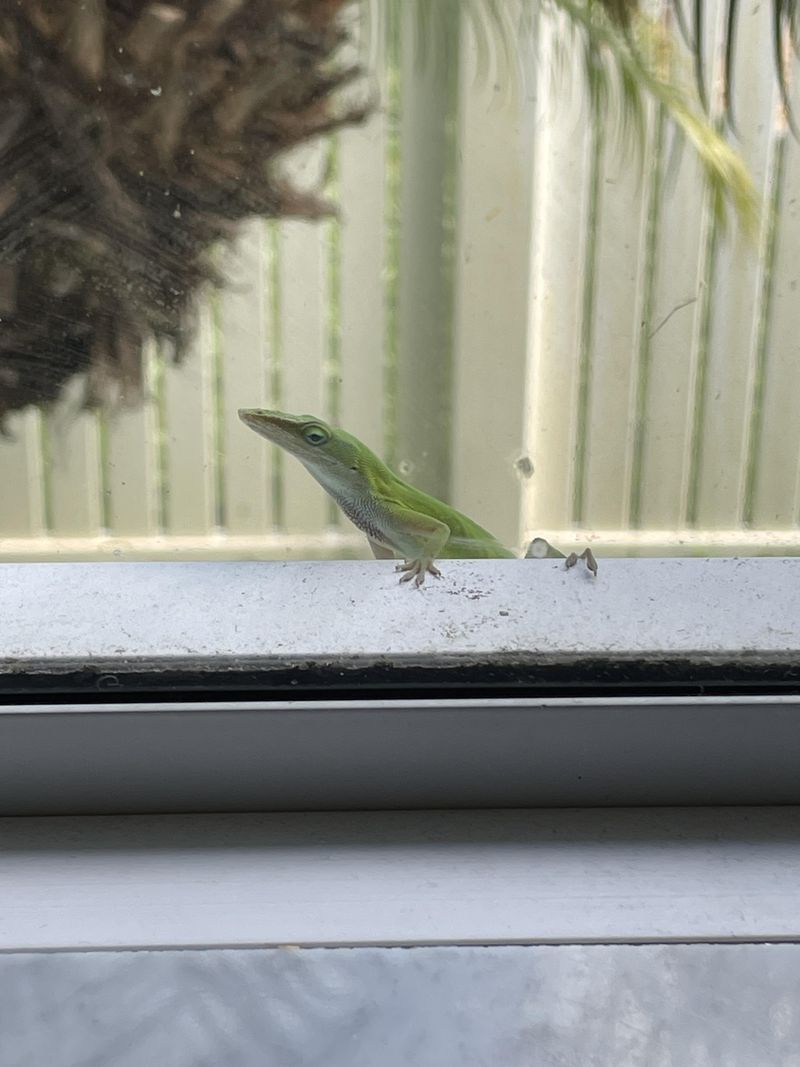
A warm evening around the house offers a chance to notice what the surrounding environment is actually doing. A gecko on a window is a data point, not a crisis.
It reflects the combination of light, insects, warmth, and shelter that the yard is currently providing. Working with that information is more useful than working against it.
Correct identification is the first practical step. Knowing whether the gecko is an introduced species like the Mediterranean house gecko or a native species changes how a homeowner understands the sighting.
Resources from the Florida Museum of Natural History and the University of Florida IFAS Extension are reliable starting points for species identification.
Managing outdoor lighting thoughtfully reduces insect concentration near windows without eliminating useful light. Keeping vegetation trimmed away from the home’s exterior reduces cover for insects and the animals that follow them.
Maintaining gutters and drainage reduces moisture that supports high insect populations near the foundation.
Accepting that some wildlife will always move through a residential yard is part of living in a state with a rich and active natural environment.
A gecko appearing on a window is almost always telling you something true about the conditions you have created around your home.
Responding with curiosity and a little observation produces better results than reacting with alarm. Understanding what you are seeing is always the more useful first move.