The Indiana Lawn Damage That Shows Up Overnight In Late Summer
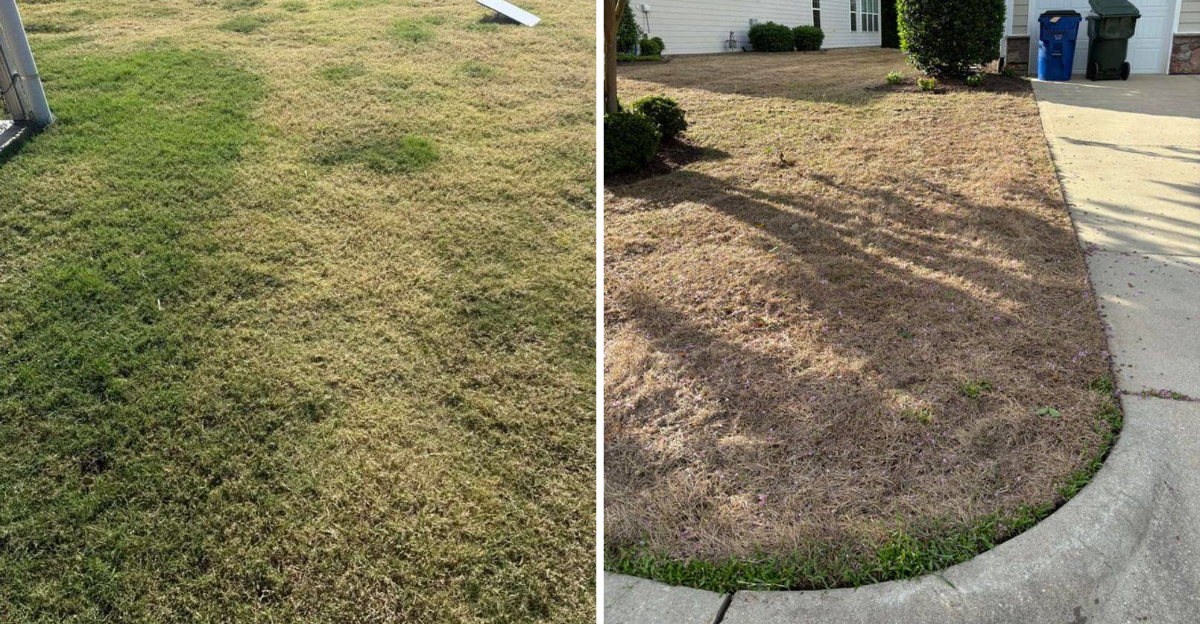
Overnight, your lawn turned into a crime scene while you slept last night. Brown patches spread across your yard by morning, spreading fast.
You blame heat right away, but that assumption costs you weeks of wasted effort. A hidden culprit attacks your grass fast and quiet.
Grass blades in your yard die in clusters, forming patterns weather never creates. Indiana lawns face this exact threat each late summer, right on schedule.
Roots hold a story your eyes cannot read, yet timing matters more than you think. Nothing about this problem waits patiently for you.
Every day without action makes recovery harder, and most homeowners across Indiana rarely expect this speed. Your soil already holds every clue you need. Ignore it another day, and your entire lawn pays the price.
Something Is Actively Feeding On Your Grass Not The Heat
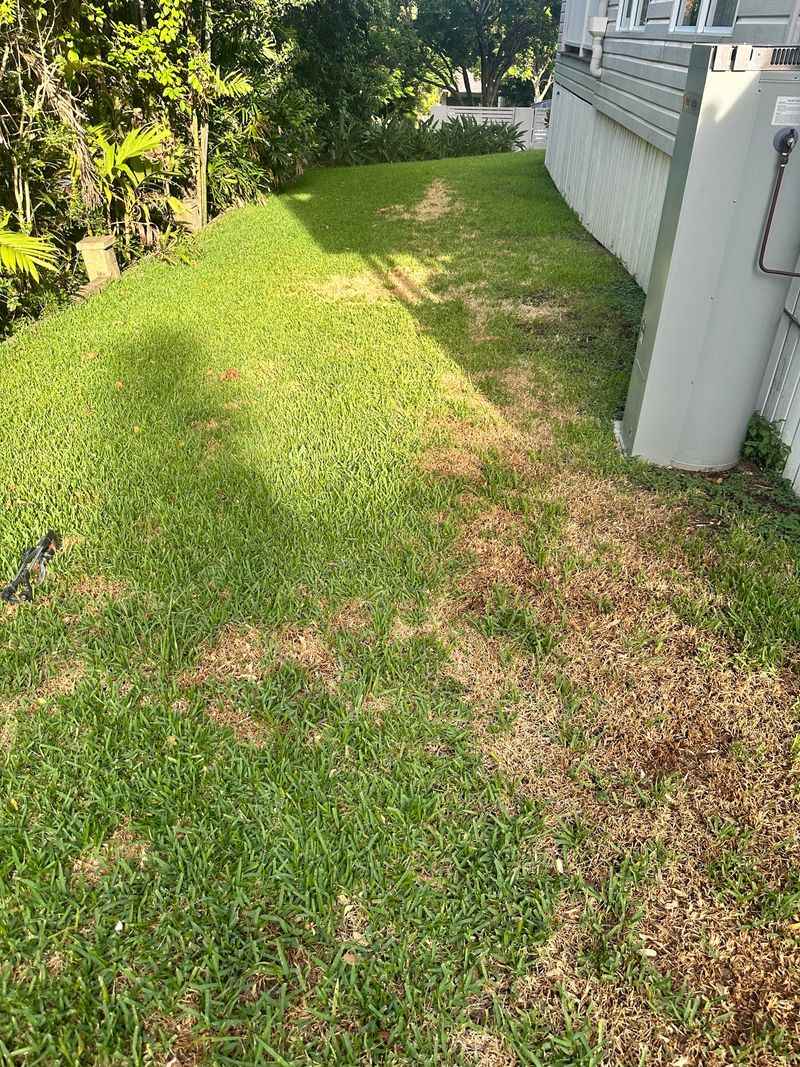
Your lawn does not brown out overnight from heat alone. Something with a mouth is working the night shift out there.
Fall armyworms are the most common culprit behind sudden late summer lawn damage in Indiana. These caterpillars feed in large groups, chewing grass blades right down to the soil level.
They are most active after dark, which is why the damage looks like it appeared from nowhere by morning. You go to bed with a green lawn and wake up to bare, chewed-up soil.
Look closely at the damaged areas during daylight hours. You will likely spot small, striped caterpillars curled up near the soil or hiding under thatch.
A single armyworm does not cause much harm on its own. The problem is they never travel alone, and their numbers can explode within days.
A single female can lay well over a thousand eggs across multiple clusters during her lifetime. Those eggs hatch fast, and the larvae start feeding almost immediately after.
Birds flocking to your yard in unusual numbers are a strong sign. Starlings, robins, and grackles go absolutely wild over a lawn full of caterpillars.
Healthy grass can bounce back if the infestation is caught early. The longer the feeding continues, the harder recovery becomes and the more seed you will need later.
Check your lawn at dusk with a flashlight. If you see dozens of small worms moving through the grass, you have found your overnight destroyer.
Patches That Widen Overnight Instead Of Drying Slowly
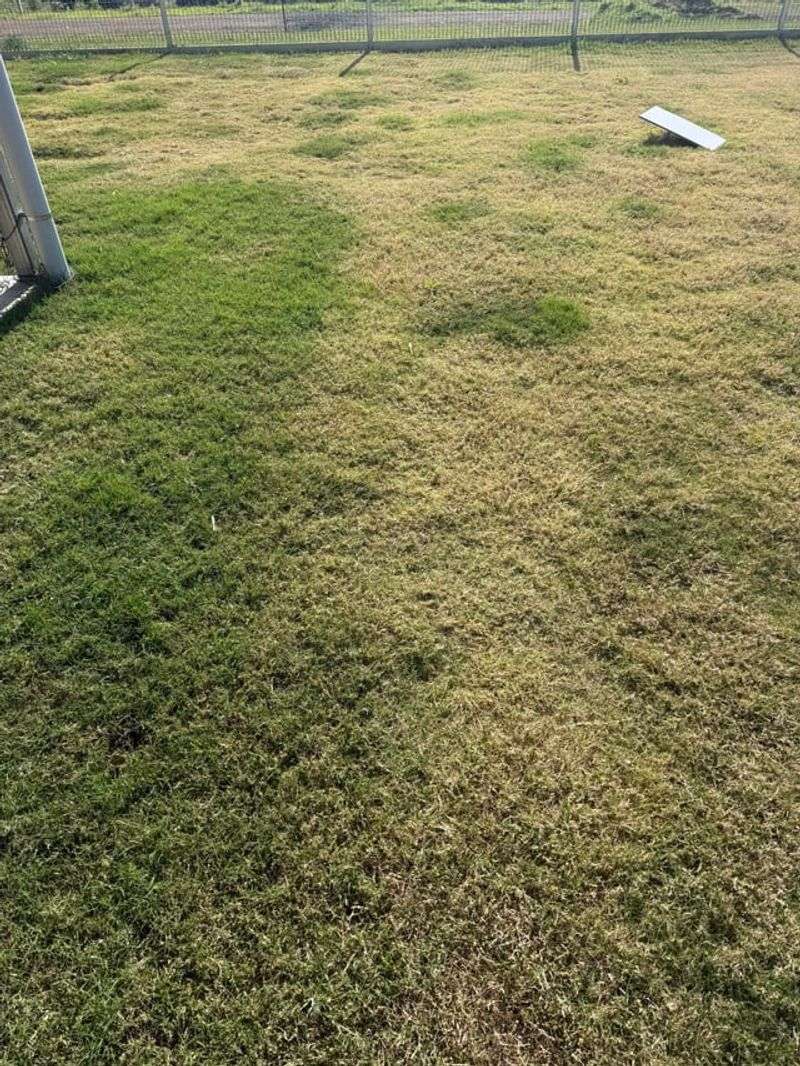
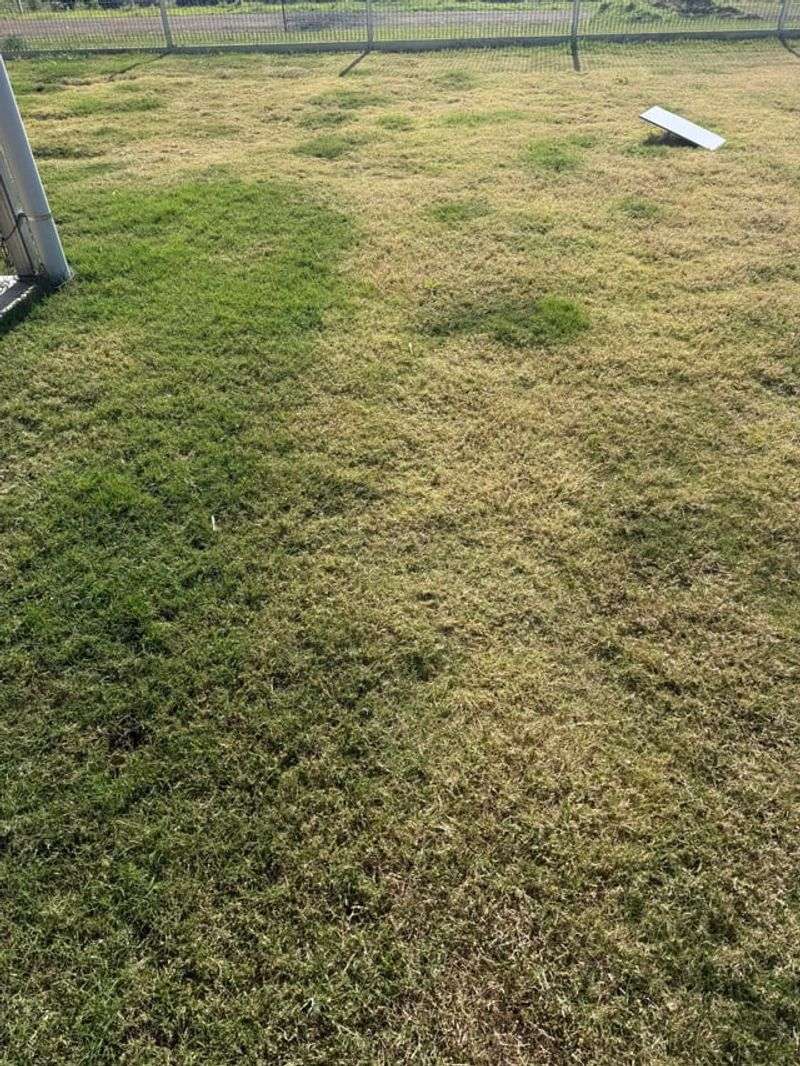
Drought damage spreads slowly and evenly across a lawn. Armyworm damage moves fast and leaves jagged, irregular edges.
That difference in pattern is your first real clue. Heat stress browns a whole section gradually over days or even weeks.
Pest-related damage creates patches that seem to grow between sunset and sunrise. You might notice a patch the size of a welcome mat on Monday and a patch the size of a car by Wednesday.
The edges of armyworm patches often look ragged or chewed. Drought edges tend to fade gradually into the surrounding green grass without a sharp boundary.
Another key sign is the grass texture inside the patch. Drought-stressed grass goes limp and dull but the blades stay mostly intact.
Your Indiana Garden Changes Every Week. Your Plan Should Too.
Gardening in Indiana changes quickly throughout the season. Every Friday you’ll receive a simple weekly plan showing exactly what to plant, prune, fertilize, harvest, and protect so you never miss the right timing.
Armyworm-damaged grass gets clipped right at the crown. The blades are gone, not just wilted, and the soil is often exposed.
Walk the perimeter of the brown area every morning for two or three days. If the patch grows noticeably larger each day, feeding activity is still happening.
Pay attention to the shape as well. Armyworm damage tends to follow a wave pattern across the yard, moving in a consistent direction as the insects march forward.
Catching that spreading pattern early is the key to protecting the rest of your lawn. Once you recognize the movement, you can act before the whole yard is gone.
Ruling Out Drought And Other Look-Alike Causes
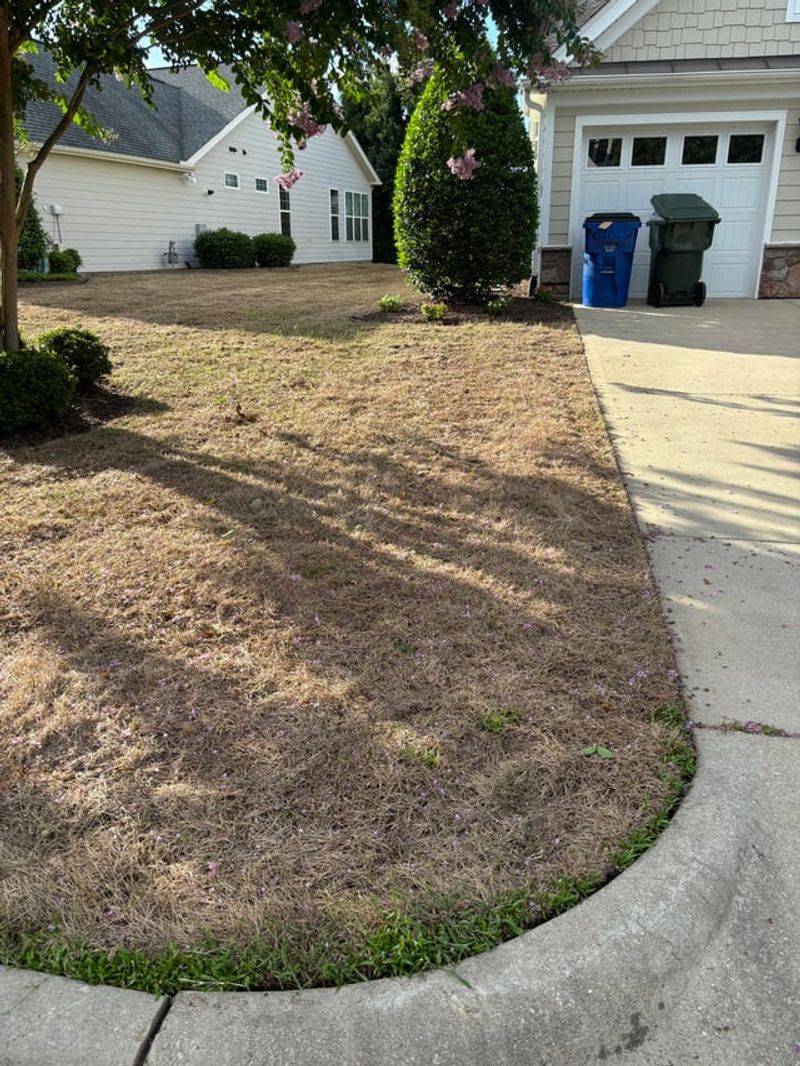
Not every brown patch is an armyworm problem. Ruling out other causes first saves you time and money on the wrong treatment.
Drought stress is the most common look-alike. It creates tan or straw-colored grass that still has its blades attached and pulls up with some resistance.
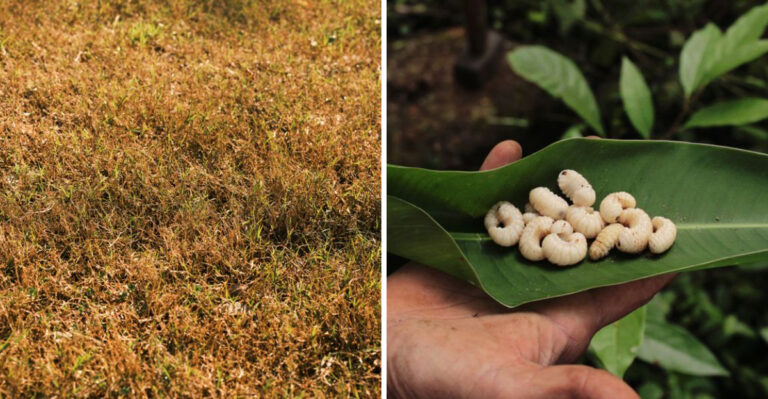
Grab a handful of brown grass and tug gently. If it lifts easily like a loose rug, the roots may be damaged by grubs feeding underground rather than armyworms above.
Grub damage is another late summer issue in Indiana yards. White grubs chew through grass roots, causing patches that roll up like sod because nothing is anchoring them.
Fungal diseases like brown patch or dollar spot create circular or ring-shaped patterns. These patches often have a slightly darker or water-soaked border around the edges.
Dog spots are small, round, and appear consistently in the same areas near fences or pathways. They also tend to have a bright green ring of lush grass surrounding the brown center.
Chinch bugs cause yellowing that starts near sidewalks and driveways where heat reflects. Their damage spreads outward from those hot edges rather than appearing randomly across the lawn.
Armyworm damage tends to appear in large irregular sections with no obvious connection to heat sources or pet activity. The blades are cleanly cut, and the caterpillars themselves are often visible at dusk.
Confirming the correct cause before treating protects your grass and your wallet from unnecessary steps.
The Reason Armyworms Move In Waves Across Indiana Yards
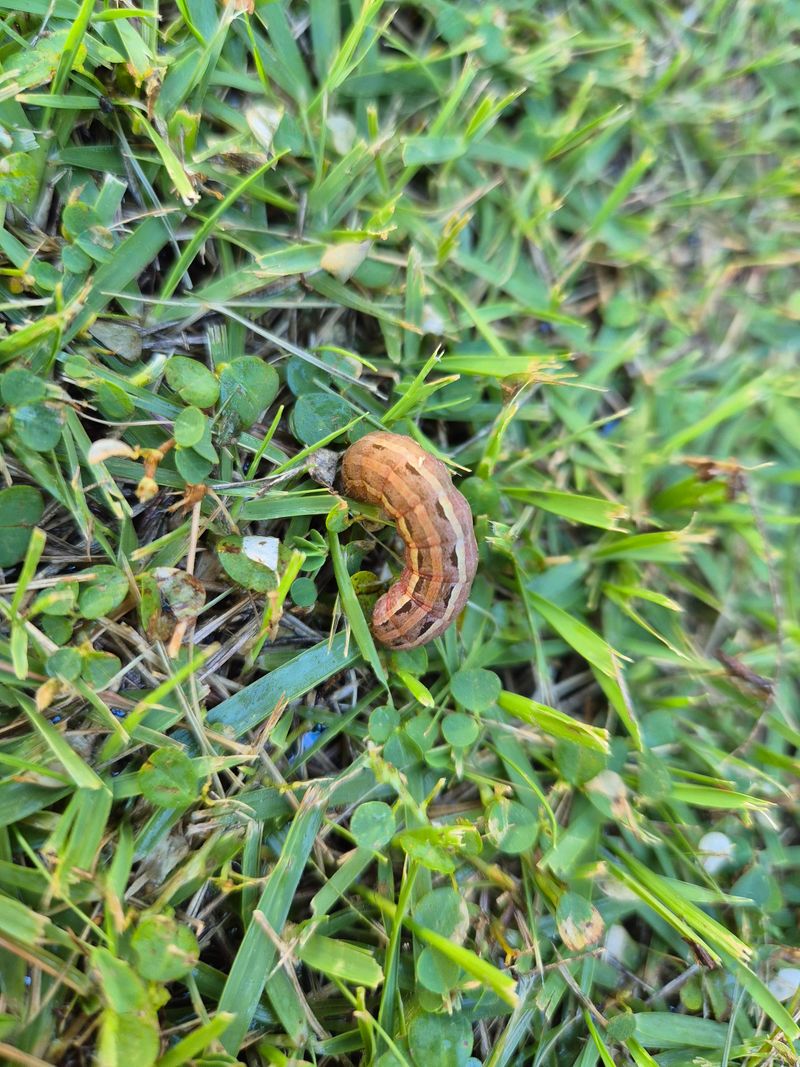
Armyworms got their name for a reason. They march through a yard in formation, stripping grass as they go, then move on to the next feeding zone.
This wave-like behavior is what makes the destruction feel so sudden. One section gets wiped out completely while the adjacent area still looks untouched.
The insects follow each other in dense groups driven by food availability. Once a section of grass is stripped bare, the entire colony shifts forward to find fresh blades.
This movement can cover several feet per night under ideal conditions. Warm nights with moderate humidity push their feeding activity into overdrive.
Late summer in Indiana creates near-perfect armyworm conditions. Temperatures stay warm after dark, moths are actively laying eggs, and new hatches arrive in overlapping waves.
Moth populations peak between July and September across the Midwest. A single storm system can carry adult moths hundreds of miles before they drop into local yards to lay eggs.
That is why neighborhoods often get hit at the same time. The moths arrive together, lay eggs across multiple properties, and the larvae hatch and feed in synchronized waves.
Talking to neighbors about their lawn condition is genuinely useful here. If three houses on your block have the same brown patches, you are dealing with a neighborhood-wide event.
Understanding the wave pattern helps you predict where damage will appear next. Protecting the healthy areas ahead of the wave is smarter than only treating what is already gone.
Steps To Stop The Spread Before It Reaches The Whole Yard
Speed matters more than anything when armyworms are active. Every hour of delay is another few square feet of grass gone.
Start by confirming the infestation with a soap flush test. Mix two tablespoons of dish soap into a gallon of water and pour it over a two-square-foot section of suspect lawn.
Wait about ten minutes and watch what comes up. Active armyworms will surface and writhe within minutes, giving you a clear population count.
Once confirmed, treat the entire lawn, not just the damaged areas. The caterpillars are already moving, and treating only brown spots misses the active feeders in the healthy grass nearby.
Spinosad-based products are effective and lower-risk for pollinators than some synthetic options. Apply in the late afternoon or early evening when the caterpillars are most active and feeding hard.
Bifenthrin and permethrin are fast-acting synthetic choices that work well for heavy infestations. Follow label directions closely and keep pets off treated areas until the product dries.
Water the lawn lightly before applying granular insecticides. Moisture helps the granules break down and reach the soil surface where the caterpillars are feeding.
Mow the lawn to a moderate height before treatment. Shorter grass allows the product to reach the insects more effectively than tall, dense turf.
Retreat the lawn seven to ten days later to catch any newly hatched larvae. One treatment rarely eliminates an entire overlapping wave of armyworms completely.
Reseeding Options Once The Infestation Clears
Armyworms do not destroy the root system the way grubs do. Most Indiana lawns can recover with the right reseeding approach.
Wait until the infestation is fully under control before putting down any seed. Planting while caterpillars are still active just gives them a fresh salad bar.
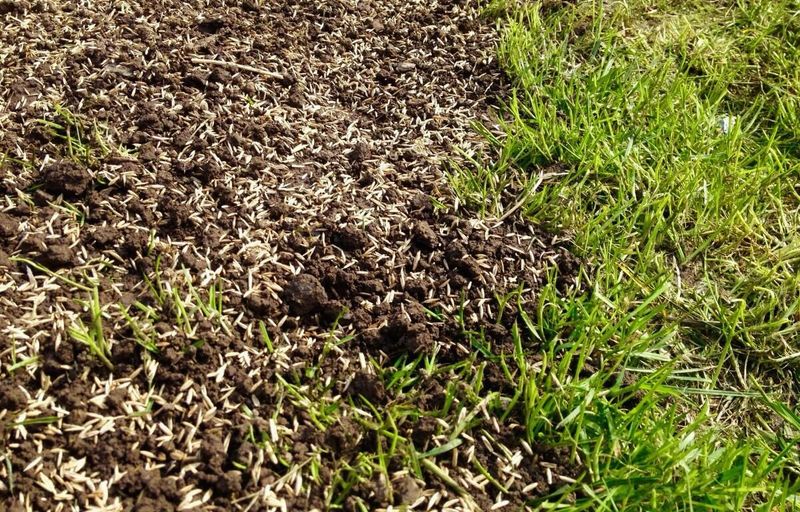
Early fall is actually a great time to reseed cool-season grasses like tall fescue and Kentucky bluegrass. Soil temperatures in September and early October are ideal for fast germination.
Rake out the dry thatch from damaged areas before seeding. Exposed soil gives new seed the best chance of making solid contact and germinating evenly.
Choose a seed blend rated for Indiana’s climate zone and your specific light conditions. Full sun, part shade, and heavy shade areas all need different grass varieties for long-term success.
A starter fertilizer applied at seeding time gives new grass the nutrients it needs to establish quickly. Look for a product with a high phosphorus number in the middle of the three-number ratio on the bag.
Keep the seeded areas consistently moist for the first two to three weeks. Light, frequent watering beats one heavy soak that washes seed into clumps or low spots.
Avoid heavy foot traffic on newly seeded patches until the grass reaches mowing height. New seedlings are fragile and get damaged easily before their roots anchor in.
Recovering from this kind of sudden destruction is absolutely possible with the right seed timing and a little patience through the fall growing season.