What It Means For Missouri Trees When Fire Blight Season Turns Severe
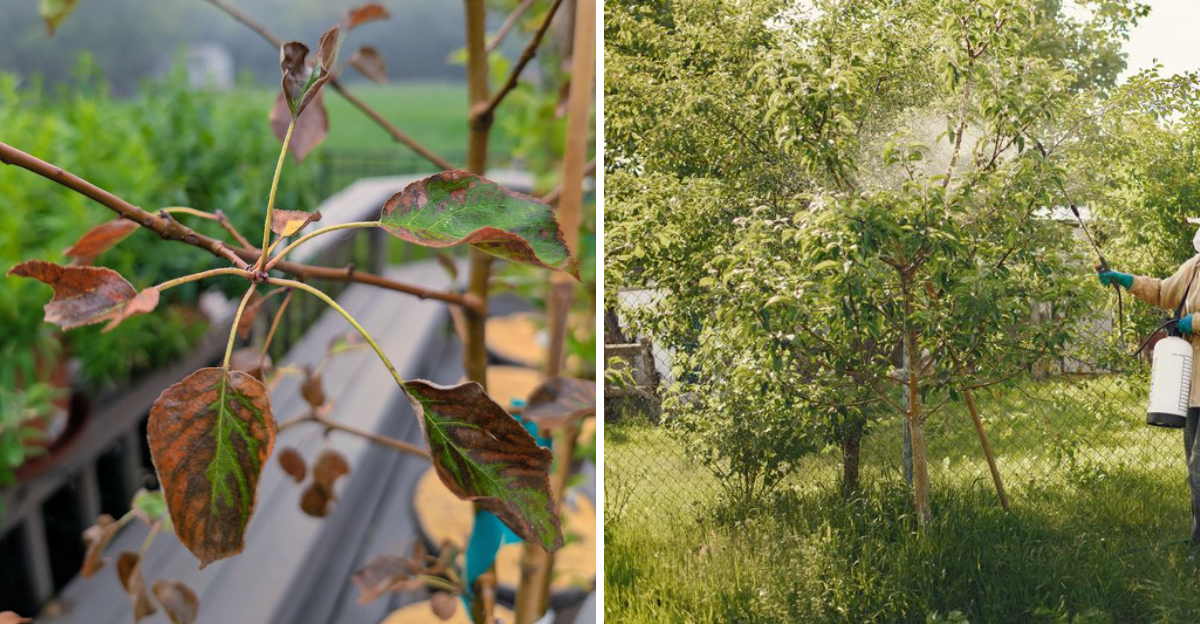
Branches can change faster than you’d expect once fire blight takes hold. Missouri orchards face real risk when conditions turn favorable for this disease.
Growers you’ve relied on for decades feel entirely unprepared right now. Fire blight arrived earlier than you or any grower expected.
Healthy limbs you assumed were safe turn brown overnight. Nobody, including you, predicted bacteria could spread this fast.
Backyard apple trees standing near you face that same risk. Pear trees across Missouri, including yours, show identical symptoms.
Experts search hard for your answers while containment efforts keep stalling. Weather patterns likely pushed this risk toward you sooner.
Blossoms near you darken while bark cracks and weeps. Supply chains you depend on for fresh fruit could weaken.
Trouble spreads quietly near you until entire rows change. Questions you can’t yet answer are piling up fast. You need real answers now, because your local trees could be next without any warning.
What’s Driving The Unexpected Fire Blight Outbreak In Missouri
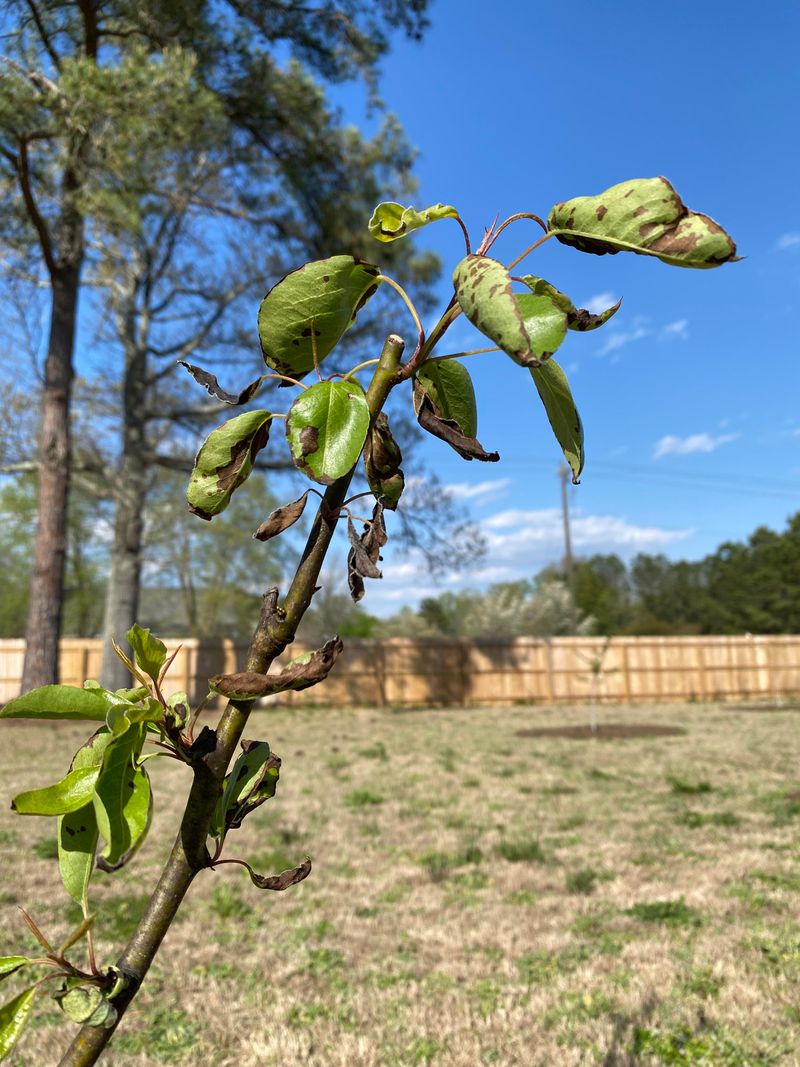
Warm, wet springs create high-risk conditions for orchards. When springs bring warm days and cool nights in quick succession, Missouri orchards face heightened fire blight risk, and weather is often the main driver.
Temperatures swung wildly between warm days and cool nights throughout April. That rollercoaster pattern created favorable conditions for Erwinia amylovora, the bacterium behind fire blight.
Rain carried the bacteria from flower to flower. Pollinators like bees unknowingly spread it even faster across entire blocks of trees.
Orchardists had little time to react before infections took hold. Warm stretches pushed trees into early bloom, which extended the window of vulnerability significantly.
Many growers rely on spray forecasting tools to time their copper or antibiotic applications. Those tools, however, struggled to keep pace with the unpredictable weather patterns this spring.
Local extension agents noted that infection periods came in rapid succession. Growers barely finished one protective spray before another infection window opened right behind it.
Some orchards skipped a spray due to equipment delays or labor shortages. That single missed application left thousands of blossoms unprotected during peak infection periods.
Soil moisture levels stayed high all season, which stressed trees and reduced their natural defenses. A stressed tree fights off bacteria less effectively than a healthy one.
Some agricultural researchers suggest climate shifts may be making these conditions more common across the Midwest. Missouri growers may need to rethink their spray programs to match this evolving reality.
How To Identify Fire Blight Symptoms In Orchard Trees
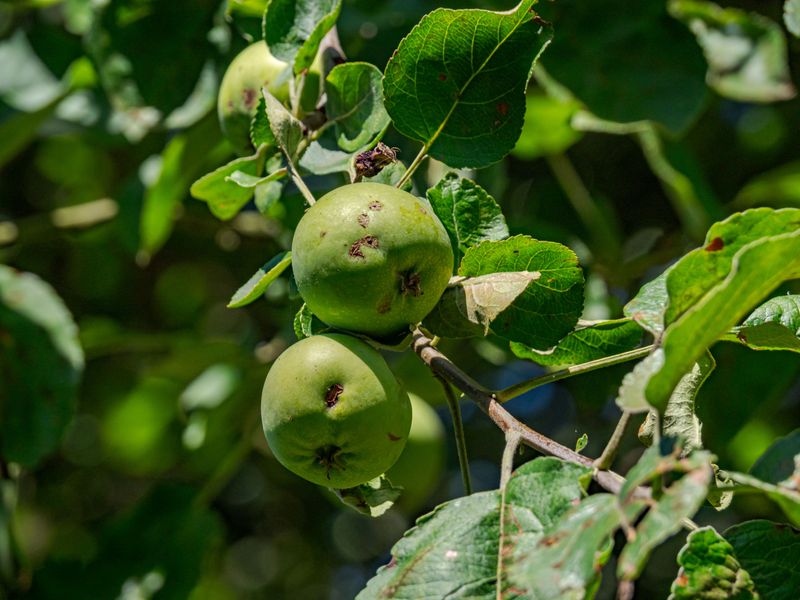
Spotting fire blight early can save an entire orchard. The disease moves fast, so knowing what to look for is critical for any grower.
The most recognizable sign is the “shepherd’s crook.” Infected shoot tips curl downward, turning brown and looking scorched, almost like they were burned.
Blossoms are often the first casualties. They shrivel, turn dark brown, and cling to the branch long after healthy flowers have dropped naturally.
Bark cankers appear as the infection moves deeper into the wood. Those cankers often show a water-soaked margin that darkens as the bacteria spread inward.
Your Missouri Garden Changes Every Week. Your Plan Should Too.
Gardening in Missouri changes quickly throughout the season. Every Friday you’ll receive a simple weekly plan showing exactly what to plant, prune, fertilize, harvest, and protect so you never miss the right timing.
In humid conditions, you might notice a sticky amber liquid oozing from infected tissue. That ooze carries bacteria and can spread the disease to nearby healthy wood quickly.
Leaves on infected branches turn brown but stay attached. That “lifeless but clinging” look is a telltale sign that separates fire blight from other diseases.
Young shoots are especially vulnerable because their tissue grows so fast. Bacteria can travel from the tip to the main scaffold branch within just a few weeks.
Fruit can also show symptoms. Infected pears or apples develop dark, sunken spots and may ooze the same bacterial liquid seen on branches.
If you see any of these signs, act quickly. Pruning out infected wood at least 12 inches below visible symptoms is the first and most important response step.
Which Fruit Trees Are Most At Risk This Season
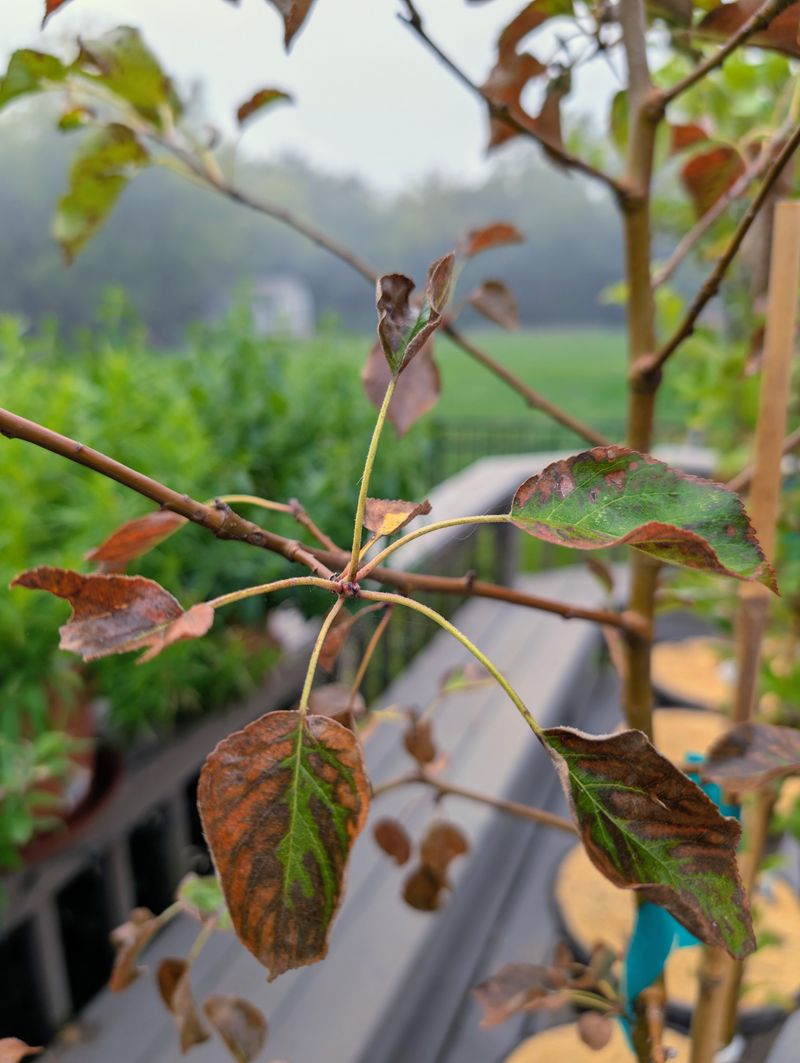
Not every tree in the orchard is equally vulnerable. Knowing which species and varieties attract fire blight most aggressively helps growers prioritize their protection efforts.
Apples and pears top the list every season. Both belong to the rose family, and Erwinia amylovora thrives on their blossoms and tender new growth.
Among apple varieties, Gala, Fuji, and Jonathan are notoriously susceptible. Growers who planted these popular commercial varieties face the biggest losses in a heavy outbreak year.
Bartlett pears are especially attractive to the bacteria. Many Missouri orchardists have shifted away from Bartlett in favor of more resistant options like Harrow Sweet or Moonglow.
Crabapple trees, often used as pollinators in commercial blocks, can become serious infection sources. A heavily infected crabapple spreads bacteria to every tree within bee-flying distance.
Quinces also show high susceptibility and are frequently overlooked in spray programs. Growers who grow quince as a specialty crop need to treat them with the same urgency as pears.
Hawthorns growing near orchard borders are another overlooked source of infection. Wild hawthorns harbor the bacteria and act as a reservoir that reinfects managed trees season after season.
Resistant apple varieties like Enterprise, Liberty, and Goldrush offer real hope. Planting even a portion of an orchard with resistant stock significantly lowers the risk of a severe outbreak.
Choosing the right variety is the first line of defense. No spray program fully compensates for planting a highly susceptible tree in a high-risk environment.
Steps Orchardists Are Taking To Control The Spread
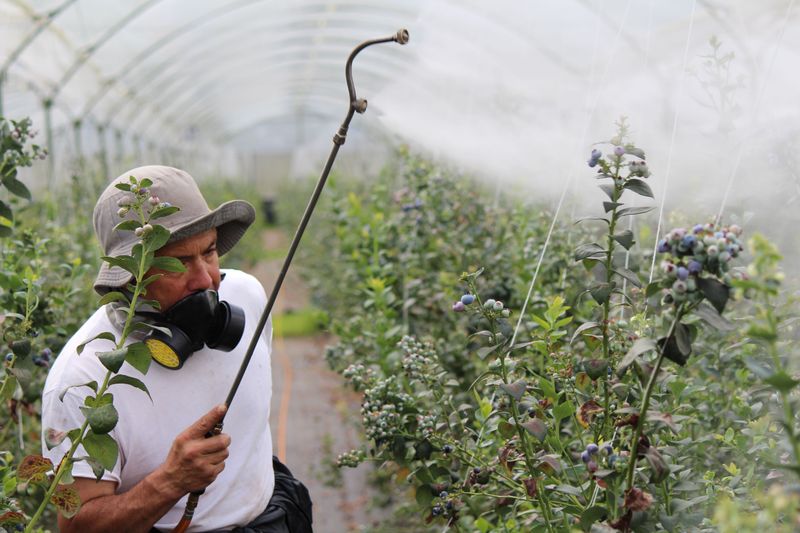
Growers across the state are not standing still. The moment fire blight appeared, orchardists began taking prompt steps to slow its spread through their trees.
Pruning is the first and most urgent tool. Infected branches get removed at least 12 inches below visible symptoms, cutting into clean white wood.
After every cut, pruning tools get dipped in a bleach solution or rubbing alcohol. Skipping tool sanitation allows the pruner to transfer bacteria from tree to tree.
Copper-based sprays applied before bloom help reduce the bacterial population on bark surfaces. Many growers add extra copper applications when infection pressure is flagged early.
Some orchardists turned to streptomycin, an antibiotic approved for fire blight control. Timing is everything with streptomycin, as it must be applied during open bloom before infection takes hold.
Biological controls like Blossom Protect, which uses a competitive yeast, are gaining traction. These products occupy flower surfaces and physically block bacteria from establishing a foothold.
Infected prunings are never left on the orchard floor. Growers burn or bury removed wood immediately to remove the bacterial source from the environment entirely.
Some operations brought in extra labor specifically to monitor trees daily during peak infection windows. Catching a new canker early is far cheaper than losing an entire scaffold limb later.
Communication between neighboring orchards also tends to increase during high-risk periods. Growers sharing spray timing data and infection reports helps everyone in the region respond faster and smarter.
Long-Term Prevention Strategies For Future Seasons
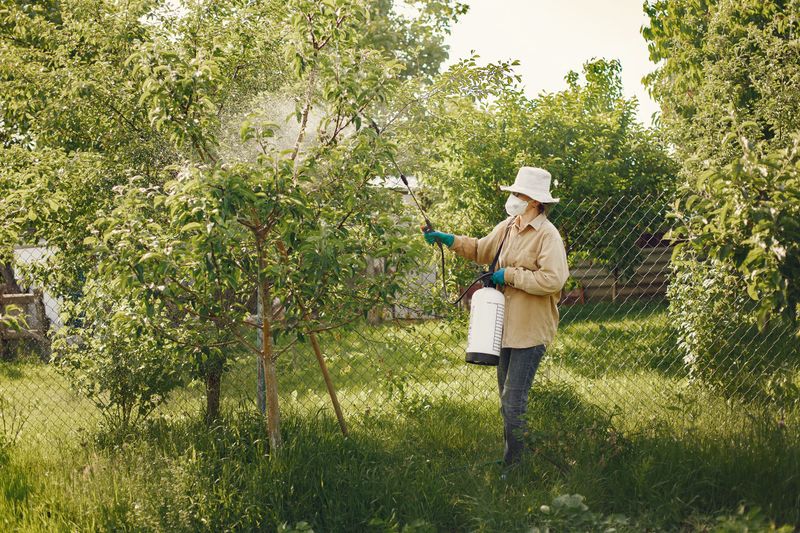
One difficult season often prompts growers to plan ahead. After watching fire blight spread through orchards, many Missouri growers are already planning long-term changes.
Variety selection is the single most impactful long-term decision an orchardist can make. Replanting susceptible blocks with resistant cultivars reduces risk without relying entirely on chemical inputs.
Rootstock choice also plays a role. Some dwarfing rootstocks, like M.9, may increase susceptibility compared to more vigorous options, though the relationship is still debated among researchers.
Balanced fertilization is another key factor. Excessive nitrogen pushes lush, fast-growing shoots that bacteria are drawn to, so growers are pulling back on nitrogen applications.
Pruning practices that open the canopy improve airflow and reduce the humid microclimate where bacteria thrive. A well-pruned tree dries faster after rain and resists infection more effectively.
Forecasting tools like Maryblyt and Cougar Blight help growers predict infection windows with real accuracy. Investing time in learning these tools pays off far more than reactive spraying ever will.
Cover crops and soil health programs strengthen tree root systems over time. Healthier roots produce trees better equipped to compartmentalize and limit the spread of bacterial infections naturally.
Training younger orchard workers to recognize early symptoms is a long-term investment that pays dividends. Experienced eyes on the ground catch problems before they escalate into orchard-wide losses.
Missouri orchards that get through a high-pressure year have a real opportunity to rebuild smarter. The lessons learned now could shape a more resilient fruit industry for the next generation of growers.
What This Outbreak Means For Missouri’s Fruit Industry
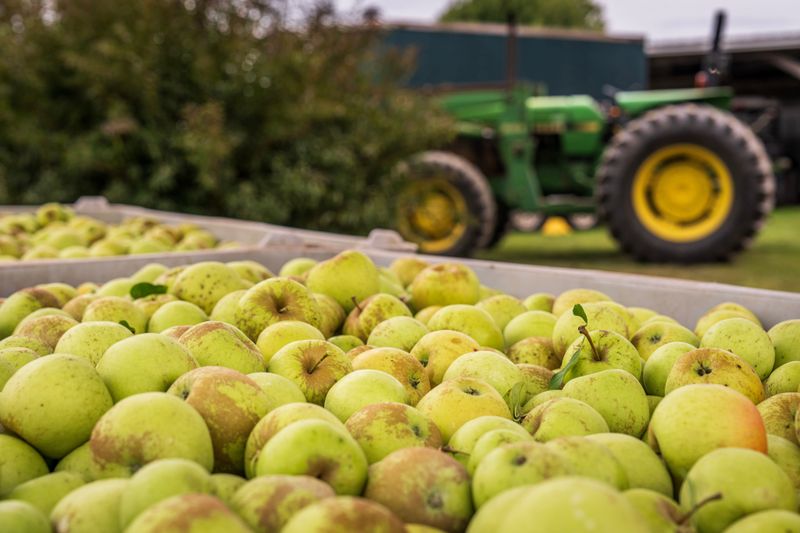
The impact extends beyond visible tree damage. Missouri orchards facing this fire blight outbreak are dealing with real financial and market consequences that spread through the industry.
Lost shoots and branches mean reduced fruit production for the current year. But the deeper loss comes from damaged scaffold limbs that take years to regrow and return to full yield.
Smaller harvests mean less fruit for local markets, farm stands, and pick-your-own operations. Consumers who depend on local sources for fresh apples and pears will feel the shortage at the checkout.
Processing facilities that buy Missouri-grown fruit also face tighter supplies. Cider makers, jam producers, and dried fruit operations all compete for a smaller pool of available product this fall.
In a severe year, fire blight can meaningfully cut into orchard income, sometimes forcing smaller operations to absorb steep losses. Some smaller operations may not recover without financial assistance.
Severe fire blight years often renew conversations about crop insurance and disaster relief programs. Many small orchardists lack adequate coverage and absorb losses entirely on their own.
Consumer awareness is growing, which creates an opportunity. Buyers who understand what growers are facing often respond with increased loyalty and willingness to pay fair prices for surviving crops.
Industry groups are pushing for expanded research funding to develop better resistant rootstocks and faster-acting biological controls. Sustained pressure from severe outbreak years may help move that funding forward.
Missouri’s fruit industry is resilient, but resilience requires resources and time. Supporting local orchards now is the most direct way to ensure they are still standing next season.