Empty Silk Shrouds Linger On Minnesota Branches And The Culprits Slipped Away Without A Trace
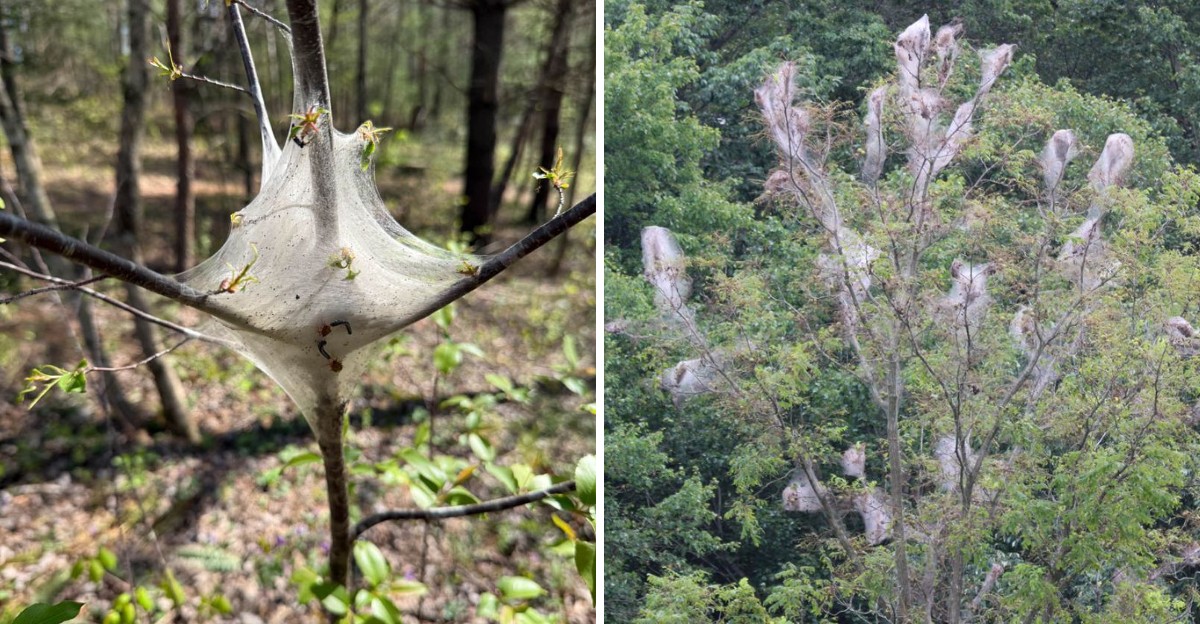
Something pale and tattered now hangs across branches near your home. Torn silk clings to the tips of limbs across your backyard trees.
Minnesota trees are quietly holding onto this strange webbing long after the leaves have started to fall.
The caterpillars that made it are already gone. Most homeowners notice the webs only once the branches turn bare and the silk stands out. Curiosity rises fast, but the facts rise faster.
These insects follow patterns you may have never learned. Understanding them changes how you respond to what you see. Neighbors debate whether you should cut it down, clean it up, or calmly leave it.
Timing matters more than most people realize. Late Minnesota autumns reveal what the summer season left behind.
Your instincts might be slightly off, and that truly matters. Answers exist, sharp and specific, waiting just for you. You need every detail before you make your next move.
What Fall Webworms Are And Why Their Webs Remain Now
Spotting those tattered tents in your trees is not as alarming as it looks. Fall webworms are the larvae of a small moth called Hyphantria cunea.
Through late summer and early fall, they spun protective webs around leaf clusters so they could feed safely inside.
That feeding season has ended. These caterpillars finished growing as the weather cooled, and the nests you see now are empty.
Adult moths laid their eggs on leaf undersides earlier in the year. Once the eggs hatched, tiny caterpillars immediately started spinning silk and pulling leaves into their nest. The web grew larger as the group ate through more foliage.
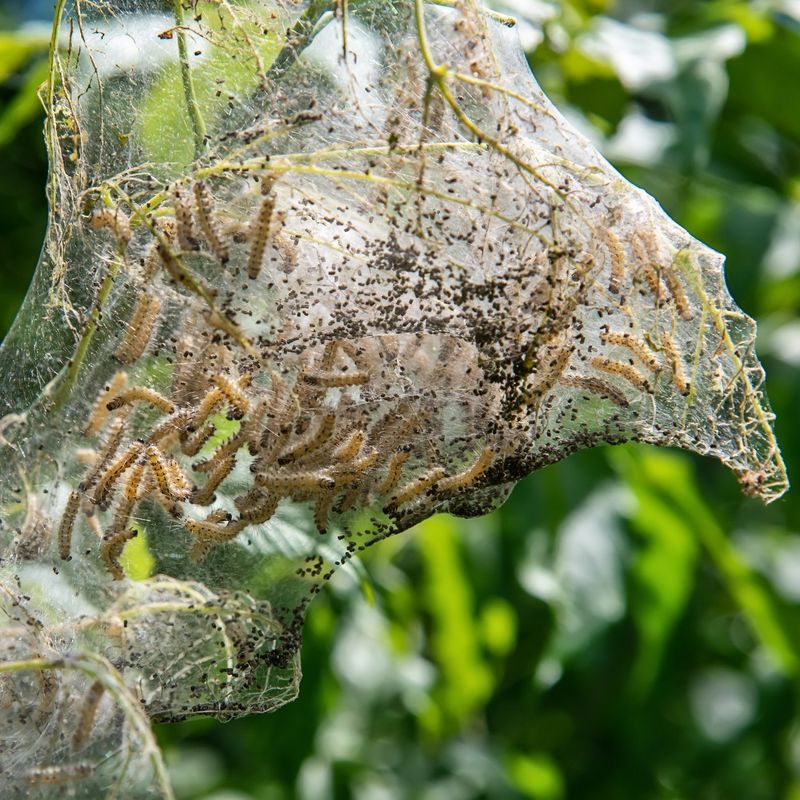
A single nest can hold dozens, sometimes hundreds, of caterpillars working together. Inside, they were protected from predators. The silk acted like a greenhouse, keeping conditions warm and humid.
When they finished feeding, the caterpillars left the web, dropped to the ground, and burrowed into leaf litter and soil to pupate. They now spend winter there in cocoons. Next year, adult moths will emerge and the whole process will start again.
Fall webworms are native insects, not invasive pests. They have been part of North American ecosystems for thousands of years.
Seeing their old nests in your yard means the natural world is simply doing what it has always done.
How To Identify Old Fall Webworm Nests In Your Trees
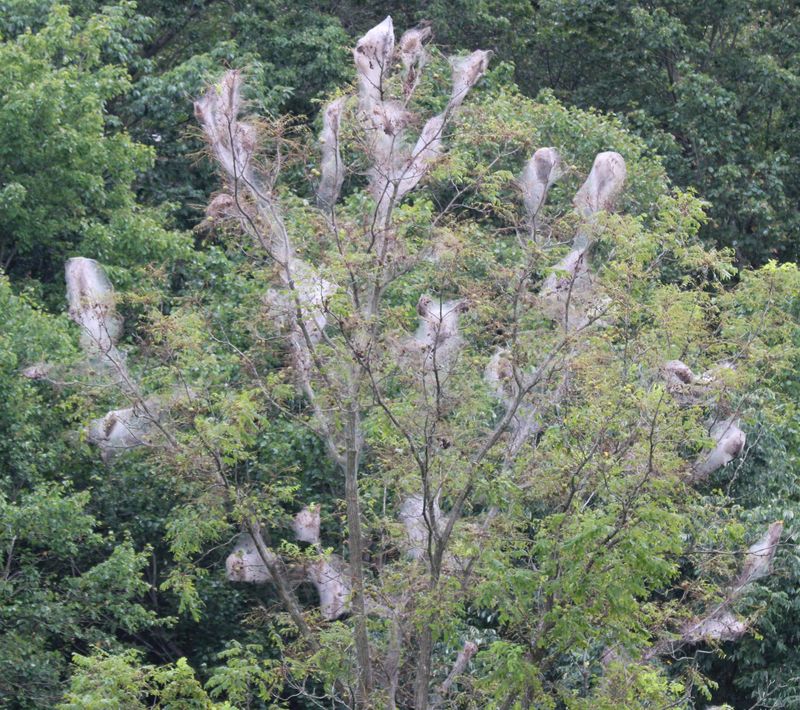
Not every web in a tree belongs to fall webworms. Knowing what to look for saves you a lot of guesswork.
The nests have a few very specific features that set them apart from other insects. Fall webworm nests form at the tips of branches. That outer location is their biggest giveaway.
Eastern tent caterpillars, by contrast, build their nests in the crotch or fork of branches in spring.
The webs look loose, messy, and gray or off-white, and by November they are often torn and weathered. They are not tight or organized like a spider web. Inside, you can usually spot dark droppings mixed in with dried leaves and shed skins.
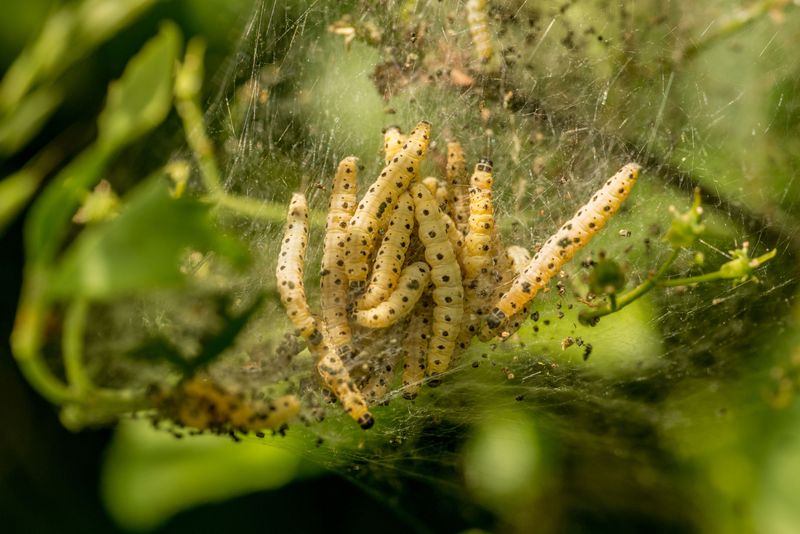
The caterpillars themselves were pale yellow or greenish with rows of black dots along their backs. Long, wispy hairs covered their bodies, giving them a fuzzy appearance. You will not see them now, because they have left the nest.
At the peak of the season, nests grew bigger and more noticeable. One colony could enclose an entire branch tip.
You may also notice leaf skeletonization inside the web. The caterpillars ate the soft leaf tissue but left behind the tougher veins.
That thin, lacy leaf pattern inside the silk is another strong identifier. Spotting these signs helps you make a faster, smarter decision about whether to tidy up or simply leave the nests alone.
Which Minnesota Trees Are Most Vulnerable To Webworms
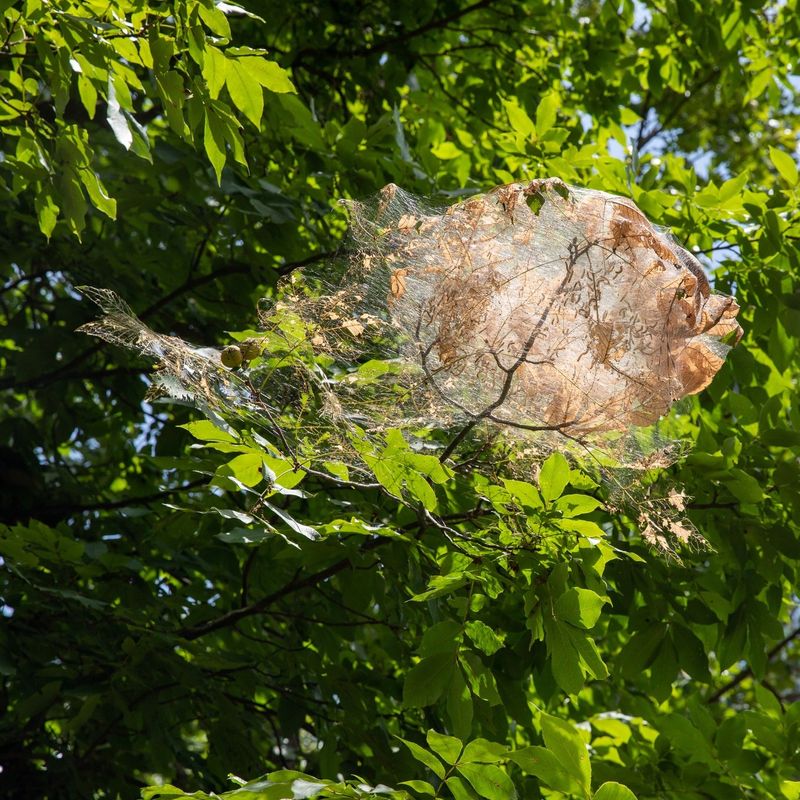
Fall webworms are not picky eaters, but they do have favorites. Dozens of tree species, with some estimates exceeding 100, can host them. In Minnesota, a handful of trees get hit far more often than others.
Wild cherry is among the most commonly targeted trees in the state. Walnut, both black and butternut varieties, also attracts heavy webworm activity.
If you have either of these in your yard, old nests on their branches are a sign to watch them closely next August.
Crabapple trees are another common target, especially in suburban neighborhoods. Apple trees, ash trees, and elm varieties also show up regularly on the webworm menu. Basically, if it has broad, soft leaves, it is fair game.
Interestingly, conifers are almost never affected. Pines, spruces, and firs are not on the webworm radar at all. So your evergreen trees should be free of webs.
Trees along forest edges and roadsides tend to see more activity than those deep in shaded woodland areas.
Open-grown trees with lots of sun exposure attract more egg-laying moths. Yards with mixed plantings can end up hosting multiple nests at once.
Younger trees with thinner bark and more tender foliage can struggle more than mature specimens. A sapling that dealt with heavy webworm feeding may show more visible stress.
Established trees typically bounce back without much trouble at all. Knowing which species you have helps you predict whether webs will show up on your property again next fall.
Did Fall Webworms Actually Harm Your Healthy Trees
This is the central question most homeowners have. You see those webs, you remember the chewed leaves, and you wonder if your tree is in serious trouble. The honest answer might surprise you.
For most healthy, established trees, fall webworms cause only cosmetic damage. The caterpillars fed on leaves in late summer, right when the tree was already preparing to drop them for winter.
The timing actually worked in the tree’s favor. Because feeding happened so late in the season, the tree had already done most of its photosynthesis work for the year.
Losing a few branch tips worth of leaves at that point does not seriously reduce stored energy.
The tree heads into winter just fine. Young trees are a slightly different story. Repeated infestations over several consecutive years can stress a sapling.
A tree that loses significant leaf cover repeatedly may grow more slowly than expected. Checking young plantings each season is a smart habit.
Trees already dealing with drought stress, root damage, or disease are more vulnerable to any added pressure. Webworm feeding can compound existing stress. Healthy soil and good watering practices keep trees resilient against seasonal insects.
According to extension entomologists, fall webworms rarely cause lasting structural harm to mature trees. The damage looks dramatic from the sidewalk.
Up close, it is usually limited to a small percentage of total leaf area. Your tree is almost certainly going to be just fine come spring.
Effective Ways To Remove Old Webworm Nests
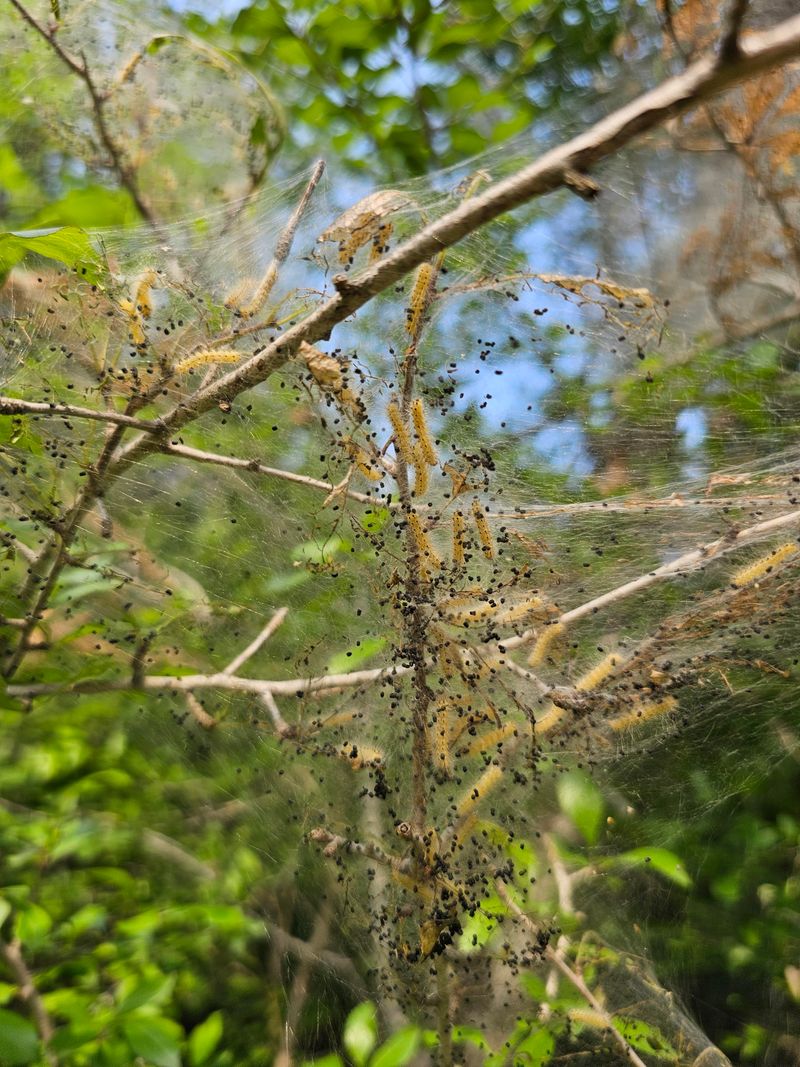
Sometimes you just want those webs gone, and that is a completely reasonable choice. Removal is straightforward now that the caterpillars have left. No special equipment or chemicals are required.
The simplest method is physical removal. Use a long stick, a broom handle, or a pruning pole to pull the old nest down. With the leaves gone, nests are easy to see and reach, and nothing inside will harm you.
Pruning is another solid option if the nest sits on a small branch tip. Clip the affected branch just below the nest and toss the whole thing with your yard waste. Bag the nest and toss it with your yard waste.
Avoid burning nests while they are still on the tree. Open flames near dry branches create a serious fire hazard. This method poses more risk to property than the old nests ever did.
Spraying is not needed at this point. The caterpillars have already left the webs, so there is nothing left in them to treat.
Removing the nests does not stop next year’s moths, because the pupae are in the soil and leaf litter rather than in the webs. Removal is purely for appearance.
Why You Can Leave Old Webworm Nests Alone And Let Nature Work
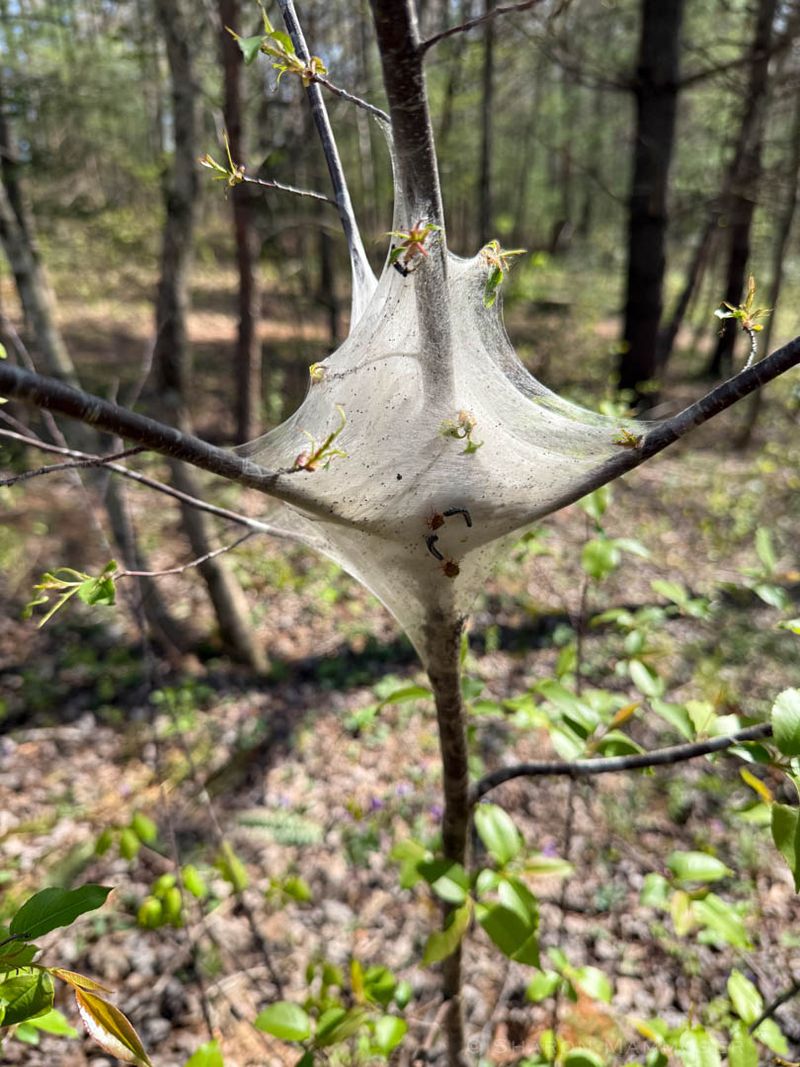
In many cases, taking no action is the most effective response. Nature has built an impressive system for keeping fall webworm populations in check. Stepping back lets that system do its job.
Old nests do no harm to a dormant tree. They weather away on their own through winter snow, wind, and rain.
Parasitic wasps and flies target fall webworms aggressively. These tiny insects lay their eggs directly inside caterpillars and pupae.
The developing larvae consume the host from the inside, naturally reducing next season’s population.
Ground beetles patrol the soil and leaf litter below infested trees. They prey on pupae overwintering in the ground. This ground-level predation adds another layer of natural control.
Birds and small mammals also forage through leaf litter in colder months. A yard with diverse plantings and some natural leaf cover attracts more of these helpful hunters.
Leaving old nests on large, healthy trees causes no meaningful damage. The ecological trade-off genuinely favors patience in most cases.
Raking away every scrap of leaf litter can actually reduce the bird and insect activity your yard depends on.
If a nest is high up and out of reach, that is also a perfectly good reason to leave it alone. Struggling with a ladder to reach a high branch creates safety risks that outweigh any benefit.
Let the weather handle it. Fall webworm season in Minnesota is a reminder that your yard is part of a living ecosystem, and often the most effective response is no response at all.