The Florida Mahogany Planting Mistake That Shows Up 10 Years Later
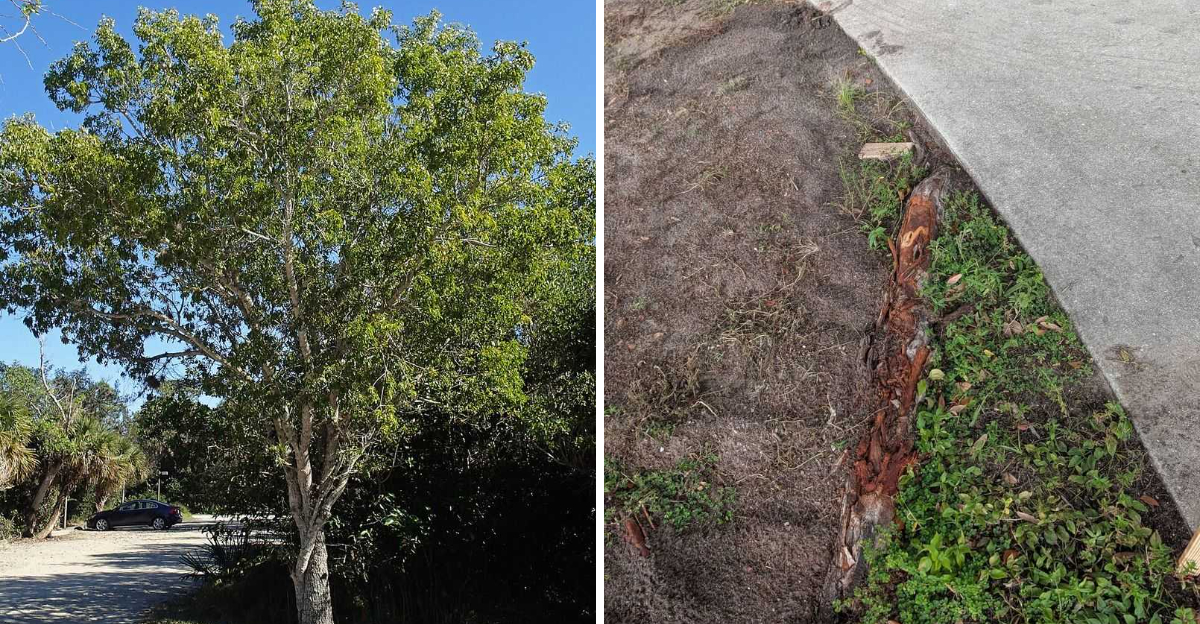
A Florida mahogany you plant today won’t reveal its biggest mistake for another decade. Young trees tolerate almost anything: bad spacing, shallow holes, roots circling the container instead of spreading out.
None of it shows up right away. The tree grows, fills in, looks completely healthy for years, right up until the exact problem planted a decade ago finally catches up with it.
By then, options run thin. A trunk that leans from poor root structure or a canopy that outgrows its space near a structure isn’t something you fix with a quick prune.
Some of these mistakes mean removing a mature tree that took ten years to grow. One planting decision made today decides how this tree behaves at year ten, not year one.
Get it right now, while the fix still costs nothing but attention.
1. That Small Mahogany Will Not Stay Small For Long
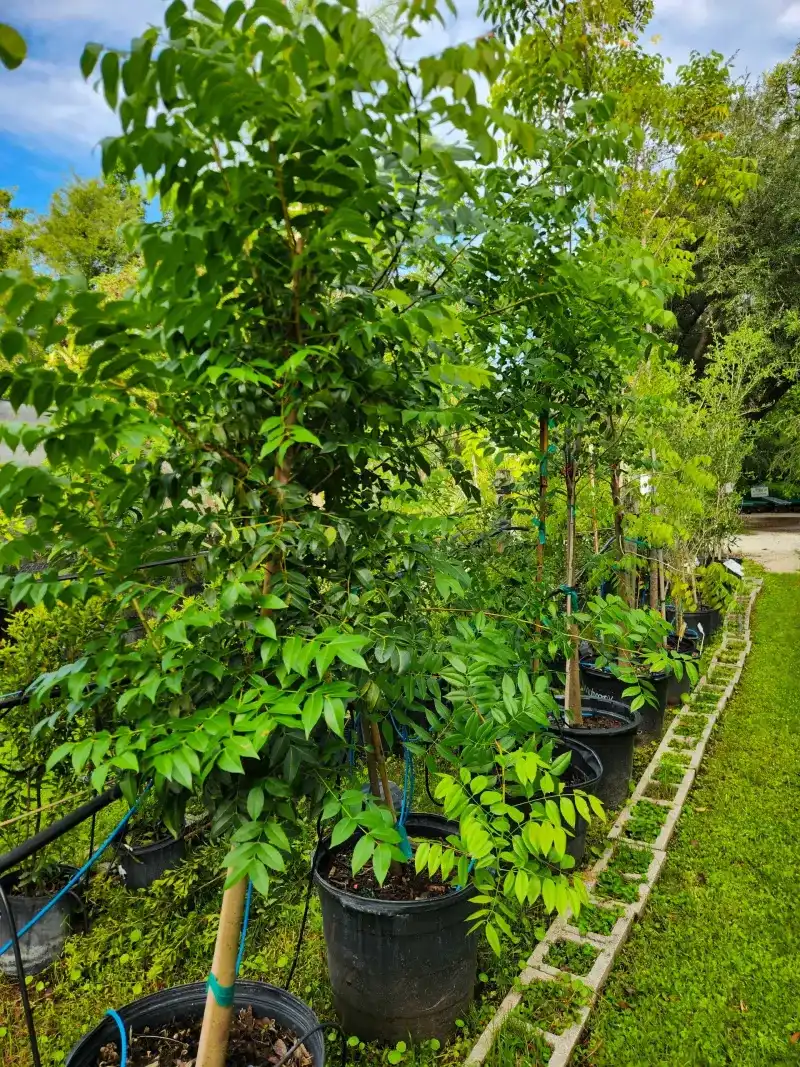
A nursery-fresh mahogany can look almost comically small sitting in its black plastic container at the garden center. Swietenia mahagoni, the species known as West Indian mahogany, is actually a large shade tree suited to the warmer parts of the state.
Homeowners sometimes underestimate how dramatically that small specimen will change over the years.
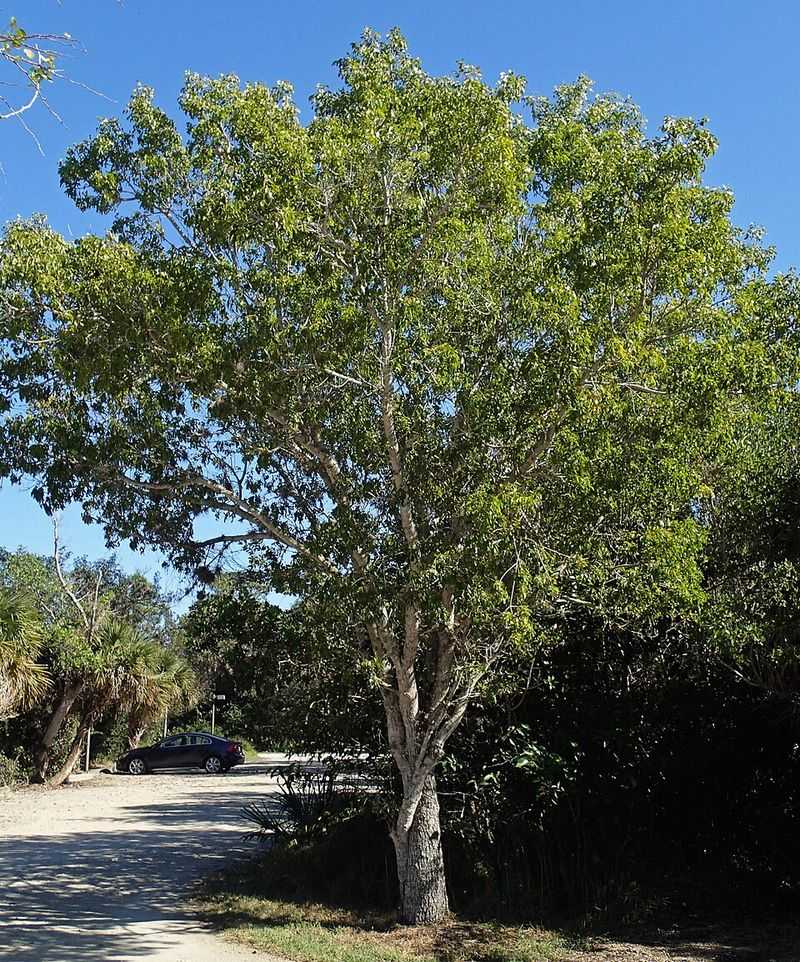
According to University of Florida IFAS Extension, mahogany can reach a mature height of roughly 50 feet, with a canopy spread that can match or exceed that figure.
Growing conditions, soil quality, water availability, and local climate all influence how large any individual tree gets.
No two trees follow an identical growth path.
A young tree in the ground makes the surrounding yard look far roomier than it really is. Patios, driveways, sidewalks, and walls all seem safely distant when the trunk is barely as wide as a garden hose.
The planting site needs to be judged by what the adult tree will require, not by what the nursery specimen looks like today.
Choosing a spot that works for a 6-foot sapling but not for a 50-foot canopy is where the long-term problem begins. Giving the tree room to mature from day one is the most useful thing a homeowner can do before the first shovel goes into the ground.
2. Planting Too Close To Pavement Creates The Delayed Problem
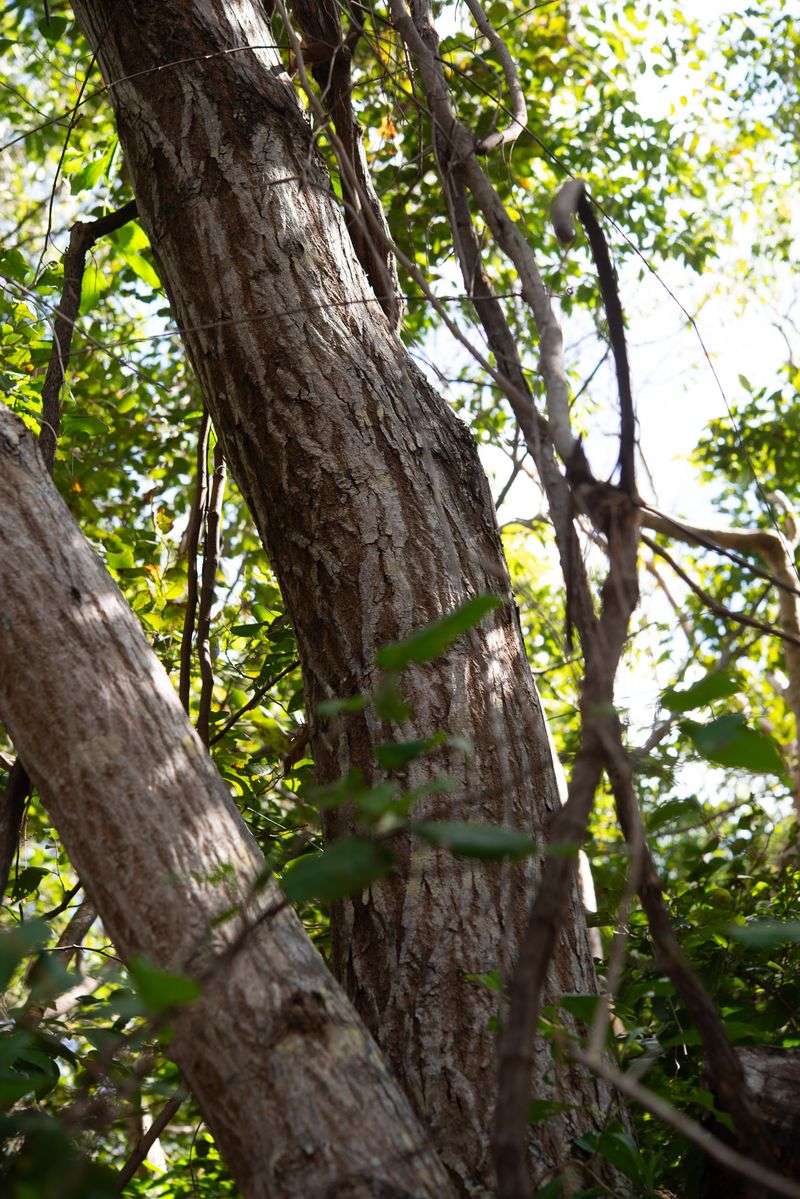
A homeowner noticing a slight lift in the sidewalk near a mature tree may not immediately connect it to a planting decision made years earlier.
UF/IFAS Extension has noted that mahogany roots can raise sidewalks and curbs when the tree is planted too close to pavement.
That concern extends logically to driveways and other hardscape surfaces nearby.
Not every mahogany planted near pavement will cause visible damage. Tree size, soil conditions, root space, and pavement type all play a role in how conflicts develop over time.
Describing root-pavement conflict as automatic or inevitable for every tree would be inaccurate.
What makes the problem tricky is that it stays hidden for a long time. Roots grow steadily underground, increasing in diameter and length well before any surface sign appears.
Your Florida Garden Changes Every Week. Your Plan Should Too.
Gardening in Florida changes quickly throughout the season. Every Friday you’ll receive a simple weekly plan showing exactly what to plant, prune, fertilize, harvest, and protect so you never miss the right timing.
A driveway edge or sidewalk panel can look perfectly fine for several years while roots beneath it continue to expand.
Using “10 years later” as a framing device captures that delayed quality well. Problems that trace back to a single afternoon planting decision may not become visible until the tree has spent a long stretch growing into the space around it.
Choose a spot with adequate clearance from pavement from the start. That is far easier than fixing a conflict after the tree becomes firmly established.
3. Large Surface Roots Eventually Need Somewhere To Go
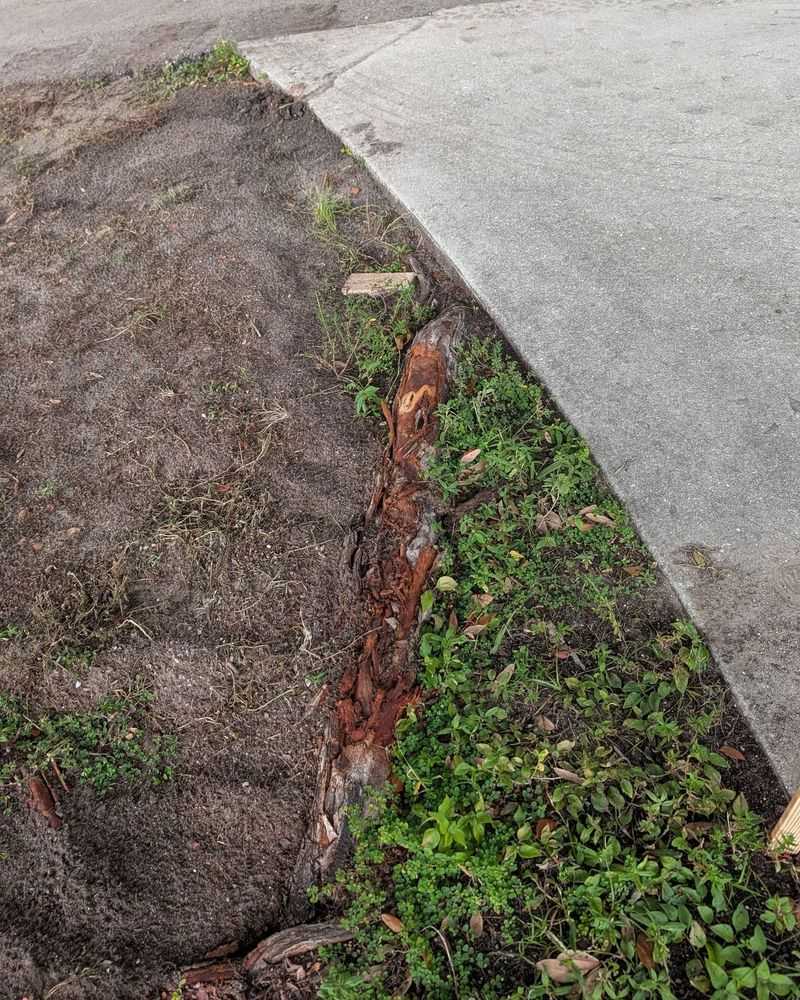
An expanding root system is not doing anything unusual or aggressive. Roots grow outward and increase in diameter as a normal part of how large trees function.
For mahogany, those roots can become quite visible at the surface as the tree matures, especially in compacted or shallow soils where downward growth is limited.
When the available soil volume around a tree is restricted, surface roots have fewer options for where to expand. Pavement, walls, curbs, and compacted subsoil can all act as barriers that redirect root growth.
Roots are not targeting concrete on purpose; they are simply following paths of least resistance toward water and oxygen.
Limited soil volume is a well-documented concern in urban and suburban tree planting. UF/IFAS urban forestry research has addressed how restricted rooting zones affect tree health and the likelihood of infrastructure conflicts.
A tree planted in a generous open area has more options for root expansion than one squeezed between a driveway and a wall.
Watching surface roots develop over time can give homeowners a clearer picture of where conflicts may eventually appear. A root heading steadily toward a driveway edge years before it reaches the pavement still has time to be addressed by a certified arborist.
Catching the situation early, rather than after damage appears, keeps more options on the table.
4. A Narrow Planting Strip Makes The Mistake Worse
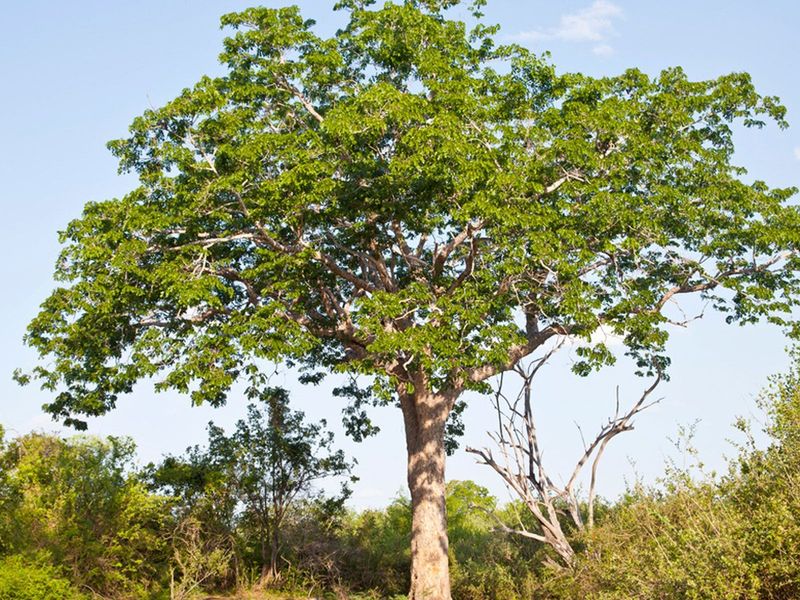
Narrow strips of soil between permanent surfaces are among the most challenging spots for large trees. A strip bordered by a driveway on one side and a sidewalk on the other might look like a reasonable planting area when the tree is young.
As the tree grows, that strip can become far too small to support a healthy root system.
Large trees need usable soil volume, not just enough ground to hold the trunk upright. Soil volume matters because roots need space to spread, access water, and anchor the tree against wind.
A cramped planting area limits all of those functions as the tree increases in size.
Boundaries like streets, curbs, buildings, and walls compound the problem by reducing the directions roots can travel. A tree hemmed in on multiple sides by fixed structures has very limited room to establish the root spread that a large canopy eventually demands.
Soil compaction from vehicle traffic or foot traffic nearby makes that situation worse.
No universal minimum planting-strip width fits every situation or every species. UF/IFAS guidance consistently emphasizes matching tree size to available space rather than forcing a large-maturing tree into a small opening.
A strip that looks workable on planting day may reveal its limitations only after the tree has spent years growing and the surrounding infrastructure has no room to move.
5. The Canopy Can Outgrow The Site Along With The Roots
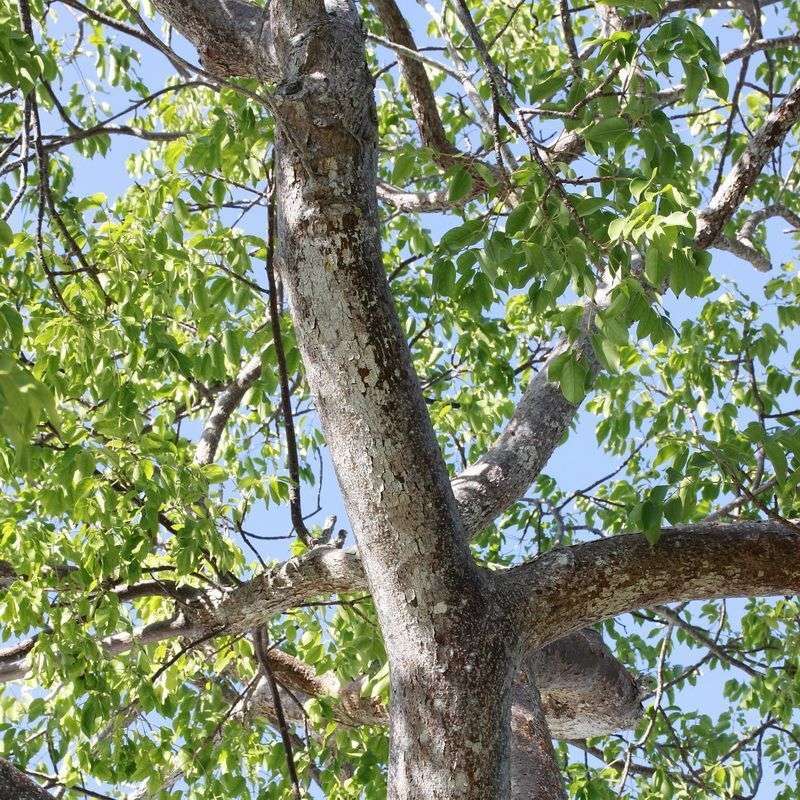
Root conflicts get most of the attention in planting discussions, but the canopy tells its own version of the same story. Mahogany develops a broad, spreading crown as it matures.
A tree planted close to a house, garage, or property line may eventually extend large branches over nearby structures. Those structures may have seemed far from the canopy when the tree was young.
Overhanging branches can interact with rooflines, gutters, and parked vehicles in ways that require regular attention. A branch that grows over a neighbor’s property line adds a layer of complexity that many homeowners do not anticipate.
Canopy spread and root spread both originate from the same original planting choice.
Selecting a site based on the young tree’s dimensions rather than its mature spread is the shared root of both problems. A spot that looks open and uncluttered when the sapling goes in may become crowded at canopy level within a decade or two.
Mature canopy spread for mahogany can rival the tree’s height, meaning the footprint above ground eventually mirrors the footprint below it.
Planning for adult dimensions at planting time addresses both concerns at once. Placing the trunk far enough from structures to allow a full canopy to develop without conflict reduces the need for heavy corrective pruning later.
The site should fit the finished tree, not the small one leaving the nursery.
6. Skipping Early Training Creates Another Problem Later
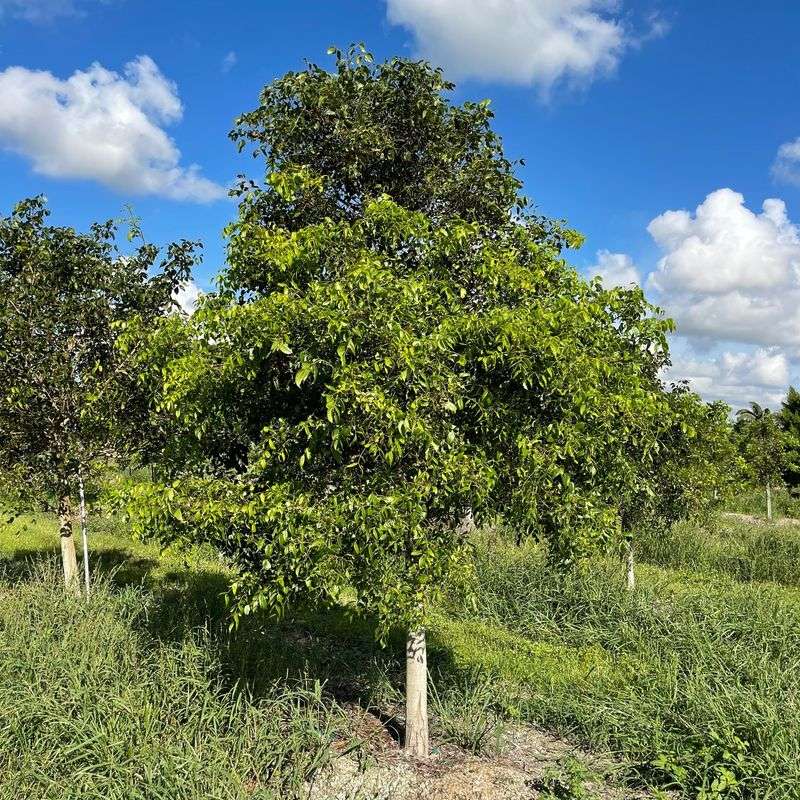
Branch structure is a separate long-term concern from root conflicts, and it deserves attention while the tree is still young enough to correct easily.
UF/IFAS guidance notes that young mahoganies can develop multiple upright branches, sometimes called co-dominant stems, that compete for the same vertical space.
Addressing that structure early is far simpler than correcting it once the branches are large.
Co-dominant stems can create branch unions that are structurally weaker than a single dominant leader. Over time, large competing branches may become harder to prune safely without causing significant harm to the tree.
Early structural training reduces how much corrective work becomes necessary later.
Mahogany is not an inherently weak tree. With appropriate early guidance, it can develop sound branch architecture that serves the tree well for decades.
The goal of early training is to encourage a structure that suits both the tree and the property around it.
A certified arborist familiar with Florida trees can evaluate a young mahogany and recommend which branches to remove or reduce while they are still small.
Waiting until problems become obvious often means working with larger, heavier wood and accepting a more limited range of solutions.
Address branch structure during the tree’s first few years of growth. Early training is one of the simplest investments in a mahogany’s long-term health and safety.
7. Cutting Big Roots Later Is Not An Easy Fix
Lifted pavement near a mature tree can feel like a straightforward repair problem. Remove the root, fix the concrete, move on.
Cutting large structural roots from a mature tree can affect stability and long-term function. It is a decision that should not be approached casually.
Major roots do more than absorb water and nutrients. They anchor the tree against wind and support the weight of a large canopy.
Severing significant roots can compromise that stability in ways that are not always immediately obvious. A tree that looks fine after root cutting may become more vulnerable to wind-related failure over time.
DIY trenching, root grinding, or severing of major roots near a mature tree is not a project to take on without professional guidance. A certified arborist can identify structural roots and determine how much removal the tree can tolerate.
They can also assess the likely outcomes for both the tree and the pavement. That evaluation is worth requesting before any cutting begins.
Preventing the conflict at planting time requires only good site selection and a few minutes of planning. Correcting the conflict after years of tree growth often requires professional assessment and possible infrastructure repair.
It can also force difficult decisions about the tree’s future on the property. The easier path runs through the planting decision, not the repair.
8. Give Mahogany Its Adult Space From The Beginning
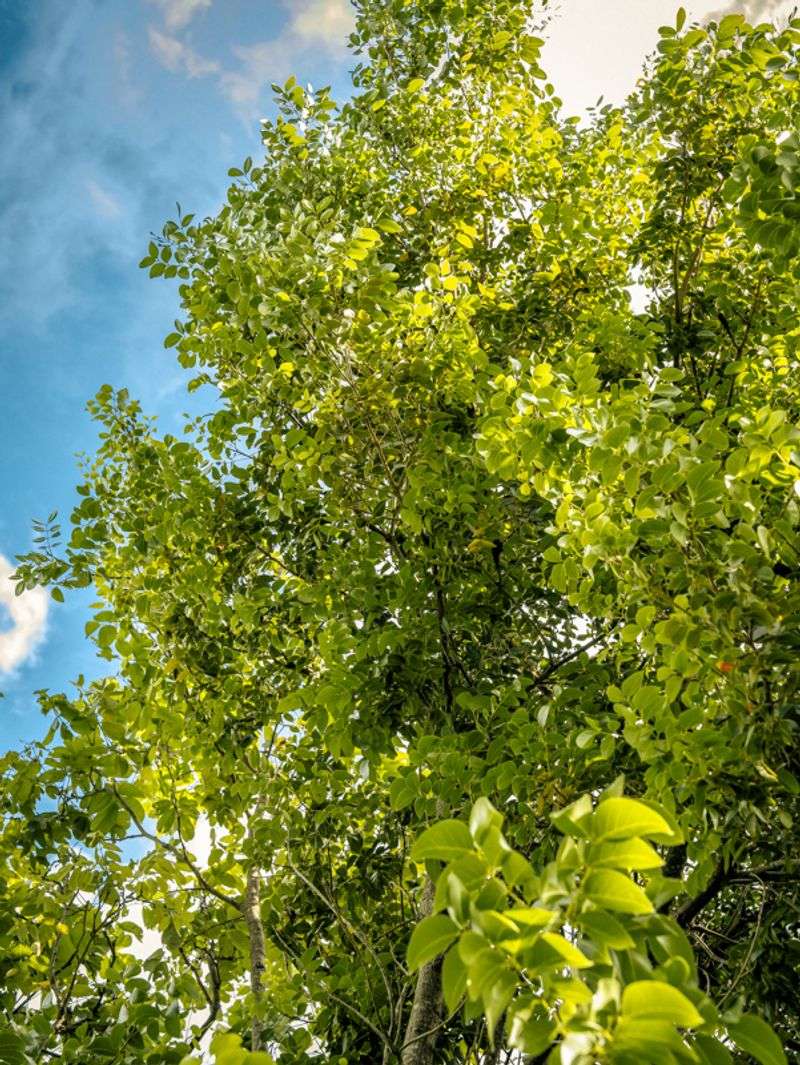
Mahogany is not the mistake. Swietenia mahagoni is a handsome, long-lived shade tree that has grown in South Florida landscapes for generations.
The mistake is treating the young nursery specimen as though it represents the tree’s finished size. A planting decision based on the sapling’s dimensions rather than the adult tree’s needs sets up a slow-building mismatch between the tree and its surroundings.
Mature canopy spread, rooting space, pavement clearance, and available soil volume all need to factor into where the trunk goes into the ground.
Structural training in the early years adds another layer of long-term benefit that no amount of corrective pruning later can fully replace.
Bringing all of those considerations together before planting is the clearest path to a tree that fits the property well over time.
Consequences of poor placement may take years to show up. A driveway may look fine for a long stretch while roots beneath it continue to grow.
A canopy may clear the roofline comfortably for years before branches finally reach far enough to become a concern. That delayed quality is exactly what makes the original planting decision so important.
A choice made in a few minutes on a single afternoon can shape how well the tree fits the property a decade or more later.
Giving mahogany the space its adult form requires from the very beginning is the simplest way to avoid the problems that show up long after the planting is done.