The Meaning Behind A Golden Silk Spider Building A Web Across Your Florida Porch
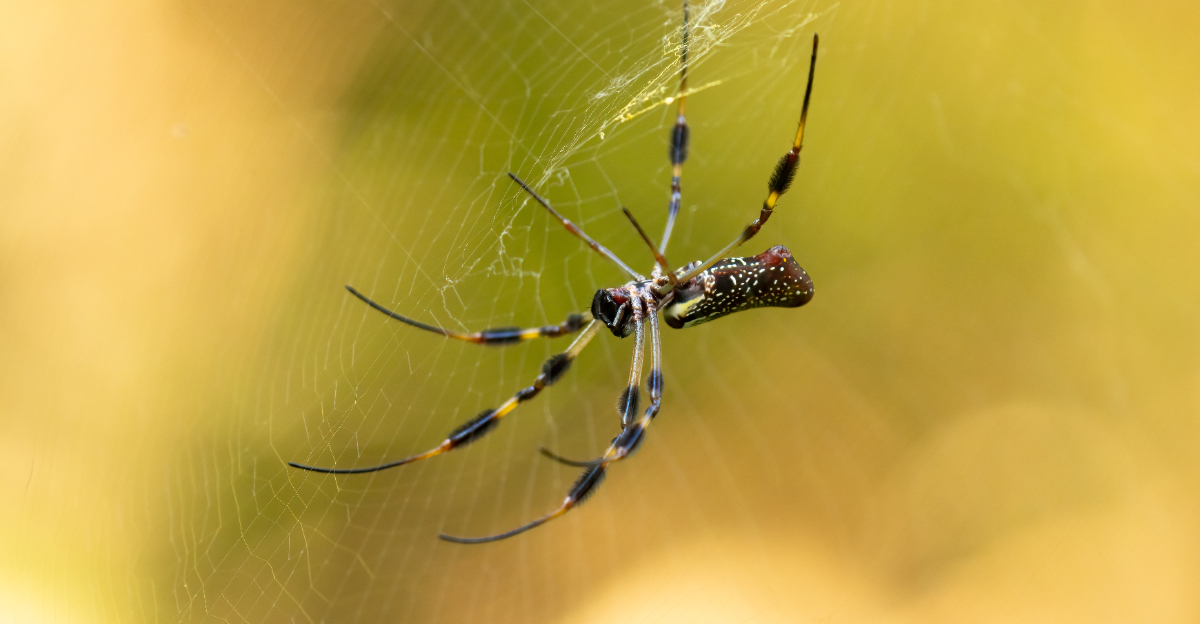
A shimmering trap greets you the moment you step outside. Silk stretches wall to wall across your porch, glinting under early light.
Florida hands you this bold weaver more often than you’d expect. Confidence radiates from every carefully placed thread stretched in front of you.
Patience built this entire web, thread by thread, long before you noticed. Females behind it often outsize the smaller males nearby.
Watching this quiet, deliberate drama unfold changes how you view your mornings. Humidity across Florida practically invites this patient visitor straight toward you, and that same warmth explains why it lingers instead of moving on.
Ignoring that golden web won’t convince it to leave you alone. Handling it carelessly could cost you far more than your nerves. What you do next decides if this encounter stays calm or turns chaotic.
Why This Large Weaver Chooses Your Porch Space
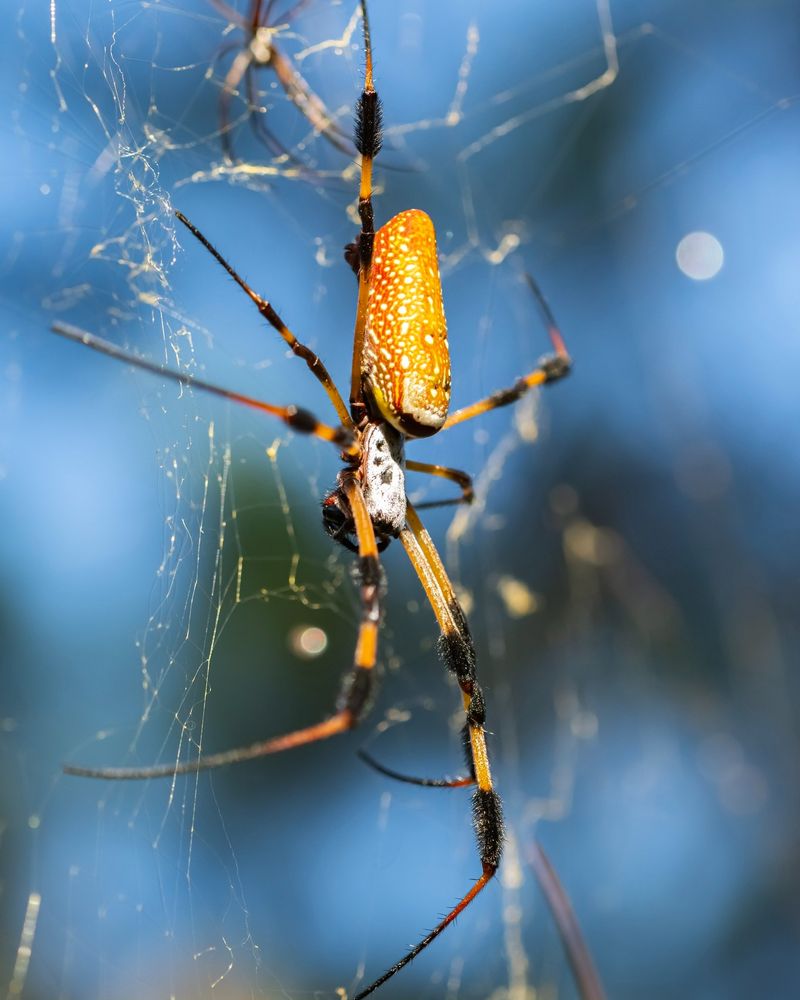
Porch lights glow steadily through the night, pulling moths, beetles, and flying insects toward that exact spot. Golden silk spiders notice that traffic and settle right where the action happens.
Railings, beams, and support posts give her sturdy points to anchor a wide, tension-heavy web. Without stable structures like these, a web this size would sag or collapse entirely.
Open space between anchor points matters just as much as the anchors themselves. Wider gaps let her build larger webs capable of catching bigger, faster prey.
Porches near gardens, trees, or shrubs pull in even heavier insect traffic. Nearby vegetation supplies overflow bugs that drift toward the light after dark.
Humid evenings speed up insect movement across the whole yard. That surge gives her reason to stay put and keep repairing damaged sections instead of moving.
Her choice of location comes down to efficiency, not curiosity about your household. She reads airflow, insect density, and structural stability before committing to a spot.
Corners near doorways see more traffic than open stretches of railing. That extra foot traffic from insects makes those spots especially appealing to her.
Elevated positions also help her avoid ground-level disturbances from pets or foot traffic. Height keeps the web out of reach while still catching plenty of prey.
Nothing about her presence reflects poorly on your home or your routines. She simply found productive territory and put it to work immediately.
Signs You Are Dealing With This Specific Spider
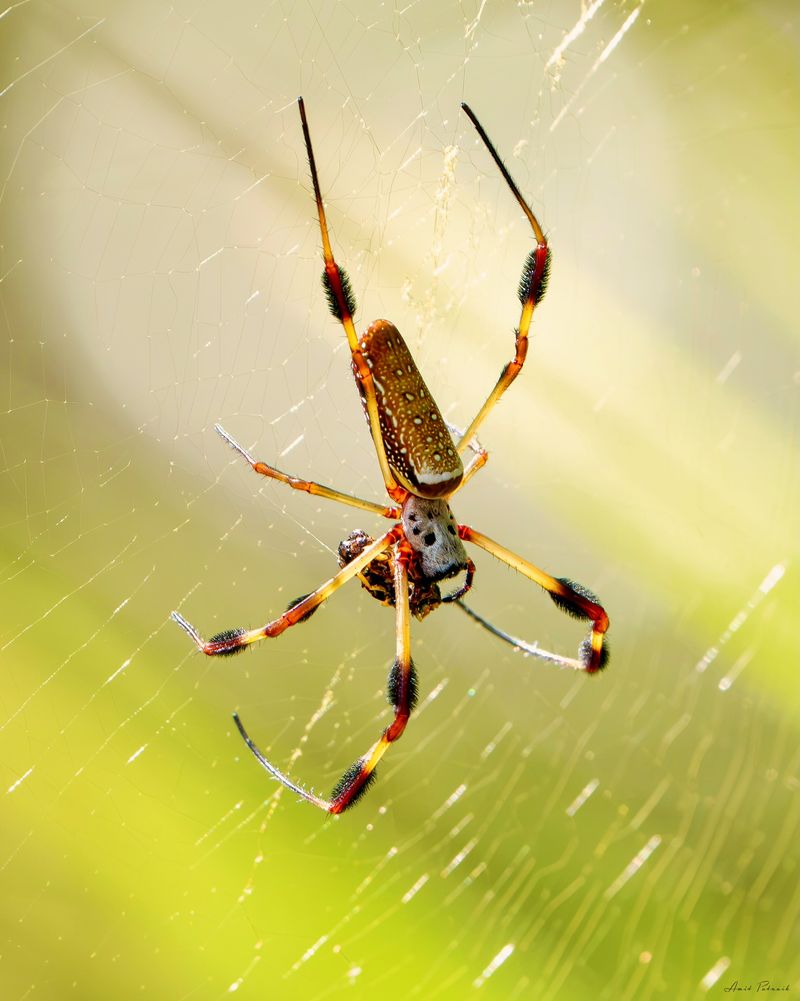
Size is the first giveaway you’ll notice from a distance. Female golden silk spiders can stretch several inches across once legs are included.
Their webs carry a distinct yellow-gold tint that catches sunlight easily. Few backyard spiders produce silk with that same warm, metallic shimmer.
Look closely for tufts of dark hair along the leg joints. That detail, paired with an elongated silvery body, points straight to this species.
Males look almost nothing like females in size or presence. They stay tiny, pale, and easy to overlook near the edge of the web.
Web shape offers another clue worth checking. These spiders often build asymmetrical, ladder-like patterns rather than the neat circular webs most people expect.
Your Florida Garden Changes Every Week. Your Plan Should Too.
Gardening in Florida changes quickly throughout the season. Every Friday you’ll receive a simple weekly plan showing exactly what to plant, prune, fertilize, harvest, and protect so you never miss the right timing.
Silk strength is unusually high for an orb weaver. Threads feel noticeably tougher than typical garden spider silk when brushed by accident.
Leg color adds another useful clue during identification. Dark banding along each leg segment helps separate her from similar-looking orb weavers.
Body posture while resting on the web can help too. She typically hangs head-down at the center, legs arranged in a distinct X shape.
Together, these details confirm you’re looking at a golden silk spider rather than a random visitor passing through.
Common Spots Around Porches And Structures
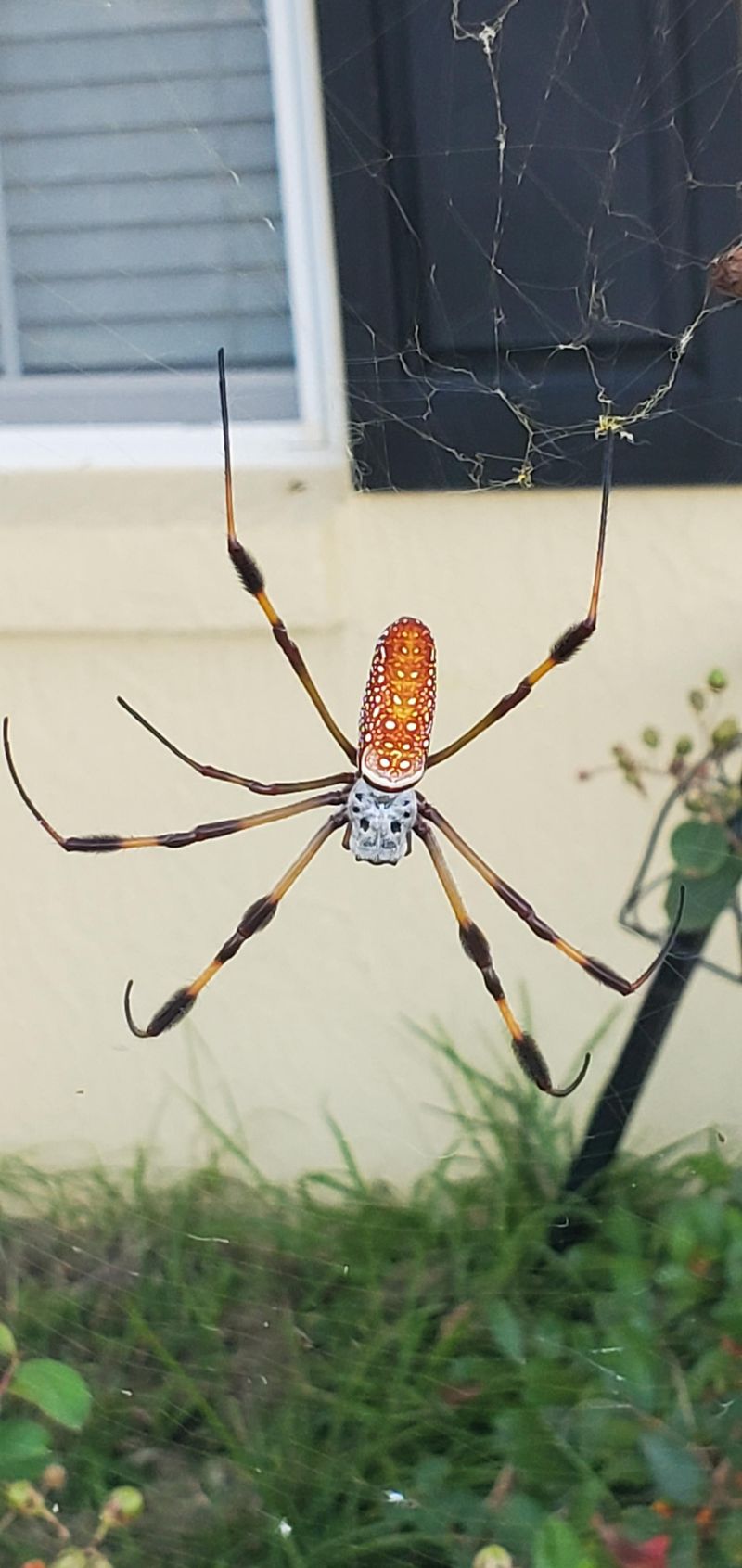
Corner posts rank among the most attractive building sites available. Two solid anchor points positioned close together let her build fast with minimal effort.
Overhangs and ceiling beams draw plenty of attention too. Sheltered spots protect the web from wind and rain, helping it last through several days of use.
Screened porches offer a similar advantage with added protection. Mesh panels break wind gusts while still allowing insects to pass through freely.
Garden archways and trellises near flowering plants attract her for a different reason. Pollinator traffic around blooms creates a steady stream of potential prey nearby.
Wooden fences positioned near vegetation see frequent activity as well. Insects moving between plants and structures often cross paths with a waiting web.
Covered walkways connecting porches to yards sometimes host webs mid-span. Long, open stretches with light on both ends make ideal building corridors.
Carports and open garages occasionally attract webs during peak season. Steady shade combined with nearby light sources creates a similar draw.
Deck railings facing open yards often see repeated activity year after year. Consistent airflow and unobstructed space make them easy to reuse each season.
Side entrances used less frequently by people often go undisturbed for weeks. That lack of foot traffic gives a web time to grow far larger than usual.
Anywhere insects travel on a predictable path becomes a candidate worth watching closely.
Seasonal Patterns Behind Increased Web Activity
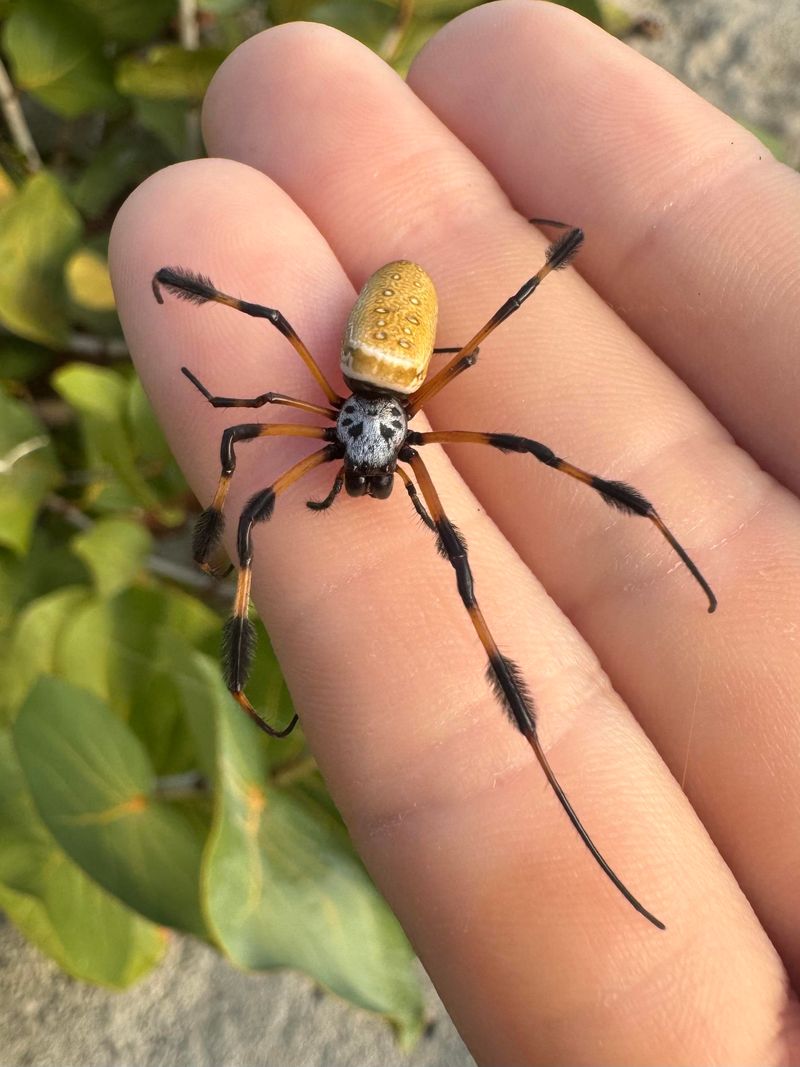
Late summer and early fall bring the most visible webs of the year. Female spiders reach full size by August and spend those months feeding aggressively before laying eggs.
Warm, humid conditions speed up insect activity across entire neighborhoods. More prey moving through the air translates directly into more silk being spun.
Egg-laying typically follows peak feeding once temperatures start shifting. Females invest heavily in building strong, well-fed bodies before that process begins.
Web size tends to grow alongside the spider herself during these months. Larger bodies require larger structures to support hunting and movement.
Cooler nights arriving with the first fall fronts change everything quickly. Reduced insect traffic signals mature females to shift focus toward egg sac production instead.
By late fall, most visible porch webs disappear as adult spiders complete their life cycle. New generations won’t reappear in noticeable numbers until the following summer.
Early spring hatchlings stay small and largely unnoticed for months. Growth accelerates only once summer heat and humidity settle in fully.
Rainy stretches can temporarily slow web-building activity. Heavy downpours damage silk quickly, forcing repairs once drier conditions return.
Coastal areas often see activity linger slightly longer into the season. Milder temperatures near the water delay the usual seasonal drop-off.
Tracking these shifts helps explain why activity spikes suddenly, then fades just as fast.
Safety Considerations For Homes With Pets And Children
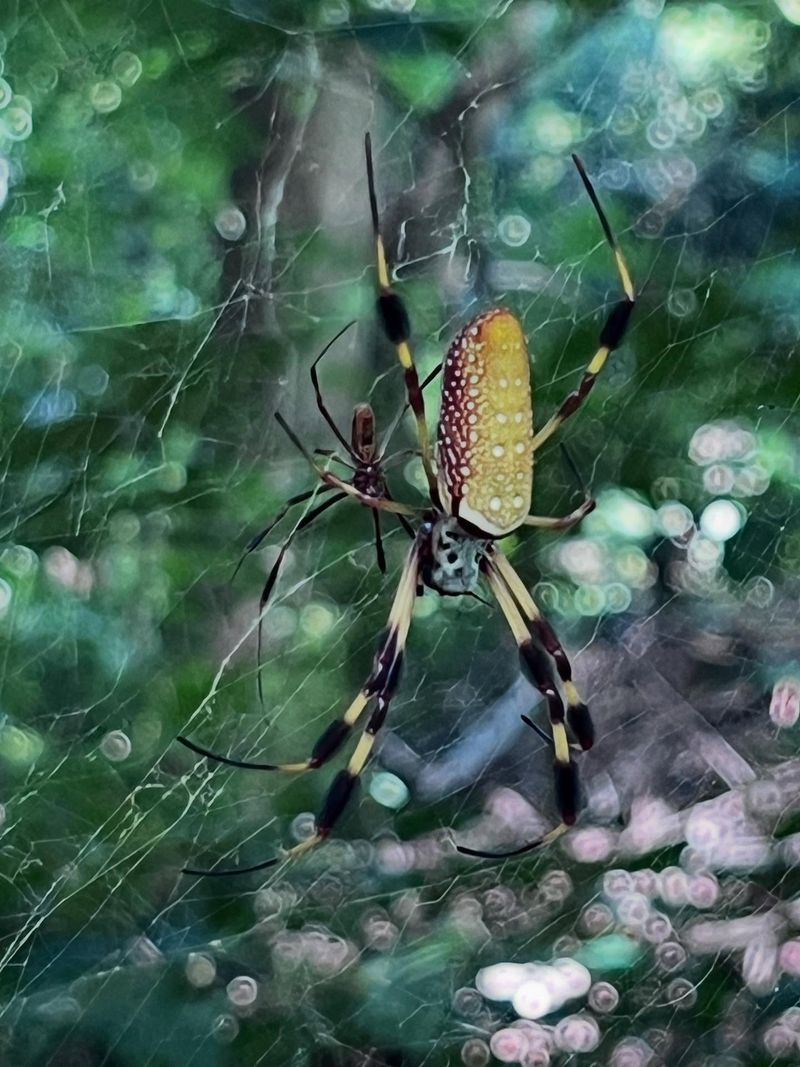
Golden silk spiders are not considered medically significant to healthy humans. A bite may cause mild redness or irritation, though serious reactions remain rare.
Pets are generally safe around these webs as well. Curious dogs that poke or paw at a web risk startling the spider into a defensive bite.
Younger animals near ground-level webs deserve a closer eye. Low-hanging webs sit right at nose height for smaller pets exploring the yard.
Children benefit from a simple rule: look without touching. Respecting distance keeps both the spider and curious hands out of trouble.
Web strength surprises most people who accidentally walk into one. Threads can pull tight against skin without causing any lasting harm.
Supervision matters more than removal in most cases. A web left alone rarely causes problems for anyone sharing the space.
Cats tend to keep their distance instinctively once a web catches their attention. Most will observe from a safe spot rather than approach directly.
Outdoor playtime near active webs is worth monitoring during peak season. A quick reminder before kids head outside prevents most accidental encounters.
Household visitors unfamiliar with the web sometimes react with more surprise than the residents. A brief heads-up before guests step onto the porch avoids startled reactions.
Calm observation, not panic, keeps this interaction safe for the entire household.
Steps To Manage Or Relocate The Web
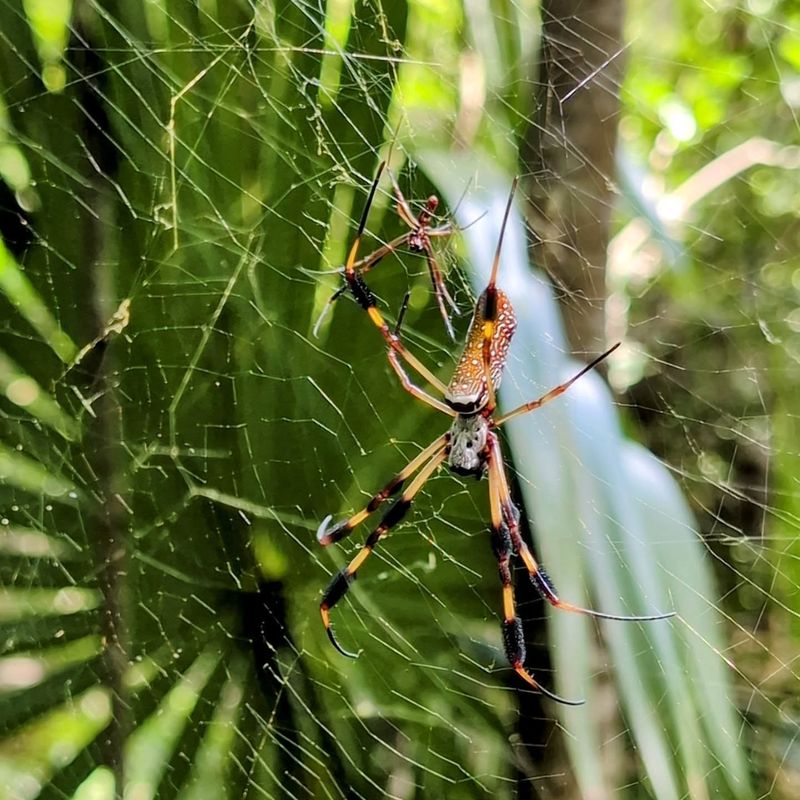
Relocation works better than most people expect once attempted carefully. A long stick can gently coax the spider onto a nearby branch or shrub.
Removing anchor threads discourages quick rebuilding in the same spot. Breaking attachment points at railings or beams often pushes her toward a new location nearby.
Timing matters when attempting removal. Early morning works best, since cooler temperatures make spiders slower and less likely to react defensively.
Reducing outdoor lighting at night cuts down on insect traffic significantly. Fewer bugs drifting toward the porch means less incentive for her to return.
Trimming nearby vegetation limits additional anchor points around the structure. Fewer available spots make repeated rebuilding noticeably harder to sustain.
Persistent return visits usually point to strong local insect activity rather than any personal targeting. Addressing that food source solves the pattern more effectively than repeated relocation.
Gloves offer extra confidence during hands-on removal attempts. They add a layer of protection without interfering much with careful, slow movements.
Checking the same spot the following morning helps confirm success. A missing web usually means the spider relocated rather than rebuilt overnight.
Sealing gaps near beams and railings limits future rebuilding attempts in that exact spot. Fewer accessible anchor points make the area far less appealing long term.
Patience and consistency, not aggressive removal, tend to produce the longest-lasting results.