Why Hummingbirds Chase Each Other Away From California Feeders
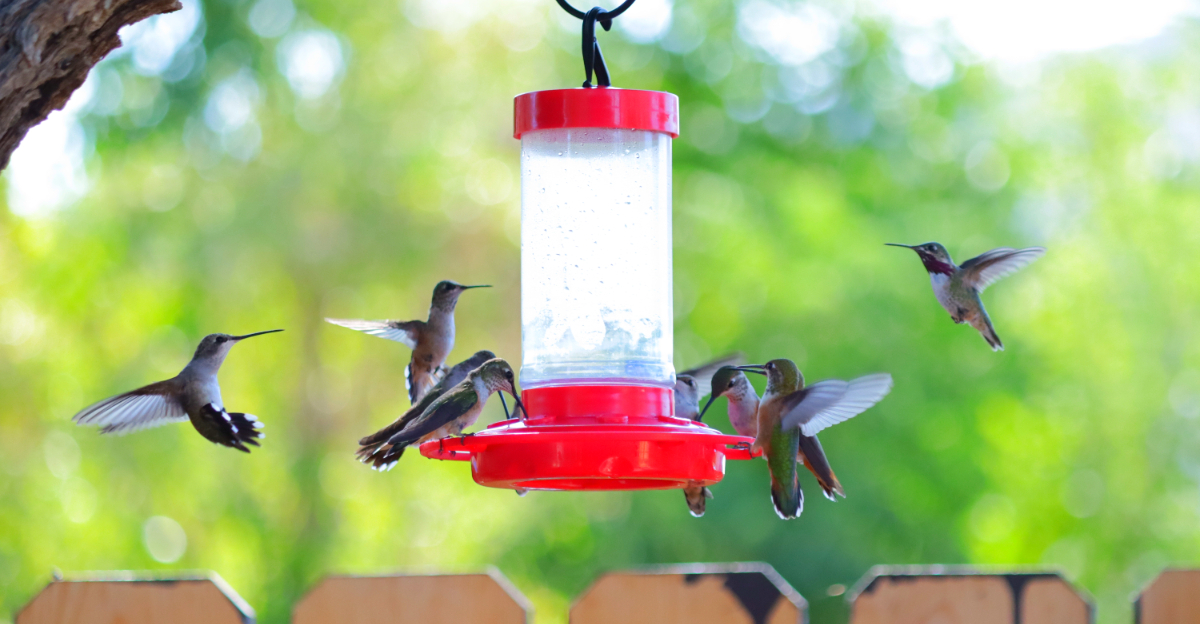
Hummingbird feeders can look peaceful for about five seconds. Then one tiny bird rockets in, another gets chased off, and suddenly the backyard feels like it is hosting an aerial turf war.
The drama can be surprisingly intense for creatures that weigh about as much as a few paper clips.
California yards with regular feeder traffic often turn into busy little arenas, especially when several birds decide the same sugar-water stop is worth defending.
That behavior can leave homeowners wondering if something is wrong with the setup. After all, a feeder seems like it should make sharing easier, not inspire high-speed arguments around the patio.
But hummingbirds have their own rules about space, food, and who gets first access. Their rapid chases, hovering standoffs, and dramatic swoops are all part of a much bigger pattern than simple bad manners.
Once you start watching closely, those feeder battles become easier to read. What looks like random chaos is often a very organized kind of competition playing out in plain sight.
1. One Hummingbird May Claim The Feeder As Its Own
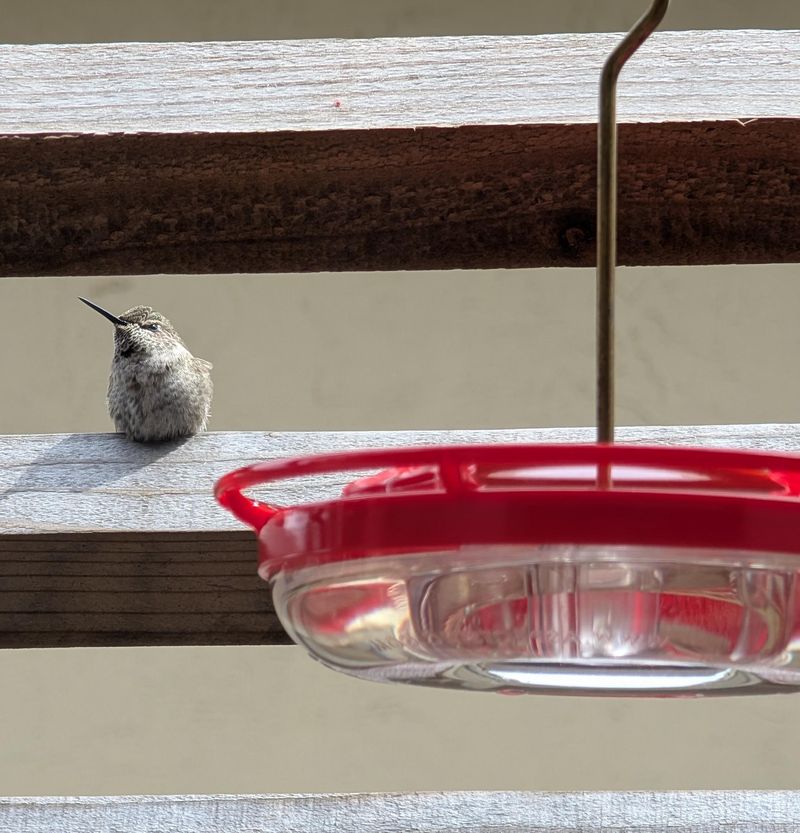
Some birds just decide a feeder belongs to them. A hummingbird that finds a reliable food source will often choose to “own” it rather than share it with others. This behavior is called resource guarding, and hummingbirds are really good at it.
Once a bird claims a feeder, it watches over it almost constantly. It will sit nearby, scan the area, and zoom after any other hummingbird that gets too close.
The chasing can look aggressive, but it is really just the bird protecting what it sees as its personal food supply.
This kind of ownership is surprisingly common. One hummingbird can spend most of its day just guarding a single feeder.
Instead of spending that energy finding other food, it decides that holding its ground is worth the effort. It often is, because a feeder offers a steady and easy meal.
You might notice that the same bird shows up day after day in the same spot. That is not a coincidence.
Hummingbirds have strong spatial memory and can remember exactly where food sources are located.
Once a bird locks onto your feeder, it may return to guard it for the entire season. Knowing this helps explain a lot of the chasing you see happening in your backyard.
2. Chasing Is Mostly About Protecting A Food Source
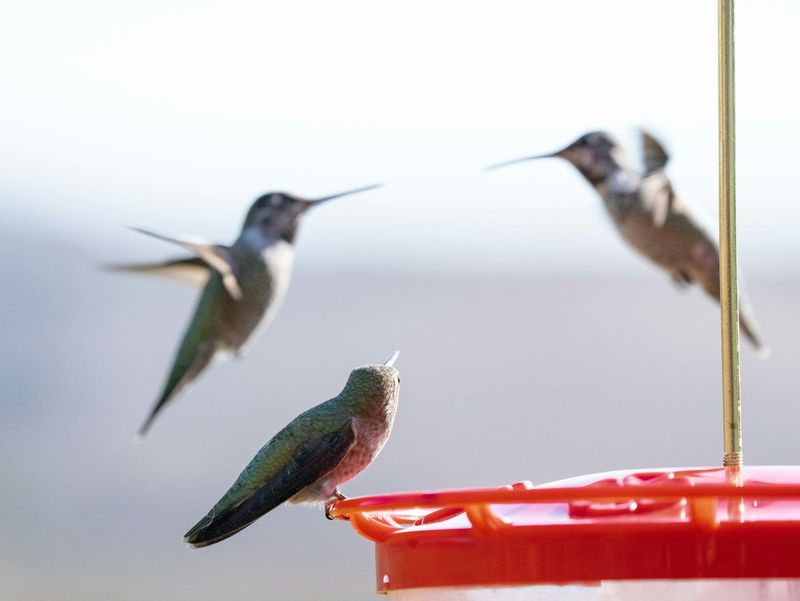
At the heart of all that chasing is one simple idea: food is precious. Hummingbirds need to eat many times every hour just to stay alive and active.
So when another bird shows up near a feeder, the one guarding it sees a real threat to its survival. The chasing is not random aggression. It is a calculated move.
The guarding bird has decided that this food source is worth fighting for. By chasing others away quickly and consistently, it sends a clear message that newcomers are not welcome here.
Most chases are short and end without any real contact. The intruder usually flies off, and the guarding bird returns to its perch.
Your California Garden Changes Every Week. Your Plan Should Too.
Gardening in California changes quickly throughout the season. Every Friday you’ll receive a simple weekly plan showing exactly what to plant, prune, fertilize, harvest, and protect so you never miss the right timing.
The whole thing can happen in just a second or two. But if intruders keep coming back, the guarding bird will keep chasing, sometimes for hours at a stretch.
Interestingly, hummingbirds do not just chase other hummingbirds. They will also go after bees, wasps, and even larger birds that get near their food.
Their boldness is remarkable for such a small creature. Understanding that the chasing comes from a need to protect food, rather than from a bad personality, makes it easier to appreciate just how driven and resourceful these little birds really are.
3. Males Can Be Especially Territorial Around Feeders
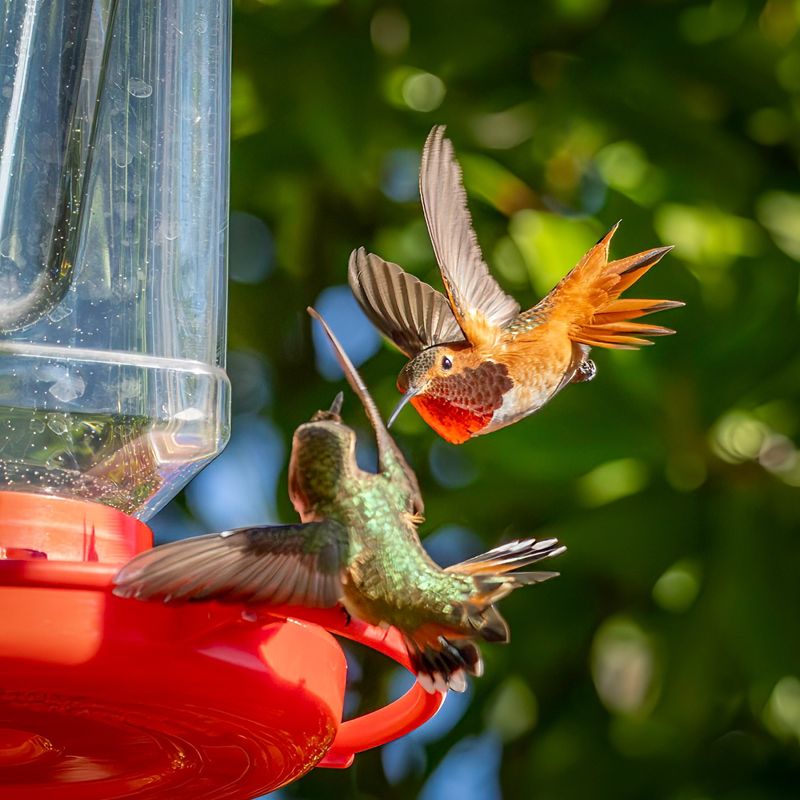
Not all hummingbirds guard feeders with the same intensity. Male hummingbirds tend to be the most aggressive defenders of all.
During breeding season especially, males ramp up their territorial behavior to protect both food and nesting areas nearby.
A male hummingbird will often pick a high perch close to the feeder. From there, he can see in all directions and launch a chase in an instant.
He may even perform dramatic dive displays, swooping down in a wide arc to impress females and intimidate rival males at the same time.
Females are also capable of chasing others away, but they tend to be slightly less intense about it.
They have their own concerns, like finding a good nesting spot and caring for eggs or chicks. Still, a female will not hesitate to defend a feeder she relies on.
In California, Anna’s hummingbirds are year-round residents, and the males are known for being especially bold. They will chase away birds much larger than themselves without a second thought.
If you notice one particular bird that seems to rule your feeder with an iron grip, there is a good chance it is a male. Giving other birds a way to access food without triggering him is the key to keeping things peaceful in your yard.
4. A Favorite Perch Gives The Bossy Bird A Lookout Spot
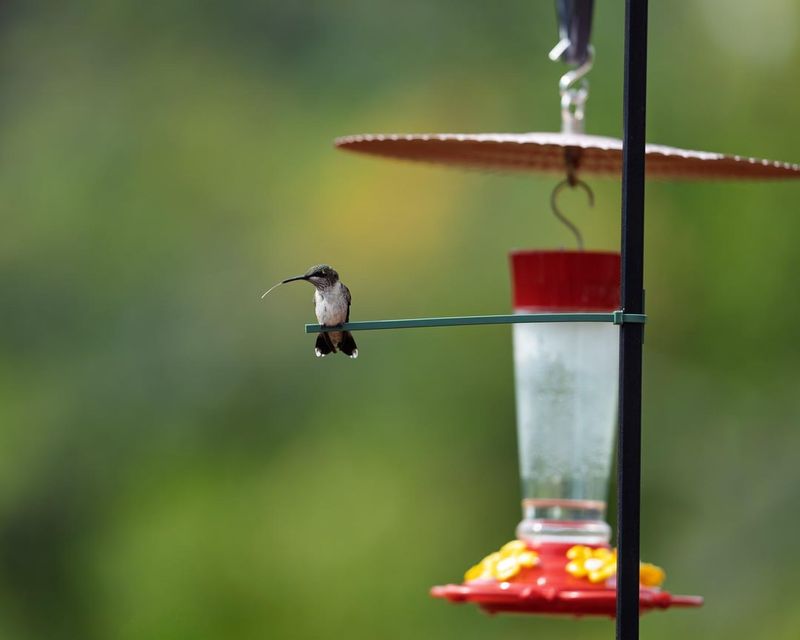
Every territorial hummingbird needs a good lookout spot. Without one, it cannot effectively guard its feeder.
That is why you will almost always find the dominant bird sitting on a nearby branch, wire, or fence post when it is not feeding.
From this perch, the bird has a clear view of the feeder and the surrounding area. The moment another hummingbird enters its field of vision, it launches into action.
The perch is not just a resting place. It is a command center for the whole operation.
If you look carefully at your yard, you can probably spot the favorite perch being used. It is usually somewhere with a good line of sight to the feeder, not too far away but not right on top of it either.
Sometimes it is a branch, which gives the bird an unobstructed view in all directions. One clever strategy for reducing chasing is to remove or block easy perch spots near your feeders. Without a great lookout, the guarding bird has a harder time keeping watch.
It becomes more difficult to maintain total control over the area. This does not always work perfectly, but it can reduce how often chasing happens.
Pairing this trick with other strategies, like adding more feeders, can make a noticeable difference in how many birds get to feed peacefully each day.
5. One Feeder Can Become Easy To Guard
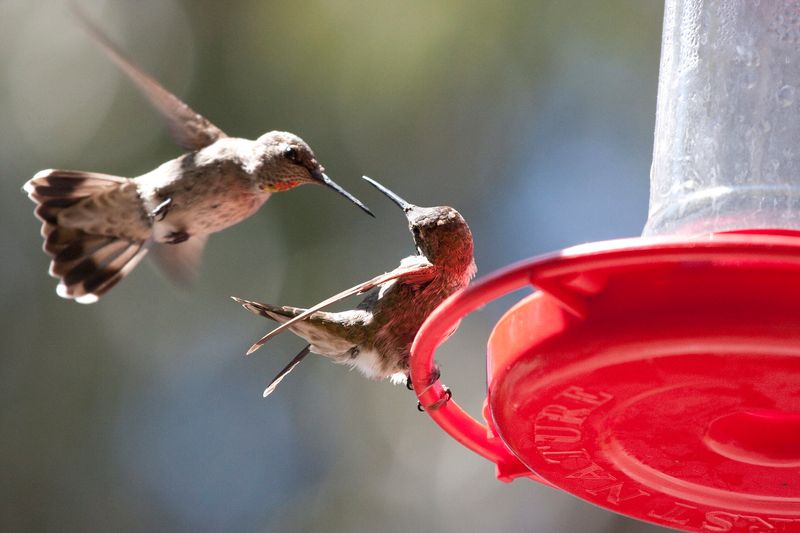
Here is something worth thinking about: one feeder is very easy for one bird to control. All the food is in one place, and one bird can sit close by and chase away every visitor with very little effort.
That setup works out perfectly for the dominant bird but leaves everyone else hungry. When there is only a single feeder in a yard, competition naturally gets intense.
Every hummingbird in the area wants access to that one food source. The strongest, most persistent bird ends up winning, and the others get pushed out again and again.
Adding a second feeder does not always solve the problem right away. A very determined bird might try to guard both.
But in most cases, one bird cannot realistically watch two feeders at once, especially if they are placed far apart or around a corner from each other.
Think of it like this: if there were only one water fountain in a park, people would crowd around it. Add a second one on the other side of the park, and the crowd spreads out naturally.
The same logic applies to hummingbird feeders. Reducing the scarcity of the resource reduces the intensity of the competition.
That simple shift can make a big difference in how many hummingbirds get to enjoy your yard without being chased away every few minutes.
6. Crowded Feeding Times Can Trigger More Chasing
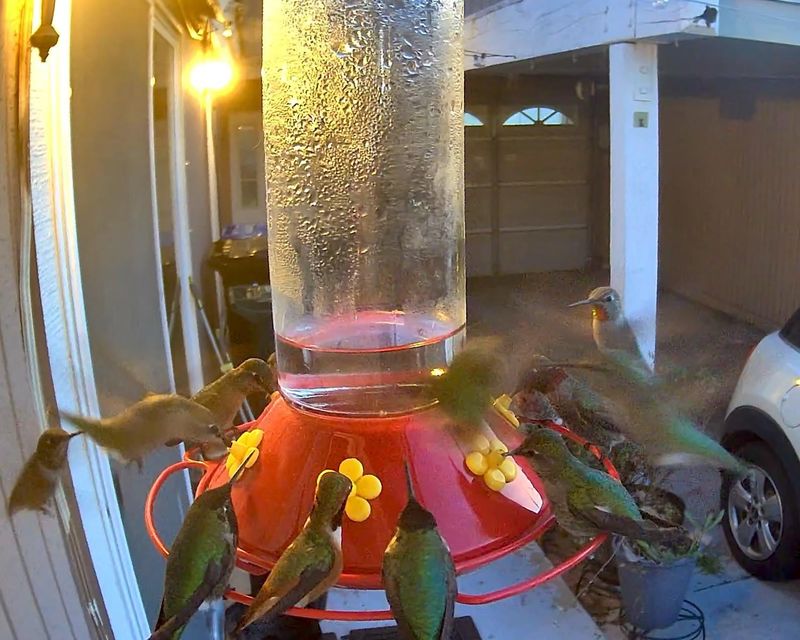
Hummingbirds tend to feed most actively during certain parts of the day, especially in the early morning and late afternoon. When many birds show up at the same time, tensions rise fast.
A feeder that seems peaceful mid-afternoon can turn into a chaotic chase scene by evening.
During peak feeding times, the dominant bird has to work overtime to keep others away. More birds arriving at once means more intruders to chase.
The guarding bird may not even get much time to eat because it is too busy running off competitors one after another.
Watching your feeders at different times of day can help you figure out when the busiest and most chaotic moments happen. Once you know the peak times, you can plan your feeder setup to reduce the bottleneck.
Adding extra feeders before those rush hours can help spread birds out before the competition gets intense.
Weather also plays a role. On cooler days or after storms, hummingbirds may feed more urgently and in larger numbers, which can increase chasing.
During migration season, new birds passing through may also create a sudden spike in feeder activity. Being aware of these patterns helps you stay one step ahead.
A little preparation during the calmer parts of the day can lead to much more peaceful feeding sessions when things get busy later on.
7. Adding More Feeders Can Spread Birds Out
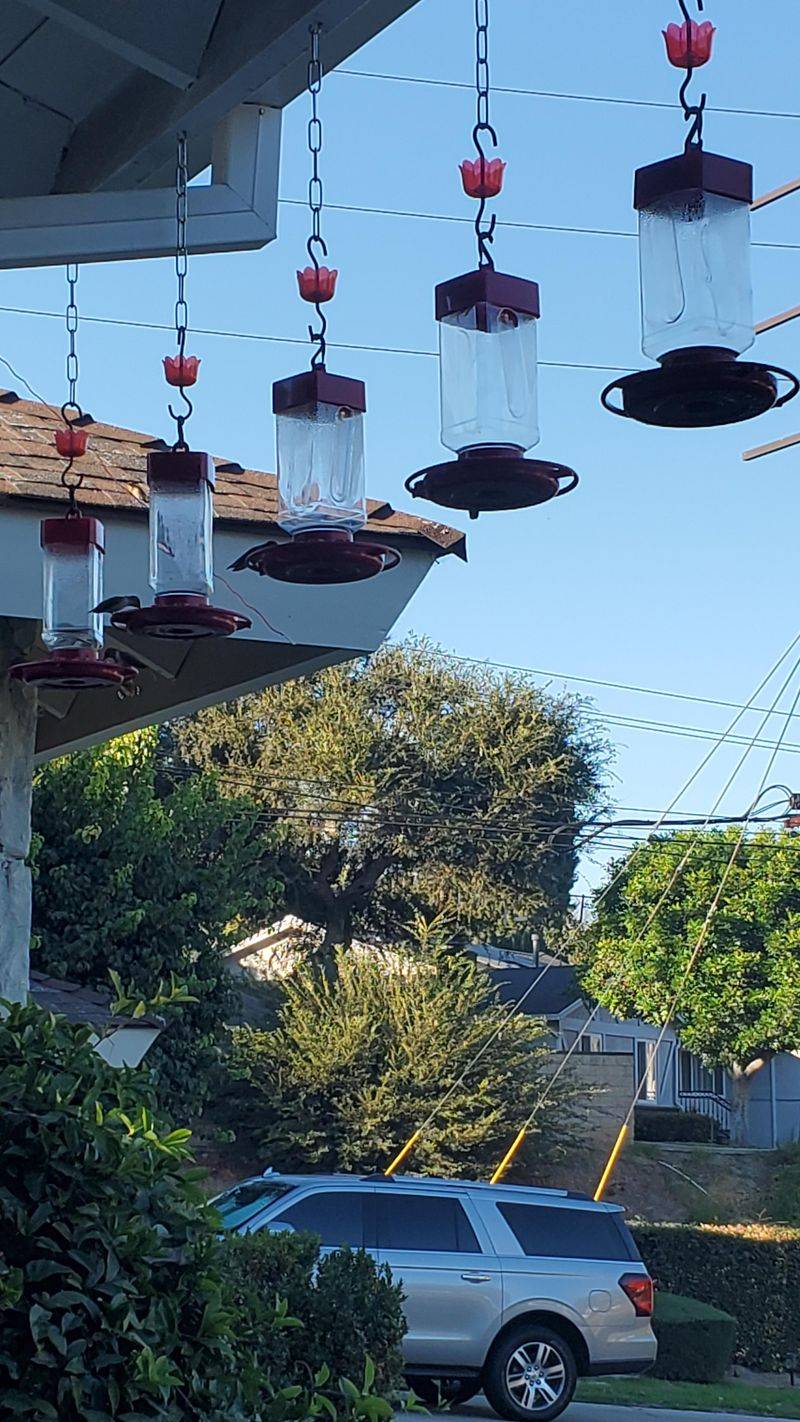
One of the most effective ways to reduce hummingbird chasing is also one of the simplest: add more feeders.
When food is spread across multiple locations, no single bird can control it all. Other birds finally get a chance to eat without being chased off constantly.
Try placing feeders in different areas of your yard rather than clustering them all in one spot.
A feeder on the front porch, one in the backyard, and one on the side of the house can create three separate feeding zones. Each zone may attract its own small group of birds.
More feeders also mean more food available overall, which lowers the stakes for each individual bird. When food feels less scarce, birds tend to be slightly less aggressive about guarding it.
The urgency behind the chasing drops a little when there are other options nearby. You do not need to spend a lot of money to make this work. Even basic, inexpensive feeders can do the job.
The key is placement, not price. Spreading feeders around different parts of your yard, especially in spots that are hidden from each other, gives each bird a sense of having its own space.
Over time, you may notice a much calmer and more welcoming yard where several hummingbirds can visit at once without constant drama breaking out between them.
8. Keeping Feeders Out Of Sight From Each Other Can Help
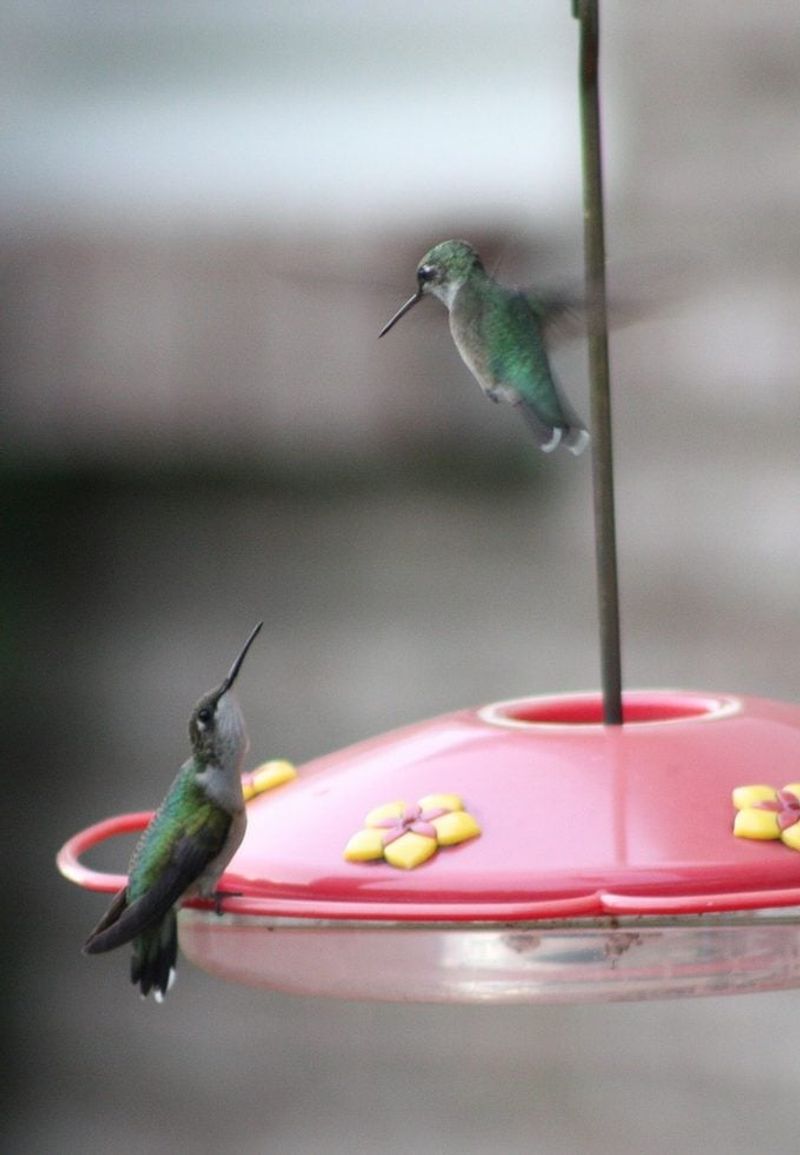
Placement matters more than most people realize. Even if you have multiple feeders, putting them all in view of each other can still allow one bird to guard them all.
The trick is to break up the sightlines so the dominant bird cannot see every feeder from one spot.
Placing feeders around corners of the house is a classic trick that works really well. If a bird cannot see the second feeder from its perch near the first one, it has a much harder time knowing when to chase.
Out of sight often means out of mind for a territorial hummingbird. Tall plants, fences, or garden structures can also act as visual barriers between feeders.
A thick hedge or a trellis covered in vines can block the view just enough to make a big difference.
You do not need to completely hide the feeders from humans. You just need to break the line of sight from one feeder to another.
This strategy works especially well when combined with adding more feeders overall. Together, these two approaches can dramatically reduce how often chasing happens.
Subordinate birds get a real chance to feed in peace, and the dominant bird spends less time and energy trying to guard everything at once.
Your yard becomes a more welcoming space for all the hummingbirds in the neighborhood, not just the boldest one.
9. Flowers Nearby Give Less Dominant Birds Another Option
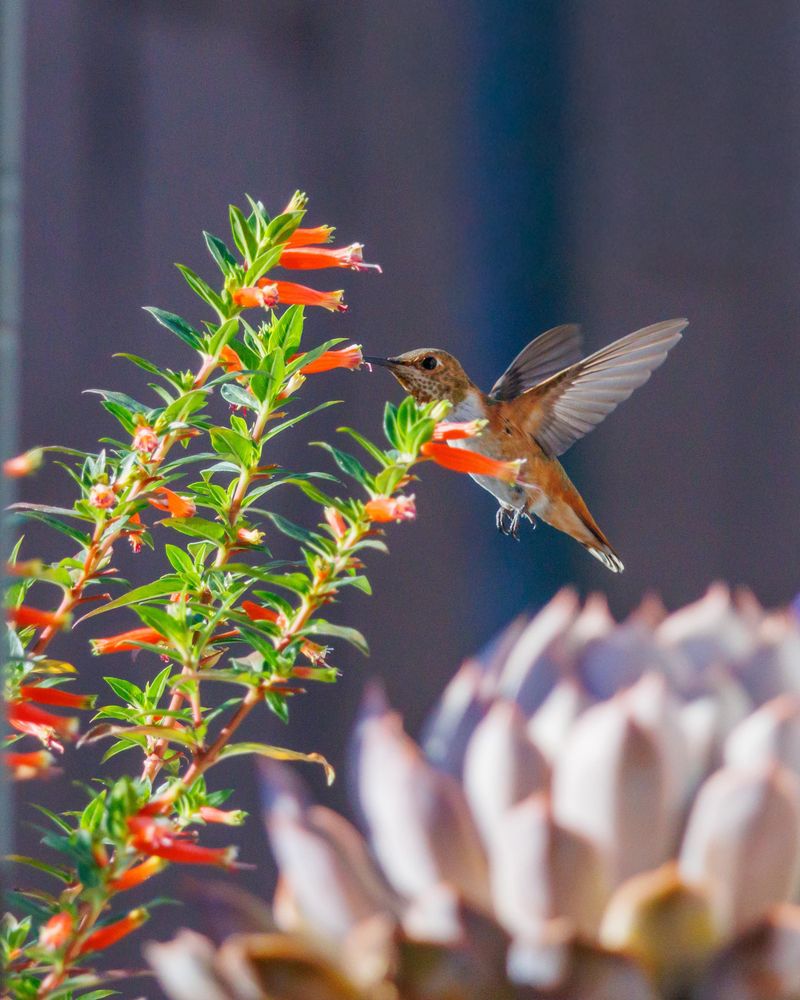
Planting flowers that hummingbirds love is one of the most rewarding things you can do for these birds. Flowers offer a natural food source that no single bird can realistically guard.
With blooms spread across a garden, less dominant birds have somewhere else to go when they get chased away from the feeder.
Tubular flowers are the best choice because hummingbirds can reach the nectar easily with their long beaks. Salvia, penstemon, fuchsia, and honeysuckle are all excellent options that grow well in many parts of the country.
Planting a variety of species that bloom at different times of year keeps the food supply going across multiple seasons.
When a less dominant bird gets chased from the feeder, having flowers nearby means it does not have to leave the yard entirely. It can simply shift to the garden and keep feeding.
Over time, some birds may even prefer the flowers over the feeder, which naturally reduces competition at the feeder itself.
Native plants are especially valuable because they have evolved alongside local hummingbirds over thousands of years.
In California, plants like sticky monkeyflower and red columbine are native favorites that attract hummingbirds reliably.
A yard full of both feeders and flowers becomes a true hummingbird haven, one where even the shyer, less aggressive birds can find food and feel at home throughout the season.