What It Means When Crows Suddenly Gather In Your California Yard
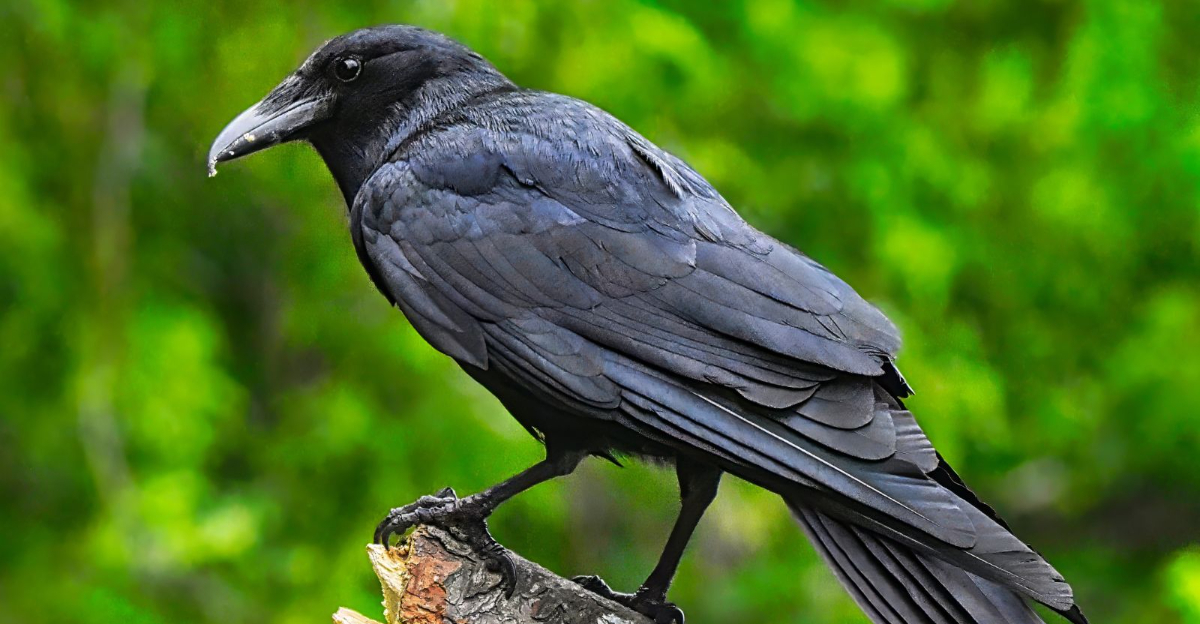
You walked outside this morning and suddenly there are crows everywhere. Like, a lot of crows.
Way more than usual. And now you are standing in your California yard wondering what on earth is going on and whether you should be concerned.
First of all, deep breath. Second of all, this is actually a pretty fascinating situation once you understand what is behind it.
American crows are some of the most socially complex and genuinely intelligent birds you will encounter in a backyard setting, and when they show up in numbers, there is almost always a logical explanation.
Food, family behavior, a nearby predator, or the early formation of a communal roost can each bring multiple crows into the same space at the same time.
Cornell Lab of Ornithology and UC IPM both have useful things to say about exactly this kind of crow activity.
1. A Food Source May Have Caught Their Attention
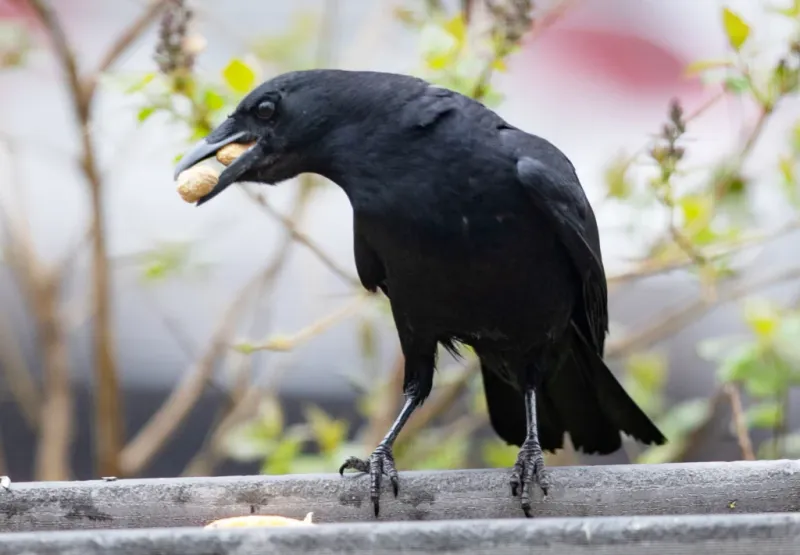
Looking out the window to find four or five crows working the same corner of a California yard repeatedly is often the clearest sign that something edible has drawn them in.
American crows eat a remarkably varied diet that can include seeds, fruits, berries, nuts, insects, earthworms, and other available materials.
A reliable food source in one spot is often enough to bring multiple birds back to the same location day after day.
Accessible compost bins, uncovered pet food bowls, and outdoor garbage containers can also pull crows into a yard quickly. Crows are observant birds, and once one finds a food source, others in the group tend to follow.
Watching what the birds are actually doing, rather than simply counting how many have appeared, gives a much clearer picture of what may be attracting them.
If the crows are concentrated near a specific part of the garden, spending a few minutes observing their behavior can help narrow things down.
Are they pulling at the soil, picking at fallen fruit, or investigating a container? Each behavior points toward a different explanation.
Reaching a conclusion before watching carefully can lead a gardener to overlook the straightforward reason that a group of social, food-motivated birds has simply found something worth returning to in that part of the yard.
2. Ripening Fruit And Nuts Can Bring A Crowd
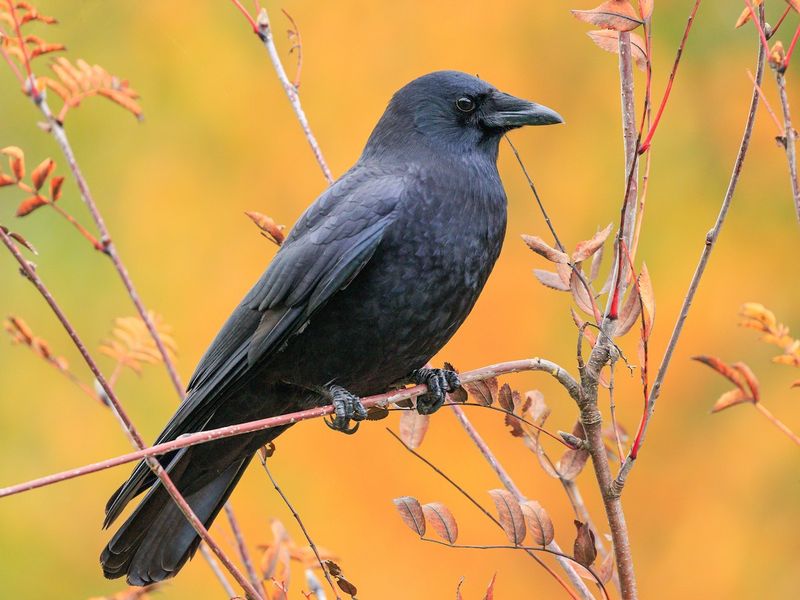
A fig tree heavy with ripe fruit or a walnut tree beginning to drop its harvest can act like a dinner bell for crows passing through a California neighborhood.
UC IPM lists crows among the birds that feed on ripening fruit and nuts and notes that they may gather in groups ranging from a small handful of individuals to considerably larger flocks when a productive food source is available.
Backyards with citrus, stone fruit, figs, persimmons, or nut trees can become attractive seasonal stops.
Seasonal timing matters here. Crows tend to show up in greater numbers when a crop is at its peak ripeness, which is also the window when the fruit is most appealing to a wide range of wildlife.
Your California Garden Changes Every Week. Your Plan Should Too.
Gardening in California changes quickly throughout the season. Every Friday you’ll receive a simple weekly plan showing exactly what to plant, prune, fertilize, harvest, and protect so you never miss the right timing.
A gardener who notices more crows than usual around a particular tree in late summer or fall may simply be witnessing normal opportunistic feeding behavior tied to that year’s harvest.
Blaming crows for every missing or damaged piece of fruit is worth resisting, since other birds, squirrels, and insects can cause similar damage. Observing whether crows are actually feeding in the tree before taking any action is a reasonable first step.
If protecting a crop becomes necessary, UC IPM guidance on physical exclusion methods such as netting offers a starting point that does not harm the birds or the garden ecosystem.
3. Your Lawn May Be Offering An Easy Meal
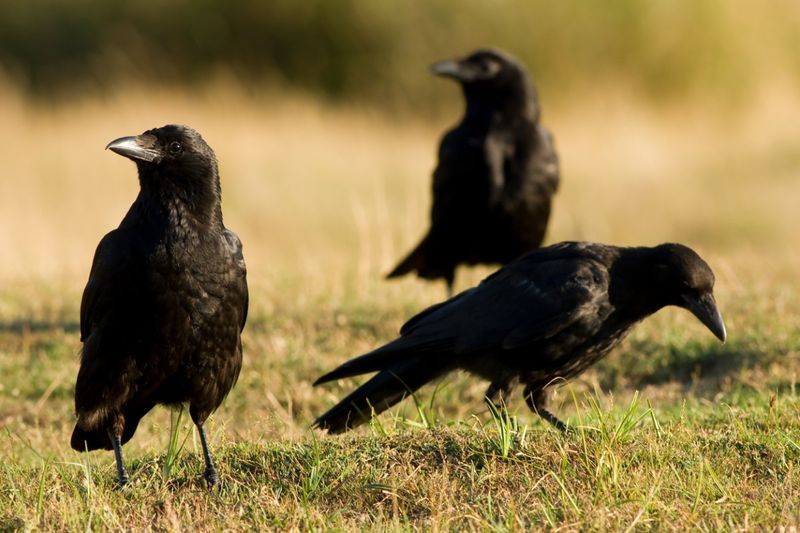
Watching a crow walk slowly across a lawn, pausing to stab its beak into the turf, is a common sight in California neighborhoods, especially after rain or irrigation has softened the soil.
Crows regularly forage on the ground for insects, earthworms, and other invertebrates.
A freshly watered lawn can bring worms closer to the surface and make ground-level foraging much easier for a bird with a strong, capable beak.
UC IPM has documented cases where birds, including crows, probe and pull at turf while searching for white grubs living beneath the surface.
Repeated turf disturbance in the same area of a lawn can be worth investigating, but crow activity alone does not confirm a grub infestation.
UC IPM also notes that insects are not the most frequent cause of unhealthy residential lawns in California, so inspecting the soil before treating anything is a practical and measured approach.
Pulling back a small section of disturbed turf to check for grubs is a straightforward way to find out whether the crows are responding to something living beneath the surface or simply taking advantage of easy earthworm access after watering.
Either way, the birds are doing what foraging ground feeders do.
Treating a lawn with pesticides based only on crow behavior, without confirming an underlying pest problem, is a step that most California gardening guidance would not support.
4. A Predator May Have Sparked The Gathering
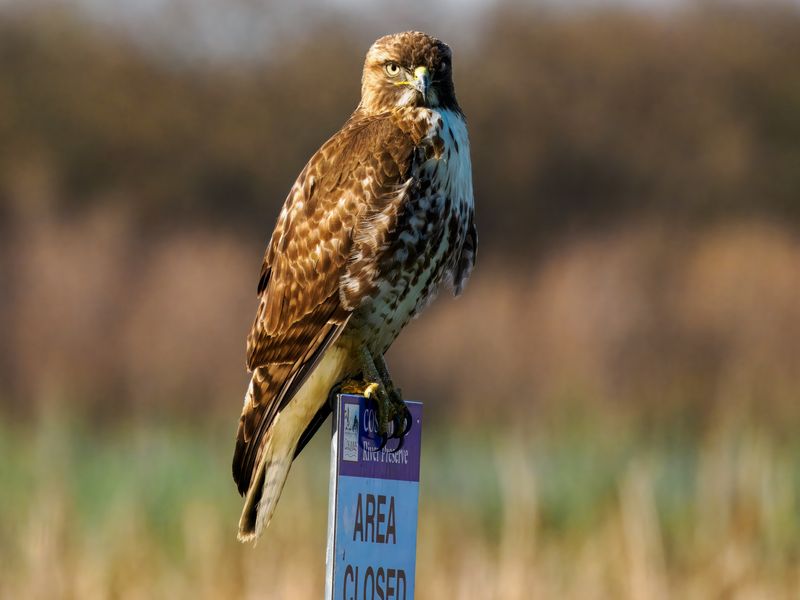
Sudden loud calling, rapid wing movement, and several crows clustering tightly around a single tree or rooftop can point toward something quite different from a food source.
Crows are well known for mobbing behavior, in which a group works together to harass or drive away a perceived threat.
Cornell Lab of Ornithology documents this behavior and notes that raptors, including hawks and owls, are among the animals that commonly trigger it in California yards and neighborhoods.
A red-tailed hawk perched in a neighborhood oak or a great horned owl roosting in a dense garden tree can set off a mobbing response that brings multiple crows in from a wide area.
The crows call loudly, dive repeatedly toward the intruder, and may continue for several minutes before the predator moves on.
To a California homeowner watching from inside, the gathering can look alarming or mysterious without any visible cause.
Scanning the tree or area that the crows seem focused on can often reveal what has caught their attention.
Crows also vocalize for many other reasons, including communicating with family members and responding to unfamiliar objects or situations, so loud calling by itself does not confirm that a raptor is present.
If the birds are circling a specific spot with clear agitation rather than foraging calmly, that behavioral difference is usually the most reliable clue that a perceived threat, rather than a food source, has pulled them together.
5. A Crow Family May Be Traveling Together
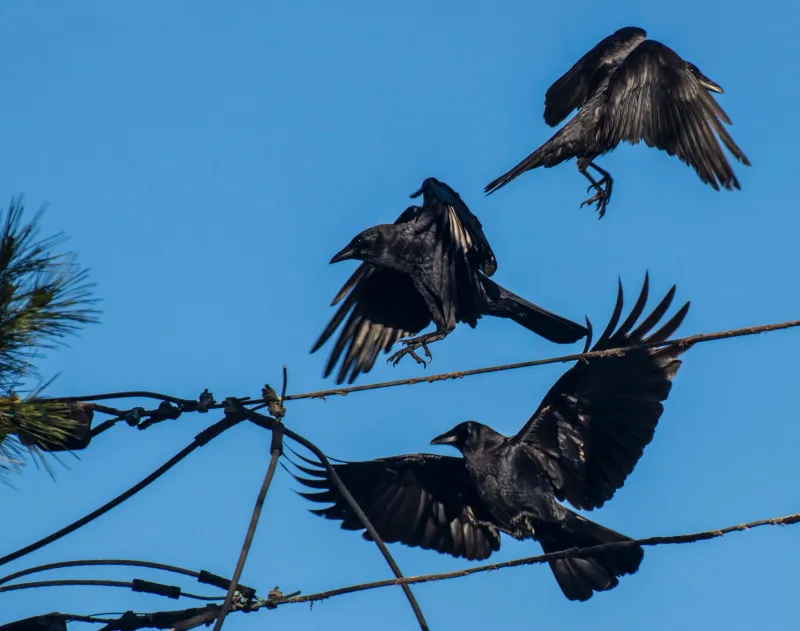
Not every group of crows represents a large flock or a dramatic wildlife event. Sometimes the four or five birds moving through a California backyard together are simply a family.
Cornell Lab of Ornithology describes American crows as birds that can remain in year-round family groups made up of a breeding pair along with offspring from one or more previous years.
These family units forage, travel, and rest together as a regular part of their social lives.
Younger birds that hatched in earlier seasons may stay with their parents rather than immediately dispersing, and they sometimes help raise the next generation of siblings.
This kind of cooperative family structure means that a small group of crows visiting the same yard repeatedly could reflect a stable, ongoing social bond rather than a random gathering.
The birds may be working a familiar foraging route that runs through several properties in the same neighborhood.
Recognizing this possibility can shift the way a gardener thinks about a repeated crow presence.
Instead of assuming that something unusual has happened in the yard, the simpler explanation is often that a family group has incorporated that space into a route they travel regularly.
Their behavior when foraging together tends to be calm and purposeful rather than agitated, which can help distinguish a family foraging visit from the kind of excited gathering that a predator or disturbance might produce.
6. Young Crows May Be Joining The Group
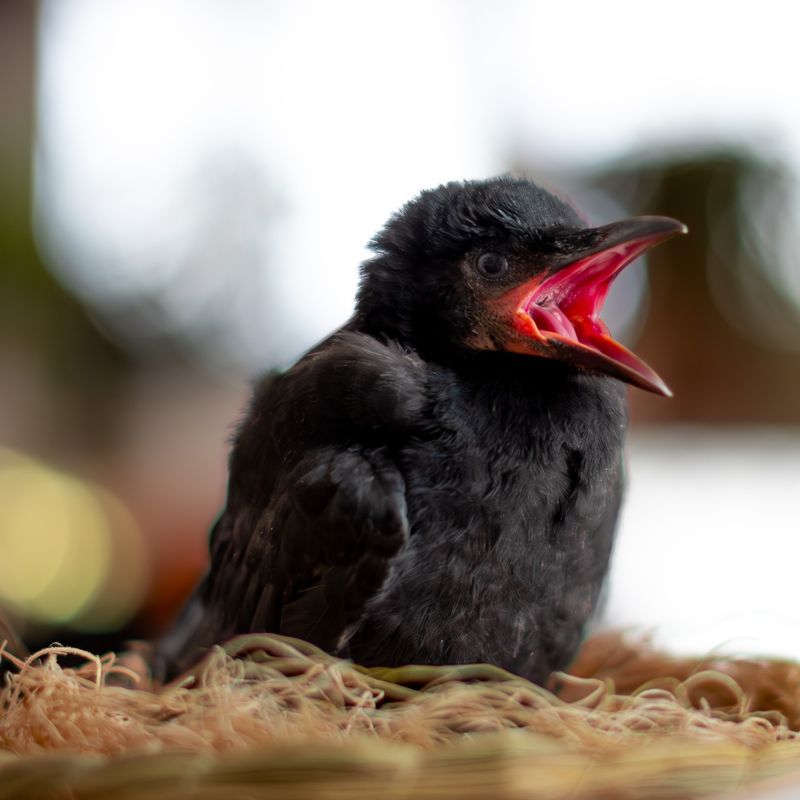
Family groups of crows can become more visible and more active as younger birds grow capable enough to move around and forage alongside older relatives. After leaving the nest, young crows do not immediately head off on their own.
They typically remain with their parents and other family members, learning foraging skills and navigating California neighborhood landscapes together.
This means that a group of crows that seems to have grown larger over a short period may simply include newly mobile young birds joining their family’s daily routine.
Identifying a young crow by size alone is tricky because recently fledged birds can reach a size close to that of an adult fairly quickly.
Cornell Lab notes that young American crows can be distinguished by behavioral cues such as begging postures and calls directed toward adult birds, along with subtler physical details like slightly duller or brownish-tinged feathers compared to the glossy black plumage of adults.
Watching how the birds interact with one another can be more informative than trying to judge size from a distance.
Seeing a group that includes birds soliciting food from others, or adults appearing to feed younger individuals, is a reasonable sign that a family with recent fledglings is moving through the area.
This kind of activity reflects normal crow social development and does not suggest that the California yard has a problem.
Observing the group’s behavior over a few days can reveal whether the pattern is consistent with a family traveling together.
7. A Communal Roost May Be Forming Nearby
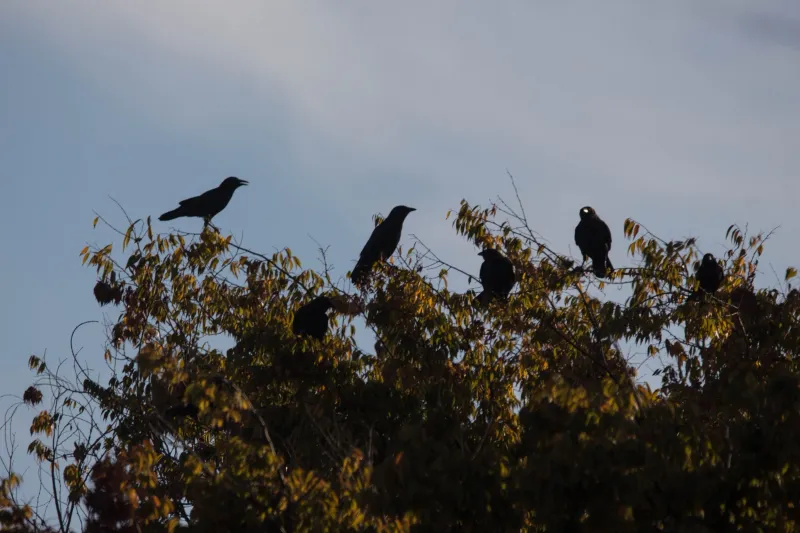
As afternoon light fades and evening settles over a California neighborhood, crows that have been spread across a wide foraging area begin moving in a consistent direction.
This kind of late-day movement can be connected to a communal roost forming somewhere nearby rather than to any specific feature of one particular yard.
Cornell Lab of Ornithology documents that American crows can gather in large communal nighttime roosts, with winter roosts sometimes holding impressive numbers of birds.
California Department of Fish and Wildlife has noted that urban areas can be attractive roosting locations because they offer large trees and slightly warmer temperatures compared to surrounding open land.
A neighborhood with mature street trees, parks, or dense landscaping may become a staging area where crows gather before settling into a roost for the night.
Homeowners who notice crows moving through their yard repeatedly near sunset, always heading in roughly the same direction, may be watching birds traveling a pre-roost route.
This kind of activity tends to be more noticeable during fall and winter when roost sizes can grow larger.
The birds passing through a specific yard in the evening are likely using it as one waypoint along a broader movement corridor rather than treating the property as their destination.
Watching the general direction the crows travel at dusk over several evenings can help confirm whether a communal roost may be located somewhere in the surrounding neighborhood.
8. Your Yard May Simply Fit Their Foraging Routine
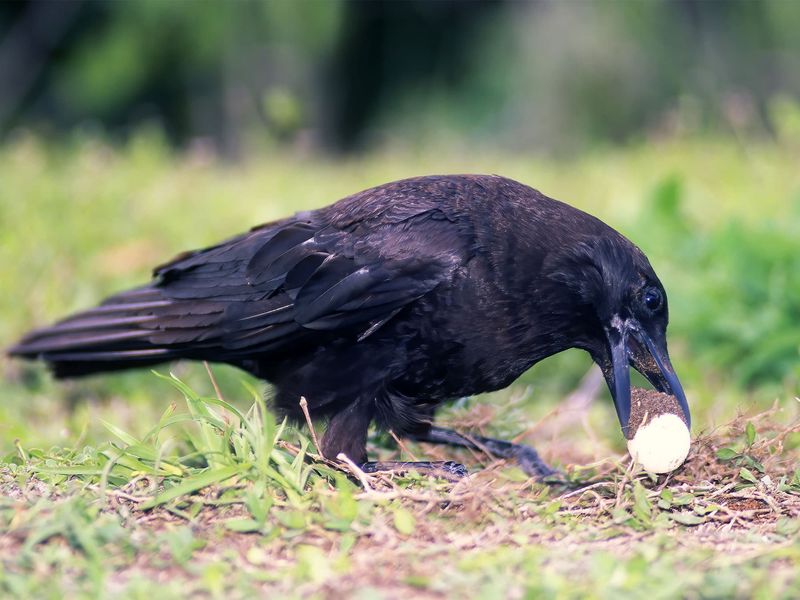
Open lawn, mature trees, a garden bed with loose soil, and a neighborhood full of similar properties can make a California yard a natural stop along a crow’s daily foraging route.
Cornell Lab of Ornithology notes that American crows readily occupy human-modified environments that offer open ground, trees, and accessible food opportunities.
A yard that combines several of these features may simply be a convenient and familiar place for a group of crows to spend part of their day.
Repeated visits do not necessarily mean the birds have permanently settled on one property. Crows tend to cover a broad area when foraging, moving between lawns, parks, garden spaces, and neighborhood streets as they work through a territory.
A yard that sees crow activity several days in a row may be one reliable stop within a much larger daily circuit that the birds run through consistently.
For most California gardeners, this kind of routine crow presence does not call for any particular response.
Watching what the birds are doing, noticing which parts of the yard attract them most, and checking whether any obvious food source or attractant is pulling them in are all reasonable observations to make before deciding whether any change is needed.
Crows are adaptable, social, and observant birds that fit comfortably into the same landscapes that California gardeners spend time cultivating, and their presence often reflects how well a yard supports local wildlife.