How To Tell When A California Potted Citrus Tree Has Outgrown Its Container
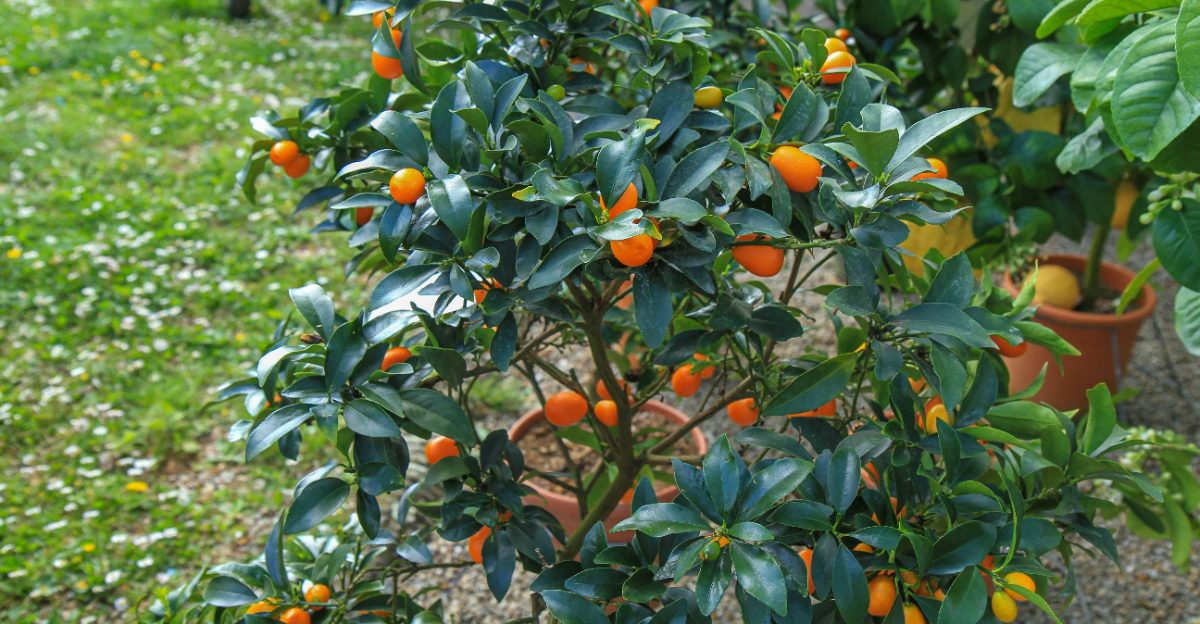
A potted citrus tree can look perfectly content for years, happily producing glossy leaves, fragrant blossoms, and the occasional crop of fruit.
Then one day, the same container suddenly starts feeling a lot smaller than it used to. That change is easy to miss because citrus trees do not exactly send out moving notices.
Growth may continue, the canopy can still look healthy, and nothing about the pot itself seems dramatically different. Yet something beneath the surface may be getting increasingly cramped.
California’s warm growing conditions can keep container citrus active for long stretches, which means space eventually becomes part of the care equation.
The tricky part is knowing when the tree has truly outgrown its home and when it simply needs ordinary seasonal attention.
Repotting too early can create unnecessary work, while waiting too long may make the transition harder on the plant.
A few subtle clues can help reveal when the container is no longer keeping up with the tree inside it.
1. Roots Are Circling Around The Bottom Of The Pot
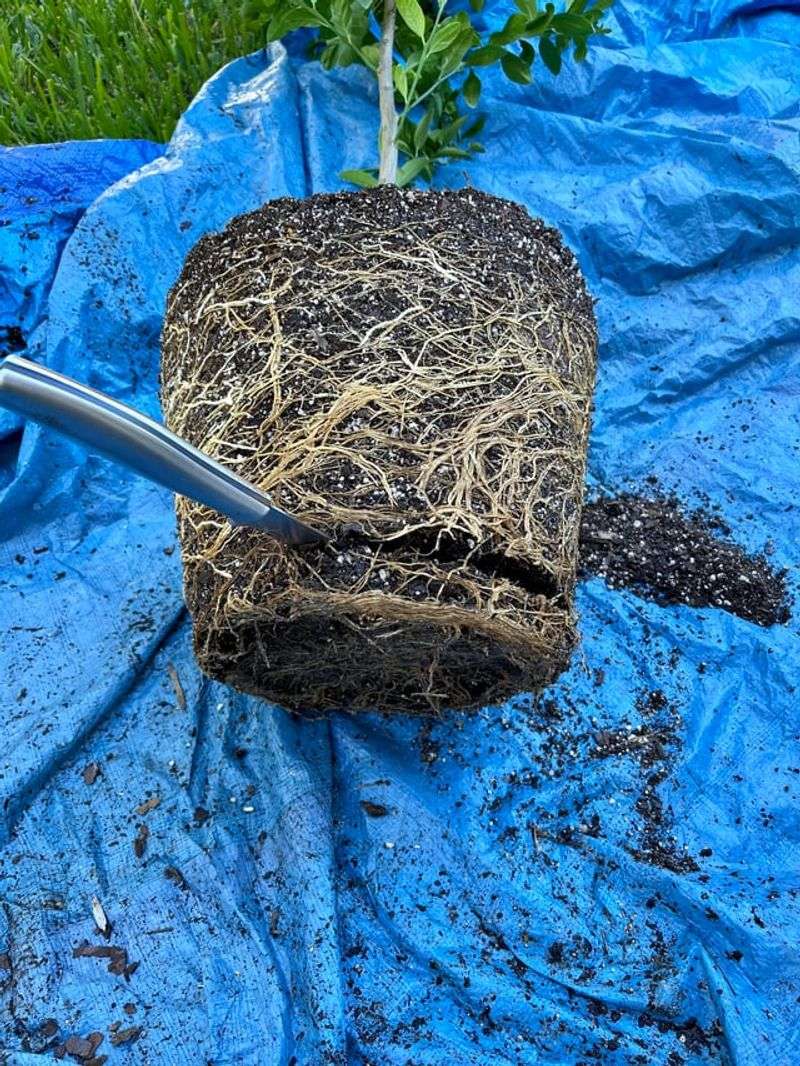
One of the most telling signs that a potted citrus tree needs a bigger home is what happens at the very bottom of the container. When roots run out of space to spread outward, they start circling.
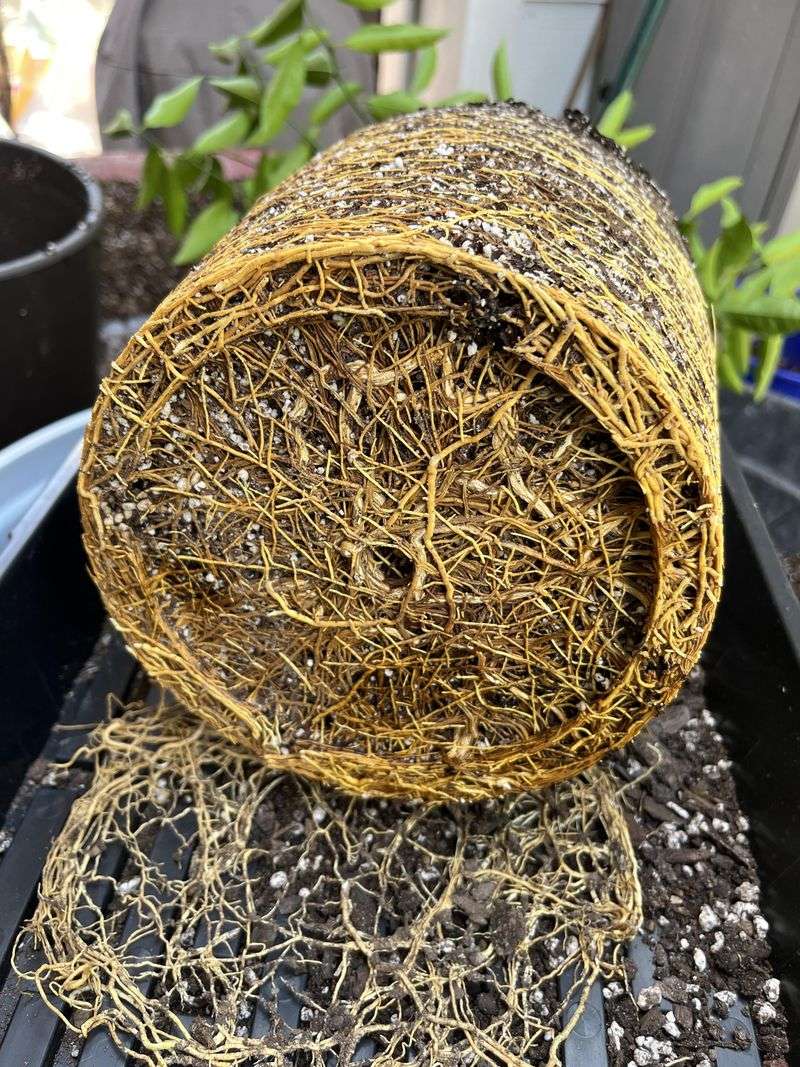
They wrap around and around the inside of the pot, following the shape of the container instead of growing freely.
This is called root binding or being “pot-bound,” and it is more serious than it sounds. Circling roots can eventually choke each other out, cutting off the flow of water and nutrients to the rest of the tree.
You might not notice this problem right away because it happens underground, hidden beneath the soil.
To check for this, gently tip the pot on its side and try to slide the root ball out. If you see a thick mat of roots swirling in a circular pattern at the bottom, that is a clear signal the tree needs repotting.
Healthy roots should spread outward in different directions, not coil like a spring.
When you do repot, gently loosen those circling roots with your fingers before placing the tree in its new container. This helps redirect them outward so they can grow properly.
Choosing a pot that is two to four inches wider than the current one gives roots the fresh space they need.
2. Water Runs Straight Through Too Quickly
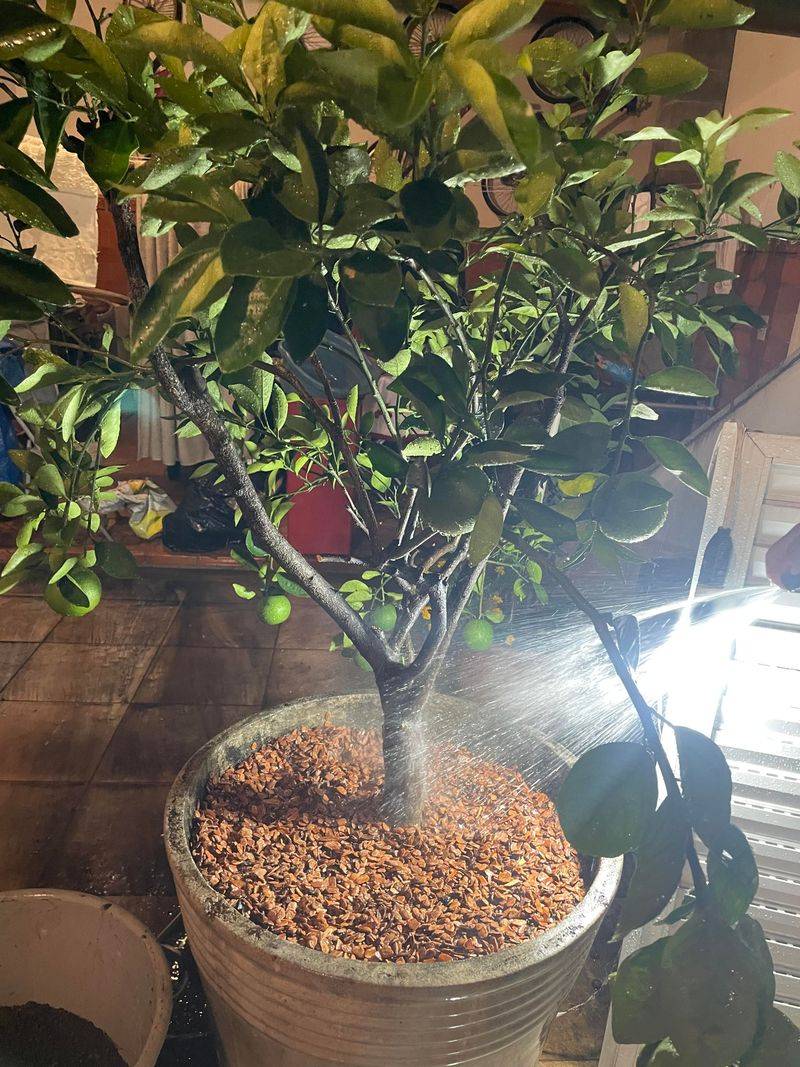
Ever notice water pouring out of the drainage holes almost as fast as you pour it in? That is not normal, and it is actually a red flag worth paying attention to.
When a pot becomes too packed with roots, there is barely any soil left to absorb moisture.
Healthy soil acts like a sponge. It soaks up water slowly and holds it long enough for the roots to drink it up.
But when roots crowd out the soil, water has nowhere to go except straight down and out. Your tree ends up thirsty even after you water it, which can cause stress over time.
Your California Garden Changes Every Week. Your Plan Should Too.
Gardening in California changes quickly throughout the season. Every Friday you’ll receive a simple weekly plan showing exactly what to plant, prune, fertilize, harvest, and protect so you never miss the right timing.
This problem often sneaks up on gardeners because the pot looks watered from the outside. The water goes in and comes right back out, and the tree never really gets what it needs.
You might even start watering more often without realizing the real issue is a lack of soil space.
A simple test is to water the tree slowly and watch how quickly the water drains. If it rushes out in seconds with no pause, the roots have taken over.
Moving the tree to a larger pot with fresh potting mix designed for citrus gives the soil a chance to do its job again. Proper drainage matters, but so does proper absorption.
3. The Soil Dries Out Faster Than It Used To
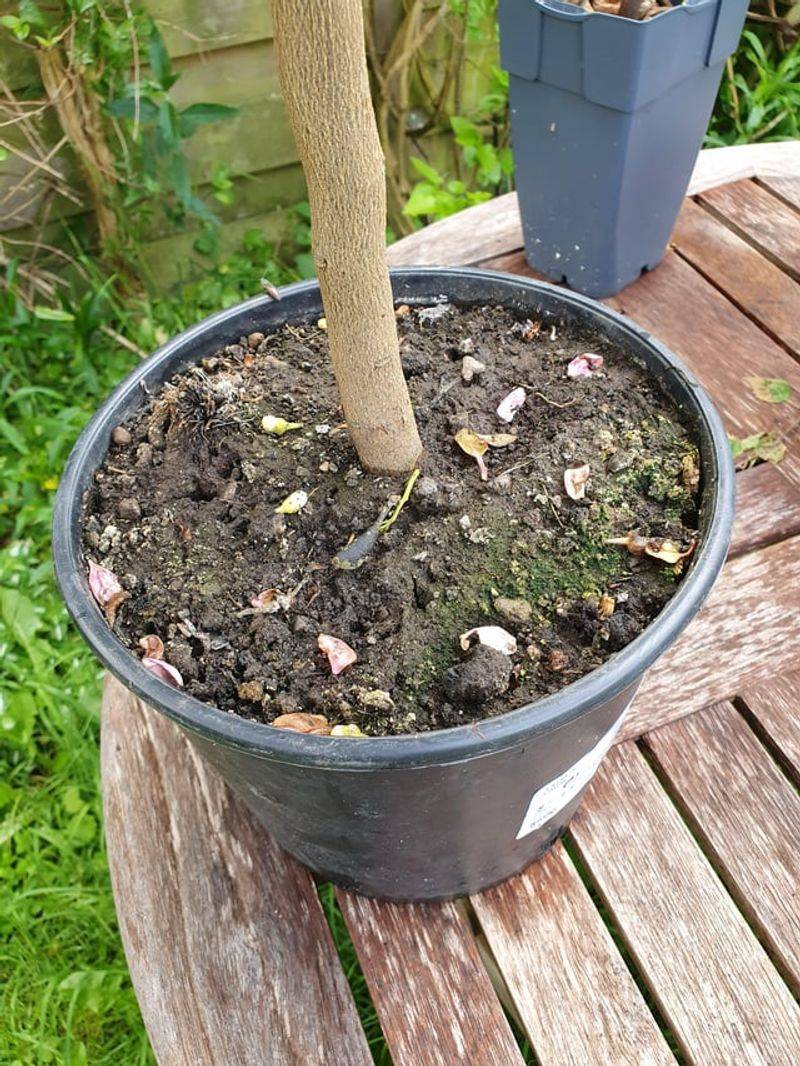
There was probably a time when you watered your citrus tree and the soil stayed moist for a few days.
If that is no longer the case and the soil seems dry again within a day or two, something has changed. Faster soil drying is one of the sneakiest signs that a tree has outgrown its pot.
As roots grow larger and more numerous, they take up more and more of the space inside the container. Less soil means less water retention.
The roots themselves also drink more water as the tree matures, which speeds up how quickly the pot dries out after each watering session.
You might also notice the soil pulling away from the sides of the pot as it dries. This happens when there is so little soil left that it shrinks and cracks as moisture evaporates.
Water can then run down the sides of the gap instead of soaking into the root zone, making the problem even worse.
Sticking your finger an inch or two into the soil is a good way to track moisture levels. If it feels bone dry after just one day, that is not typical.
Fresh potting mix in a larger container will hold moisture much better, giving the roots consistent hydration. Citrus trees do best when the soil stays evenly moist, not soaking wet and not bone dry.
4. New Growth Starts Looking Smaller Or Weaker
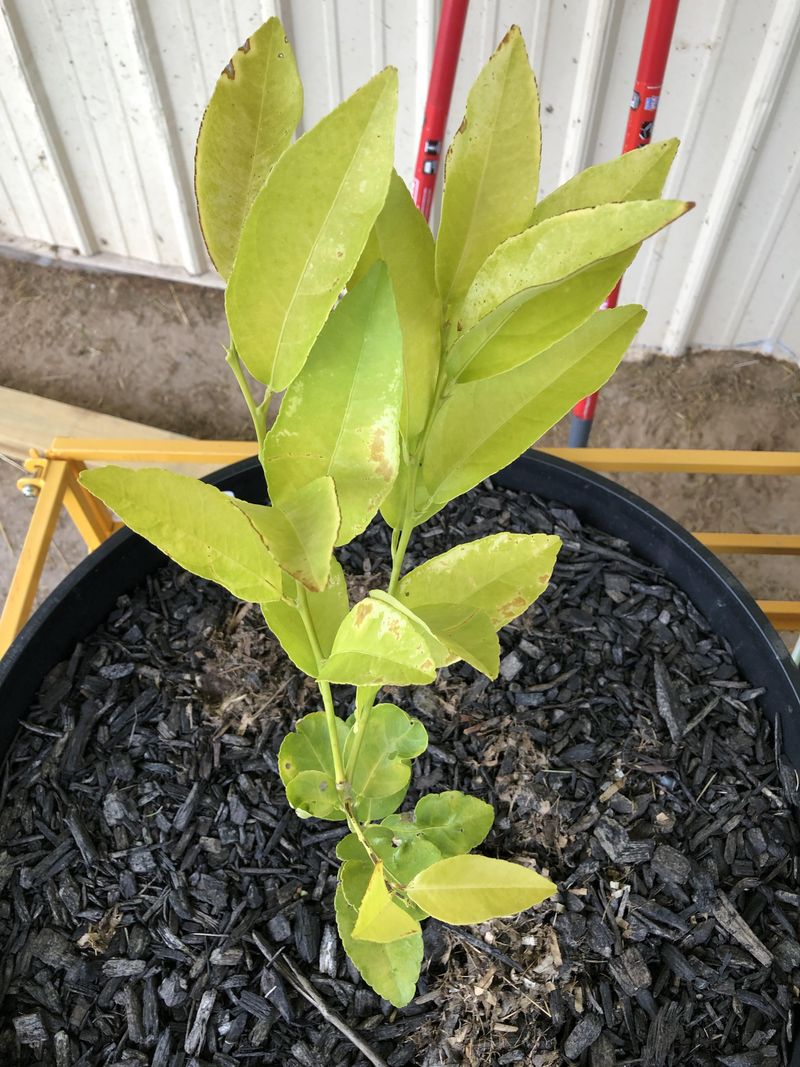
Healthy citrus trees in California push out vibrant, full-sized new leaves and strong new branches during the growing season.
When new growth starts coming in smaller than usual, lighter in color, or looking a little limp, that is the tree sending a message. Something is holding it back, and an overcrowded root system is often the reason.
Roots that are jammed into a too-small pot struggle to pull in enough nutrients and water. Even if you are fertilizing regularly, the tree cannot absorb what it needs when the roots are stressed and suffocated.
Growth slows because the tree simply does not have the resources to support new development.
Yellowing leaves on new growth can also point to this problem. When roots are too crowded, iron and other nutrients become harder for the tree to take up.
The result is pale, yellowish leaves that never quite reach their full, glossy green color. This is often mistaken for a fertilizer problem, but repotting can fix it entirely.
Comparing current new growth to photos from previous seasons is a helpful trick. If the difference is obvious, the root system is likely the culprit.
Giving the tree a larger container with nutrient-rich citrus potting mix can bring back that lush, vigorous growth fairly quickly. Trees are resilient when given the right conditions to recover and thrive.
5. The Tree Becomes Top-Heavy And Tips Easily
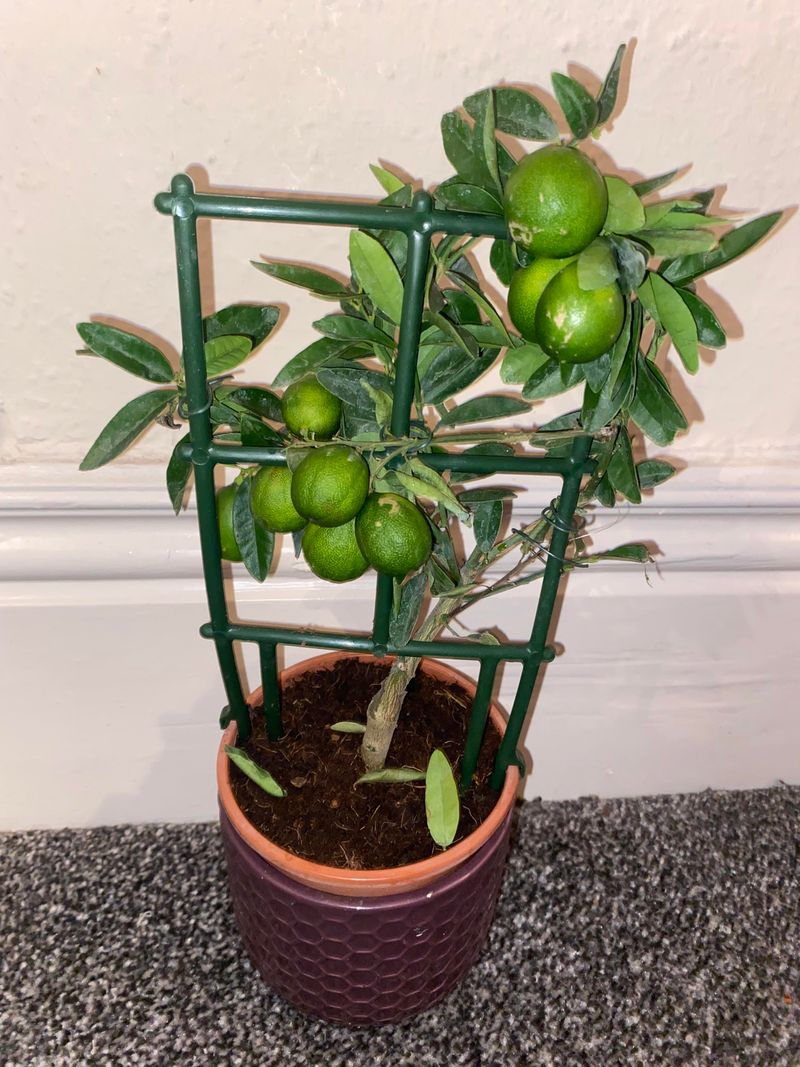
A potted citrus tree that keeps falling over is not just an annoyance. It is actually a sign that something is out of balance.
As the tree grows taller and its canopy gets fuller, the weight above the soil increases. If the pot has not grown with it, the whole setup becomes unstable.
When a tree is young, the pot and the plant are roughly proportional. But over time, the canopy expands, branches thicken, and the tree gets heavier on top.
A small or shallow pot can no longer anchor it properly, especially when wind comes through or someone brushes against it.
This tipping problem is especially common in California, where patio-grown citrus trees can get quite large. Outdoor conditions like afternoon breezes make stability even more important.
A tree that tips repeatedly can suffer from broken branches or disturbed roots, both of which set back its overall health.
Upgrading to a heavier, wider pot solves this in two ways. First, the extra weight of a larger container lowers the center of gravity.
Second, more soil and root room helps the tree anchor itself more firmly. Whiskey barrel-style planters or wide ceramic pots work especially well for larger citrus trees.
Look for a container that is at least a few inches wider and deeper than the current one to restore balance and stability.
6. Roots Begin Pushing Out Of The Drainage Holes
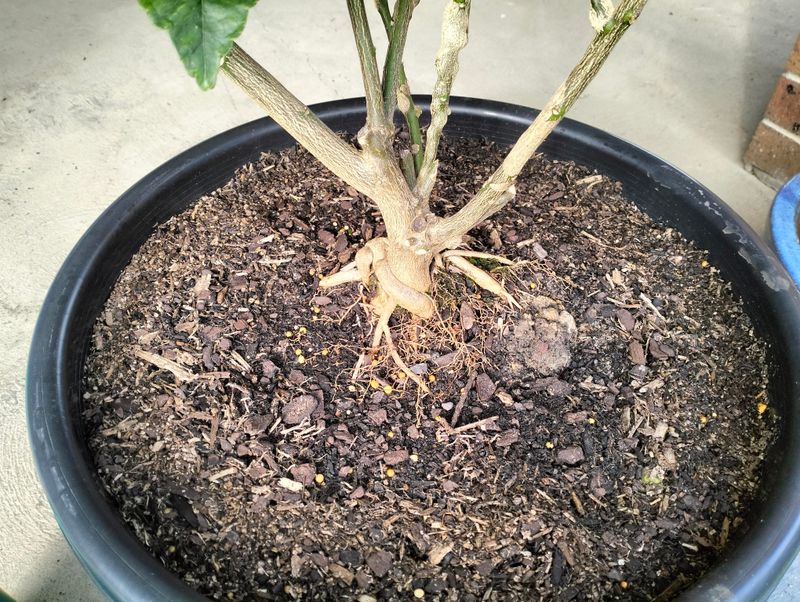
Roots poking out of the drainage holes at the bottom of a pot are one of the most obvious signs that a citrus tree has run out of space.
Roots grow toward moisture and air, and when the inside of the pot is completely packed, they start searching for an exit. The drainage holes are the easiest escape route.
Seeing one or two thin roots peeking out is not always an emergency. But when thick, well-developed roots are visibly pushing through and curling around the outside of the pot, that is a clear sign repotting should happen soon.
The tree is telling you, in the most direct way possible, that it needs more room. Roots that grow out of drainage holes can also block the holes themselves over time.
When drainage is restricted, water pools inside the pot and can lead to soggy conditions that harm the roots. It becomes a cycle that gets harder to fix the longer it is ignored.
Checking the bottom of your pot every few months is a smart habit. If roots are escaping, it is time to move up to the next pot size.
When repotting, trim any roots that have grown out of the holes before placing the tree in its new container.
This helps encourage healthy inward root growth and prevents the same problem from happening again too quickly.
7. Fruit Production Can Slow As Roots Get Crowded
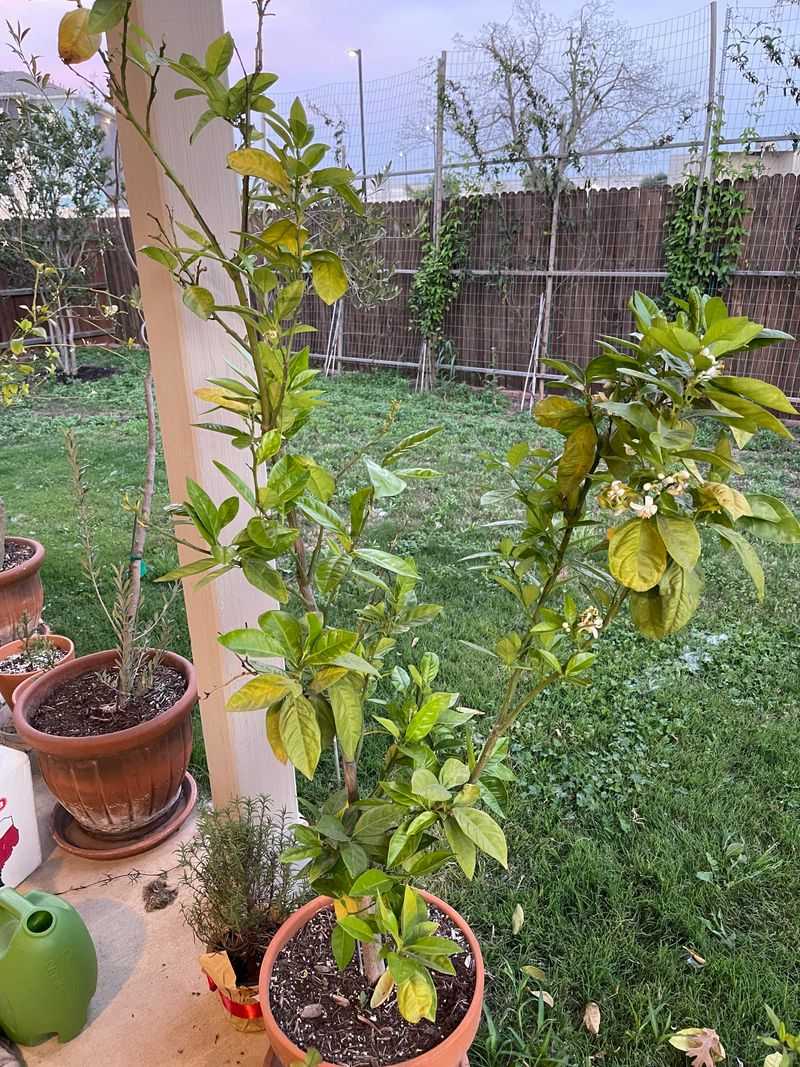
Few things are more disappointing than a citrus tree that used to produce well but suddenly seems to have given up on fruiting.
If your tree is flowering less, dropping fruit early, or producing smaller fruit than before, the root system could be the problem. Crowded roots affect every part of the tree, including its ability to fruit.
Producing fruit takes a lot of energy. The tree needs strong roots to pull in water, phosphorus, potassium, and other nutrients that support flowering and fruit development.
When roots are jammed into too small a space, nutrient uptake drops and the tree starts conserving energy. Fruiting is often the first thing to suffer.
Some gardeners assume the issue is a lack of fertilizer and add more, but extra fertilizer cannot fix a root space problem. The roots need physical room to function well.
Adding nutrients to an already stressed root system can sometimes make things worse by building up salts in the crowded soil.
Repotting into a larger container and refreshing the soil can bring fruiting back within a season or two in California.
Pair this with a balanced citrus fertilizer applied at the right time of year, and the tree often rebounds nicely.
Patience is key after repotting, as the tree first focuses energy on establishing its roots before putting effort back into fruit production.
8. The Pot Feels Packed Solid With Roots
Sometimes you do not even need to remove the tree from its pot to know something is wrong.
If pressing down on the top layer of soil feels like pressing on a hard, solid block, the inside of the container is likely packed tight with roots.
Healthy soil has some give to it. Dense, immovable soil near the surface is a giveaway. You might also notice roots growing right at or above the soil line. When roots have nowhere else to go, they start heading upward.
Seeing a network of roots on top of the soil, weaving around each other, means the underground space is completely used up. The tree has essentially filled its container from top to bottom.
This level of root density makes it hard for air to circulate through the soil as well. Roots need oxygen to function, and when soil is replaced almost entirely by roots, the whole system becomes less efficient.
Water and nutrients struggle to reach all parts of the root ball evenly.
Sliding the root ball out of the pot confirms this quickly. If it comes out in one solid, pot-shaped mass that holds its form perfectly, the roots have taken over completely.
A fresh start in a pot that is at least two to four inches wider gives the roots breathing room. Use a quality citrus potting mix to fill in around the root ball for the best results.