Where To Plant A Florida Sabal Palm For The Best Tropical Look
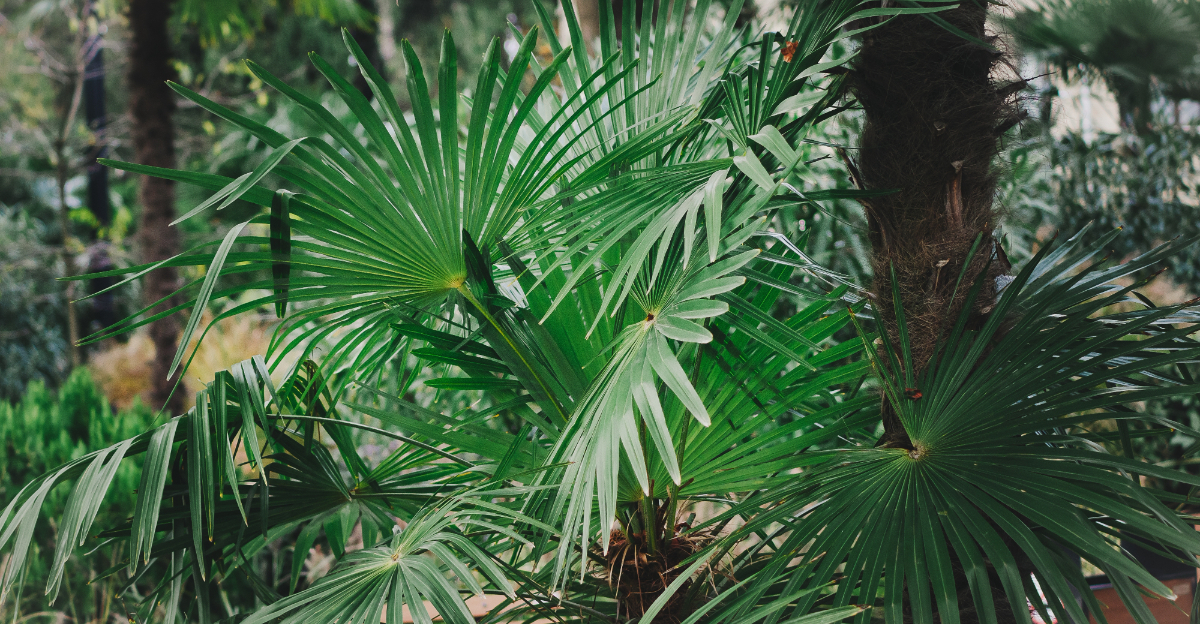
A Florida sabal palm can turn an ordinary yard into a place that feels coastal, but the tree itself does not create that effect alone. Its position does.
One palm beside a house can look grand and natural. The same palm ten feet away can make the yard feel empty.
That is why placement deserves more thought than people give it. Your eye notices proportion, distance, height, and what sits behind the trunk long before soil or care enters the picture.
The strongest tropical yards use sabal palms almost like architecture, with each tree set where it adds shape, depth, and character while the scene stays open. Your goal is not to find a patch of grass and fill it.
You want the palm to look as though the yard always had a place reserved for it. Find that spot, and the tree ceases to look placed.
It looks inevitable.
1. Give A Sabal Palm An Open Lawn To Own
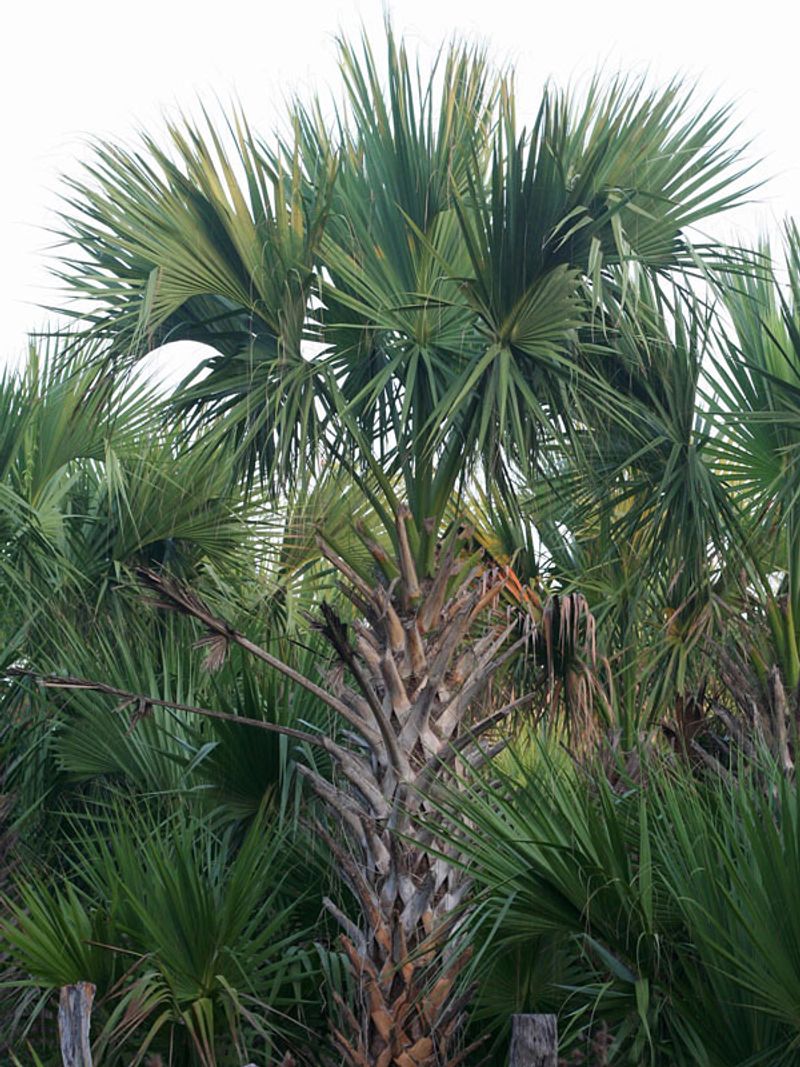
An open stretch of lawn gives a sabal palm exactly what it needs to make a visual statement. Without tall shrubs or competing trees crowding the frame, the trunk reads as a clean vertical line and the crown spreads out against the sky.
That combination is what makes the classic tropical look so satisfying.
Low groundcovers or simple mulched beds around the base of the palm reinforce the effect. They keep the eye moving upward rather than pulling attention sideways.
Ornamental grasses, liriope, or native groundcovers all work well without stealing the spotlight.
Not every open lawn position is automatically ideal, though. Sight lines matter.
Place the palm off-center toward a natural viewing angle from the street or main entrance. That feels more intentional than dropping it in the middle of the yard with no relationship to the surroundings.
Property size plays a role too. On a smaller lot, one well-placed specimen creates a strong focal point without overwhelming the space.
On a larger property, that same palm may need a bit more visual anchoring through surrounding plantings to avoid looking lost.
Mature clearance is worth considering from day one. Sabal palms can reach 40 to 50 feet tall, according to UF/IFAS, so the open space that looks generous today should still feel right when the crown is fully developed.
2. Plant Three Together For A Bigger Tropical Effect
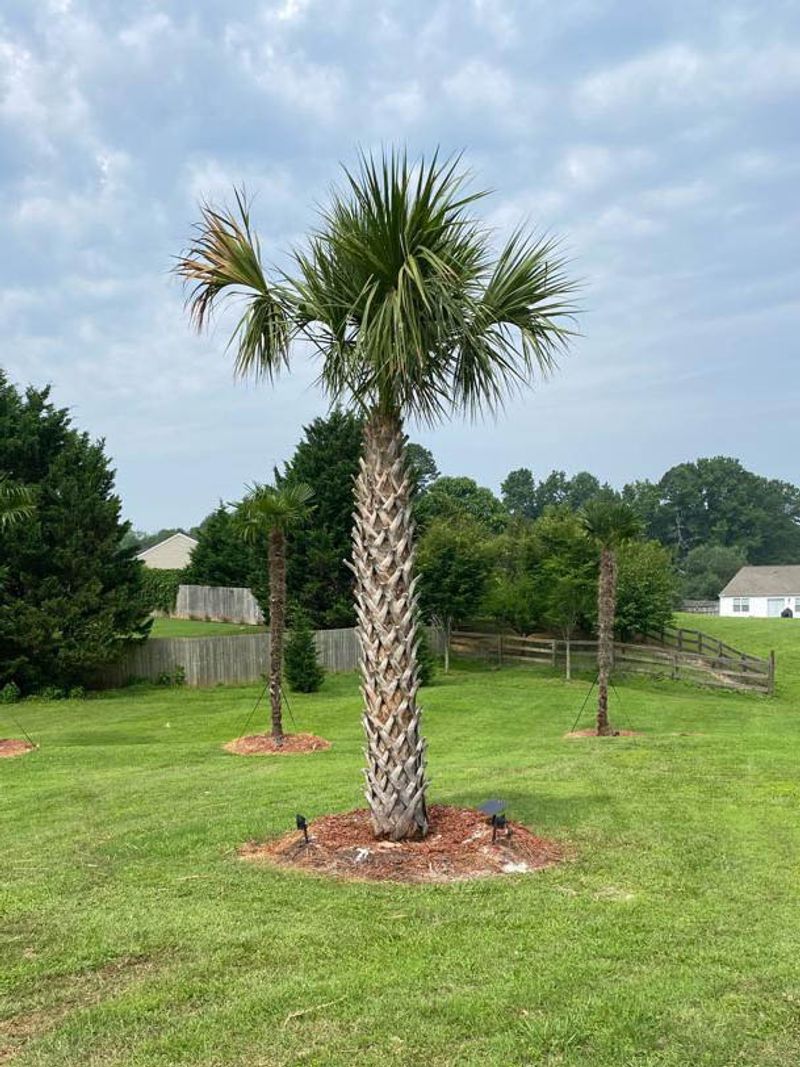
Three palms almost always look better than one rigid row. A small group of sabal palms in a loose, staggered arrangement creates depth and natural composition.
A single specimen or evenly spaced row usually cannot create the same effect.
Staggering the positions means placing the palms at different distances from each other and from the viewer. A triangle-shaped layout, with no two palms sharing exactly the same line, gives the grouping a relaxed and organic quality.
That approach mirrors how palms grow naturally in Florida hammocks and coastal areas.
UF/IFAS guidance on palm groupings supports spacing palms so their crowns have room to develop without crowding each other. Mature sabal palms can develop crowns roughly 10 to 14 feet wide.
Your Florida Garden Changes Every Week. Your Plan Should Too.
Gardening in Florida changes quickly throughout the season. Every Friday you’ll receive a simple weekly plan showing exactly what to plant, prune, fertilize, harvest, and protect so you never miss the right timing.
Planting the trunks too close together can eventually force those crowns to compete for light and space.
Varying the heights of the palms at planting adds another layer of visual interest. Starting with palms of different sizes means the grouping will mature with more natural variation rather than looking uniform and flat.
A grouping also softens the transition between a structure and the open yard. Three sabal palms near a property corner or garden edge can create an effective backdrop.
They make the landscape feel more lush and layered without requiring a complicated planting plan.
3. Use The Crown To Frame A Pool Or Patio
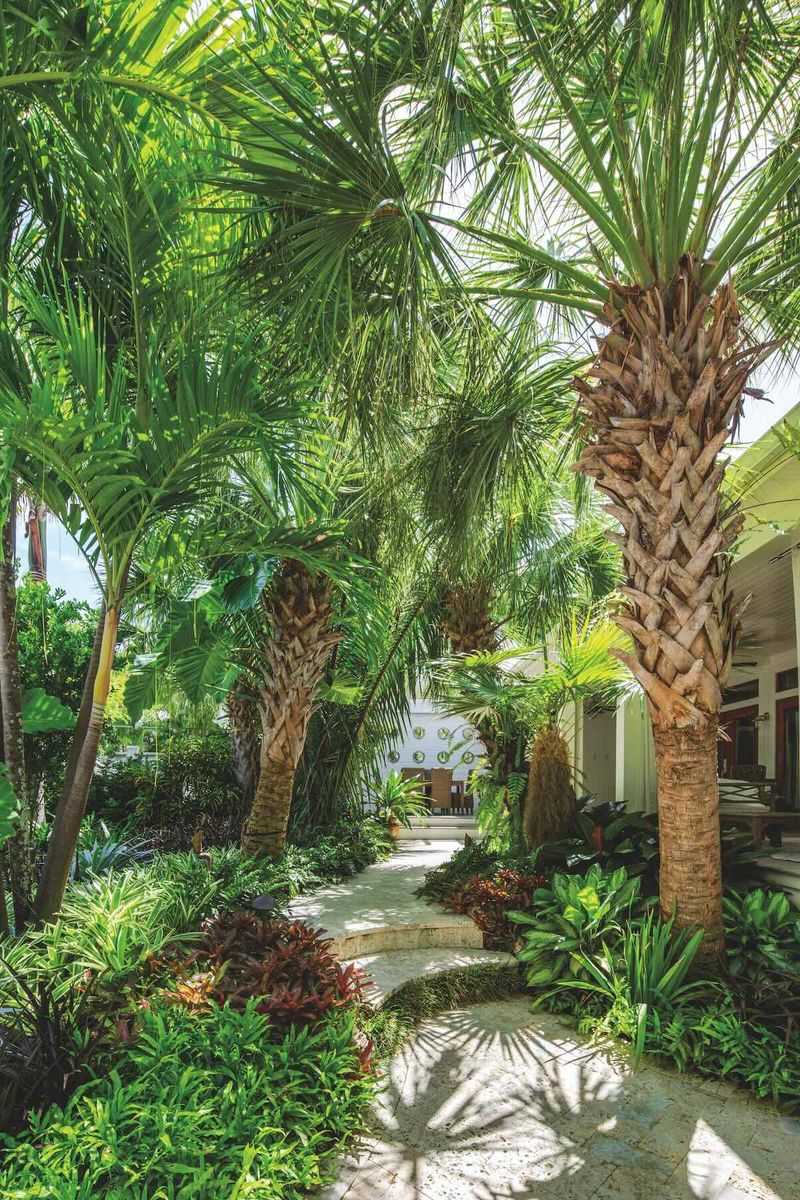
Florida pool and patio areas feel more like a tropical retreat when palms are part of the scene.
Sabal palms are especially useful here because their elevated crowns create a canopy effect overhead while leaving the ground level relatively open and uncluttered.
Position palms beyond the edge of a pool or patio rather than directly beside the seating area. This lets the crown arch into view without the trunk interrupting usable space.
Looking outward from a lounge chair or the water, the crown frames the sky and adds a resort-style backdrop to an otherwise simple backyard.
Old fronds do drop from sabal palms as the crown grows. Placing palms thoughtfully beyond the immediate pool surround reduces how often dropped fronds land in the water or on furniture.
UF/IFAS notes that proper palm placement can reduce maintenance issues related to debris.
Crown spread should be factored into the placement decision before planting. Sabal palms are not broad-canopied shade trees, but their crowns still extend outward and will eventually influence what falls below them.
Pairing sabal palms with lower tropical plantings like bird of paradise, heliconia, or ornamental grasses between the palm trunks and the patio edge adds layering.
That layering reinforces the tropical look without blocking the view or crowding the space where people actually spend time outdoors.
4. Keep Enough Space Between The Palm And The House
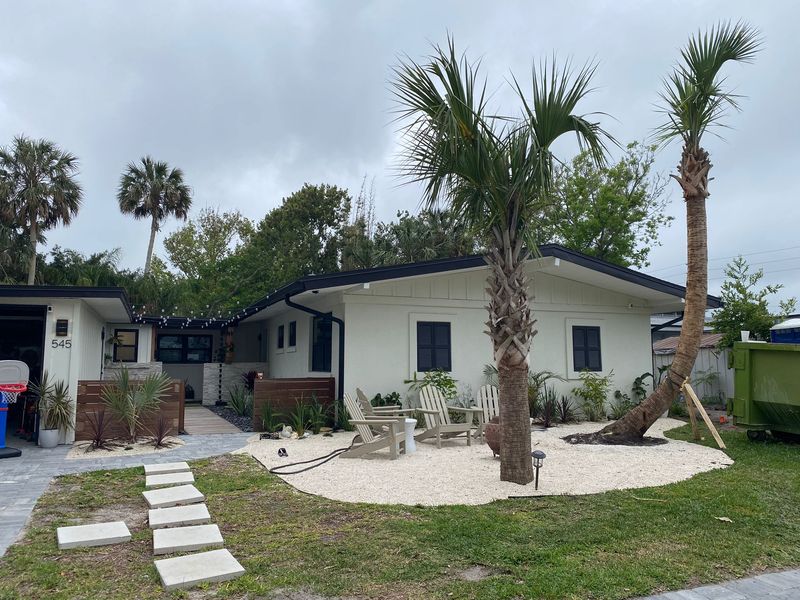
Florida rooflines and palm crowns do not mix well when a sabal palm is planted too close to a house. At installation, a young palm looks modest and easy to manage.
Over time, that same palm can reach heights where its crown sits directly above gutters, windows, or the edge of a roof.
Planning around the mature palm rather than the plant you bring home from the nursery is the smarter approach. UF/IFAS recommends considering the mature height and crown spread of any tree or palm before choosing a planting location near a structure.
Sabal palms can reach 40 to 50 feet at maturity.
Gutters can collect old fronds and debris if a crown extends over the roofline. Walls may eventually sit in the shadow of a crown that was never meant to reach that far.
Walkways beneath the crown can become slippery when wet fronds fall during storms.
Sabal palms have a relatively compact crown compared to broad shade trees, which is one of their landscape strengths. That compact form does not eliminate clearance concerns entirely, but it does mean thoughtful placement is usually enough to avoid problems.
A palm planted with enough lateral distance from the house can still look close and connected to the home’s landscape without creating long-term maintenance headaches.
Giving it room to grow upward freely is the simplest way to keep both the palm and the structure looking their best.
5. Full Sun Makes The Classic Palm Look Stand Out
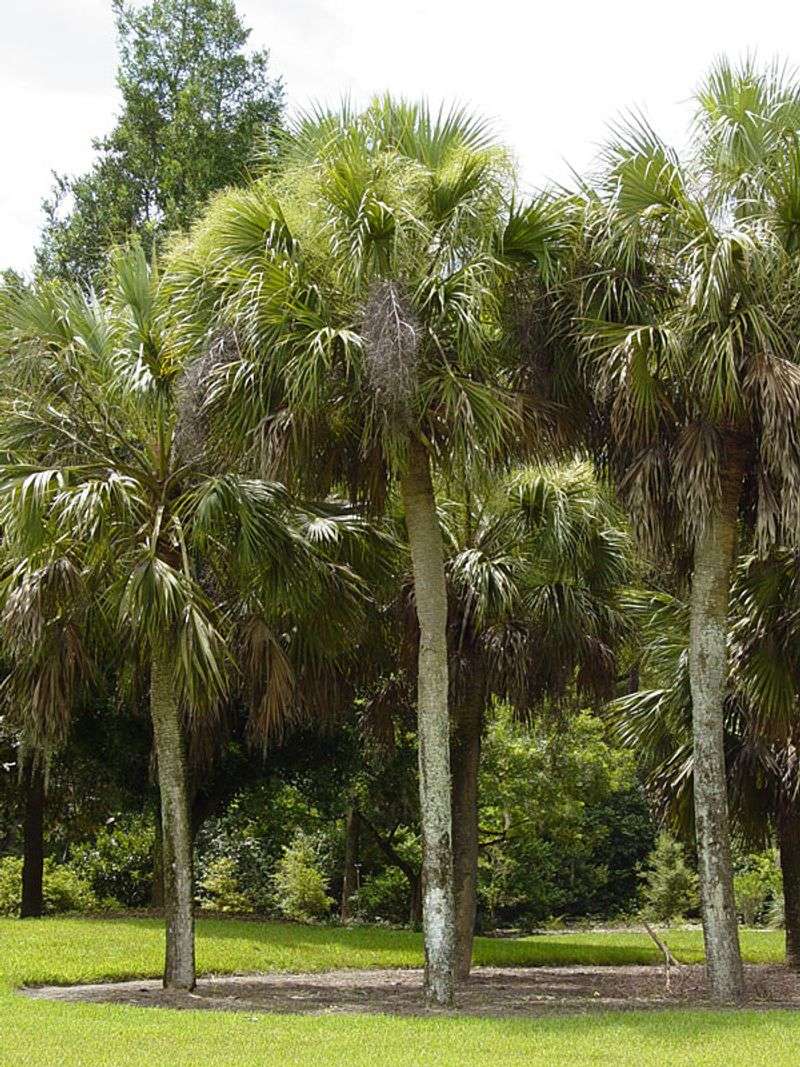
Bright open sun does something for a sabal palm that shade simply cannot replicate. In a full-sun position, the crown takes on a richer green color and develops a fuller, more rounded silhouette.
The trunk stands out as a clean vertical form against the sky, and the whole palm reads as a deliberate and confident landscape feature.
According to UF/IFAS, sabal palms perform well in full sun and can tolerate some shade. That tolerance is useful in certain landscapes, but tolerating shade and thriving in sun are different things when visual impact is the goal.
A palm tucked into partial shade beneath taller trees may grow more slowly and produce a less dense crown. The fronds can stretch and reach toward available light, which sometimes creates a thinner, less symmetrical appearance over time.
None of that is harmful to the palm, but it does affect how the palm looks as a landscape feature.
Choosing a sunny, open position also benefits the plants growing around the base of the palm. Low sun-loving groundcovers, ornamental grasses, and native wildflowers perform better in bright light.
That helps the entire planting area look more polished and intentional.
For the strongest tropical look, choose an open south- or southeast-facing position with minimal shade. Those light conditions allow the sabal palm’s natural form to show at its best.
6. Coastal Yards Can Put Sabal Palms On Full Display
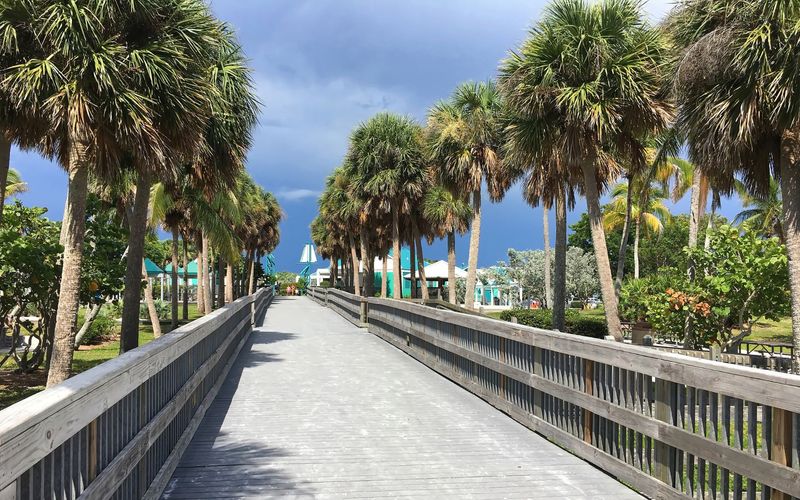
Coastal landscapes present conditions that most trees handle poorly. Salt spray, sandy soil, and strong winds eliminate a lot of planting options.
Sabal palms hold up well in those conditions, which is part of why they appear so naturally along Florida’s shorelines and barrier islands.
UF/IFAS rates sabal palms as having good tolerance to salt spray. That tolerance makes them a practical choice for exposed coastal yards where the tropical look fits the setting perfectly.
A palm framing an ocean view or standing at the edge of a dune-stabilized yard looks right in a way that a non-coastal species never quite achieves.
Salt tolerance in this context refers primarily to airborne salt spray, which is what coastal plants contend with most directly. Excessive salt around the root zone from irrigation water or flooding is a separate concern.
If your site has known salinity issues, discuss them with your local UF/IFAS Extension office.
Coastal placement also benefits from the open exposure that most beachside properties naturally offer. Wide sight lines, unobstructed sky, and minimal competition from large shade trees give sabal palms exactly the visual stage they need to look impressive.
Planting sabal palms along a coastal fence line, near a dune edge, or at the entrance of a beach property creates an immediate sense of place. The palm belongs in that environment, and that belonging comes through clearly in the finished landscape.
7. Skip The Low Wet Spot Just Because Sabals Grow Near Water
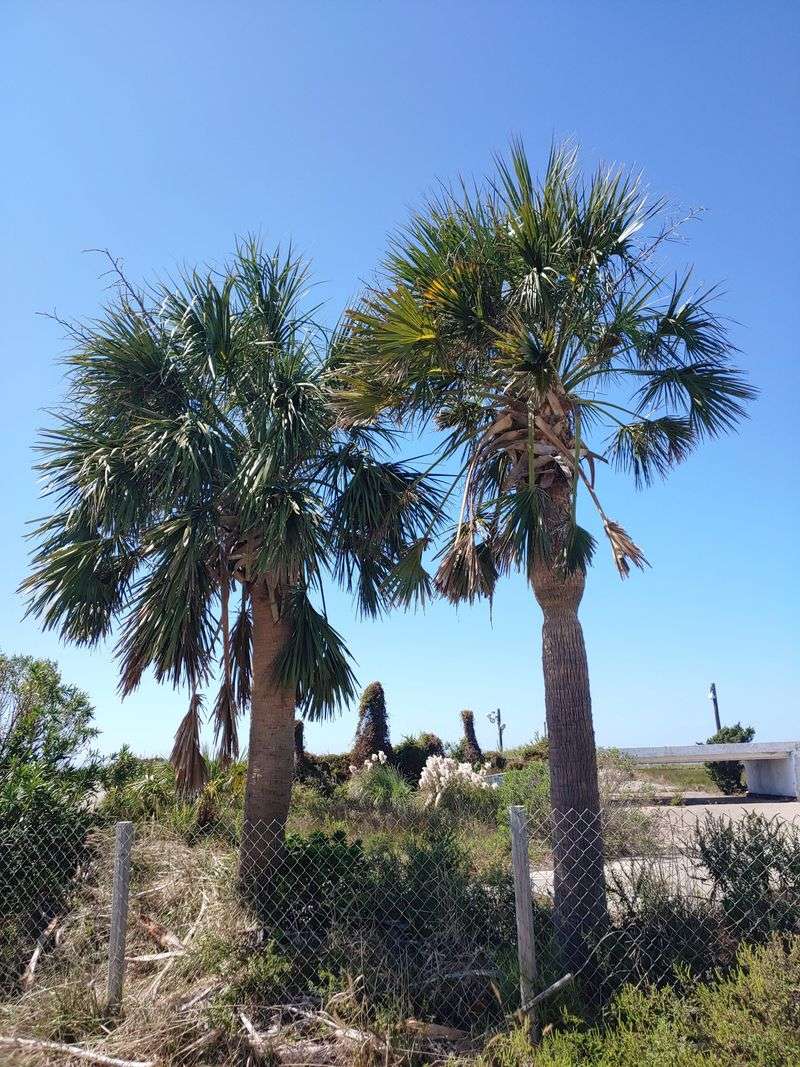
Standing water after a heavy rain is a clue worth paying attention to before choosing a planting spot. Sabal palms do occur naturally in a wide range of Florida habitats, including areas near rivers, wetlands, and coastal swamps.
That natural range sometimes leads homeowners to assume any wet or low-lying yard spot will work just fine.
Consistently waterlogged soil in a residential planting hole is a different situation from the seasonal flooding that palms in natural habitats may experience. UF/IFAS extension guidance on palm planting emphasizes that good drainage is important for healthy root development.
Roots sitting in stagnant water for extended periods can struggle to function properly.
Sabal palms are genuinely adaptable. They handle a range of soil types and moisture conditions better than many landscape trees.
That adaptability does not make them immune to problems caused by poor site preparation or chronically saturated soil.
If a yard has a low spot that collects water regularly, improving drainage before planting is a better strategy than assuming the palm will adjust.
Raising the planting area slightly, amending compacted soil, or redirecting surface water can all help create conditions that support healthy root growth.
Choosing a spot with reasonable drainage also tends to be a spot with better visual placement. Low areas often sit outside natural sight lines.
Fixing drainage and moving the palm to a better location can improve both plant health and the landscape’s appearance.
8. Let The Mature Palm Decide Where It Goes Today
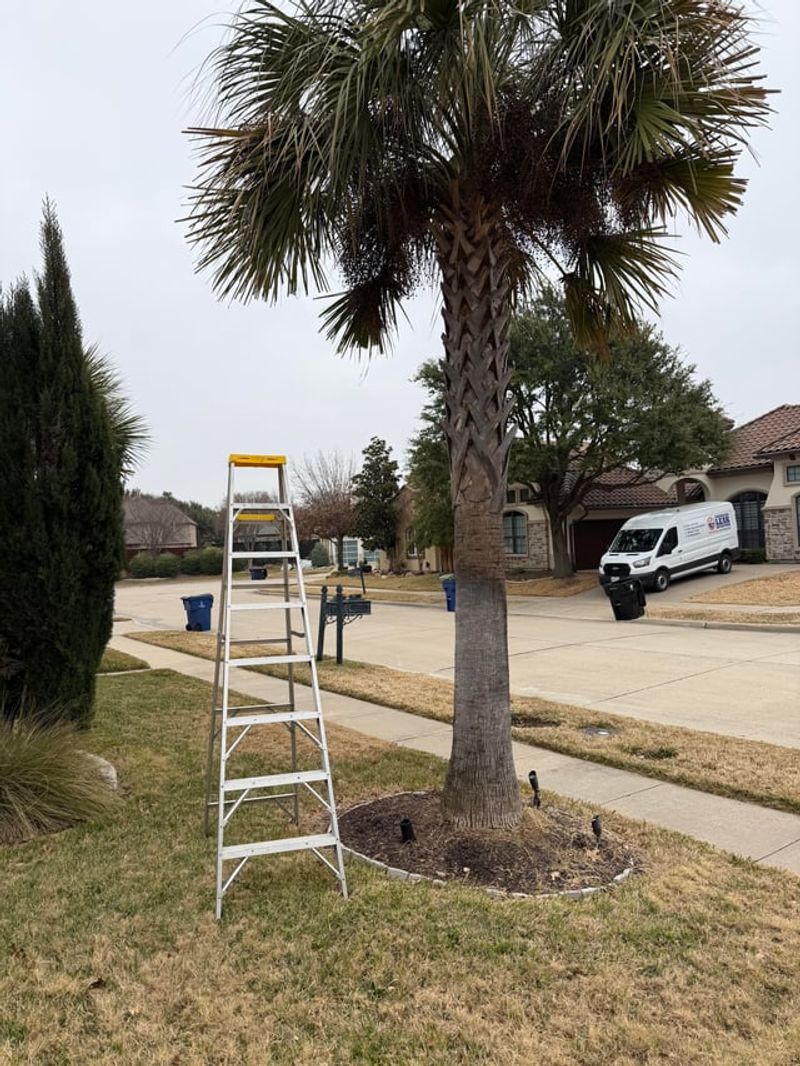
Picture the palm not as it looks leaving the nursery, but as it will look in twenty years. That mental image is the most useful tool for choosing the right planting spot.
A mature sabal palm with a 40- to 50-foot trunk and a full crown changes the scale of everything around it.
Sight lines from the street, the driveway, or the back patio will shift as the trunk rises. A spot that seems too far from the house today may end up being perfectly framed by the roofline at maturity.
A spot that seems conveniently close to the pool may eventually put the crown directly over the water.
Crown spread, sun exposure, coastal conditions, and drainage all feed into the same decision. Place the palm in full sun with good drainage and enough clearance from structures.
A natural sight line toward a key viewing angle will make it look deliberate rather than randomly placed.
Groupings work best when the spacing accounts for mature crowns rather than the gaps between young trunks. Buildings, fences, and hardscape features all need to be considered in relation to where the crown will eventually sit, not just where the trunk stands now.
The best tropical effect comes from giving a sabal palm enough room to look balanced and impressive at full size. Space given generously at planting becomes the framework for a landscape that looks intentional, confident, and genuinely tropical for decades to come.