Why Oregon Tomatoes Develop Blossom-End Rot During The Driest Part Of Summer
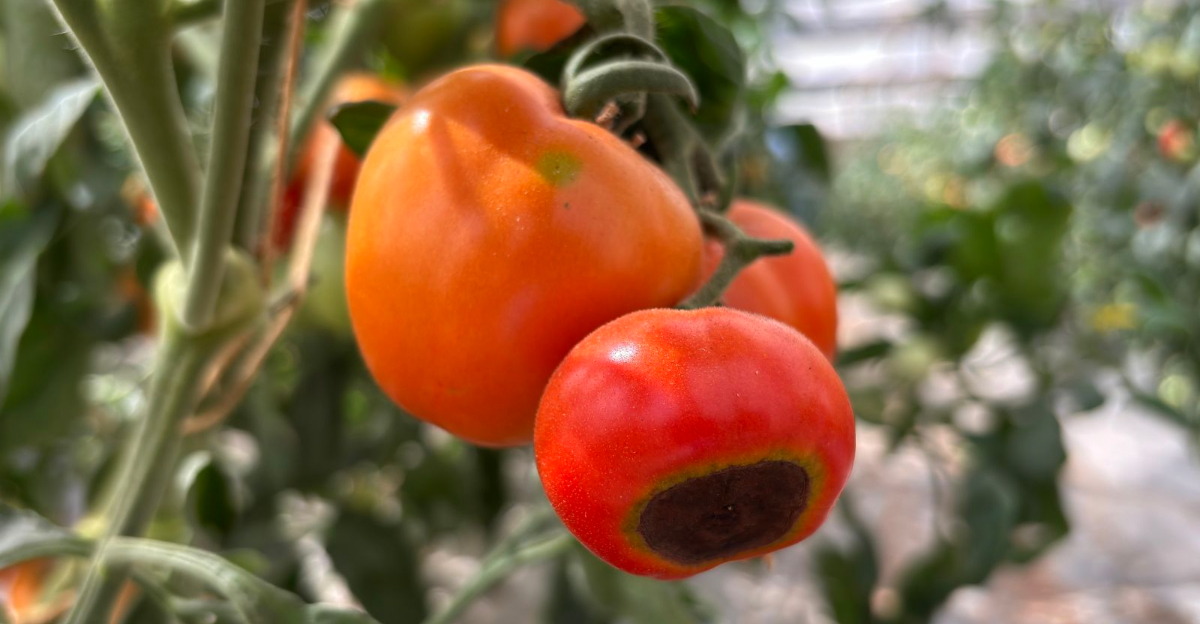
You waited all season for your Oregon tomatoes to come in, and then you flip one over and find a dark, sunken patch spreading across the bottom like the garden is personally trying to disappoint you. Blossom-end rot has that effect.
It shows up right when summer heat peaks and the rain has been gone for weeks, which feels like spectacularly bad timing, and honestly it kind of is. The confusing part is that this is not a disease you caught from a neighboring plant or a pest doing damage at night.
Blossom-end rot is a physiological problem connected to calcium not reaching developing fruit consistently through the plant’s water supply.
Oregon summers vary quite a bit across the state, but drying soil, rising temperatures, and rapidly sizing fruit create conditions where even well-managed gardens can run into this problem.
1. Dry Soil Limits Calcium Movement Into Fruit
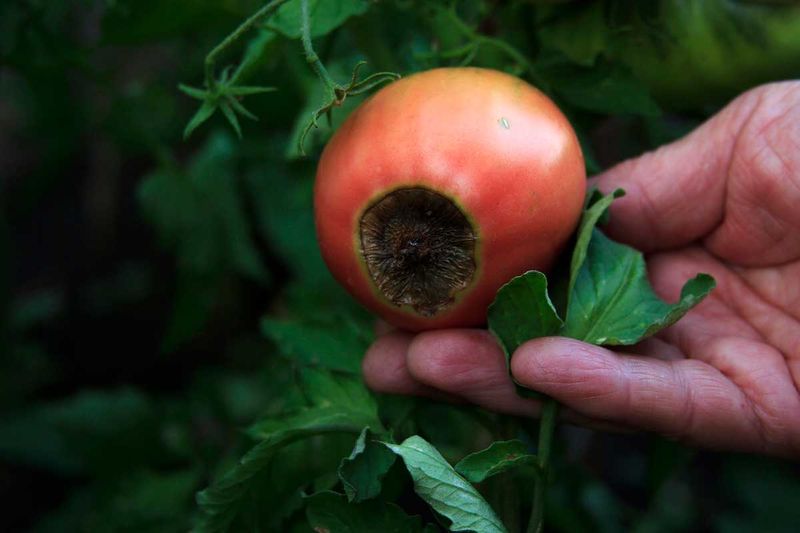
Calcium does not travel through a tomato plant the way nutrients sometimes do in popular gardening guides. Instead, it moves almost entirely with water – absorbed through the roots and carried upward through the plant as part of normal water flow.
When the soil around a tomato’s roots becomes very dry, that movement slows down significantly, and developing fruit may not receive enough calcium to grow properly.
During the driest stretch of an Oregon summer, garden soil can lose moisture faster than many gardeners expect.
In parts of western Oregon, weeks can pass without meaningful rainfall, and soil that feels moist on the surface may be much drier just a few inches down where roots are actively feeding.
If irrigation does not reach the root zone consistently, the plant’s ability to pull calcium-carrying water becomes limited.
This does not mean every tomato on a dry-stressed plant will develop blossom-end rot. Some fruit may develop normally while others show the dark, leathery patch at the blossom end.
The key point is that very dry soil creates conditions where calcium delivery to fast-growing fruit becomes unreliable.
Keeping the root zone reasonably moist – not waterlogged, but consistently available – gives the plant a better chance of moving calcium into developing tomatoes throughout the driest part of summer.
2. Uneven Watering Makes The Problem Worse
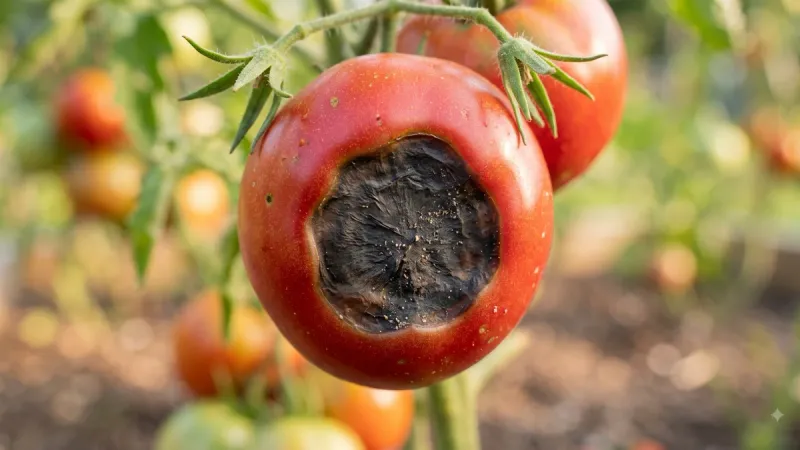
Letting the garden dry out completely and then soaking it thoroughly might feel like responsible watering, but this kind of back-and-forth moisture swing can actually contribute to blossom-end rot.
When roots sit in very dry soil for an extended period, the plant begins to experience stress, and calcium uptake becomes inconsistent.
Then, when a heavy watering arrives, the plant may respond by pushing water rapidly into leafy growth rather than directing calcium-rich water steadily toward developing fruit.
The goal for Oregon tomato growers during dry summer stretches is not to water as often as possible, but to maintain relatively even soil moisture in the root zone.
This looks different depending on soil type, plant size, container versus in-ground growing, and local weather.
Sandy soils drain quickly and may need more frequent attention, while heavier clay-based soils hold moisture longer but can also become compacted and slow to absorb water after drying out.
Your Oregon Garden Changes Every Week. Your Plan Should Too.
Gardening in Oregon changes quickly throughout the season. Every Friday you’ll receive a simple weekly plan showing exactly what to plant, prune, fertilize, harvest, and protect so you never miss the right timing.
Applying a layer of organic mulch around tomato plants can help slow moisture loss between waterings and buffer the soil against rapid drying.
Checking the soil a few inches below the surface before watering – rather than guessing based on the calendar – gives a more accurate picture of what the roots actually need.
Consistency matters more than volume when it comes to supporting calcium movement into developing fruit during Oregon’s dry summer months.
3. Summer Heat Raises Water And Calcium Demand
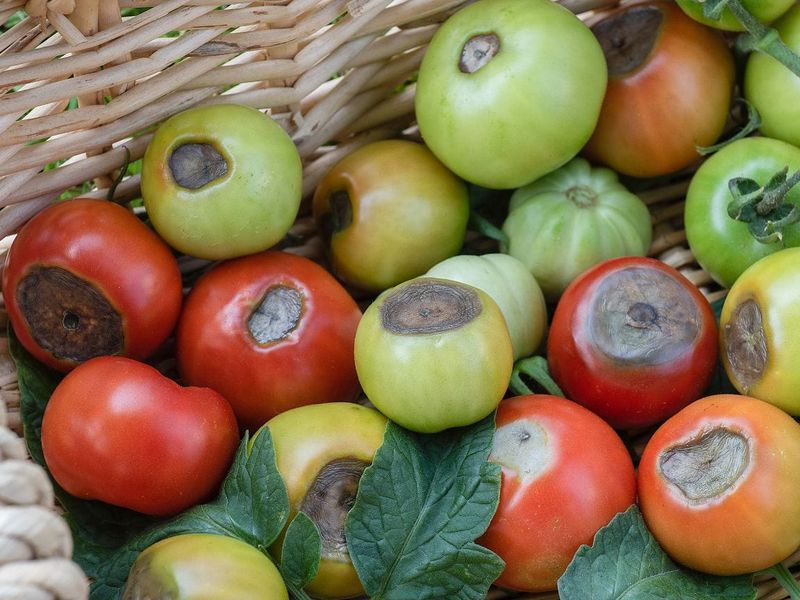
Hot afternoons push tomato plants to pull water through their roots at a much faster rate than they do on cooler days.
This increased water demand is the plant’s way of cooling itself through a process called transpiration, where moisture moves up through the stems and evaporates from the leaves.
The problem is that during peak heat, the plant may move water so quickly toward its leaves that developing fruit – which competes for the same calcium-carrying water – receives less than it needs.
Oregon experiences some genuinely intense heat events during mid to late summer, particularly in the Willamette Valley and other inland areas.
During these stretches, soil moisture can drop rapidly, and the gap between what the plant needs and what the roots can supply may widen.
Heat alone does not cause blossom-end rot, but heat combined with drying soil or inconsistent irrigation creates conditions that make it harder for developing tomatoes to receive adequate calcium.
Gardeners sometimes notice that blossom-end rot appears or worsens right after a multi-day heat event, which reflects this relationship between temperature, water demand, and calcium delivery.
Paying closer attention to soil moisture during and after hot spells – rather than sticking to a fixed watering schedule – can help reduce the risk.
The plant’s needs shift with the weather, and summer irrigation in Oregon often requires more flexibility than a simple routine provides.
4. Rapid Fruit Growth Creates A Vulnerable Period
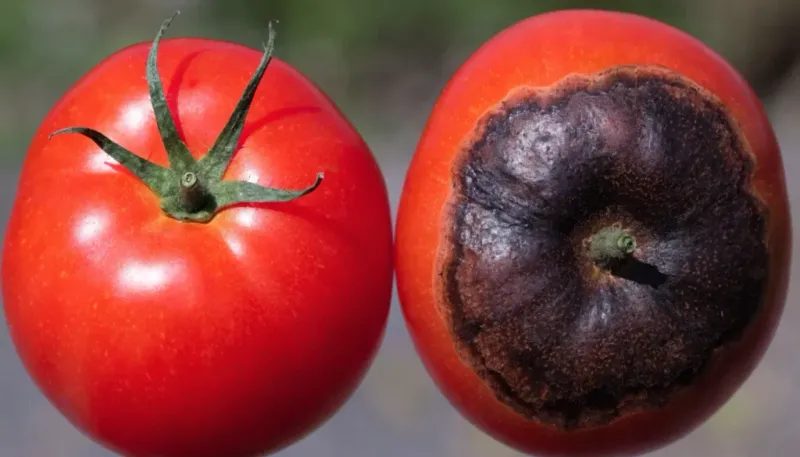
Young tomatoes swell surprisingly fast once they begin developing, and during that rapid expansion phase, their need for calcium is especially high.
Calcium plays a structural role in building healthy cell walls, and when a fruit is growing quickly, the demand for new calcium can outpace what the plant’s water system delivers.
This makes the earliest weeks of fruit development a particularly sensitive window for blossom-end rot to begin.
What makes this tricky is that calcium does not move easily from older plant tissues into new growth. Once calcium is deposited in mature leaves or stems, it tends to stay there.
This means the only reliable way for expanding fruit to receive calcium is through fresh water being absorbed by the roots and carried upward.
Any disruption to that water flow during the rapid growth phase – whether from dry soil, heat stress, or inconsistent irrigation – can leave developing fruit short of what it needs.
The blossom end of the fruit, which is the farthest point from the stem and the last area to receive water flow, tends to be the most vulnerable. This is why the dark, sunken patch typically appears at the bottom of the tomato rather than near the stem.
Growers in Oregon who notice blossom-end rot on the first flush of fruit during a dry spell may find that later fruit develops more normally if growing conditions stabilize and moisture becomes more consistent.
5. Containers And Raised Beds Dry Out Faster
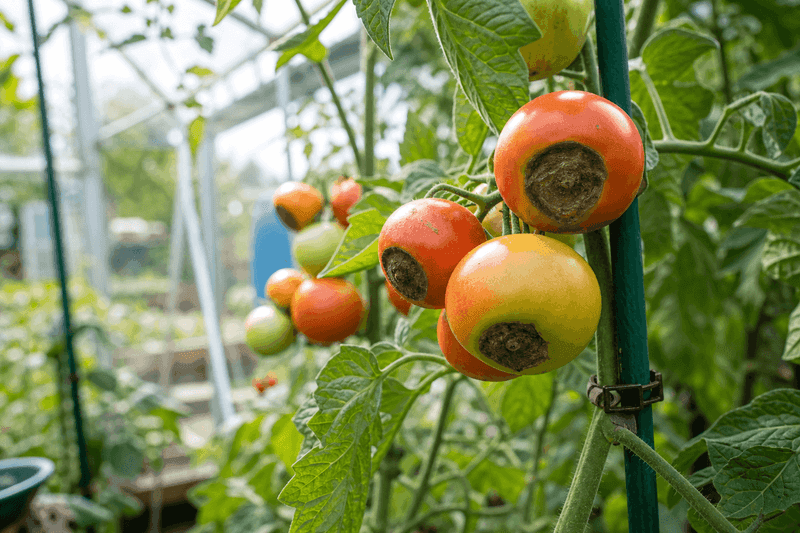
Growing tomatoes in pots or raised beds has real advantages in Oregon – better drainage, warmer soil temperatures in spring, and easier weed management.
But one trade-off is that smaller volumes of growing medium dry out much more quickly than the large, buffered root zone of an in-ground garden.
During Oregon’s hottest summer weeks, a container or shallow raised bed can shift from adequately moist to dangerously dry in less than a day, especially in full sun or on a warm patio surface.
This faster moisture loss creates a more volatile environment for calcium delivery.
Roots in a container have nowhere to reach for additional moisture once the growing medium dries out, and the plant may begin experiencing stress before a gardener even notices the soil has changed.
Raised beds with very fast-draining mixes can behave similarly, particularly when they are narrow or shallow and exposed to afternoon sun and wind.
Checking soil moisture in containers and raised beds more frequently during summer heat is a practical way to reduce this risk. Pressing a finger several inches into the growing medium gives a better sense of actual moisture levels than checking the surface alone.
Mulching the top of containers and raised beds can also slow evaporation meaningfully.
The goal is to keep conditions stable enough that roots have consistent access to moisture and can continue moving calcium toward developing fruit without interruption throughout the dry season.
6. Excess Nitrogen Can Increase Susceptibility
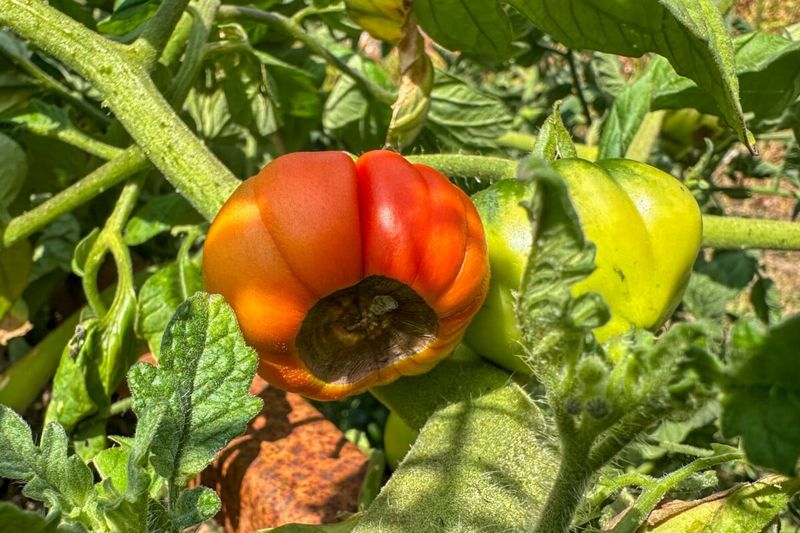
Lush, fast-growing tomato plants with deep green leaves and thick stems can look like a sign of excellent gardening, but when that growth is driven by excess nitrogen, it may actually increase the risk of blossom-end rot.
Nitrogen encourages rapid vegetative growth – more leaves, more stems, more overall plant mass.
When a plant is pushing energy into all that new growth, the competition for calcium intensifies, and developing fruit may end up lower on the priority list.
This does not mean nitrogen is harmful to tomatoes – they absolutely need it as part of balanced nutrition. The concern is with applying too much, too often, especially during the period when fruit is actively developing.
Some gardeners, noticing blossom-end rot on their plants, assume the problem means the tomatoes need more fertilizer.
Adding more nitrogen at that point can actually make things worse by stimulating even more leafy growth and increasing the demand for calcium across the entire plant.
A more measured approach to fertilizing Oregon tomatoes – particularly once fruit has set and is beginning to swell – can help reduce the competition for available calcium.
Soil testing before the growing season is a useful way to understand what nutrients are actually needed rather than guessing.
If blossom-end rot appears during a dry summer stretch, looking at watering consistency and heat stress is often more productive than reaching immediately for fertilizer as a solution.
7. Some Tomato Types Are More Vulnerable
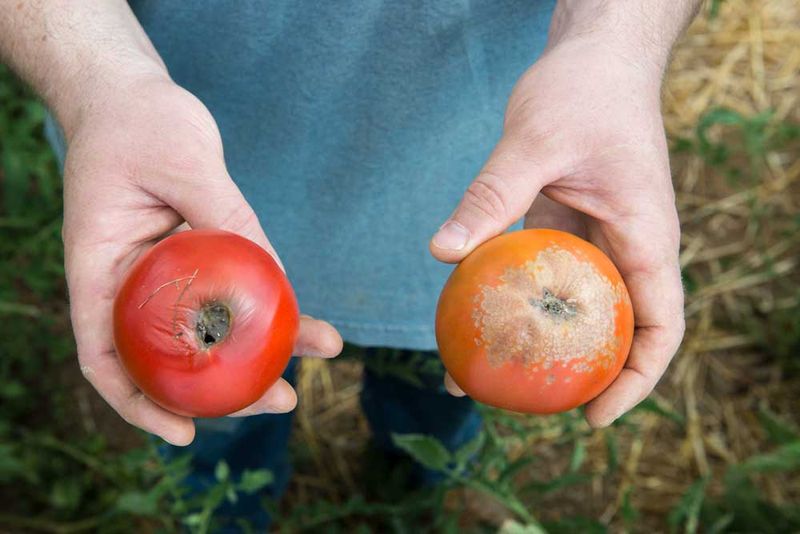
Not every tomato variety responds the same way when growing conditions get stressful.
Research and extension guidance from Oregon suggest that larger and more elongated fruit types – including many paste and roma-style tomatoes – tend to show higher susceptibility to blossom-end rot during dry conditions compared to smaller, rounder varieties.
This difference likely relates to the greater distance calcium must travel to reach the blossom end of a long fruit, and the larger overall calcium requirement of a bigger tomato.
Cherry tomatoes and other small-fruited varieties often show less blossom-end rot under similar growing conditions, though this is a difference in general susceptibility rather than a guarantee.
Any tomato variety can develop the disorder when calcium delivery is seriously disrupted, and small-fruited types are not fully immune.
Variety selection is simply one factor among many that can influence how often a gardener encounters the problem.
For Oregon growers who have experienced repeated blossom-end rot issues in past seasons – particularly with beefsteak or paste-type tomatoes – experimenting with smaller-fruited varieties may be worth considering.
At the same time, choosing a less susceptible variety does not eliminate the need for consistent watering and good soil management.
Addressing moisture consistency and soil conditions remains the most reliable way to reduce blossom-end rot across all tomato types grown in Oregon’s dry summer months.
8. Low Soil Calcium Is Not The Only Explanation
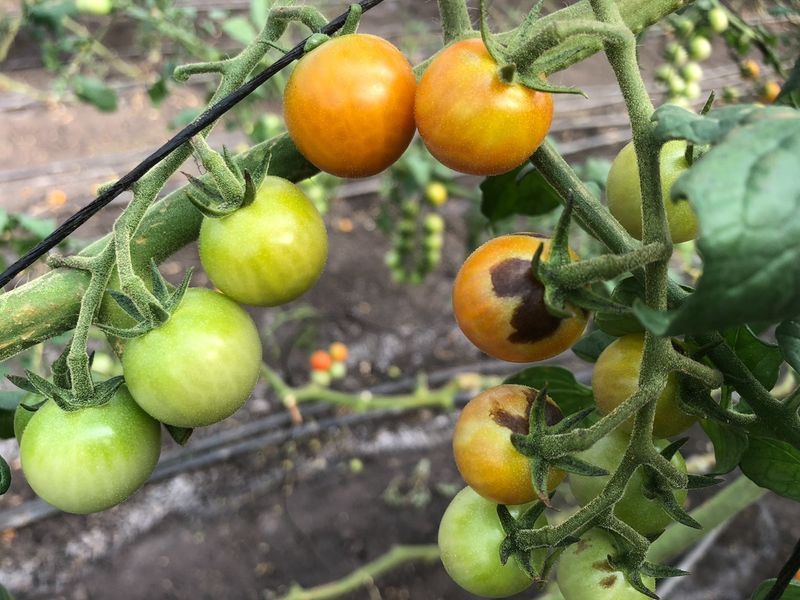
Seeing that familiar dark patch on the bottom of a tomato often sends gardeners straight to the garden center looking for calcium supplements. This reaction is understandable, but it can lead to adding amendments that the soil does not actually need.
Oregon soils in many parts of the state already contain adequate calcium, and guidance from Oregon State University Extension indicates that low soil calcium is not necessarily the primary cause of blossom-end rot in most home vegetable gardens.
The more common issue is not a lack of calcium in the soil but rather a breakdown in the process of getting that calcium from the soil into developing fruit.
Dry conditions, uneven watering, heat stress, rapid fruit growth, and root health all affect how well calcium moves through the plant.
Correcting those underlying conditions often does more to reduce blossom-end rot than adding calcium products to soil that already has enough.
A soil test is a far more useful first step than assuming calcium is deficient. If a test reveals genuinely low calcium levels, then targeted amendments may be appropriate.
But applying lime, gypsum, or other calcium-containing products without knowing the soil’s actual status can throw off other nutrient balances and create new problems.
Understanding that blossom-end rot is a delivery problem as much as a supply problem changes the way Oregon gardeners can approach prevention and care during the driest part of summer.