Stop Adding Fertilizer To North Carolina Garden Beds Right Before A Thunderstorm
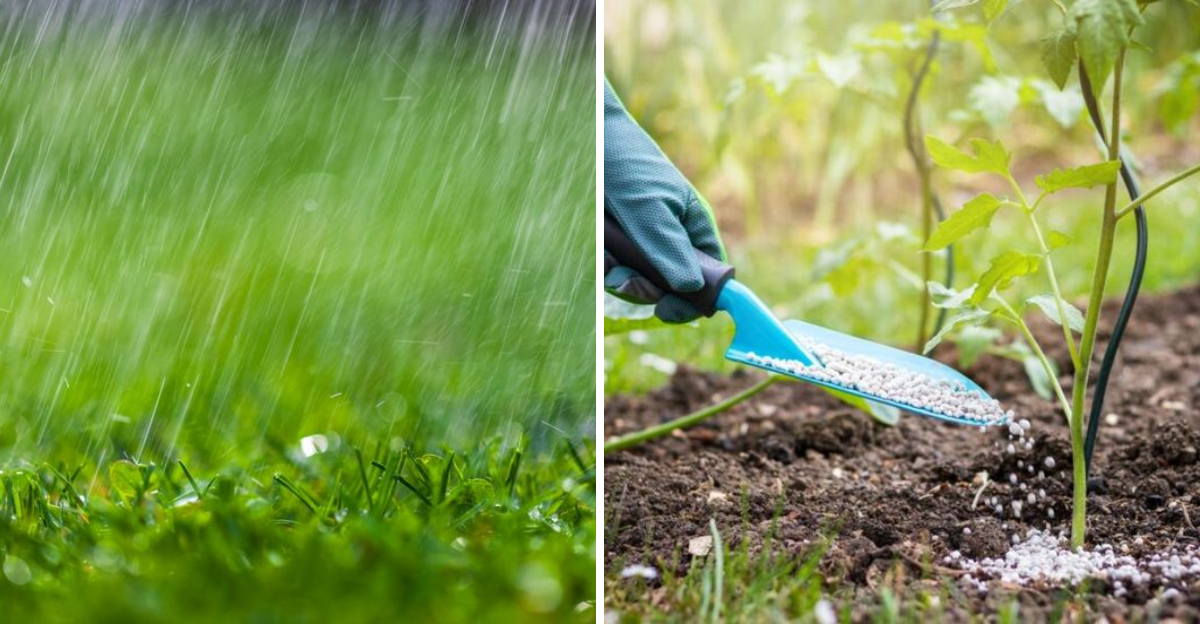
There is something deeply satisfying about spreading fertilizer right before a North Carolina summer storm rolls in. Free watering, nutrients going straight into the soil, nature doing half the work for you.
Honestly it feels like a gardening cheat code. But here is where that plan can quietly go sideways: the size of that incoming storm matters a lot more than most people realize.
A modest shower settling granular fertilizer into the soil is genuinely helpful. A heavy downpour showing up right after you spread nutrients is a completely different situation.
Nitrogen is especially mobile in wet conditions and can move away from plant roots faster than you would expect, while phosphorus tends to hitch a ride with eroding soil particles.
That free watering can turn into a pretty expensive mistake if the timing is off.
1. Heavy Rain Can Carry Fresh Fertilizer Out Of The Bed
Picture a handful of fertilizer granules sitting on bare soil just as the first fat raindrops begin to fall. For a while, that looks like a helpful combination.
Light moisture helps granules begin dissolving so nutrients can reach plant roots. The trouble starts when the rainfall arrives faster than the soil can absorb it.
When water builds up on the surface faster than it soaks in, it begins moving sideways across the bed rather than straight down.
That moving surface water is called runoff, and it can carry dissolved nutrients along with it, away from the root zone where plants are actually feeding.
Nitrogen loss is greater when heavy rain immediately follows a surface fertilizer application, especially where runoff occurs.
Not every granule will leave the bed, and not every North Carolina thunderstorm produces enough water to create visible runoff.
Rainfall intensity, how much organic matter is in the soil, whether the bed has a slope, and how saturated the ground already is all play a role.
A brief pop-up shower is a different situation than a slow-moving storm that drops several inches of rain.
The practical takeaway is straightforward. If the forecast calls for heavy rainfall rather than a passing sprinkle, waiting a day or two before fertilizing can keep more of those nutrients right where the plants need them, saving both money and effort in the long run.
2. Quick-Release Nitrogen Is Especially Vulnerable To Heavy Rain
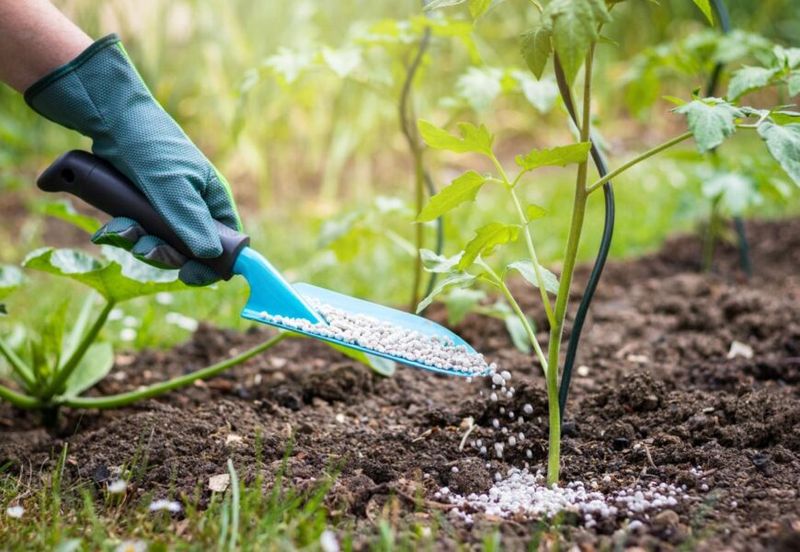
Not all fertilizers behave the same way once water gets involved. Some products release their nutrients slowly over weeks or months, while others make nitrogen available almost immediately after contact with moisture.
That fast availability is exactly what makes quick-release nitrogen so useful during active plant growth, and also what makes timing so important before a heavy storm in North Carolina, where summer downpours can be intense and fast-moving.
The form of nitrogen that moves most easily through soil is called nitrate. It carries a negative charge, and most soil particles also carry a negative charge, which means they do not hold onto nitrate well.
When a large amount of water moves downward through the soil, nitrate can travel right along with it, a process called leaching. Once nutrients move below the active root zone, plants have less opportunity to use them.
Your North Carolina Garden Changes Every Week. Your Plan Should Too.
Gardening in North Carolina changes quickly throughout the season. Every Friday you’ll receive a simple weekly plan showing exactly what to plant, prune, fertilize, harvest, and protect so you never miss the right timing.
Slow-release fertilizers generally make nitrogen available over a longer stretch of time, which can reduce leaching potential compared with quickly available forms.
That does not make them completely immune to heavy rain, but the risk is lower when less nitrogen is available at the soil surface all at once.
Splitting a nitrogen application into smaller amounts applied across the growing season is another approach that can help, especially on North Carolina soils that drain quickly or sit over sandy subsoil.
Applying a large amount of quick-release nitrogen right before a major storm is the combination most likely to result in nutrients leaving the intended area before plants can put them to use.
3. Saturated Soil Makes Nutrient Loss More Likely
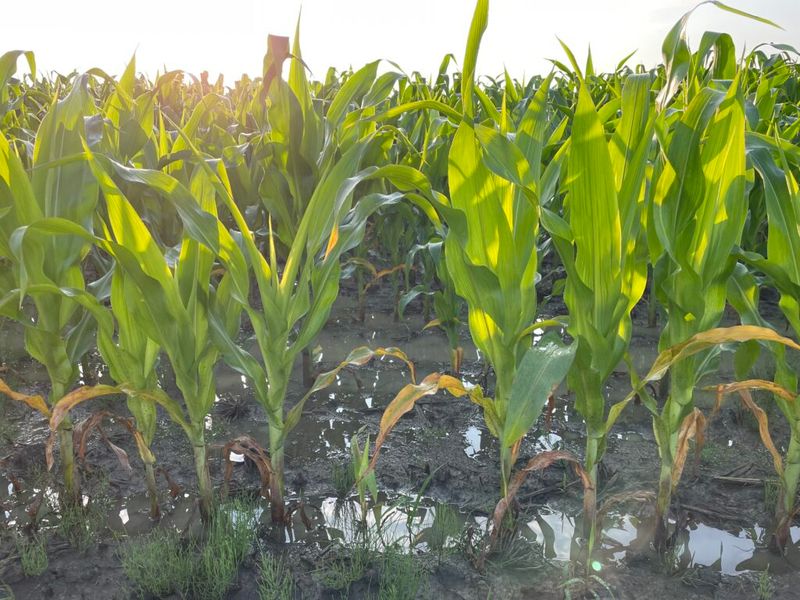
After several days of summer storms roll through North Carolina, a garden bed can hold about as much water as it possibly can. That condition is called saturation, and it changes how any additional rainfall behaves in the soil.
When the ground is already full, new rain has very little room to soak in.
Leaching risk for nitrogen is greater in saturated soils because water moving through has fewer dry pockets to slow its progress. Runoff also becomes more likely when the surface cannot accept more moisture.
Adding fertilizer to a bed in that condition, just before another round of heavy rain, stacks the odds against nutrients staying where they were placed.
Waterlogged conditions can also limit a plant’s ability to absorb nutrients in the first place. Roots need oxygen to function properly, and saturated soil pushes oxygen out of the spaces between soil particles.
A plant sitting in soggy ground may not be in a position to take up nutrients even if they are present.
Waiting for the soil to drain and recover before applying fertilizer is a more practical choice than fertilizing into a saturated bed ahead of another storm.
There is no single number of hours or days that applies to every garden, because drainage varies widely across North Carolina’s different soil types and garden sites.
Checking whether the soil feels workable and is no longer waterlogged is a better guide than watching the clock.
4. Sloped Garden Beds Face A Greater Runoff Risk

Water moving downhill during a rainstorm does not stop to ask which nutrients it is carrying. On a flat bed, rainfall has more opportunity to soak in before it builds up and starts flowing.
On a sloped bed, gravity gets involved right away, and that changes the equation considerably when fresh fertilizer is sitting on the surface.
This is a particularly relevant concern in North Carolina, where sloped Piedmont yards and hilly mountain gardens are extremely common.
Nitrogen loss following heavy rain is greater when surface-applied fertilizer is on sloped ground. Water running downhill can pick up dissolved nutrients and carry them out of the planting area before they have a chance to work their way into the root zone.
Bare soil, compacted patches, and nearby hard surfaces like driveways or sidewalks can all influence where that moving water ends up.
One useful habit is simply watching how water moves through the garden during a normal rain event. If water visibly channels down through the bed or collects at the bottom edge, that bed deserves extra caution before a heavy storm.
Keeping fertilizer off paved surfaces is also worth the effort, because granules that land on concrete or asphalt can be washed directly into storm drains with no soil to filter or hold them.
Raised beds with defined borders, cover crops that hold soil in place, and mulched pathways can all help slow runoff on sloped North Carolina garden areas.
Timing fertilizer applications for days when the forecast is calm and dry gives even a sloped bed a much better chance of holding onto its nutrients through whatever the summer weather brings.
5. Sandy Soil Can Lose Nitrogen More Easily

Sandy soil drains fast. That quality can be a real advantage during wet spells when other gardens turn swampy, but it also means water moves through quickly enough to carry dissolved nutrients along for the ride.
In many parts of North Carolina’s Coastal Plain, sandy soil is simply what gardeners are working with, and that texture shapes how fertilizer timing decisions play out.
Nitrate nitrogen is particularly mobile in coarse-textured soils because those soils have lower nutrient- and water-holding capacity than soils with more clay and organic matter.
Nitrate carries a negative charge that soil particles do not hold, so it travels easily with moving water.
When heavy rain pushes water rapidly through sandy soil, nitrate can move below the active root zone before plants have a chance to absorb it.
That does not mean every sandy garden in the Coastal Plain will lose all of its nitrogen after a thunderstorm. Organic matter content, rooting depth, fertilizer rate, and actual rainfall intensity all affect the outcome.
Soil conditions can vary meaningfully even within a single county or neighborhood.
One practical approach for sandy soil is splitting nitrogen applications into smaller amounts spread across the growing season rather than applying a large quantity all at once.
That strategy keeps less nitrogen available at any given moment, reducing the amount that could potentially move downward during a heavy rain event.
Lighter, more frequent feeding tends to match how sandy soils actually hold and release nutrients.
6. Phosphorus Can Leave The Garden With Runoff And Eroding Soil
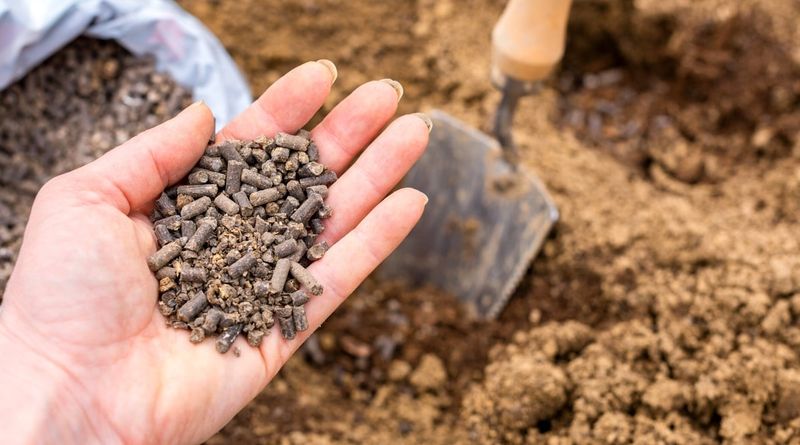
Phosphorus behaves quite differently from nitrogen once it enters the soil. Rather than moving freely with water, phosphorus tends to bind tightly to fine soil particles, which keeps it from leaching downward through most soils the way nitrate nitrogen does.
That sounds reassuring until you consider what happens to those soil particles during a heavy North Carolina rainstorm, where summer downpours can be intense enough to dislodge and move surface soil surprisingly fast.
When rain hits bare soil hard enough to dislodge particles, and when runoff moves across the surface, it can carry those particles out of the bed. Phosphorus travels with them.
Fertilizer granules that land on sidewalks, driveways, or other hard surfaces face an even more direct path to stormwater, since there is no soil to slow them down or hold onto the nutrients they contain.
Sweeping stray granules back into the planting bed rather than letting them sit on pavement is a simple habit that makes a real difference.
Keeping a thick layer of mulch on bare soil also helps by reducing the force of raindrops hitting the surface directly, which slows erosion and keeps soil particles where they belong.
Phosphorus that leaves a North Carolina landscape through runoff and eroded soil can contribute to water-quality problems in nearby streams, rivers, and estuaries.
Applying phosphorus only when a soil test shows the garden actually needs it is the most straightforward way to reduce the amount available to move during a storm.
Adding more than the soil can hold does not help plants grow faster and raises the amount that could leave with the next heavy rain.
7. A Gentle Watering Is Different From A Thunderstorm Downpour
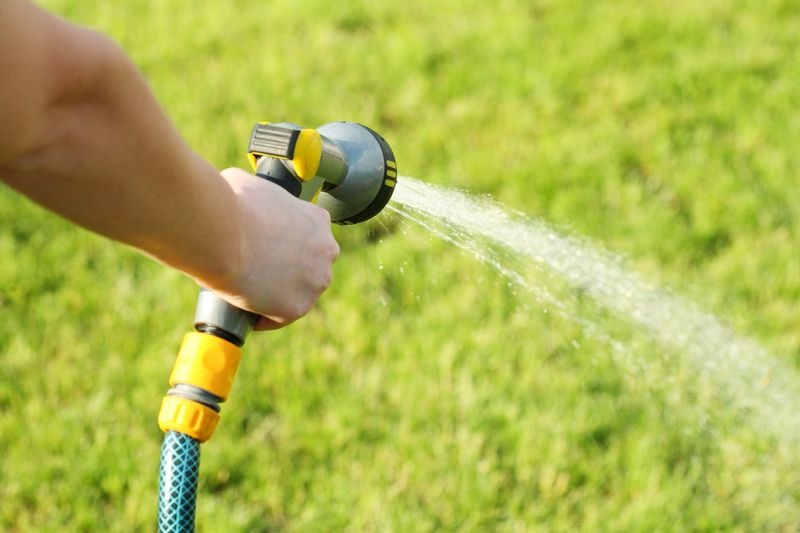
Fertilizer granules sitting dry on the soil surface cannot do much for plants until moisture helps them dissolve and begin moving into the root zone. So the advice here is not to keep fertilizer bone dry after applying it.
Moisture is actually part of the process. The distinction that matters is how much water arrives and how fast it comes.
Applying roughly a quarter to a half inch of water after a granular fertilizer application can help move nutrients into the soil and reduce the amount sitting exposed on the surface.
That controlled amount encourages incorporation without creating the volume of moving water that causes runoff or deep leaching.
Some NC State guidance for trees and shrubs even notes that granular fertilizer may be applied before forecast rain, because moderate moisture helps it break down and work into the soil.
North Carolina gardeners can take that same principle into their vegetable and flower beds with reasonable confidence when only light rain is in the forecast.
A thunderstorm that drops an inch or more of rain in a short period is a different situation entirely. That kind of rainfall can overwhelm the soil’s ability to absorb water, create surface runoff, and push dissolved nutrients below the root zone.
The concern is not rain itself but the intensity and volume of water that a major North Carolina summer storm can deliver, and those storms can arrive and intensify faster than many gardeners expect.
Checking a reliable forecast before fertilizing is one of the simplest steps a gardener can take. If the weather service is calling for heavy rain, waiting a few days costs very little.
If the forecast shows only a light shower or partly cloudy skies, that window may actually be a reasonable time to fertilize and water lightly afterward.
8. Soil Testing Should Come Before The Fertilizer Bag Opens

One of the most effective ways to reduce fertilizer loss during a rainstorm is to avoid applying nutrients the garden does not actually need.
That might sound obvious, but many North Carolina gardeners reach for a bag of fertilizer when plants look slow or pale without first checking whether a nutrient shortage is actually the cause.
Poor drainage, compacted soil, root problems, insufficient light, water stress, pests, and disease can all limit plant growth without being fixed by adding fertilizer.
Putting more nutrients into the soil when the real problem is something else does not help the plants, and it does add to the amount of nitrogen or phosphorus available to move during the next heavy rain.
NC State recommends basing phosphorus and potassium applications on soil-test results and using soil testing to determine fertilizer needs.
A current soil test shows what is already present in the garden, what the pH looks like, and what amendments would actually benefit the plants growing there.
That information makes it possible to fertilize according to demonstrated need rather than guesswork.
Soil tests are available through NC State Cooperative Extension at a modest cost, and the results come with specific recommendations tailored to the crops or plants in the bed.
Fertilizing according to a soil test means applying only what the North Carolina garden can reasonably use, which keeps excess nutrients from accumulating and reduces the amount that could leave the bed during a summer storm.
That is good for the garden, and good for local waterways too.