The Egg Masses Appearing On Virginia Tree Trunks Before The First Frost
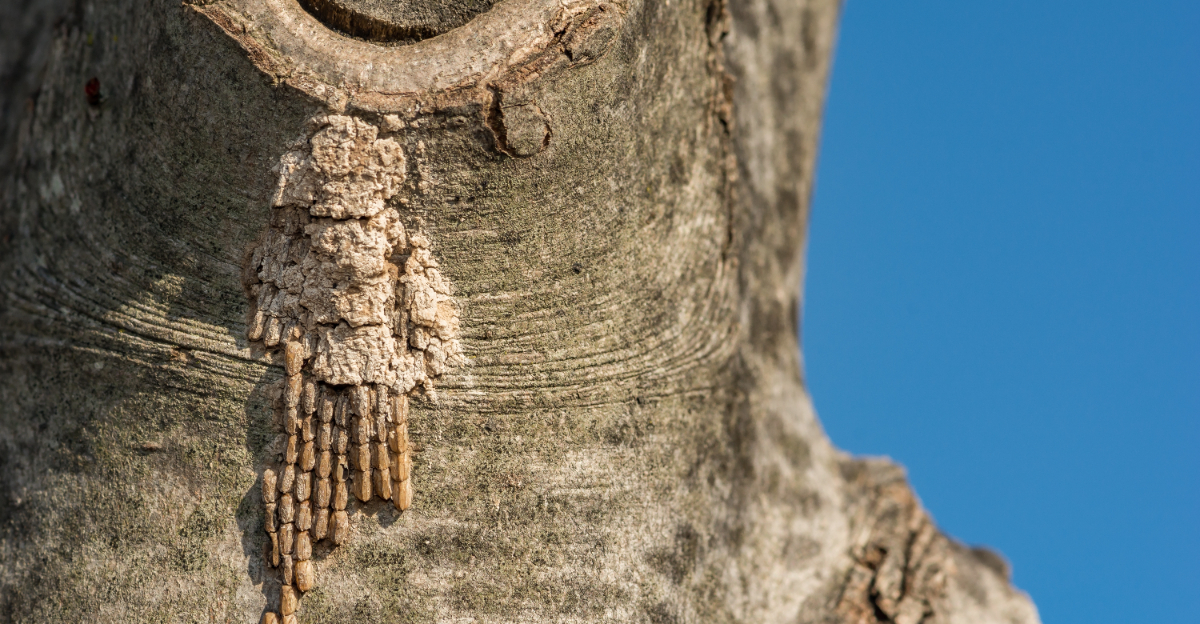
Your porch railing may already be marked by more than dirt this season. Gray patches spreading across tree trunks in your yard and across Virginia signal a population working to double before winter fully settles in.
You might find them on fence posts, patio furniture, or the grill in your backyard. Each patch holds a tight cluster of insects waiting on spring to hatch and spread even further into your neighborhood.
Frost will lock those clusters into place until the ground warms again months later. Before that happens, Virginia residents like you still have a narrow window to respond.
Acting early matters more than acting perfectly ever could for your trees. Removing and reporting these patches now, before the weather turns, can slow a spread that will not stop on its own.
What happens to your own trees next depends on what you learn right now.
Spotted Lanternfly Females Lay Their Eggs From September Through November
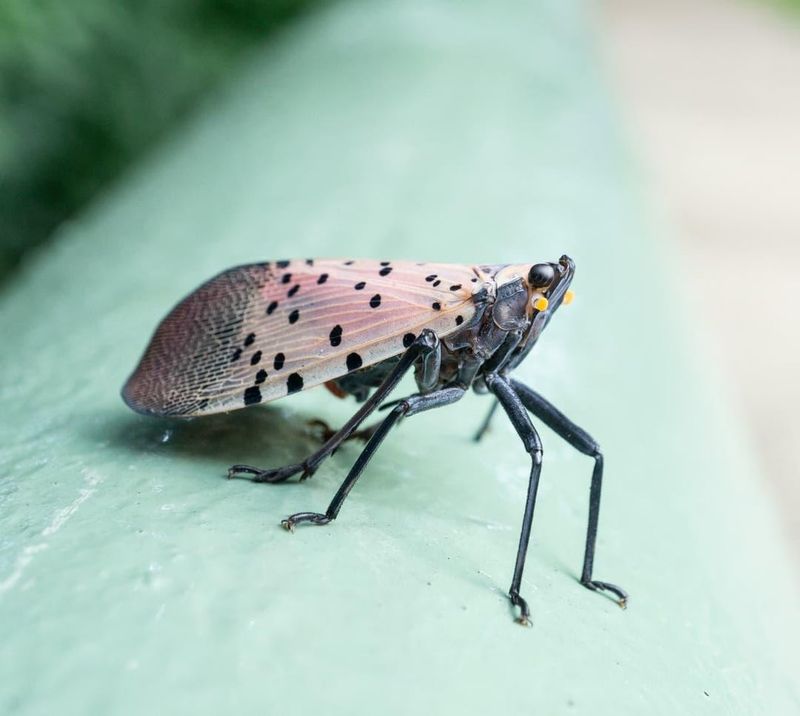
Most people do not realize the clock starts ticking in early September. Spotted lanternfly females begin laying egg masses on Virginia tree trunks as soon as temperatures start to cool.
Each female can produce one to two egg masses per season. That adds up fast when populations are high in your area.
The egg-laying window runs from September straight through November. Females will keep depositing masses right up until the first hard frost ends the adult season.
A single egg mass holds between 30 and 50 eggs. Multiply that across dozens of females on one property and you can see how populations explode the following spring.
The eggs are built to survive winter. They are coated in a waxy, mud-like substance that insulates them against freezing temperatures.
Adults don’t survive the first frost, but the eggs they left behind remain viable. Those eggs will hatch into nymphs the following spring, usually between April and May.
Timing your search is everything. Checking your trees weekly from September through November gives you the best shot at catching fresh masses before they harden.
Walking your property with a flashlight on overcast days makes the grayish patches easier to spot. The egg masses on Virginia tree trunks blend in surprisingly well against rough bark, so slow down and look carefully at every surface.
A Fresh Mass Compared To An Older One
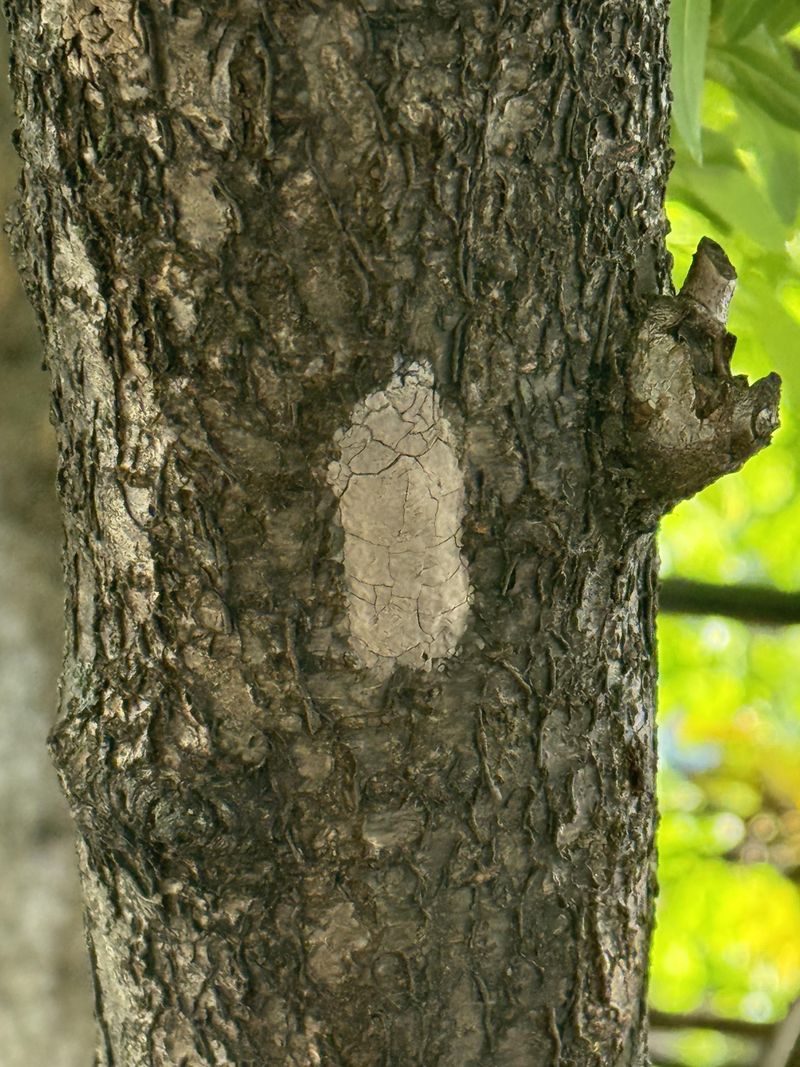
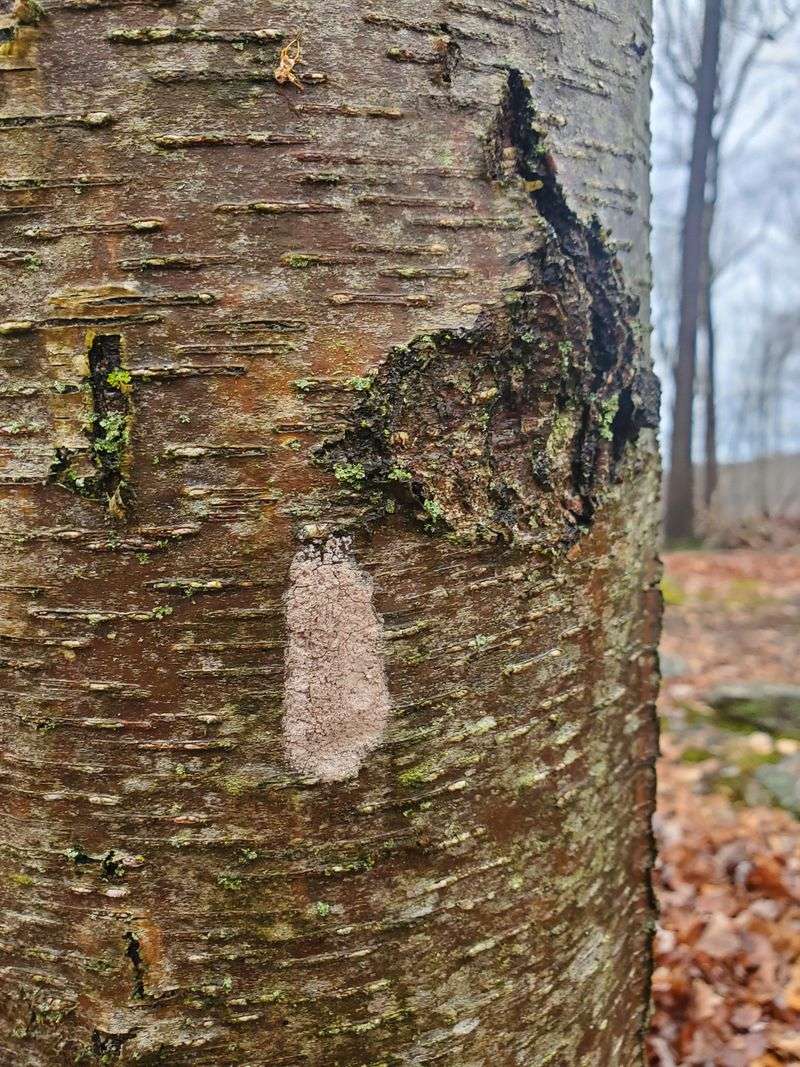
Fresh egg masses have a distinct look that is easy to spot once you know what to check for. They appear shiny, slightly wet, and covered in a brownish-gray waxy coating that looks almost like streaked mud.
Run your finger across a fresh one and it feels smooth and slightly greasy. The coating is soft enough that a fingernail can scrape through it with light pressure.
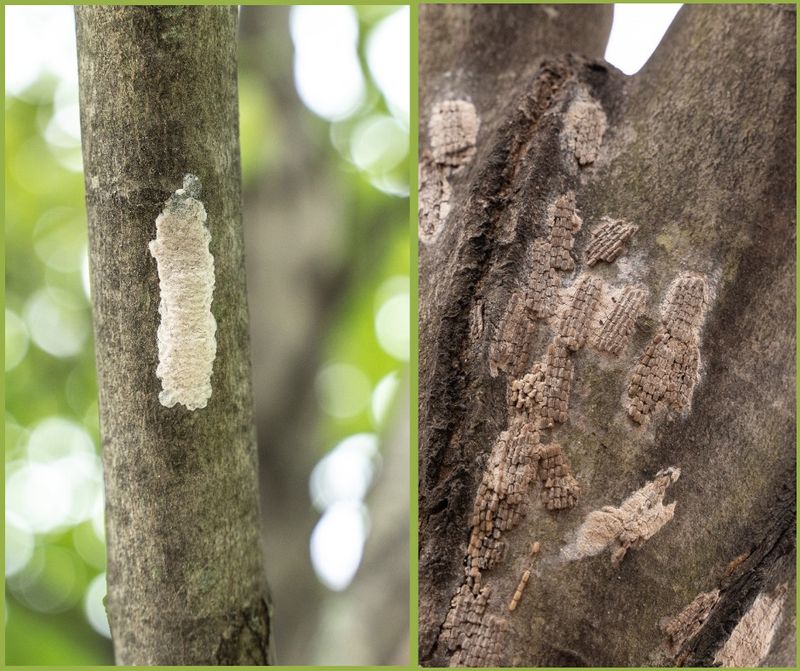
As the mass ages, everything changes. The waxy surface dries out, cracks, and fades to a lighter gray or tan color that blends almost perfectly with tree bark.
Older masses look like cracked mud left behind after a puddle dried up. The surface splits into small rectangular sections, revealing rows of seed-like eggs underneath.
Your Virginia Garden Changes Every Week. Your Plan Should Too.
Gardening in Virginia changes quickly throughout the season. Every Friday you’ll receive a simple weekly plan showing exactly what to plant, prune, fertilize, harvest, and protect so you never miss the right timing.
Those rows are your clearest identification clue. Spotted lanternfly eggs line up in neat columns of six to ten, resembling small brown seeds pressed into putty.
A hatched mass looks completely different from an unhatched one. Once the nymphs have emerged, the mass appears hollow, with open pockets and no eggs remaining inside.
Finding hatched masses in spring tells you that adults are likely nearby or already gone. Finding unhatched masses in fall means you still have time to act.
Knowing the difference between fresh and old egg masses on Virginia tree trunks helps you prioritize. Target fresh masses first since they are easier to scrape off before the coating fully hardens.
The Tree Species And Surfaces Virginia Homeowners Should Check First
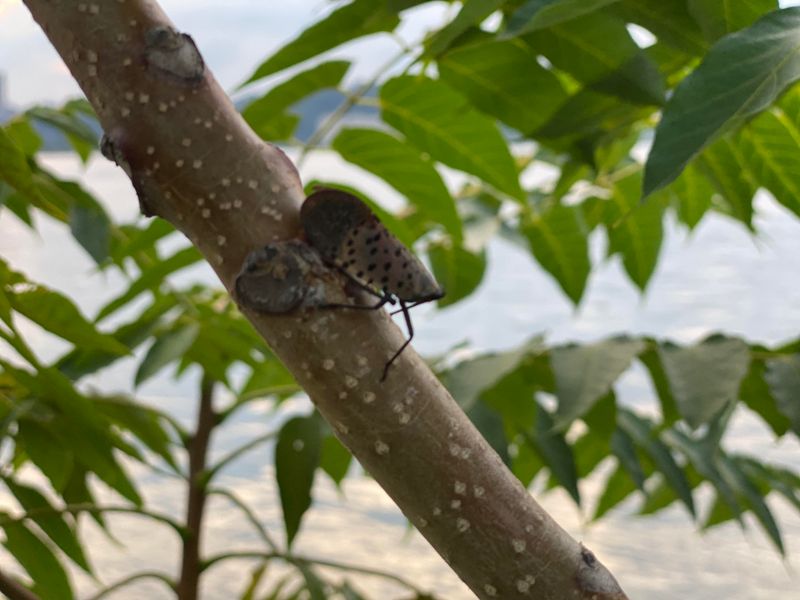
Tree of heaven is the spotted lanternfly’s favorite host plant. If you have one growing on your property, start your search there before checking anything else.
This invasive tree is common along roadsides, fence lines, and disturbed areas across Virginia. Its distinctive compound leaves and tall, straight trunk make it fairly easy to identify.
Black walnut, willow, maple, and apple trees are also high-priority targets. Spotted lanternflies are not picky, and females will lay on almost any nearby surface when preferred hosts are crowded.
Grapevines deserve special attention, especially if you grow them for food or landscaping. This pest causes serious damage to vineyards, and egg masses on vines are easy to miss.
Do not stop at trees. Females routinely lay on non-plant surfaces like wooden fences, stone walls, metal railings, and outdoor furniture.
Check the undersides of patio chairs, the legs of picnic tables, and even your parked vehicles if they sit outside for long periods. Egg masses have been found on car bumpers and wheel wells.
Stone retaining walls and concrete foundations also attract egg-laying females. The flat, hard surface suits them just fine, and the gray color of the mass blends in almost invisibly.
Doing a thorough property check every two weeks from September through November gives you the best chance of catching egg masses on Virginia tree trunks and surfaces before winter locks them in.
Scraping A Mass Into A Bag Without Spreading It
Scraping is the most reliable removal method when done correctly. You need a stiff plastic card, an old credit card works perfectly, and a zip-lock bag filled with hand sanitizer.
Hold the bag open near the mass before you start scraping. You want the eggs falling directly into the liquid, not onto the ground.
Press the card firmly against the bark just below the mass. Slide it upward in one steady motion to lift the entire mass off the surface in one piece.
Work slowly and stay close to the tree. Flicking or jabbing at the mass can scatter eggs across the ground, where they can still hatch the following spring.
Once the mass is in the bag, seal it tightly. Double-bag it if you are dealing with a large number of masses in one session.
The hand sanitizer breaks down the eggs on contact. Leave the sealed bag in direct sunlight for a few hours before disposing of it in your outdoor trash bin.
Do not compost egg masses or toss them into leaf piles. Eggs can survive in debris piles long enough to hatch if conditions stay mild.
After each scraping session, inspect your tools and clothing for stray eggs. Spotted lanternfly egg masses on Virginia tree trunks are easy to accidentally carry to new locations on boots, gloves, or gear.
The Limits Of Crushing Or Painting Over A Mass
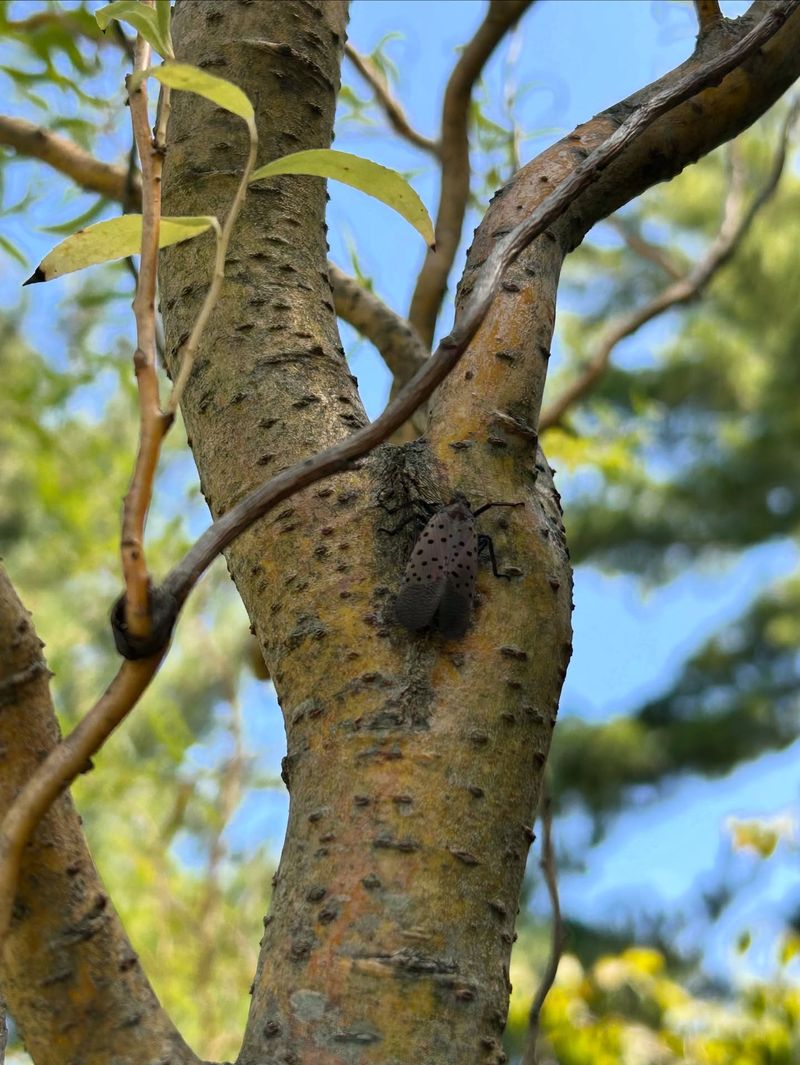
Crushing sounds like a simple fix, but it is not as effective as it seems. Pressing your thumb over a mass often leaves dozens of intact eggs pushed into bark crevices where they can still develop.
The waxy coating that protects the eggs also protects them from blunt pressure. A casual smear rarely ruptures every individual egg inside the mass.
Painting over the mass with exterior paint is another common mistake. The paint layer may seal the surface, but it does not always penetrate deeply enough to suffocate all the eggs.
Eggs sealed under paint can still hatch if the paint layer cracks or peels during winter freeze-thaw cycles. The nymphs simply push through the weakened coating.
Some homeowners try spraying the masses with soapy water or essential oils. These products are not proven to work reliably, and the waxy coating repels most liquid-based treatments.
The methods confirmed to work consistently are physical scraping into a disinfecting solution or approved pesticide applications. Anything less gives some eggs a chance to survive.
Approved contact insecticides like neem oil can help when scraping is not practical on large surfaces. Follow the product label and check Virginia-specific guidance before applying anything to trees.
Skipping proper removal is a gamble that costs you next spring. Every overlooked egg mass on Virginia tree trunks means dozens more spotted lanternflies feeding on your plants come May.
Reporting An Egg Mass To Virginia’s Department Of Agriculture
Reporting a sighting makes a real difference for tracking this pest across the state. Virginia’s Department of Agriculture and Consumer Services tracks spotted lanternfly spread using citizen reports, and every submission helps.
You can report online through the VDACS website or through Virginia Cooperative Extension’s reporting resources. Include a clear photo of the mass and your location so officials can confirm the sighting.
Include something for scale in the photo, like a coin or a finger. Blurry images make identification harder for inspectors who review submissions.
Note the surface where you found the mass. Reporting whether it was on a tree trunk, fence, vehicle, or other surface helps officials understand how the pest is moving through your county.
If you find masses on a vehicle or equipment that has traveled recently, report that specifically. Vehicles are a common way this pest reaches new counties.
VDACS may follow up if your location is outside the current known range. Early detection in a new area can trigger a faster response that helps slow further spread.
Neighbors benefit when you report too. A confirmed sighting in your area alerts nearby residents to start checking their own properties right away.
Staying alert to egg masses on Virginia tree trunks and reporting every find keeps the state’s response sharp. Your backyard observation could be the detail that helps officials track where this pest is headed next.