Why North Carolina Petunias Develop Sticky Leaves Around Their Blooms
That unexpectedly sticky feeling on petunia leaves catches plenty of North Carolina gardeners off guard the first time they brush against their own plants.
Most people assume something is wrong, maybe a pest problem or a disease quietly taking hold without any other obvious symptoms.
But this specific characteristic actually has a straightforward explanation that has nothing to do with the plant being unhealthy at all.
Understanding what’s really behind that sticky texture changes how you should think about this common petunia trait going forward.
Many gardeners spend time worrying over something that turns out to be a completely normal part of how these plants function. Once you know the real reason, that sticky feeling stops seeming like a concerning mystery.
This knowledge could put your mind at ease the next time you’re deadheading blooms in the garden.
1. A Little Stickiness Is Completely Normal
Before you panic and reach for the bug spray, take a breath. Petunias are naturally sticky plants, and that tacky feel is often just part of who they are.
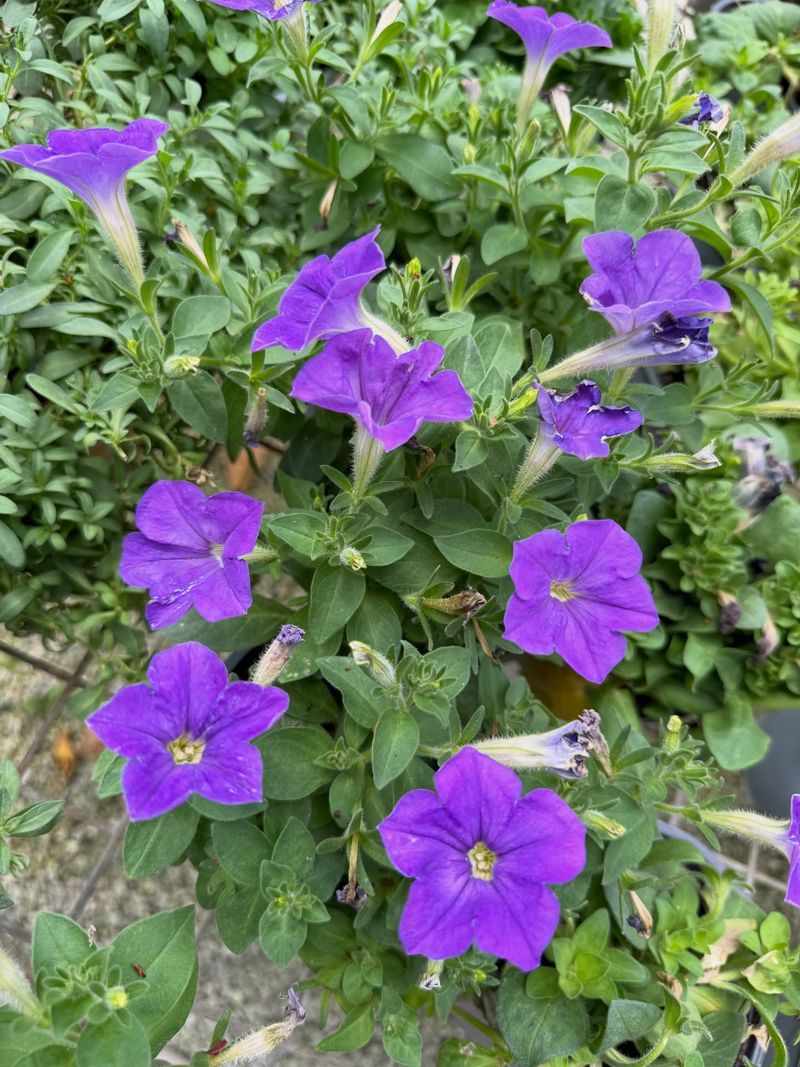
The leaves and stems are covered with tiny hairs that release a slightly gummy substance.
Those little hairs are called trichomes, and they do a real job for the plant. They help petunias hold on to moisture and can even discourage some small insects from crawling around and feeding.
So that sticky coating is actually a built-in defense system working quietly in your garden. Many first-time petunia growers touch the foliage and assume the plant is coated in something harmful. In most cases, it is simply the plant being a plant.
If your petunias look green, healthy, and full of blooms, the stickiness alone is nothing to worry about.
A good way to check is to look closely at the surface. Normal stickiness feels even and spreads across the whole leaf and stem.
There are no clusters of bugs, no black patches, and no shiny drips gathering in spots. Gardeners in North Carolina often notice this feeling most on warm, humid afternoons when the plant is very active. That is completely expected.
Once you understand that petunias come this way from the start, you can relax and enjoy them.
Keep this baseline in mind as you read on. Knowing what normal feels like makes it much easier to spot the moments when stickiness is trying to warn you about something more.
2. Some Petunias Are Stickier Than Others
Not all petunias feel the same when you touch them, and that surprises a lot of people. Just like some dogs shed more than others, certain petunia types are naturally stickier by nature.
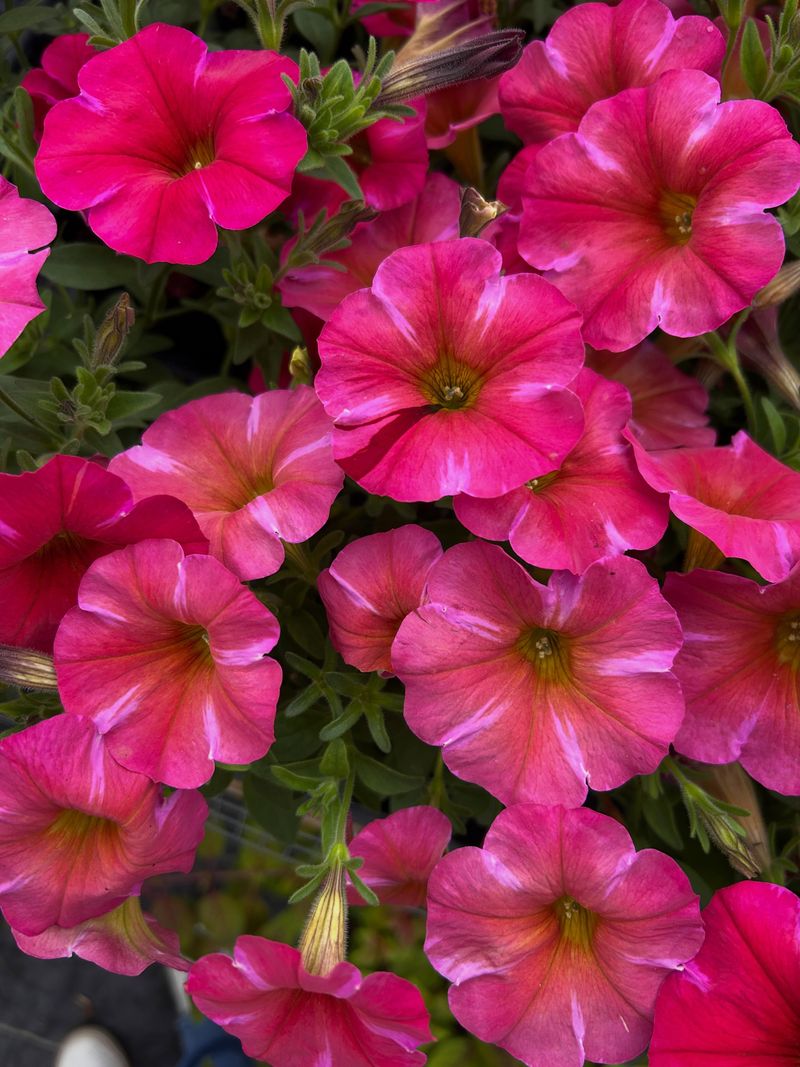
The variety you planted plays a big role in how tacky the leaves feel. Large, showy petunias such as the grandiflora types often have thicker stems and heavier foliage. These plants tend to produce more of that gummy coating than smaller, spreading kinds.
If you switched varieties this year, the difference in feel might catch you off guard. Wave and spreading petunias can feel stickier too, especially as they grow long and full across a bed or hanging basket.
Your North Carolina Garden Changes Every Week. Your Plan Should Too.
Gardening in North Carolina changes quickly throughout the season. Every Friday you’ll receive a simple weekly plan showing exactly what to plant, prune, fertilize, harvest, and protect so you never miss the right timing.
More leaves and more stems simply mean more surface for that natural substance to sit on. It builds up as the plant fills out.
Weather adds another twist to the story. During hot North Carolina summers, plants push out lots of fresh growth, and new growth is usually the stickiest part. So even the same variety can feel different from spring to midsummer.
When you shop for petunias, it helps to know this ahead of time. If sticky foliage bothers you, ask your local garden center which types tend to feel smoother.
Some newer hybrids were bred with tidier leaves in mind. The main takeaway is simple. A stickier petunia is not a sick petunia.
Variety, size, and growth stage all shape how tacky the plant feels, and none of that signals trouble on its own.
3. Aphids May Be Hiding Around Tender Growth
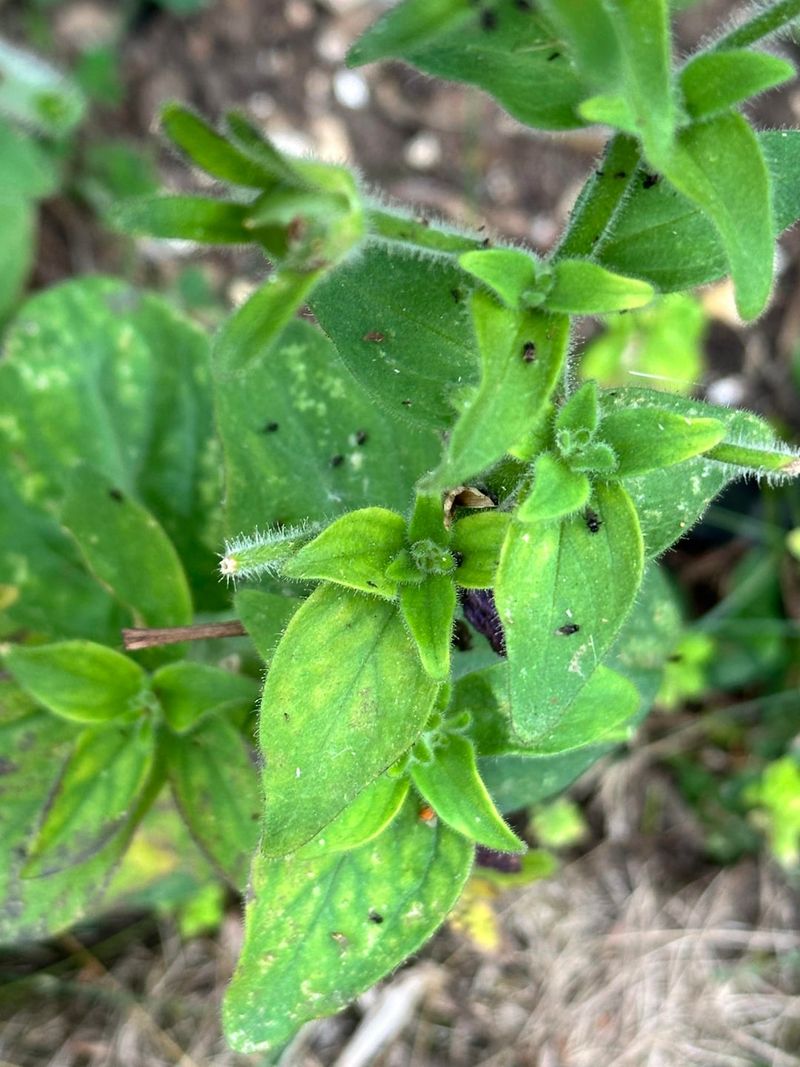
Here is where stickiness starts telling a different story. If your petunias suddenly feel much tackier than usual, tiny insects called aphids might be the reason. These soft little bugs love the tender parts of the plant.
Aphids gather on fresh stems, young leaves, and unopened flower buds. They poke into the plant and sip the sugary sap inside.
As they feed, they release a sweet, shiny liquid called honeydew, and that is what leaves your petunias feeling extra sticky.
They are small, usually green, though they can also be black, yellow, or pink. Because they blend in so well, many gardeners miss them at first. The stickiness often shows up before the bugs get noticed.
To find them, gently turn over a few leaves and look right where new growth appears. Aphids like to crowd together, so you may spot a cluster hugging a stem or hiding under a bud.
Seeing them in groups confirms the problem. The good news is that aphids are easy to handle when caught early. A strong spray of water from the hose can knock many of them off.
For bigger groups, a gentle insecticidal soap works well and is safe for most gardens. Helpful bugs like ladybugs also treat aphids as a favorite snack, so inviting them into your yard pays off. Check your plants once a week during warm months.
Catching aphids fast keeps the stickiness under control and your blooms looking bright and fresh.
4. Whiteflies Can Leave Sticky Honeydew Behind
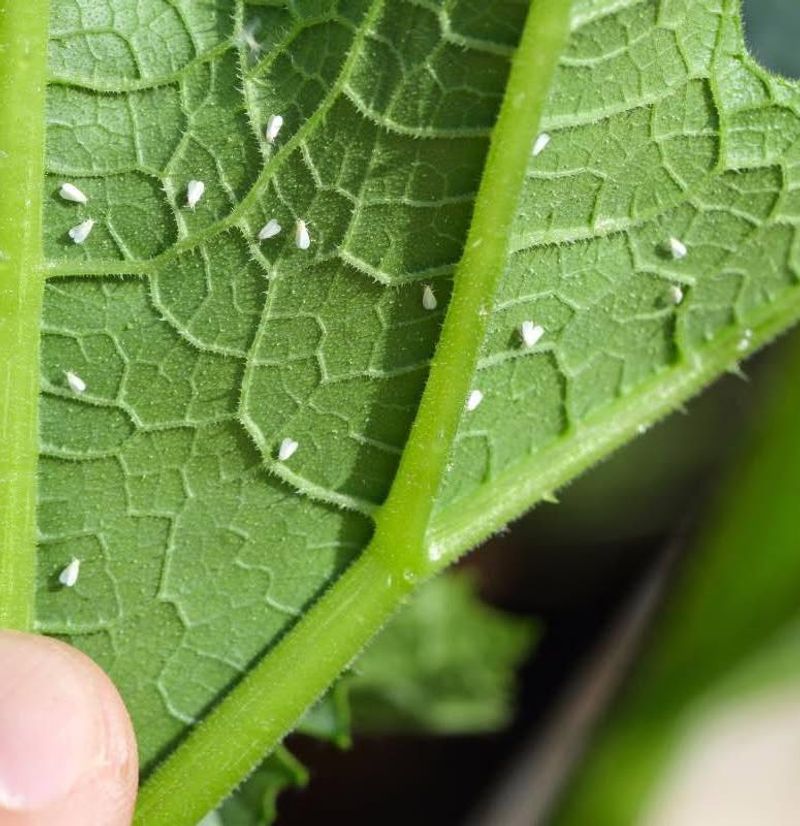
Give your petunia a gentle shake and watch closely. If a little cloud of tiny white bugs flutters up, you have met the whitefly. These small pests are a common cause of sticky leaves in North Carolina gardens.
Whiteflies look like miniature moths, and they usually stay tucked beneath the leaves where they are hard to see. Hiding on the underside keeps them safe while they feed on the plant’s sap.
Like aphids, they leave behind that sugary honeydew that coats everything in a tacky film.
Late summer is prime time for these insects in our warm, muggy climate. Heat and humidity help their numbers grow fast, so a small group can turn into a large one within a week or two.
That is why stickiness sometimes seems to appear almost overnight.
To check for them, flip a few leaves over and look for clusters of white specks or tiny eggs. When you disturb the plant, adult whiteflies scatter into the air, which makes them easy to identify.
Their flying habit sets them apart from other pests. Controlling whiteflies takes a bit of patience. Yellow sticky traps placed near the plants catch many of the adults.
Insecticidal soap or neem oil, sprayed under the leaves in the early morning, helps reduce them too.
Staying consistent matters most. Check your petunias often, treat when needed, and clear away heavily coated leaves.
A little steady attention keeps whiteflies from taking over and returns your flowers to their normal, cheerful state.
5. Black Sooty Mold Is An Important Clue
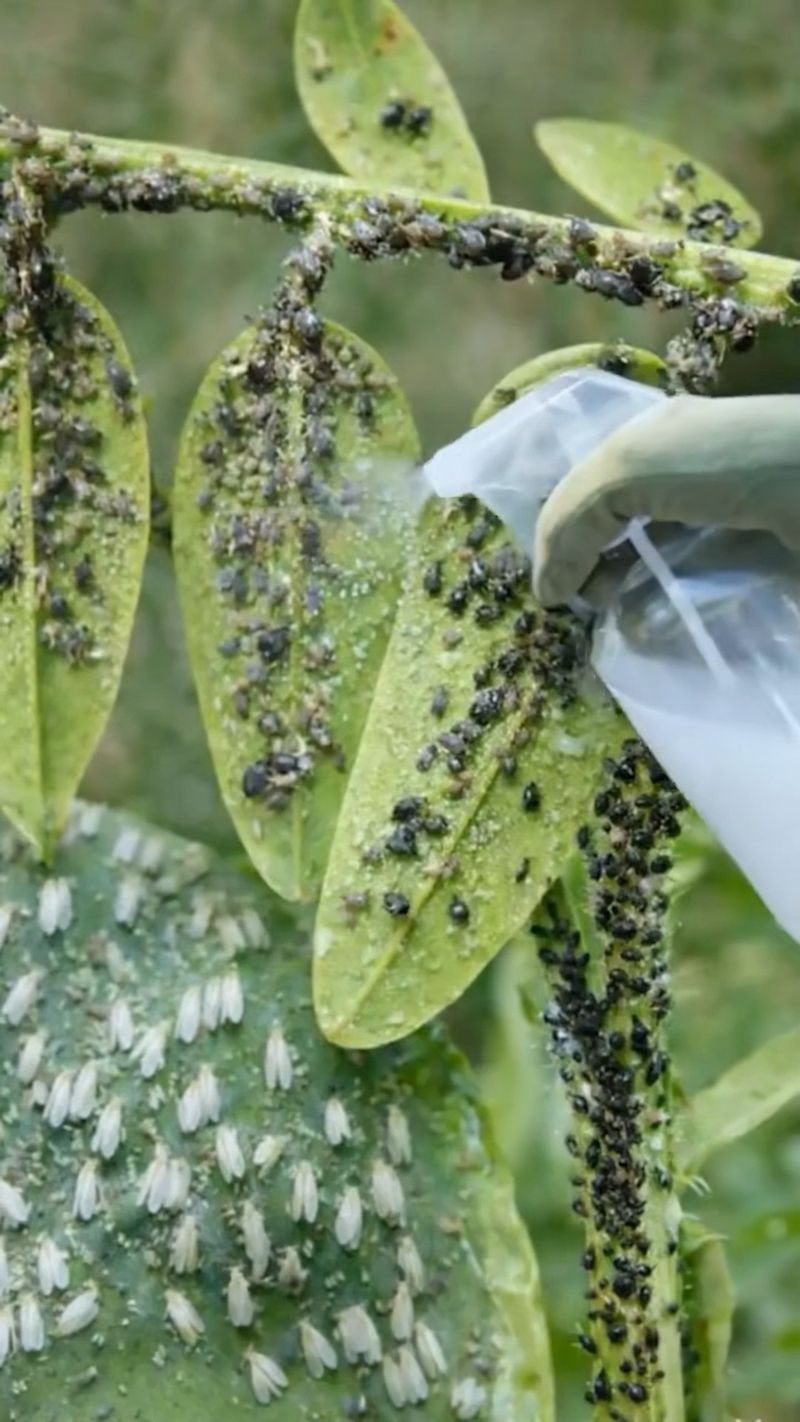
Spotting a dusty black film on your petunias can feel alarming, but it actually tells you something useful. That dark coating is called sooty mold, and it grows on the sugary honeydew left behind by insects.
Where there is honeydew, this mold often follows. The mold itself does not feed on your plant. Instead, it settles on top of the sticky residue and spreads across leaves and stems.
Think of it as a sign pointing straight to a pest problem you may not have noticed yet. This clue is really handy for gardeners. Normal petunia stickiness stays clear and clean, but honeydew from bugs draws in the dark, powdery growth.
So if you see black patches, insects are almost certainly nearby. Heavy sooty mold can block sunlight from reaching the leaves. When that happens, the plant cannot make food as well, and growth may slow down.
Blooms can look tired, and the whole plant may lose some of its shine. Cleaning it off is fairly simple. Wipe the leaves with a soft, damp cloth, or rinse the plant gently with water. The mold usually lifts away once the sticky honeydew is removed.
The most important step, though, is dealing with the bugs producing the honeydew in the first place. Treat the aphids or whiteflies, and the mold has nothing to grow on.
Handle the source, keep the leaves clean, and your petunias will bounce back looking healthy and bright again.
6. Ants Can Point To A Hidden Pest Problem
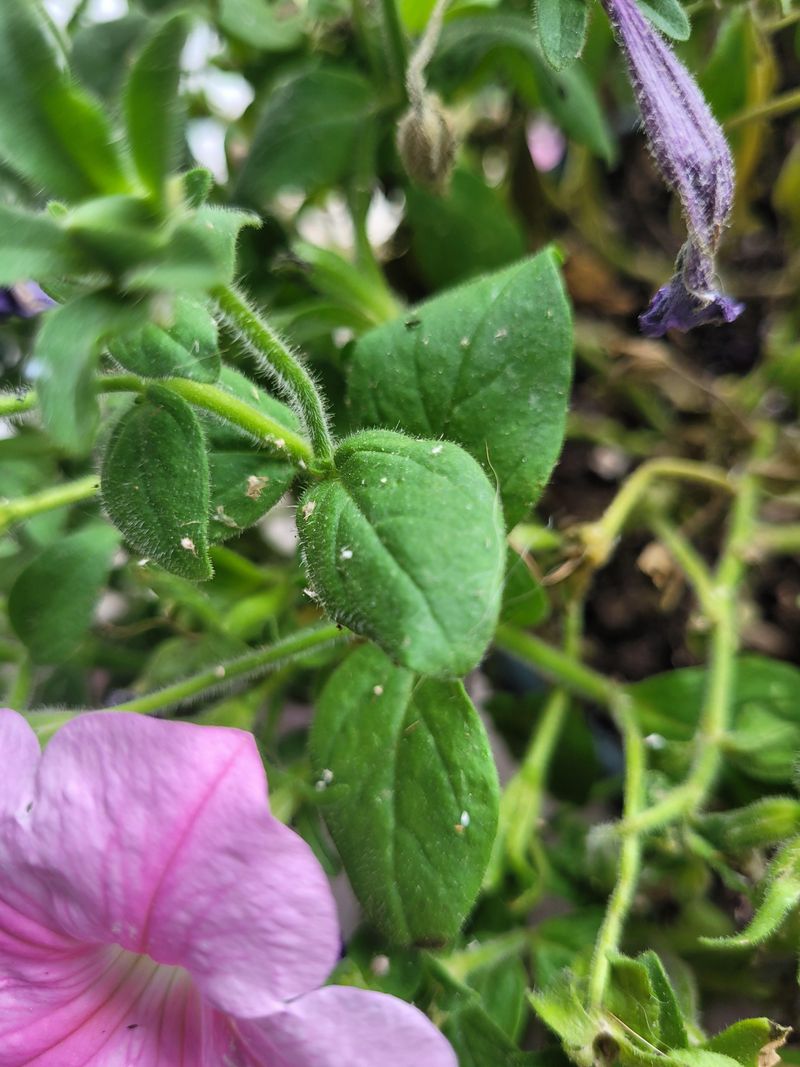
Watching a line of ants march up your petunia might seem harmless, but it is worth a closer look. Ants have a serious sweet tooth, and honeydew is one of their favorite treats.
Their presence often hints at pests you have not spotted yet. Here is the clever part. Ants and honeydew-making insects have a kind of partnership.
The ants protect aphids and whiteflies from predators, and in return they get to feast on the sugary liquid those bugs produce. It is a teamwork you would rather not have in your garden.
So when ants keep visiting a sticky petunia, treat it as a warning sign. They are usually leading you straight toward a colony of sap-feeding insects hiding somewhere on the plant. Following the ants can help you find the real culprit.
Take time to inspect the areas where the ants are heading. Check the undersides of leaves, the joints where stems meet, and the base of flower buds. Those hidden spots are exactly where aphids and whiteflies like to gather.
Once you locate the bugs, you can treat them with a water spray, insecticidal soap, or neem oil. Removing the honeydew source usually sends the ants looking elsewhere too. Fix the pest, and the ant parade fades away.
Keeping mulch and debris tidy around your plants also discourages ant trails. A quick weekly walk through your flower beds, watching for these busy little visitors, gives you an early heads-up before stickiness gets out of hand.
7. Dry Weather Can Let The Stickiness Build Up
Rain does more for your garden than just water the roots. During wet stretches, falling rain rinses honeydew and dust right off your petunia leaves. When the skies stay dry, though, that sticky coating has nowhere to go.
North Carolina summers can swing between soggy weeks and long dry spells. In those dry periods, honeydew from aphids or whiteflies keeps piling up on the foliage. Without rain to wash it away, the leaves feel tackier and tackier by the day.
That buildup can make a small pest problem look much worse than it is. You might notice heavy stickiness and assume the insects have exploded in number. Sometimes the bugs are the same, and the missing rain is really to blame.
Before you grab any treatment, take a moment to figure out the true source. Look for insects, check for black mold, and watch for ants.
If the plant is clean of pests, the stickiness may just be normal residue that never got rinsed off.
A gentle spray from the hose can imitate a good rain shower. Washing the leaves every few days during dry weather keeps honeydew from collecting and helps you see the plant clearly.
Clean foliage is much easier to inspect. The smart move is always to identify what is going on before you treat. Reacting too fast can waste effort and stress the plant.
Watch, rinse, and check carefully, and your petunias will stay bright, healthy, and full of blooms all season.