What It Really Means When Barred Owls Start Calling Right Over Your North Carolina Yard At Dusk
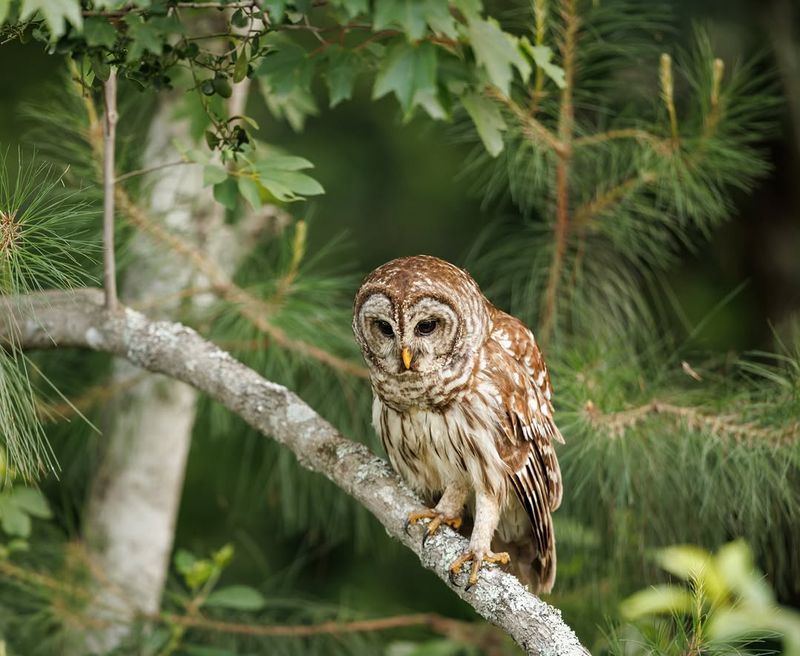
You are settling into the porch as the light goes gold, and then it comes rolling out of the treeline: “Who cooks for you? Who cooks for you-all?” That sound belongs to a barred owl, and if it is coming from right above your North Carolina yard at dusk, you are probably wondering what it means. The short answer is that an owl is using the surrounding landscape, and that tells you something worth knowing. Read on and you will find out exactly what the call can and cannot reveal, and what to do about it.
The Call Means An Owl Is Using The Surrounding Area
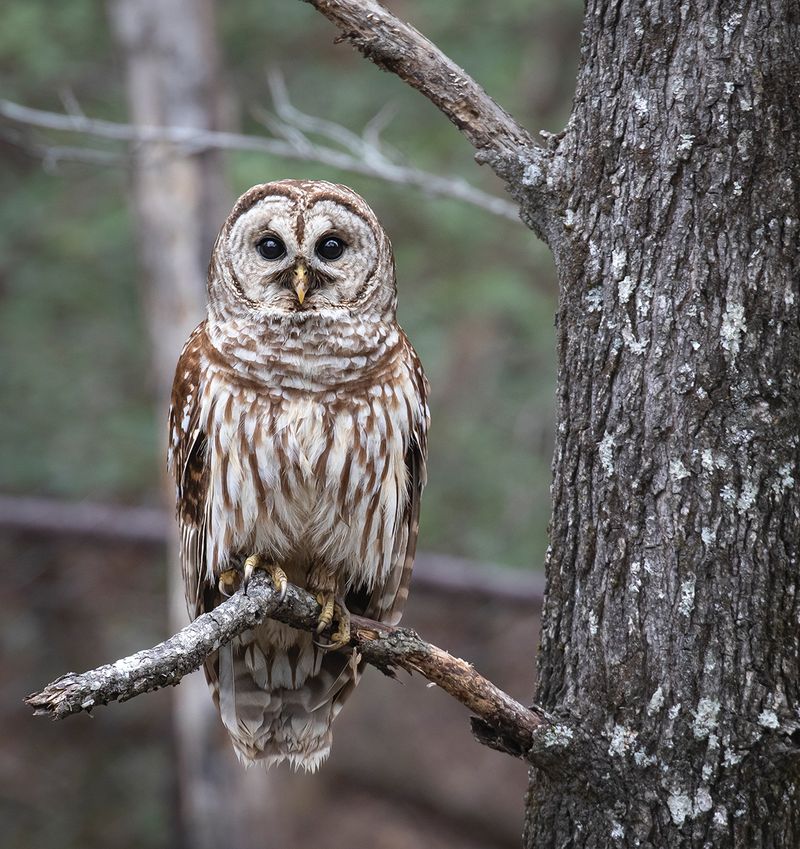
Hearing that rolling “Who cooks for you?” from your treeline at dusk is not random. NC Wildlife’s barred owl profile confirms that barred owls are year-round, territorial birds in North Carolina, tied to mature woods, floodplains, swamps, and moist habitats. The call means an owl has claimed some portion of the surrounding landscape as its territory, and your yard sits inside or near that range.
The hooting is communication, plain and simple. Barred owls call to hold territory, stay in contact with a mate or family members, respond to rival owls, or carry on courtship. Cornell Lab’s barred owl sounds page describes the species as primarily nocturnal, which is exactly why dusk is such a reliable trigger for calling. The owl is waking up for its shift, and announcing itself is part of the routine.
Here is the distinction that matters most: the call is a habitat clue, not a habitat report card. It shows that an owl is using the surrounding area. It cannot tell you whether your specific yard has excellent ecological quality, how many mice live under your shed, or whether you gardened your way to this moment. A single “Who cooks for you?” carries real information, but it carries less than most people assume.
Think of it as a signal that something in the broader landscape is working well enough to support a large predator. Whether that something is your yard, the creek two properties over, or the old hardwood stand at the end of the street, the call alone cannot say.
Read The Treeline As Part Of A Larger Habitat
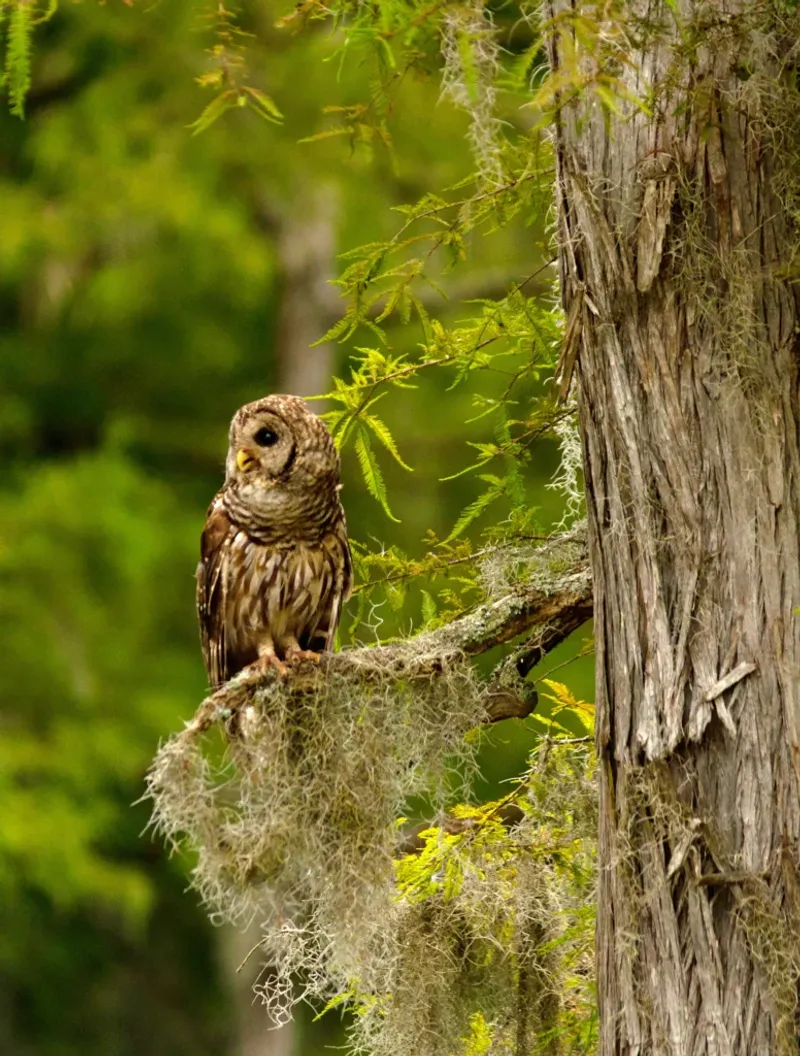
Barred owls do not pick a single backyard and decide it is perfect. They work a territory that can stretch across many acres, and that territory is shaped by the larger landscape around it. NC Wildlife associates the species with mature woods, moist woodlands, floodplains, open swamps, beaver ponds, streamsides, and wooded corridors. If any of those features exist within a reasonable distance of your property, an owl may be patrolling through.
Your yard may be one stop along a route that connects a creek bottom to a woodlot to a pond edge. That creek two streets over, the drainage ditch thick with willows, the older hardwood stand behind the neighborhood, the retention pond at the subdivision entrance, any of these can provide pieces of what an owl needs. Cornell’s barred owl life history page notes that natural nests are typically in cavities of large trees, often 20 to 40 feet above ground, which hints at how much the species depends on mature timber rather than tidy suburban plantings.
Your North Carolina Garden Changes Every Week. Your Plan Should Too.
Gardening in North Carolina changes quickly throughout the season. Every Friday you’ll receive a simple weekly plan showing exactly what to plant, prune, fertilize, harvest, and protect so you never miss the right timing.
The habitat clues worth noticing are not your raised beds or your lawn edge. Look instead for mature trees with real canopy, wooded stream buffers, elevated hunting perches, dense cover where small animals can hide, and any standing water within a half mile. Those are the features that make a territory viable for a bird this size.
One call from the treeline does not prove every one of those features exists in your yard. It is consistent with some usable combination of them existing somewhere within the owl’s broader range, and your property may simply be part of a connected landscape that the owl moves through each night.
A Barred Owl Is Not A Rodent Census
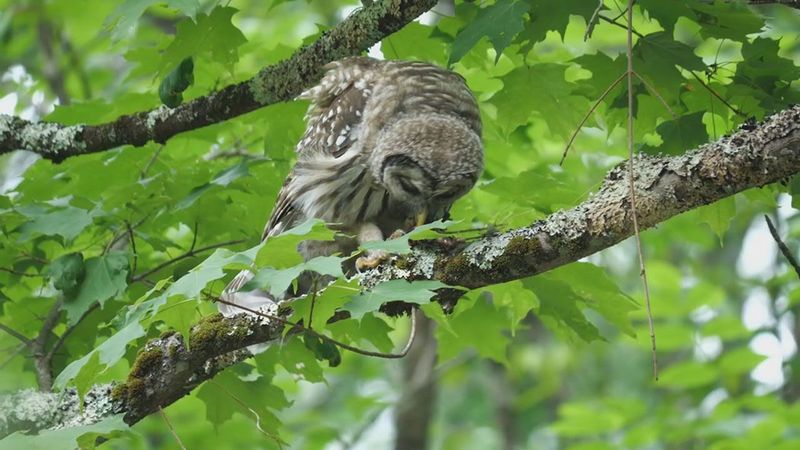
Many North Carolina homeowners hear a barred owl and immediately think: “I must have a mouse problem.” That leap is understandable, but the owl’s diet makes it unreliable. NC Wildlife’s species profile lists rodents as one part of a genuinely broad menu that also includes squirrels, rabbits, birds, frogs, salamanders, reptiles, fish, crayfish, beetles, and other insects. The owl calling from your pine tree could be hunting any of those things, or several of them in the same night.
Because the diet is so flexible, you cannot work backward from the call to identify what prey drew the owl nearby. A barred owl over a suburban yard might be targeting the voles in the unmowed strip along the fence, the frogs in the neighbor’s garden pond, or the crayfish in the creek at the bottom of the hill. There is no way to know from sound alone.
Here is where it gets tricky for anyone hoping the owl will solve a pest problem. Barred owls hunt across a territory larger than one yard, and their appetite shifts with whatever is easiest to catch. One owl calling from your treeline will not reliably clear your attic of mice, reduce your tick population, or pick off the voles eating your bulbs. It may take some rodents.
It will also take other things.
The honest framing is this: the owl is one predator moving through a wider food web, not a free pest-control service assigned to your address. Appreciate it for what it actually is, a native hunter doing what it has always done across North Carolina’s moist woodlands and creek corridors.
Repeated Hooting Does Not Prove A Nest
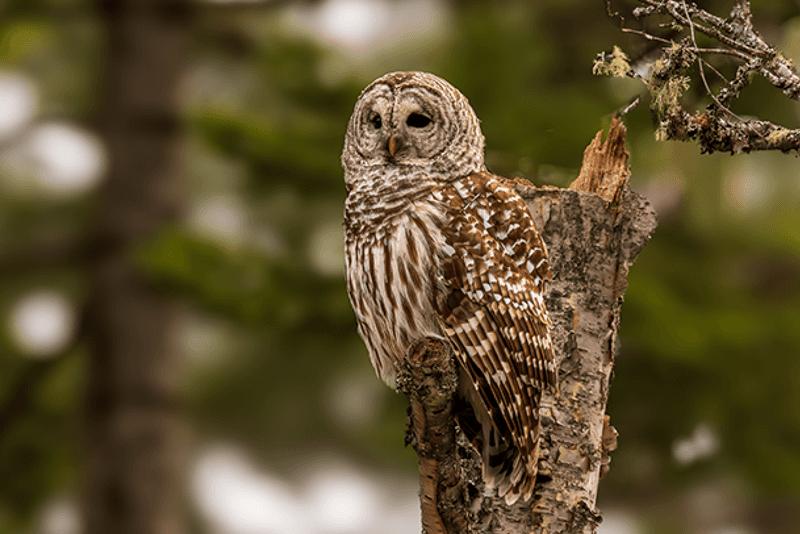
When the calling goes on for several nights in a row, or picks up again in late summer, a reasonable person starts wondering whether an owl pair has moved in permanently. The calling may genuinely intensify during certain seasons, but that does not mean a nest is sitting in your oak tree. NC Wildlife explains that barred owls use vocalizations for territorial defense, mate contact, courtship, family communication, and responses to other owls. Each of those reasons can produce a stretch of frequent calling without any nest on the property at all.
The North Carolina breeding season adds another layer. Courtship begins before actual breeding, young may leave the nest cavity by midsummer, and juveniles remain dependent on adults for several more weeks after that. Increased calling in late summer can coincide with family activity as adults and young keep track of each other across a large territory. That activity does not prove a nest exists on your land, only that a family group may be using the broader area.
Cornell’s identification page describes barred owls as mostly nocturnal but occasionally active in the morning and evening, with calls occurring throughout the year. Hearing one at noon or at 2 a.m. is unusual but not alarming. Cornell’s sounds page reinforces that the species is vocal across all seasons, so a burst of calling in October carries no more diagnostic weight than one in March.
Do not infer illness, distress, a resident breeding pair, or a nest on your property from sound patterns alone. The owl is communicating. What it is communicating about is more than one call can tell you.
The Good News Depends On What You Value
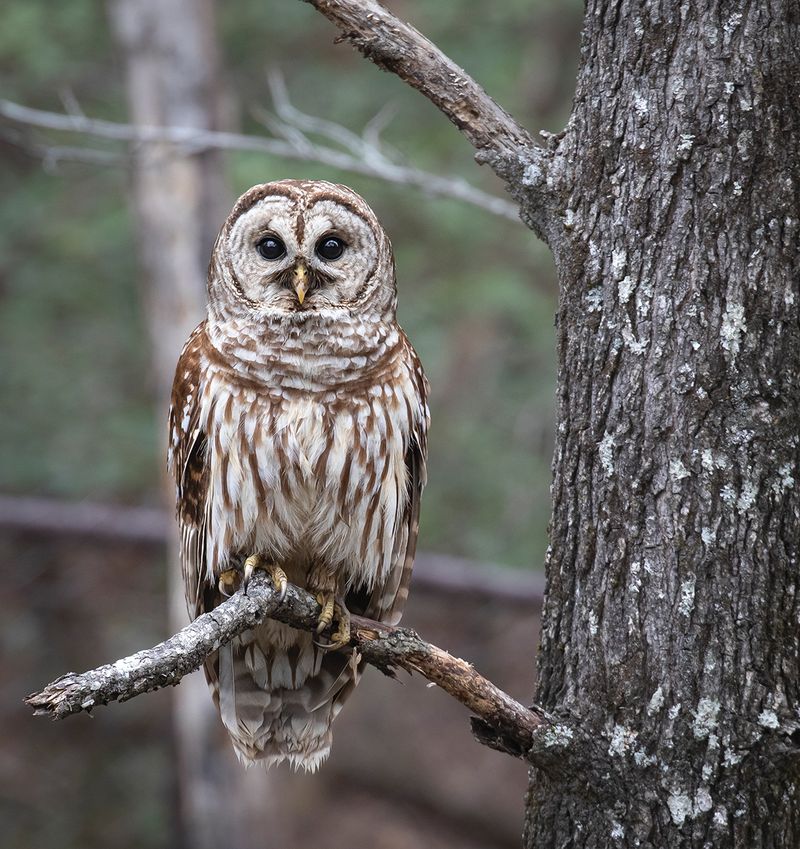
A barred owl using your yard’s edge is genuinely good news if you value native predators and a functioning food web. NC Wildlife’s profile frames the species as a natural part of North Carolina’s landscape, and a large native raptor moving through your neighborhood means the surrounding habitat is supporting real wildlife. That is worth something, especially in areas where development has pushed mature woodland into smaller and smaller patches.
But the news is more complicated if you keep a bird feeder or small pets. An owl near a feeder is not necessarily targeting your cardinals and chickadees, but a concentrated group of birds can create a hunting opportunity that would not otherwise exist. Cornell’s barred owl FAQ notes that the species takes birds up to roughly grouse size, along with mammals and other prey. If protecting songbirds matters to you, avoid setting up a dense feeding station directly beneath a known owl hunting perch, and keep feeders clean so you are not accidentally concentrating prey in one spot.
Small pets deserve a straightforward precaution. NC Wildlife guidance recommends keeping small pets indoors or supervised at night when a large owl is regularly using the property. This is not evidence that barred owls routinely carry off dogs or cats. It is simply a sensible step on a property where a bird with a broad diet is actively hunting after dark.
The owl adds something real to your yard’s ecology. What that means for your feeders, your songbird mix, and your evening routine depends on what you are trying to protect and what you are willing to adjust.
Support Habitat Without Poisoning The Food Web
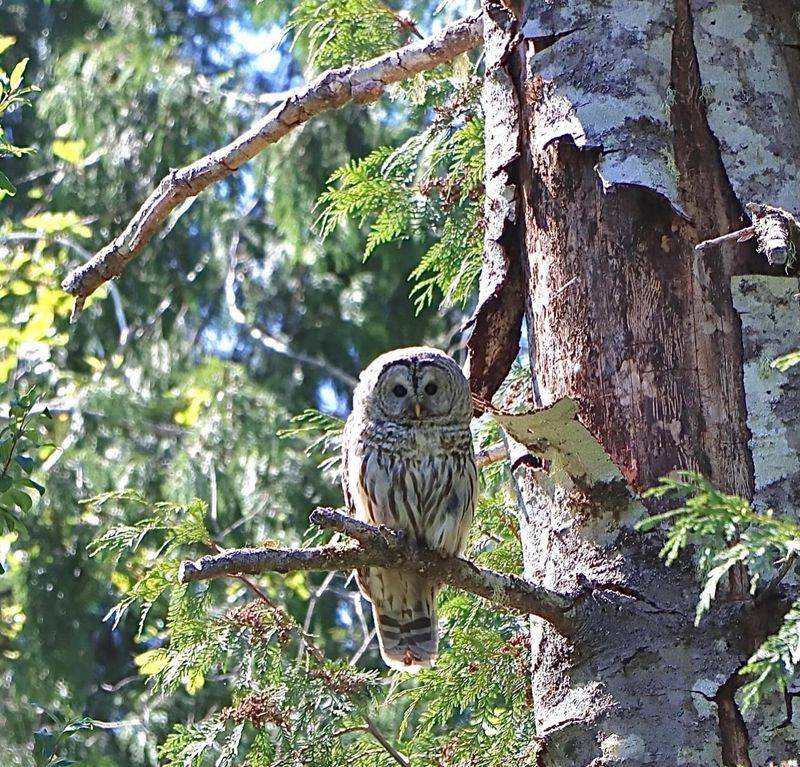
One of the most useful things you can do after hearing a barred owl near your yard is to look at your trees. Mature hardwoods, standing snags, and wooded stream buffers are the structural features that make a landscape usable for a bird this size. NC State Extension’s owl resource identifies large snags as important for barred owls and other cavity-nesting wildlife, recommending snags in trees at least 10 inches in diameter at breast height when they can be retained safely.
The safety boundary matters as much as the recommendation. A snag beside a house, over a driveway, near a play area, or under a utility line is a risk, not a benefit. Retain suitable snags only where they pose no threat to people, vehicles, structures, or power lines. NC State Extension’s snags and downed logs page gives practical guidance on how to evaluate and manage these features responsibly.
Preserving a wooded creek buffer or a connected stand of older hardwoods where it is safe to do so will do more for the owl than almost any other single action.
Pesticides and rodenticides are where many well-meaning homeowners accidentally work against the food web they are trying to support. NC Wildlife warns that owls can be harmed when they eat prey that has been exposed to pesticides. Start with exclusion, sanitation, and habitat changes before reaching for any chemical control. Seal entry points, remove food sources, and clean up clutter that shelters rodents.
Rodenticides deserve special caution. EPA’s rodenticide safety review explains that poisoned rodents can retain residues long enough to expose predators that eat them, with second-generation anticoagulants being especially persistent and risky. A barred owl calling from your treeline is a clear reason not to leave poisoned rodents accessible in the yard. If a rodenticide is genuinely necessary, follow the label exactly, use only products and placements permitted for your setting, and remove any dead rodents before they become available to wildlife.
The owl should hunt naturally, not inherit a contaminated food supply.
Observe The Owl Without Trying To Manage It
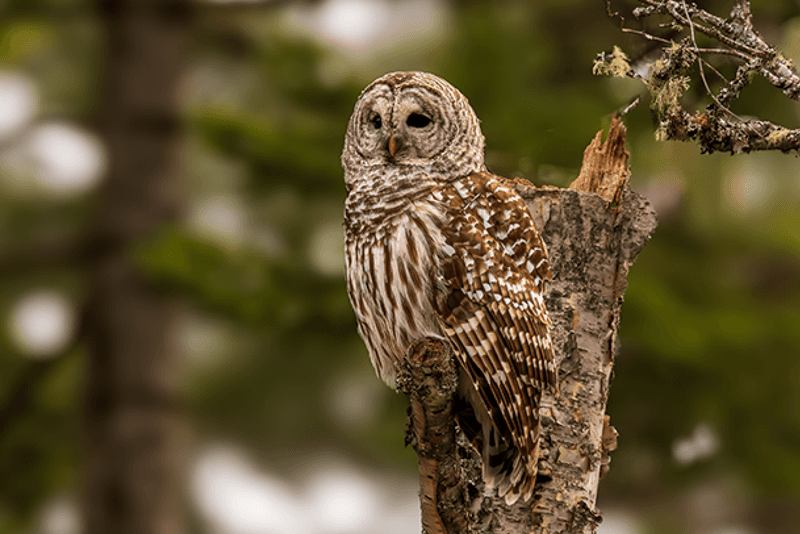
The most common mistake people make after spotting a barred owl near the yard is trying to get closer to the relationship. Putting out meat, tossing mice near the patio, or playing recorded owl calls from a phone speaker feels like a friendly gesture, but it creates real problems. Cornell’s barred owl FAQ specifically warns against tossing food near roads, because it can draw both rodents and raptors into traffic danger. Luring the owl toward a busy street or a lit patio does not help the bird, it just moves the risk closer to it.
Repeated playback of owl recordings is another habit worth skipping. Barred owls are territorial and will respond aggressively to perceived rivals, which means repeated playback can disrupt a bird that is already managing a real territory. Approach a known nest site with the same restraint, barred owls can be aggressive near active nests, and the disturbance is not worth the closer look.
If you want to offer something genuinely useful, a nest box built to the right specifications is a reasonable option, though it comes with no guarantees. Cornell NestWatch lists the specifications for a barred owl box: a 7-inch entrance hole, 23-inch interior depth, 13-by-13-inch interior footprint, placement 12 to 15 feet above ground, at least 0.5 mile between boxes, and a location within 200 feet of water when possible. Add 3 to 4 inches of untreated wood chips inside. Install the box well before February if you want any chance of it being used during the breeding season.
Occupancy is not guaranteed, and a box should not go up in an area where pesticides are routinely used.
On the legal side, federal bird nest protections and NC Wildlife rules make it illegal to injure, harass, kill, or disturb owls or active nests without appropriate authorization. Contact NC Wildlife or an authorized wildlife professional before taking any action involving a bird or nest. If you find a visibly injured owl, do not attempt to treat or raise it yourself. NC Wildlife’s injured wildlife page can connect you with a licensed rehabilitator who has the training and permits to help.
The owl calling from your treeline is part of a larger living system, and the best thing you can do is let it stay that way.