The Orange Florida Snake You May Find Around Sheds, Gardens And Compost Areas
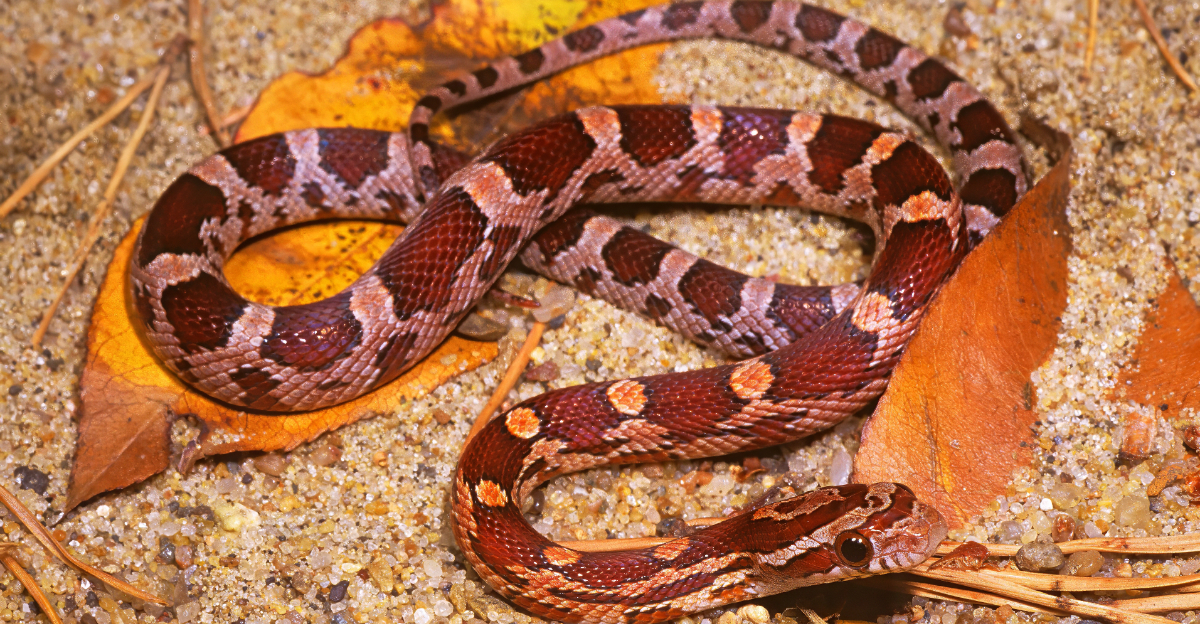
An orange snake near your Florida shed can make you freeze before you even know what you saw. The color alone feels unusual, especially beside a compost pile, under a flowerpot, or along the edge of a garden bed.
Florida yards offer plenty of cool, sheltered spaces, so a snake can appear close to the house with little warning. The key is not to judge it by color alone.
Orange tones can show up on more than one species, and body shape, pattern, size, and behavior tell a clearer story. A quick glimpse can make identification tricky, especially when the snake slips back under cover seconds later.
Before you assume the worst or try to move it, take note of details you saw. A stripe, a ring, or even the shade of orange can change the answer and reveal what kind of visitor has claimed that corner of your yard.
1. That Orange Snake Is Probably A Corn Snake
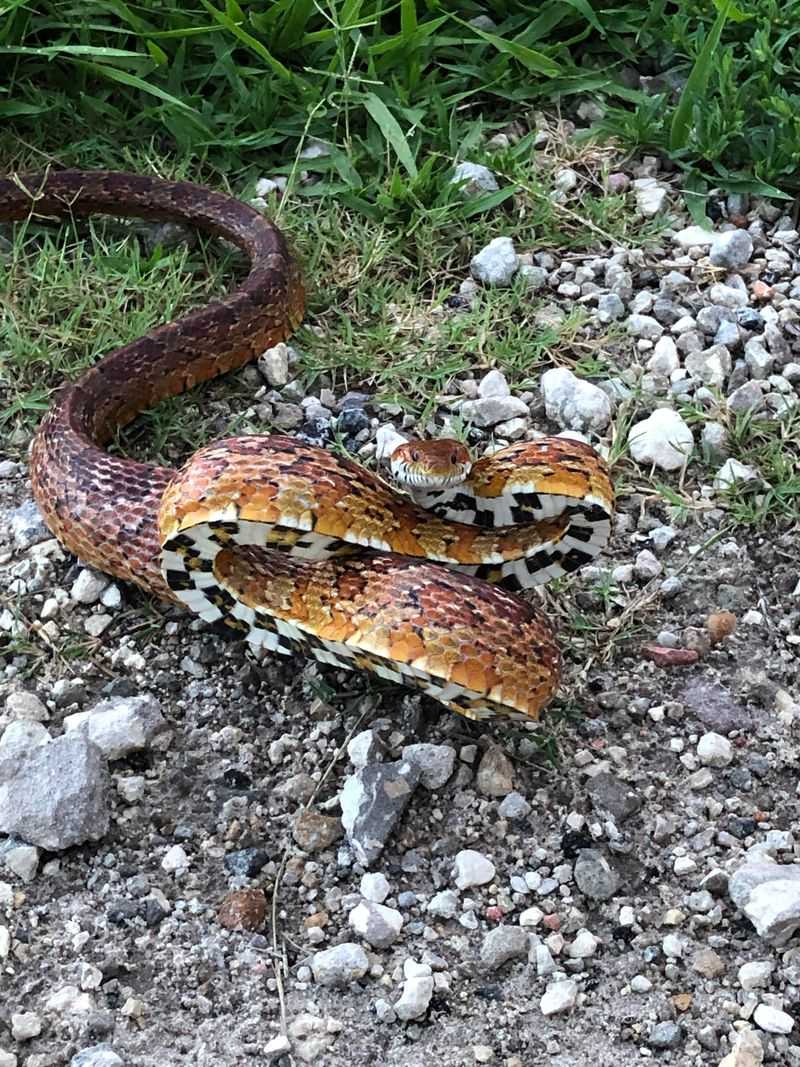
An orange flash near a shed wall or garden edge is one of the more striking things a homeowner can stumble across on an ordinary afternoon. More often than not, that color belongs to a corn snake, Pantherophis guttatus.
This nonvenomous species lives across much of Florida and the southeastern United States.
Corn snakes typically show an orange, reddish, or orangish-brown base color with a row of large, dark-bordered blotches running down the back. The belly often has a bold black-and-white checkerboard pattern that sets them apart from many other species.
Color and pattern can vary quite a bit from one individual to the next, though, so no two corn snakes look exactly alike.
Some individuals lean toward a deeper red, while others appear almost tan or pale orange depending on age, region, and individual variation. Juveniles sometimes look noticeably different from adults of the same species.
Florida Museum of Natural History records note that corn snakes are among the most variable colubrids in the region.
Orange color alone is never a reliable way to identify any snake. Several other species share warm reddish or orange tones, and some can look similar at a quick glance.
If you spot an unidentified snake, observe it calmly from a safe distance rather than approaching for a closer look.
2. Sheds Give Corn Snakes More Than One Reason To Visit
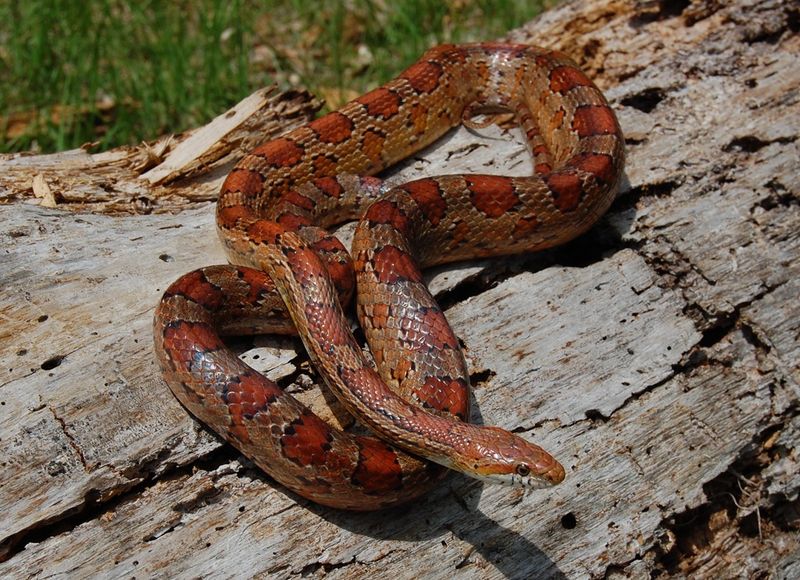
Old storage sheds have a long history with corn snakes, and that connection goes back further than most people realize. Historically, corn snakes were common around grain barns and smokehouses across the South.
They were drawn to the mice and rats feeding on stored food, not to the grain itself.
A modern backyard shed offers some of the same basic appeal. Dark corners, gaps under flooring, stacked lumber, and sheltered walls can all provide protected resting spots where a snake can stay concealed during daylight hours.
Sheds also tend to trap warmth, which can be useful to a reptile regulating its body temperature.
Rodents may enter sheds for birdseed, pet food, or other stored materials. A corn snake following that prey then has a practical reason to investigate the structure.
Your Florida Garden Changes Every Week. Your Plan Should Too.
Gardening in Florida changes quickly throughout the season. Every Friday you’ll receive a simple weekly plan showing exactly what to plant, prune, fertilize, harvest, and protect so you never miss the right timing.
Spotting one corn snake near a shed does not confirm a serious rodent problem on the property. It simply suggests the area offered something useful on that particular day.
Gaps in shed siding, spaces beneath doors, and openings around pipes can allow a snake to move in and out with ease. Sheds with tight construction and no food storage inside are less likely to support the prey that draws a snake in the first place.
The structure itself is shelter; the prey nearby is the real pull.
3. Gardens Put Plenty Of Potential Prey Within Reach
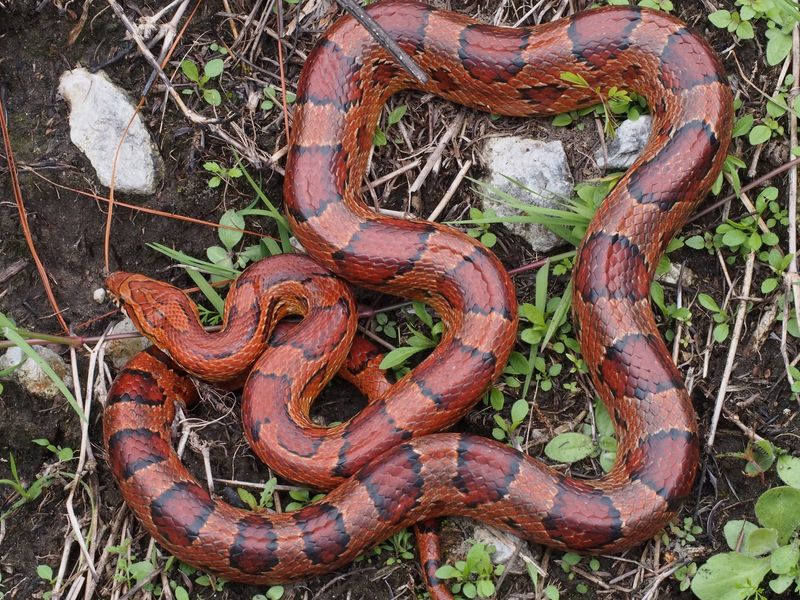
A thriving garden is a busy place. Leaf litter, dense plantings, ground cover, and garden beds support many small animals.
That variety matters to a corn snake searching for prey.
According to Florida Museum of Natural History resources, corn snakes consume small rodents, frogs, lizards, birds, and bird eggs. Gardens that attract any of these animals can put potential prey within easy reach of a passing snake.
A vegetable bed may draw mice looking for fallen fruit, while a flower border may support anoles and small frogs. Both can become part of a food web that a corn snake moves through.
Corn snakes hunt primarily by following scent trails and exploring cover rather than actively chasing prey in open ground.
Dense plantings, mulched rows, and low-growing ground cover give them the kind of concealed movement corridors they use naturally in woodland edges and overgrown fields.
Vegetables, flowers, and ornamental plants do not attract corn snakes on their own. A garden full of marigolds and tomatoes with no prey animals present offers a snake very little.
The food web the garden supports is what matters, not the plants themselves. Corn snakes are capable hunters, but they are following real prey, not wandering into gardens out of curiosity about what you planted this season.
4. Compost Can Draw The Prey A Corn Snake Follows
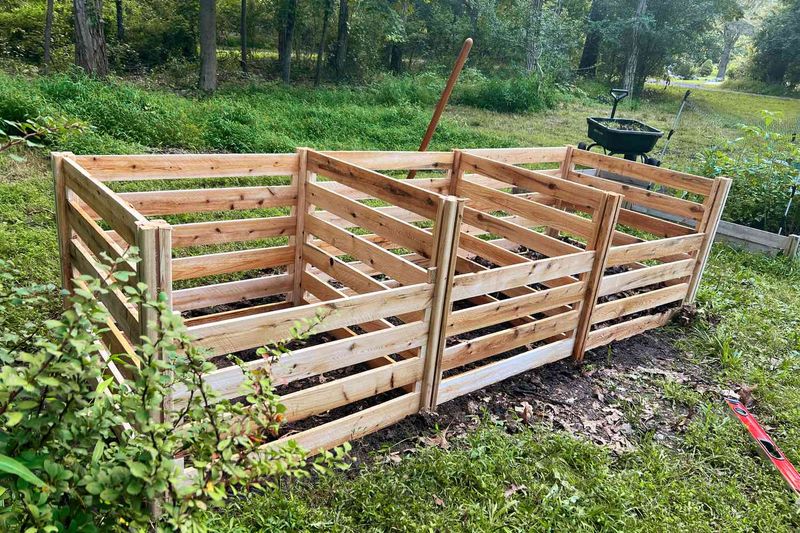
Compost areas get an unfair reputation when snakes are involved. A corn snake found near a compost pile did not come because it was drawn to decomposing plant matter or kitchen scraps.
The causal chain is more indirect than that.
Poorly managed compost that includes accessible food scraps, meat, or improperly covered organic waste can sometimes attract mice or rats looking for an easy food source. Those rodents, in turn, are exactly the kind of prey a corn snake follows.
The snake responds to the prey animal, not to the compost itself.
A properly managed compost pile should contain plant-based materials, stay covered, and be turned regularly. That makes it far less likely to support rodent activity that could interest a corn snake.
University of Florida IFAS Extension recommends keeping pest-attracting food scraps out of compost. Doing so also reduces conditions that could bring small predators into the area.
Nearby cover matters too. Dense vegetation, wood borders, or stacked materials around a compost area give a snake places to rest and move through without being exposed.
Removing excess clutter around the compost perimeter can reduce the shelter value of that spot without requiring any drastic changes to the garden. Compost supports prey, and prey interests the snake.
That is the whole chain.
5. Mulch And Debris Give This Snake Easy Cover
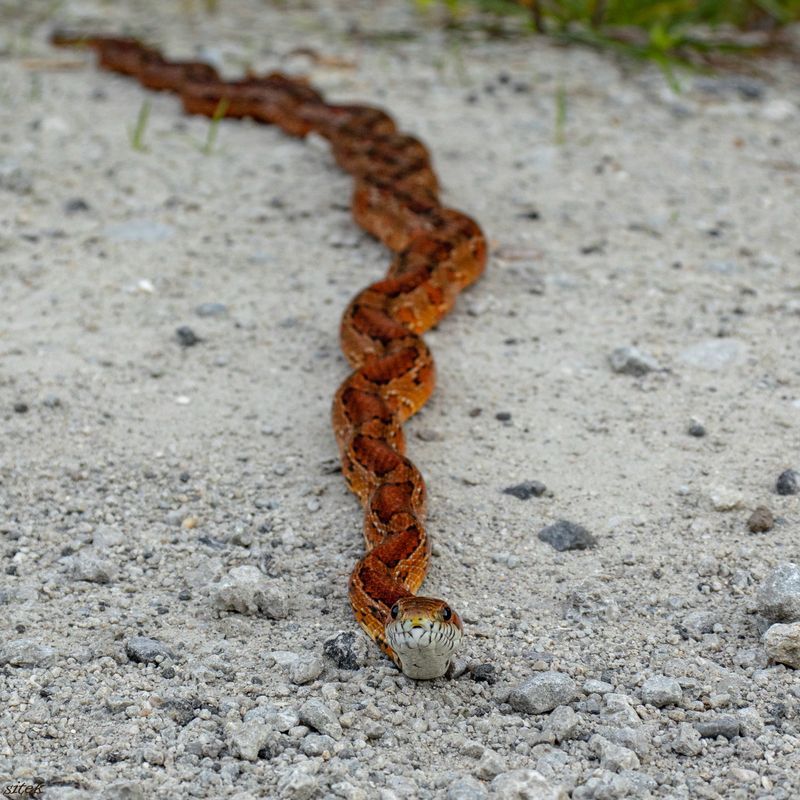
Move a stack of old boards near a shed and you might find a corn snake resting quietly underneath. That is not a coincidence.
Ground-level cover is one of the most important resources a corn snake uses throughout its daily and seasonal routines.
Logs, rocks, debris, deep mulch, rotting wood, bricks, and leaf litter can all create sheltered microhabitats. Corn snakes use these spots to stay concealed, regulate body temperature, and rest between feeding trips.
Florida Museum of Natural History field notes describe corn snakes as secretive animals that spend much of their time hidden beneath surface objects.
Having some natural cover in a yard is not the same as creating a snake problem. Woodland edges, brushy fence lines, and garden borders with ground cover are all normal parts of a residential landscape.
The concern is less about natural plantings and more about dense clutter pushed against shed walls, doorways, patios, or heavily used areas of the yard.
Stacked materials that sit undisturbed for long periods become particularly attractive resting spots because they stay dark, stable, and protected from disturbance. Reorganize stored materials, raise stacked wood off the ground, and keep debris away from doorways.
These steps reduce shelter near busy areas without removing every bit of cover from the property. Concealment is what the snake is after.
6. Corn Snakes Can Climb Far Better Than Their Shape Suggests
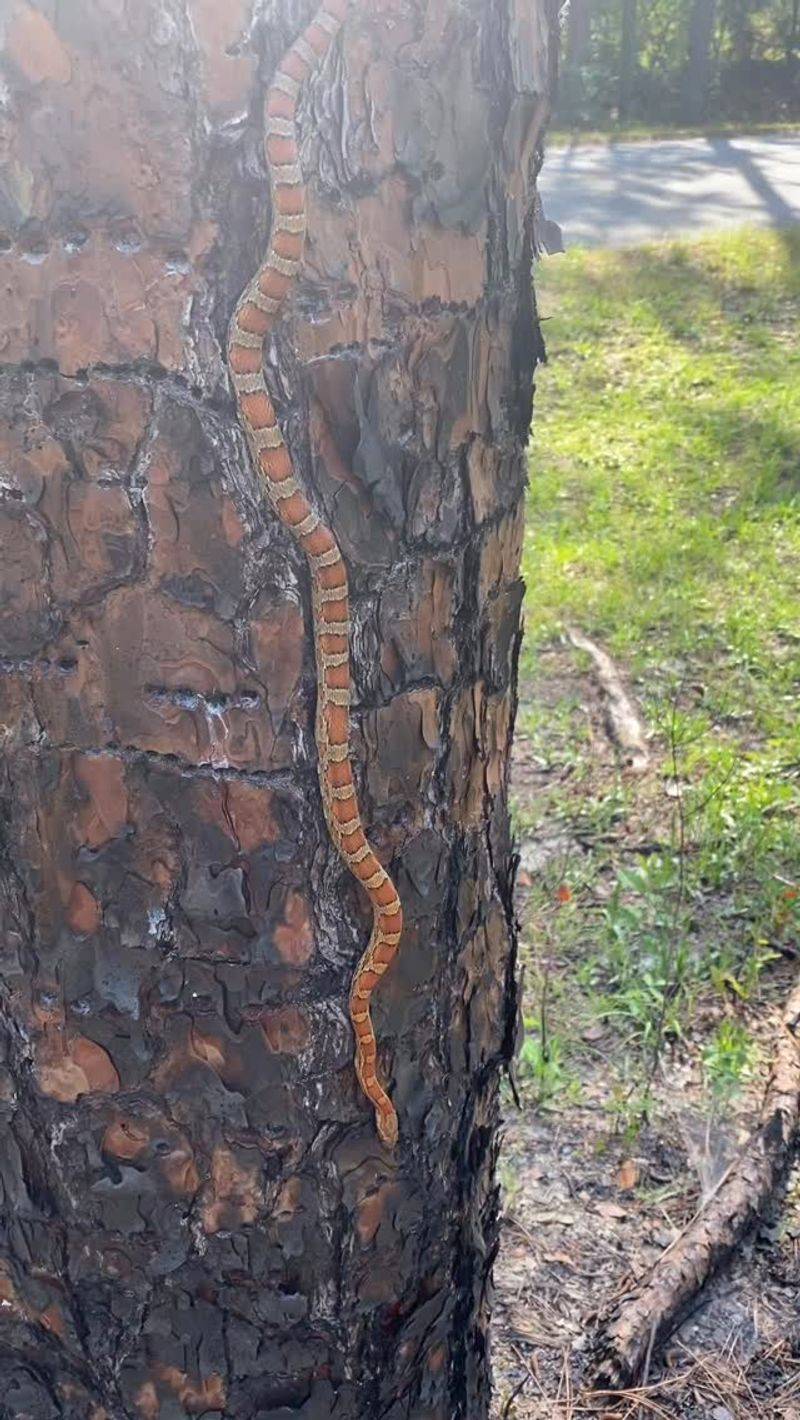
Seeing a snake above ground level surprises most people, especially near a shed or fence line. Corn snakes are capable climbers, and that ability is a normal part of how they move through their environment rather than unusual behavior worth alarm.
Rough bark, wooden fence rails, stacked lumber, wire fencing, and the structural framework inside open sheds all give a corn snake enough grip to move upward with ease.
Florida Fish and Wildlife Conservation Commission information notes that corn snakes regularly use trees and shrubs.
They may climb them while searching for bird nests, eggs, or roosting prey.
Finding a corn snake on a fence rail, resting on a low shed rafter, or moving through a dense shrub near a garden bed fits within normal behavior for this species.
Climbing also helps them access elevated hiding spots that stay warmer and drier than the ground during wet periods.
Corn snakes are not routinely trying to enter homes through rooflines or attics, and their climbing ability should not be read as a sign of invasive intent. A snake moving along a fence or shed wall may be following a scent trail or exploring available cover.
It may also simply be using the route that offers the most concealment and ease. Elevated movement is ordinary for this species.
7. Bright Orange Color Does Not Mean Venom
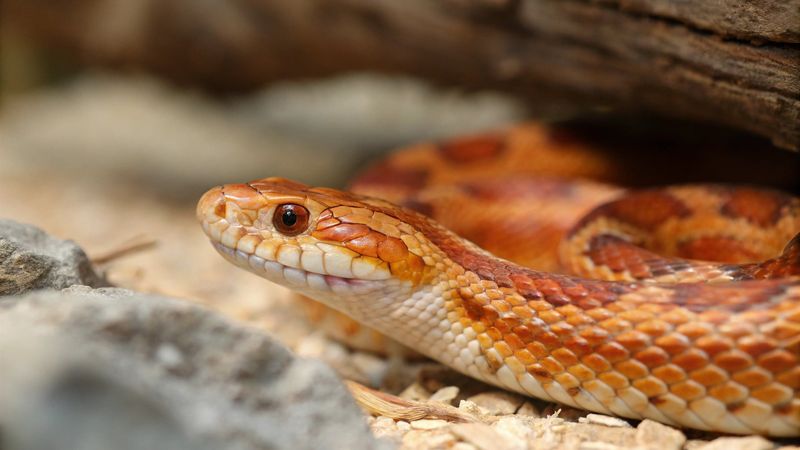
Vivid colors in nature sometimes signal danger, and that association runs deep for most people. Seeing a bright orange or reddish snake near a garden bed or shed can trigger an immediate assumption that the animal is venomous.
For corn snakes, that assumption is wrong.
Corn snakes are nonvenomous. They do not produce venom and pose no toxic threat to people or pets through a bite.
If cornered or handled, a corn snake may coil, flatten its head, vibrate its tail, or attempt to bite as a defensive response. That behavior is stress-driven, not aggression, and a bite from a nonvenomous corn snake is minor compared to any genuine medical risk.
Orange and reddish coloration appears in several Florida snake species, some venomous and some not. Color alone is never a safe basis for identifying any snake.
Proper identification depends on pattern, head shape, scale arrangement, and other features. Even experts prefer observing snakes from a safe distance rather than relying on color alone.
Folk rhymes and color-based rules of thumb have led to many misidentifications over the years. No shortcut replaces careful observation from a safe distance.
If you are uncertain about a snake’s identity, give it space and observe without approaching. Consult a university herpetology department or wildlife agency rather than guessing from color.
8. One Corn Snake Usually Means The Yard Offers Something Useful
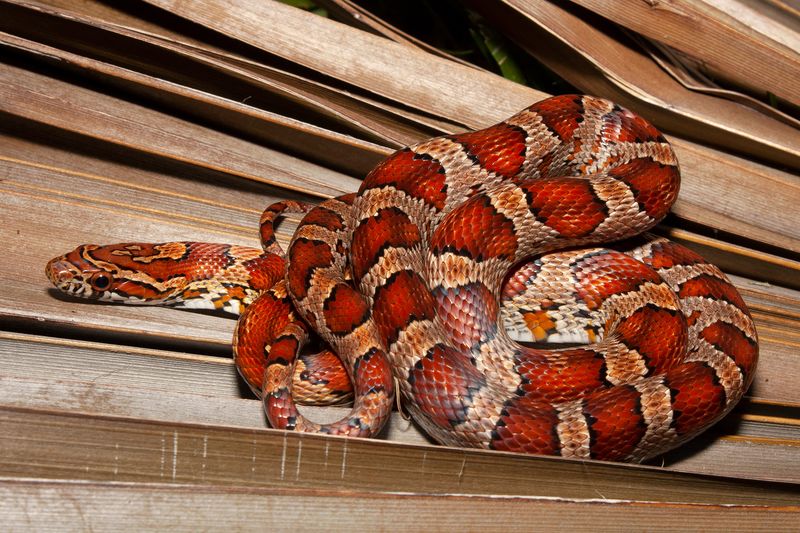
A single sighting near a shed, garden edge, or compost area rarely tells a dramatic story. Most of the time, a corn snake passing through a yard is simply responding to a combination of ordinary habitat opportunities that happen to overlap in one place.
Yards that support small rodents, frogs, or lizards near areas with ground cover, stacked materials, or sheltered structures offer multiple resources at once. A corn snake moving through does not need every element to be present.
Even one or two useful features, such as prey near a debris pile or a warm shed wall beside a mulched border, can make a route worth traveling.
Corn snakes are wide-ranging animals that move across suburban landscapes regularly in Florida. A single sighting does not prove the snake lives permanently on the property, has established a den, or signals that dozens more are nearby.
Suburban yards sit within the natural movement range of this species, and occasional appearances are part of normal wildlife activity in many neighborhoods.
Reduce dense clutter near doorways, manage compost to limit rodents, and keep stored materials elevated. These changes can make specific spots less appealing without making the whole yard inhospitable.
A corn snake near a shed, garden, or compost area is responding to real, practical habitat value. Remove that value gradually and thoughtfully, and the yard simply becomes a less convenient stop along the way.