Why Backyard Plums Crack Or Rot After Late-Summer Rain In Oregon
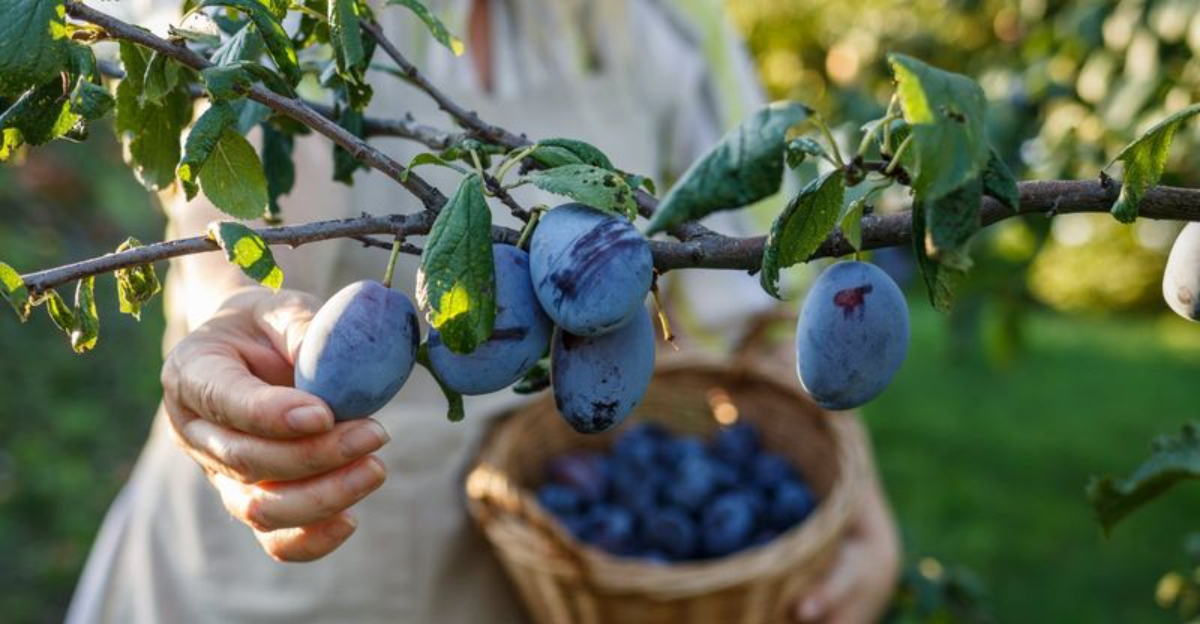
An Oregon plum tree can look perfectly ready for harvest and still change dramatically after one late-summer storm.
The fruit may be dark, full-sized, and only days away from picking. Then rain arrives, the air stays damp, and suddenly skins split, soft spots spread, and fuzzy growth appears where everything looked fine before.
That kind of damage feels sudden. The setup usually is not. Several small factors build together as plums approach maturity.
Soil moisture changes. Skins become more vulnerable. Fruit stays wet longer. Tiny cracks or wounds open the door to organisms that can move quickly once warm, damp weather settles in.
So what can you do before the next Oregon rain event?
The answer starts with timing and consistency.
A few adjustments to irrigation, harvest decisions, sanitation, and canopy management can reduce the amount of fruit lost when dry weather gives way to rain.
The storm may be unavoidable.
The worst damage often is not, especially when you know which warning signs matter most before harvest each season.
1. Sudden Water Uptake Swells Ripening Fruit
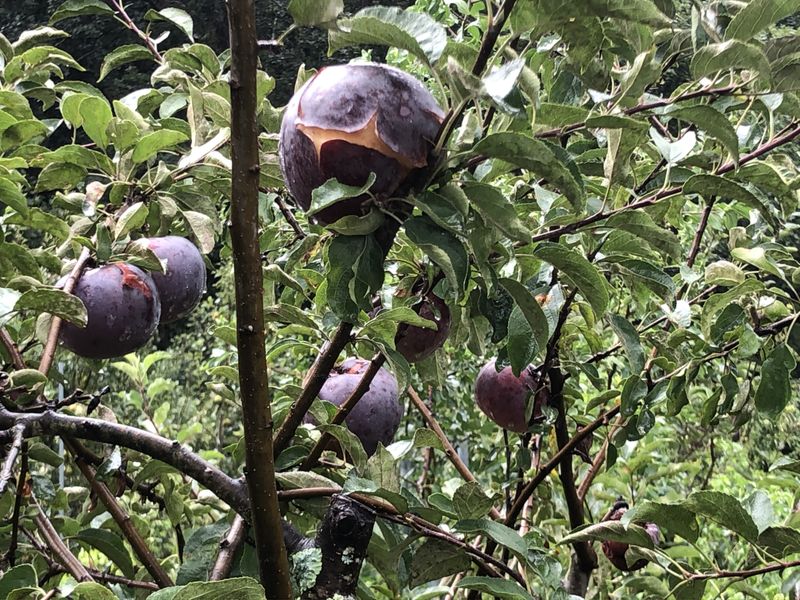
A cracked plum often reflects a moisture swing that began before the storm ever arrived.
When the root zone stays very dry for an extended stretch, developing fruit grows under one set of conditions.
A sudden soaking then changes water availability quickly, and near-ripe fruit may expand faster than its skin can comfortably accommodate.
That does not mean every rainy week will split a crop.
Cultivar, fruit maturity, skin condition, irrigation history, and the intensity of the weather all matter. The practical goal is simply to avoid letting the tree bounce between severe drought stress and sudden saturation.
Keep irrigation reasonably consistent through Oregon’s dry summer stretches.
Water deeply enough to reach the active root zone, then allow the soil to begin drying before the next cycle. Avoid frequent shallow sprinkling that wets only the surface and leaves deeper roots in a repeated dry-wet pattern.
Check the soil rather than judging by dusty ground alone.
A probe, screwdriver, or narrow trowel can tell you whether moisture still remains several inches below the surface. Mulch can help slow evaporation, especially around young trees, but keep it pulled back from the trunk.
You cannot stop a late-August or September rainstorm.
You can make sure it does not arrive after weeks of unnecessary moisture stress.
That steadier starting point gives ripening fruit a better chance of staying intact.
2. Dry Soil Makes Rainfall Swings More Extreme
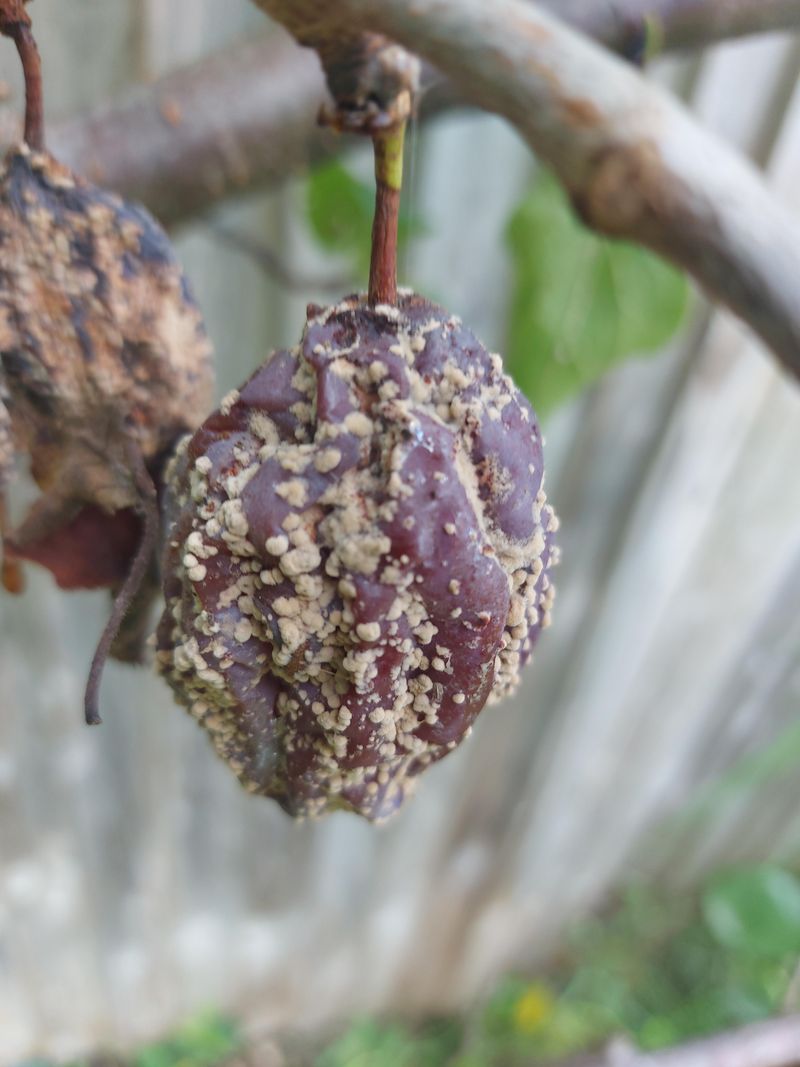
Dry summer soil can make the next weather shift much more dramatic.
Western Oregon commonly moves through long rainless stretches before late-summer or early-fall moisture returns.
A plum tree growing through that dry period may tolerate it reasonably well, but fruit near maturity is less forgiving of abrupt changes.
The solution is not to soak the tree right before a storm.
Instead, maintain a sensible irrigation rhythm throughout the dry part of the season so the soil never reaches an extreme before rain arrives.
Mulch makes that easier.
Your Oregon Garden Changes Every Week. Your Plan Should Too.
Gardening in Oregon changes quickly throughout the season. Every Friday you’ll receive a simple weekly plan showing exactly what to plant, prune, fertilize, harvest, and protect so you never miss the right timing.
Spread a broad layer of wood chips or another coarse organic mulch over the root zone to reduce surface evaporation and moderate soil temperature. Keep the material several inches away from the trunk so bark does not stay constantly damp.
Forecast watching helps too.
When rain is expected, check the soil first. A root zone that still holds adequate moisture does not need a last-minute irrigation simply because a storm is coming.
Likewise, deliberately flooding a dry tree one day before heavy rain can create the very moisture swing you are trying to avoid.
Consistency matters more than panic watering.
A tree that has received steady moisture through August is better positioned to handle a wet spell than one repeatedly pushed into drought stress.
Think of the rain as one more irrigation event in the season, not a rescue mission for a tree that has been left dry for weeks.
3. Saturated Roots Push Moisture Into Fruit Fast
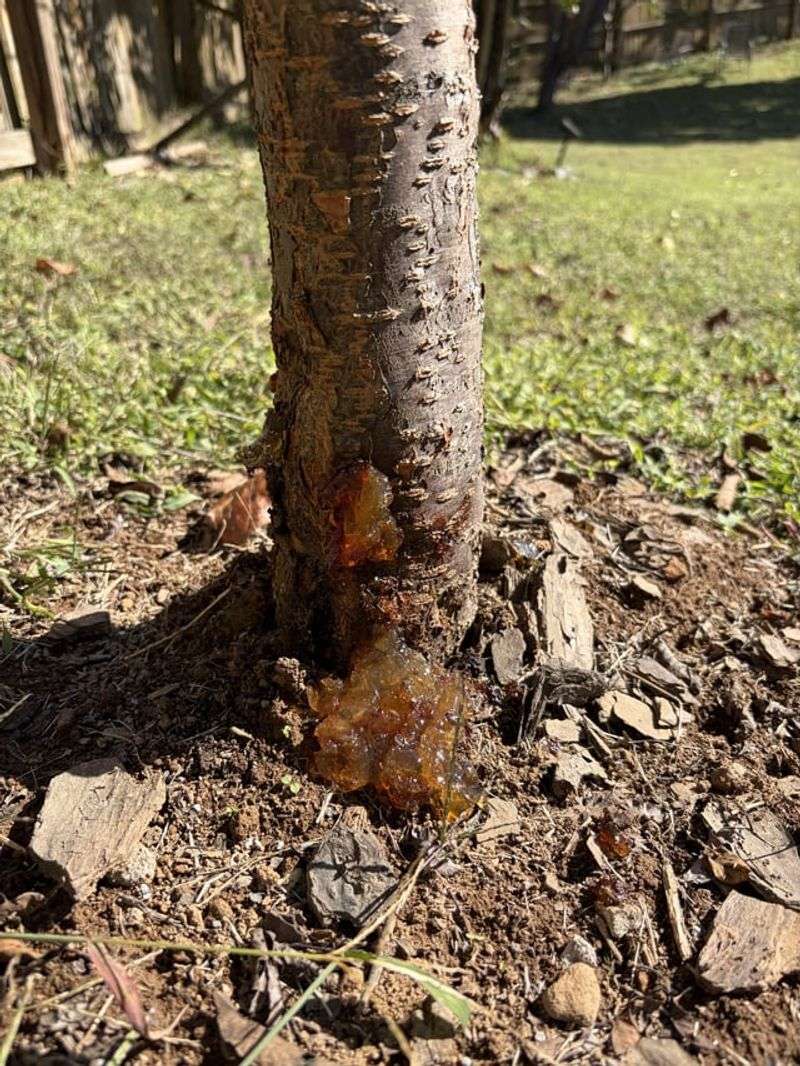
Rain becomes more troublesome when it has nowhere to go.
A plum planted in a low spot, compacted clay, or a poorly drained basin may sit in saturated soil long after the storm passes.
That creates stress around the roots and can keep the tree in an unstable moisture pattern at exactly the stage when fruit is softening.
Do not assume more water always means more fruit cracking.
The bigger issue is an extreme and prolonged change in root-zone conditions. Waterlogged soil also reduces oxygen around roots, which can weaken the tree and complicate nutrient uptake.
Site choice is the best fix.
Where possible, plant plums on well-drained ground rather than in depressions that collect runoff. On heavier Oregon soils, a slight slope or broad raised planting area can improve drainage without creating an unnaturally small mound.
Avoid digging a deep hole and filling it with loose amended soil.
That can create a basin that collects water around the root ball. Improve the broader site instead, and preserve natural soil structure as much as possible.
After a major storm, pause automatic irrigation until the root zone actually begins drying again.
A rain gauge and soil probe make that decision easier.
The goal is not to keep the soil dry.
It is to keep water moving through the root zone rather than leaving the tree sitting in a sudden, extended saturation event while ripe fruit remains on the branches.
4. Soft Ripening Skins Split More Easily
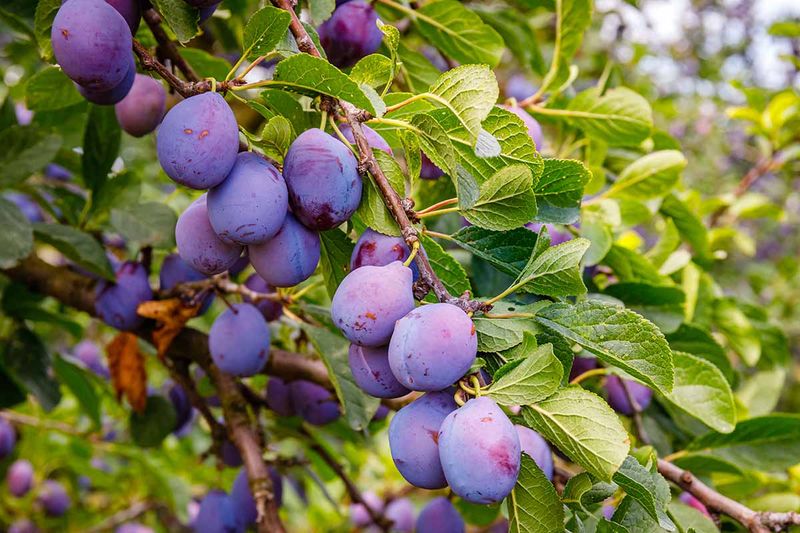
Harvest timing can save more fruit than almost any last-minute treatment.
Plums become increasingly vulnerable as they soften. The skin and flesh are changing rapidly, sugar levels are rising, and small injuries become easier to create.
A storm that passes harmlessly over firmer fruit may cause much more trouble when the crop is already at eating-ripe softness.
Start checking fruit frequently as harvest approaches.
Color alone is not enough because cultivars differ, but aroma, flavor, background color, and a slight softening can help show when plums are close.
Sample a few fruits rather than waiting for every plum on the tree to reach exactly the same stage.
When substantial rain is forecast, harvest fruit that is already mature and only a little short of ideal eating softness.
Many plums can continue softening after harvest, especially when they were picked mature rather than truly immature. Keep them at room temperature for a short period and check them daily.
Do not strip hard, undeveloped fruit just because clouds appear.
Picking too early sacrifices flavor and texture without guaranteeing a better result.
The useful window is narrow.
You are looking for fruit that is essentially ready but would normally receive another day or two on the tree.
That small timing adjustment can keep a nearly finished crop from sitting through prolonged wetness, cracking, or the first wave of brown rot just before harvest.
5. Wet Fruit Gives Brown Rot Better Conditions
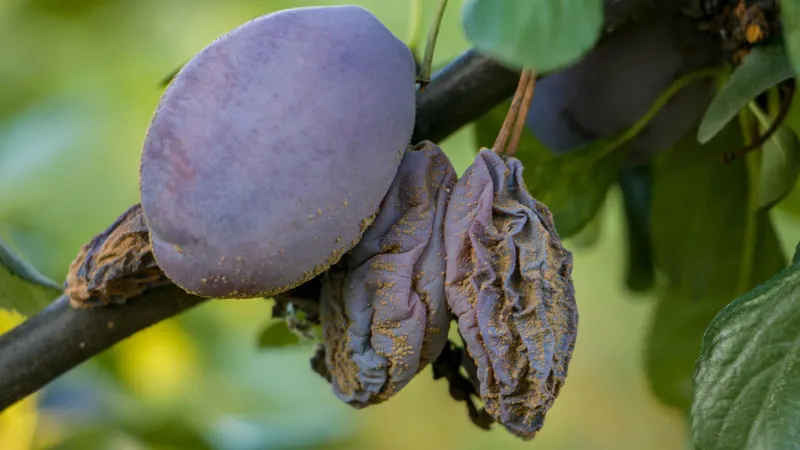
Rain does more than change soil moisture.
It also keeps the fruit surface wet, and that matters when brown rot spores are present.
Brown rot, caused by fungi in the genus Monilinia, can affect plums and other stone fruits.
Infections become especially noticeable as fruit ripens, when tissues are softer and more susceptible. Warm, wet weather around harvest can accelerate the problem dramatically.
The first symptom may be a small brown area.
That spot can enlarge quickly, turning the plum soft while tan or grayish spore masses develop on the surface. Fruit touching an infected plum is especially vulnerable because moisture and spores are already concentrated in the cluster.
Reduce the amount of time fruit stays wet where you can.
Avoid overhead irrigation as harvest approaches, and keep the canopy reasonably open through appropriate dormant-season pruning so air can move around branches.
Do not respond to a rainy week by aggressively pruning a tree full of fruit.
Thinning fruit earlier in the season can also reduce tight clusters.
More space between plums improves airflow and prevents constant fruit-to-fruit contact.
After rain, inspect the crop often.
Remove fruit showing expanding brown lesions, soft rot, or obvious sporulation before it remains pressed against healthy neighbors.
Wet weather does not create brown rot from nothing.
It gives an existing disease cycle much better conditions to become visible fast.
6. Cracks Give Rot An Easy Entry Point
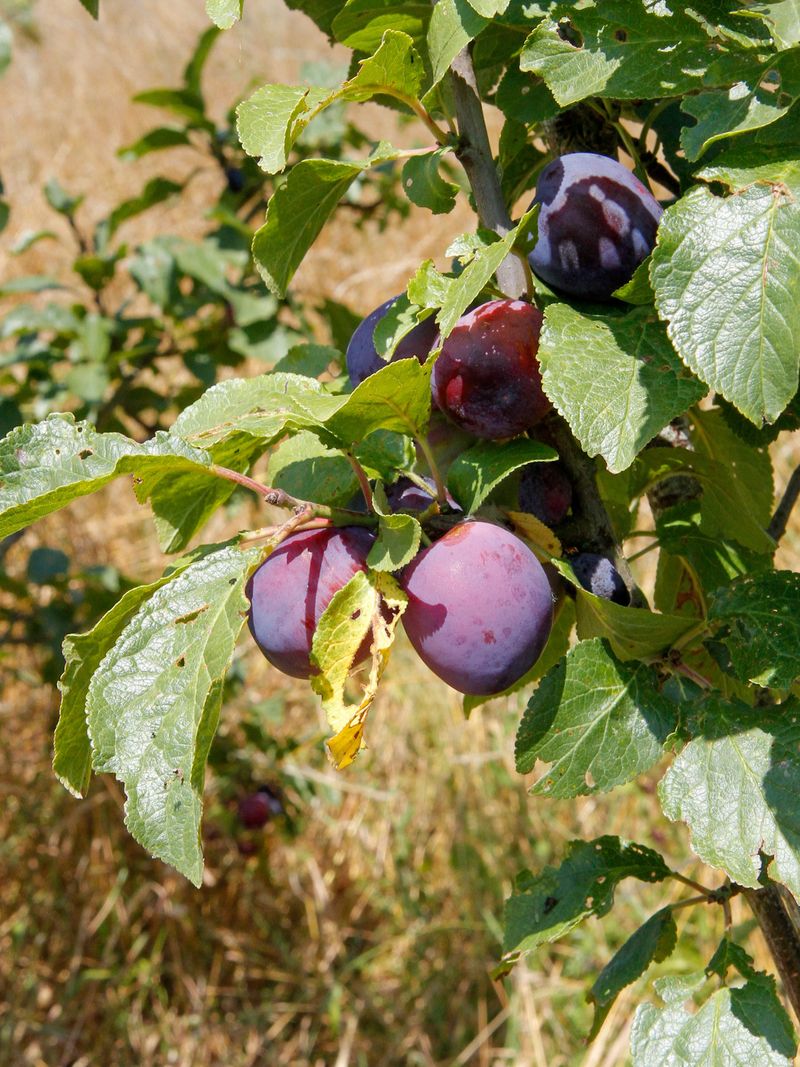
A cracked plum loses one of its most important defenses: an intact skin.
Once the flesh is exposed, fungi, bacteria, and insects have easier access to the sugary tissue inside. Warm late-summer conditions can turn a small split into a soft, leaking fruit surprisingly quickly.
Check the tree after every significant rain event.
Look closely at the stem end, natural seams, insect injuries, and places where two fruits touch. Remove badly split plums rather than leaving them in the canopy to deteriorate beside healthy fruit.
Do the same underneath the tree.
Fallen plums can become feeding sites for insects and reservoirs of decaying material. Collect them regularly instead of letting the ground fill with soft fruit.
Spotted wing drosophila can also attack soft-skinned fruit in Oregon, particularly as fruit ripens.
Cracked and damaged plums are even more attractive to a range of vinegar flies and other opportunistic insects, making sanitation increasingly important near harvest.
Avoid tossing obviously rotting fruit into a cool backyard compost pile when disease pressure is a concern.
Municipal yard-waste systems or another disposal method appropriate to your area may be a better choice.
This cleanup will not reverse damage that has already happened.
Its value is in separating compromised fruit from the rest of the crop.
After a storm, speed matters.
A five-minute inspection today can prevent one cracked plum from sitting against several healthy ones while decay develops unnoticed for the next few days.
7. Overripe Plums Stay Vulnerable Longer
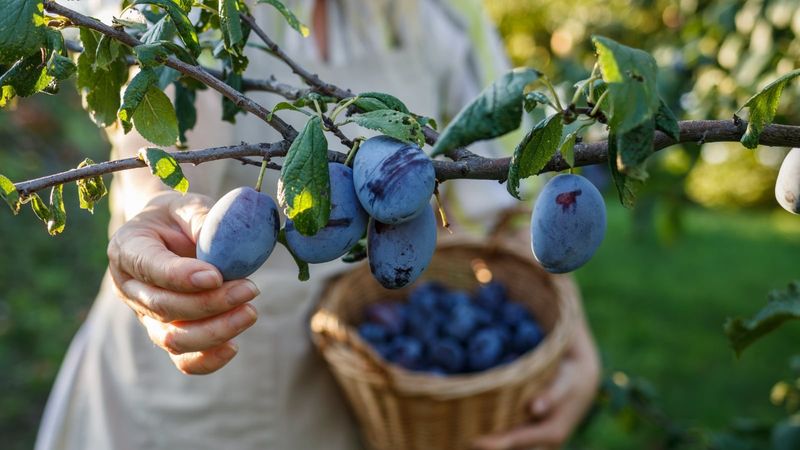
There is a point when extra time on the tree stops improving the crop.
Once plums are fully ripe, their flesh is softer, the skin is more vulnerable, and every additional wet day creates another opportunity for cracking, insect damage, or brown rot.
That makes late-summer weather forecasts useful.
When the crop is close and several days of rain are expected, pick mature fruit rather than holding out for maximum softness on the branch. Harvest in more than one pass when necessary because plums on the same tree often ripen unevenly.
Start with the fruit that colors first and feels closest to ready.
Leave firmer plums that clearly need additional development, then return every day or two. This staggered approach protects the vulnerable part of the crop without sacrificing fruit that still benefits from time on the tree.
Handle everything gently.
Rain-softened plums bruise easily, and damaged areas may rot during storage even when the fruit looked fine when picked.
Keep fallen fruit cleaned up during the same period.
A ground layer of overripe plums attracts insects and increases the amount of decaying fruit directly beneath the canopy.
The goal is not to beat every raindrop.
It is to shorten the amount of time fully mature fruit remains exposed to repeated wetting.
Oregon weather can change quickly near harvest.
A flexible picking schedule usually works better than waiting for one perfect day when the entire tree seems ready.
8. Old Mummified Fruit Keeps Brown Rot Nearby
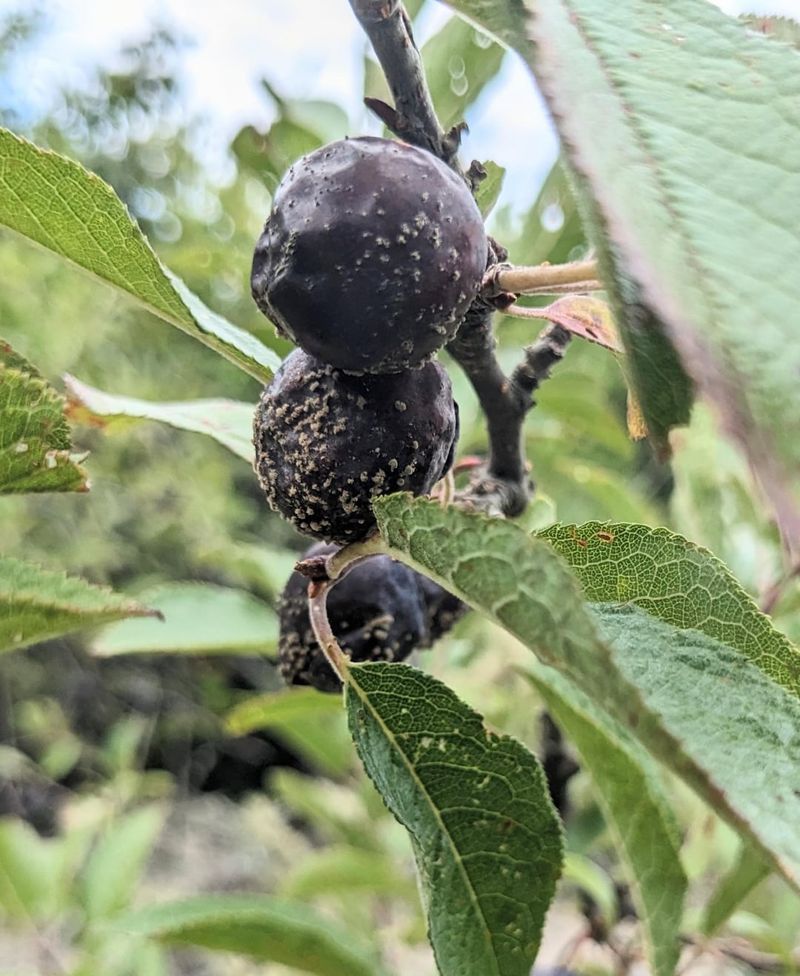
Useful brown rot cleanup may happen months before the next plum starts ripening.
Infected fruit can dry into hard, shriveled mummies that remain attached to branches or fall beneath the tree.
Monilinia fungi can survive in infected fruit and other diseased tissue, giving the disease a source from which to restart when favorable weather returns.
Do not leave those mummies hanging through winter.
Remove them during cleanup and collect old fruit from beneath the canopy. Check twigs and small branches for suspicious cankers or areas associated with previous brown rot damage, and prune diseased wood when the tree is dormant.
Sanitation lowers the amount of infected material sitting beside next year’s blossoms and fruit.
It does not guarantee a disease-free crop, especially during a wet season, but it removes one preventable source of inoculum.
Keep pruning tools clean when working through diseased tissue.
Dispose of heavily infected fruit and wood in a way that does not return infected material to the base of the tree. A backyard compost pile that stays cool may not reliably break everything down.
Then carry the same strategy into summer.
Thin crowded fruit, maintain reasonable airflow, irrigate consistently, and harvest promptly as plums mature.
Late-summer rain gets most of the blame because that is when the damage becomes obvious.
Brown rot management starts much earlier.
A cleaner tree going into spring gives the next crop one less obstacle before Oregon’s wet weather returns.