This Arizona Native Tree Gives Yards Shade Without Heavy Watering
Shade can feel like a luxury when your yard faces intense desert sun. Getting it does not always mean choosing a tree that demands frequent watering.
One Arizona native offers a practical way to create welcome shade while fitting naturally into a dry landscape. Its ability to handle tough conditions makes it especially appealing.
Give this tree enough space, and it can become a valuable part of your outdoor area. The canopy provides relief without making high water use part of the deal.
Native trees also bring a character that feels right at home in desert surroundings. This one combines that natural look with everyday usefulness around the yard.
Choosing a shade tree is a decision worth making carefully. Size, placement, and long-term needs all matter.
For water-conscious landscaping, this native tree deserves serious consideration.
1. Emory Oak Is A Native Tree Well Suited To Dry Conditions
Surviving where most trees struggle, Emory Oak has earned its place in dry landscapes across the Southwest.
Native to elevations ranging from about 4,000 to 7,000 feet, it developed over thousands of years in areas with low rainfall and thin soils.
That kind of background shapes a tree built to last through tough stretches.
Unlike ornamental trees shipped in from wetter climates, Emory Oak does not need a babysitting schedule. Once it gets established over a few seasons, it can rely mostly on seasonal rainfall in many settings.
Supplemental watering during long dry spells can still help young trees get a better start.
Its deep root system is part of what makes it so resilient. Roots push down to find moisture that surface-level plants cannot reach.
That gives the tree a steady internal reservoir during dry months.
Gardeners in arid regions often spend years searching for a shade tree that does not demand constant irrigation. Emory Oak answers that need without asking for much in return.
It fits naturally into xeriscaping plans and low-water landscaping designs. Choosing a tree that already belongs to the regional ecosystem tends to produce better long-term results than trying to adapt a non-native species to a difficult climate.
2. Its Spreading Crown Makes It Useful For Creating Yard Shade
A wide canopy changes how a yard feels on a hot afternoon. Emory Oak develops a broad, rounded crown that can spread significantly as the tree matures over many years.
That spread is exactly what makes it valuable in residential settings where summer heat is relentless.
Shade from a mature Emory Oak can cover a patio, a garden bed, or a large section of lawn. Positioned well, it can also reduce heat load on the south or west side of a house.
Blocking direct afternoon sun from hitting walls and windows can noticeably lower indoor temperatures during peak heat.
Growth rate is moderate, so patience is part of the deal. Planting a young Emory Oak means investing in shade that builds year by year rather than arriving overnight.
Many homeowners find that worth the wait because the tree keeps improving with age.
Your Arizona Garden Changes Every Week. Your Plan Should Too.
Gardening in Arizona changes quickly throughout the season. Every Friday you’ll receive a simple weekly plan showing exactly what to plant, prune, fertilize, harvest, and protect so you never miss the right timing.
Spacing matters when planting for canopy coverage. Giving the tree enough room to spread without crowding structures or power lines makes management easier long-term.
A spot with full sun exposure works best since Emory Oak thrives in open, sunny conditions.
Thoughtful placement at planting time pays off for decades down the road, making this one of the more practical shade investments a dry-climate homeowner can make.
3. This Oak Naturally Grows In Arid And Semiarid Areas
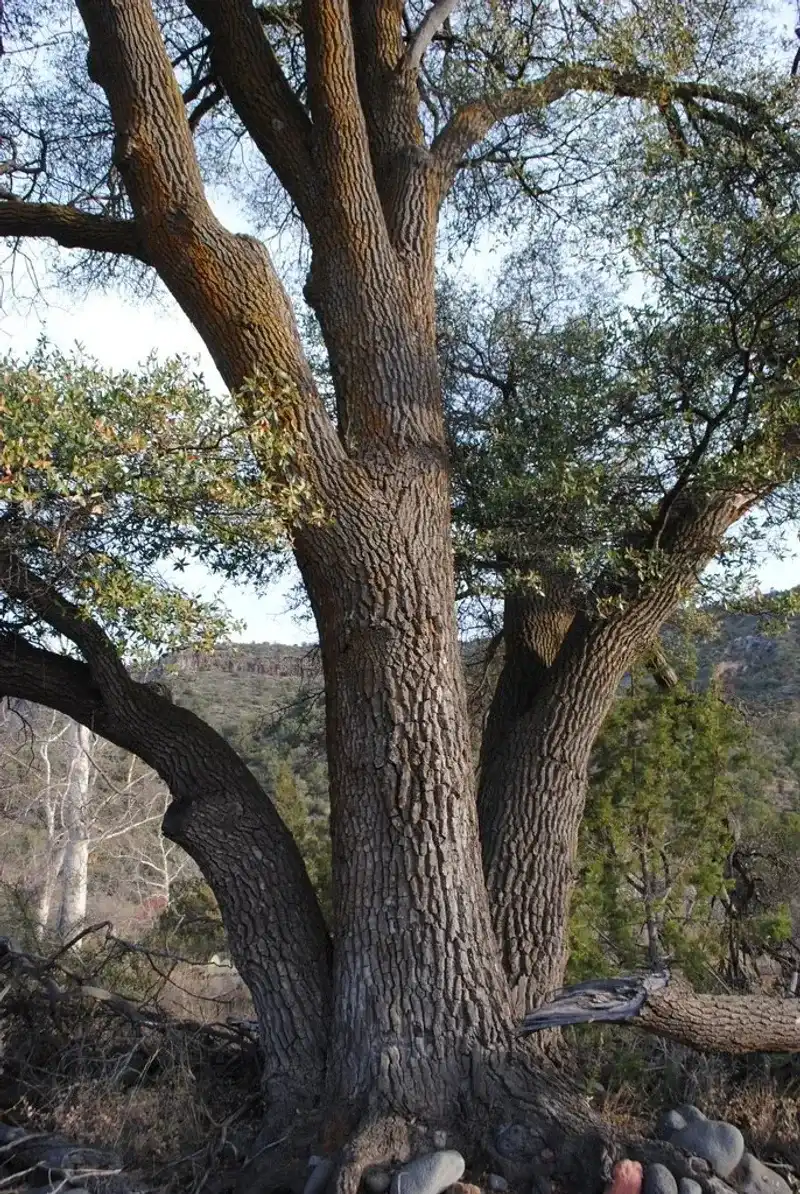
Not every tree belongs in every place. Emory Oak belongs in dry country, and its natural range tells that story clearly.
It grows across parts of Arizona, New Mexico, west Texas, and into northern Mexico, thriving in regions where annual rainfall is often well below 20 inches.
Semiarid environments test trees hard. Summers run hot and dry.
Winters can bring freezes at higher elevations. Emory Oak handles both ends of that range without much drama.
Its ability to adapt to temperature swings is part of what makes it reliable over many decades.
Elevation plays a role in where it performs best. Natural stands tend to appear in foothill and mountain zones rather than low desert floors.
Homeowners in higher elevation communities across the Southwest often find Emory Oak fits their conditions especially well.
Planting a tree outside its natural range always carries some risk. Putting Emory Oak in a region with heavy clay soil, poor drainage, or very high humidity may produce mixed results.
Matching the tree to conditions similar to its native habitat gives it the best chance to settle in and grow well.
Researching local soil types and average rainfall before planting helps avoid problems that can take years to show up after the tree is already in the ground.
4. Thick Leathery Leaves Give This Oak A Distinctive Look
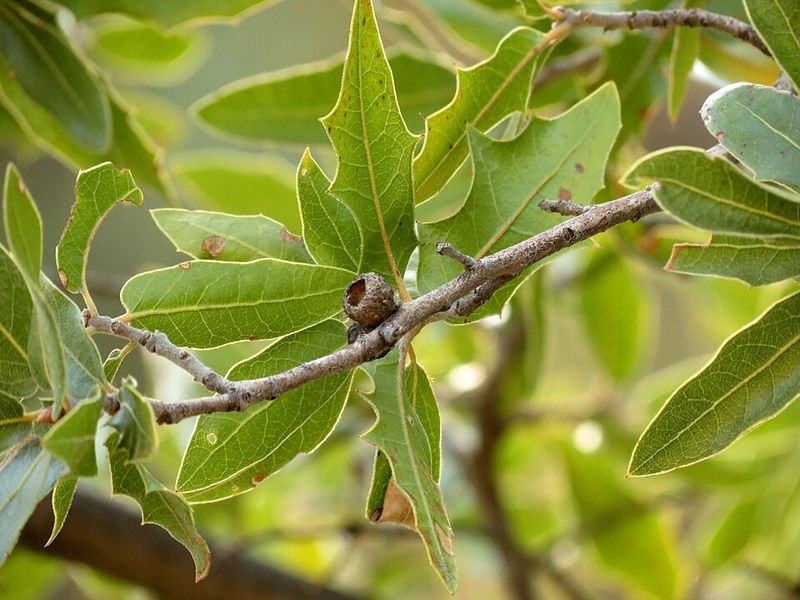
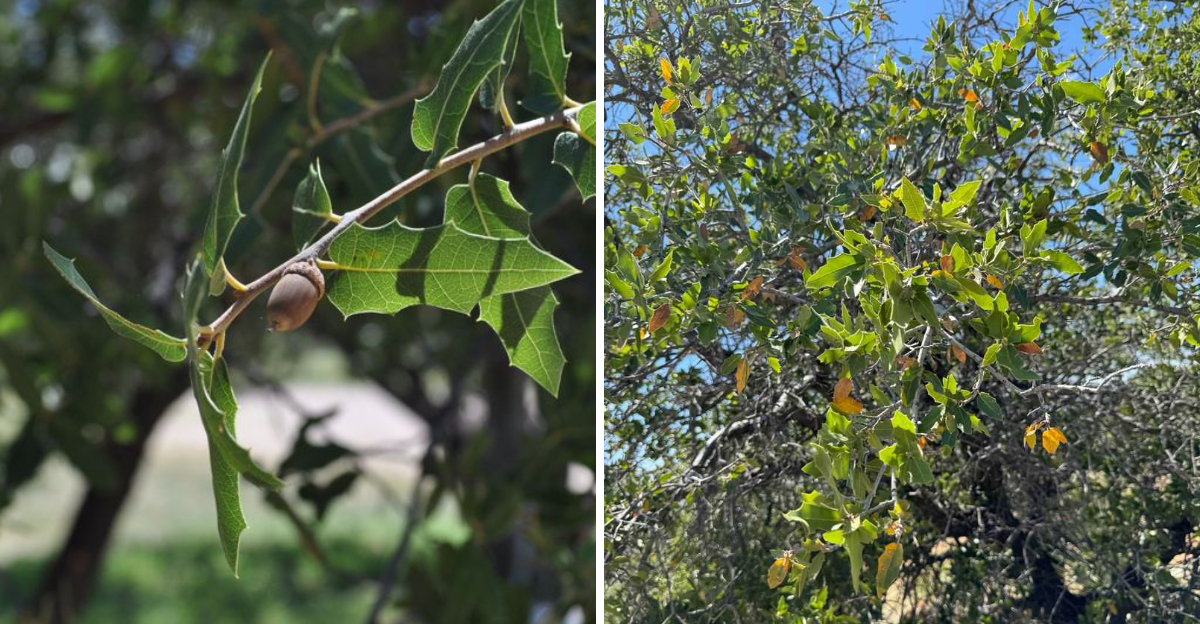
Leaf texture tells a lot about how a tree handles stress. Emory Oak carries thick, leathery leaves that feel noticeably sturdy compared to many common shade trees.
That texture is not just visual, it serves a real function in reducing water loss during hot, dry conditions.
Thicker leaf tissue holds moisture more effectively than thin, papery leaves. Waxy coatings on the surface also help slow evaporation when temperatures spike.
Together, those features help the tree stay functional through periods when water is scarce.
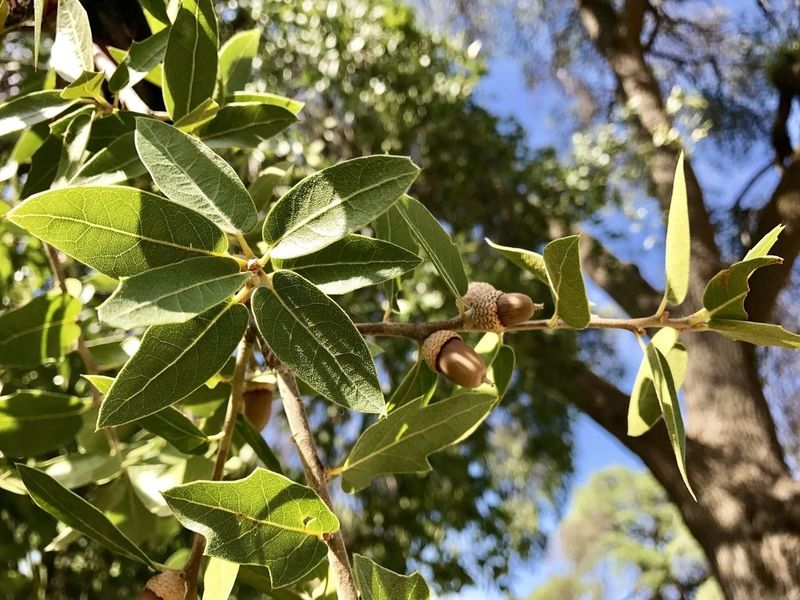
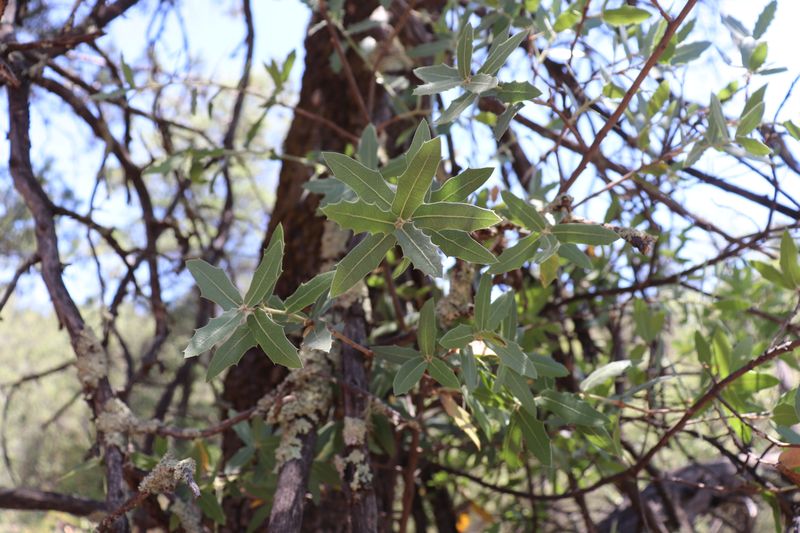
Shape-wise, Emory Oak leaves tend to be oblong with slightly pointed tips. Edges can be smooth or lightly toothed depending on the individual tree.
Leaf size is modest, which keeps the canopy from looking heavy or overpowering in a residential yard.
From a design standpoint, the leaf texture adds visual interest without being flashy. Up close, the leaves have a polished quality that looks clean and attractive through most of the year.
Fallen leaves break down slowly because of their thick structure, which means some cleanup may be needed in certain yard situations. Composting the leaves is a practical option since they eventually contribute organic matter back to the soil.
Knowing what the foliage looks like before planting helps set realistic expectations for how the tree will appear across different seasons.
5. Leaves Can Drop During Drought To Reduce Water Demand
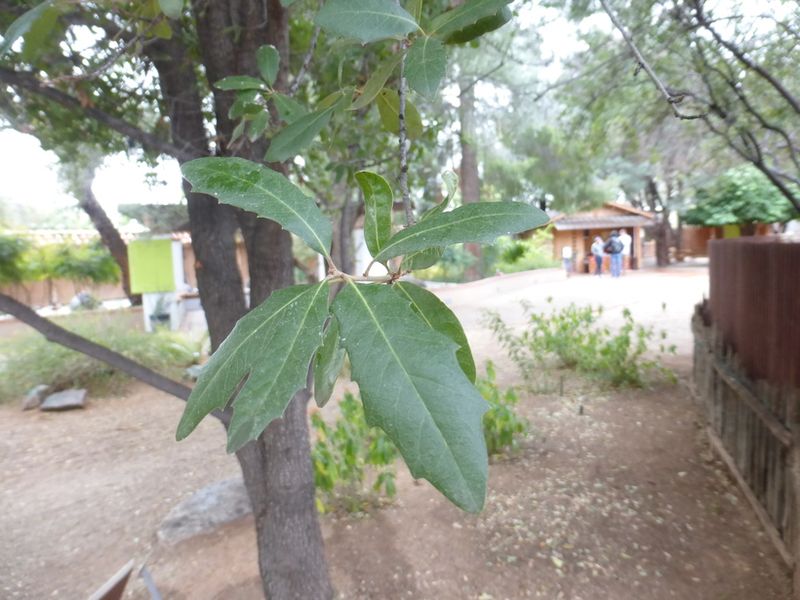
Dropping leaves during drought sounds alarming at first, but for Emory Oak it is a built-in survival strategy.
Shedding foliage reduces the surface area through which water escapes, lowering the tree’s overall moisture demand during the toughest dry stretches. It is a practical response, not a sign of serious trouble.
Emory Oak is considered semi-evergreen in many locations. Under normal conditions it holds most of its leaves through winter and into spring.
During an unusually severe dry period, though, leaf drop can increase as the tree adjusts to conserve resources.
New leaves typically return once conditions improve, whether that comes from monsoon rains or supplemental watering. Recovery after partial leaf drop is common in established trees with healthy root systems.
Young or recently transplanted trees may need extra attention during drought periods to help them through.
Understanding this behavior helps homeowners avoid unnecessary worry. Seeing some leaf drop on an Emory Oak during a dry summer does not mean the tree is failing.
Checking soil moisture at root depth gives a clearer picture of what the tree actually needs. If soil is completely dry several inches down for an extended stretch, a slow, deep watering can help bridge the gap.
Watching how the tree responds over time builds a better sense of its normal patterns in your specific yard conditions.
6. Shiny Dark Green Foliage Stands Out Along The Branches
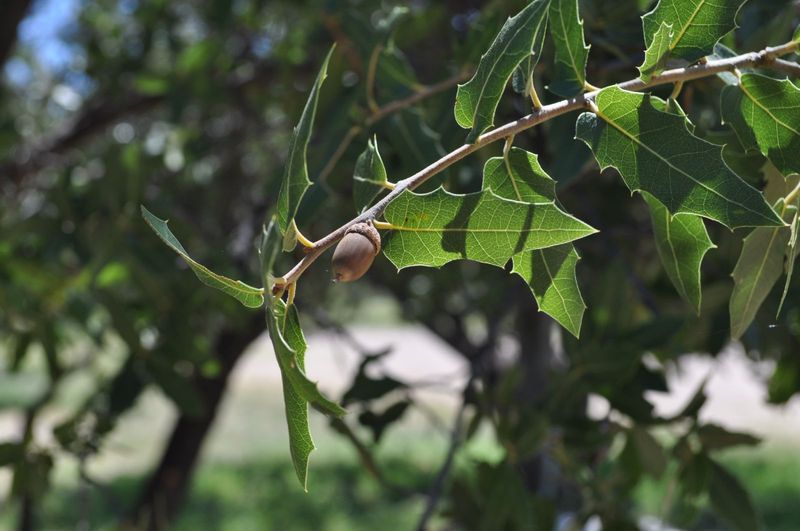
Color contrast matters in a dry landscape. Against pale soil, tan gravel, and bleached rock, the shiny dark green foliage of Emory Oak reads as a strong visual anchor.
It gives yards a sense of depth and life that lighter-colored plants cannot match.
Leaf shine comes from the waxy surface coating that also helps reduce water loss. So the glossy appearance is both attractive and functional.
Sunlight hitting the canopy on a clear day creates a subtle shimmer that makes the tree stand out even from a distance.
That rich color holds reasonably well through much of the year under normal growing conditions. Seasonal variation does occur, and individual trees may show some color shift depending on elevation, soil conditions, and rainfall patterns in a given year.
For homeowners designing a low-water landscape, Emory Oak adds a lush appearance without requiring the irrigation that true tropical or subtropical plants demand.
Pairing it with native grasses, agaves, or other drought-tolerant shrubs creates a layered, textured yard that looks intentional rather than sparse.
Dark green foliage also works well as a backdrop for lighter-colored flowering plants, making surrounding plants pop visually.
Choosing plants that complement the oak’s color and scale helps tie the whole yard together in a way that feels natural to the regional setting.
7. Rocky Slopes And Well Drained Sites Fit Its Natural Habitat
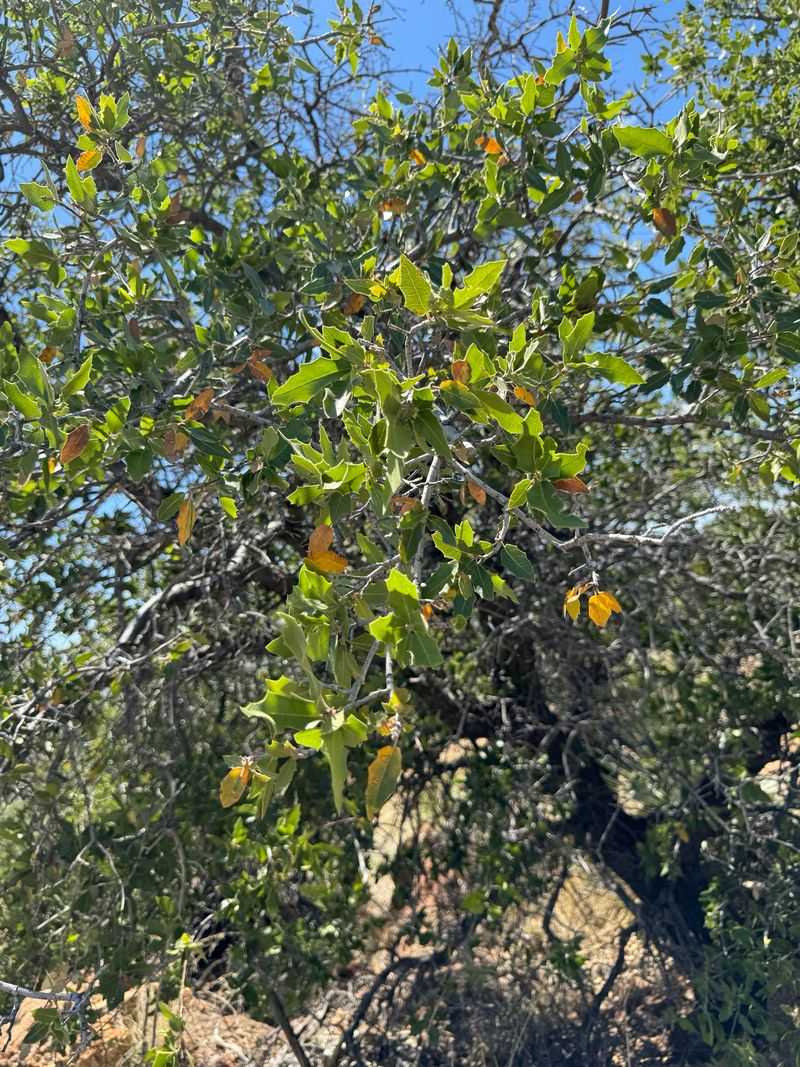
Soil drainage makes or breaks an Emory Oak planting. In its natural habitat, this tree grows on rocky slopes and hillsides where water moves through quickly after rain.
Roots sitting in wet, compacted soil for extended periods can lead to serious problems over time.
Heavy clay soils that hold water are not ideal for this species. If your yard has poor drainage, amending the planting area or choosing a raised spot on the property gives the tree a better chance.
Gravel mulch around the base can also help water move away from the root zone more efficiently.
Rocky ground suits Emory Oak in ways that might surprise new gardeners. Rocks store warmth, improve drainage, and reflect light in ways that mimic the tree’s native foothill conditions.
Planting in a spot with some natural slope often works better than flat, irrigated lawn areas.
Before planting, checking how water drains after a heavy rain is a worthwhile step. Areas where puddles linger for more than a few hours may need modification before an Emory Oak goes in the ground.
Matching the tree to a site that resembles its natural conditions shortens the establishment period and reduces the chance of root stress. Soil preparation done right at planting time saves a lot of corrective work later on.