Common Garden Plants Oregon Homeowners May Be Restricted From Selling Or Planting
That gorgeous shrub in the corner of your yard might be breaking the law. Not a dramatic law. No one is coming for your trowel.
Still, a handful of plants sold for decades across Oregon now carry real restrictions, and many homeowners have no idea which ones.
Some of them are probably growing within a hundred feet of where you’re sitting.
The tricky part? Almost none of them look dangerous. They bloom beautifully. Pollinators love a few of them. Garden centers stocked them for generations.
Then something happens outside the fence line. A creek picks up a fragment. A bird carries a seed. A pile of trimmings starts growing in a ditch.
Oregon has a list, and the list matters more than most tags suggest. Rules can shift by species, by cultivar, and by what you plan to do with the plant.
Selling changes things. So does sharing starts with a neighbor.
Eight familiar garden plants sit in that complicated territory right now, along with better options that keep your yard colorful and your conscience clear.
Ready to find out what’s in your beds?
1. Watch Out For Butterfly Bush In Sensitive Areas
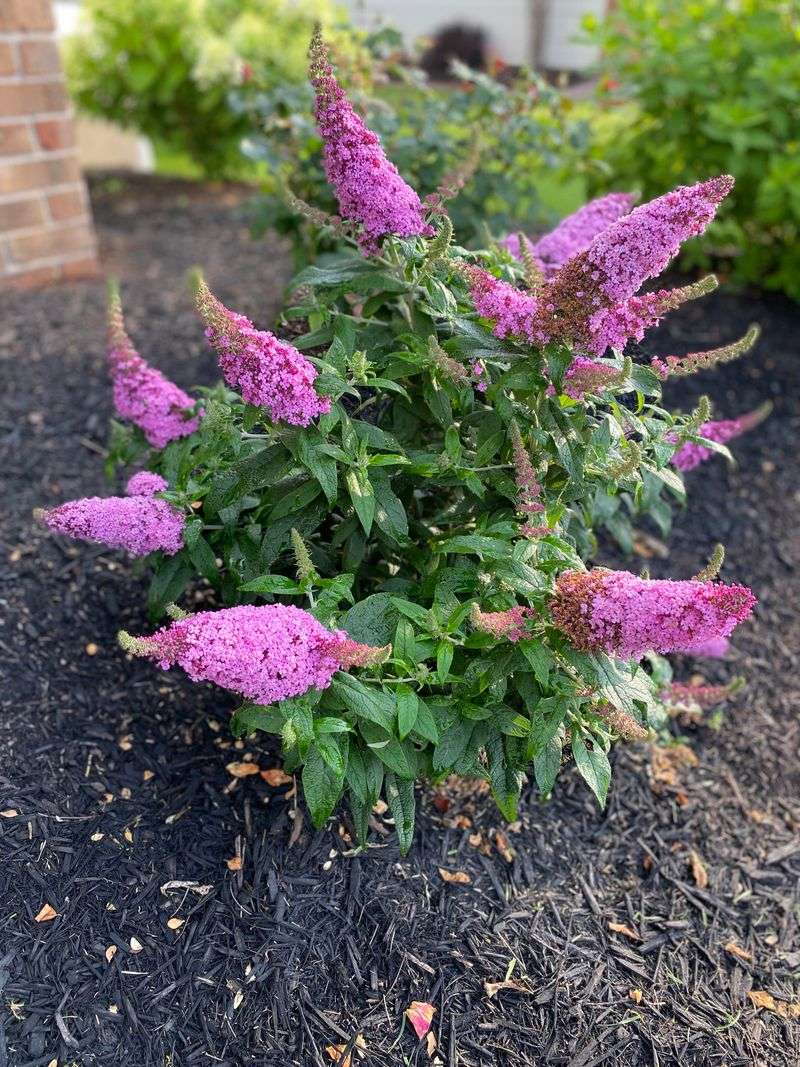
Few shrubs generate more mixed feelings than butterfly bush.
Pollinators visit it eagerly and the flowers brighten a summer yard. Meanwhile, some varieties produce seed that travels well past the garden bed.
Oregon addressed this directly. Buddleja davidii and its hybrids appear on the state quarantine list, which restricts sale, and certain approved sterile or low-seed cultivars are exempt from that restriction.
The exemption is the part people miss. Approved cultivars remain legal to sell in Oregon, while older fertile types generally do not.
Verification matters here since the approved list can change. Checking current Oregon Department of Agriculture information before buying saves trouble later.
Fertile plants already growing in a yard call for a little management. Removing spent blooms before seed sets reduces escape, and keeping trimmings out of ditches and creek edges helps too.
Proximity raises the stakes. Gardens near rivers, parks, or undeveloped land face higher risk from seed spread than a yard surrounded by pavement.
Plenty of shrubs bring similar color and pollinator traffic. Red flowering currant, Oregon grape, mock orange, and native spireas all offer nectar and structure with regional character.
Butterflies aren’t picky about brand names. Give them a native buffet and they’ll show up just the same, minus the paperwork.
2. Avoid English Ivy Near Natural Areas
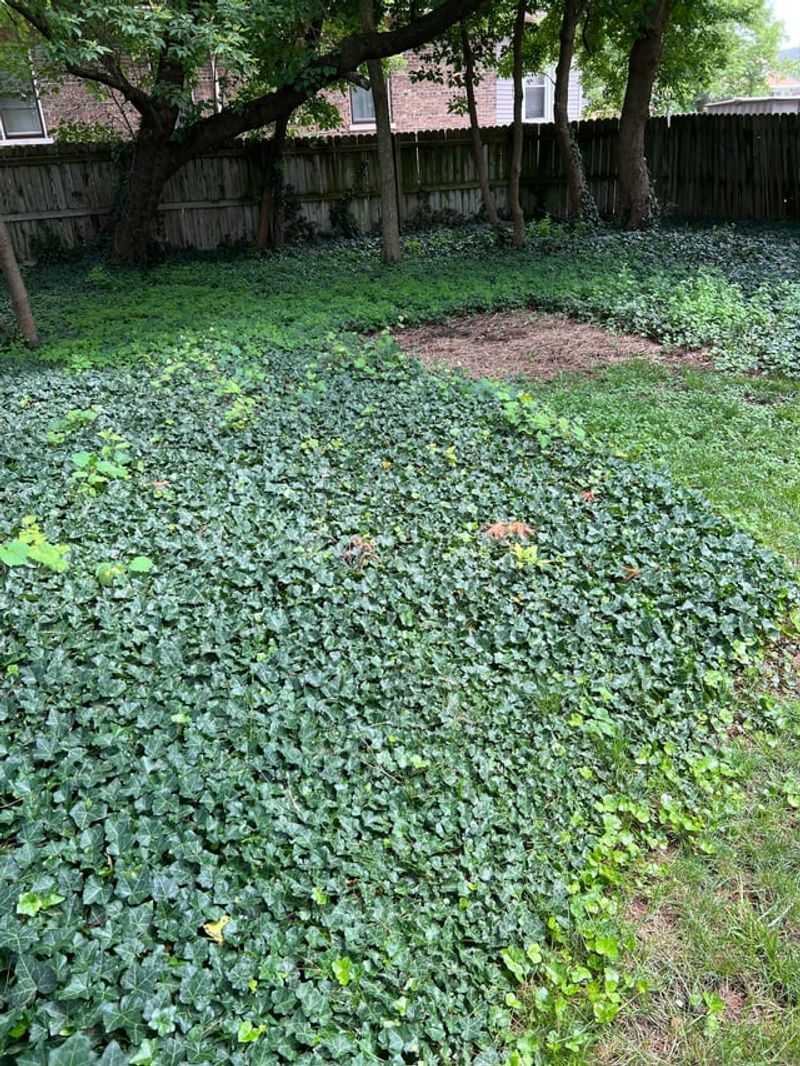
English ivy tends to start out looking tidy and old fashioned.
Given time, it creeps under fences, climbs trees, blankets shrubs, and heads toward whatever woodland sits nearby.
Oregon lists several ivy varieties on its quarantine list, which restricts sale, and the plant is designated a noxious weed in the state. Sharing cuttings with a neighbor deserves the same caution as buying.
Consequences show up in natural areas. Dense mats can crowd out native wildflowers and young shrubs, while vines on trunks add weight and shade to established trees.
Your Oregon Garden Changes Every Week. Your Plan Should Too.
Gardening in Oregon changes quickly throughout the season. Every Friday you’ll receive a simple weekly plan showing exactly what to plant, prune, fertilize, harvest, and protect so you never miss the right timing.
Birds also move ivy around. Mature vines produce berries, and seed can travel much farther than the ground level growth suggests.
Removal takes persistence rather than one good weekend. Small patches pull best from moist soil, and rooted stems left behind tend to resprout, so repeat passes are usually needed.
Trees call for a different approach. Cutting vines near the base and clearing a ring around the trunk is generally preferred over pulling everything down at once, since ripping vines off bark can damage the tree.
Friendlier coverage exists for most conditions. Evergreen huckleberry suits shade, kinnikinnick handles sun, and native clematis climbs a support nicely.
A well behaved vine knows its boundaries. English ivy apparently never got that memo, and it has been ignoring it in Oregon for about a century.
3. Check Before Planting Japanese Knotweed
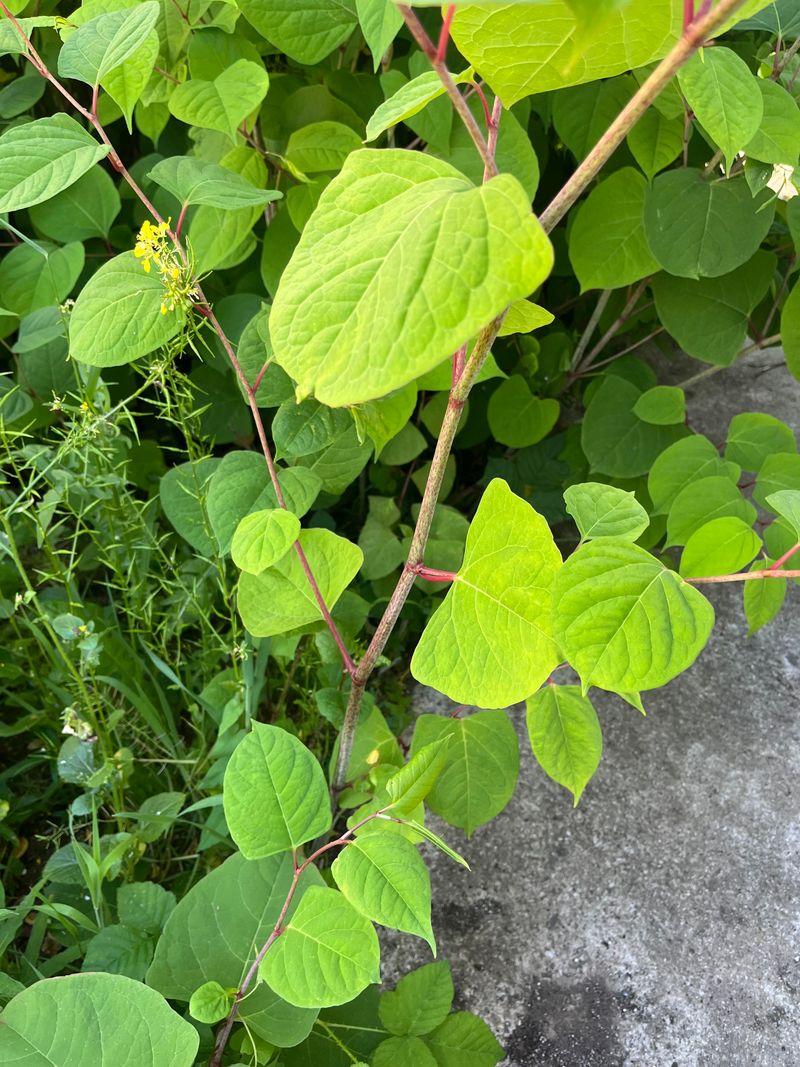
Japanese knotweed fools people at first glance. Tall canes and broad leaves look bold, almost tropical.
That impression fades quickly. Oregon designates it a noxious weed, and it appears on the state quarantine list, so sale and distribution are restricted.
Spread happens through more than seed. Tough underground rhizomes and stem fragments both start new patches, which explains much of the plant’s reputation.
Water moves those fragments efficiently. Floods, ditch maintenance, mowing, and dumped yard debris can all relocate pieces into streamsides and vacant lots.
Established stands cause real problems. Dense growth crowds out native vegetation and creates long, expensive management projects for landowners and public agencies.
Prevention runs far cheaper than cleanup. Declining offered divisions and keeping cut stems out of debris piles near waterways both help considerably.
Suspected knotweed on a property deserves careful handling. Photograph it, avoid chopping or mowing it into fragments, and contact your county weed authority or extension office for current guidance.
Similar looking plants exist, so identification comes first. Giant knotweed and Bohemian knotweed are close relatives with comparable concerns.
Bold texture is available elsewhere. Joe Pye weed, red twig dogwood, ninebark, and larger ornamental grasses suited to your site all provide height without the escape risk.
Every group project has one member who takes over completely. Knotweed is that member, and it never returns your calls afterward.
4. Skip Purple Loosestrife Around Wet Areas
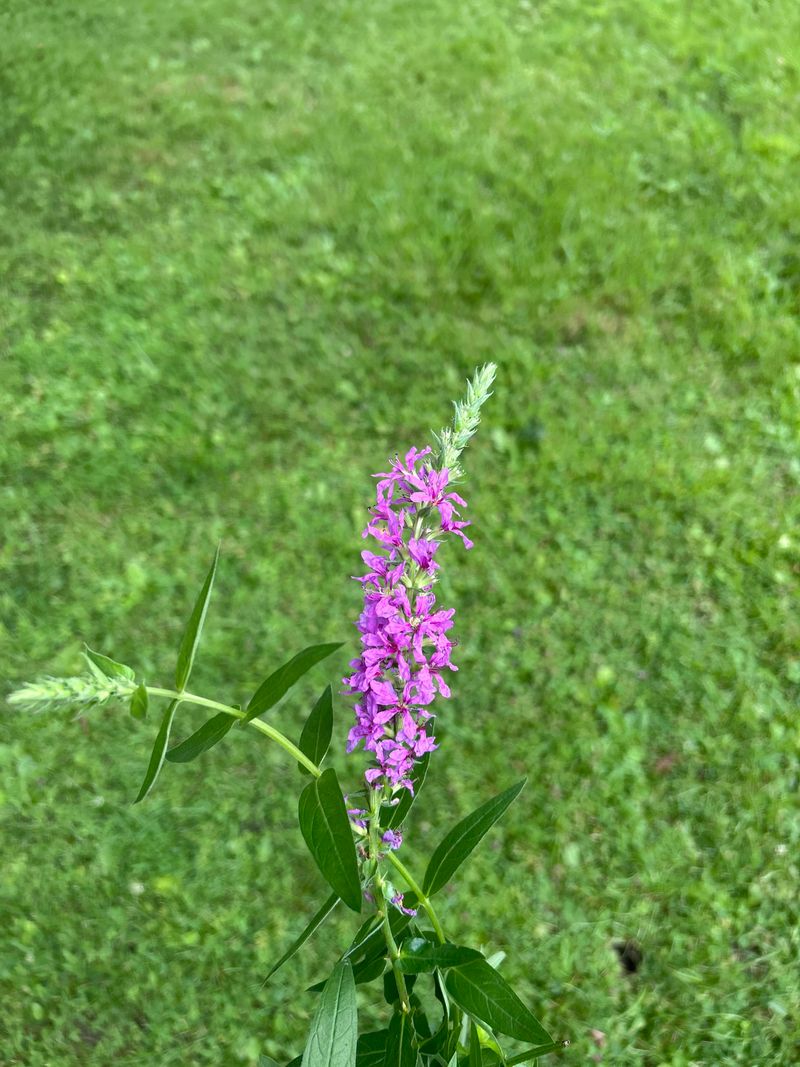
Purple loosestrife photographs beautifully. Tall rosy purple spikes catch attention, particularly around ponds and ditches.
Wet ground is exactly where caution matters most. Oregon designates purple loosestrife a noxious weed and restricts it under the state quarantine list.
Established patches can reduce plant diversity in wetlands. Dense stands limit space for the native sedges, rushes, and flowering plants that support insects, birds, and water movement.
Habitat simplification is the underlying concern. A single species dominating a marsh may look colorful from the road while offering less to the creatures that depend on variety.
Seed production runs high, and those seeds travel by water, mud, boots, and equipment. Backyard ponds connect to the wider landscape more often than owners realize.
Dumped plant material is another common escape route. Compost piles near drainage tend to be poor retirement homes for aquatic plants.
Unidentified purple flowered plants near water deserve a closer look. Several lookalikes exist, including native fireweed and non-invasive garden lythrums, so confirming the species comes before any action.
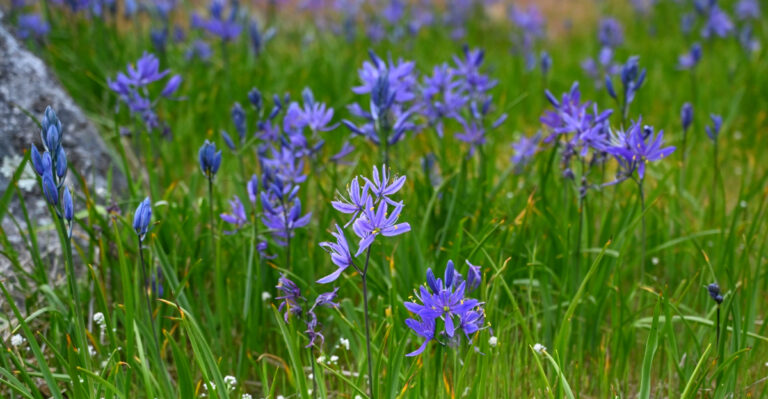
Better waterside color is easy to find. Douglas aster, camas, tufted hairgrass, and native sedges create a lively planting with genuine local value.
Wetland gardening works best as an ensemble performance. Purple loosestrife tends to hog the spotlight and forget the rest of the cast entirely.
5. Be Careful With Scotch Broom In Oregon Landscapes
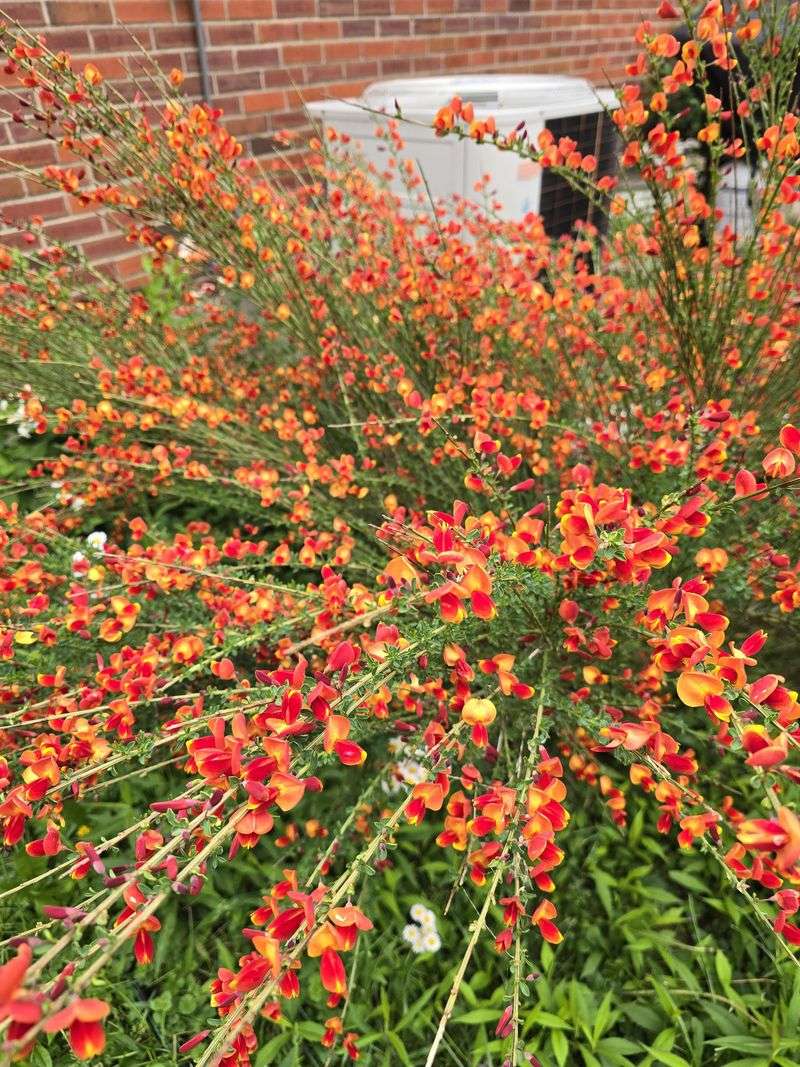
Scotch broom seems cheerful when yellow flowers light up a hillside in May.
That display comes with a long list of complications. Oregon designates it a noxious weed, and it has spread extensively across western parts of the state.
Seed production explains much of the problem. A mature plant can produce thousands of seeds, and those seeds may remain viable in soil for years.
Removal alone rarely finishes the job. New seedlings often continue appearing well after the parent plants are gone, which makes follow-up part of the plan.
Native grasses and shrubs lose ground to broom in open habitats. Restoration in those areas becomes slower and more costly once dense stands take hold.
Fire concerns come up frequently in dry landscapes. Heavy broom growth adds woody fuel and complicates management along roadsides and rural property lines.
Timing improves your odds. Pulling young plants before seed set works well, particularly in moist soil, while mature stands usually need a steady multi-year approach.
Native substitutes fit Oregon conditions better. Red flowering currant, snowberry, oceanspray, serviceberry, and kinnikinnick all bring seasonal interest without the runaway habit.
Anyone wanting yellow flowers has options that stay put. Scotch broom has a talent for converting one sunny corner into a neighborhood conversation, and rarely a pleasant one.
6. Research Yellow Flag Iris Before Adding Water Plants
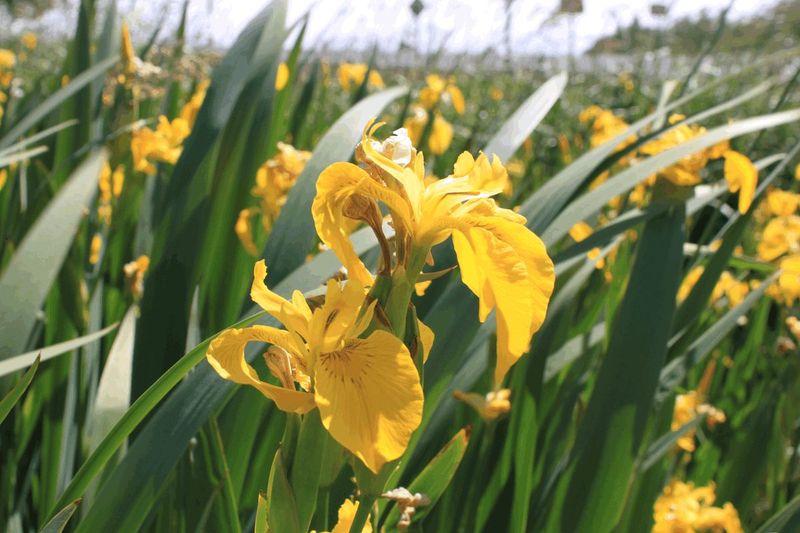
Water gardens cool down a yard nicely. Not every pond plant makes a good neighbor though.
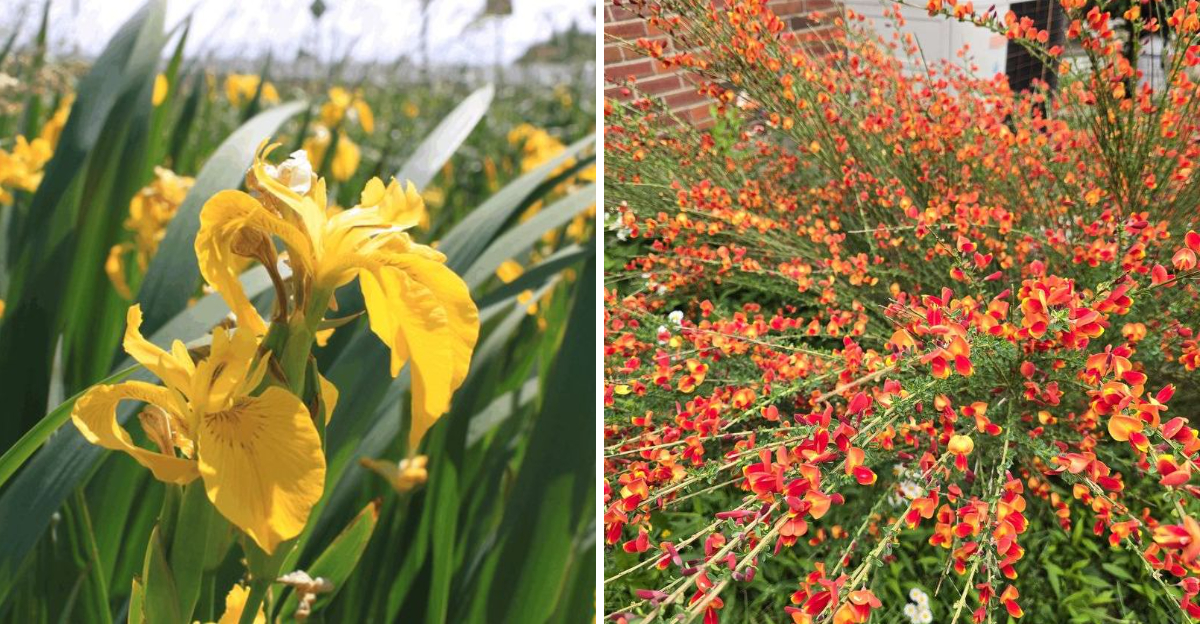
Yellow flag iris illustrates the problem well. Oregon designates it a noxious weed, and it spreads aggressively in and around water.
Two spread methods work in its favor. Seeds float and travel, while thick rhizomes form dense clumps along pond edges, canals, and wetland margins.
Those clumps change how a shoreline functions. Native vegetation loses room, sediment collects differently, and habitat used by fish and amphibians shifts.
Backyard containment often proves temporary. Moving water, wildlife, and dumped divisions all carry the plant beyond its intended spot.
Identification deserves patience before any purchase. Common names get slippery, and one nursery iris is not necessarily the same species as another with a similar label.
Oregon happens to have a native iris worth knowing. Iris tenax, western blue flag, and other regional species offer the iris form without the aggressive habit.
Trading pond divisions works best when both parties know exactly what they have. Botanical names on a label beat verbal descriptions every time.
Safer texture and bloom are widely available. Native sedges, rushes, and wapato give a pond a natural Oregon look with solid wildlife value.
In a water garden, the goal is a plant that makes a ripple. Yellow flag prefers to claim the entire shoreline and rename it.
7. Avoid Spreading Invasive Ground Covers
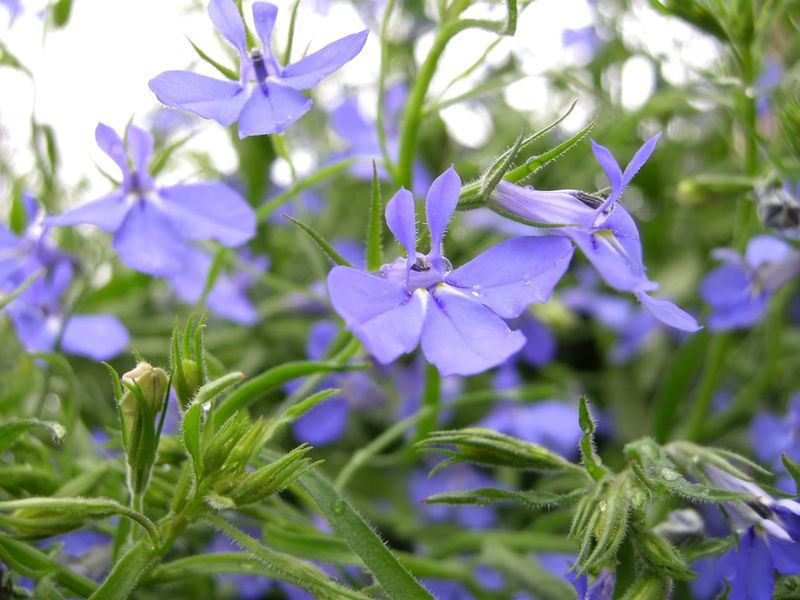
Ground covers arrive with a tempting sales pitch. Fill bare soil, block weeds, enjoy easy green texture.
Some varieties take that assignment far too seriously. Fast spreading types can move past their designated area into surrounding natural land.
Species in this category include periwinkle, English ivy, yellow archangel, and various creeping ornamentals. Concern levels vary by species and by where you garden, so local guidance helps.
Their greatest strength doubles as the drawback. Stems root while traveling, fragments reestablish readily, and dense growth can smother smaller native plants sharing the space.
Location raises or lowers the risk considerably. Yards backing onto woods, ravines, streams, and unmaintained fence lines give runners room to slip away unnoticed.
Yard debris causes more escapes than most people expect. Discarded pieces frequently keep growing wherever they land.
A few habits reduce trouble. Read labels closely, ask extension resources about invasive status, and treat the word vigorous as information rather than a compliment.
Solid alternatives exist for most Oregon conditions. Kinnikinnick handles sun, wild ginger suits shade, native strawberry fills gaps, and low Oregon grape adds evergreen structure.
Mulch also solves plenty of problems without introducing a spreading plant at all. Not glamorous, admittedly, but it stays exactly where you put it.
Coverage with manners is the target. A botanical carpet that slips under the door and redecorates the whole neighborhood is something else entirely.
8. Choose Plants That Protect Oregon Ecosystems
The simplest way to avoid plant trouble involves planning around species that fit and behave.
Memorizing every regulated plant is unnecessary. Knowing where to check before buying, selling, swapping, or planting something unfamiliar covers most situations.
Reliable sources make the difference. The Oregon Department of Agriculture noxious weed list, OSU Extension, county weed boards, and the Oregon Invasive Species Council all provide current information.
Lists get updated, which is worth remembering. A plant considered acceptable a decade ago may carry restrictions today, and the reverse happens occasionally too.
Nursery staff can help, though double checking names remains wise. Cultivars and lookalikes create genuine confusion even among experienced gardeners.
Native and regionally adapted plants simplify the whole question. They often support pollinators well, match local rainfall patterns, and settle in with less intervention.
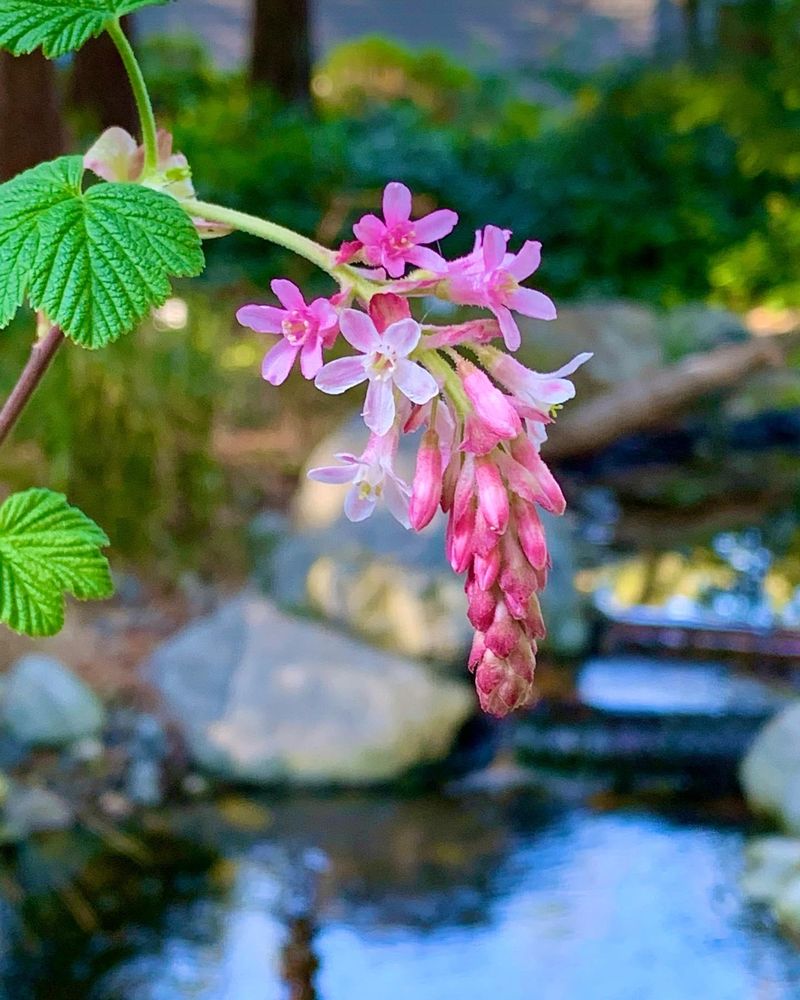
Good candidates cover most conditions. Oregon grape, red flowering currant, serviceberry, Douglas aster, snowberry, and vine maple all fit somewhere between full sun and deep shade.
Attention beats rule memorization. Read the tag, learn the botanical name, and consider where seeds, roots, or cuttings might travel after a storm.
Restraint costs nothing in beauty. Oregon gardens can stay colorful and full of personality while leaving the creek down the hill in better shape than they found it.