The Orange Fungus Appearing On New York Oak Trunks This Month
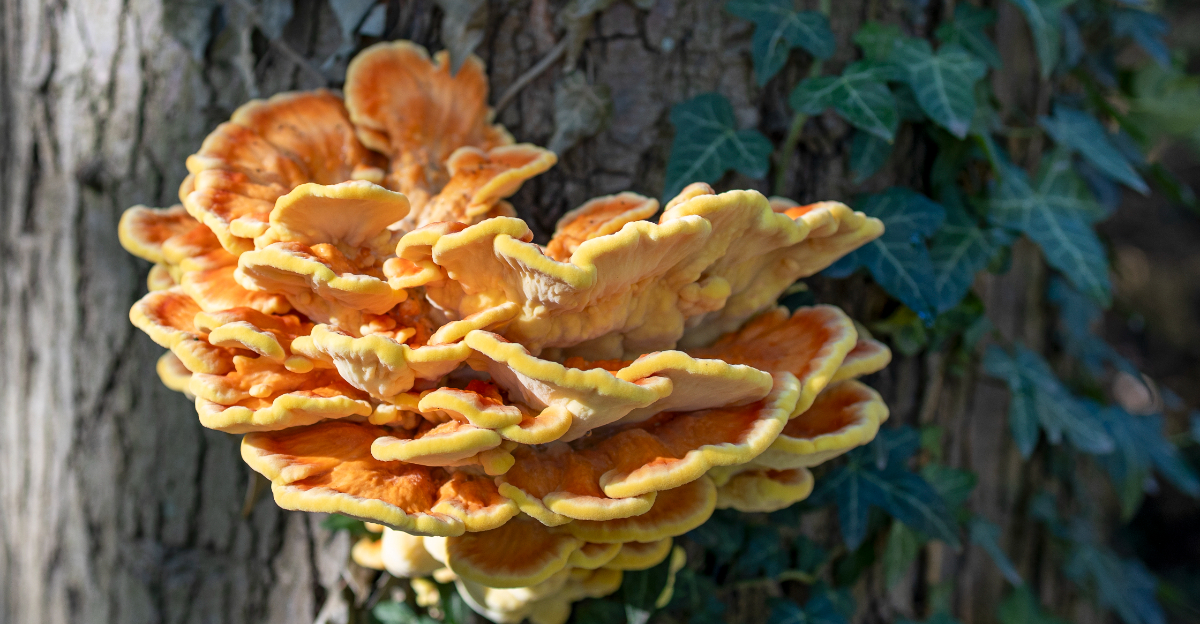
Something bright showed up on the bark this month, and it has people slowing down for a second look across the state. From a distance, it looks like somebody splashed a can of paint down the side of the trunk.
Step closer and the color gets stranger, soft and damp, stacked in layers like shingles on a tiny roof. Neighbors argue about what it is, and about half of them are simply guessing.
Some folks reach for a saw right away, convinced their tree is in serious trouble. Others grab a basket and a knife, because finds like this one sometimes end up in a frying pan.
The real answer sits between those two reactions, and it is more interesting than either. Here is what that color means, how to tell it from look-alikes, and what to do next.
Bright Shelves That Seem To Appear Overnight
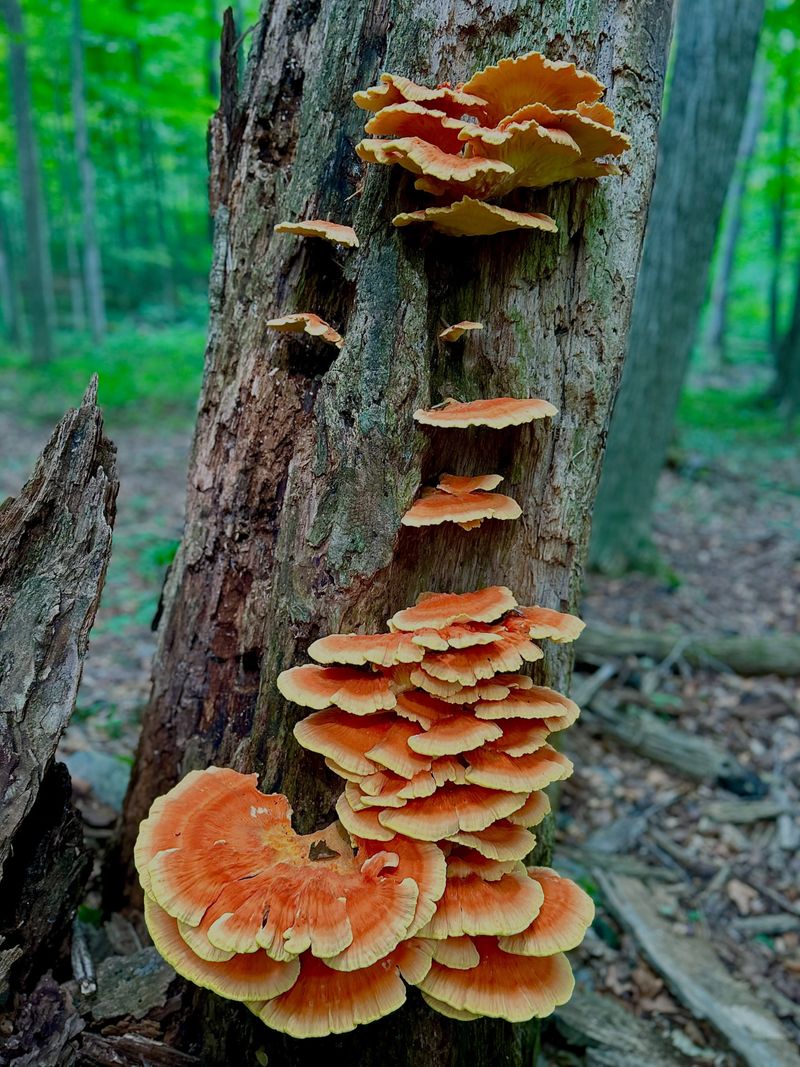
Picture damp roof tiles glowing tangerine against gray bark, and you have pictured the find people keep stopping to photograph. Laetiporus sulphureus, usually called chicken of the woods, is the shelf fungus behind most orange sightings on New York oaks.
Caps grow in overlapping tiers, each fan shaped with a wavy edge and a suede-soft surface when young. Tops range from salmon to pumpkin orange, while the undersides glow sulfur yellow, which explains the older nickname, sulfur shelf.
Turn a shelf over and you will find tiny pores rather than gills, packed so tightly the surface looks like yellow velvet. Those pores release spores by the billions, drifting toward fresh wounds on other trunks nearby.
Size can be startling for a first-timer. Clusters weighing fifteen or twenty pounds show up regularly, and a rosette can widen past a dinner plate within a week of steady rain.
Texture tells you the age. Fresh growth feels moist and slightly rubbery, then dries to a chalky, brittle wafer that crumbles under a fingertip by late fall.
Smell offers another clue. Fresh shelves carry a mild, mushroomy scent, not the sour tang people expect from decaying wood.
Plenty of people mistake the color for spilled paint or construction foam from a distance. A closer look, ideally with gloves on, settles the question in seconds.
Snap a photo and jot the date in your phone. That simple habit gives an arborist a timeline later, and timelines matter more than any single sighting.
Oaks Sit At The Top Of The Menu
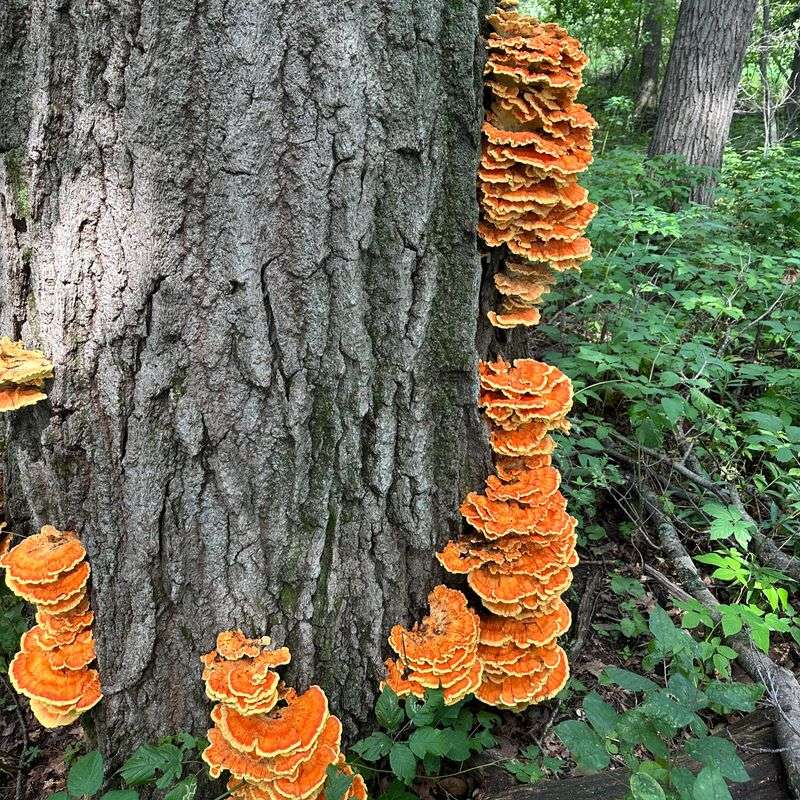
Oaks and this fungus have a long history together, and it comes down to chemistry. Heartwood in the center of an oak is loaded with lignin and tough tannins, and Laetiporus has the enzymes to break down the cellulose fibers packed between them.
New York gives it plenty of choices. Red, black, pin, and white oaks fill parks from Buffalo to Brooklyn, plus thousands of street trees planted a century ago.
Age matters as much as species. Older oaks carry more interior heartwood, and heartwood is the buffet, while the living outer sapwood stays largely untouched.
Your New York Garden Changes Every Week. Your Plan Should Too.
Gardening in New York changes quickly throughout the season. Every Friday you’ll receive a simple weekly plan showing exactly what to plant, prune, fertilize, harvest, and protect so you never miss the right timing.
Entry usually happens through an opening. Storm-torn limbs, lawnmower scrapes, old pruning stubs, and cavities left by woodpeckers all give spores a doorway into the wood.
Rain does the rest, pooling in hollows and keeping the interior damp enough for the fungus to spread.
Cherry, beech, willow, and even locust can host it too. Oak simply hosts it more often, which is why the sightings cluster around the state’s biggest shade trees.
Urban oaks face extra pressure from compacted soil and road salt. Stress does not invite the fungus directly, though it does slow a tree’s ability to wall off trouble.
One caution worth repeating: shelves on hemlock, yew, or other conifers belong to different species. Those can upset stomachs badly, so host identity is part of identification.
If you own an oak over eighty years old, treat it like a valued elder. Regular checks around the base catch changes early, while options stay wide open.
Late Summer Rain Sets The Clock
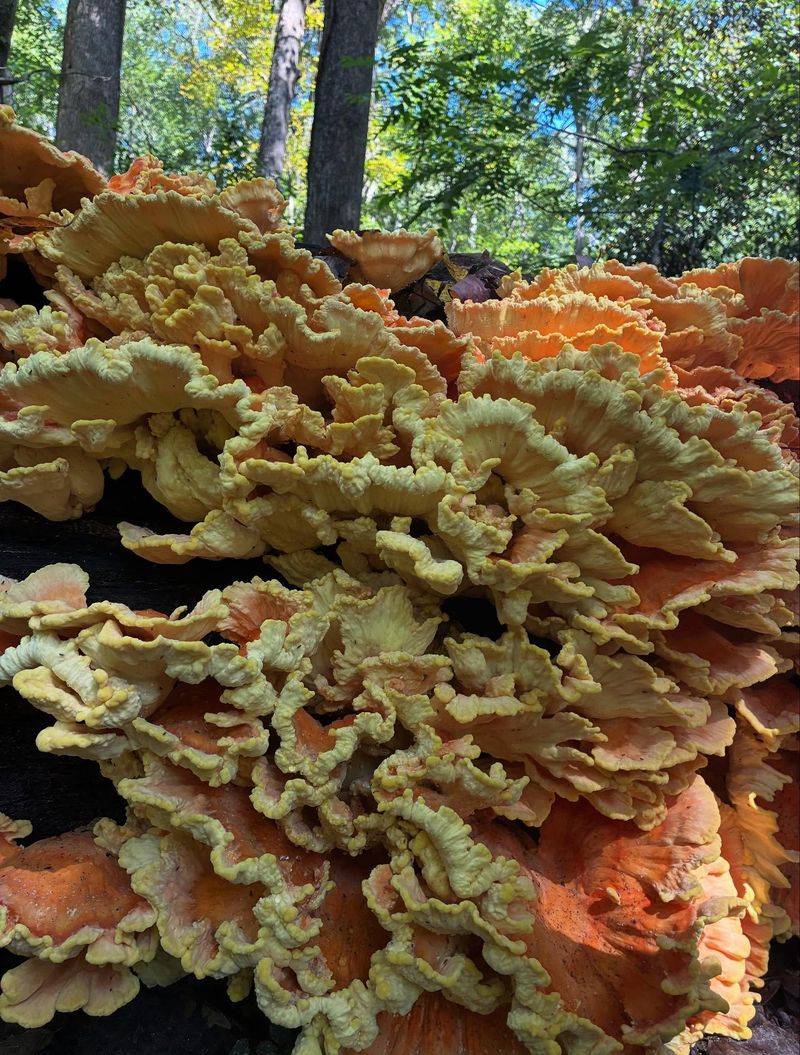
Ask any forager in the Hudson Valley when to start looking, and the answer involves a calendar and a rain gauge. Warm days, cool nights, and a soaking storm are the combination that pushes shelves out of the bark.
Across most of New York, the main window runs from late July into October. Downstate trees often fruit a couple of weeks earlier than those in the Adirondacks.
Growth is fast once it starts. A knob the size of a golf ball on Monday can be a foot-wide bracket by Friday if humidity holds.
The show is short. Shelves stay tender for roughly a week, then toughen, pale, and begin flaking apart at the edges.
Rainfall totals explain the year-to-year swings. A dry stretch in August can push the whole display into September, and a soggy season can noticeably increase the number of trees showing color.
Some oaks fruit year after year in the same spot, since the mycelium inside the trunk keeps working quietly between seasons. Others skip a summer entirely, then reappear after a wet August.
Morning walks are the best time to spot new growth. Low sun makes the orange practically glow, and the shelves have not yet collected a day of dust.
A hard frost usually ends the run. What remains through winter is a bleached, papery shell that tells you where to check again next year.
Mark those spots on a map or a photo of your yard. Knowing where fruiting happened last October saves guessing when the shelves reappear.
Inside The Trunk During Decay
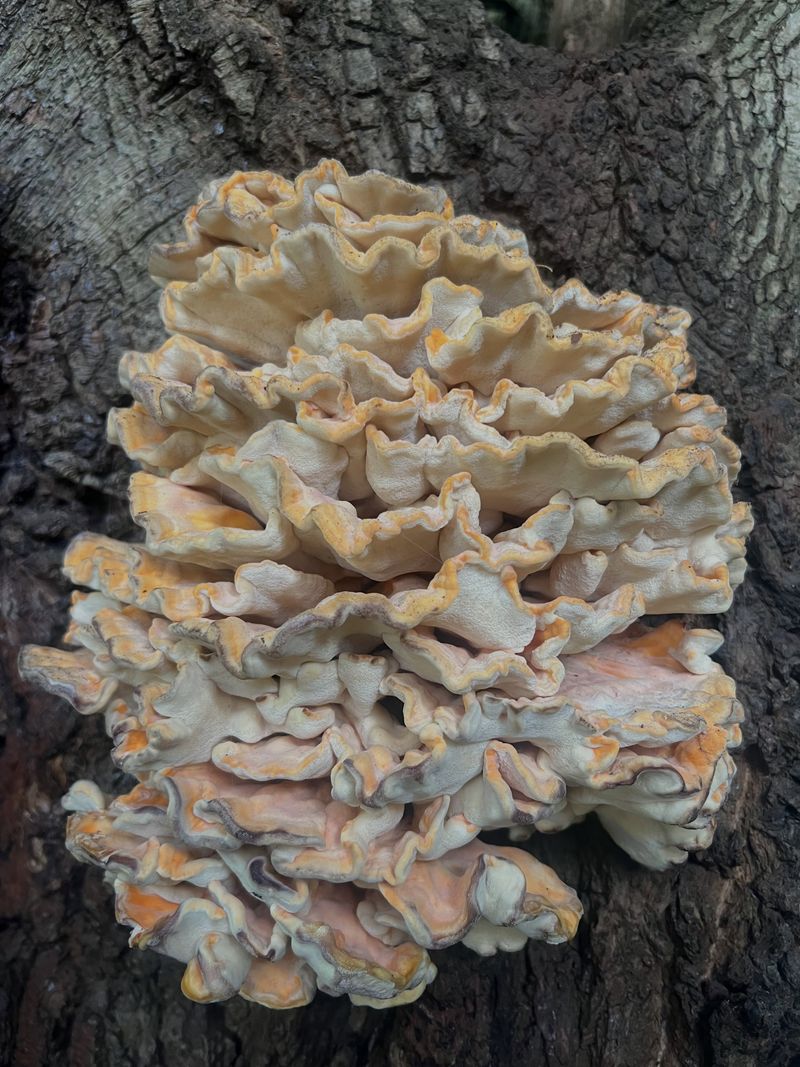
Here is the part people miss while admiring the color: the shelf is just the fruit. The real organism is a web of threads called mycelium, spreading through the heartwood for years before anything shows outside.
Laetiporus causes what specialists call brown cubical rot. It breaks down cellulose and leaves the brown lignin behind, so affected wood cracks into little cubes that crumble like burnt toast.
That crumbling matters because heartwood is the tree’s structural core. Think of a broom handle hollowed from the middle; it still looks fine until the day it bends.
Meanwhile the canopy can look perfectly healthy. Leaves keep working because water and sugar travel through the outer layers, which the fungus mostly leaves alone.
Hollow oaks are not automatically hazardous, either. Many old trees stand for decades with cavities inside, especially when they have added a thick shell of sound outer wood.
A rough rule used by arborists: trouble rises when the solid wall of wood is thinner than about one third of the trunk’s radius. Measuring that takes tools, not eyeballs.
Forest ecologists see real value in this process. Hollowed trunks become nesting space for owls, raccoons, and honeybees, and the recycled nutrients feed the soil around the roots.
Timelines stretch longer than most homeowners expect. Decay of this type often moves at a few inches a year, which leaves room for planning instead of panic.
So the fungus is a messenger rather than the whole story. What it tells you is that the inside deserves a closer look.
Orange Look-Alikes Worth Knowing
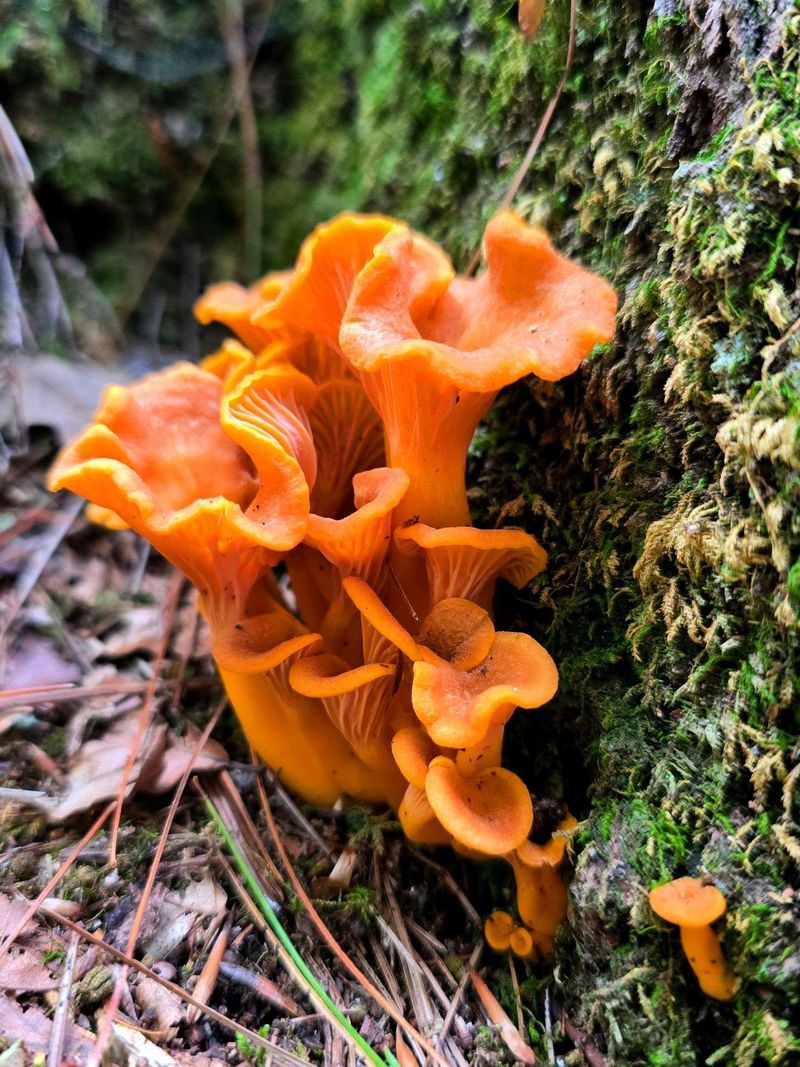
Not every orange blob on an oak is the same organism, and mixing them up leads to bad decisions. A handful of regulars show up on New York trunks each fall.
Laetiporus cincinnatus is the closest relative. It grows as a rosette at the base of oaks, with a peachy top and a white pore surface instead of yellow.
Jack-o’-lantern mushrooms fool a lot of beginners. They sprout in orange clumps around stumps and roots, but they have true gills and cause serious stomach upset.
Then there is Inonotus dryadeus, the weeping conk, which forms a lumpy tan cushion low on oak trunks and oozes amber droplets. Its color leans caramel rather than tangerine.
Orange jelly fungi and slime molds add to the confusion. Both feel gooey or foamy instead of firm, and both wash away in a hard rain.
Bark color plays tricks too. Wet oak bark can turn rusty orange from algae or old iron staining, which vanishes under a fingernail scrape.
Age changes appearances as well. A month-old sulfur shelf fades toward bone white, so people report it as a totally different fungus in November.
Three checks sort most cases quickly. Look for shelf shape, pores instead of gills, and that sulfur-yellow underside.
Photograph the top, the underside, and the spot where it meets the bark. Local mycological clubs and the Cornell Cooperative Extension office are glad to weigh in.
Careful looking beats quick labeling, especially when a mushroom might end up on a dinner plate.
Kitchen Rules For Foragers
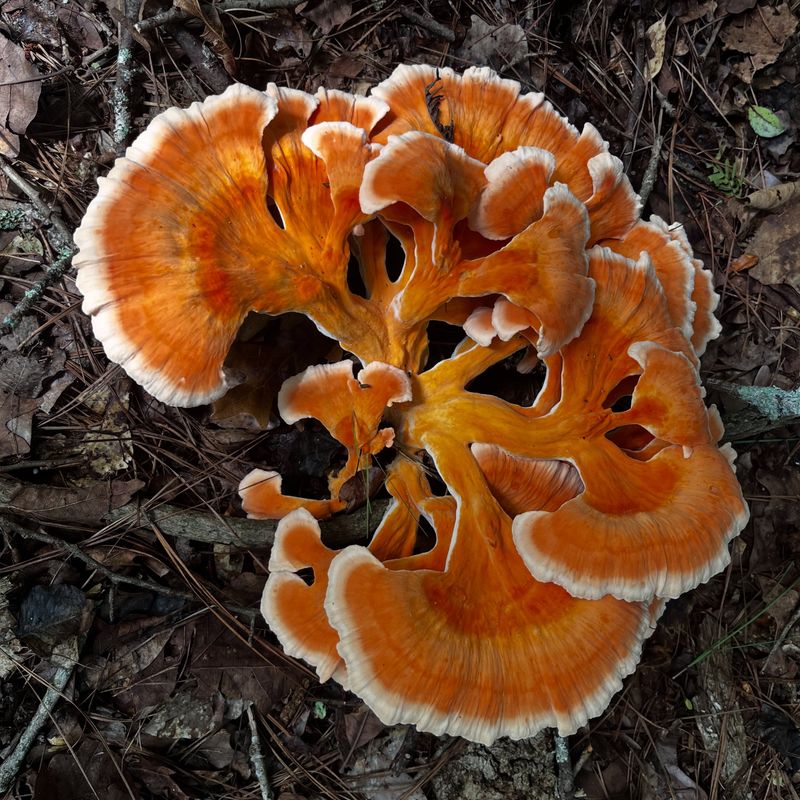
Cooks love this one, and for good reason: young chicken of the woods really does have the texture of poultry breast. Sauteed with butter and thyme, it turns up in sandwiches all over the Catskills each September.
Caution comes first, though. A minority of people react with nausea or swollen lips, especially from specimens gathered on oak, where tannins concentrate in the flesh.
Sample a small, well-cooked portion the first time, then wait a day. Raw pieces should be skipped, since cooking is what makes the fungus agreeable.
Only the soft outer edges are worth harvesting. Older shelves toughen into something closer to chalk and taste about as good.
Skip anything growing beside a highway, on a treated utility pole line, or in a park sprayed for insects. Fungi soak up whatever is in the wood and soil around them.
Rules vary by land. New York State forests generally allow personal mushroom picking, while many city and county parks do not, so check before you carry a knife into the woods.
Storage is simple. Cook within two days, or slice and freeze the pieces, since the flesh dries out fast in a paper bag.
Cut cleanly and leave the base attached to the trunk. The mycelium inside continues on its own schedule, and a tidy cut keeps the tree from picking up extra wounds.
One more note for beginners: harvesting the shelf does not stop the decay inside the trunk. The mushroom is a symptom, and removing it doesn’t slow the decay already underway inside the wood.