Native California Plants For Awkward Side Yards With Almost No Irrigation
There’s a strip of your property you probably haven’t looked at in months. Between the house and the fence. Maybe four feet wide. Hot as a griddle by two in the afternoon.
The hose does not reach. Nothing grows there except whatever blew in.
Many Californians write that space off entirely. Gravel, a trash can, a coiled extension cord, done.
Here’s the thing though. Those exact conditions, lean soil, blazing sun, almost no water, describe the native habitat of some genuinely handsome plants.
Not compromise plants. Not survivors barely hanging on.
Plants with sculptural red bark. Silver foliage that scents the air when you brush past. Flowers that pull hummingbirds into a corridor nobody visits.
The narrow strip is not the obstacle. In many cases it’s closer to an advantage, since these plants tend to struggle in exactly the pampered conditions the rest of the yard offers.
So which natives take a hot side yard and turn it into the part of the garden you show people?
1. Grow Toyon For Tough Evergreen Structure
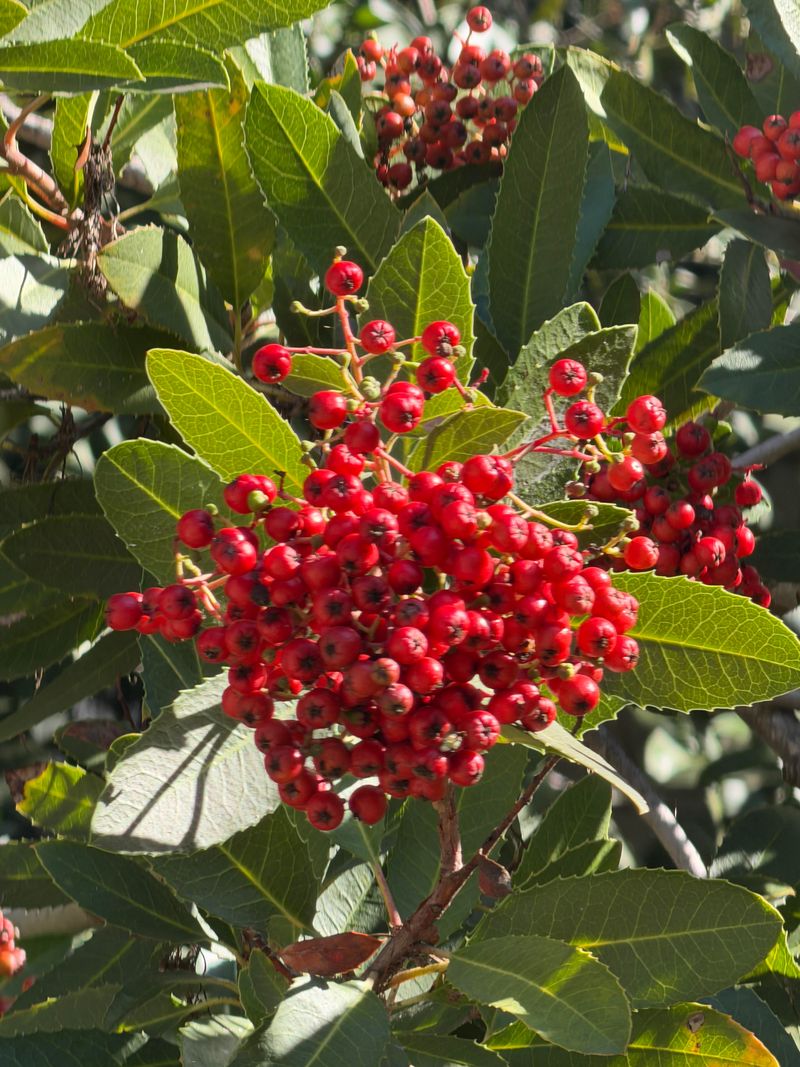
Some plants earn their place quickly, and toyon belongs in that group.
Native across much of California, it handles lean soil, reflected heat, and narrow spaces better than many thirstier shrubs.
Evergreen leaves keep the area from looking bare in winter. That matters when a skinny walkway runs beside a wall or fence.
Red berries follow the summer flowers and often persist into winter. Birds notice them, which brings activity to a passage that usually sees none.
Size deserves honest consideration first. Toyon can reach fifteen feet or more in open ground, so side yards call for careful placement and a gentler hand.
Prune after berries fade, thinning a few branches rather than shearing. Keep it clear of doors, vents, and utility boxes from the start.
Young plants want regular water while roots establish. After that, deep occasional soaking during long dry stretches is often enough.
Mulch helps keep soil cooler, though pulling it back from the main stem reduces rot risk.
Gravel paths, boulders, or smaller natives make good companions. Nothing should crowd the base.
One specimen can make a forgotten passage feel deliberate. Toyon does structure, berries, and habitat value in a single plant, which is efficient work for something that asks almost nothing in return.
2. Plant California Sagebrush For Dry Corners
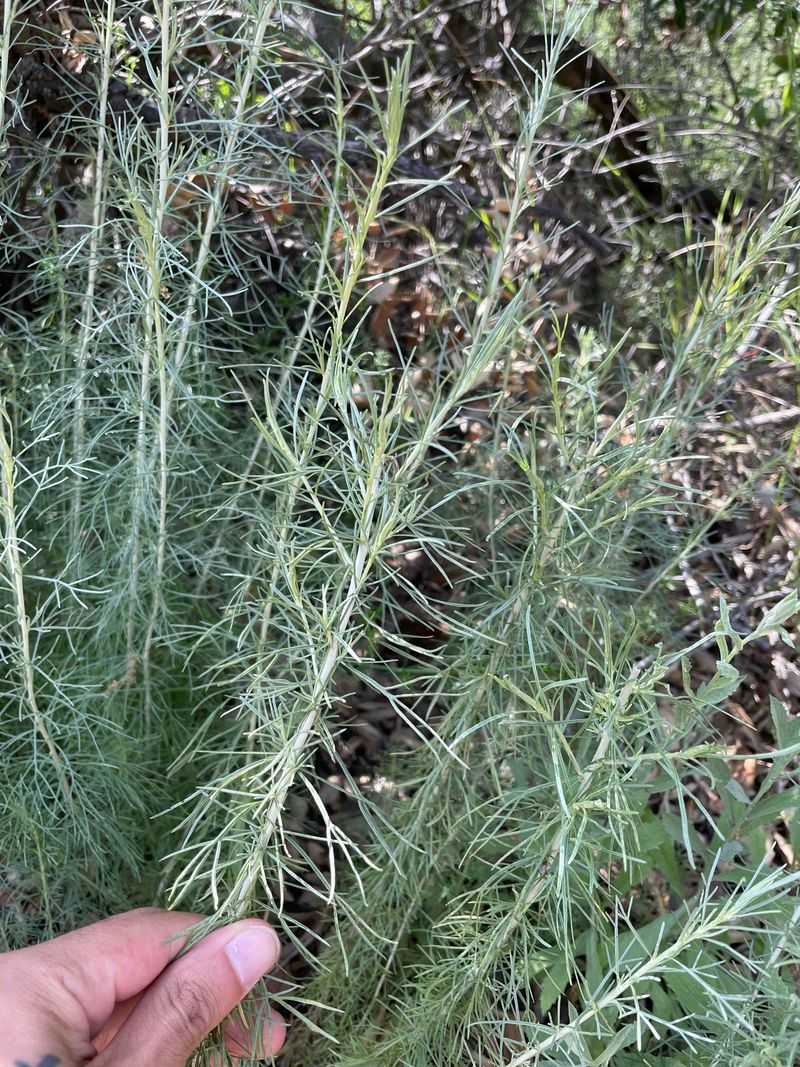
Brush past California sagebrush on a warm afternoon and the air changes immediately.
Silvery foliage releases a clean, wild scent. A dry side yard suddenly reads more like a coastal hillside than a problem strip.
The plant is built for California’s long dry season. Blazing sun, gritty soil, and minimal irrigation all suit it.
Fine texture may be its biggest design contribution. Plain fences, stucco walls, and concrete paths all soften considerably next to that feathery foliage.
Drainage matters far more than soil quality here. Overwatering causes more sagebrush failures than drought does.
Keep it out of regular sprinkler range. Water deeply but infrequently through the first growing season so roots push outward.
Your California Garden Changes Every Week. Your Plan Should Too.
Gardening in California changes quickly throughout the season. Every Friday you’ll receive a simple weekly plan showing exactly what to plant, prune, fertilize, harvest, and protect so you never miss the right timing.
Plants often go partly dormant in late summer, dropping leaves and looking sparse. That is normal seasonal behavior rather than a problem to fix with the hose.
Woodiness develops with age, so skip harsh shearing. Tip pruning or removing a few older stems keeps the form airy.
Rocks, bunch grasses, and low flowering natives let the silver foliage stand out.
Skinny spaces where hoses rarely reach need reliability above all. Sagebrush provides that, plus a scent that makes taking out the trash unexpectedly pleasant.
3. Add Penstemon For Color Without Extra Water
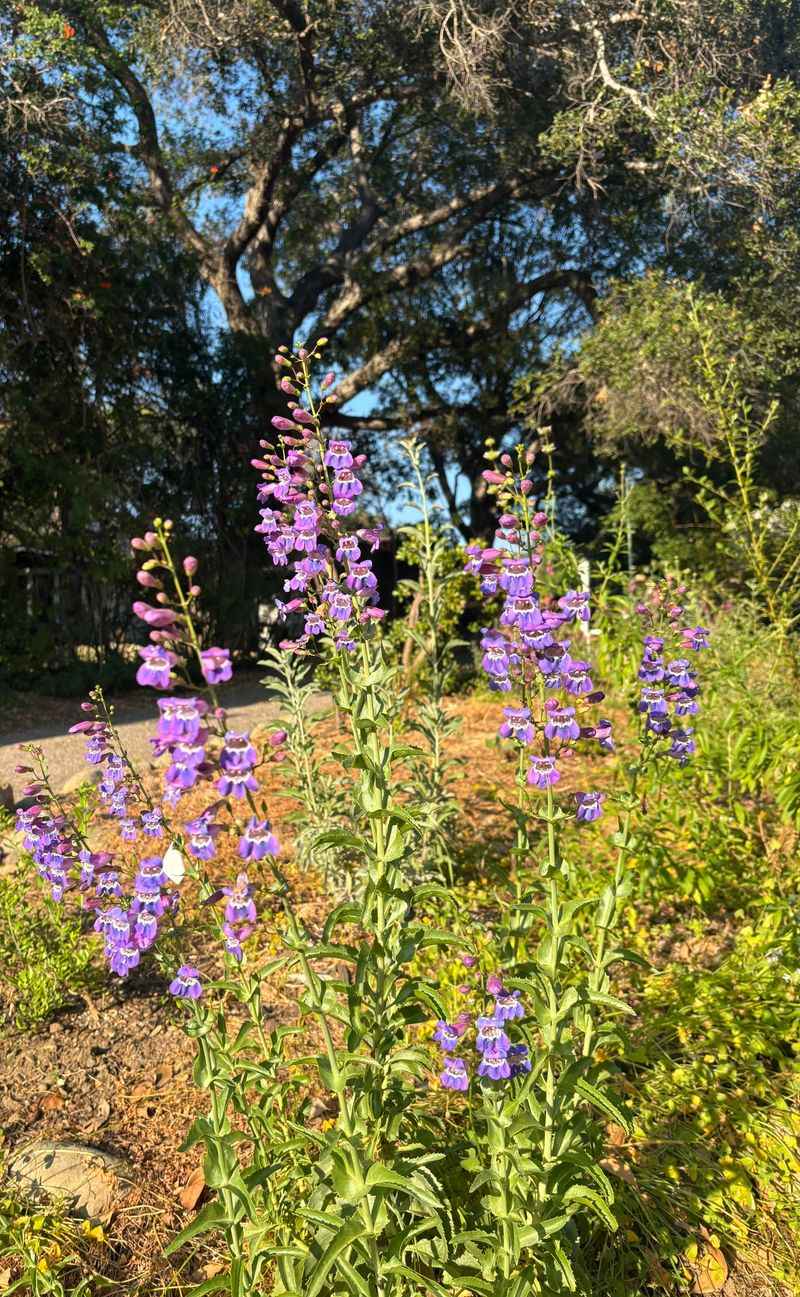
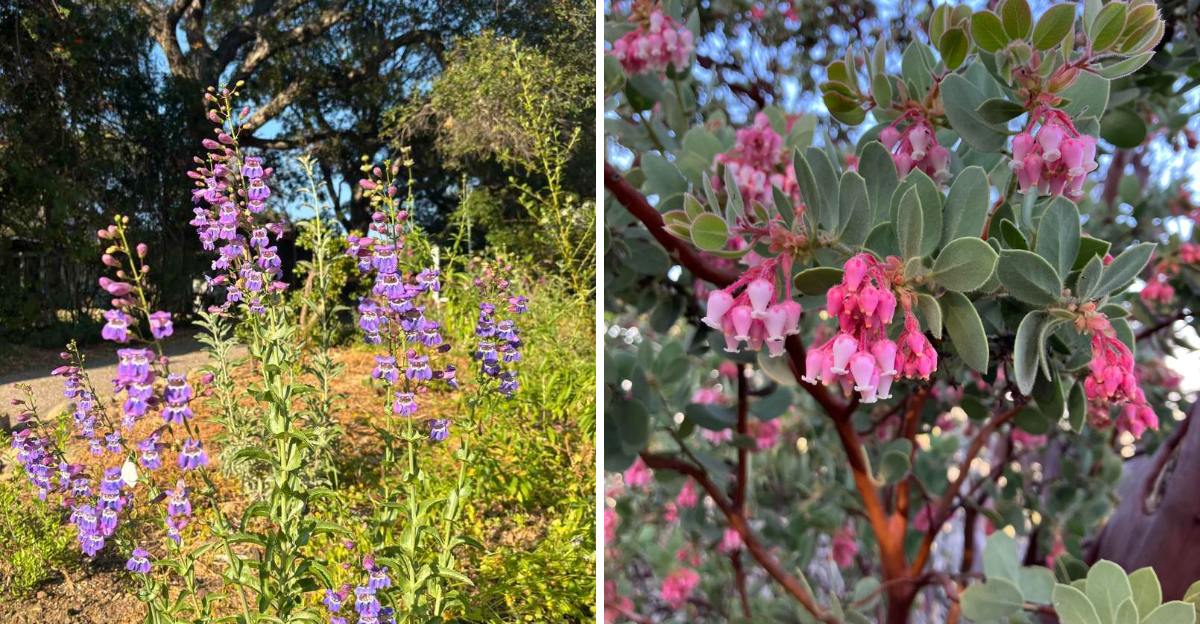
A stand of penstemon can make a narrow side yard feel cheerful rather than forgotten.
Tubular blooms rise above tidy foliage. Hummingbirds find them readily, which adds motion to a space that otherwise sits still.
California native penstemons come in several forms, so matching plant to site is realistic. Many handle lean soil and low water once established.
Drainage does most of the work. Strong afternoon sun paired with quick draining soil suits them well.
Compact or mid sized selections work better in tight spaces. Taller types tend to flop into walkways after bloom.
Placement near gravel, stepping stones, or a sunny gate puts the flower spikes at eye level. That is where they earn their keep.
Regular water helps young plants, then frequency drops as roots establish. Heavy mulch against the crown invites rot, so leave that area open.
Skip rich fertilizer. Soft fast growth serves this site poorly compared with sturdy growth suited to lean conditions.
Many penstemons are relatively short lived, often three to five years. Letting some plants set seed keeps the patch renewing itself.
Mix purple, red, pink, or blue forms with stones and native grasses. A route to the back gate becomes something you slow down for, which is more than most side yards manage.
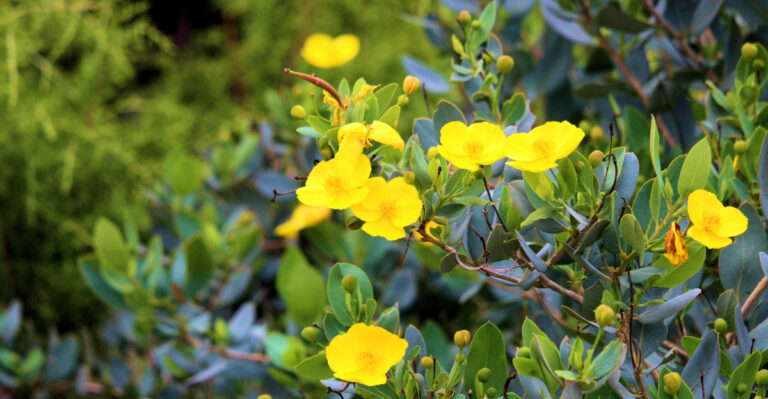
4. Use Desert Marigold In Harsh Sunny Spots
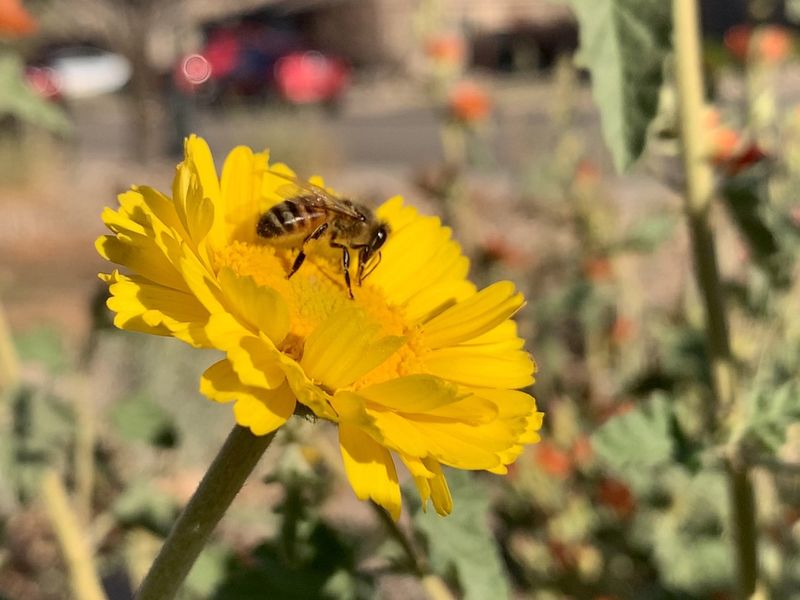
When a side yard bakes all day, desert marigold often looks unbothered.
Bright yellow flowers seem to float above gray green foliage. Reflected heat that troubles other plants rarely slows it down.
Origin is worth noting for anyone building a strictly local palette. Baileya multiradiata is native to the Southwest, including desert parts of southeastern California, so inland gardens suit it better than coastal ones.
Strong sun, quick drainage, and low irrigation are its requirements. Bloom can stretch across a long season given those conditions.
Standing water is the main threat. Place it where runoff does not collect and moisture drains away fast.
Gravel mulch works especially well around it. The look echoes its desert character while keeping the crown dry.
Maintenance stays light. Snip spent flower stalks for tidiness and pull nearby weeds before they crowd the base.
Rich feeding pushes leafy growth at the expense of flowers. Lean treatment produces the cleaner display most gardeners want.
Plants tend to be short lived and often self sow where conditions suit them. Letting a few go to seed keeps the show going.
Open habit means it pairs well with stones and boulders. Cheerful yellow against a blank wall does a lot of work for a plant that asks for almost nothing.
5. Plant Buckwheat For Pollinator Support
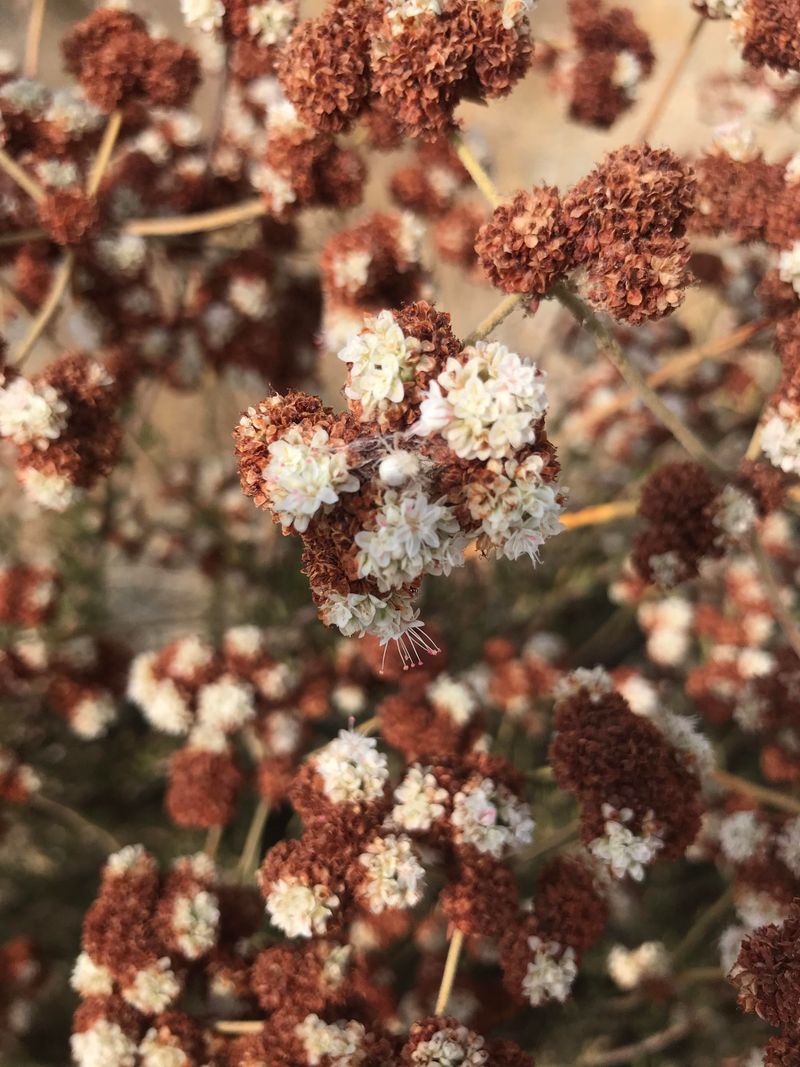
Buckwheat sounds plain and behaves like anything but.
Small flower clusters attract bees, butterflies, and other beneficial insects. A quiet passage becomes a small habitat with very little effort.
Several native buckwheats suit gardens. Low growing types work for edging, while larger shrubby species provide structure.
What they share is real tolerance for sun, sparse water, and poor soil once established.
Color shift is part of the appeal. Fresh blooms open white, pink, or pale yellow, then age into cinnamon and rust tones that hold interest past peak bloom.
California buckwheat is the workhorse for hot inland sites. Coastal gardens may do better with seaside or Santa Cruz Island types, depending on conditions.
Give buckwheat at least half a day of sun and excellent drainage. Water through the first season, then taper off deliberately.
Too much attention often helps less than letting the plant adapt on its own.
Leaving spent flowers standing continues feeding wildlife and adds winter texture. Cut back in late winter if the look bothers you.
Pair smaller types with gravel and stepping stones, or use shrubby forms as a sunny anchor by the gate. Buckwheat connects a narrow strip to the wider garden and hosts most of the insect traffic while doing it.
6. Grow Manzanita For Architectural Beauty
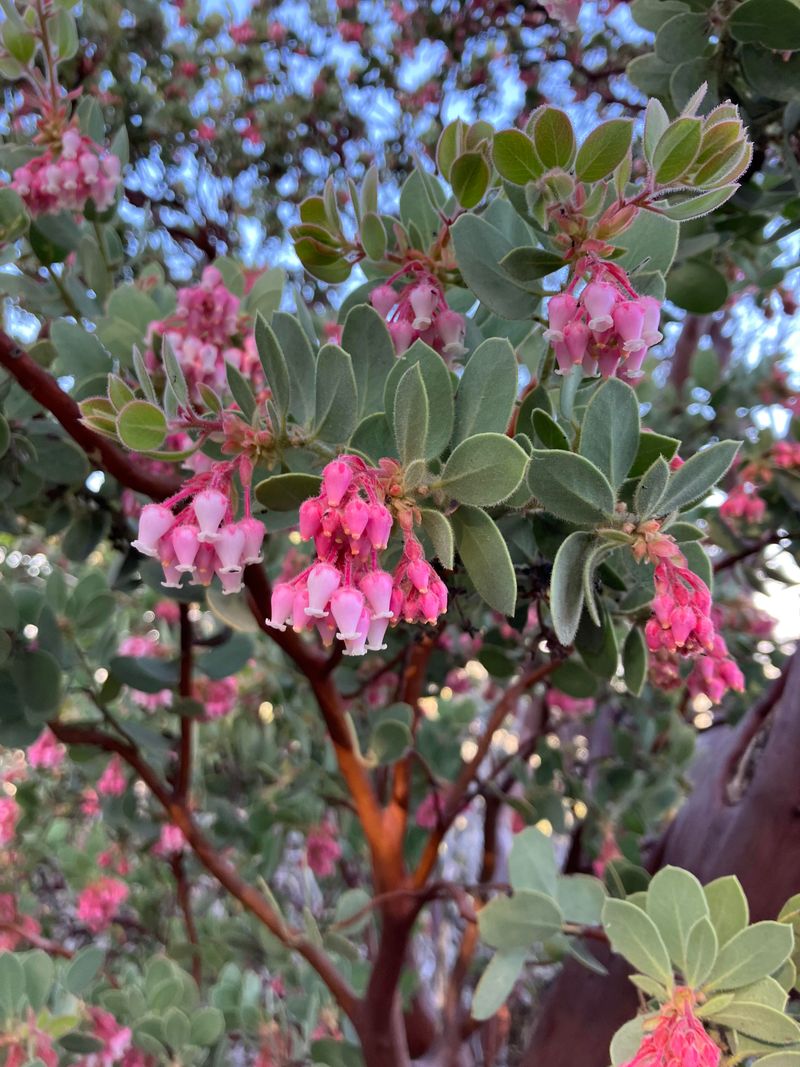
Few natives make a stronger impression than manzanita.
Smooth reddish bark, sculptural branching, and evergreen leaves deliver year round interest. Even a narrow run between houses starts looking intentional.
Selection matters more than almost anything else. Species and cultivars range from low ground covers to broad shrubs, so mature size on the label deserves real attention.
Avoid spots where branches will press against walls, paths, or utility equipment. Reaching in to prune later rarely improves the shape.
Drainage is essential, particularly where roof runoff collects. Building up the planting area helps considerably in heavy soil.
Mineral mulch like gravel suits it better than bark. Keep summer water light once the plant is established.
Overwatering in summer is a common cause of manzanita losses, since some species are prone to root pathogens under warm wet conditions. Lean, dry treatment usually produces the dense form and handsome bark people admire.
Planting on a slight mound improves the odds in clay soil. So does watering in the cooler months rather than midsummer.
Polished appearance across every season makes it a good fit near an entry path or visible gate. Underplant sparingly and leave air around the base.
Structure over nonstop flowers is the trade. Placed well, one manzanita can make an awkward corridor the most photographed part of the property.
7. Add Blue Fescue For Narrow Ground Coverage
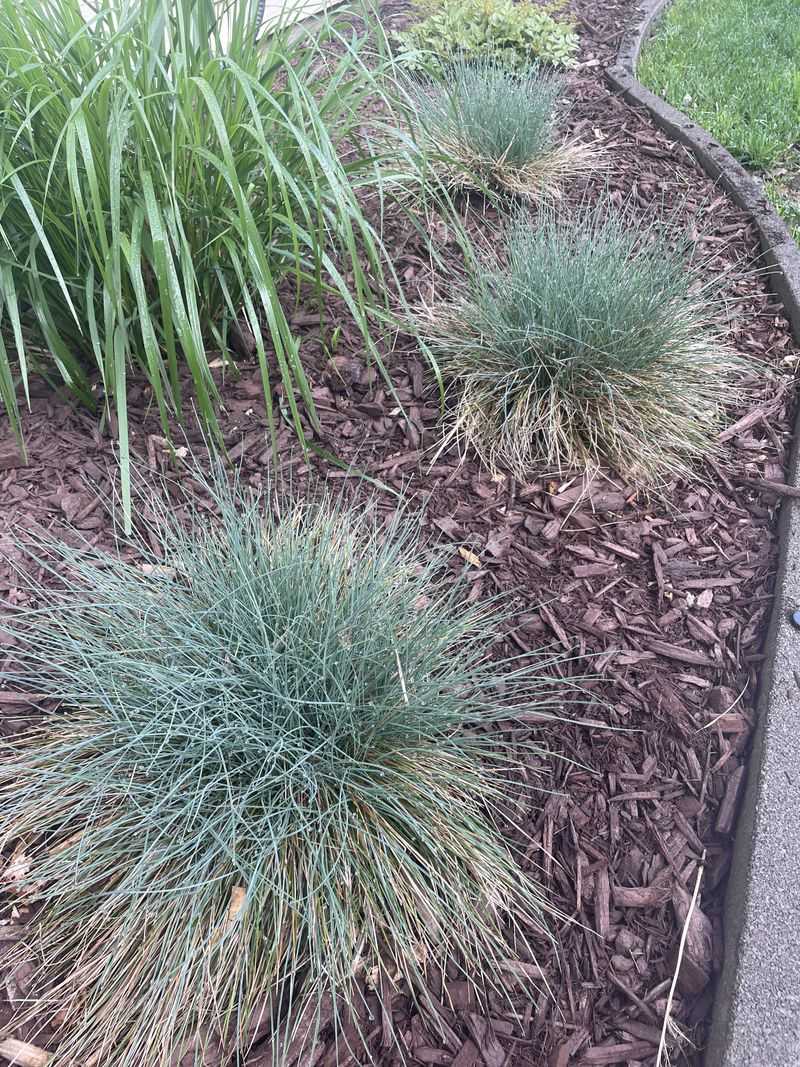
Sometimes a side yard needs a small plant that stays put, and blue fescue does that reliably.
Neat clumps bring cool color and soft texture. Skinny spaces where larger natives feel crowded suit it well.
Origin note first, since this piece is about natives. Festuca glauca comes from Europe, so gardeners wanting a strictly California palette might consider native alternatives like Idaho fescue, California fescue, or deer grass instead.
Blue gray blades contrast nicely with warm walls, gravel, brick, and stepping stones. That color shift makes a narrow passage look designed.
It does not spread as ground cover does. Grouped in repeated clusters, though, it covers visual gaps efficiently.
Use it along path edges, beside boulders, or between other drought tolerant plants. Repetition ties a scattered planting together.
Sun or bright light, decent drainage, and modest irrigation once established cover its needs. Coastal conditions suit it better than extreme inland heat.
Trim out old blades occasionally and divide tired clumps every few years. Centers tend to open up with age.
Scale is the real advantage. It never dominates, yet it adds rhythm and a finished look.
Repeating several clumps in a simple line calms a pinched space considerably. Sometimes the fix for an awkward corridor is a plant that knows how to sit still.
8. Turn Forgotten Side Yards Into Native Habitats
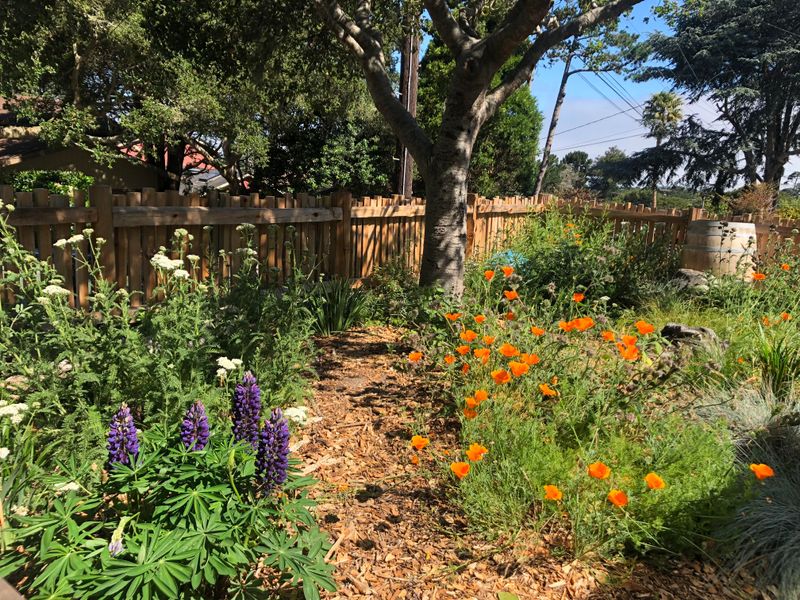
A forgotten side yard can become one of the most useful parts of a California garden.
Even a narrow hot strip can support birds and pollinators, look good year round, and get by on very little water.
Start with an honest look at the site. Measure width, count sun hours at ground level, note where runoff travels, and decide what the space is actually for.
Passage, screening, storage access, or a view from a window all lead to different plant choices.
Build a simple plan with layers. Taller anchors like toyon or manzanita go where they have room, medium plants such as sagebrush or buckwheat fill the middle, and low plants edge the path.
Hardscape earns its cost in tight spaces. Gravel paths, stepping stones, and small boulders improve drainage and give the planting a clean framework.
First year watering deserves a schedule. Water deeply to encourage root spread, then gradually stretch the intervals over the following seasons.
Mulch helps, kept off stems and crowns. Pull weeds early, before they compete for the limited moisture.
Leave enough open space for each plant to hold its natural form. Crowding creates the maintenance problem you were trying to avoid.
The result is a cooler, softer passage that supports local life. Not bad for the one part of the yard you used to walk past without looking.