The Missouri Cave Fish That Exists In Just One Underground System On Earth
Beneath your feet, an ancient creature rests in complete darkness. Ground here sounds strange, almost secretive, like a puzzle. Water disappears into sinkholes across Missouri and returns miles away.
Sunlight never reaches these underground rivers or their residents. Quiet passages shelter a fish that exists nowhere else. Scientists only confirmed its identity within the last few decades.
Pale skin replaced vivid color once darkness became permanent. Eyes faded while other senses grew remarkably sharp. Perry County alone holds this species’ entire known population.
Nowhere else in Missouri, or anywhere, will you find it. Farmers plow fields directly above these hidden waterways every season. Chemicals sprayed across a field can reach caves within hours.
Underground streams tie surface decisions to hidden consequences instantly. This isn’t some distant curiosity you can casually overlook.
Your grasp of this small creature reveals something much larger indeed. What happens down there depends on you now.
Meet The Grotto Sculpin, Missouri’s Underground Oddball
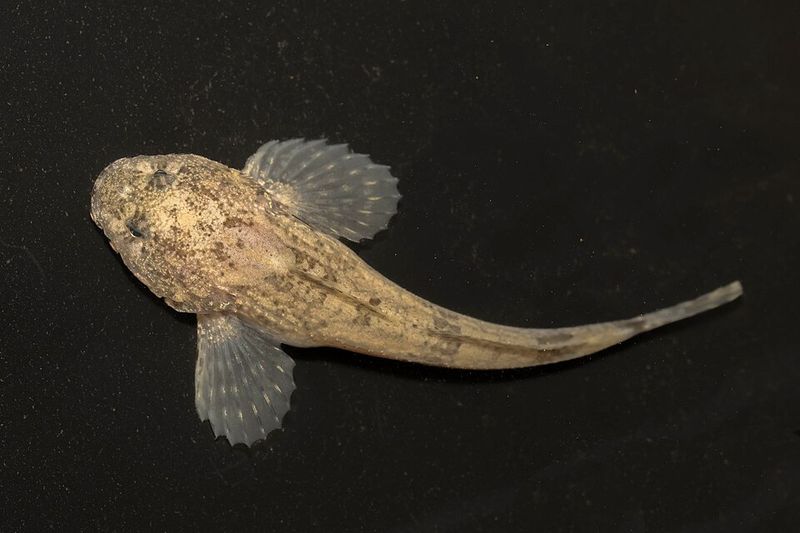
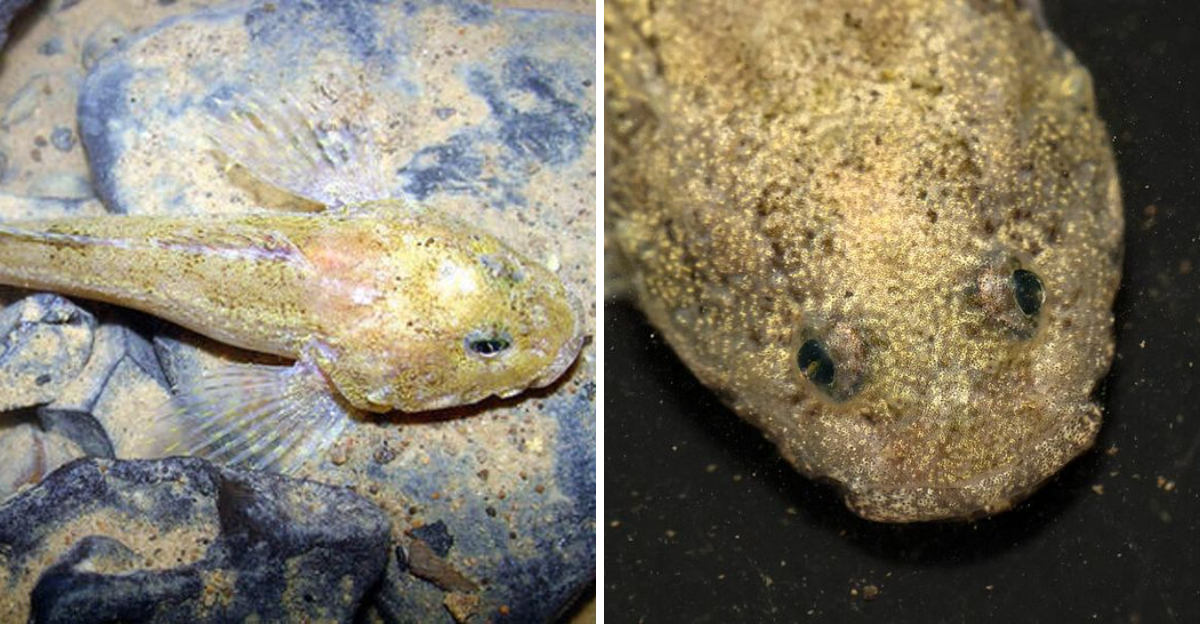
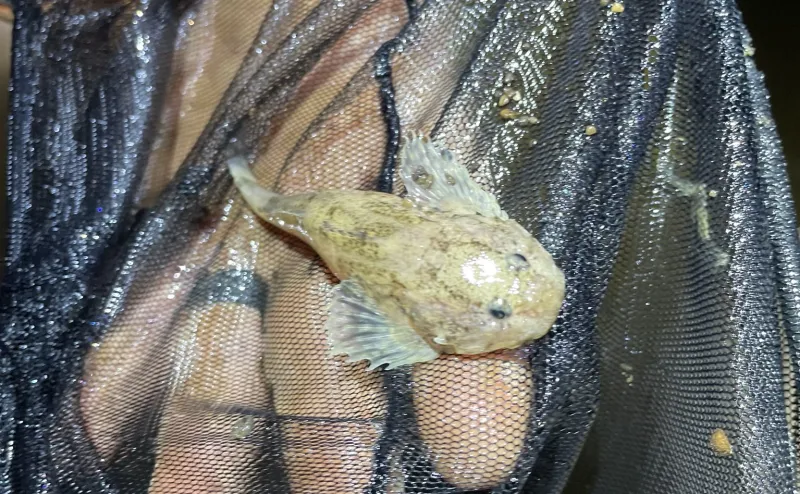
Small, blotchy, and built like a tiny bulldog, the grotto sculpin shows the physical hallmarks of long-term cave adaptation. It rarely stretches past four inches, yet it has become one of the most talked-about animals in Missouri conservation circles.
Scientists know it as Cottus specus, a name given officially in 2013. Before that, researchers simply called it the grotto sculpin and puzzled over how a surface fish family produced such an unusually pale member.
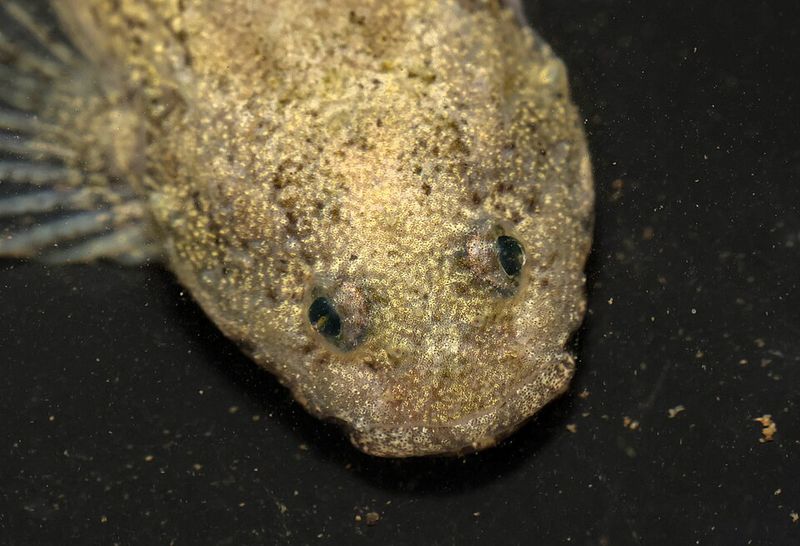
Its body carries washed-out coloring, ranging from creamy tan to pale gray with faint mottling. Compared with its cousin the banded sculpin, the cave version looks like a photocopy that ran low on ink.
The head is wide and flattened, the eyes are shrunken, and the mouth stretches nearly the full width of the face. That build suits a fish that spends its hours pressed against rock, waiting for food to drift past.
Unlike many famous cave animals, this one has not lost its eyes entirely. Some individuals see reasonably well, while others have eyes so reduced they seem more decorative than useful.
Biologists find that mix fascinating because it suggests evolution caught in the middle of a change. The fish appears to be adapting to cave life right now, not thousands of generations ago.
Fun detail worth remembering: the word grotto simply means a small cave or cavern. The name fits a creature whose entire known world sits beneath Missouri pastures and cornfields.
The Only Address It Has Ever Known
Roughly 60 miles south of St. Louis sits Perry County, a patchwork of crop fields, hardwood ridges, and quiet gravel roads. Beneath all that ordinary scenery lies one of the most cave-riddled landscapes in the country.
Every confirmed grotto sculpin lives inside this single county’s underground drainage network. No other county, state, or country has produced a verified population.
The fish turns up in five known cave systems, including Mystery Cave, Running Bull Cave, Crevice Cave, Moore Cave, and Rimstone River Cave, along with a few surface springs where cave water resurfaces.
Your Missouri Garden Changes Every Week. Your Plan Should Too.
Gardening in Missouri changes quickly throughout the season. Every Friday you’ll receive a simple weekly plan showing exactly what to plant, prune, fertilize, harvest, and protect so you never miss the right timing.
Crevice Cave alone holds more than 30 miles of mapped passage, making it the longest cave in Missouri.
Geologists call this kind of terrain karst. Rainwater slightly acidic from soil and air slowly dissolves limestone, carving out sinkholes, springs, and miles of hidden plumbing.
Perry County’s karst is unusually well developed, with thousands of sinkholes acting like drains across the countryside. Water that disappears into one of those funnels can travel underground for miles before reappearing.
Because the entire population sits in one connected system, the species has no backup location. A problem in the water supply reaches every individual at roughly the same time.
Conservation planners describe that situation as leaving the species with no backup population. For a fish measured in inches and counted in modest numbers, geography is both its home and its biggest gamble.
How A Surface Fish Became A Cave Dweller
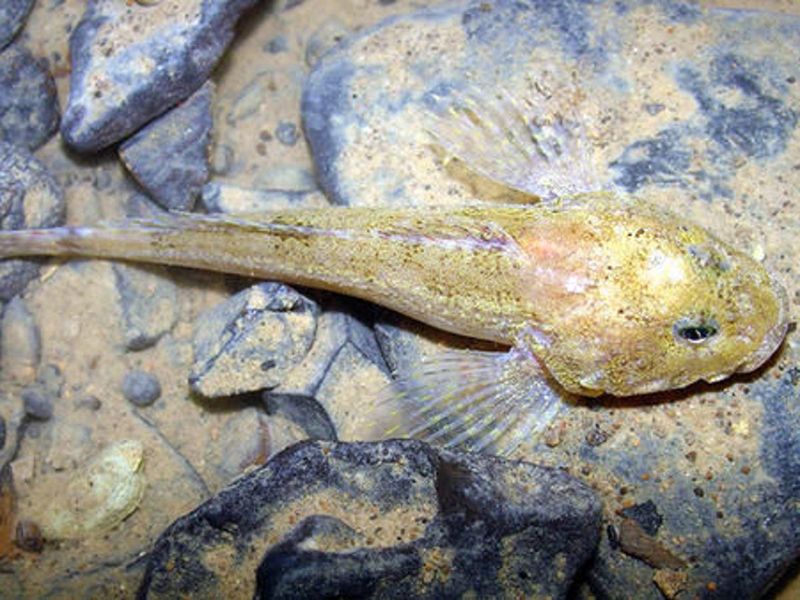
Somewhere along the way, ordinary sculpins swimming in Perry County creeks got swept underground and simply stayed. That accidental relocation set off one of the more interesting evolution stories in North American freshwater biology.
The grotto sculpin’s closest relative is the banded sculpin, a common fish in Ozark streams. Genetic work shows the two split relatively recently in evolutionary terms, likely within the last several thousand years.
Life underground rewards different traits than life in a sunny riffle. Eyes lose value fast when there is nothing to see, while touch, smell, and water-motion sensing become far more useful.
Grotto sculpin show expanded lateral line systems, the row of pressure-sensing pores that lets fish feel movement in water. Extra sensory pores on the head help them map prey and obstacles in total darkness.
Pigment fades too, since camouflage means little where light does not reach. Making pigment costs energy, and energy is scarce in caves.
Behavior shifted as well. Researchers watching them note a calmer, slower approach to swimming, plus less startle response to light than their surface cousins show.
What makes the species scientifically valuable is that the transition is incomplete. Individuals vary widely, with some looking nearly like banded sculpin and others fully cave-adapted.
Studying that range gives biologists a rare live view of adaptation in progress. Most cave animals finished changing long ago, leaving no middle steps to examine.
What Ends Up On The Menu
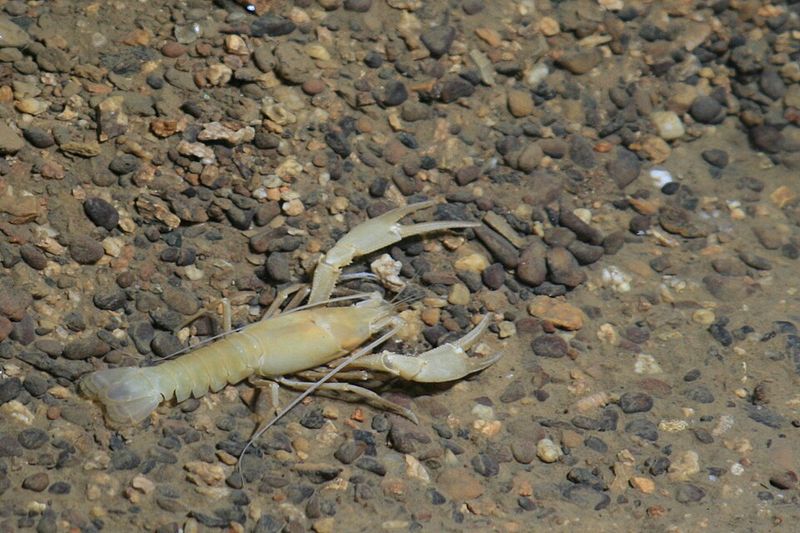
Groceries are scarce in a cave, so the grotto sculpin eats whatever the darkness delivers. Its diet reads like a list of everything small and unlucky enough to share the passage.
Cave crayfish, amphipods, isopods, aquatic worms, and insect larvae all appear in stomach contents. Researchers have also documented salamander larvae and even other sculpin turning up as meals.
That last item is notable. Cannibalism is uncommon among sculpin, and documented cases here suggest food supplies can become extremely scarce underground.
Caves produce almost no food on their own because sunlight, the engine behind plant growth, never arrives. Nearly every calorie washes in from the surface through sinkholes and cracks.
Leaf litter, twigs, soil, and bits of organic matter tumble down during rain. Bacteria and fungi break that material down, tiny invertebrates graze on it, and the sculpin eats the invertebrates.
Hunting style suits a low-energy lifestyle. The fish sits motionless on gravel, sensing vibrations, then lunges with that oversized mouth when something passes close.
Sitting still saves calories, which matters enormously when meals arrive unpredictably. Many cave animals share this patient, low-effort strategy.
One practical takeaway for anyone living above a cave system: what falls on the ground eventually feeds or harms the animals below. A healthy cave food web starts with healthy soil and clean runoff on the surface.
Sinkholes, Runoff, And Water That Travels Fast
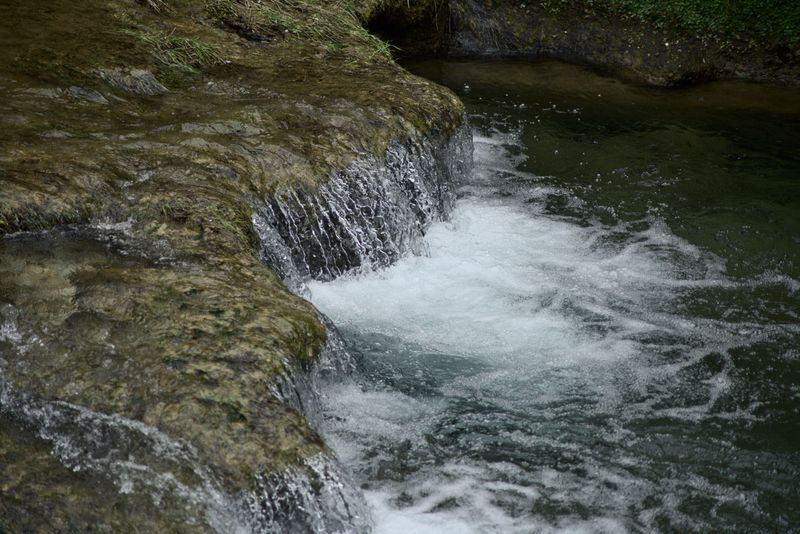
Here is the part that surprises most people: in karst country, water does not filter slowly through layers of soil. It falls into a sinkhole and races underground like a storm drain.
Perry County holds thousands of sinkholes scattered across farm fields, yards, and pastures. Dye-tracing studies show water moving through the system in hours, not weeks.
Speed matters because slow-moving groundwater normally gets cleaned along the way. Soil and rock act like a filter, trapping sediment and breaking down contaminants.
Karst skips that step. Whatever enters a sinkhole arrives in the cave stream almost unchanged.
Historically, some sinkholes served as convenient dumping spots for trash, old appliances, and farm waste. Few realized the waste was flowing directly into the fish’s only habitat.
Agricultural runoff carrying fertilizer, pesticides, and manure adds another layer of concern. Nutrient spikes can starve water of oxygen, which hits sensitive cave species hard.
Documented fish loss events in Perry County caves during the 1990s pushed researchers to investigate. Those incidents helped build the case for federal protection.
The encouraging news is that solutions are practical. Fencing sinkholes, keeping livestock out, planting grass buffers, cleaning out old dumps, and timing fertilizer applications carefully all reduce what reaches the caves.
Landowners who understand the connection are more likely to support conservation efforts. Once you know your back pasture drains straight into a cave river, you tend to treat it differently.
Federally Endangered Since 2013
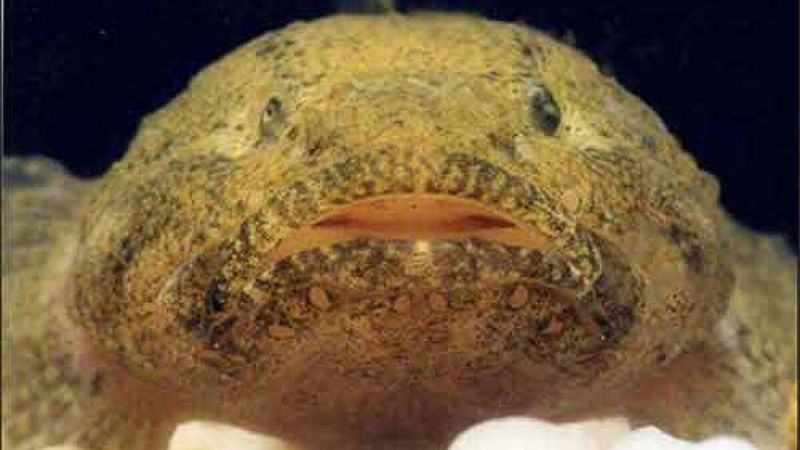
September 2013 marked a turning point when the U.S. Fish and Wildlife Service listed the grotto sculpin as federally endangered.
The decision followed years of surveys, water testing, and documented population trouble. Endangered status means a species is currently at serious risk of extinction throughout all or most of its range.
It brings the strongest legal protections available under the Endangered Species Act, along with funding and coordination for recovery work.
The listing highlighted several concerns. Water quality problems topped the list, followed by the species’ tiny range and its dependence on a single connected aquifer.
Interestingly, federal officials chose not to designate critical habitat at the time. The reasoning was partly that publicizing exact cave locations could invite unwanted visitors.
Instead, agencies leaned on voluntary partnerships with landowners. The Missouri Department of Conservation, the Natural Resources Conservation Service, and local groups worked together on sinkhole cleanups and water monitoring.
Perry County’s community response has been notable. School programs, dye-trace demonstrations, and landowner workshops turned an obscure fish into a local talking point.
Population estimates remain modest, often described in the low thousands across all known sites. Counting fish in a dark cave is genuinely difficult, so numbers carry uncertainty.
Recovery for a species like this rarely means dramatic action. It means steady, unglamorous work: clean water, protected recharge areas, and neighbors who care about what happens beneath their fields.
The Challenge Of Studying Cave Fish
Try running a wildlife survey while crawling through mud, wading cold water, and squeezing past rock in absolute darkness. That is a normal workday for the biologists tracking this species.
Cave research demands specialized gear and training. Teams carry helmets, multiple light sources, wetsuits or waders, and backup batteries, and someone always knows their exit route.
Surveys typically involve walking sections of cave stream and counting fish spotted along the way. Researchers may also use small nets, then measure, photograph, and release the animals.
Weather complicates everything. Heavy rain can flood passages quickly, so trips get scheduled around dry stretches and cancelled without much warning.
Newer tools have eased some of the difficulty. Environmental DNA sampling lets scientists collect water and detect genetic traces the fish shed, confirming presence without seeing a single individual.
Water quality monitoring runs alongside biological work. Sensors track temperature, dissolved oxygen, turbidity, and nutrient levels through storm events.
Dye tracing remains a favorite technique. Nontoxic dye poured into a sinkhole shows up later at a spring, drawing an invisible map of underground flow.
All this effort produces information landowners can actually use. When a map shows exactly which fields feed which cave, conservation advice stops being vague and becomes specific.
The work is slow and rarely makes headlines. Yet every dataset builds a clearer picture of a habitat almost nobody sees.