Those Webbed Clumps In Missouri Trees This Fall Aren’t Part Of The Color Show
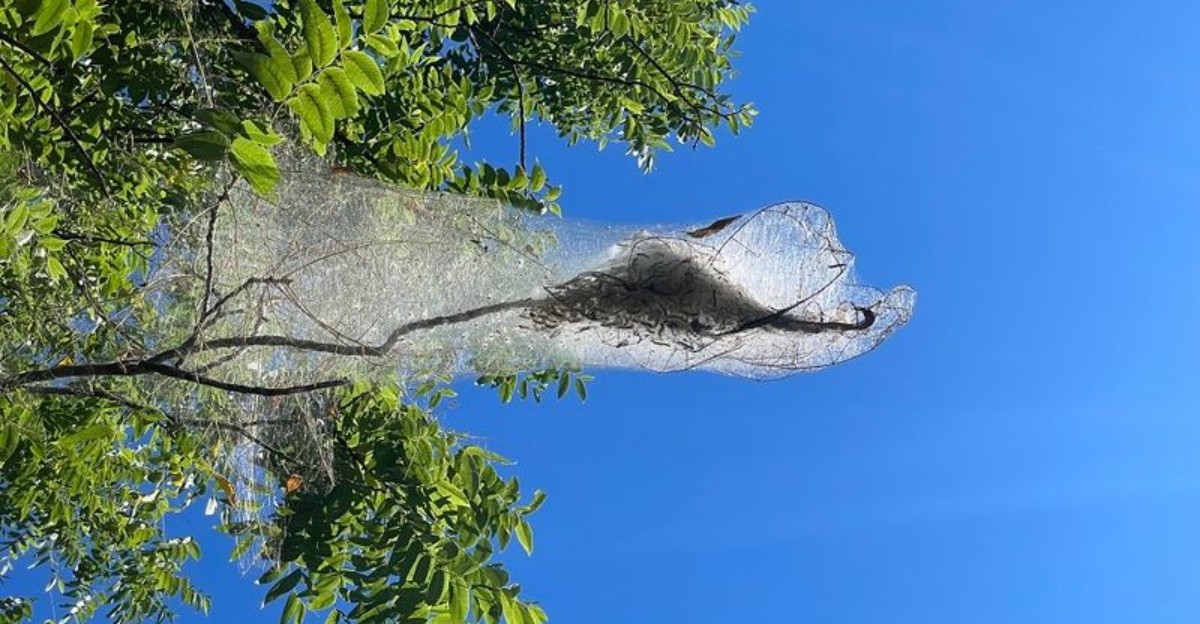
Late in the season, some Missouri walnut and pecan trees wear silky gray hoods wrapped around their branch tips. Look closer and you will spot tiny hairy bodies wriggling inside, munching leaves behind a shimmering silk curtain.
I like how fall turns every drive into a slow parade of gold maples and fiery red sumac. Those cottony bundles crash the party, though, and they often make people worry about the health of their trees.
You need to know that the culprits are common insects, and they are usually far less scary than they look. Folks across Missouri spot these webs every autumn, and many reach for a ladder before they learn the facts.
I believe a little knowledge turns that worry into real curiosity about the busy life inside each nest. So who exactly is spinning those silky tents, and should you actually do anything about them this October?
Silk Tents Spun Over Branch Tips By Hungry Caterpillars
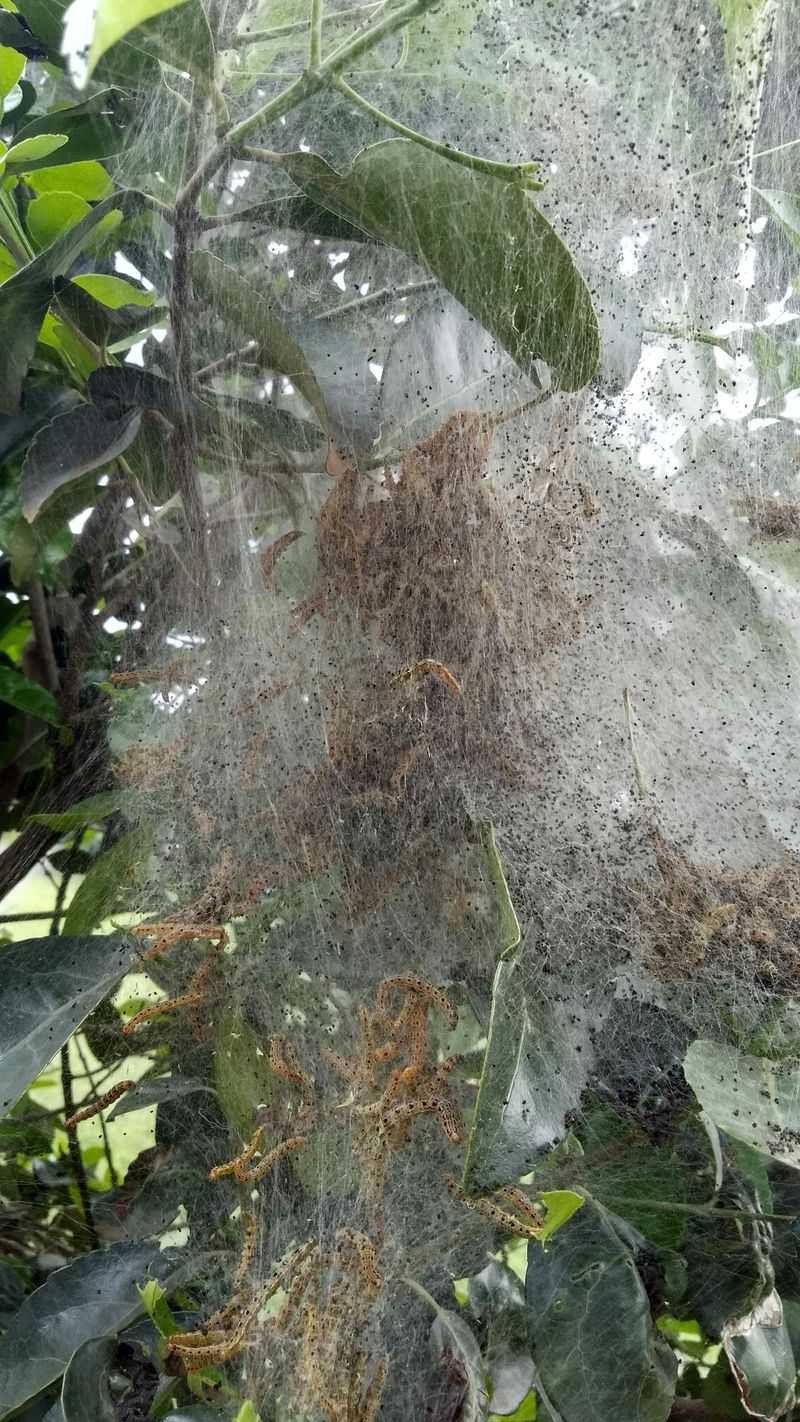
Walk under a pecan tree in October and you may notice a hazy gray bag clinging to the outer twigs. That bag is a silk tent, and a crowd of young caterpillars built it together as their shared home.
The tent wraps right around the leaves at the branch tips, so the larvae can eat without leaving shelter. As they finish one batch of leaves, they simply stretch the silk outward to cover a fresh supply.
Over several weeks, a nest the size of a fist can grow to cover a large section of branch. Some tents stretch two or three feet long, and they look a bit like old cotton candy left outside.
Inside the silk, you will find brown leaf skeletons, tiny black droppings, and dozens of fuzzy wriggling bodies. The caterpillars mostly skeletonize leaves when small, then chew whole leaves as they grow bigger and hungrier.
The silk works like a screen door, giving the group some protection from birds and wasps that would gladly snack on them. It also gives the group a cozy spot to rest, molt, and hide from rough weather during the day.
Across Missouri, these tents usually show up from summer through fall, so autumn is a good time to spot them. You might spot several nests in one tree, especially along roadsides, fence rows, and sunny woodland edges.
A quick tip is to look at the tips of branches, not the forks, when you try to identify nests. That single clue tells you a lot about which caterpillar moved in, and it helps you plan calmly.
Fall Webworms Behind The Silky Nests
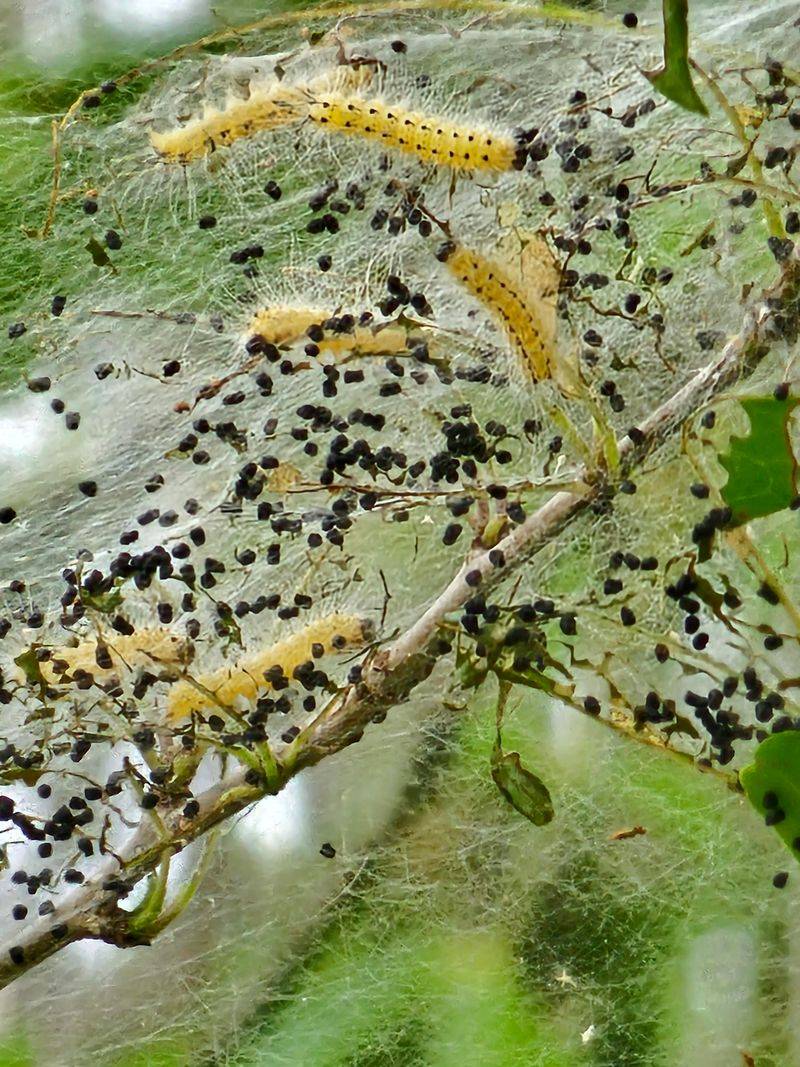
The real builder is the fall webworm, a native caterpillar known to scientists as Hyphantria cunea. University extension experts in Missouri note that it is common across the state, and it shows up across most of North America.
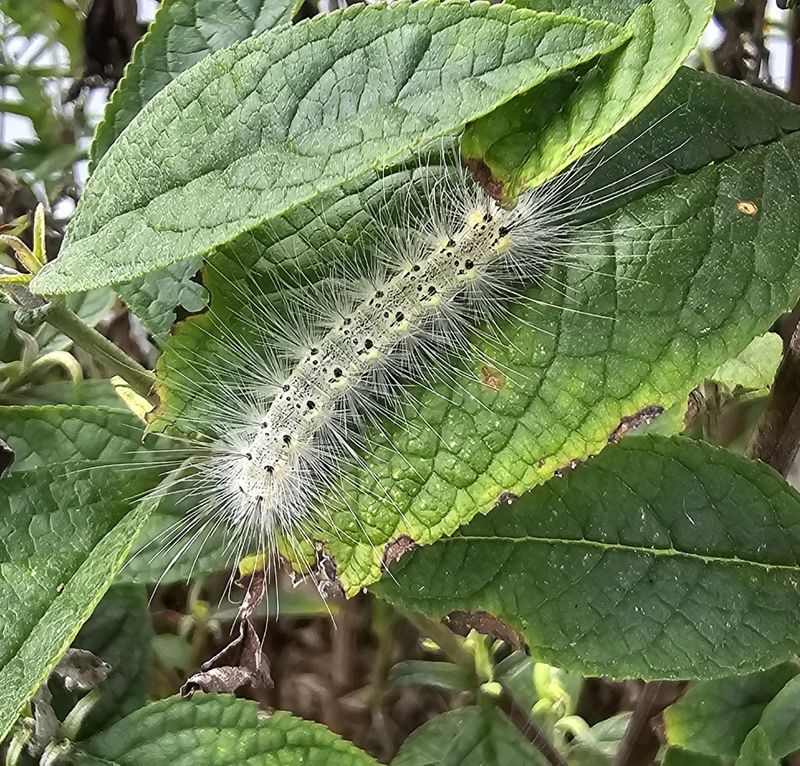
The caterpillars are pale yellow or greenish, with dark spots and long silky white hairs sprouting from their bodies. Fully grown, they reach about one inch long, which is roughly the length of a paper clip.
Your Missouri Garden Changes Every Week. Your Plan Should Too.
Gardening in Missouri changes quickly throughout the season. Every Friday you’ll receive a simple weekly plan showing exactly what to plant, prune, fertilize, harvest, and protect so you never miss the right timing.
Two color forms exist, and you can tell them apart by checking whether the head is black or reddish. The two forms also differ a little in how they build their webs, but both make the same kind of silk tent.
The adult is a small white moth, sometimes speckled with dark dots, that flies mostly at night. Females lay hundreds of eggs in a fuzzy patch on the underside of a leaf near branch ends.
Once the eggs hatch, the tiny siblings start spinning silk right away and stay together for several weeks. In warmer areas, there can be two generations per year, which explains why nests keep appearing into fall.
When the caterpillars finish eating, they leave the web and crawl off to find a safe hiding place. They spend the winter as brown pupae tucked into bark cracks, leaf litter, or loose soil near trees.
Fun fact, this native insect traveled overseas to Europe and Asia, where people now treat it as a pest. Back home, natural enemies help keep its numbers in check, so big outbreaks here tend to come and go.
Favorite Host Trees Across Missouri
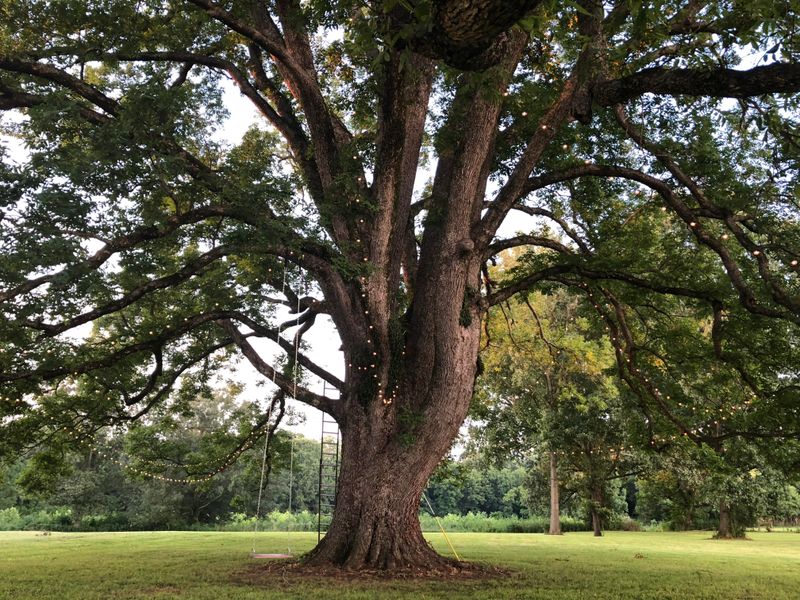
Fall webworms are not picky eaters, and researchers have recorded them feeding on more than one hundred tree species. Even so, they clearly have favorites, and a few trees seem to collect nests like refrigerator magnets.
Pecan and black walnut top the list in many Missouri yards, farms, and riverbank woods each autumn. Hickory, persimmon, and sweetgum also attract plenty of attention, especially when they grow in sunny, open spots.
Fruit trees get visits too, so do not be surprised to see webs on cherry, mulberry, or crabapple. Elm, redbud, and willow round out the menu, along with plenty of other common shade and ornamental trees.
Location matters as much as species, because the moths like laying eggs on trees along sunny edges. Roadside trees, lone yard trees, and trees bordering fields often carry more nests than those deep in forests.
I find it fun to drive country roads in October and count the gray tents dotting the walnut trees. Some years you will see just a handful, while other years seem to bring webs on nearly every branch.
Those swings are normal, and they often follow changes in weather, predator numbers, and diseases that affect caterpillars. Extension specialists describe these ups and downs as a natural cycle rather than a sign of trouble.
If you are planting a new tree, you do not need to avoid pecans or walnuts because of webworms. Healthy, well-watered trees handle the feeding just fine, and they reward you with shade for decades to come.
Cosmetic Leaf Loss On Otherwise Healthy Trees
Relax, because those ugly webs usually look much worse than they really are for a healthy tree. University extension services describe fall webworm damage as mostly cosmetic, especially when it shows up late in the season.
Timing is the secret, since trees have already done most of their food making for the year by fall. Leaves are about to drop anyway, so losing a few branches of foliage in October barely matters to them.
Think of it like someone eating the last few fries on your plate after you already feel full. It might be annoying to watch, but your tree stored the energy it needed weeks ago.
Mature trees across Missouri often carry several nests each fall and still leaf out normally the next spring. The caterpillars eat leaves only, so they leave buds, bark, and roots alone while they feed.
Small or newly planted trees deserve a closer look, since heavy feeding can stress them more than big trees. Trees already struggling with drought, root injury, or other pests may also need a little extra care.
To help those trees, water them deeply during dry autumn spells and spread mulch over the root zone. Keep the mulch a few inches away from the trunk, and avoid piling it up like a volcano.
Once the leaves fall, those empty webs may hang on for weeks, looking like tattered gray lace. Winter wind and rain slowly break them apart for you.
Spring Tent Caterpillars Often Confused With These Nests
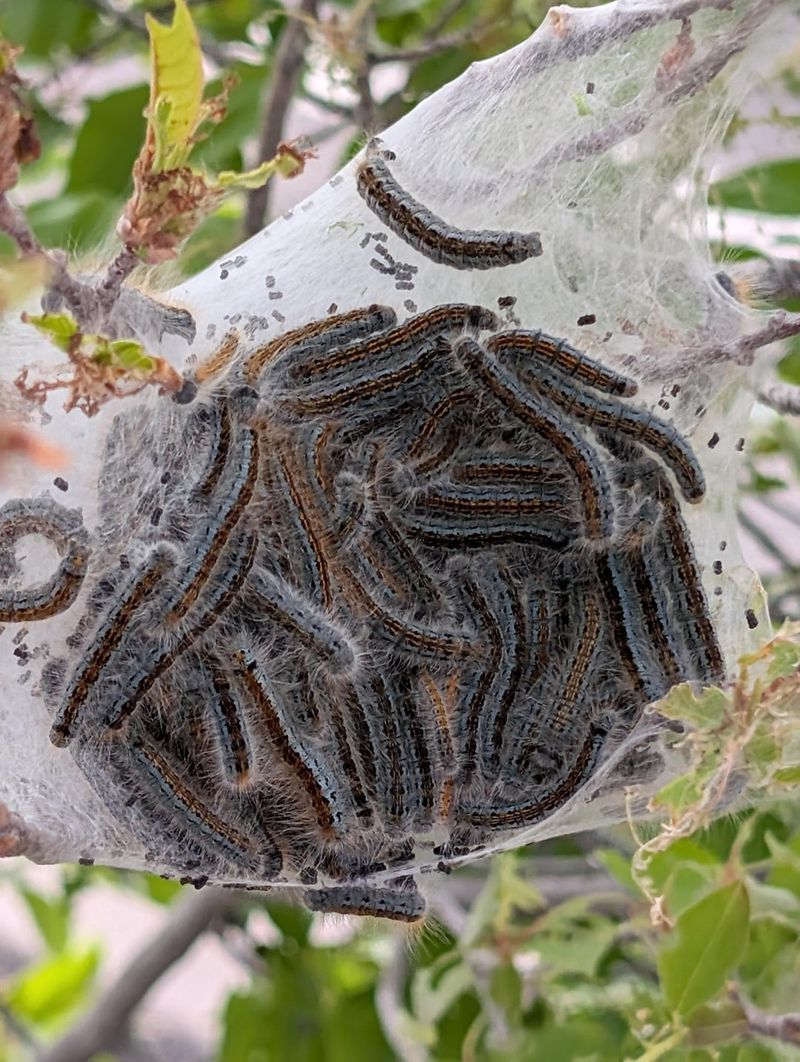
Plenty of gardeners mix up two silk builders, and honestly, I understand the confusion every single time. The eastern tent caterpillar also spins large white nests, but it follows a very different yearly schedule.
Eastern tent caterpillars hatch in early spring, right as wild cherry and crabapple leaves begin to unfold. By early summer they have finished feeding, so a nest you see in October is almost certainly the work of someone else.
Location gives another strong clue, because spring tents sit snugly in the forks of branches. Fall webworm nests drape over the branch tips instead, wrapping the leaves the caterpillars plan to eat.
Feeding habits differ too, since tent caterpillars leave their nest to munch leaves out in the open. Webworms stay inside their silk while eating, which is why their webs fill up with chewed leaf scraps.
The caterpillars themselves look different, with tent caterpillars wearing a bold white stripe down their dark backs. They also show blue spots along their sides, while webworms look paler, with long silky hairs and no white stripe.
In Missouri, spring tent nests often appear on wild black cherry trees along pastures and woodland borders. Spotting the difference helps you pick the right timing, since the two insects show up months apart.
One easy memory trick is matching the name to the season, since fall webworms arrive when leaves turn. Spring tents belong with blossoms and fresh green buds, so an autumn web usually points to webworms.
Simple Removal Options For Low Branches
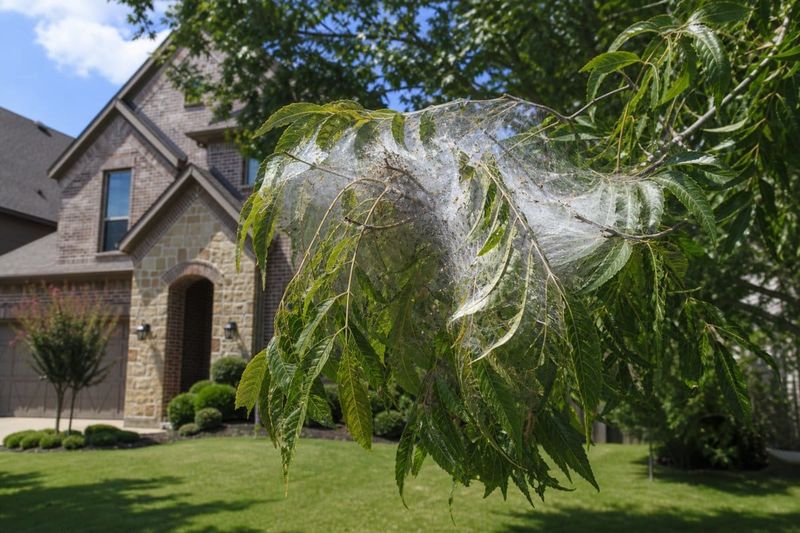
A long stick or a garden rake might be the best webworm tool you already own. Poking open the web lets birds, wasps, and other helpful predators reach the caterpillars hiding inside.
Extension experts across Missouri often recommend this simple trick for nests that are easy to reach from the ground. It costs nothing, takes a few minutes, and lets nature handle most of the remaining work for you.
Pruning is another solid option when a nest sits on a small branch close to the ground. Clip the branch just outside the collar, then drop the whole web into a bag for the trash.
Please skip burning nests while they are still in the tree, since flames can scorch bark and spread quickly. Extension specialists warn that this method often harms the tree far more than the caterpillars ever could.
Sprays are rarely needed in October, because most caterpillars are large and nearly finished feeding by then. Products with Bt work best on young caterpillars, and the spray must reach leaves inside the web.
For high nests, the safest choice is usually to leave them alone and let the season run its course. Climbing ladders to reach treetops brings real risks, and a hired arborist rarely sees webworms as an emergency.
This fall, raking up leaf litter under nested trees may also disturb some of the pupae hiding there. Fewer overwintering pupae can mean fewer moths next year, which is a nice bonus for a little yard work.