Wisconsin Gardeners Who Plant Fall Bulbs Now Can Expect Early Spring Color When The Snow Retreats
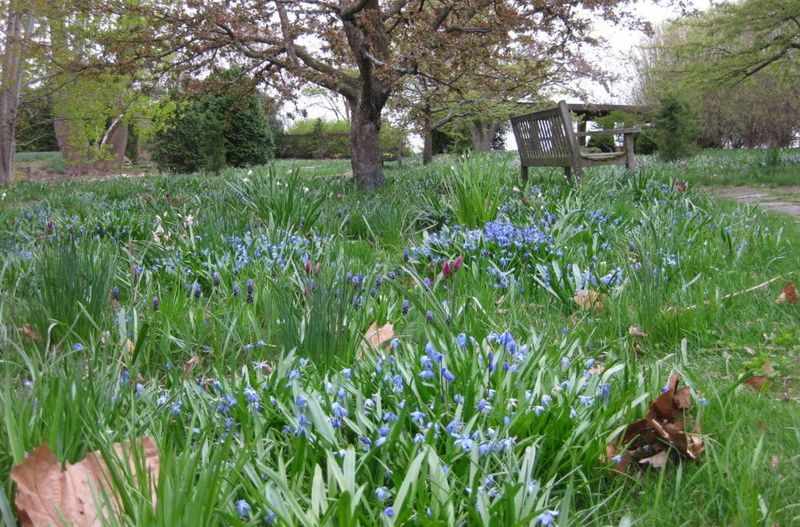
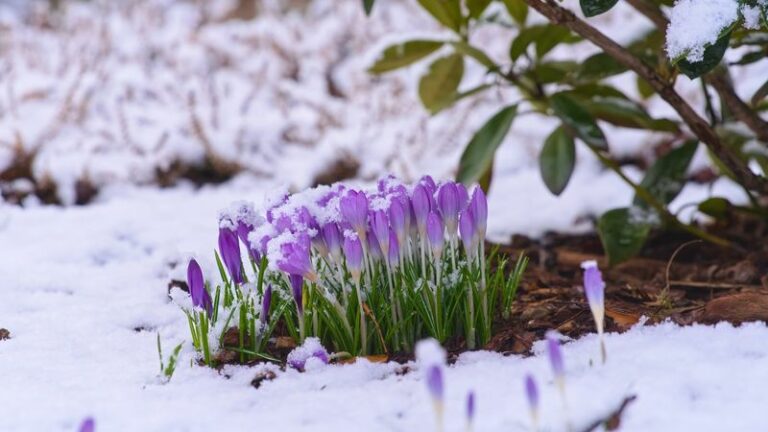
Every spring, Wisconsin yards wake up slowly, still patchy with snow, and the gardeners who planned ahead in fall get to watch color push through first. Planting spring-flowering bulbs in autumn gives tulips, crocuses, and other early bloomers the root system and cold-weather rest they need to perform.
The catch is that not every bulb races the last snowflake, and knowing which ones do makes all the difference. Getting that early reward starts with a trowel, the right bulbs, and a few good decisions made before the ground freezes.
Wisconsin Fall Bulbs Build the First Spring Color
Spring-flowering bulbs planted in fall spend the cold months doing quiet, essential work underground in Wisconsin. Roots grow from the base of each bulb in autumn, anchoring the plant and pulling in water and nutrients before the soil locks up for winter.
That root establishment, combined with the long cold period Wisconsin winters reliably provide, is what primes the bulb to flower vigorously when temperatures rise.
Wisconsin Extension explains that spring bulbs need winter chilling and fall root development to perform normally in spring. Without both, flowering can be weak, delayed, or skipped entirely.
Wisconsin gardeners who skip fall planting and try to add bulbs in spring will almost always be disappointed, because the chilling requirement cannot be shortcut in the field.
What fall planting does not do is guarantee that ordinary tulips will push through the snow before it fully melts across Wisconsin. That promise belongs more accurately to a different group of plants.
Snowdrops, glory-of-the-snow, and winter aconite are the genuine snow-level performers in Wisconsin, while most tulips bloom in the mid- to late-spring window after the landscape has already thawed.
The realistic and genuinely exciting promise is this: fall planting in Wisconsin sets up one of the first dependable waves of spring color , arriving weeks before annuals or perennials stir. Pairing early minor bulbs with well-chosen tulip varieties gives Wisconsin yards a layered display that begins at winter’s edge and carries through May.
That layered sequence, rather than a single pre-melt moment, is what makes fall planting worth every hour of October digging.
When Wisconsin Soil Is Ready for Fall Bulbs
Soil temperature, not the calendar date, is the right signal for planting spring bulbs in Wisconsin. The practical target is soil that has cooled to approximately 50 to 55 degrees Fahrenheit or lower at planting depth, while the ground remains loose enough to work with a trowel or bulb planter.
Planting into soil that is still warm and wet raises the risk of fungal disease and rot before roots have a chance to establish.
UW-Madison Extension recommends planting Wisconsin spring bulbs when soil temperatures have dropped to that cool range but the ground has not yet frozen solid. The window typically runs until roughly two weeks before the expected hard freeze, giving bulbs enough time to push out a modest root system before winter shuts down growth.
A cheap soil thermometer, available at most Wisconsin garden centers, removes the guesswork.
Your Wisconsin Garden Changes Every Week. Your Plan Should Too.
Gardening in Wisconsin changes quickly throughout the season. Every Friday you’ll receive a simple weekly plan showing exactly what to plant, prune, fertilize, harvest, and protect so you never miss the right timing.
Northern Wisconsin reaches suitable conditions noticeably earlier than southern Wisconsin, often by several weeks. A gardener in Ashland or Rhinelander may find ideal soil temperatures in late September or early October, while someone gardening in Kenosha or Racine might not reach that window until mid- to late October.
Regional extension guidance for the Upper Midwest consistently points to local conditions rather than a single statewide planting date.
Waiting for the soil to cool also discourages voles and other rodents that are more active in warmer soil. If the ground freezes before planting is finished in Wisconsin, the remaining bulbs are best stored in a cool, dry location and planted as soon as a thaw opens the soil again, even briefly.
The goal is always to give roots a running start, however short the remaining season.
Which Wisconsin Bulbs Flower Earliest
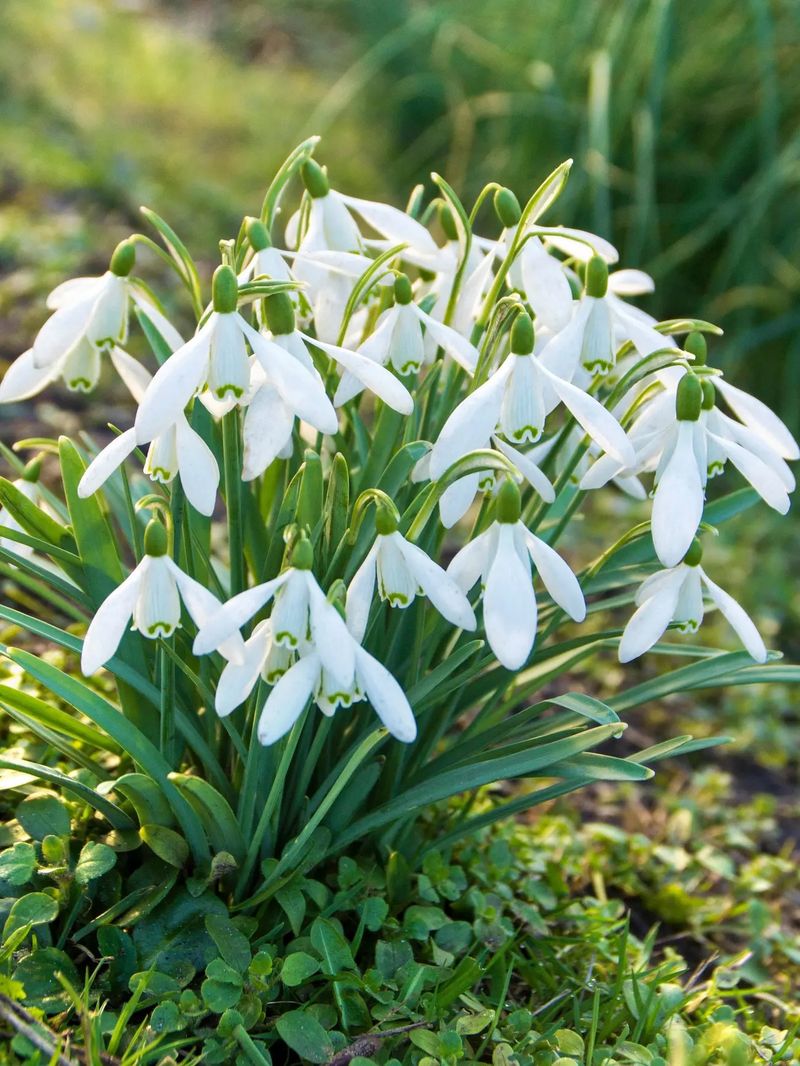
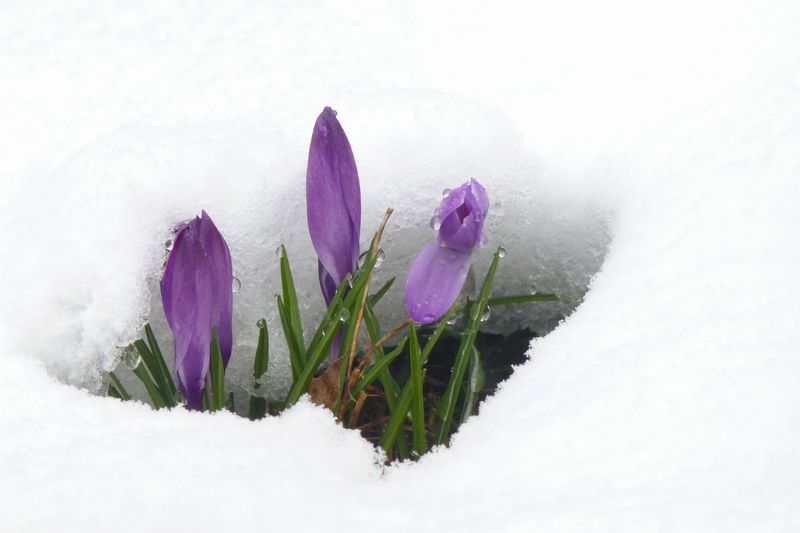
Snowdrops hold the strongest claim to snow-level flowering in Wisconsin. UW-Madison Extension identifies snowdrops as among Wisconsin’s earliest bloomers, capable of pushing white, nodding flowers through frozen crust or alongside lingering drifts.
Their small stature and cold tolerance make them uniquely suited to the late-winter edge that Wisconsin gardeners know well.
Glory-of-the-snow, Chionodoxa, earns its name honestly. Wisconsin Extension describes glory-of-the-snow as sometimes blooming through snow, producing starry blue or pink flowers that appear almost before winter has finished.
Winter aconite follows closely, its bright yellow cups rising on a ruff of green leaves while temperatures in Wisconsin still dip at night. These three, planted together in Wisconsin yards, give the best realistic chance of color at the snow line.
Crocus, Siberian squill, and grape hyacinth step in next, typically flowering as Wisconsin soil warms through March and April. Crocus is reliably early in most Wisconsin regions and naturalizes well under turf or in rock gardens.
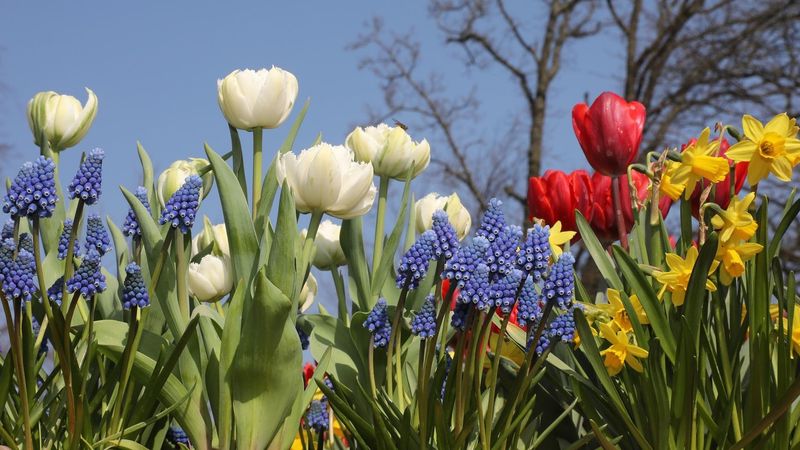
Siberian squill spreads steadily and produces an intense blue carpet that stops Wisconsin neighbors in their tracks. Grape hyacinth carries the sequence into mid-spring with dense purple spikes that pair naturally with mid-season tulips.
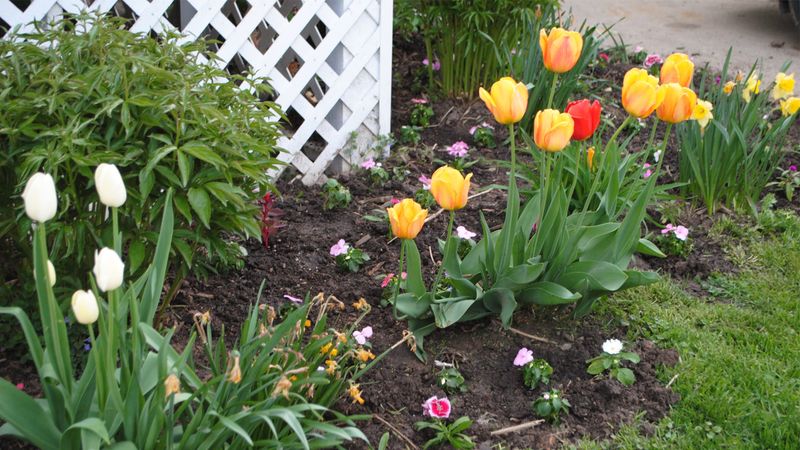
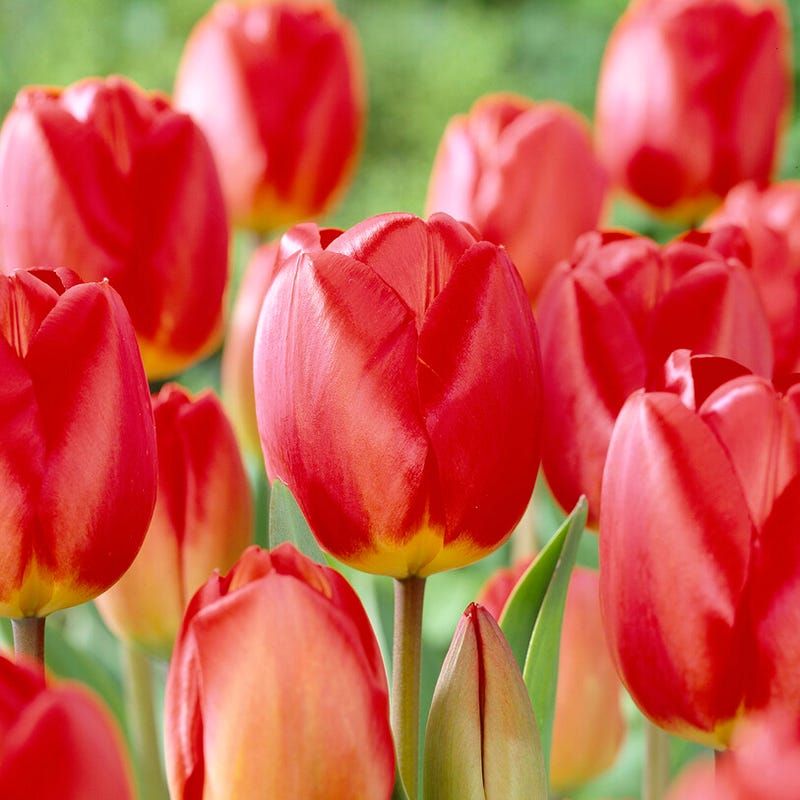
Most tulips, including the large-flowered Darwin Hybrids and many Single Late types common in Wisconsin garden centers, bloom in mid- to late spring. The Royal Horticultural Society notes that most tulips flower in mid to late spring and that even border tulips can fail to flower reliably in their second year.
Kaufmanniana and Fosteriana tulips are earlier-flowering groups that may bloom ahead of the standard Wisconsin tulip season under favorable conditions, but Wisconsin gardeners should treat that early timing as a pleasant possibility rather than a firm schedule.
A Wisconsin Bulb Bed Needs Drainage and Light
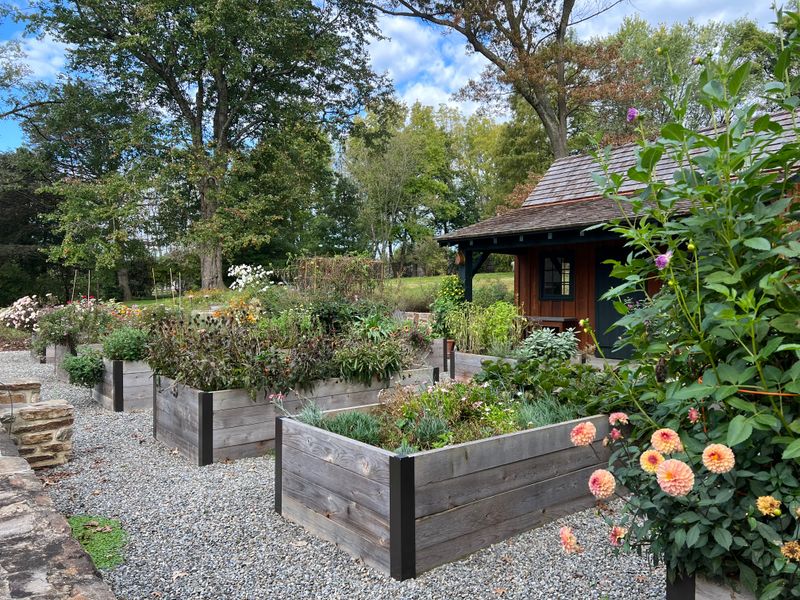
Drainage is the single most important site quality for spring bulbs in Wisconsin. Bulbs sitting in saturated soil through a Wisconsin winter are far more likely to rot than to flower, and heavy clay that holds water is a common problem across much of the state.
Low-lying spots that collect snowmelt or spring rain are the worst possible locations for tulips, daffodils, or any other bulb that needs a dry dormant period.
UW-Madison Extension warns that poor drainage and wet soils increase bulb rot risk and notes that many hybrid tulips may persist only a few seasons in Wisconsin. Raised beds solve drainage problems immediately and are worth the extra construction effort for Wisconsin gardeners who garden on heavy or compacted ground.
A slope, even a gentle one, naturally moves excess water away from the root zone and gives Wisconsin bulbs a better chance of returning year after year.
Sunlight matters, but Wisconsin gardeners have more flexibility than they might expect. Full sun is ideal, but sites beneath deciduous trees work well for early bulbs because the bulbs complete most of their growth cycle before the tree canopy fills in.
Snowdrops, crocus, and Siberian squill are particularly suited to lightly shaded Wisconsin spots under oaks or maples.
Wisconsin Extension recommends planting in groups or drifts rather than scattering individual bulbs across a bed. A cluster of fifteen or twenty tulips reads as a bold statement from a Wisconsin street or window.
A single bulb planted alone tends to disappear. Mixing species within a drift, such as pairing early crocus with mid-season tulips in the same Wisconsin bed, extends the color window without requiring additional space.
How Wisconsin Gardeners Should Plant Tulip Bulbs
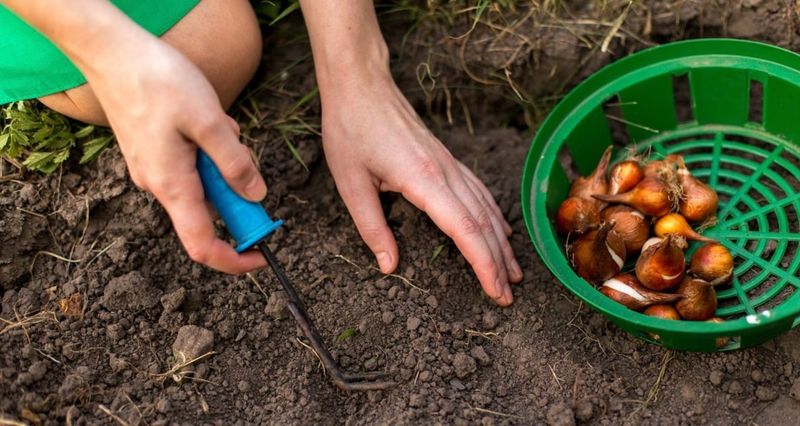
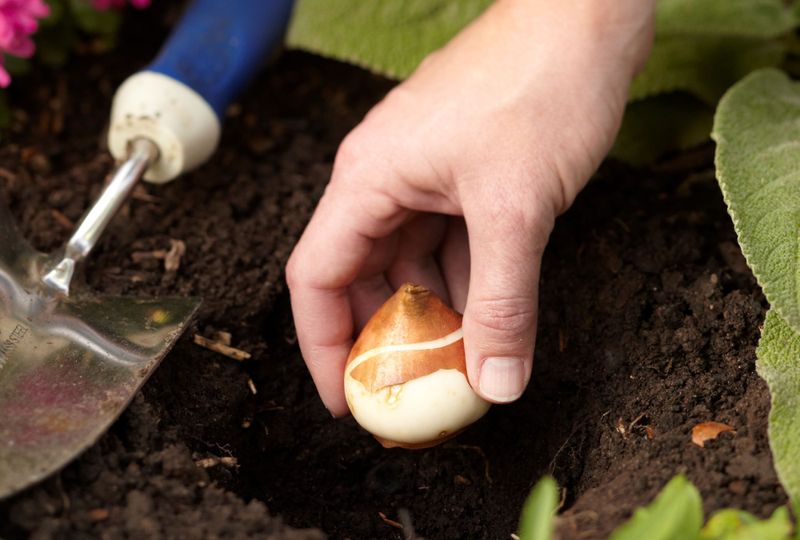
Orientation matters more than most Wisconsin gardeners realize when they are dropping bulbs into a prepared bed. The pointed tip is the growing end and must face upward; the flat, slightly rough base is the root plate and goes down into the soil.
A bulb planted sideways or upside down in Wisconsin soil will usually correct itself, but it wastes energy doing so and may emerge weeks later than its neighbors.
UW-Madison Extension gives a depth of approximately 6 to 8 inches for large tulip bulbs, measured from the bottom of the bulb, and recommends a general rule of two to three times the bulb’s height for other sizes. Planting too shallow in Wisconsin leaves bulbs exposed to damaging freeze-thaw cycles and makes them easier for squirrels to find.
When package instructions specify a different depth for a particular cultivar, follow those directions, because some species tulips and miniature types are smaller and need shallower placement.
Spacing tulips about 4 to 6 inches apart in Wisconsin beds gives each bulb room to develop without crowding. After setting each bulb at the correct depth, firm the soil gently over it to eliminate large air pockets, which can dry out roots in Wisconsin’s variable autumn weather.
Water the bed thoroughly after planting if conditions are dry, soaking the soil down to bulb level.
Wisconsin gardeners should avoid keeping the bed saturated after that initial watering. Consistent moisture encourages rooting, but standing water invites the rot that ends so many Wisconsin tulip plantings prematurely.
If autumn rain is adequate, no additional irrigation is needed until the soil dries noticeably. A simple finger test, pressing into the soil to a depth of 3 or 4 inches, tells Wisconsin gardeners whether the bed needs water or can rest until spring.
Winter Care Protects Wisconsin’s Spring Display
After Wisconsin’s first hard freeze settles the soil, a light layer of mulch applied over the bulb bed does meaningful protective work. Straw, shredded leaves, or wood chips spread 2 to 3 inches deep help moderate the freeze-thaw cycles that can heave bulbs out of the ground during Wisconsin’s unpredictable late fall and early spring temperature swings.
Mulch applied too early, before the soil has begun to freeze, can trap warmth and push bulbs into premature growth that a subsequent cold snap will kill.
Wisconsin Extension recommends applying mulch after the soil begins to freeze rather than immediately after planting. The timing distinction is small but consequential for Wisconsin gardeners who plant in October and face a long, variable winter.
Snow itself acts as an effective insulating mulch when it stays on the ground, which is one reason Wisconsin bulbs often perform better after snowy winters than after cold, bare ones.
Once spring arrives and Wisconsin tulips finish flowering, the temptation to tidy up the bed immediately is understandable but harmful. Wisconsin Extension is clear that tulip leaves should remain in place until they yellow naturally, because the foliage is actively photosynthesizing and refilling the bulb for next season.
Removing green leaves right after bloom weakens the bulb and reduces flowering the following year in Wisconsin gardens.
Spent flower stems are a different matter. Cutting off the seed head after Wisconsin tulips bloom redirects the bulb’s energy away from seed production and back into storage, which can modestly improve return flowering.
Upper Midwest extension guidance on mulching and bulb care reinforces that thoughtful seasonal maintenance, rather than heavy intervention, gives Wisconsin spring bulbs their best chance of a multi-year run.
Wisconsin Bulb Mistakes Create Late or Failed Color
Planting timing errors account for a large share of Wisconsin bulb disappointments. Soil that is still warm and moist in early September is not ready for tulip bulbs, regardless of what a calendar or a garden center display suggests.
Extension guidance on spring bulb myths makes clear that planting earlier in fall does not make tulips bloom earlier in spring. The correct signal is cool soil, not an early date, and Wisconsin gardeners who rush that step often end up with rotted bulbs before the first snow falls.
Assuming every tulip will return reliably for years is a second common Wisconsin mistake. Many large-flowered hybrid tulips perform well for two or three seasons in Wisconsin and then decline, particularly in poorly drained clay soils.
Illinois Extension planting guidance and Wisconsin Extension both note that hybrid tulips are best treated as short-lived plantings in many Midwest conditions. Wisconsin gardeners who want longer-lived displays should lean toward species tulips, Darwin Hybrids, or Kaufmanniana types, which tend to persist better than Single Late varieties.
Fertilizer and bonemeal deserve more skepticism than they typically receive in older Wisconsin gardening advice. Soil testing before adding any phosphorus is the safer current recommendation, because many Wisconsin soils already have adequate phosphorus levels.
Adding bonemeal without testing can waste money and may actually attract dogs to dig in the bed, which creates a separate problem for Wisconsin pet owners.
Safety deserves direct attention for any Wisconsin household with pets or children. The ASPCA confirms that tulip bulbs are toxic to dogs, cats, and horses, with the highest concentration of harmful compounds in the bulb itself.
Keep unplanted bulbs out of reach of pets in Wisconsin homes and fence or cover freshly planted beds if dogs have yard access.
Human skin is also at risk. Poison Control advises wearing nitrile gloves when handling tulip bulbs because repeated contact can cause “tulip fingers,” an irritating rash or sensitization reaction.
Finally, Wisconsin gardeners who grow crocus should know that spring crocus and autumn crocus, Colchicum autumnale, look similar but are very different plants. The ASPCA warns that autumn crocus can cause far more serious poisoning in pets than spring Crocus species, so Wisconsin gardeners should label plantings clearly and store bulbs separately.
Wisconsin Gardeners Can Plant for an Honest Early Reward
The action plan for Wisconsin gardeners is straightforward. Check local soil temperature and wait for it to drop to around 50 to 55 degrees Fahrenheit or lower, then plant while the ground is still workable.
Choose a site with reliable drainage, and follow Wisconsin Extension guidance on depth, spacing, and post-planting care to give bulbs the best start.
Build the early end of the display with snowdrops and other minor bulbs that genuinely flower at winter’s edge in Wisconsin. Add crocus, glory-of-the-snow, and Siberian squill for the weeks that follow, then bring tulips in to carry the color through mid-spring.
That layered mix gives Wisconsin yards a sequence that begins almost before anyone expects it and holds through April.
Wisconsin Extension puts it plainly: planting hardy bulbs now is how you treat yourself to early spring blooms. Snow-level flowering is a real possibility for snowdrops and glory-of-the-snow in Wisconsin, a pleasant surprise for tulips, and a dependable outcome for gardeners who plan the whole sequence well.
The bulbs already contain everything they need to perform; the Wisconsin gardener’s job is simply to put them in the right place at the right time.